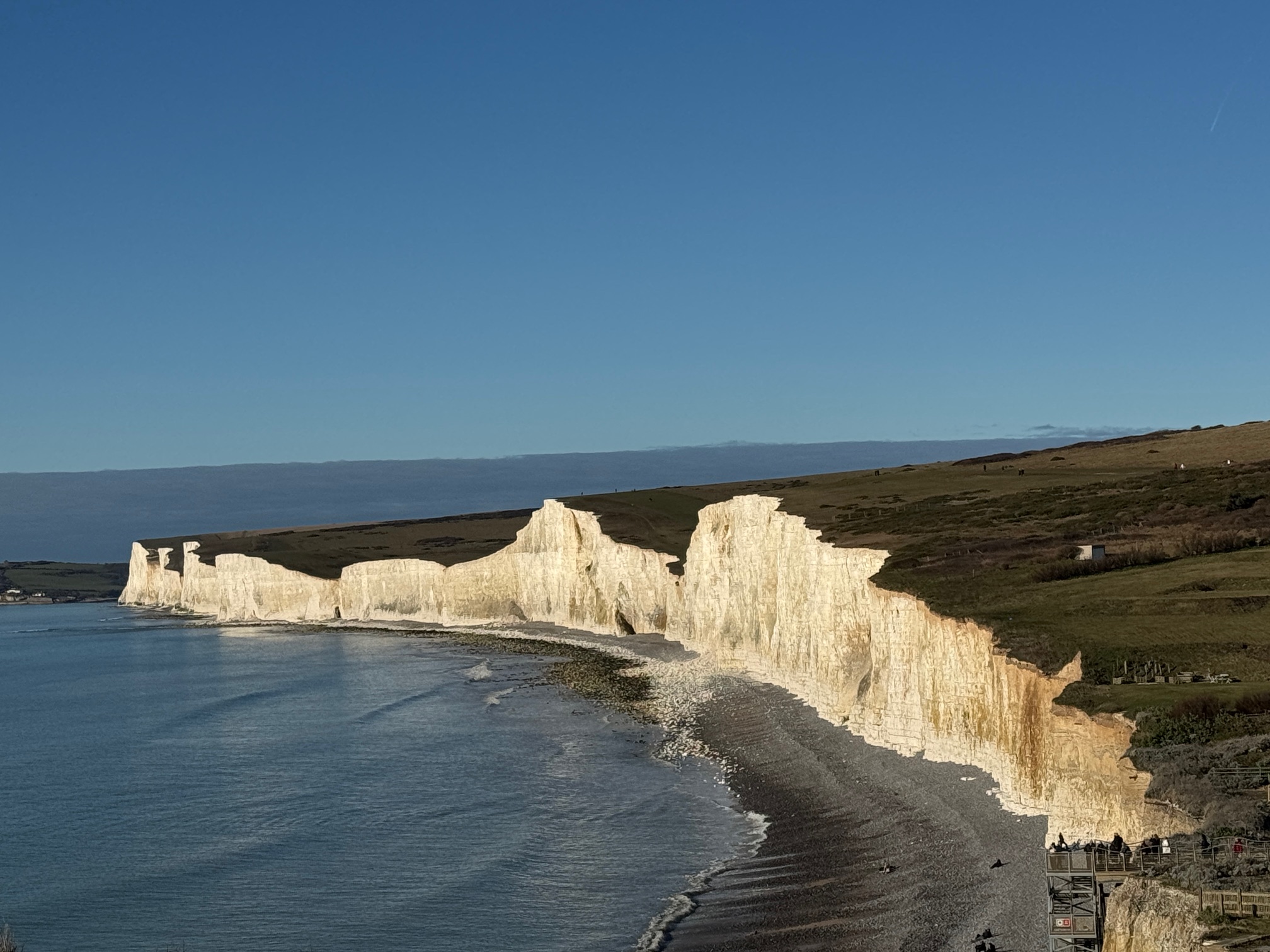
Hope Gap: The Viewpoint Nobody Knows About
The classic Seven Sisters photo gets taken from Seaford Head looking west, with all seven white cliffs marching away into the distance. Everyone knows that viewpoint. On summer weekends, you'll be sharing it with 50 other people all trying to get the same Instagram shot.
Hope Gap is 500 metres east of the main Seaford Head viewpoint. It offers virtually the same view—dramatic white cliffs, sweeping coastal panorama, those iconic chalk Sisters—but with maybe 5% of the visitors. Most people walk straight past it without realising it's there.
I'm not saying it's better than the main viewpoint. But it's equally good and vastly quieter, which for photographers and anyone who prefers not sharing their scenic moments with coach parties makes it worth knowing about.
Why Hope Gap Works
The geography is simple: Seaford Head is a prominent clifftop hill at the eastern end of the Seven Sisters. The highest point—where everyone congregates—offers the classic westward view. Hope Gap is a distinctive notch in the cliffs slightly to the east, where a small valley cuts down to sea level.
From Hope Gap, you get the same westward view of the Seven Sisters, just from a slightly different angle. The perspective is fractionally lower and more side-on, but the view is equally spectacular. The crucial difference: it's not marked as a viewpoint on most maps or mentioned in guidebooks, so most visitors don't know it exists.
Result: brilliant clifftop scenery without the crowds. You can set up a tripod without people walking through your frame. You can sit on the grass and enjoy the view without perching on an overcrowded bench. You can actually hear the sea and the skylarks rather than other tourists' conversations.
What Makes Hope Gap Special
The view: Seven Sisters stretching west, Beachy Head visible in clear conditions to the west, sweeping coastal panorama. Virtually identical to the main Seaford Head viewpoint, just from 500 metres further east.
The gap itself: A distinctive V-shaped notch where a dry valley cuts through the cliff line. You can scramble down to beach level if the tide's out (more on that later), or just admire the geological drama from above.
Rock pools: At low tide, the shore below Hope Gap has excellent tide pools—better than Birling Gap in my opinion because fewer people disturb them.
Solitude: This is the key advantage. On days when Seaford Head viewpoint is packed, Hope Gap will have maybe three people. Sometimes you'll have it completely to yourself.
Getting There
Start from Splash Point car park in Seaford (postcode BN25 2PS). This is the same starting point as the main Seaford Head walk, which is partly why Hope Gap stays quiet—people set off toward the obvious high point and don't explore further.
From the car park, head west on the clifftop path (South Downs Way). After about 10-15 minutes walking, you'll climb up toward Seaford Head proper. Just before the path reaches the highest point—where the bench and the crowds are—look for a slightly fainter path branching right (eastward) along the cliff edge.
Follow this eastern path for about 5 minutes. You'll see the gap ahead—a distinct V-shaped notch in the cliff line. That's Hope Gap. The path runs right to the edge of it, where you can look down into the valley and out to sea.
Total walk from car park: 15-20 minutes. Longer if you're stopping for photos at the main viewpoint first, which most people do. The path is clear and safe, though keep back from the crumbling cliff edges as always.
Cliff safety reminder: These cliffs are actively eroding. The cliff edges at Hope Gap are particularly unstable because of the valley cutting through. Stay well back—at least 5 metres from any cliff edge. The grass-covered overhangs look solid but can collapse without warning. Several people have died falling from Seaford Head cliffs over the years.
The Beach Below
If the tide's out, you can scramble down to the shore at Hope Gap. There's no proper path—it's a steep, loose scramble down the valley floor—but it's doable if you're reasonably agile and wearing proper boots.
Why bother? The rock pools here are excellent. The chalk platform below the cliffs gets exposed at low tide, creating numerous pools that trap sea life. You'll find crabs, sea anemones, small fish, periwinkles, limpets—all the usual suspects, but in relatively undisturbed pools because fewer people make it down here.
The beach itself is chalk and flint shingle rather than sand. Not comfortable for sunbathing, but interesting for beachcombing. You'll find fossils in the chalk—mostly belemnites (bullet-shaped fossils from ancient squid-like creatures), occasionally ammonites if you're lucky.
Tide timing matters: You need low tide or approaching low tide. At high tide, the sea comes right up to the cliff base and there's no beach access. Check tide times before you go—any online tide table will give you Newhaven/Seaford times, which are accurate enough for Hope Gap.
Getting back up is harder than going down, as scrambles always are. Allow energy for the climb back. If you're not confident scrambling on loose chalk and grass, admire the gap from above and skip the beach descent.
Photography at Hope Gap
This is where Hope Gap really shines over the crowded main viewpoint. You can set up properly, take your time, and not have people wandering through your frame every 30 seconds.
Photography Tips
- Best light is morning or late afternoon: Early morning catches the Seven Sisters in warm light. Late afternoon gives you side-lighting that enhances the cliff contours. Midday light is harsh and unflattering.
- The gap itself makes a good foreground: Frame your shot with the V-shaped notch in the foreground and the Seven Sisters stretching away in the background. Gives depth and context rather than just distant cliffs.
- Long exposures work well here: If you're doing seascapes, Hope Gap beach offers good rock formations for long-exposure water shots. Bring a tripod and ND filters.
- Fewer people means fewer constraints: You can spend an hour waiting for perfect light without feeling like you're hogging the viewpoint. You can shoot multiple compositions without rushing.
- Drone pilots: Hope Gap is quieter if you're flying a drone (legally and safely), though be aware of the usual National Park restrictions and don't disturb nesting birds.
Combining Hope Gap With Other Walks
Hope Gap isn't a destination in itself—it's a feature along the Seaford Head coastal path. You'd typically visit it as part of a longer walk rather than making a special trip just for the gap.
Option 1: Seaford Head Circuit (including Hope Gap)
Distance: 3-4km circular | Time: 1.5-2 hours
From Splash Point car park, walk west to Hope Gap, continue to the main Seaford Head viewpoint, then loop back inland through the nature reserve grassland. This gives you both viewpoints, some clifftop walking, and inland scenery. Easy and family-friendly.
Option 2: Seaford to Cuckmere Haven via Hope Gap
Distance: 6-7km one way | Time: 2-3 hours
Walk west from Seaford along the cliffs, passing Hope Gap and Seaford Head, continuing all the way to Cuckmere Haven. This is the first section of the full Seven Sisters walk—gives you a taste without committing to the whole route. Return the same way or drop down to the valley and walk back via the river path.
When to Visit
Best for solitude: Weekday mornings, September-May. Summer weekends are busiest, though even then Hope Gap sees far fewer people than the main viewpoint.
Best light for photography: Early morning (7-9am) for sunrise and golden light on the cliffs. Late afternoon (4-6pm) for side-lighting and sunset colours. Avoid midday when light is flattest.
Best for tide pools: Two hours either side of low tide. Spring tides (around full and new moons) give lowest water and most exposed rock platform.
Avoid in strong southerly winds: The clifftop at Hope Gap is very exposed. Strong winds from the south make it unpleasant and potentially dangerous—the gusts can knock you off balance near cliff edges.
Wildlife
Same species you'd see anywhere along this clifftop: skylarks singing overhead, stonechats perched on gorse, the occasional kestrel hunting. In spring, you'll see wheatears (small migrant birds with white rumps) passing through.
The cliff face itself sometimes hosts nesting fulmars—grey seabirds that look like small gulls. They nest on cliff ledges and are quite tolerant of people watching from the clifftop above.
The tide pools below support the usual rocky shore wildlife: crabs, anemones, small fish. Nothing rare or unusual, but it's all there if you're interested in that sort of thing.
What Hope Gap Isn't
Let's be realistic about what you're getting:
- It's not better than the main Seaford Head viewpoint—it's equally good but quieter
- There are no facilities (no toilets, café, benches—nothing)
- The beach scramble is genuinely steep and loose—not suitable for everyone
- If you're not into photography or wildlife, the main viewpoint is perfectly fine and easier to reach
- On really quiet days, the main viewpoint might be empty anyway, making Hope Gap's solitude advantage irrelevant
Hope Gap matters most on busy days when the popular spots are crowded, or for photographers who need time and space to work properly. If you're just doing a quick clifftop walk and taking a few phone snaps, the main viewpoint is probably more convenient.
The Name
Why "Hope Gap"? Nobody's entirely sure. "Hope" in place names sometimes derives from Old English "hop" meaning valley or hollow, which fits—there's definitely a valley here cutting through the cliffs. But it might also be a corruption of something else entirely. The name's been used locally for centuries, but the etymology is lost.
What's certain: it's a distinctive geographic feature that's been a landmark for sailors and locals for as long as people have been navigating this coast. The gap is visible from sea and makes a useful reference point for knowing where you are along this stretch of cliff.
Local tip: If you're walking the full Seven Sisters route from Seaford to Birling Gap, Hope Gap makes an excellent early checkpoint. "Right, we've reached Hope Gap, that's the first landmark done." It helps break up the walk psychologically and gives you a sense of progress before you tackle the Sisters themselves.
Final Thoughts
Hope Gap isn't going to change your life or revolutionise your Seven Sisters visit. But if you value quiet over popularity, if you're photographing the area and need space to work, or if you're simply curious about exploring beyond the obvious viewpoints, it's worth the extra 10 minutes walk.
The view is spectacular, the location is dramatic, and the lack of crowds makes it feel like a genuine discovery rather than a tourist attraction. That's worth something in an area as popular as the Seven Sisters.
More Seven Sisters Viewpoints and Walks
For other routes in the area, check our beginner walks guide or the Cuckmere Valley circular route. See our main Seven Sisters guide for facilities, parking, and accommodation.