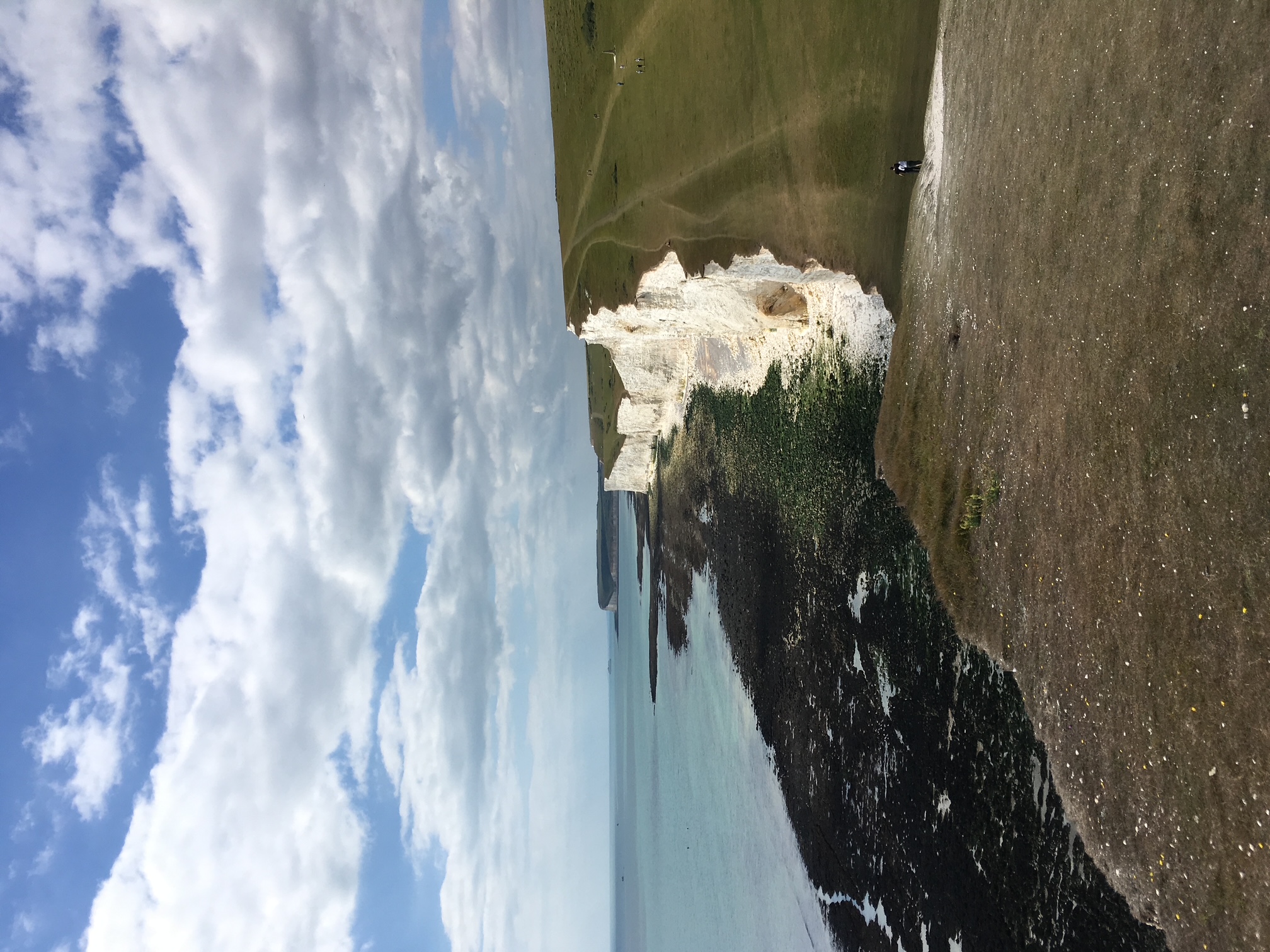
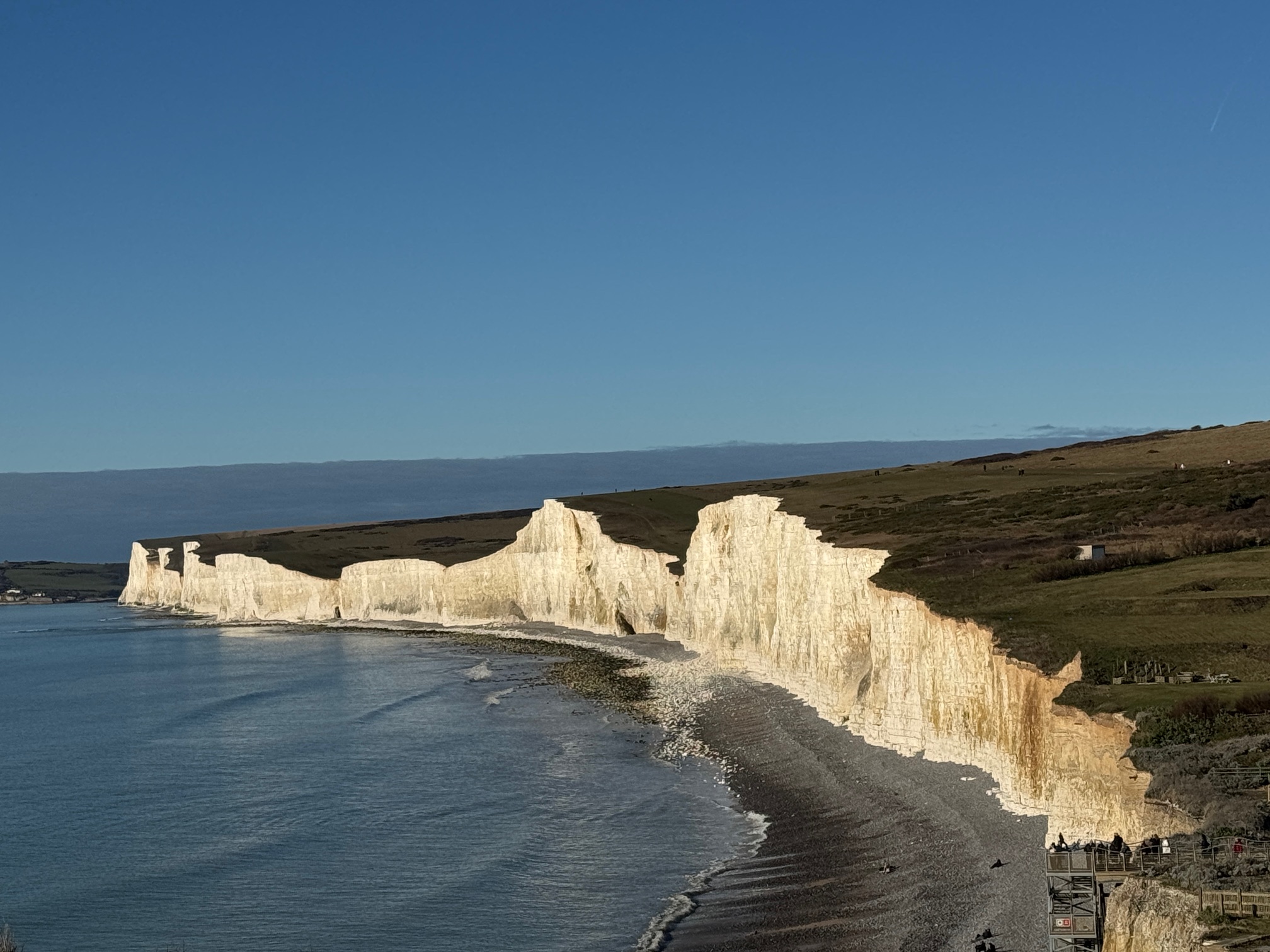
Chalk cliffs and open downland at Seven Sisters, East Sussex — perfect for stargazing
Night Sky

Stargazing &
Dark Sky Nights

One of England's darkest coastal skies, right above the chalk cliffs. Telescope evenings led by astronomers. Saturn's rings. The Milky Way. Jupiter's moons. No experience needed.

Night Sky

One of England's
Darkest Coastal Skies

The South Downs is designated a Dark Sky Discovery Site — a recognition of its low light pollution levels compared to the rest of South East England. The Seven Sisters clifftop, with its open 360-degree horizon and absence of buildings, provides one of the finest stargazing positions on the English coast. On a clear winter night, the Milky Way is visible to the naked eye from the cliff-top path above Cuckmere Haven.

A guided stargazing session brings this sky to life. Your astronomer sets up high-quality telescopes at the observing location and guides the group through the night sky — from naked-eye constellations to detailed views of planetary rings, lunar craters, and galaxies millions of light years away. No experience required; guides explain everything from first principles.

Sessions run year-round but peak between November and February, when Sussex nights provide 12–14 hours of darkness and the winter constellations (Orion, the Pleiades, Gemini) are prominent in the southern sky. Summer sessions align with the Perseid meteor shower in August — spectacular from the clifftop.

Check Availability & Book

What's Included

A Night Above
the Cliffs

Telescopes, expert guidance, and one of England's finest dark-sky locations.

High-Quality Telescopes

Guide-operated telescopes set up at the observing location. Participants view planets, craters, galaxies and clusters in turn. No equipment needed.

Constellation Tour

A naked-eye guided tour of the night sky — seasonal constellations, mythology, and navigation using the stars, starting with total beginners in mind.

Planetary Viewing

Saturn's rings and cloud bands, Jupiter's four Galilean moons, Mars's polar ice caps when visible — all through high-magnification eyepieces.

Dark Sky Location

The Seven Sisters clifftop is one of the South East's best dark sky sites — designated South Downs Dark Sky Discovery Site, with minimal light pollution on three horizons.

Qualified Astronomer

Guides with professional astronomy training who can answer any question about what you're seeing — from planetary formation to deep-sky objects and the scale of the universe.

Weather Guarantee

If cloud cover prevents observing, most operators cancel and offer a full refund or free rebooking. No risk on the booking — you only attend when the sky cooperates.

The Experience

Under the Dark
Sussex Sky

Arriving After Dark

Stargazing tours begin after sunset — typically 8pm in summer and 6pm in winter. The group meets at Exceat or Birling Gap car park, where the guide conducts a brief introduction and allows eyes to adapt to the dark before moving to the observing location. Red-light torches are used to preserve night vision; ordinary white lights destroy the eye's dark adaptation in seconds and are not permitted during the session.

What the Telescopes Reveal

The first view through a quality telescope is consistently described as one of the most affecting experiences visitors have on the Seven Sisters. Saturn's rings — tilted at an angle that makes them unmistakable — appear in crisp detail at 150x magnification. Jupiter's four Galilean moons (discovered by Galileo in 1610) are visible as dots in a row beside the planet's disc, their positions changing measurably over hours. The Moon's craters, mountain ranges, and lava plains are revealed in extraordinary geological detail.

The Perseid Meteor Shower

Each year in mid-August, Earth passes through the debris trail of Comet Swift-Tuttle, producing the Perseid meteor shower — up to 100 shooting stars per hour at peak. The Seven Sisters clifftop, with its unobstructed sky and southerly horizon over the Channel, is one of the finest Perseid viewing locations in Southern England. Perseid tours are particularly popular and book up weeks ahead.

The night sky looks different from above the chalk. Come and see why.

Book on GetYourGuide
Book Now

Available Dates & Prices

Live availability. Instant booking. Weather guarantee on most options.

View All Options

Common Questions

Stargazing FAQ

Why is stargazing so good at Seven Sisters?
The South Downs is a Dark Sky Discovery Site with very low light pollution compared to the rest of South East England. The open clifftop provides a 360-degree sky view with no buildings or trees. On clear winter nights, the Milky Way is visible to the naked eye.
What will I see on the tour?
Saturn's rings, Jupiter's moons, the Moon's craters, star clusters, and galaxies through high-magnification telescopes. Naked-eye: seasonal constellations, the Milky Way in winter, and the Perseid meteor shower in August.
What's the best time of year?
November to February: longest nights and winter constellations. The Perseid meteor shower (August 12–13) is spectacular. New moon phases each month provide the darkest skies. Check the Met Office forecast before your visit.
Do I need astronomy experience?
None at all. Tours are designed for complete beginners. Guides explain everything from naked-eye constellations to telescope operation. Children from age 8 engage well with the sessions.
What if it's cloudy?
Most operators cancel if cloud cover prevents observing and offer a full refund or free rebooking. Always check the weather policy on your chosen operator's listing before booking.
Are telescopes provided?
Yes. The guide sets up high-quality telescopes at the observing location. You do not need to bring any equipment, though binoculars enhance the naked-eye sections of the tour significantly.

The Milky Way above
England's finest chalk cliffs.

One of England's darkest coastal skies. Telescopes provided. Weather guarantee on most tours. Book now.