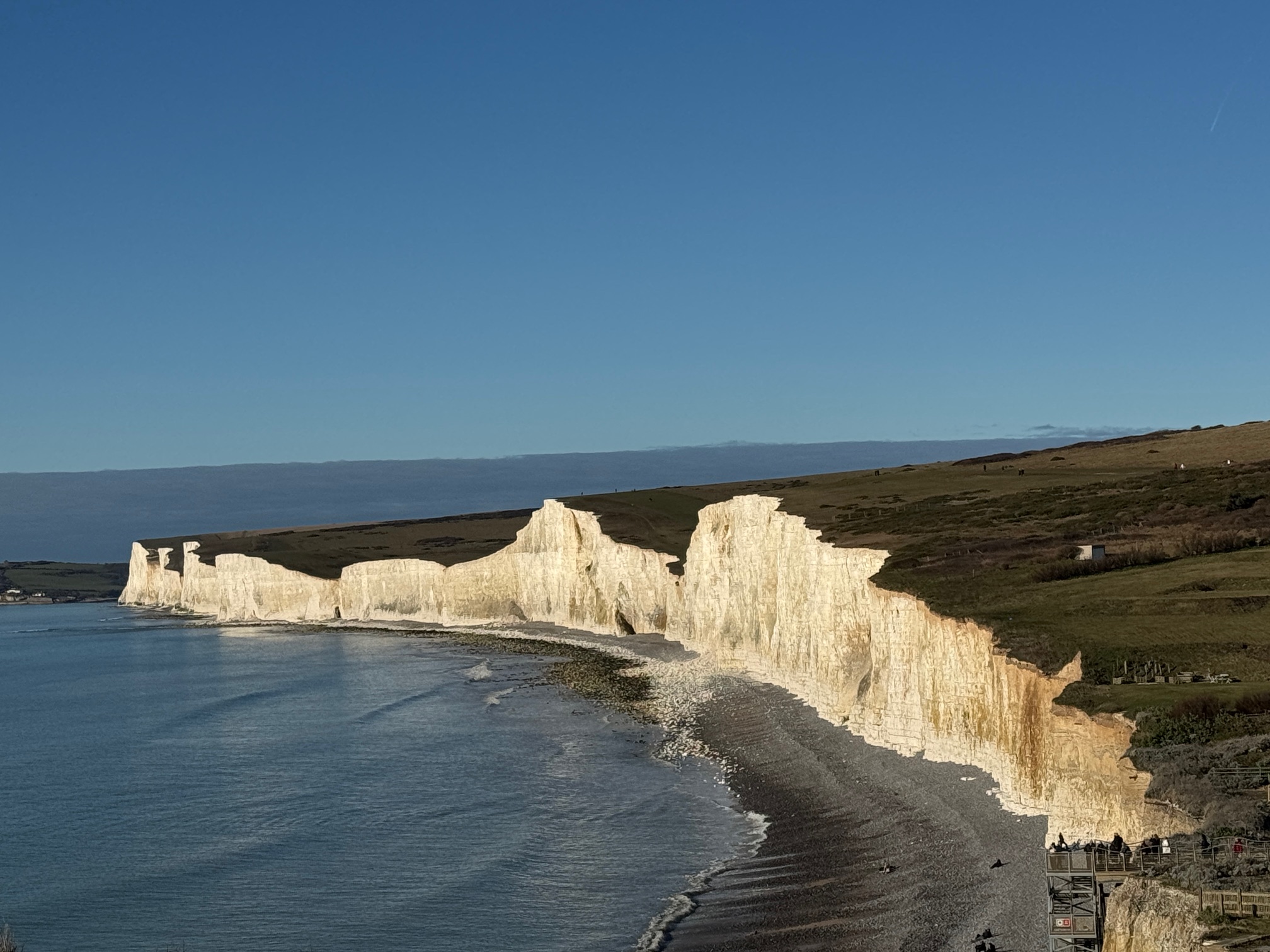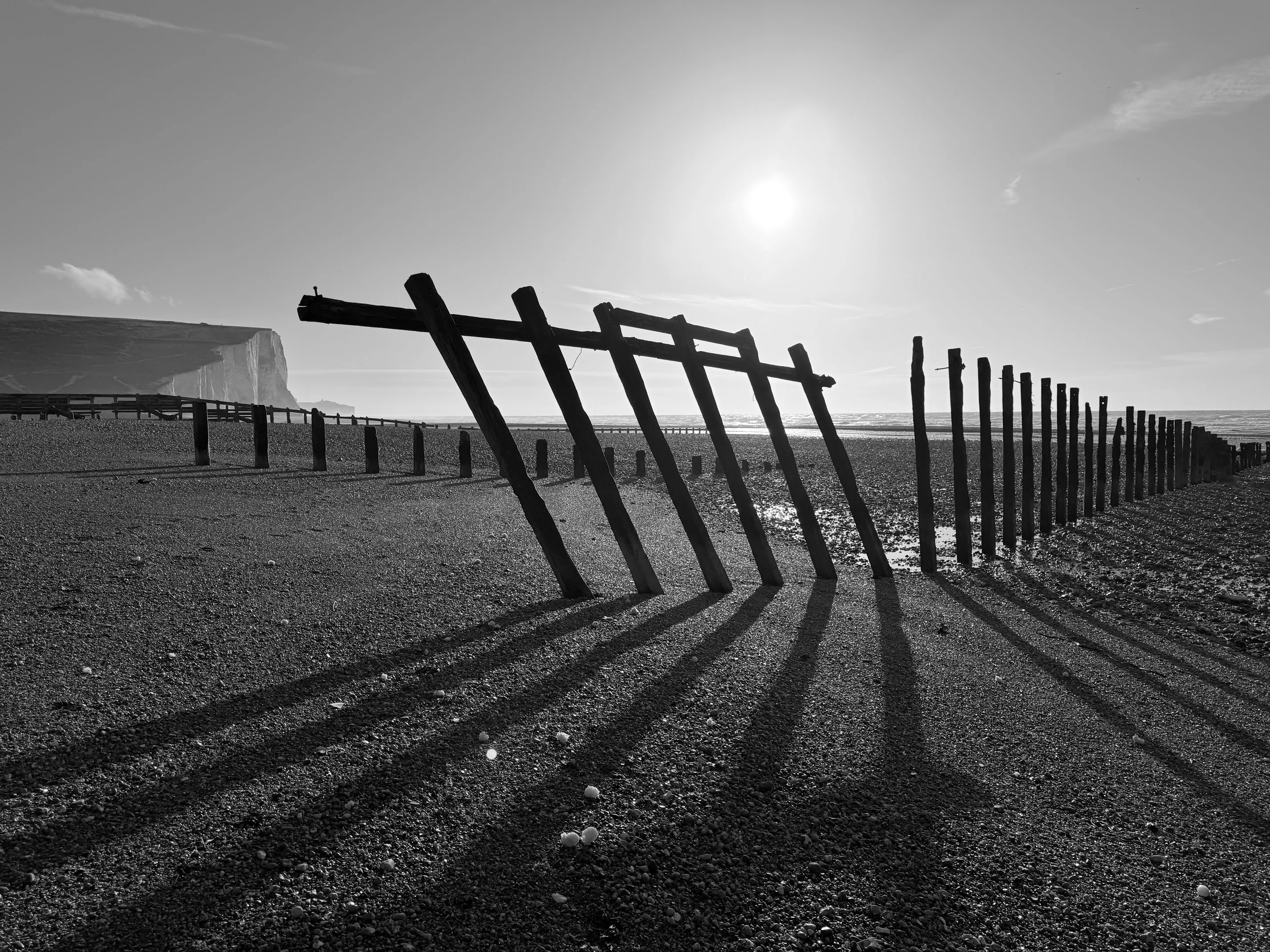
Seven Sisters
Safety Guide
Everything you need to know before you walk — cliff rules, fog, tides, solo safety and emergency contacts
Everything you need to know before you walk — cliff rules, fog, tides, solo safety and emergency contacts
Last updated: October 2026 · Written by Alen Marrick
Read this before you walk. The risks at Seven Sisters are specific and manageable — but only if you know what they are.
Quick Answer — Is Seven Sisters Safe?
Seven Sisters is safe for prepared walkers. The cliff-top path is well-maintained and used by hundreds of thousands of visitors annually. The risks are specific: stay 5 metres from the chalk cliff edge (it erodes and collapses without warning), check tide times before going to the beach (it disappears at high tide), carry water and a mid-layer (no shade for 6km and fog can arrive in under two minutes). In any cliff or beach emergency, call 999 and ask for the Coastguard.
Cliff / beach / sea emergency
999 → Coastguard
Medical emergency on trail
999 → Ambulance
Nearest A&E
Eastbourne DGH
Kings Drive, BN21 2UD — 20 min from Birling Gap
Each guide focuses on one specific risk — what it is, why it matters here specifically, and exactly what to do.
Why the 5-metre rule exists, what chalk erosion actually means, and why the edge is further inland than it appears from above.
Read the guide →Sea fret arrives in under two minutes. A decision guide for what each visibility level means and exactly what to do at each one.
Read the guide →Who to call, what to say, mobile signal zones, nearest A&E, what3words, and step-by-step instructions for cliff, beach and medical emergencies.
Read the guide →Seven Sisters is walkable solo — thousands do it each year. The specific risks involved, why they are manageable, and the one thing that is not optional.
Read the guide →The beach disappears at high tide. The safe access window, how fast it comes in, what to do if you get stranded, and how to check times before you visit.
Read the guide →Zero shade for 6km, chalk that reflects UV upward, and a café that runs out of water by 1pm on hot days. How to manage heat before it manages you.
Read the guide →Inland apps understate ridge wind by 8–15 mph. How to read coastal forecasts correctly, monthly risk calendar, and go/no-go thresholds by wind speed and visibility.
Read the guide →Dogs are welcome but cliff edges and excited dogs are a dangerous combination. Lead rules, seasonal restrictions, beach access, water points, and where dogs cannot go.
Read the guide →Why approaching the cliff edge for photographs is the most common cause of cliff incidents, and why the best shots do not require it. Safe viewpoints and what the edge does not give you.
Read the guide →Seven Sisters in winter is genuinely beautiful — and genuinely more demanding. Storm risk, icy chalk paths, short daylight, and exactly when it is and is not appropriate to walk the ridge.
Read the guide →The science behind why chalk cliffs collapse — undercutting, freeze-thaw, invisible fractures, rainfall effects, and why collapses cannot be predicted. Essential reading.
Read the guide →What to wear, what to bring, and how fit you need to be. The complete kit list for Seven Sisters — from footwear to emergency basics — with honest fitness expectations for each route length.
Read the guide →Stay 5+ metres from the cliff edge at all times
Chalk erodes 30–50cm per year and collapses in sudden sections without warning. The 5-metre rule is a minimum, not a target. See the cliff edge guide for why, and read our detailed breakdown of cliff collapse risk explained.
Check tide times before visiting the beach
The beach disappears at high tide. Safe window: 2 hours before to 2 hours after low tide. Search "Birling Gap tide times". See the tide danger guide.
Download an offline map and carry a mid-layer
Sea fog can arrive in under 2 minutes and drop temperatures 6°C. Mobile signal is patchy on the ridge. See the fog safety guide.
Bring 1.5L water and SPF 50 per person
No shade for 6km. Chalk reflects UV upward. The café sells out of water by 1pm on hot days. See the heat and sun guide.
Tell someone your route and return time (especially solo walkers)
"Walking Birling Gap to Cuckmere and back, home by 2pm." That is the whole message. See the solo walking guide.
Emergency: 999 → Coastguard
Cliff and beach emergencies: Coastguard. Medical on trail: Ambulance. Nearest A&E: Eastbourne DGH, BN21 2UD. See the emergency guide.
Check conditions on CoastMetric before leaving
Coastal wind speeds are 10+ mph higher than inland forecasts suggest. Standard weather apps routinely underestimate ridge conditions. See the weather & conditions guide.
The safety guidance on this page comes from walking this coast first-hand, cross-checked against the official bodies responsible for it. Where you need the authoritative source, go direct:
The 999 → Coastguard service for any cliff, beach or sea emergency along this coast.
National guidance on tides, being cut off, and what to do if you are stranded by an incoming tide.
The landowner's own cliff-edge and access safety advice, plus the Shifting Shores record of active cliff retreat here.
Chalk geology and coastal landslide science — why the Seaford Chalk erodes and collapses without warning.
The statutory protected-site designation covering the cliffs and Cuckmere.
Official tide predictions for Newhaven and Eastbourne — the nearest tidal ports to Cuckmere Haven and Birling Gap.
The park operator — visitor information, parking at Exceat, and the accessible Cuckmere valley trail.
SevenSisters.co.uk is an independent visitor guide, not affiliated with the National Trust, the South Downs National Park Authority, or Natural England. Safety content last reviewed 26 October 2026.
Cite or link to this guide
Running a visitor-information, tourism or walking page? You're welcome to point readers here for Seven Sisters safety — the more walkers who arrive prepared, the better.
Seven Sisters Safety Guide — SevenSisters.co.uk — https://sevensisters.co.uk/safety
Most trouble on these cliffs starts with choosing the wrong walk for the day, the weather or the group. Compare the four routes — distance, ascent and difficulty — before you set out.
Practical, first-hand guidance on tides, weather, cliff edges and staying safe on the ridge.
A few more corners of the Seven Sisters worth your time.
 When to visit
Light, crowds and weather through the seasons — when to time your trip.
Explore
Places
When to visit
Light, crowds and weather through the seasons — when to time your trip.
Explore
Places
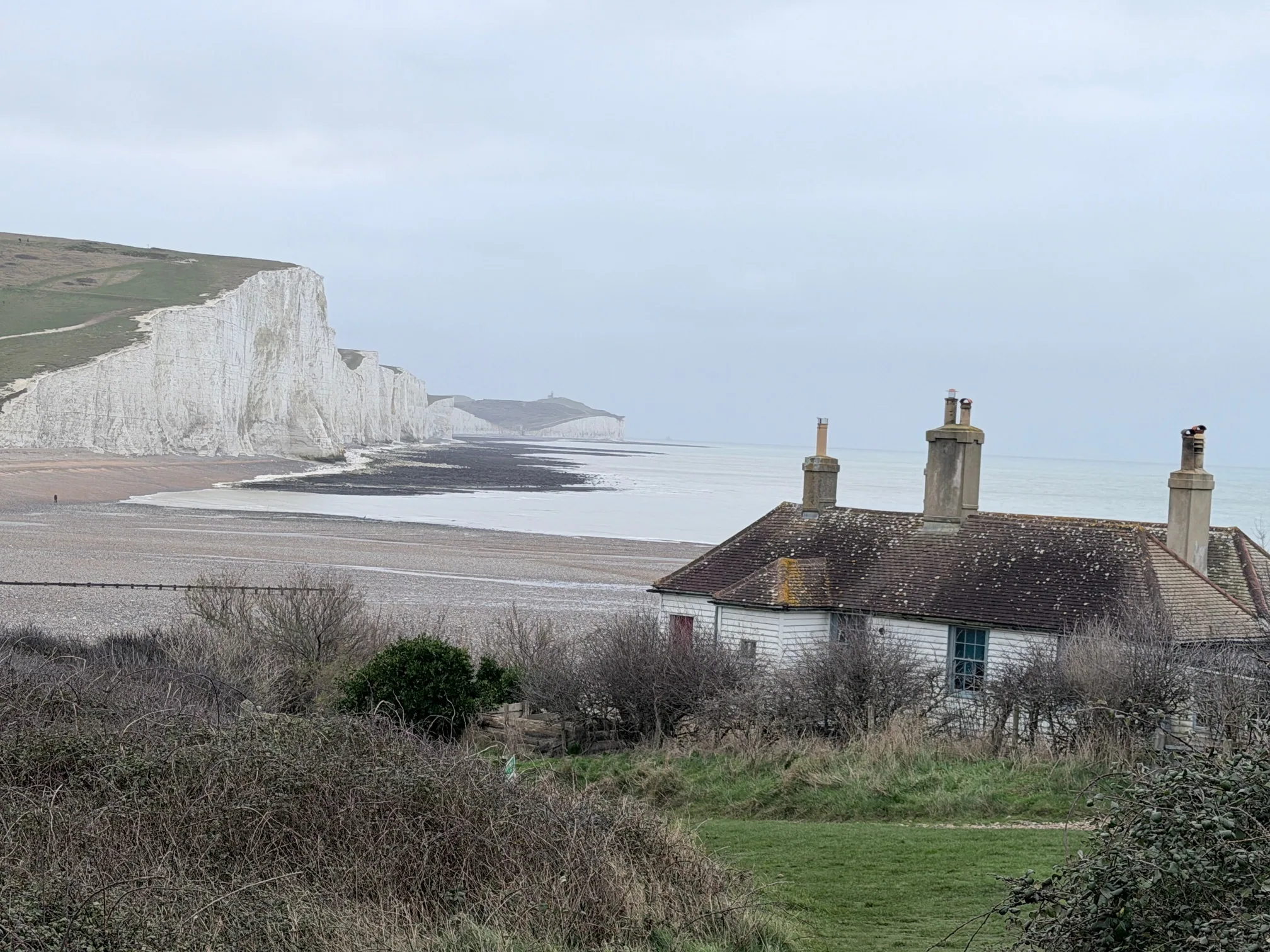 Eastbourne
The classic resort town at the eastern end of the coast path.
Explore
Walks
Eastbourne
The classic resort town at the eastern end of the coast path.
Explore
Walks
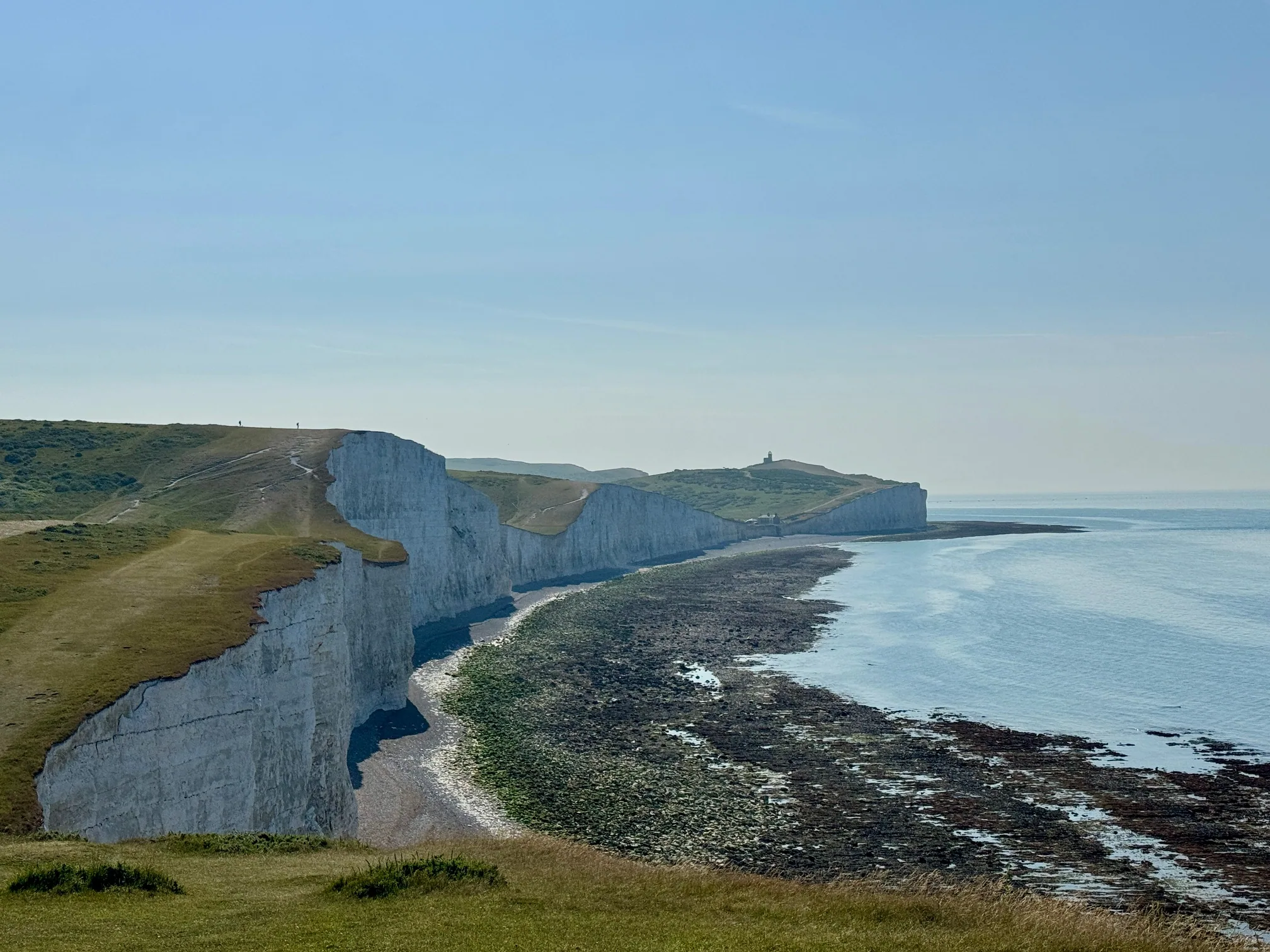 Walking routes
From the easy riverside stroll to the full clifftop traverse — pick your walk.
Explore
Places
Walking routes
From the easy riverside stroll to the full clifftop traverse — pick your walk.
Explore
Places
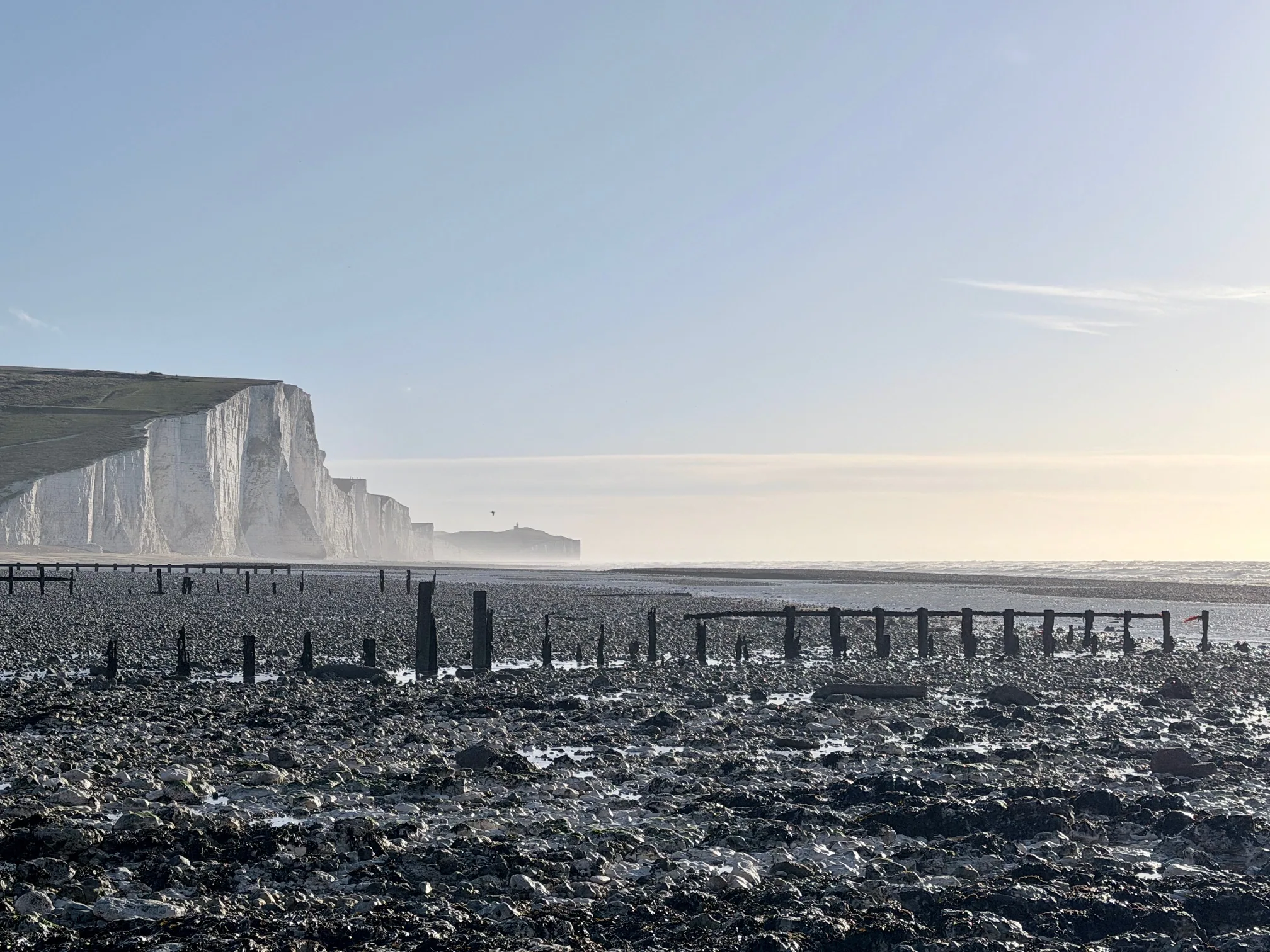 Birling Gap
Clifftop cafe, beach steps and the coastguard cottages at the eastern end.
Explore
Guide
Birling Gap
Clifftop cafe, beach steps and the coastguard cottages at the eastern end.
Explore
Guide
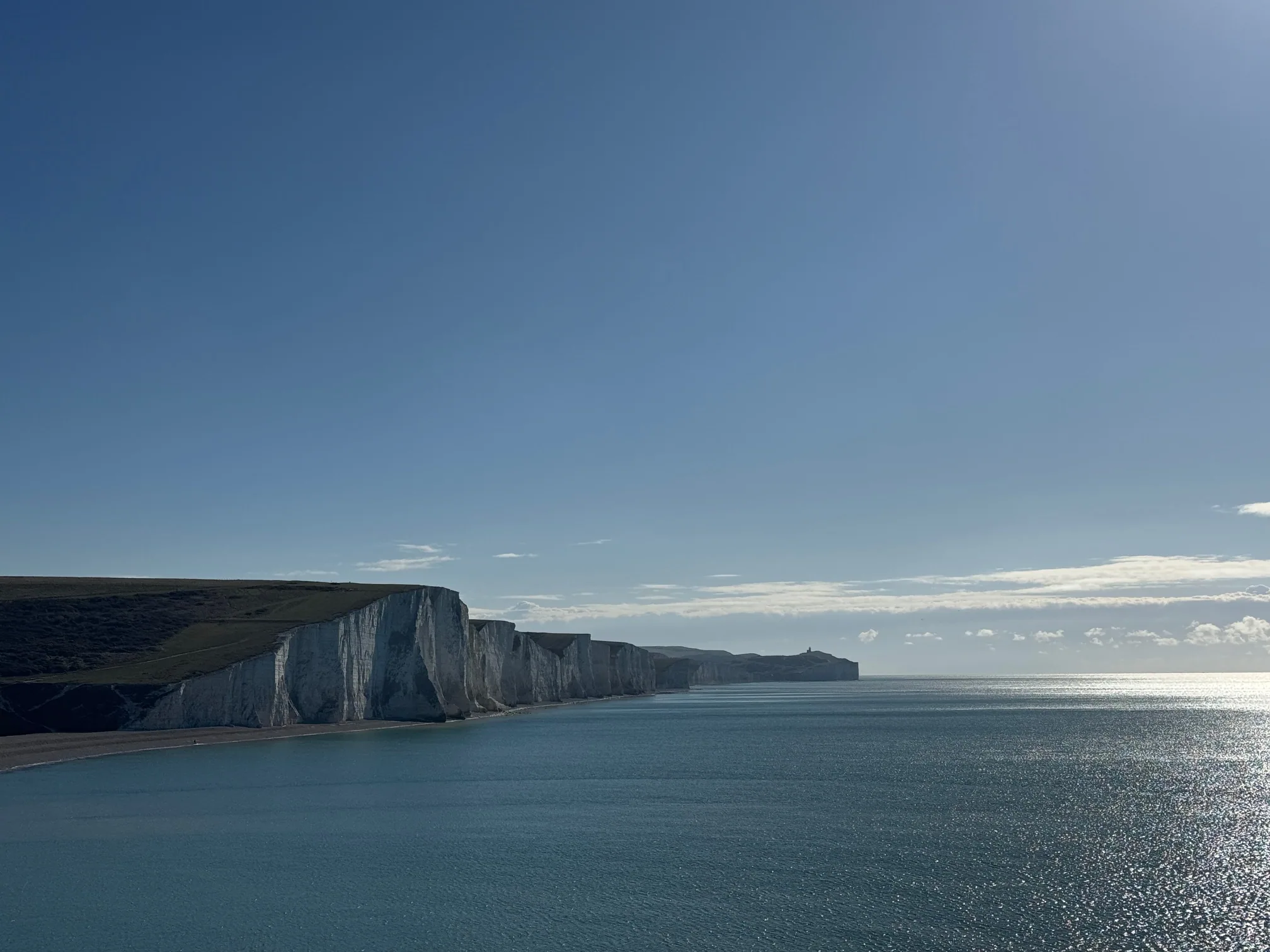 The complete guide
The complete first-hand guide to walking the Seven Sisters, start to finish.
Explore
Travel
The complete guide
The complete first-hand guide to walking the Seven Sisters, start to finish.
Explore
Travel
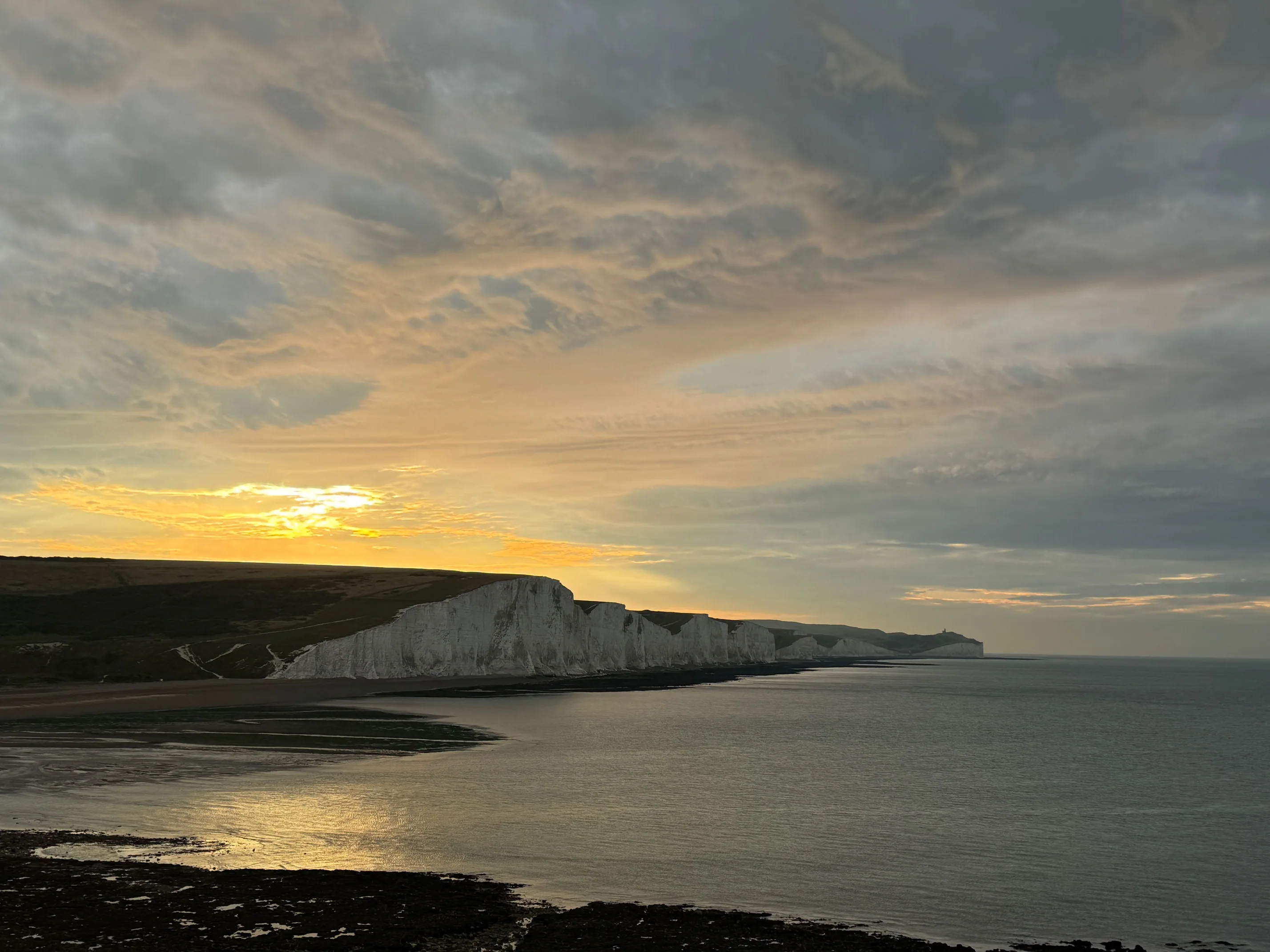 Getting there
By car, train or bus: how to reach Exceat and the cliffs from anywhere.
Explore
Getting there
By car, train or bus: how to reach Exceat and the cliffs from anywhere.
Explore
£4.99 · 24-page PDF · Instant download
The complete 24-page companion built from first-hand walks — every cliff, all four graded routes, tide windows and a parking strategy. Designed to work offline, right on the cliff top.
Just want the basics? Download the free 2-page walk guide
Stay up to date with seasonal guides, crowd forecasts, and local tips — direct to your inbox.
No spam. Only coastal inspiration and timing tips — unsubscribe any time.