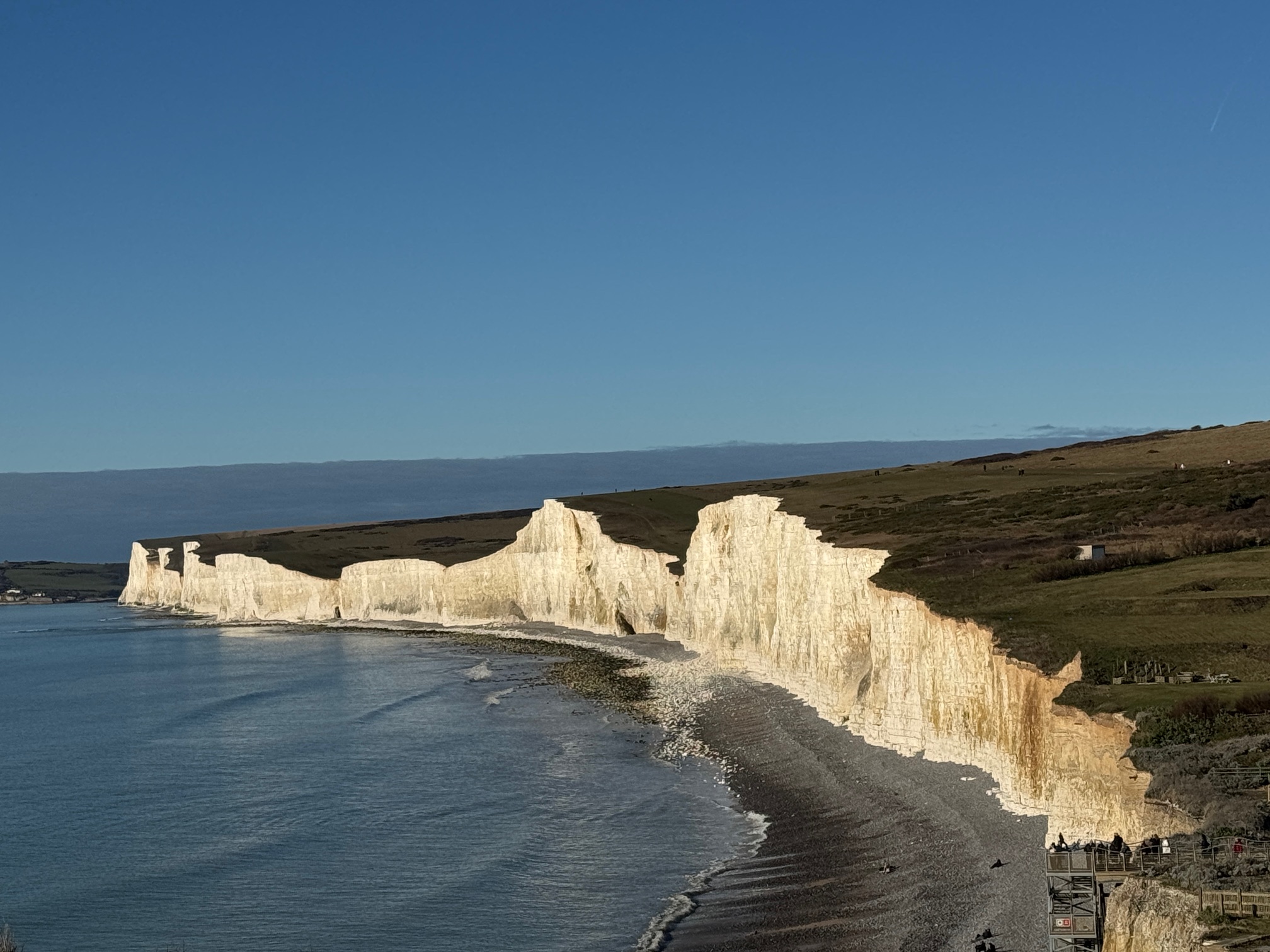
Seven Sisters
Cuckmere Haven
Iconic river meanders and the ultimate Seven Sisters viewpoint
Iconic river meanders and the ultimate Seven Sisters viewpoint
Last updated: October 2026 · Written by Alen Marrick
We may earn a small commission on bookings made through this link, at no extra cost to you. More info.
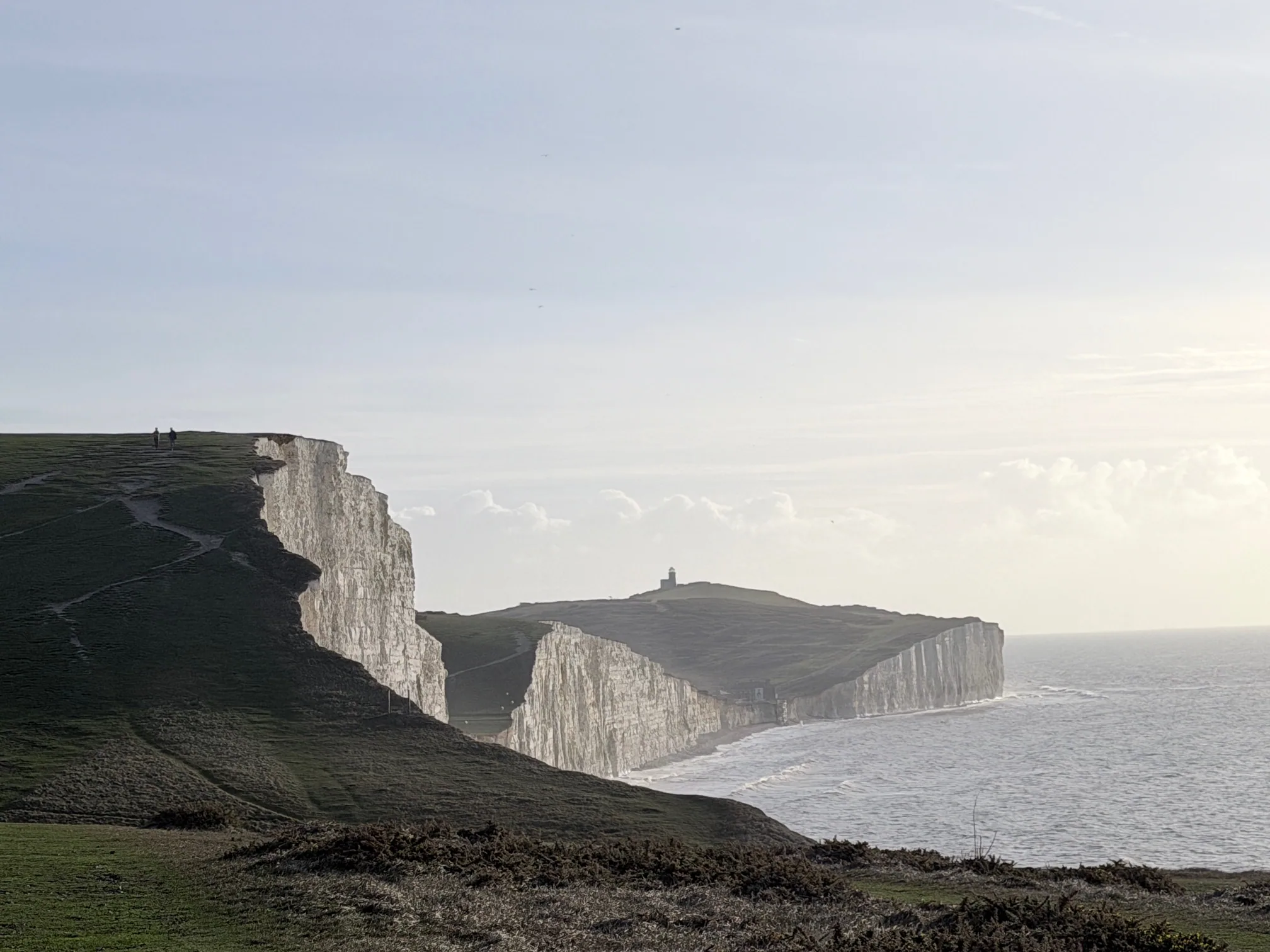
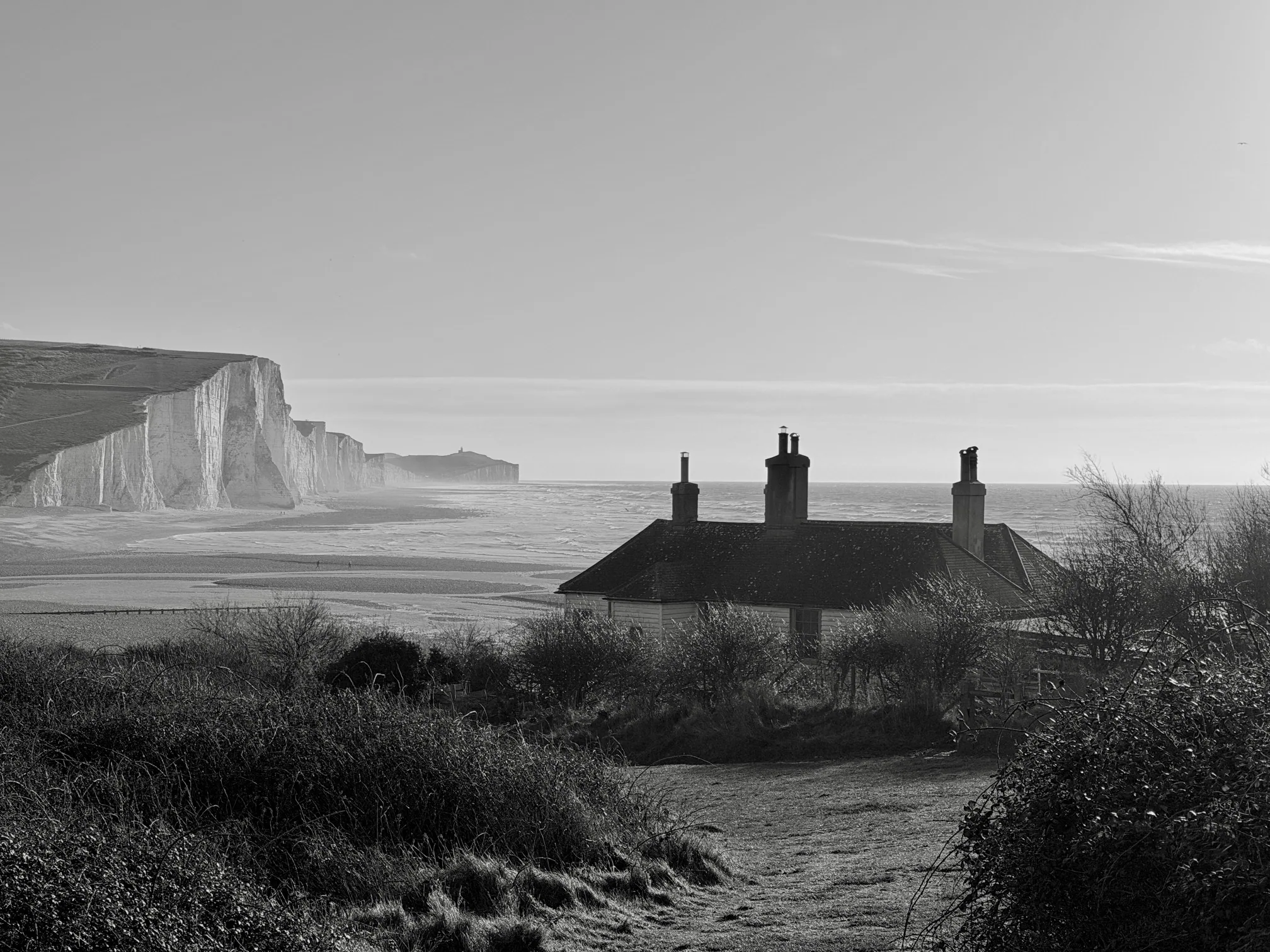
Cuckmere Haven is where the Cuckmere River meets the English Channel, creating Britain's most photographed coastal scene. You've definitely seen this view before—those perfect oxbow river meanders curving through the valley with all seven chalk sisters marching off to the right. It's the shot that graces every Seven Sisters postcard, travel guide, and Instagram feed.
The beach itself is shingle (not sand), backed by the river estuary and those iconic meanders. It's genuinely spectacular, especially late afternoon when the sun hits the chalk at an angle and creates dramatic shadows across the cliff faces. This is also the western endpoint for the famous Seven Sisters ridge walk, and the starting point for walks to Seaford Head.
Unlike Birling Gap, there are no facilities here—no café, no toilets, no shops. Just nature. Park at Exceat (paid parking, ~£7/day — spaces go fast) and walk 1.5km down through the valley. The path is mostly flat and takes about 20 minutes, ending at one of England's most beautiful beaches.
We may earn a small commission on bookings made through this link, at no extra cost to you. More info.
Those perfect river curves that make Cuckmere Haven so photogenic aren't natural—or at least, they're not the river's current course. The Cuckmere River used to meander wildly across the valley floor, creating those beautiful oxbow loops you see in photos. Then in the 1960s, farmers straightened the river to drain the land faster and create more usable agricultural space.
The old meanders are silting up year by year because they're no longer part of the active river system. Without flowing water to scour them out, they're gradually filling with sediment and vegetation.
In another 20-30 years, they might be barely visible. Photograph them while you can—you're capturing a landscape that's slowly vanishing.
The Cuckmere meanders are one of Britain's best examples of oxbow lake formation, making this a popular field trip destination for geography students. The process typically takes hundreds of years, but here you can see seven different stages of meander development all in one valley.
The wider meanders are older (formed when the river had more power), while the tighter curves are younger. The most recent meander, nearest to the sea, was cut off in the 1950s—within living memory.
This is Britain's most photographed coastal view, and for good reason. The composition practically creates itself—meanders in the foreground leading your eye to the seven white sisters marching off to the horizon. But there's technique involved in capturing it properly.
Beach Level (Classic Shot)
Stand on shingle beach with meanders on your left, cliffs on your right. This is the postcard angle. Works any time of day.
Viewpoint Path (Elevated)
Halfway down path from Exceat, small viewpoint looks down on meanders. Shows the curves better but loses some drama.
First Sister Clifftop
Climb the first sister (30-min walk from beach) for aerial perspective of entire scene. Stunning but requires fitness.
River Mouth
Photograph from the west bank near the river mouth at low tide for the classic meanders-and-cliffs composition. Do not attempt to cross the river at the beach — it is tidal and the current unpredictable. To reach the east bank, walk inland and cross at Exceat Bridge (A259). Check tide times.
Golden Hour (Optimal)
Midday (Avoid)
Harsh overhead light washes out chalk detail and creates flat lighting on meanders. Go for walk instead, photograph later.
Overcast (Surprisingly Good)
Even light perfect for detail shots. Colors more saturated. Reflections in meanders work beautifully. Don't skip photography on cloudy days.
Spring (April-May):
Cliffs bright green, wildflowers on clifftop, meanders full of water. Best color contrast.
Summer (June-Aug):
Longest days for golden hour shots, but cliffs turn brownish. Meanders may be partially dried.
Autumn (Sept-Oct):
Golden light angle perfect, fewer crowds. Best photography season overall.
Winter (Nov-Feb):
Dramatic storms, moody skies, meanders full. Empty beach but need warm clothes.
Swimming at Cuckmere Haven is possible but comes with serious caveats. The water is cold (12-16°C even in summer), there are strong currents near the river mouth, and there are absolutely no lifeguards. But if you're an experienced cold-water swimmer or wearing a wetsuit, it's one of the most spectacular swimming spots in Sussex.
Kite Flying
Perfect location—steady sea breeze, wide open space, no power lines. Popular on windy days.
Rock Pooling
East end of beach at low tide. Crabs, shrimp, small fish, anemones. Best 2 hours either side of low tide.
Picnicking
Shingle beach not ideal for sitting—bring cushions or camp chairs. Best spots near dunes for wind protection.
Dog Walking
Dogs welcome year-round. Rinse in river before heading back (saltwater causes matting). Dog safety guide.
This is an unpatrolled beach. No lifeguards, no rescue equipment on site. Emergency response time 20+ minutes. If someone gets in trouble, call 999 immediately and ask for Coastguard. Have emergency services app downloaded—mobile signal is patchy. Read full safety guide →
The famous Seven Sisters ridge walk. From beach, climb the first sister (Haven Brow, 20 minutes steep ascent), then traverse all seven peaks ending at Birling Gap. Spectacular but demanding—constant up and down totaling around 280m of elevation gain. Most people walk east-to-west to end here at the iconic viewpoint.
One-way route. Either arrange pickup, take bus 13X back to Exceat (seasonal — check timetable), or walk the valley path back (adds 1.5km, much easier). Most people do Birling Gap to Cuckmere Haven direction to finish with the best view.
Walk west along beach toward Seaford (3km), climb Seaford Head, return via clifftop path with views back to Seven Sisters. Less crowded than the ridge walk, still spectacular views. Can extend into Seaford town for lunch/supplies.
Beach section only passable at low-mid tide. Check tide times. At high tide, take valley path to Seaford instead (adds 1km).
Perfect for families or those wanting the views without serious climbing. Walk down from Exceat to beach, explore meanders and river mouth, climb to viewpoint path (gentle slope), return via valley. Mostly flat with one moderate climb. Great for kids.
Suitable for children 5+, buggies can manage valley path (not beach). Bring picnic—lovely spots by meanders. Allow extra time for paddling and exploring.
Climb just the first sister (Haven Brow) from beach for incredible aerial view of entire scene—meanders, beach, valley, and six remaining sisters. Steep 20-minute ascent (100m elevation), then return same way. Gets you the clifftop experience without committing to full ridge walk.
Short but steep. Equivalent to climbing 25 floors of stairs. Take your time, rest halfway. Not suitable for young children or limited mobility. Worth it for the view though.
Simple flat walk from Exceat car park down valley path to beach. Follows old Cuckmere river, meanders visible on left. Entirely flat, suitable for wheelchairs/buggies on dry days. Perfect for those who just want to see the view without any climbing.
Wheelchair accessible to beach on firm days. Can be muddy after rain (2-3 days). Beach itself is shingle (difficult for wheels). Accessible toilets at Exceat visitor centre.
Cuckmere Haven has NO toilets, cafés, or shops. Bring everything you need. Nearest facilities at Exceat (1.5km walk back up valley). Use toilets before leaving visitor centre.
Park at Exceat (~£7/day, limited spaces, fills weekends). Walk 1.5km (20 mins) down valley path to beach. Path mostly flat, can be muddy after rain. No parking at beach itself.
Variable signal—EE best, Three worst. Download maps before arriving. Emergency calls (999) usually work. Nearest reliable signal at Exceat car park.
Dogs welcome year-round. Keep on lead March-July near nesting birds. Bring water—none available. Rinse in river after swimming (saltwater). Dog safety guide.
Check tide times before visiting. High tide reduces beach significantly. Low tide best for rock pooling, photography, and beach walks. Tide times change daily.
Beach very exposed—strong sea breezes always. Bring windbreaker even on warm days. No shade anywhere. Sunscreen essential in summer. Check weather guide.
Water (1.5L/person), food, sunscreen, windproof jacket, good footwear (shingle is hard on feet), phone power bank, tide times saved offline. Bag for rubbish—carry everything out.
Emergency: Call 999, ask for Coastguard. Location: "Cuckmere Haven beach, BN25 4AB". Nearest A&E: Eastbourne DGH (10km). Full safety guide.
The closest beds are in Seaford (3km) and Alfriston (5km). Eastbourne (12km) and Brighton (28km) are realistic for car-based visitors. Compare live availability and prices below.
Pick your dates and compare the same search on two of the biggest booking sites. Prices, free-cancellation filters and pay-at-the-property options differ between them, so it is worth checking both before you book.
Seaford (3.8 km along the cliff path) and Alfriston are the nearest beds.
Stays are booked on Hotels.com or Expedia. We earn a small commission on bookings made through these links at no extra cost to you, and nothing is sent to either site until you click. Affiliate disclosure.
We earn a small commission on bookings made through this widget at no extra cost to you. More info.
Paid parking (~£7/day), visitor centre, café, and bike hire. Start here.
☕Eastern endpoint with café, toilets, and beach steps
🥾All Seven Sisters walks with maps and timing
📅Seasonal guide and tide times for planning
⚠️Essential cliff and swimming safety information
🏘️Nearby town with shops, cafés, and accommodation
A few more corners of the Seven Sisters worth your time.
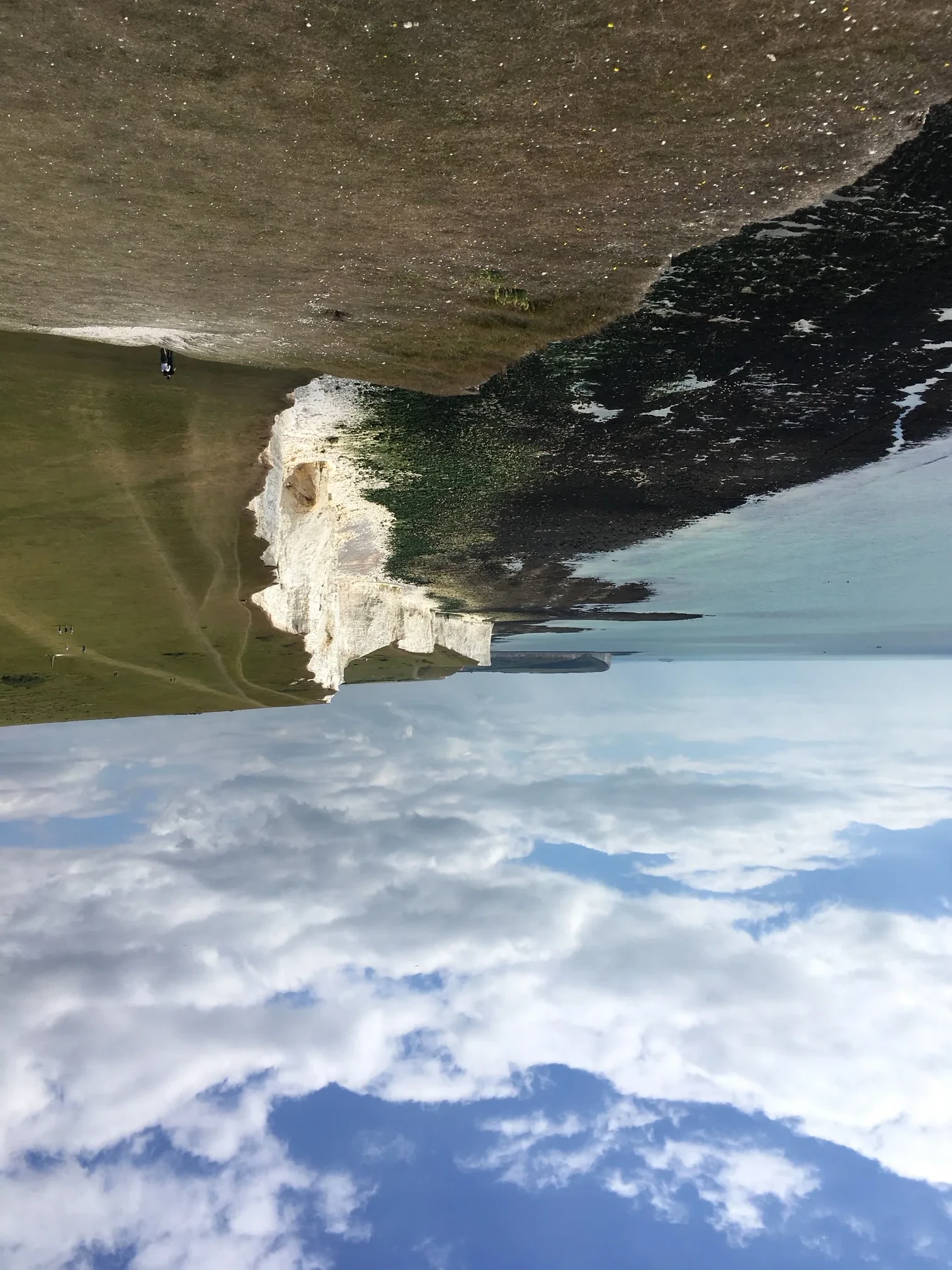 From London
A door-to-door day trip from the capital, by train or car.
Explore
Plan
From London
A door-to-door day trip from the capital, by train or car.
Explore
Plan
 When to visit
Light, crowds and weather through the seasons — when to time your trip.
Explore
Walks
When to visit
Light, crowds and weather through the seasons — when to time your trip.
Explore
Walks
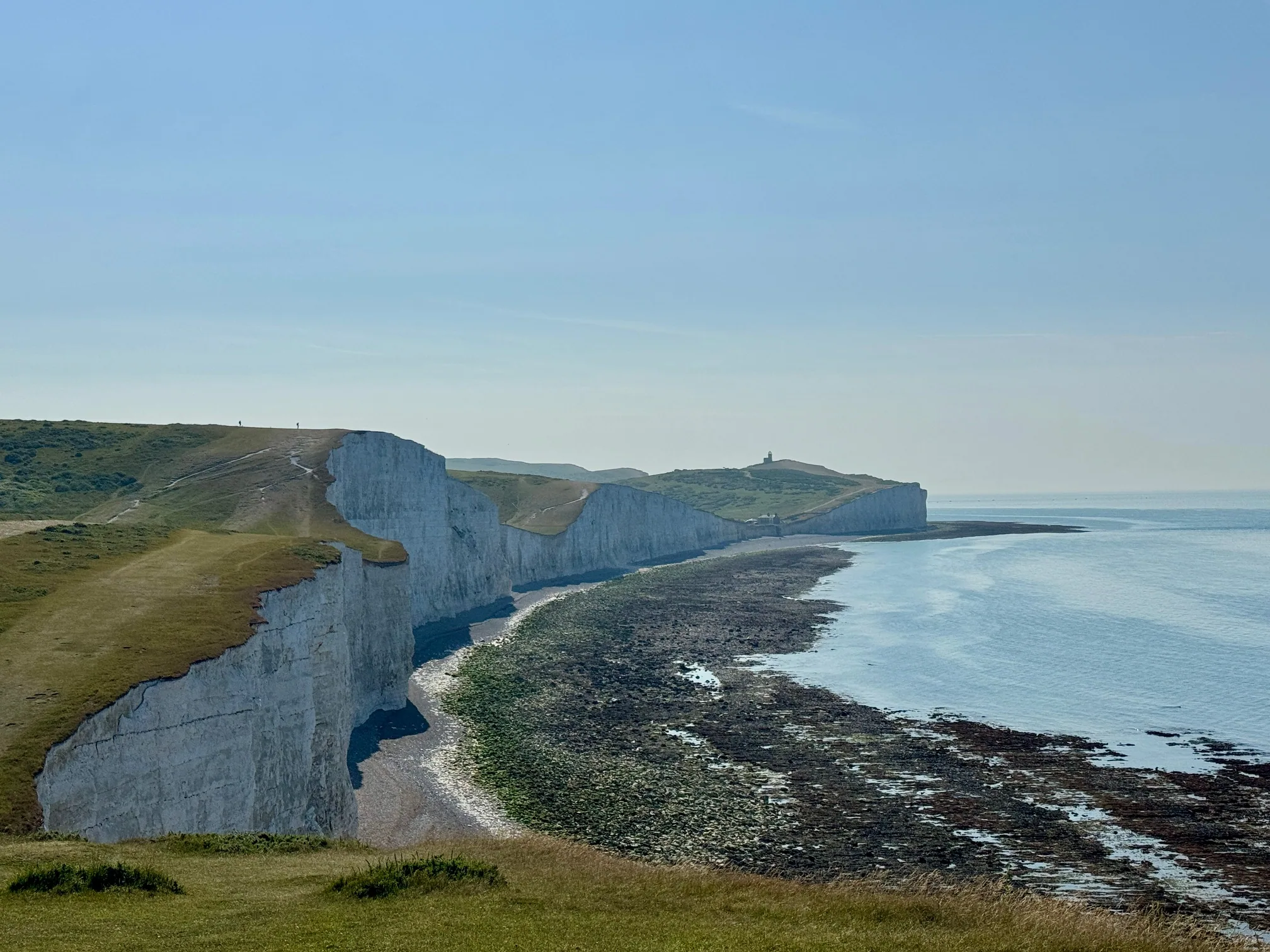 Walking routes
From the easy riverside stroll to the full clifftop traverse — pick your walk.
Explore
Stay
Walking routes
From the easy riverside stroll to the full clifftop traverse — pick your walk.
Explore
Stay
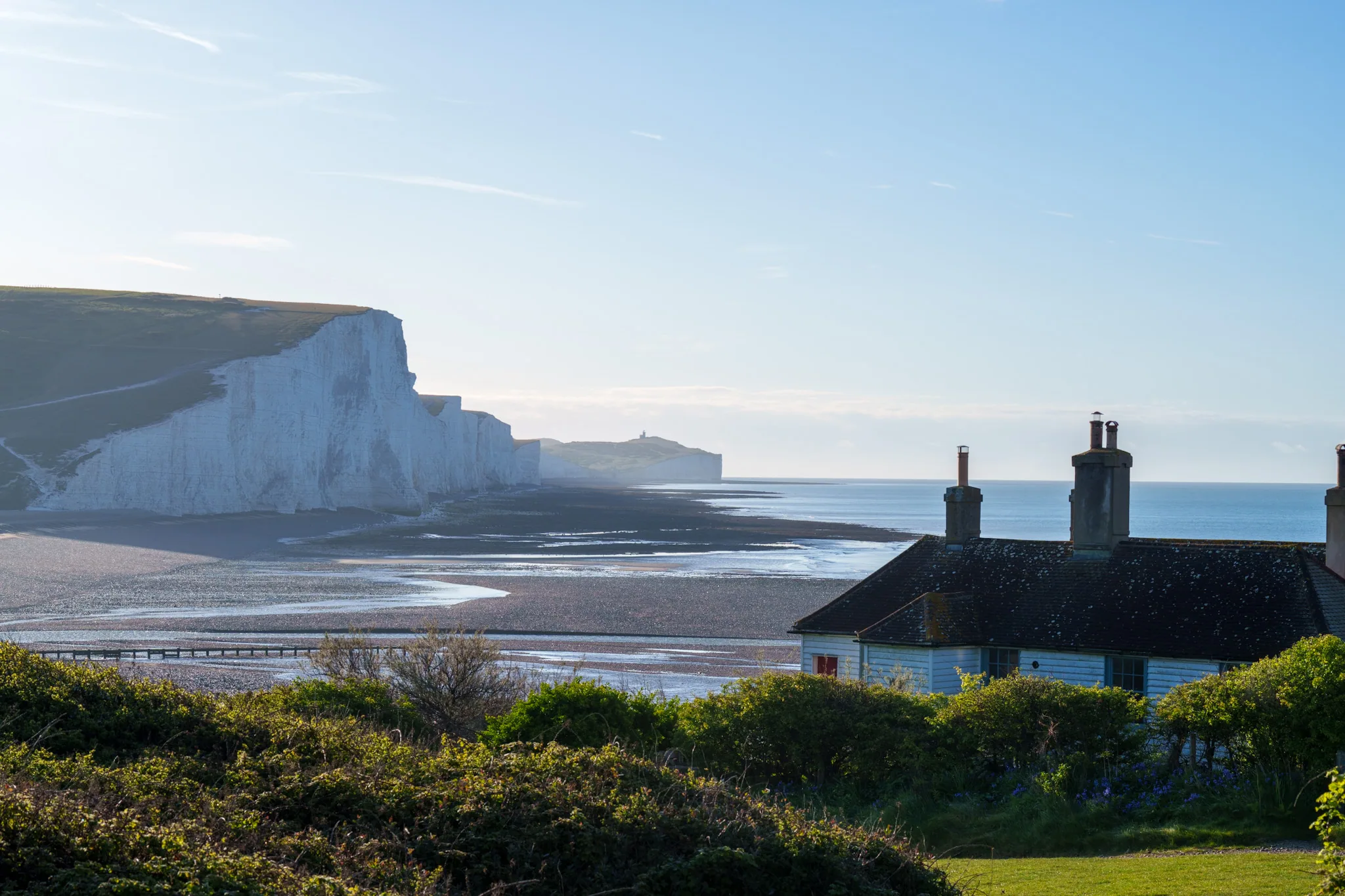 Where to stay
Cottages, inns and campsites within reach of the cliffs.
Explore
Plan
Where to stay
Cottages, inns and campsites within reach of the cliffs.
Explore
Plan
 Plan your visit
Everything in one place — routes, parking, tides and the best times to come.
Explore
Access
Plan your visit
Everything in one place — routes, parking, tides and the best times to come.
Explore
Access
 Accessible visits
Step-free routes, mobility hire and facilities for every visitor.
Explore
Accessible visits
Step-free routes, mobility hire and facilities for every visitor.
Explore
£4.99 · 24-page PDF · Instant download
The complete 24-page companion built from first-hand walks — every cliff, all four graded routes, tide windows and a parking strategy. Designed to work offline, right on the cliff top.
Just want the basics? Download the free 2-page walk guide
Stay up to date with seasonal guides, crowd forecasts, and local tips — direct to your inbox.
No spam. Only coastal inspiration and timing tips — unsubscribe any time.