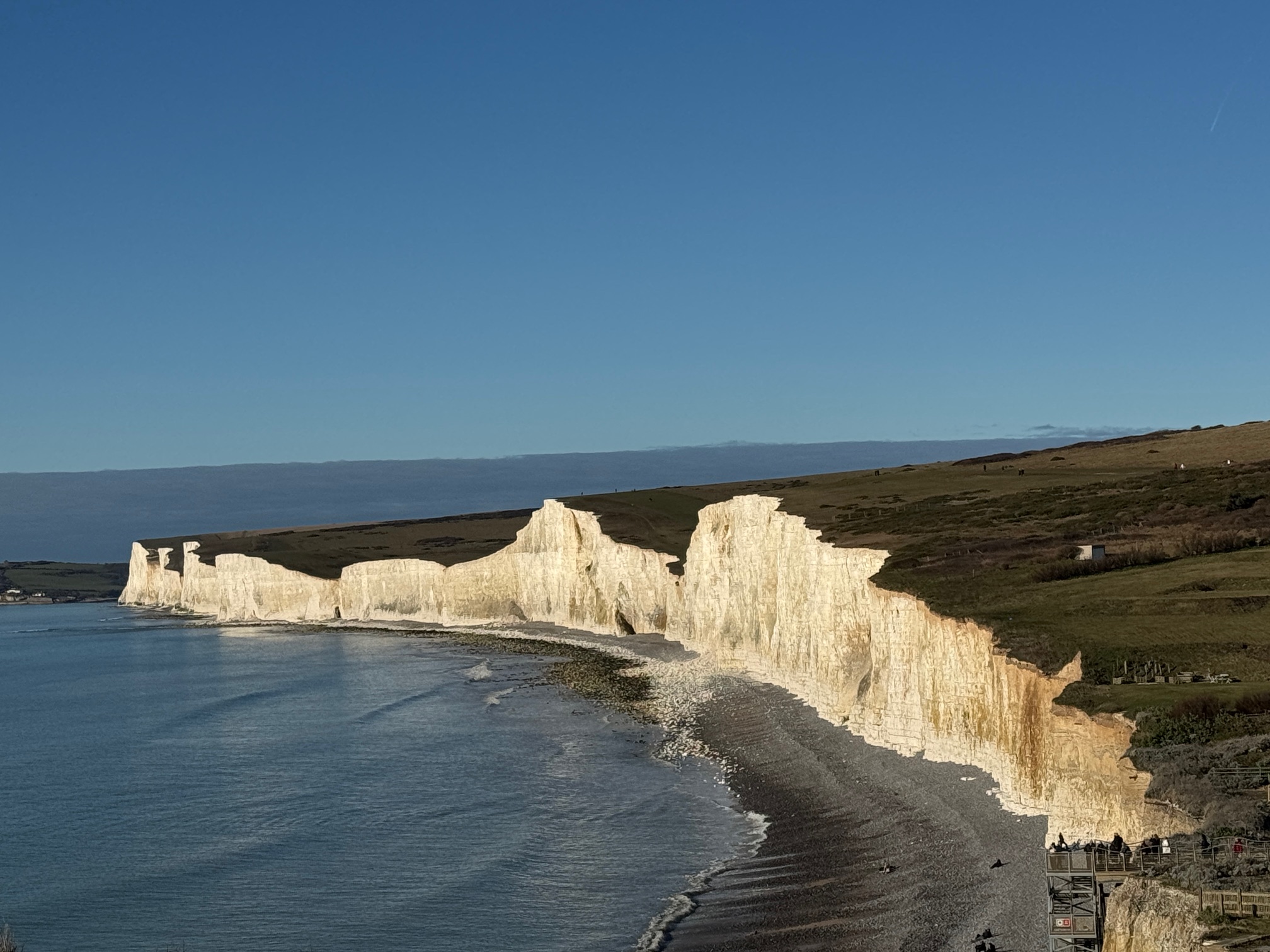
Seven Sisters
Complete Visitor Guide
Everything you need to know — walking routes, parking, safety, best time to visit, and what the crowds won't tell you
Everything you need to know — walking routes, parking, safety, best time to visit, and what the crowds won't tell you
Last updated: October 2026 · Written by Alen Marrick
We walk these cliffs in every season. Over that time, we've watched sections collapse into the sea, seen the same groups return season after season, and figured out exactly what makes this stretch of Sussex coast so special.
The Seven Sisters are seven distinct chalk cliffs running along the Sussex coast between Seaford and Eastbourne. They're genuinely what the White Cliffs of Dover used to look like—pristine, undeveloped, untouched by roads or buildings or commerce. Just chalk, grass, sky, and the Channel stretching toward France.
Unlike Dover (where the A20 carves through the cliffs and a working port dominates the view), the Seven Sisters remain completely wild. No modern intrusions. No infrastructure. Just 14 kilometres of continuous white chalk above the Channel—exactly as it looked when Turner painted it two centuries ago.
Most visitors start at either Birling Gap (where the National Trust runs a café and you get beach access via 83 steps) or Exceat (paid parking ~£7/day, visitor centre, peaceful). The full ridge walk from end to end is genuinely challenging—3-4 hours of continuous ups and downs with seven distinct climbs, each of them steep. But you can do shorter loops, valley walks, or just visit Cuckmere Haven for the most photographed view.
A Short Film
The cliffs, the walk, and what this guide covers — photographed on the reserve, with sound.
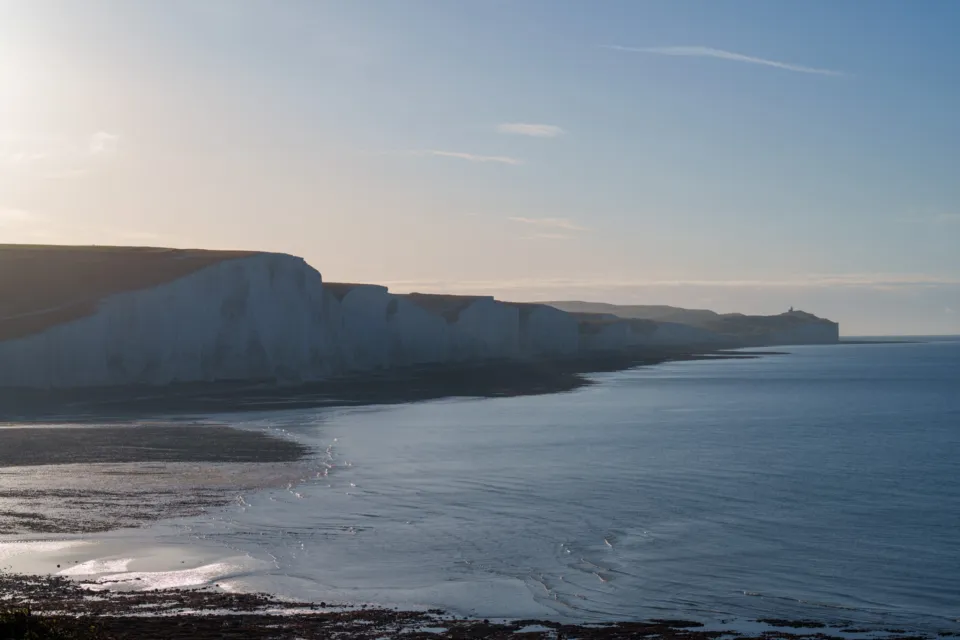
Each cliff has an official name, though locals rarely use them. They run west to east — from Cuckmere Haven to Birling Gap — with Haven Brow the tallest and the first peak you encounter when walking from the valley. The heights vary because the cliffs erode at roughly 30–50cm per year — every survey produces slightly different measurements.
| # | Name | Height |
|---|---|---|
| 1 | Haven Brow Highest | ~77m |
| 2 | Short Brow | ~57m |
| 3 | Rough Brow | ~68m |
| 4 | Brass Point | ~64m |
| 5 | Flagstaff Point | ~62m |
| 6 | Bailey's Hill | ~61m |
| 7 | Went Hill Brow Birling Gap end | ~75m |
Full Ridge Elevation Profile — West to East
Walking it soon?
The Ultimate Guide is a 24-page companion — all seven cliffs named and measured, four graded routes compared, the classic walk and the full traverse step by step, the tide windows, the parking strategy and three ready-made day plans. The Trail Companion map comes with it, working on the cliffs with no signal.
Every season is walkable — but some are dramatically better than others. This is what we've learned from visiting in every month of the year.
Our recommendation: September is the single best month — warm enough to swim, quiet enough to park at 10am, long enough days for a full ridge walk, and the low-angle light in the afternoon turns the chalk cliff faces gold. Full seasonal guide with monthly breakdown →
This is the question we get asked most. Both are impressive white chalk cliffs, both are iconic, but if you've visited both you know the difference is profound. The Seven Sisters are what England's coastline looks like when you actually leave it alone.
We visited Dover once. Sat on the clifftop, looked down at the commercial port, the ferries, the A20 cutting through the landscape—all busy and industrial and somehow sad. The cliffs themselves are massive and white and impressive, sure. But they're dominated by human development. By contrast, when we first visited the Seven Sisters on a May afternoon, walking along the ridgeline with nothing around us but chalk, grass, and the Channel, we understood why people return to this place again and again. It doesn't feel managed or compromised. It feels real.
We've seen first-timers arrive unprepared a hundred times. They park at 11:30am (parking's full), wear the wrong shoes (turned ankles), bring no water (dehydrated by lunch), underestimate the distance (exhausted after two hours). Here's what actually matters based on years of watching people get this right and wrong.
90 minutes by car via M23/A23, or around 2 hours by train — Victoria to Seaford (1h 25min via Lewes, then 25-min walk to the cliffs) is the simplest option. Victoria to Eastbourne direct (90 min) then the seasonal 13X bus to Birling Gap is the alternative. Most Londoners leave by 7:30am to arrive before parking fills up. See detailed London travel guide →
No booking needed for the walk itself—the cliffs are free and public. Parking is pay-on-arrival. However, accommodation in peak season (July–August) should be booked weeks ahead, and the Birling Gap café can have hour-long queues on sunny Saturdays.
Imagine climbing up and down seven hills in a row, each roughly 60–75m tall, all along a cliff edge. It's spectacular but physically demanding—3-4 hours for the full route. The paths are clear but uneven. See detailed route breakdown or explore easier short walks.
You don't have to walk the whole ridge. Many visitors just walk to the first or second sister from Birling Gap (30–45 minutes), enjoy the view, and return. The beach at Cuckmere Haven is a 20-minute flat walk from Exceat car park. See easier options →
Spring (April–May) for wildflowers and fewer crowds, or early autumn (September–October) for the best weather-to-crowd ratio. Avoid summer weekends unless you arrive before 9am. Complete seasonal guide →
We've made most of these ourselves. Here's what we learned the hard way, and how to sidestep the problems that catch everyone out.
We watched someone spend 45 minutes last July searching for a parking spot at Birling Gap, eventually giving up and driving to Exceat only to find it full there too. By the time they parked at Foxhole (the free backup), they'd wasted an hour and frustration had already set in before the walk even started.
Here's the reality: Birling Gap car park (~130 spaces) is completely full by 10am on any sunny Saturday or Sunday from May through September. Exceat (paid, smaller) fills by 11am. This isn't an exaggeration or occasional issue—it's guaranteed every single week.
The actual fix: Either arrive by 9am (seriously, 8:30am is better), or use the free Foxhole overflow car park and walk 1.2km to reach the cliffs. Weekdays? Park anywhere after 11am and you're fine. See detailed parking strategy →
We genuinely saw someone in flip-flops try to summit the ridge last August. They made it 200 metres up the first climb, slipped twice on loose chalk, and had to turn back. Their feet were bleeding from the toe-post digging in.
The Seven Sisters paths aren't gentle. They're rough, compacted chalk mixed with flint, steep in places, slippery when wet, and loose on downhills. Canvas trainers will give you grip for maybe an hour before the chalk dust wears through. Shoes with smooth soles are actively dangerous.
What actually works: Proper walking trainers (£50–80 with ankle support and tread) are the bare minimum. Walking boots are much better. The trails can be muddy for 2–3 days after rain. See footwear recommendations →
We met someone on the ridge last June who'd brought one small bottle (350ml) for a 2-hour walk. After 40 minutes on a hot day with full sun and no shade, they were visibly struggling—headache, lightheaded, regretful choices.
There is literally nowhere to refill water between Birling Gap and Cuckmere Haven. That's ~6km of cliff ridge with zero facilities. The Birling Gap café often runs out of bottled water by 1pm in summer.
What you need: Minimum 1–1.5 litres per person. On hot days, 2 litres isn't excessive. Energy bars or sandwiches matter too. See hydration & nutrition guide →
"It's only 8km" is what we hear people say. What they don't realise is that those 8km pack seven separate climbs back to back — roughly 280 metres of ascent in total. Google Maps will tell you it's a 2-hour walk. Google Maps is wrong.
The terrain is relentlessly undulating. You can't get into a rhythm. Add in rest stops, photos, and admiring the view, and you're easily looking at 4–5 hours for the full walk.
Realistic planning: Budget 4 hours minimum for the ridge. Start early or consider one of the shorter, less demanding circular routes. See complete route timing guide →
We watched someone lean back at the edge for a selfie last July. A chunk of chalk the size of a car broke free 20 metres further along and crashed onto the beach. He was fine, but it stopped everything in its tracks.
The Seven Sisters are actively eroding at 30–50cm per year. Three coastguard cottages at Birling Gap are now in the sea (fallen in 2014, 2017, and 2019). The chalk gives no notice.
The rule that matters: Stay at least 5 metres back from any cliff edge. Your phone's zoom can get great shots from a safe distance. Read the complete safety guide →
The right boots and clothing are the difference between a great walk and a miserable one. These are what we genuinely recommend for chalk clifftop paths.
As an Amazon Associate we earn from qualifying purchases — at no extra cost to you. Affiliate info.
Tick everything off before you leave. Your selections are saved in your browser so you can close and reopen the page.
Each location offers something different—some have facilities, some are just stunning viewpoints. Here's what you'll actually find at each spot.
This is where most people end up because it's got everything: National Trust café, toilets, proper car park, and steps straight down to the beach. The coastguard cottages perched on the cliff edge are slowly falling into the sea—three have gone already, and the rest will follow.
From here you can walk west along the ridge to see all seven sisters, or east toward Beachy Head. The beach access is via steep steps—83 of them, though the number changes as they rebuild after cliff falls. Weekends from May to September, the car park's full by 9:30am.
The official visitor centre for the Seven Sisters Country Park. Free parking, though spaces go fast on sunny weekends. The centre has exhibitions about the local wildlife and geology, plus a decent café. From here it's a 20-minute walk down to Cuckmere Haven beach, mostly flat until the final slope.
This is also where you can hire bikes if you fancy cycling the paths through the valley. The route to the beach follows the old Cuckmere river—the current one's been straightened, so there are perfect oxbow meanders that look brilliant from above.
The beach where the Cuckmere River meets the sea. This is the view you've seen in photos—those oxbow meanders in the foreground, all seven sisters marching off to the right. It's genuinely spectacular, especially late afternoon when the light hits the chalk at an angle.
Park at Exceat and walk 20 minutes down through the valley. The beach is shingle, not sand, but it's gorgeous. Check tide times before descending as high tide cuts off some paths.
The western gateway to the Seven Sisters. This small seaside town is the starting point for walks from Seaford Head, offering street parking and a more relaxed alternative to the busy Birling Gap car park. The town has proper shops, cafés, and pubs if you need supplies.
Walk from Seaford Head along the cliffs toward Cuckmere Haven (3km) for stunning views back toward town. This route is less crowded than starting at Birling Gap, and you can catch bus 12 back if doing a one-way walk.
We've walked these cliffs in every season and weather condition. Here's what we've learned—organised so you can find what you need without wasting time.
Ridge walk · Valley paths · Short options
Full ridge: ~6km (3.7 miles), 3-4 hours, genuinely demanding (seven 60–75m climbs). Or do the Cuckmere Valley walk—flat, easy, kids love it.
Car parks · Buses · Trains from London
Birling Gap fills by 9:45am summer weekends. Exceat (~£7/day) is usually less busy. Bus 12/12X run frequently from Eastbourne/Seaford.
Best months · Crowd avoidance · Weather
September is the best month—warm, empty trails, golden light. May is second choice. Avoid late July–August weekends.
Cliff edges · Weather · What to bring
Stay 5 metres from cliff edges—sections collapse without warning. Bring proper footwear and 1.5L water per person.
Toilets · Food · Visitor centres
Birling Gap: NT café (queues on weekends), toilets. Exceat: visitor centre, café, bike hire. Nothing on the ridge.
Seaford · Eastbourne · Brighton
Seaford: budget base, 3km to cliffs, walkable. Eastbourne: resort town, more facilities. Brighton: premium city option, 20km.
Knowledge Hub — Deeper Reading
Arrive Early
Before 9am summer weekends for parking. Midweek is much easier.
Proper Footwear
Trainers minimum. Walking boots better. We've seen flip-flops fail badly.
Pack Water & Snacks
1.5L per person, energy bars. No shops on the ridge for ~6km.
£4.99 · 24-page PDF · Instant download
The complete 24-page companion built from first-hand walks — every cliff, all four graded routes, tide windows and a parking strategy. Designed to work offline, right on the cliff top.
Just want the basics? Download the free 2-page walk guide
No shops or water taps on the ridge. These are the essentials that should be in your daypack before you start.
As an Amazon Associate we earn from qualifying purchases — at no extra cost to you. Affiliate info.
Click any marker to see location details and guide links
The questions we get asked most often — answered directly.
Yes — it is one of the finest coastal walks in England. The chalk cliffs are completely undeveloped: no roads, no buildings, no infrastructure on the ridge. Walking the cliff top with seven distinct peaks, the Channel stretching to France, and the Cuckmere meanders below is genuinely exceptional. It is worth the early start and the journey from London.
The full ridge from Cuckmere Haven to Birling Gap is ~6km (3.7 miles) and takes 3–4 hours for most walkers. It involves seven steep climbs of roughly 60–75 metres each. A short out-and-back from Birling Gap to the first or second peak takes 45 minutes to 2 hours and gives genuine cliff views with manageable effort. Compare Seven Sisters hike routes →
1.5 litres of water per person (no refill points on the ridge), walking boots or trail shoes with grip, a mid-layer and waterproof accessible in your bag, food for the duration, and a phone with an offline map downloaded (signal drops out on the ridge). Apply SPF 50 before leaving the car park — there is zero shade and chalk reflects UV upward. Full safety checklist →
The full ridge walk is demanding for inexperienced walkers — steep climbs, exposed paths, ~6km with no shelter. But beginners can enjoy the area: walk from Birling Gap to the first peak and back (2–3km, 1.5 hours), or take the flat Cuckmere valley path from Exceat to the beach. Both give outstanding views without the full ridge challenge.
September is the single best month — warm enough to swim, quiet enough to park at 10am, and the low-angle afternoon light turns the cliff faces gold. April and May are excellent for wildflowers. Avoid late July–August weekends if you want easy parking. Full seasonal guide →
The walk is free — the cliff path and downland are open access with no admission charge. Car parks are paid: Birling Gap (National Trust) and Exceat both charge; NT members park free at Birling Gap. There is no entry fee to the area.
Yes — dogs are welcome year-round on the cliff paths and beaches. Keep them on leads near cliff edges and when livestock are grazing (usually spring). Bring water as there are no sources on the ridge. The flat Cuckmere valley walk is an excellent dog-friendly route.
Yes. The cleanest option from London is Victoria → Seaford (1h 25min via Lewes) — walk 25 minutes directly to the ridge, no bus needed. Or Victoria → Eastbourne direct (90 min, about every 30 min), then the seasonal 13X bus direct to Birling Gap (about 25 min). From Brighton, train to Seaford then walk to the cliffs. Public transport works particularly well for a one-way ridge walk — start at Seaford, walk east, take the 13X back from Birling Gap. Full transport guide →
Guided walks, photography tours, wildlife days and family experiences — all bookable through local operators below.
We may earn a small commission on bookings made through this link, at no extra cost to you. More info.
We earn a small commission on bookings made through this widget at no extra cost to you. More info.
Honest timings for every route and starting point — Birling Gap, Seaford, Cuckmere and the full traverse.
Why the edge is more dangerous than it looks — the science behind undercutting, freeze-thaw, and overhang instability.
Month-by-month breakdown of crowds, weather, and what you'll actually find when you arrive.
6km one-way or 12km circular, with pub stops and bus return options — a less crowded alternative starting point.
Quiet spots, lesser-known beaches, and viewpoints the crowds never find — with directions and access notes.
The classic Cuckmere Haven shot and five other viewpoints — where to stand, what time to arrive, and what to use.
This site was created by a team that genuinely loves these cliffs and visits them regularly. We've walked every possible route, visited in every season, watched the landscape change, and documented what works and what doesn't based on real experience.
Every piece of advice here comes from either personal experience or direct observation. The parking timing? We've arrived at different times and timed how long it takes for car parks to fill. The water requirement? Based on hot days when we've run out. The safety warnings? We've watched near-misses and talked to locals. Nothing here is guesswork.
The goal is simple: help first-time visitors have better experiences. Because once you understand how to visit the Seven Sisters properly, it becomes one of the most memorable walks you'll ever do.
Note: This site is independent and not affiliated with the National Trust or Seven Sisters Country Park, though we work closely with local guides and visitor services to keep information current. We update parking information and route conditions monthly.
Planning your visit? Share the guide
Send this to whoever you're walking the Seven Sisters with.
In-depth guides to make the most of your visit — based on first-hand walks in every season.
A few more corners of the Seven Sisters worth your time.
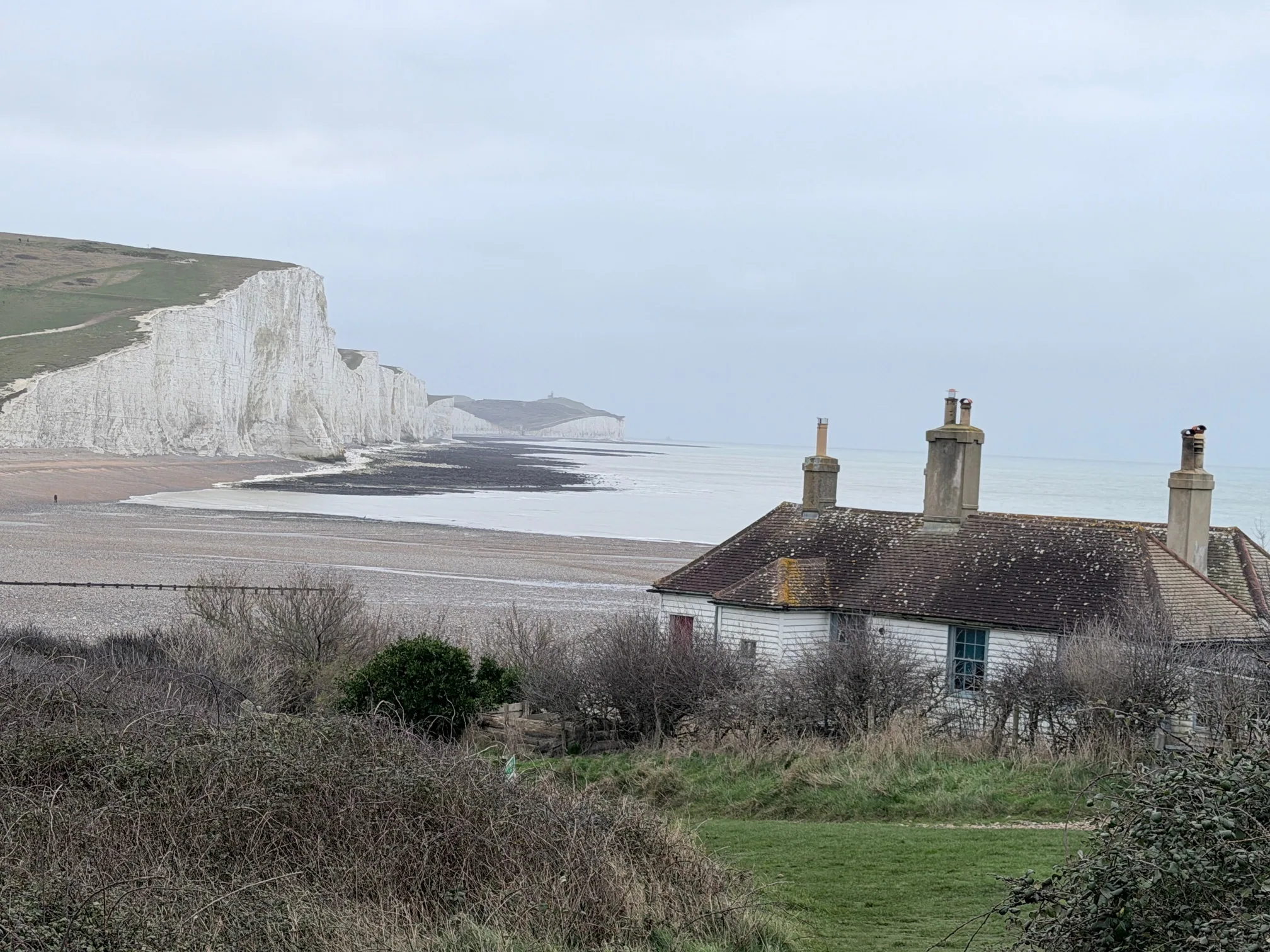 Eastbourne
The classic resort town at the eastern end of the coast path.
Explore
Travel
Eastbourne
The classic resort town at the eastern end of the coast path.
Explore
Travel
 From London
A door-to-door day trip from the capital, by train or car.
Explore
Plan
From London
A door-to-door day trip from the capital, by train or car.
Explore
Plan
 When to visit
Light, crowds and weather through the seasons — when to time your trip.
Explore
Walks
When to visit
Light, crowds and weather through the seasons — when to time your trip.
Explore
Walks
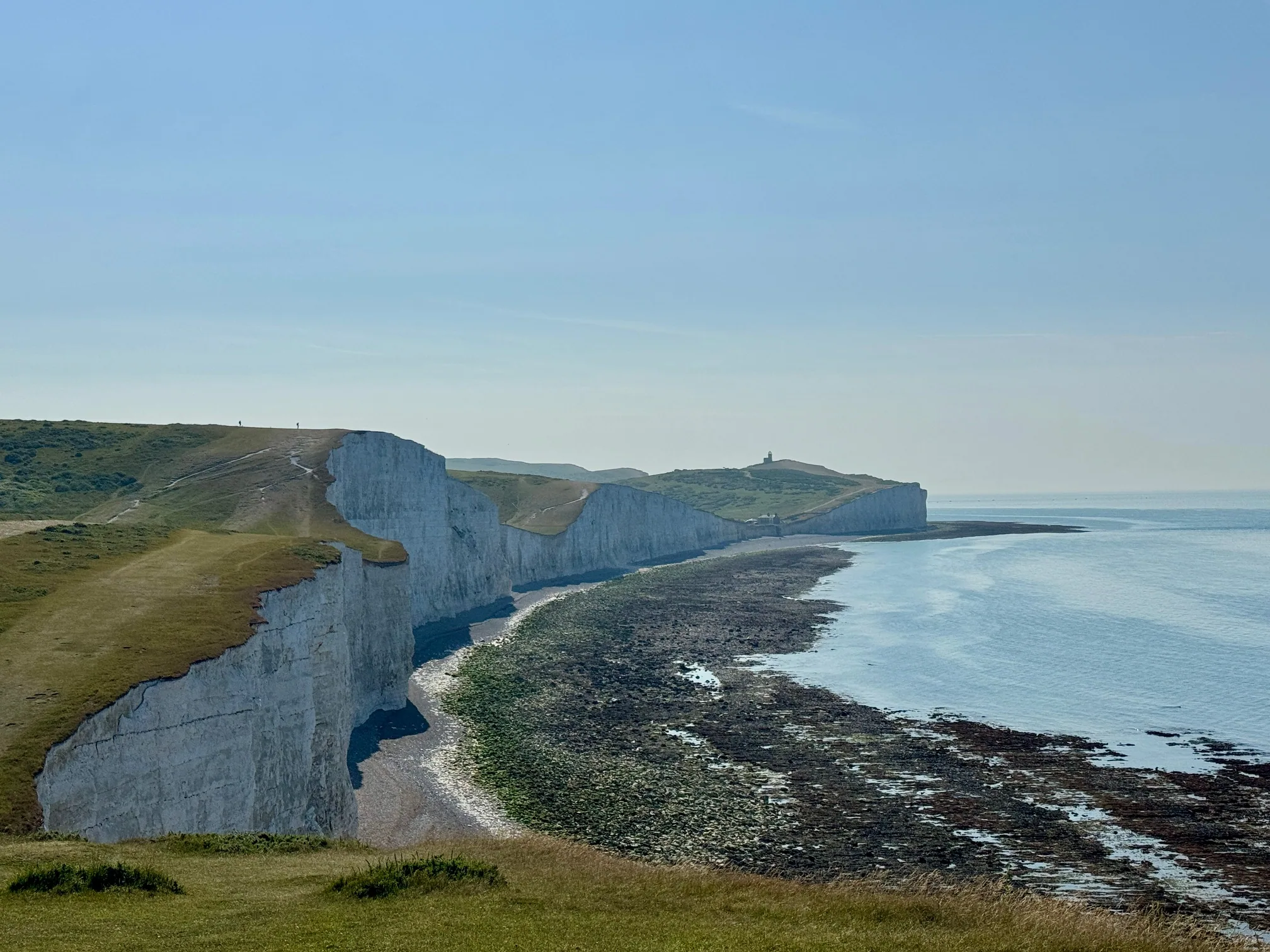 Walking routes
From the easy riverside stroll to the full clifftop traverse — pick your walk.
Explore
Places
Walking routes
From the easy riverside stroll to the full clifftop traverse — pick your walk.
Explore
Places
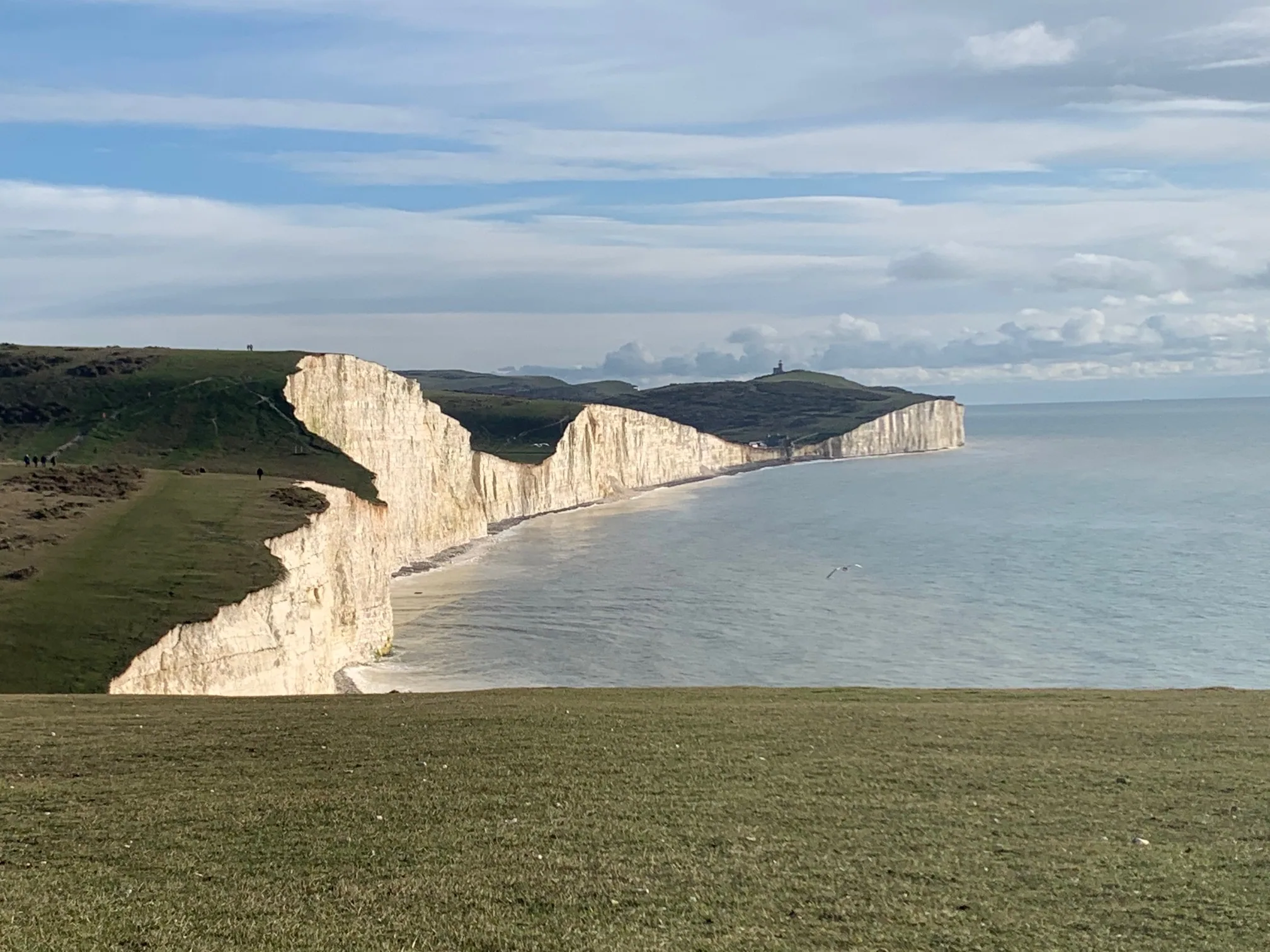 Cuckmere Haven
Where the meandering Cuckmere river reaches a wild, undeveloped shore.
Explore
Stay
Cuckmere Haven
Where the meandering Cuckmere river reaches a wild, undeveloped shore.
Explore
Stay
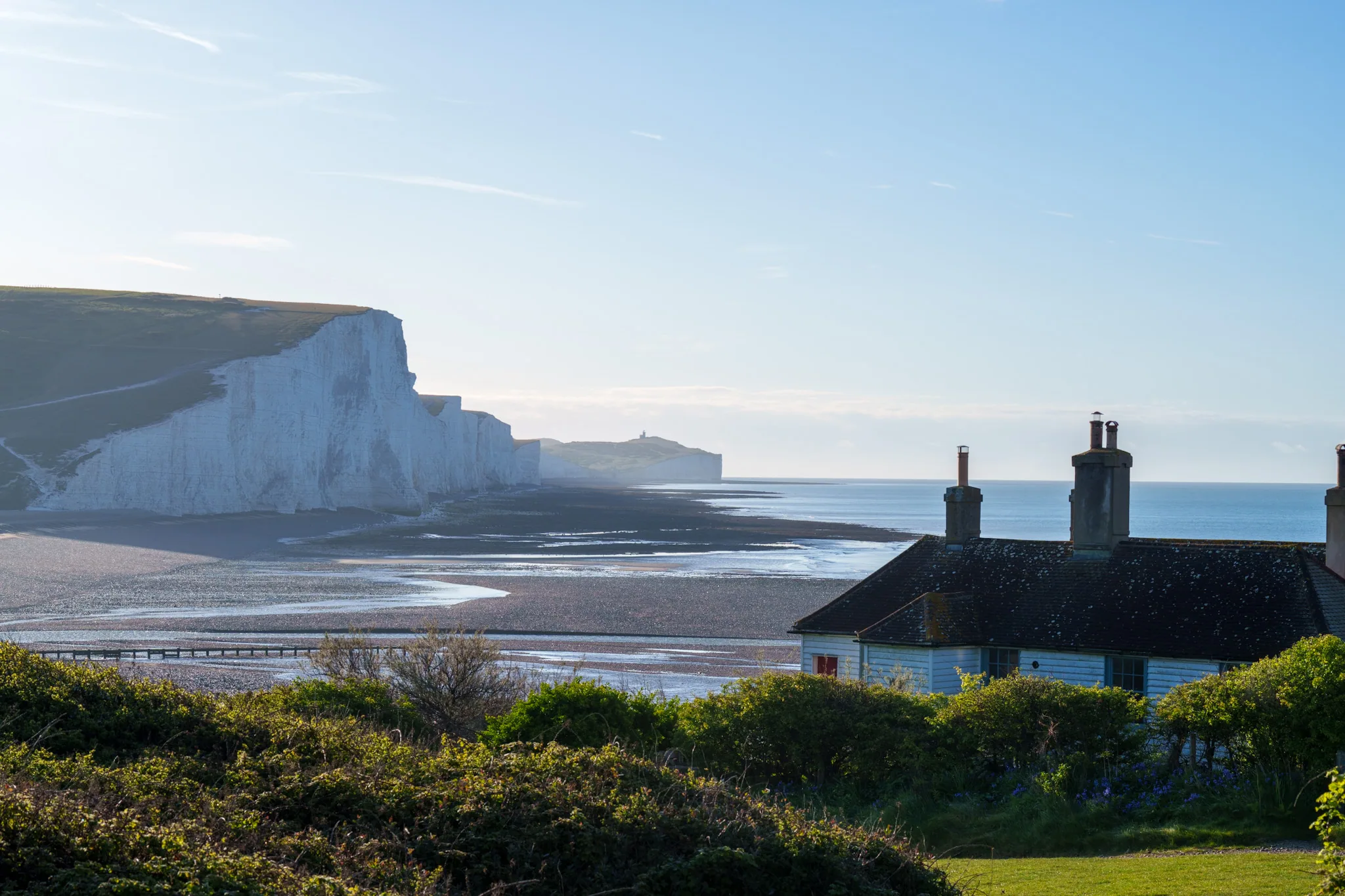 Where to stay
Cottages, inns and campsites within reach of the cliffs.
Explore
Where to stay
Cottages, inns and campsites within reach of the cliffs.
Explore
Stay up to date with seasonal guides, crowd forecasts, and local tips — direct to your inbox.
No spam. Only coastal inspiration and timing tips — unsubscribe any time.