The Experience
Reading the
Living Landscape
The Geology Underfoot
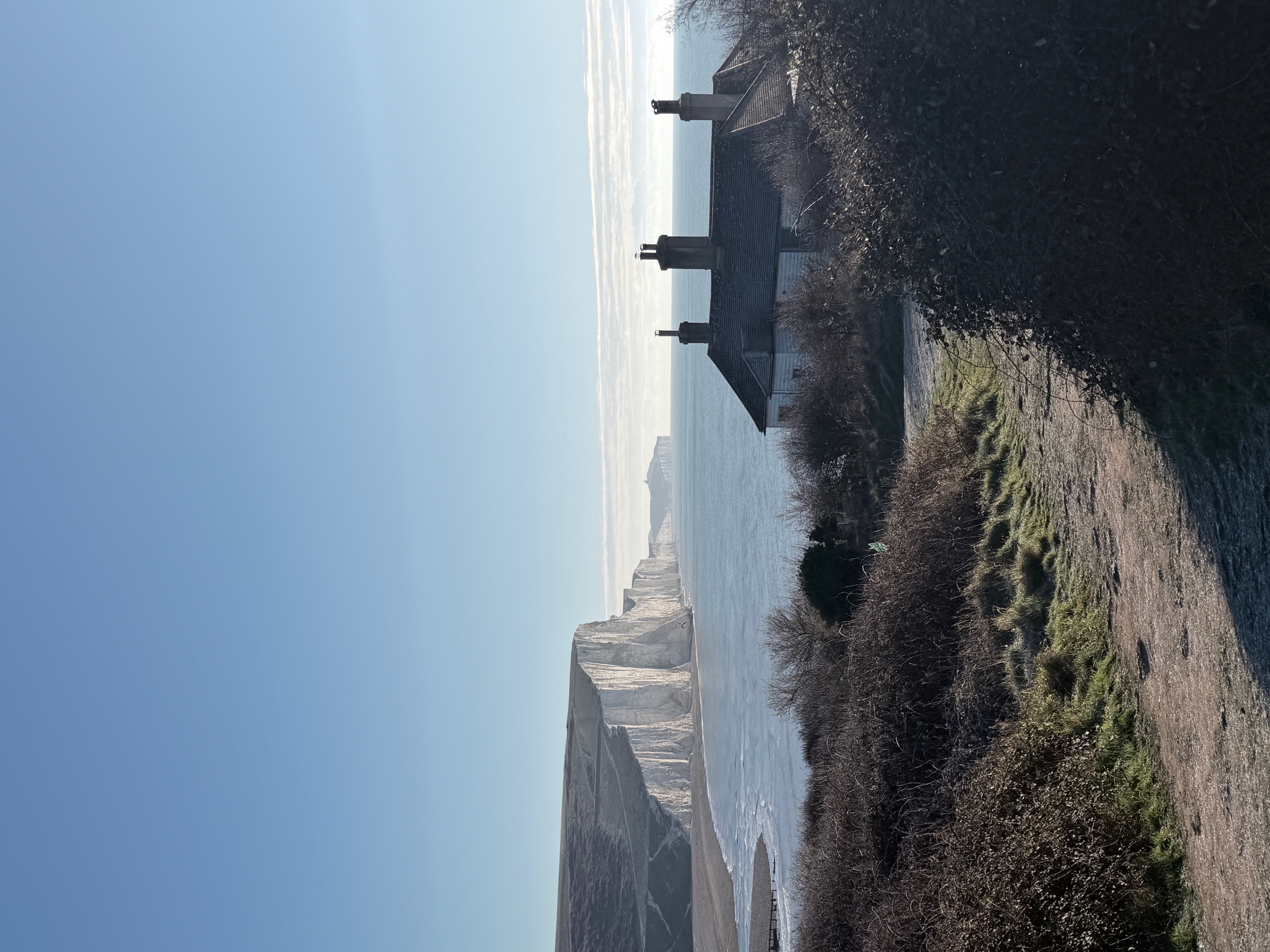
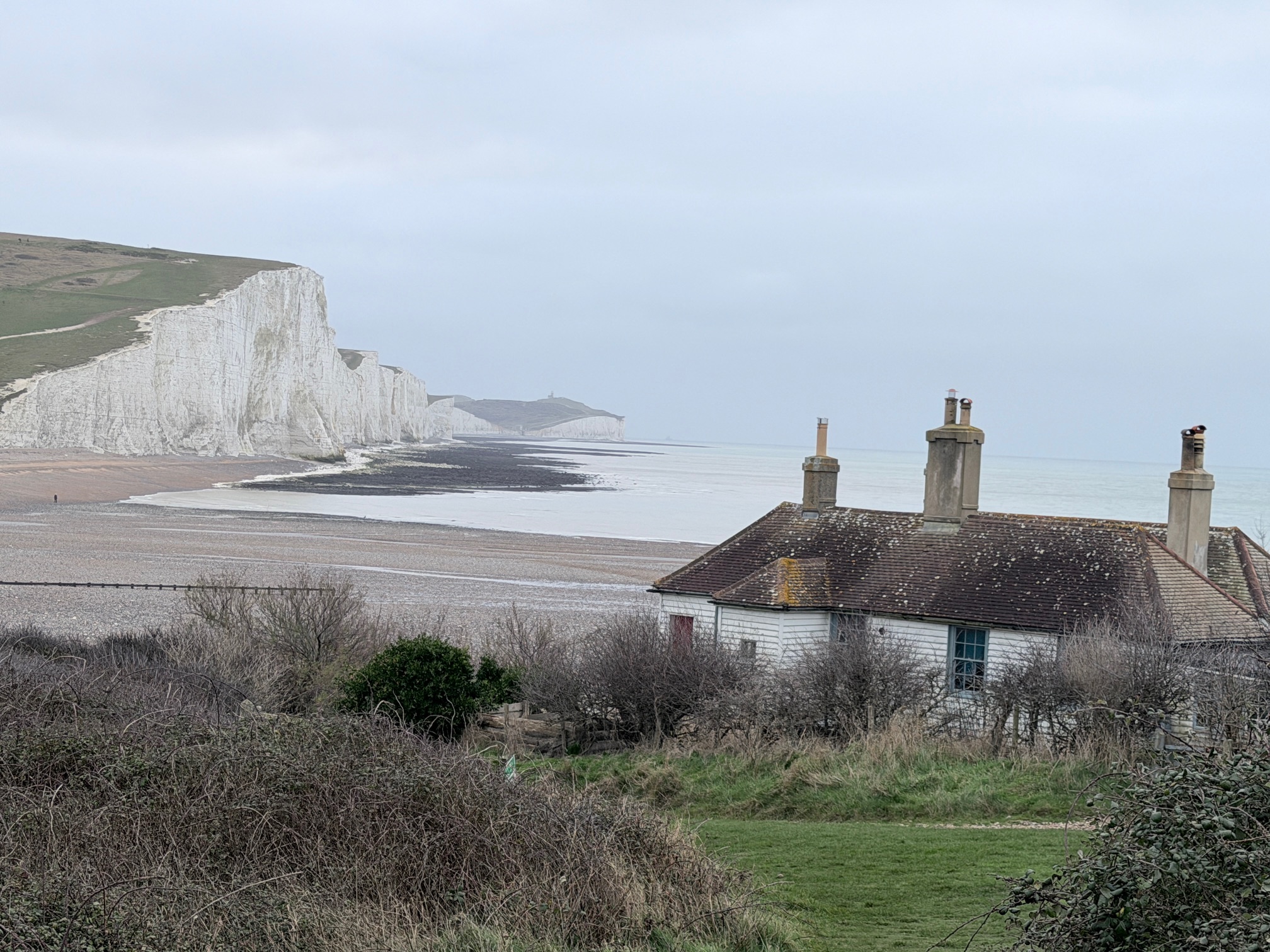
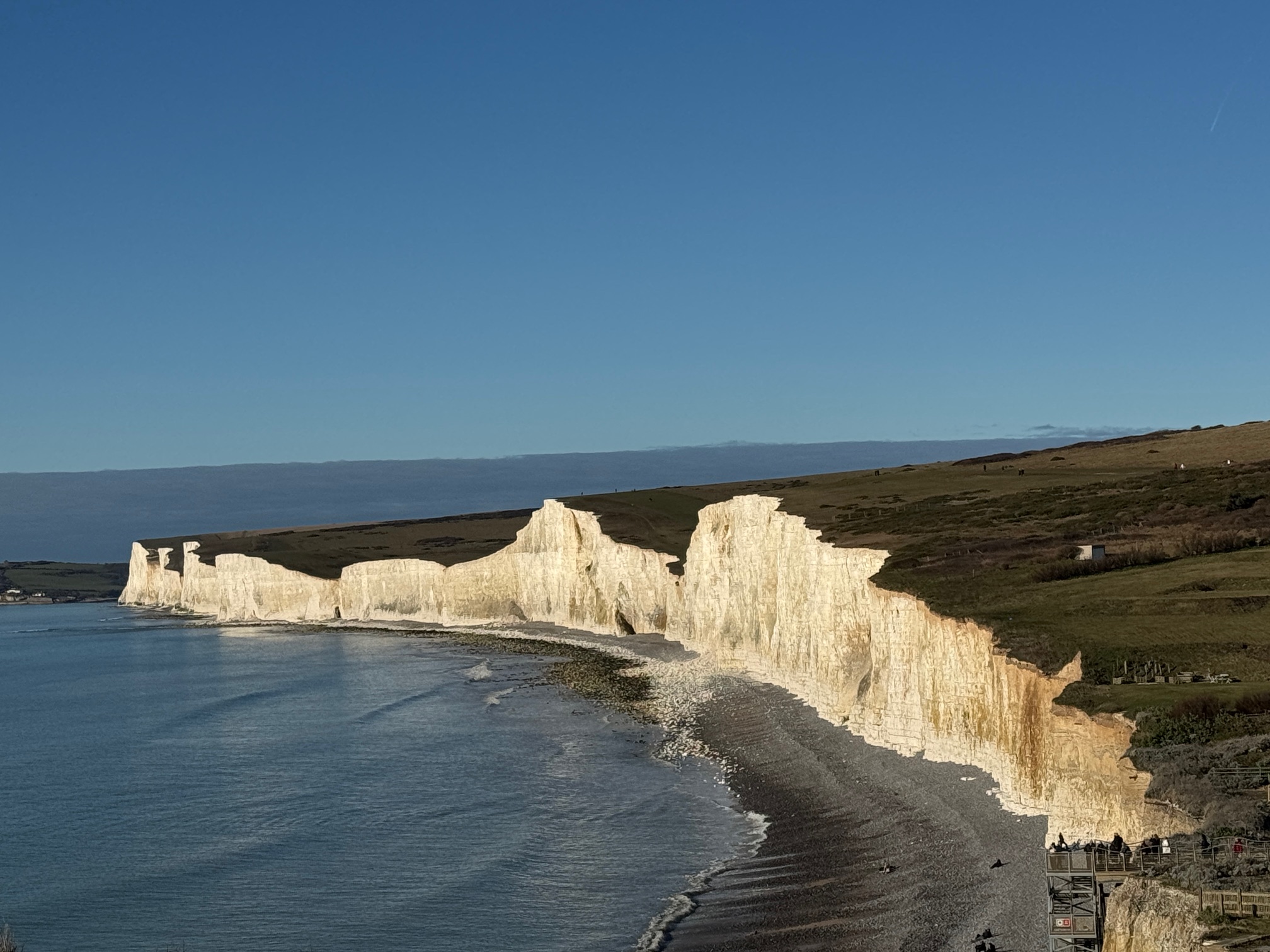
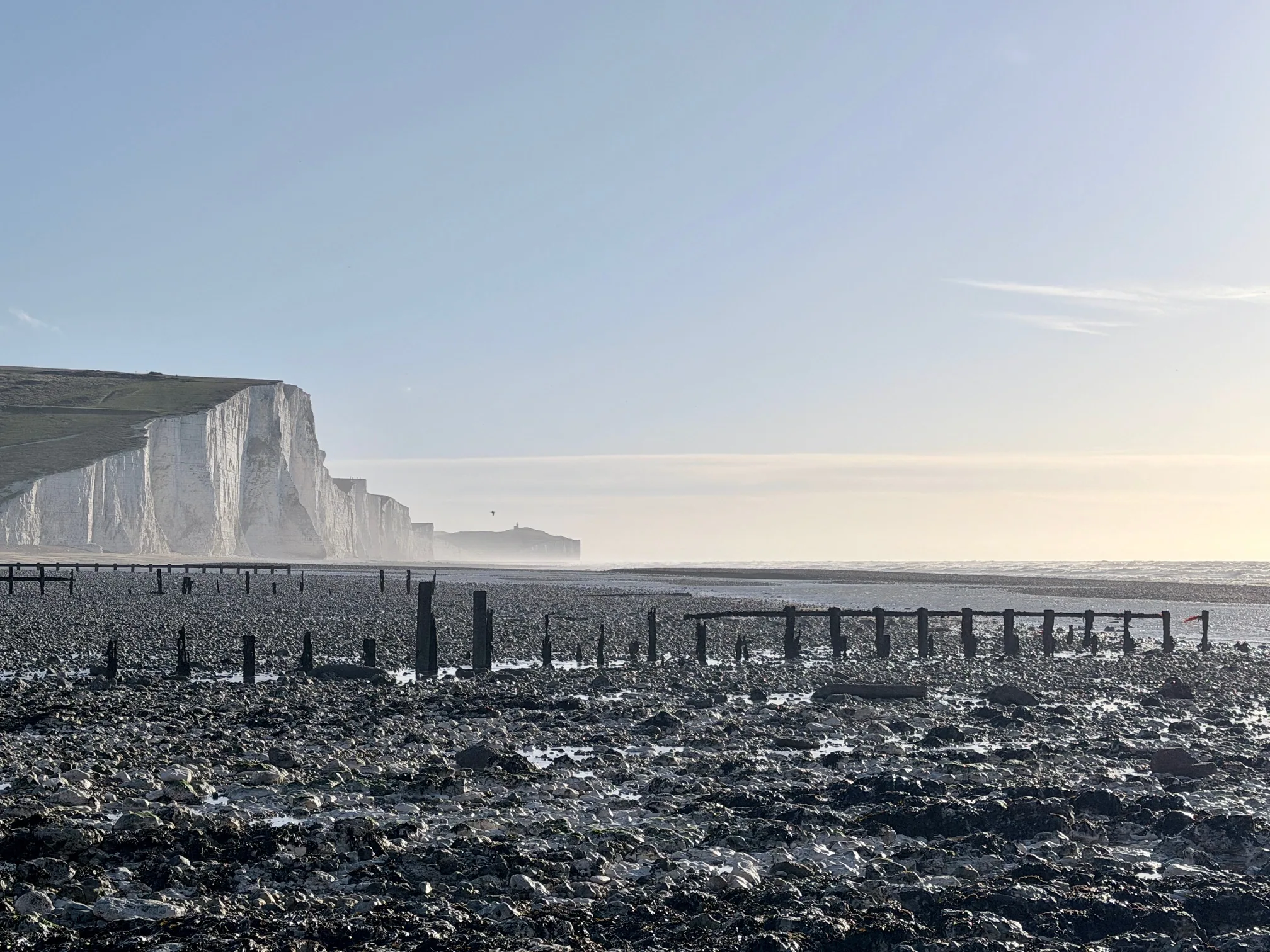
The chalk you walk on at the Seven Sisters is not just rock — it is a compressed record of 25 million years of marine life. Each layer represents approximately 10,000 years of deposition, laid down in a warm shallow sea that stretched from Devon to Poland during the late Cretaceous period. The distinct black flint bands visible in the cliff face formed when silica-rich water percolated through the chalk, replacing organic material — sea sponges, shells, and sea urchins — with glass-hard flint. Ancient humans, from the Mesolithic onwards, collected this flint as their primary tool material.
The Human Story
The South Downs have been farmed and settled since the Neolithic period. The rectangular earthwork enclosures visible from the cliff-top path are Bronze Age field boundaries — 3,000 years old, yet still perfectly legible in the landscape. The hillfort at Belle Tout area dates to the Iron Age, when hilltop positions controlled routes along the chalk ridge. The Saxons founded the villages of the Ouse valley below, and the Normans built the estate at Exceat whose name persists today.
Smugglers and Revenue Men
In the 18th century, the Seven Sisters coast was worked by some of England's most organised smuggling gangs. The Cuckmere valley — remote, accessible only by track, and with a direct river connection to the inland villages — was a prime landing ground for untaxed brandy, tea, and silk from France. The Alfriston gang and later the Hawkhurst Gang (operating from Kent and Sussex) moved contraband through these valleys in quantities that would constitute serious organised crime by any modern standard. Your guide knows where the storehouses were.
Every valley, every flint, every earthwork has a story. Let a local expert tell it.
Book on GetYourGuide