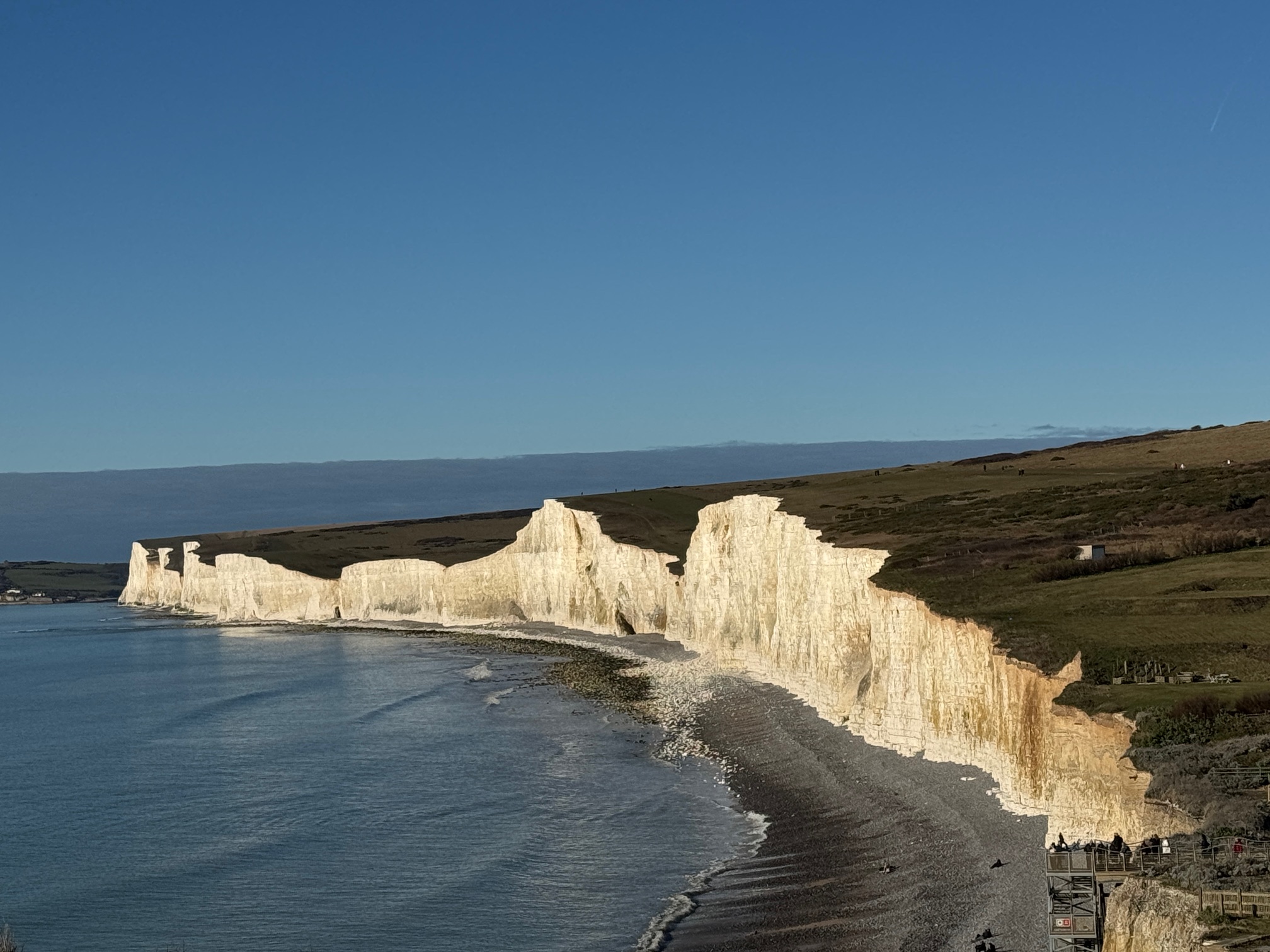
The Experience
What You'll Find
Season by Season
Spring: The Richest Harvest
Spring (March–May) offers the most abundant foraging of any season on the Sussex coast. Alexanders — a tall, yellow-flowered umbelliferous plant introduced by the Romans — reaches its peak edibility before the flowers open: stalks, leaves, roots, and flower buds are all edible and have a complex, celery-like flavour. Three-cornered leek, with its white hanging bells and powerful garlic scent, forms carpets in the sheltered scrub above the beach. Sea beet is at its most tender, and rock samphire is shooting its first aromatic growth.
Summer: Sea Herbs and Flowers
Summer brings elderflower — the most evocatively scented ingredient in the coastal landscape — into the scrub and hedgerow above the beach. Sea purslane, with its distinctive oval, grey-green leaves, lines the margins of the Cuckmere estuary channels in dense mats. Sea holly — the architectural thistle-relative with its silver-blue bracts — was historically candied and sold as a luxury confection called eryngoes. Sea rocket, colonising fresh shingle deposits each year, is one of the strongest-flavoured wild rocket varieties available. Sea kale, with its huge glaucous leaves and edible flower heads, grows in isolated clumps on the upper shingle.
Autumn: Berries and Late Harvest
Autumn concentrates flavour into berries. Sloe — the blackthorn fruit that becomes sloe gin — ripens on the scrub above the beach after the first frosts. Hawthorn berries (haws) are one of the most nutritious wild fruits in the English landscape, rich in antioxidants, and edible raw or cooked into hedgerow jelly. Sea beet remains in excellent condition throughout autumn, its leaves darkening and intensifying in flavour as temperatures drop. The Cuckmere estuary margins continue to offer sea purslane into November.
The coast has been feeding people here for thousands of years. Rediscover how.
Book on GetYourGuide