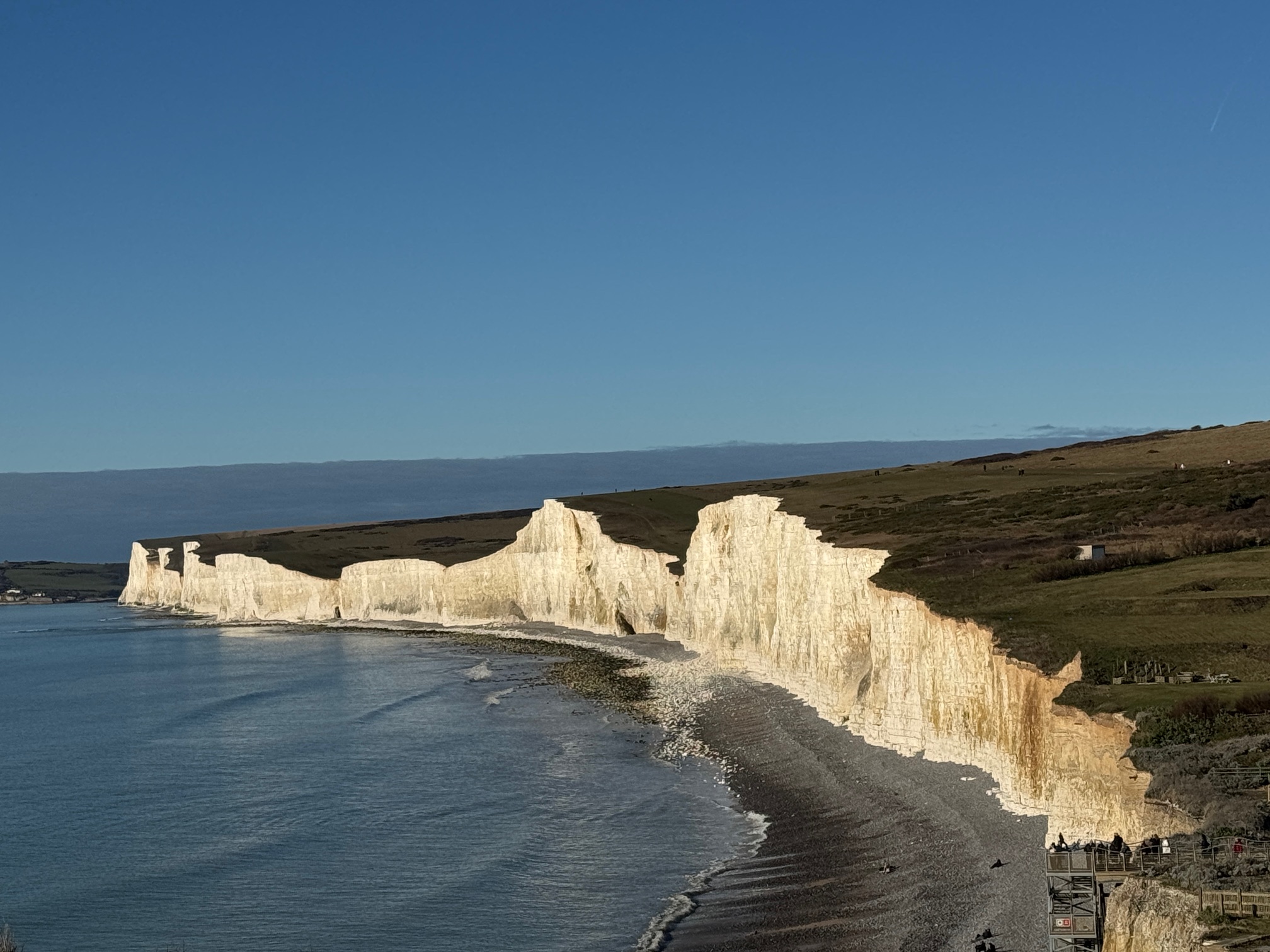
Seven Sisters Weather Patterns: Why Forecasts Are Often Wrong
You check the weather forecast for Seaford or Eastbourne, it says sunny and calm, so you head to the Seven Sisters expecting a pleasant walk. You arrive to find horizontal rain, 40mph winds, and visibility of about 50 metres. This happens all the time because coastal weather doesn't work like inland weather, and the Seven Sisters create their own microclimate that forecasts often miss.
We're not meteorologists, but we've walked the Seven Sisters enough times to recognise the patterns that local weather follows. Understanding these patterns helps you plan better, avoid miserable conditions, and occasionally catch those perfect days when everything aligns.
The Coastal Effect
The fundamental issue: the Seven Sisters sit right on the coast, fully exposed to the English Channel. Inland Sussex—where most weather forecasts are calibrated for—is sheltered by the South Downs ridge. What's happening in Lewes, Uckfield, or even Brighton a few miles inland often bears no relation to conditions on the exposed clifftops.
The sea moderates temperature (cooler in summer, warmer in winter) but amplifies wind. An "8mph breeze" forecast for Eastbourne becomes a 25mph wind on the clifftops. "Patchy rain" becomes persistent drizzle driven horizontally by that wind. "Mostly dry" means you'll definitely get wet.
The result: forecasts for nearby towns give you a rough idea but rarely predict exactly what you'll experience on the cliffs themselves.
Better Ways to Check Conditions
- Shipping forecasts: The Met Office shipping forecast for "Dover" or "Wight" gives you coastal conditions rather than inland. It's designed for boats, but that makes it more relevant for clifftop walking than town forecasts.
- Live webcams: The Birling Gap and Beachy Head webcams show you current conditions in real-time. If it looks grim on the webcam, it is grim.
- Mountain weather forecasts: The Mountain Weather Information Service (MWIS) doesn't cover the South Downs, but their general principles apply—check wind speed at height, not surface level. The clifftops are exposed like mountain summits.
- Windy.com or similar apps: Show predicted wind speeds with more detail than standard forecasts. Very useful for coastal walking where wind is often the limiting factor.
- Ask locals: The Birling Gap café staff, Seven Sisters Country Park visitor centre, or Seaford Head café all know local conditions. Ring ahead and ask.
Wind: The Main Problem
Rain you can handle with decent waterproofs. Cold you manage with layers. Wind is harder to deal with because it makes everything worse: rain becomes horizontal, cold becomes bone-chilling, and walking itself becomes difficult.
The Seven Sisters clifftop path runs more or less east-west, which means:
Southerly winds (from the sea) hit you side-on and can literally knock you sideways. Anything over 30mph becomes unpleasant; over 40mph becomes dangerous near cliff edges. These are the winds to avoid.
Northerly winds (from inland) push you toward the cliff edge, which is psychologically uncomfortable even though the path is well back. Still exposed, still cold, but more manageable than southerlies.
Westerlies and easterlies hit you head-on or from behind depending on which direction you're walking. Tiring but not dangerous unless they're storm-force.
Practical threshold: once forecast winds exceed 25mph sustained (not gusts), clifftop walking stops being pleasant. Above 35mph, it becomes genuinely difficult and potentially unsafe. The wind on the clifftops will be 20-30% stronger than the forecast suggests for ground level.
The Sea Fog Problem
Summer brings a particular irritation: sea fog, known locally as "haar" (borrowed from Scotland, where it's common). This forms when warm air moves over the cold English Channel, causing condensation that rolls inland as thick fog or low cloud.
You'll get days when Brighton is sunny and 22°C, but the Seven Sisters are wrapped in cold, clammy fog with visibility down to 50 metres. The temperature drops 5-7°C from what the inland forecast predicted, and the dampness soaks through clothes that would be fine in clear air.
Sea fog is most common in spring and early summer (April-June). It typically burns off by midday or early afternoon, but some days it lingers all day. If webcams show fog at 9am, there's a good chance it'll clear by 2pm—but no guarantee.
Planning around sea fog: If morning webcams show fog, either wait until afternoon or choose an inland walk (Friston Forest, for example). The fog rarely penetrates more than a mile inland, so the valley walks at Cuckmere are usually clear even when the clifftops are socked in.
Seasonal Patterns
Winter (November-March): Stormy, wet, windy. The prevailing south-westerlies bring Atlantic weather systems straight onto this coast. Expect wind and rain most days, with occasional clear, cold spells between systems. Winter walking requires proper waterproofs and wind resistance. The upside: dramatic seas, moody skies, and you'll have the place to yourself.
Spring (April-May): Unpredictable. You'll get brilliant sunny days mixed with cold, wet ones. Sea fog becomes an issue. The wind moderates compared to winter but still blows hard on exposed days. This is "four seasons in one day" territory—pack for all possibilities.
Summer (June-August): Best weather overall but not guaranteed. The prevailing winds shift more southerly, which is less ideal for the Seven Sisters (side-on rather than behind you). Sea fog is common in June. July-August are warmest and driest but can still be windy. Hot, still days are rare—when they occur, the exposed clifftops become uncomfortable due to lack of shade.
Autumn (September-October): Often the best walking weather. Settled high-pressure systems bring clear skies and moderate temperatures. The wind drops compared to summer's southerlies. September in particular can be excellent. But autumn storms arrive by late October, bringing winter conditions back.
Best Weather Windows
For reliable good weather: Late September to mid-October. High-pressure systems settle over Britain, winds moderate, temperatures are comfortable, and autumn light is beautiful.
For dramatic conditions: December-February. Winter storms create spectacular seas, but only go if you're experienced and properly equipped.
For photography: May and September-October. Clear air, good light, reasonable weather likelihood.
Avoid for walking: November and March. Transition months bringing worst of both winter storms and spring unpredictability.
Understanding Local Indicators
Beyond forecasts, you can read local signs to predict conditions:
Cloud height: If you can see the top of the Seven Sisters from Seaford or Cuckmere Haven, the cloud base is high enough for good clifftop visibility. If the clifftops are in cloud, you'll be walking in fog.
Sea state: Rough seas usually mean strong wind. If you can hear the waves from the car park, it's windy on the cliffs. Calm seas suggest lighter winds, though not always—wind can blow hard over calm water.
Flag direction at Birling Gap: The National Trust flag shows wind direction. If it's horizontal, it's windy. If it's southerly (blowing from sea toward land), clifftop walking will be challenging.
Smoke and steam: Look at chimney smoke or steam from the Birling Gap café. If it's streaming inland almost horizontally, the wind is strong and from the south—difficult walking conditions.
When Forecasts Actually Work
Standard forecasts are most accurate during:
- Settled high-pressure systems (clear skies, light winds, stable conditions)
- Clear winter cold (no wind, frost, clear skies—rare but forecasts nail it when it happens)
- Major storms (everyone knows when a big low-pressure system is coming)
They're least accurate during:
- Marginal conditions (will it rain? Will the fog clear? Forecasts struggle)
- Sea fog formation (hard to predict exactly)
- Wind speed on exposed coasts (always underestimated)
- Transition periods between weather systems (rapid changes)
Practical Walking Decisions
Here's how to use weather information to plan your day:
Abandon the walk if: Sustained winds forecast above 35mph, heavy rain all day, poor visibility in fog/low cloud, storm warnings in effect. The Seven Sisters will still be there tomorrow. Getting caught in dangerous conditions isn't worth it.
Choose valley routes if: Wind forecast over 25mph, sea fog on webcams, rain likely but not certain. The Cuckmere Valley riverside walk offers shelter and escape routes while still delivering scenery.
Do the clifftop walk if: Winds under 20mph, cloud base above 200m, no rain forecast or only light showers, webcams show reasonable visibility. Even imperfect conditions can be fine if you're prepared.
Wait for afternoon if: Morning fog visible on webcams but forecast improvement. Sea fog often clears by 2-3pm—check again at midday before deciding.
What to Wear When
Weather dictates clothing more than season:
Windy conditions: Windproof outer layer essential. Wind cuts through fleece and down. You need a proper shell jacket. Hat that won't blow off (baseball cap under jacket hood works).
Rain: Waterproof jacket and overtrousers. The rain here doesn't fall down—it blows sideways. You need protection for your legs too, not just torso.
Cold: Layers you can adjust. It's often warmer than you expect due to exertion, but the wind chill on exposed clifftops can be brutal. Bring more layers than you think you need.
Sun: Factor 30 minimum, reapply every 2 hours. Hat with brim. Long sleeves if you burn easily. The sea breeze keeps you cool while the sun burns you—easy to get caught out.
The "It'll Be Fine" Trap
People see an iffy forecast and think "it'll probably be fine" or "we've come all this way, we have to walk." Then they have a miserable time, get soaked and cold, and decide the Seven Sisters aren't worth the fuss.
Here's the reality: the weather makes or breaks clifftop walking. A brilliant sunny day on the Seven Sisters is genuinely spectacular. A howling gale in horizontal rain is miserable regardless of how beautiful the cliffs are.
The sensible approach: have a Plan B. If the forecast looks marginal, plan an alternative—the valley walks, Friston Forest, or even indoor options in Brighton or Eastbourne. Then check conditions on the day and decide. Don't commit to the clifftop walk regardless of weather.
Local wisdom: "If you can see the Seven Sisters from the car park, it's a good day for walking. If you can't see them clearly, reconsider your plans." Simple rule, surprisingly accurate.
Planning Your Seven Sisters Visit?
Check current conditions via webcams before you go. For walk options in different weather, see our sheltered valley routes or clifftop walks. Our main guide has links to webcams and local weather resources.