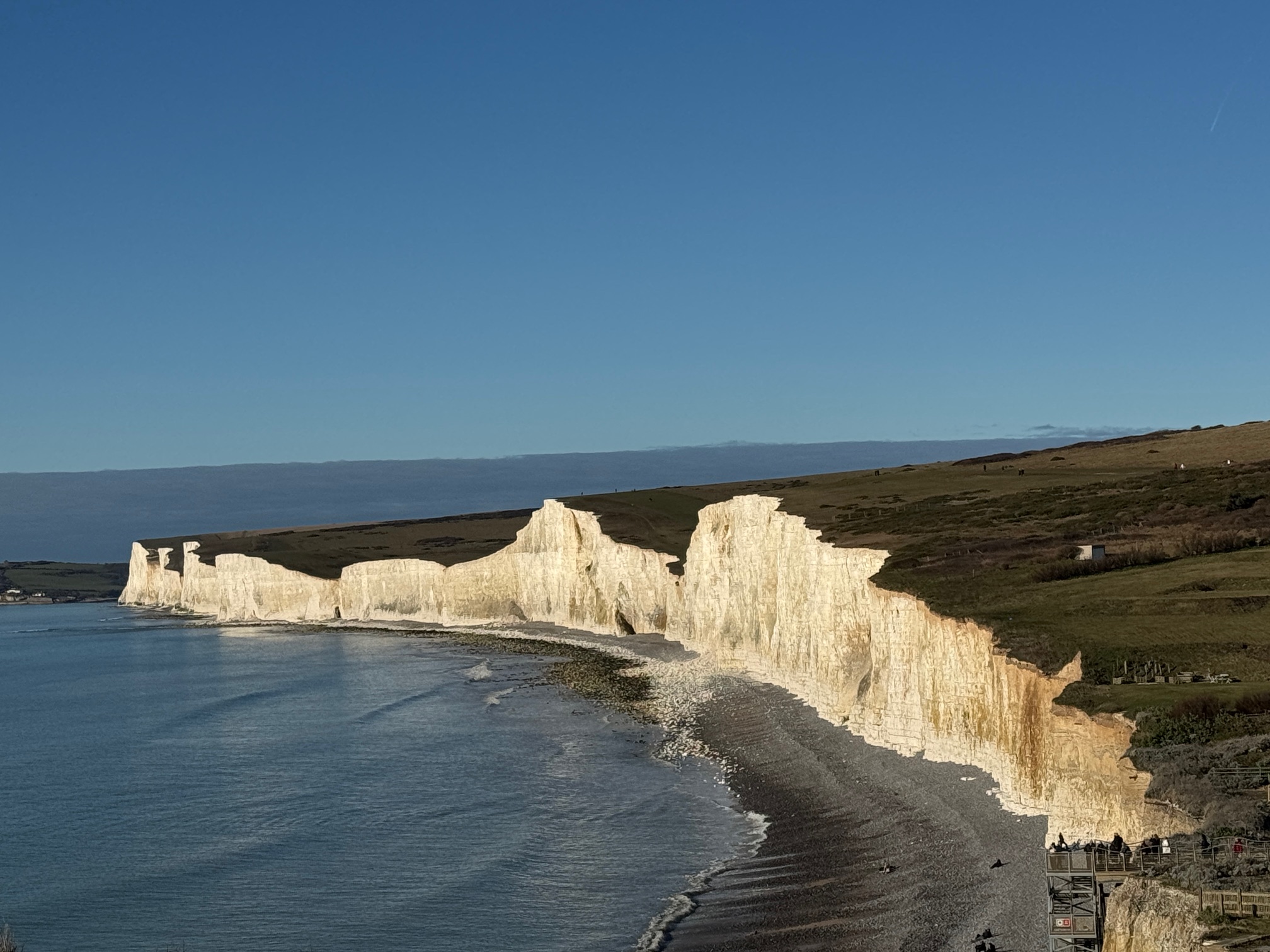
Seven Sisters Weather Patterns: Wind, Rain & Best Conditions Year-Round
Seven Sisters weather is brutal, unpredictable, and absolutely critical to understand before visiting. We've been caught in 50mph winds that made standing impossible. We've watched perfect blue skies turn to torrential rain in 15 minutes. We've cancelled trips because the forecast showed conditions that would turn a lovely walk into genuine misery.
After 200+ visits across 5 years—winter storms, summer heatwaves, spring gales, autumn fog—we've learned which conditions work, which don't, and how to read forecasts properly. Coastal weather behaves differently from inland. What looks "fine" on a London forecast might be dangerous on exposed chalk cliffs 500 feet above the Channel.
Quick answer: Wind is the main challenge year-round (20-30mph typical, 40-50mph common winter). Rain less frequent than you'd think (South East England = driest region). Best conditions: September-October (settled weather, moderate wind). Worst: December-February (storms, short days, cold). Summer unpredictable (heatwaves or disappointing grey).
Why Coastal Weather Is Different
If you're coming from inland, the Seven Sisters weather will surprise you. Exposed clifftops face the English Channel with zero protection. What feels like "breezy" in Brighton becomes "hold-onto-your-hat-or-lose-it" at Haven Brow summit.
Wind Amplification: Clifftop elevation + no wind barriers = double the wind speed you'd experience inland. Forecast shows 15mph? Expect 30mph on ridgeline. Forecast shows 25mph? Expect 50mph gusts that make walking difficult.
Our experience: Inland forecast "moderate breeze (15mph)" translated to clifftop reality "struggling to stand upright, had to turn back" (actual 40mph gusts). Always check coastal-specific forecasts, not general area predictions.
Rapid Weather Changes: Channel weather moves fast. Clear conditions → rain clouds → heavy showers → clear again can happen in 45 minutes. We've experienced this cycle three times in one afternoon.
Temperature Reality: Forecast temperature = meaningless on exposed cliffs. "Feels like" temperature matters. 12°C with 25mph wind = feels like 5°C. Windchill impact: Every 10mph wind subtracts roughly 3-5°C from apparent temperature.
Sea Fog (Haar): Coastal fog rolls in off the Channel, often when inland is clear. Most common spring/early summer (April-June). Can reduce visibility to 50m, obliterate views entirely. Usually morning (burns off by midday), occasionally sticks all day.
Monthly Weather Breakdown
January-February: Storm Season
Temperature: 3-8°C typical (feels like 0°C with wind)
Wind Speed: 25-40mph typical, storms 50-70mph
Rain Days: 12-15 per month
Daylight: 8-9 hours
Atlantic storms sweep through regularly. Named storms bring dangerous winds. Between storms: clear, crisp, beautiful days with incredible visibility. It's feast or famine—spectacular or terrible, rarely mediocre.
Good Days: Anticyclone high pressure brings calm, clear, cold conditions. Views to France. Empty paths. Dramatic light. These days are magical—but unpredictable, maybe 5-8 days per month.
Bad Days: Storms make clifftop walks dangerous (genuinely unsafe 40mph+ winds). Horizontal rain. Zero visibility. We've cancelled 40% of planned January/February visits due to dangerous conditions.
Our rating: For experienced winter hikers only. Incredible when conditions align. Miserable when they don't. Check forecast obsessively, have backup plans, be ready to cancel.
March: Transition Month
Temperature: 6-11°C
Wind Speed: 20-30mph typical
Rain Days: 10-12 per month
Conditions: Improving
"Four seasons in one day" cliché is true. Morning frost → midday sunshine → afternoon showers → evening clear. Still windy but less violent than Jan/Feb. Days lengthening fast (clocks forward late March). We've had gorgeous March days and awful ones—50/50 odds.
April-May: Spring Sweet Spot
Temperature: 10-16°C (perfect walking weather)
Wind Speed: 15-25mph (manageable most days)
Rain Days: 8-10 per month
Wildflowers: Peak season
Comfortable temperatures for walking. Wind moderate (breezy not brutal). Cliffs brilliant green. Wildflowers everywhere. Longer days (6am-8pm light). Fewer crowds than summer. This is when we recommend first-time visitors come.
Watch Out For: Sea fog (haar) most common April-early June. Can roll in off Channel, obliterate views for hours. Check coastal fog forecasts specifically. Otherwise, these months are genuinely excellent for visiting.
June-August: Summer Unpredictability
Temperature: 16-25°C range (heatwaves to grey drizzle)
Wind Speed: 10-20mph (calmest season)
Rain Days: 8-12 per month
Crowds: Peak season
British summer is unreliable. Some years deliver glorious heatwaves (2022, 2023 had 30°C+ spells). Other years deliver disappointing grey drizzle. You're gambling on weather luck.
When It's Good: Spectacular. Warm sunshine, calm seas, long days (4:30am-9:30pm light), swimming possible, perfect picnic weather. We've had July days that were absolutely perfect.
When It's Not: Disappointing grey overcast, drizzle, cool (15°C), feels more like April than summer. We've had August visits where we needed fleeces.
Heat Warning: Heatwaves (25°C+) make the ridge walk brutal. Zero shade, full sun exposure, chalk reflects heat. We've cut walks short in 28°C heat—genuinely uncomfortable, borderline unsafe. Bring 2-3L water per person if forecast shows 23°C+.
September-October: Absolute Best
Temperature: 14-19°C (ideal hiking temperature)
Wind Speed: 15-25mph (moderate, manageable)
Rain Days: 8-10 per month (driest months)
Reliability: Highest
Most settled, most reliable, least unpredictable. Anticyclones common (high pressure = stable conditions). Wind moderate. Temperature perfect (not too hot, not cold). Post-summer crowds thin out dramatically. Golden autumn light. This is when we visit most often—September especially.
Why This Is Peak Season: We've had consistently good experiences these months across 5 years. Weather rarely disappoints, conditions rarely force cancellation. If you can only visit once, make it late September or early October. This is the sweet spot.
November: Autumn Storms Begin
Temperature: 7-12°C
Wind Speed: 20-35mph typical
Rain Days: 12-14 per month
Daylight: 8-9 hours
Storms return. Days shorten fast (4pm darkness depressing). Cold sets in. BUT: Between storms, crystal-clear days with incredible visibility. Moody dramatic light. Empty paths. For photographers and hardy walkers: rewarding. For casual visitors: probably skip.
December: Winter Returns
Similar to January-February. Storms, wind, cold. Shortest days (8am-4pm light). Most people's idea of "miserable walking weather" (and they're not wrong). We visit rarely in December—only on guaranteed clear high-pressure days.
Snow: Rare but spectacular when it happens (2-3 days per year typical). Chalk cliffs dusted with snow = incredible photos. Paths treacherous (chalky slopes become ice rinks). We've walked Seven Sisters in snow twice—magical experience, but slippery and dangerous.
Wind: The Main Challenge Year-Round
Rain you can prepare for (waterproofs). Cold you can layer for (thermals). Wind is the factor that determines whether your walk is enjoyable or miserable. Exposed clifftops amplify wind speed dramatically—and there's nowhere to hide on the ridgeline.
Manageable Wind (10-20mph)
Breezy but pleasant. Hair blows around, need to speak up to be heard, some resistance walking into headwind. This is normal clifftop conditions—totally fine. No special precautions needed beyond basic awareness.
Challenging Wind (20-30mph)
Significantly windy. Walking into headwind requires effort. Camera shake issue. Hats blow off. Conversation difficult. Picnics require windbreaks. Doable but tiring. Weight everything, secure loose items, expect to work harder than usual.
Dangerous Wind (35mph+)
Walking difficult, gusts can push you sideways, cliff edges become dangerous. We've been knocked off balance by gusts (genuinely scary near cliff edge). Photography impossible (tripod useless). Abort. Descend to valley floor (much less wind) or reschedule entirely.
Our Wind Horror Story: January 2024 forecast showed 25mph wind (acceptable). Actual conditions: 45mph gusts on Haven Brow summit. Had to crouch down to avoid being blown over. Walking felt genuinely dangerous—gusts pushed sideways with enough force to make us stagger toward cliff edge. Lesson: Add 10-15mph to forecast for exposed clifftop conditions.
Best Forecasts for Wind
- Met Office: Most reliable for UK coastal areas
- Windy.com: Visual wind maps, shows gusts specifically
- Mountain Weather Information Service (MWIS): Detailed upland forecasts
- XC Weather: Hour-by-hour wind predictions
Check multiple sources. If all agree wind is high, believe them.
Valley Floor Alternative: Cuckmere Valley floor is always much calmer. When ridgeline has 35mph wind, valley typically has 15-20mph (perfectly manageable). Don't cancel entire visit—just change route. Valley walks still show the cliffs (from below), still beautiful, way less brutal.
Rainfall: Less Than You'd Expect
South East England is UK's driest region. Seven Sisters gets ~750mm annual rainfall (compare to Lake District ~2,000mm or Scottish Highlands ~3,000mm). You're more likely to get caught in wind than persistent rain.
Typical Rain Patterns:
- Showers: Most common. Brief (15-30 mins), then clear. Often pass through quickly.
- Drizzle: Light persistent rain. Not heavy but soaks you gradually. More annoying than dramatic.
- Heavy rain: Less common. When it happens, usually frontal systems bringing steady rain for 2-6 hours.
- Thunderstorms: Summer only. Dramatic, sometimes hail, usually short-lived (30-60 mins).
Walking in Rain: Light rain/drizzle totally manageable with waterproofs. We've done full ridge walks in drizzle—atmospheric, moody, empty paths, enjoyed it. Heavy rain miserable. Views disappear, paths muddy, glasses/camera lenses constantly wet. We usually abandon and head to Birling Gap café instead.
Our Approach: Check rain radar (real-time). If showers expected, time walk between them. If persistent rain forecasted all day, reschedule or do valley walk only.
Muddy Path Reality
Chalk paths drain well (unlike clay soil areas). Light rain = paths fine within 24 hours. Heavy rain (10mm+) = sticky mud for 2-3 days afterward. Valley floor paths worse than ridge (valley holds water longer).
Footwear Impact: Trainers become skating rinks on wet chalk/mud. Boots essential after rain. We've seen people slip and fall on muddy descents (especially Seaford Head descent)—proper footwear matters.
Finding Best Weather Windows
Perfect Seven Sisters weather = 15-20°C temperature, 10-15mph wind, clear or partly cloudy, dry. This happens reliably in September-October, occasionally in April-May, randomly in summer, rarely in winter.
How We Plan Visits
- Check forecast 5-7 days ahead: Look for high-pressure systems (anticyclones). These bring settled weather, light winds, clear skies. Low pressure = unsettled, windy, rainy (avoid).
- Confirm 2-3 days before: UK weather forecasts reliable 2-3 days out, unreliable beyond that. Don't book accommodation based on 10-day forecasts (they change).
- Final check morning-of: Look at rain radar (real-time), wind forecast (hour-by-hour), cloud cover. Sometimes conditions better/worse than forecast suggested.
- Have Plan B ready: Valley walk if ridge too windy, café visit if too wet, indoor activities if weather hopeless.
Flexibility Is Key: Our success rate with flexible visiting (choose dates based on forecast) = 80%+ good conditions. Fixed dates (booked months ahead) = 50-60% good conditions. Weather matters more than specific dates for Seven Sisters enjoyment.
If possible: Stay locally (Seaford, Eastbourne) for 3-4 days. Pick best weather window during stay. Way more reliable than banking on one specific day being perfect.
Perfect Day Checklist
We've experienced this ~30 times across 5 years. When all these align, Seven Sisters is absolutely spectacular:
- Temperature: 15-20°C (comfortable for walking)
- Wind: 10-15mph (present but not challenging)
- Cloud: Clear or partly cloudy (not overcast grey)
- Visibility: 20km+ (France visible on horizon)
- No rain in forecast (none expected all day)
- Season: April-May or September-October (optimal months)
When these conditions appear in forecast, drop everything and go. These days are what Seven Sisters is all about.
Essential Weather Gear
Year-Round Essentials
- Waterproof jacket: Not "shower-proof"—actual waterproof. Rain will happen.
- Layers: Base layer + mid layer + waterproof. Temperature changes 5-10°C between valley and clifftop.
- Hat: Beanie winter (warmth), cap summer (sun protection). Will blow off in wind—secure it or bring spare.
- Gloves (Oct-April): Windchill makes hands painfully cold. Cheap gloves = massive comfort improvement.
- Sunglasses: Even overcast days—chalk reflects light, causes squinting/headaches.
Summer Additions (June-Aug)
- Sun cream (SPF 30+, chalk reflects sun = extra exposure)
- 2-3L water per person (no refills on cliffs)
- Light fleece (wind still present, evenings cool)
Winter Additions (Nov-Feb)
- Thermal base layer (essential, not optional)
- Insulated jacket (windproof crucial)
- Waterproof trousers (if rain forecasted)
- Head torch (dark by 4pm, essential if walk runs late)
What We've Learned
- Overdressed > Underdressed: Easy to remove layers. Impossible to add them if you didn't bring them.
- Cheap gear fails: £15 supermarket waterproof lasted 2 hours before soaking through. Proper gear expensive but essential.
- Cotton kills (winter): Gets wet (sweat/rain), stays wet, saps warmth. Synthetic or wool only.
- Boots > Trainers: Ankle support, waterproofing, grip on mud. Trainers = slipping, wet feet, twisted ankles.
When to Cancel or Reschedule
We've cancelled ~15-20 planned visits over 5 years because forecast showed genuinely miserable or dangerous conditions. No shame in cancelling—better to reschedule than force a walk that's miserable or unsafe.
Cancel If:
- Wind forecast 35mph+: Dangerous on exposed cliffs. Not worth risk. Valley walk possible but ridge walk unsafe.
- Named storm warning: Storm Ciara/Dennis type events = don't even consider it. Stay indoors.
- Persistent heavy rain all day: Waterproofs keep you dry initially, but 6 hours walking in heavy rain = miserable however prepared you are.
- Freezing rain / ice warning: Chalky slopes become lethal skating rinks. Seriously dangerous.
- Very poor visibility (<100m fog): Can't see cliff edges, views obliterated, navigation difficult. What's the point?
Proceed If:
- Wind 15-25mph: Breezy but manageable. Typical Seven Sisters conditions.
- Brief showers forecast: Walk between them using rain radar. Or accept getting briefly wet.
- Overcast but dry: Views less spectacular than sunny days, but still worthwhile. Actually good for photography (no harsh shadows).
- Cold but clear: Layer up properly. Winter clear days often best visibility (crisp air).
- Mixed conditions: Changing weather creates dramatic light, moody skies, memorable photos.
Listen to Your Instinct: If forecast looks marginal and you're thinking "hmm, not sure about this"—trust that instinct. We've ignored doubtful feelings three times and regretted it each time (got caught in worse conditions than forecasted, walk became ordeal not enjoyment). Better to cancel and visit another day than force it and have miserable experience. Seven Sisters deserves good conditions.
Plan Your Weather-Dependent Visit
Check our When to Visit guide for best months, Walking Routes for weather-appropriate options, and What to Bring for seasonal packing lists. The Seven Sisters will still be there tomorrow—wait for the right conditions.