Winter Wildlife Spotting: What to See at Seaford Head
Most people don't think of winter as prime wildlife watching season, but Seaford Head in the colder months is surprisingly active. While the summer crowds have gone home, the seabirds are just getting started, and if you know where to look, you'll see species that completely disappear during the busy summer months.
I'm not a twitcher—those people with £3,000 binoculars who'll drive four hours to see a bird that's slightly the wrong colour—but even as a casual observer, winter at Seaford Head offers brilliant wildlife moments. You don't need expensive kit or expert knowledge. Just some patience, decent binoculars if you've got them, and a willingness to stand in the cold for a bit.
Why Winter's Actually Good for Wildlife Watching
Counter-intuitively, winter offers some advantages. The vegetation dies back, so you can see more. Fewer people means less disturbance. Many birds are easier to spot because they're in winter plumage which often contrasts better against the landscape. And the cliff-nesting seabirds that disappear in summer actually stick around offshore during winter.
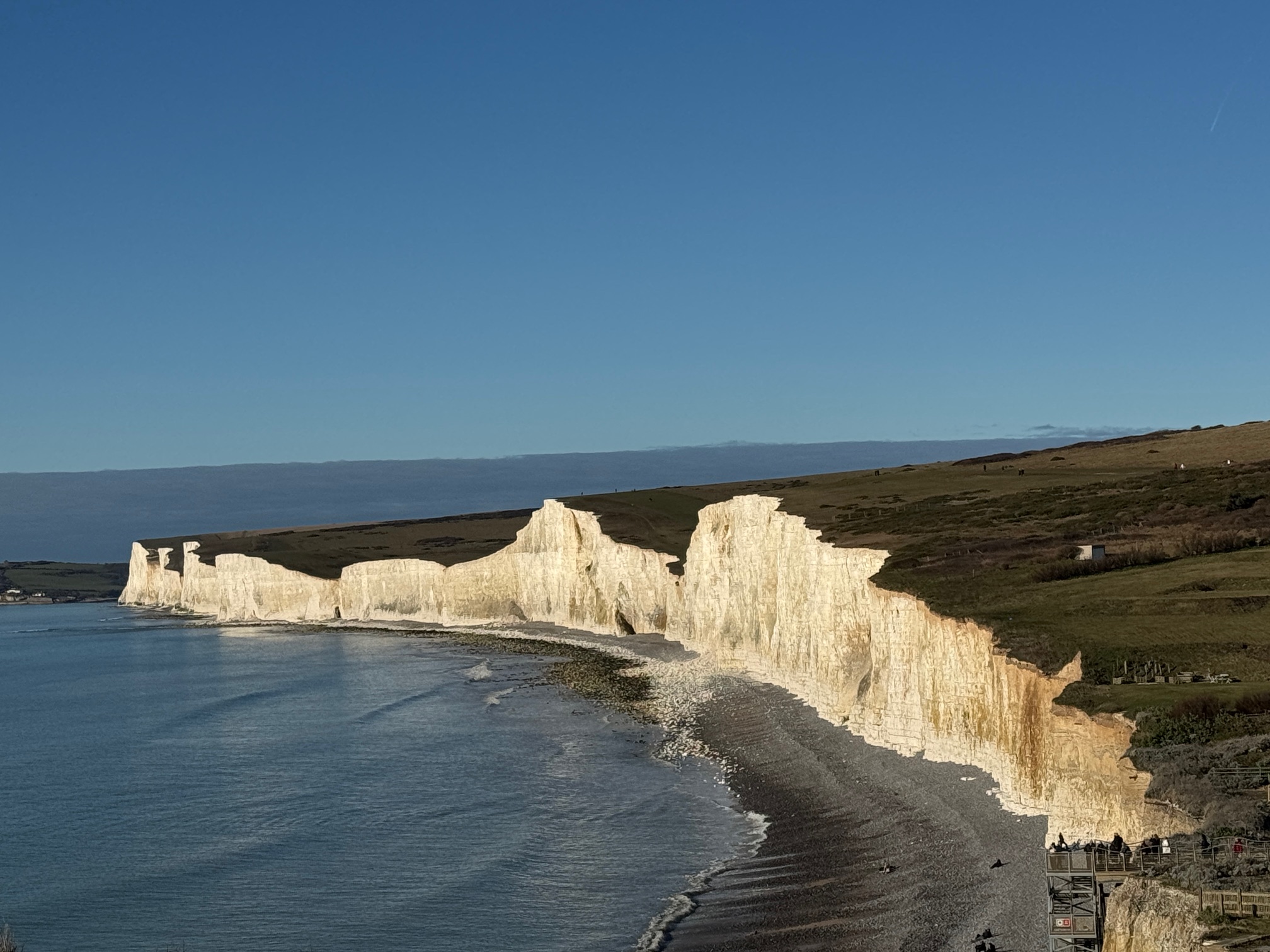
The other thing about winter: the light. Low sun, dramatic skies, that golden quality you get on clear mornings. Even if you don't care about birds, the landscape itself is worth the trip.
Best Spots for Winter Wildlife at Seaford Head
Hope Gap viewpoint: The highest point of the Seaford Head walk, about a mile west of the car park. This is your best vantage point for scanning the sea for divers, grebes, and seaducks. Bring binoculars—they make a massive difference for seabird watching.
The beach below Seaford Head: Accessible via the steps near the car park. Winter brings waders to the shoreline—turnstones, sanderlings, ringed plovers. They're not shy if you keep your distance and move slowly.
Seaford Head nature reserve grassland: The inland section of the walk. This is where you'll find winter thrushes—fieldfares and redwings—feeding on berries. Also skylarks, meadow pipits, and if you're very lucky, short-eared owls hunting in late afternoon.
What You'll Actually See (Probably)
Here's the honest list—species you've got a decent chance of seeing on a winter morning walk, not the ultra-rare stuff that requires sitting in a hide for six hours.
Seabirds Offshore
Gannets: Massive white seabirds with black wingtips, wingspan nearly 2 metres. They feed by diving into the sea from height—spectacular to watch when they hit the water. You'll see them year-round, but winter concentrations can be impressive, especially if there's a shoal of fish close to shore.
Cormorants: Dark, prehistoric-looking birds that sit on the water or rocks with their wings spread to dry. Often mistaken for seals when swimming because only their necks stick out of the water. Very common here.
Great crested grebes: Winter visitors to the Sussex coast. Elegant diving birds with distinctive head plumes (less prominent in winter). Float quite far offshore. Binoculars definitely needed to appreciate these properly.
Kittiwakes: Small gulls with completely black wingtips and a gentle "kitti-wake" call. Less common than the big herring gulls but more interesting to watch. They wheel and dive gracefully rather than just screaming and nicking chips.
Shore Birds
Turnstones: Chunky little waders with tortoiseshell patterns on their backs. They do exactly what their name suggests—turn over stones and seaweed looking for food. Entertaining to watch and quite tolerant of people if you don't rush at them.
Sanderlings: Small, pale waders that run up and down the beach chasing the waves like wind-up toys. Surprisingly fast. Often in small flocks. You'll know them when you see them because their behaviour is so distinctive.
Oystercatchers: Impossible to miss—black and white with long orange bills and pink legs. Very vocal. Present year-round but easier to see in winter when they're on the beaches rather than nesting inland.
Grassland Birds
Skylarks: The sound of the South Downs. They sing while hovering high above the grassland—a continuous, complicated warbling that goes on for minutes. In winter they're often on the ground feeding, but you'll still hear them on milder days.
Fieldfares and redwings: Winter thrushes from Scandinavia. Fieldfares are grey-headed with spotted chests; redwings have a distinctive red patch under the wing and a pale stripe above the eye. They travel in flocks, often feeding on hawthorn berries in the scrub areas.
Stonechats: Small birds that perch on top of gorse bushes. Males are distinctive—black heads, white collars, orange breasts. They make a call that sounds like two stones being knocked together, hence the name. Present year-round but easier to spot in winter.
The Rare Stuff (Don't Expect It, But...)
Occasionally, Seaford Head produces something special. I'm mentioning these not because you'll see them, but because the possibility exists, which adds a bit of excitement to winter walks.
Short-eared owls: Winter visitors that hunt over the grassland in late afternoon. They quarter the ground looking for voles, flying low with distinctive slow wingbeats. If you see one, you'll remember it. But you probably won't—they're irregular visitors and favour certain winters over others.
Mediterranean gulls: Rarer than their name suggests in Britain. Similar to black-headed gulls but with completely white wings and a heavier bill. A few turn up most winters among the larger gull flocks on Seaford beach.
Snow buntings: Arctic breeders that occasionally appear on the beach in hard winters. Small, pale finches with white wing patches. Needle in a haystack territory, but birders do report them from Seaford Head every few years.
Peregrine falcons: The cliffs around here support nesting peregrines. In winter they hunt over the headland—you might see one stooping at the pigeon flocks. Fast, powerful, absolutely thrilling to watch if you're lucky enough to catch one hunting.
Practical Wildlife Watching Tips
- Timing matters: Early morning (around sunrise) and late afternoon (2-3 hours before sunset) are peak activity times. Midday can be quiet. Weekday mornings are best for avoiding disturbance from walkers and dogs.
- Dress properly: You'll be standing still more than walking, which means you'll get cold. Layer up. Windproof outer layer essential. Hat and gloves even on days that don't seem that cold—the clifftop wind is brutal.
- Binoculars help enormously: You don't need £1,000 Swarovskis. Decent 8x42 or 10x42 binoculars (£100-200) make a massive difference for seabird watching. The difference between "there's a bird" and "that's a great crested grebe."
- Move slowly and quietly: Sudden movements and noise spook wildlife. If you want to approach birds on the beach, move gradually, stop frequently, avoid direct approaches. Let them relax and they'll often let you get surprisingly close.
- Check the tide times: Low tide exposes more feeding areas for waders. High tide pushes birds closer to shore where they're easier to see. Either can be good, but for different reasons.
- Weather affects what you see: Strong onshore winds after storms can push unusual seabirds close to shore—great for watching from the clifftop. Calm, clear days are better for spotting distant birds on the sea.
What You Won't See (Managing Expectations)
Let's be realistic. You're not going to see puffins—they're not here. Dolphins occasionally pass through, but it's rare and unpredictable. The big spectacle seabird colonies you might have seen in Scotland or Wales don't exist here—the cliffs are too low and too disturbed.
This isn't a criticism. Seaford Head offers accessible coastal wildlife watching without needing to trek to remote headlands or book expensive boat trips. It's brilliant for what it is—a place where you can combine a pleasant walk with genuine wildlife encounters if you take your time and pay attention.
Beyond Birds
The wildlife here isn't just birds, though they're the most obvious. Winter brings grey seals close to shore—you'll often see their heads poking out of the water, looking remarkably dog-like. They're curious and might watch you watching them.
Butterflies obviously aren't around in winter, but the clifftop grassland in summer supports excellent populations—chalkhill blues, marbled whites, common blues. Worth knowing if you're planning a return visit in warmer months.
The rock pools at the base of the cliffs host the usual suspects—crabs, sea anemones, small fish. Not unique to winter, but always there if you're interested in that sort of thing.
Photography note: Winter light is fantastic for photography, but the contrast between bright sky and dark cliffs can be tricky. Early morning or late afternoon gives you the best conditions. For bird photography, you'll need a long lens—at least 300mm, ideally more. Phone cameras are fine for landscape shots but hopeless for birds unless they're absurdly close.
Combining Wildlife Watching with Your Walk
You don't need to choose between walking and wildlife watching. The standard Seaford Head circuit (covered in last week's blog post) takes about 90 minutes at normal walking pace. Add regular stops to scan the sea and watch birds, and you're looking at 2-3 hours. That's a pleasant morning out, not a gruelling expedition.
Bring a small backpack with a flask of something hot, some biscuits, and binoculars if you have them. Find a sheltered spot out of the wind when you reach Hope Gap, sit for 20 minutes scanning the sea, and you'll be surprised what appears. That's wildlife watching at its simplest and most effective.
More Seven Sisters Wildlife & Walking Guides
Looking for walking routes? Check our beginner's guide to Seven Sisters walks. Planning your visit? See our complete Seven Sisters visitor guide with parking, facilities, and nearby accommodation in Brighton, Seaford, and Eastbourne.