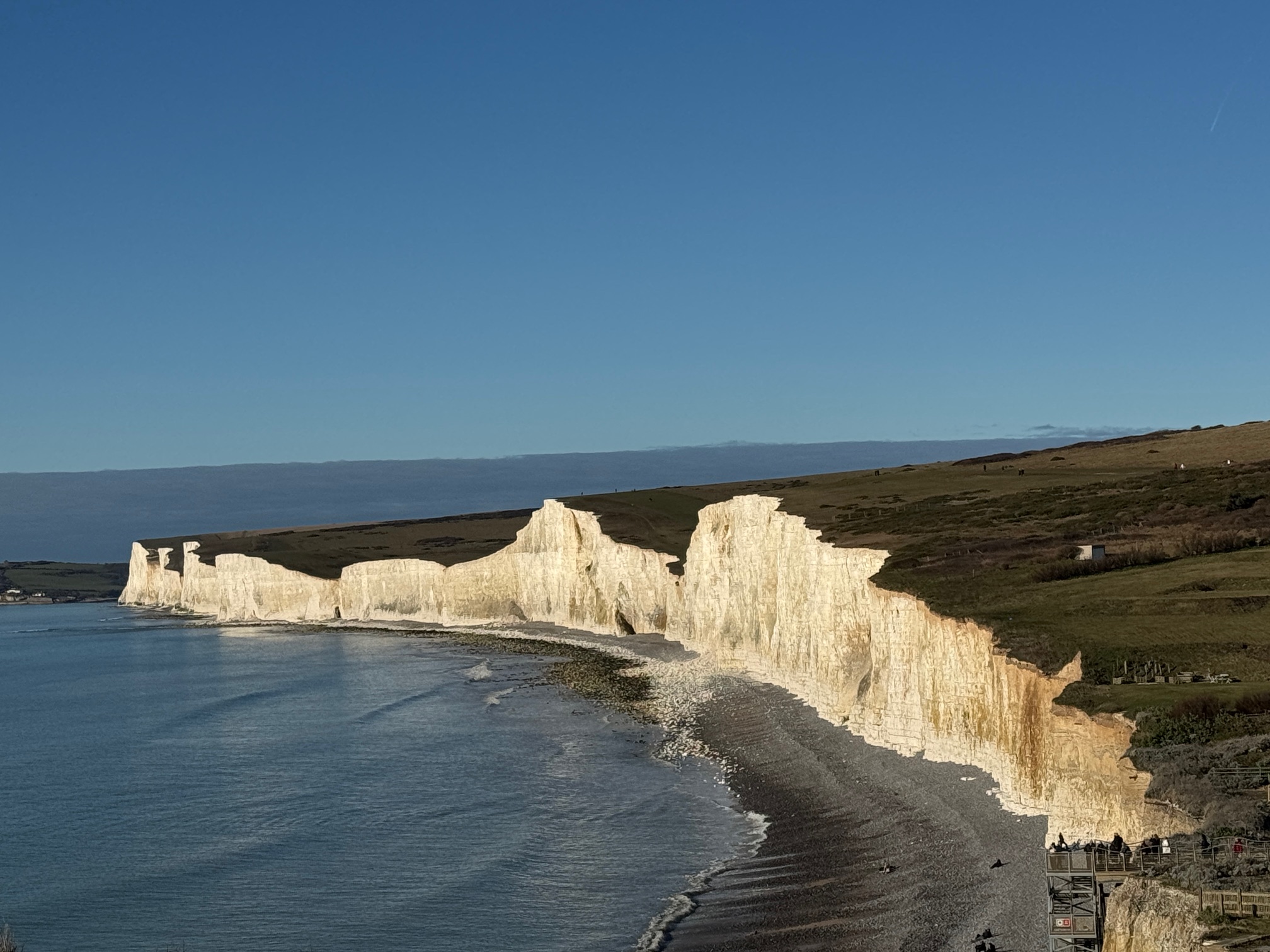
Birling Gap Stairs Closed After Cliff Fall: What Visitors Need to Know
The stairs at Birling Gap are currently closed to the public following a cliff fall that has damaged the beach access route. This is a significant but not unexpected development—Birling Gap's chalk cliffs erode at roughly one metre per year, and cliff falls are a regular occurrence. What makes this closure important is that the stairs are the only safe access point to the beach at Birling Gap, affecting thousands of visitors who use this location as a gateway to the Seven Sisters.
If you're planning to visit Birling Gap or walk the Seven Sisters, you need to know what this closure means for beach access, alternative routes, and how long the stairs are likely to remain closed.
What Happened
A cliff fall at Birling Gap has caused damage to the stairway structure that provides beach access from the clifftop car park and National Trust café. The exact extent of the damage varies with each incident, but cliff falls at Birling Gap typically involve hundreds or thousands of tonnes of chalk collapsing from the cliff face, taking sections of the cliff edge and any structures near it.
The stairs have been relocated multiple times over the years as erosion has forced them further inland. Each major cliff fall requires assessment of structural safety before the stairs can reopen, and in some cases, complete rebuilding is necessary.
Do not attempt to access the beach via alternative routes: Climbing down the cliff face or using unofficial paths is extremely dangerous. The chalk is unstable, crumbles easily, and people have been seriously injured or killed attempting to bypass closures.
Why the Stairs Are Closed
The National Trust closes the Birling Gap stairs immediately following any cliff fall for several reasons:
- Structural safety: Cliff falls can undermine the stairway foundations or damage the structure itself, making it unsafe to use
- Ongoing instability: After a major cliff fall, further collapses often follow as the cliff face adjusts to the new profile
- Assessment required: Engineers need to inspect the stairs, cliff edge, and surrounding area to determine if it's safe to reopen
- Debris clearance: Tons of fallen chalk often block the beach below, creating hazards
Reopening timelines depend entirely on the damage. Minor incidents might result in closures of days or weeks. More serious damage can mean months of closure while repairs or rebuilding take place. In some cases, the stairs need to be completely relocated further inland.
Current Beach Access at Birling Gap
With the stairs closed, there is no safe beach access at Birling Gap itself. The clifftop remains accessible—you can still visit the National Trust café, use the car park, and walk the clifftop paths—but you cannot reach the beach via the stairs.
Do not attempt to:
- Climb down the cliff face
- Use ropes or unofficial paths
- Access the beach from the closed stairway
- Walk along the beach from Cuckmere Haven (tides and cliff falls make this dangerous)
National Trust staff and signs will indicate the closure. Ignoring these warnings puts you at serious risk of injury or death.
Alternative Beach Access Near Birling Gap
If you specifically want beach access near the Seven Sisters, your options are:
1. Cuckmere Haven beach: About 3km (2 miles) west of Birling Gap, Cuckmere Haven offers free, unrestricted beach access with no stairs required. The beach is shingle and chalk debris, not sand, but it's safe, accessible, and gives you views of the Seven Sisters from sea level. Park at Seven Sisters Country Park (Exceat) and walk 20 minutes down the valley to the beach.
2. Seaford beach: A proper shingle beach about 5km west of Birling Gap, with promenade access, facilities, and no cliff-related hazards. It's less dramatic scenically but completely accessible and safe. Free parking available in Seaford town or at the seafront car parks.
3. Eastbourne beaches: East of Birling Gap (beyond Beachy Head), Eastbourne has sandy beaches with full facilities, promenade access, and no erosion concerns. About 8km from Birling Gap by road.
For fossil hunting: Cuckmere Haven beach is your best alternative. The beach is made of chalk and flint eroded from the Seven Sisters, and you'll find echinoid fossils, belemnites, and other specimens in the loose material.
What This Means for Seven Sisters Walks
The clifftop walking routes along the Seven Sisters are not affected by the Birling Gap stairs closure. You can still:
- Walk the full Seven Sisters ridge from Seaford to Eastbourne
- Park at Birling Gap and walk the clifftop path in either direction
- Use the National Trust café and facilities at Birling Gap
- Access all clifftop viewpoints and paths
What you cannot do is combine a clifftop walk with beach access at Birling Gap. If your plan involved walking the cliffs then descending to the beach at Birling Gap, you'll need to either skip the beach section or use Cuckmere Haven instead.
Popular walks still accessible:
- Birling Gap to Beachy Head (clifftop, no beach involved)
- Seaford to Cuckmere Haven via Seaford Head (includes beach access at Cuckmere Haven)
- Cuckmere Haven to Birling Gap (clifftop section only, no beach at Birling Gap)
- Full Seven Sisters traverse (entirely clifftop, unaffected by stairs closure)
When Will the Stairs Reopen?
There is no confirmed reopening date. The National Trust will announce this once engineers have assessed the damage and completed any necessary repairs. Historically, Birling Gap stairs closures have lasted:
- Minor incidents: 1-2 weeks for safety assessment and debris clearance
- Moderate damage: Several weeks to months for repairs
- Major structural damage: Months, potentially requiring complete stair relocation
The National Trust posts updates on their website and social media when reopening timelines become clear. Check before visiting if beach access is essential to your plans.
Staying Updated on Birling Gap Access
- National Trust website: Check the Birling Gap page for current access status
- Call ahead: The National Trust café can confirm current access status
- Social media: National Trust South East posts updates on closures and reopenings
- On arrival: Signs at the car park and clifftop clearly indicate if stairs are closed
Why Cliff Falls Happen at Birling Gap
Birling Gap experiences frequent cliff falls due to the nature of chalk and coastal erosion:
Chalk is soft and porous: Unlike harder rocks, chalk absorbs water, which weakens its structure. Rainwater and groundwater flowing through the chalk erode it from within.
Wave action undercuts the cliff: Waves constantly pound the cliff base, creating an overhang. Once the overhang becomes too heavy, gravity causes collapse.
Freeze-thaw cycles: Water in cracks freezes and expands, fracturing the chalk. Repeated cycles weaken the cliff until sections fall.
Natural process: The Seven Sisters have been eroding since they formed 10,000 years ago. The current coastline has retreated roughly 10 kilometres since the cliffs first emerged above sea level. Erosion of about one metre per year is normal and expected.
Birling Gap is particularly vulnerable because it sits at the foot of the cliffs with infrastructure (stairs, cottages, café) very close to the cliff edge. The National Trust has repeatedly moved or demolished buildings as erosion advances.
Safety Around Birling Gap During Closure
Even with the stairs closed, you can safely visit Birling Gap for clifftop access. However, follow these safety rules:
- Stay behind barriers and fencing: If areas are fenced off, they're unstable and dangerous
- Keep back from cliff edges: The recommended distance is at least 5 metres, but further is safer
- Watch for cracks in the ground: Cracks parallel to the cliff edge indicate instability—stay well back
- Don't attempt beach access: Use alternative beaches if you need sea-level access
- Supervise children closely: The cliff edge is unfenced in many places
Recent cliff falls can destabilise large sections of cliff that look solid but are actually fracturing internally. More collapses often follow the initial fall, sometimes days or weeks later.
Never stand at the cliff edge for photos: Multiple deaths have occurred at the Seven Sisters from people posing at cliff edges. The chalk can crumble suddenly, and there's no warning before it gives way. Stay well back.
Long-Term Future of Birling Gap
Birling Gap is fighting a losing battle against erosion. The café, car park, and remaining infrastructure sit very close to the cliff edge. The National Trust has adopted a managed retreat policy—rather than trying to stop erosion (which is impossible and environmentally damaging), they accept that buildings and facilities will eventually be lost to the sea.
The stairs have been relocated multiple times and will continue to be moved as erosion advances. Eventually, the clifftop infrastructure will need to be relocated further inland or abandoned entirely. This might happen within 20-50 years depending on erosion rates.
For visitors, this means enjoying Birling Gap while it exists in its current form. The location is temporary by nature—the cliffs, the beach access, the buildings—all will look different in a generation's time.
Visitor Impact and Planning
If you're planning a Seven Sisters visit and beach access matters to you:
Check before you go: Verify whether the Birling Gap stairs are open if beach access is essential to your plans.
Have a backup plan: Cuckmere Haven is the best alternative for Seven Sisters beach access. It's slightly further to walk but equally scenic.
Adjust expectations: If stairs are closed, focus on the clifftop walks, which are spectacular and completely accessible regardless of beach closures.
Visit the café anyway: The National Trust café at Birling Gap remains open during stairs closures, and you can still enjoy clifftop views and access the walking routes.
Alternative Plans If Birling Gap Stairs Are Closed
- Plan A (clifftop only): Park at Birling Gap, walk to Beachy Head or toward Cuckmere Haven along clifftop paths. Return the same way or via bus.
- Plan B (beach access): Park at Exceat, walk to Cuckmere Haven beach for sea-level views and fossil hunting, then walk clifftop to Birling Gap if desired.
- Plan C (full experience): Start at Seaford, walk clifftop to Cuckmere Haven, descend to beach, explore, climb back up, continue to Birling Gap (clifftop only), then onward or return.
What the National Trust Is Doing
The National Trust manages Birling Gap and is responsible for maintaining safe public access. Following cliff falls, they:
- Immediately close affected areas and install warning signs
- Commission structural engineers to assess damage and safety
- Clear debris where safe to do so
- Repair or rebuild stairs if feasible
- Relocate infrastructure when erosion makes current locations untenable
- Communicate closures and reopenings via their website and on-site signage
The National Trust does not try to prevent erosion—the cliffs are designated as a Site of Special Scientific Interest, and natural erosion processes are part of the protected landscape. Their role is to manage safe access while accepting that the coastline will continue retreating.
Local Perspective
For those of us who visit the Seven Sisters regularly, Birling Gap stairs closures are a familiar part of the landscape's rhythm. The cliffs are dynamic, constantly changing, and closures following cliff falls happen every few years. Most locals adapt by using Cuckmere Haven for beach access or accepting that some visits will be clifftop-only.
The closures are frustrating if you've travelled specifically for beach access, but they're a reminder that this coastline is wild, active, and genuinely dangerous. The National Trust's caution is justified—chalk cliffs kill people who ignore warnings or take risks.
Birling Gap will reopen eventually. It always does. But the timeline is uncertain, and patience is required while safety assessments and repairs take place.
Planning Your Seven Sisters Visit?
For current walking routes and alternatives to Birling Gap beach access, see our Seven Sisters walking guides. Learn more about chalk cliff erosion in our geology guide. For safety information, read our complete safety guide.