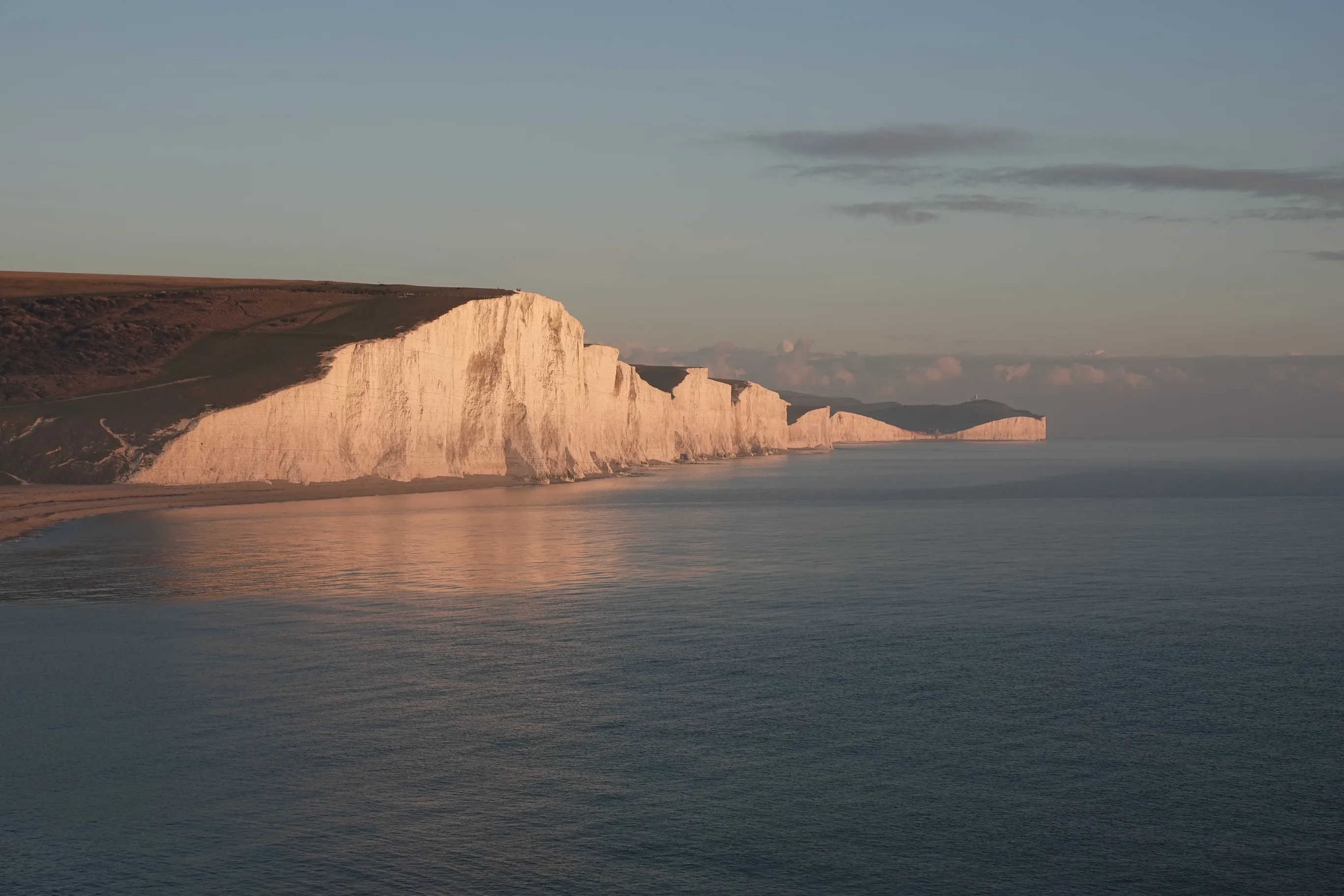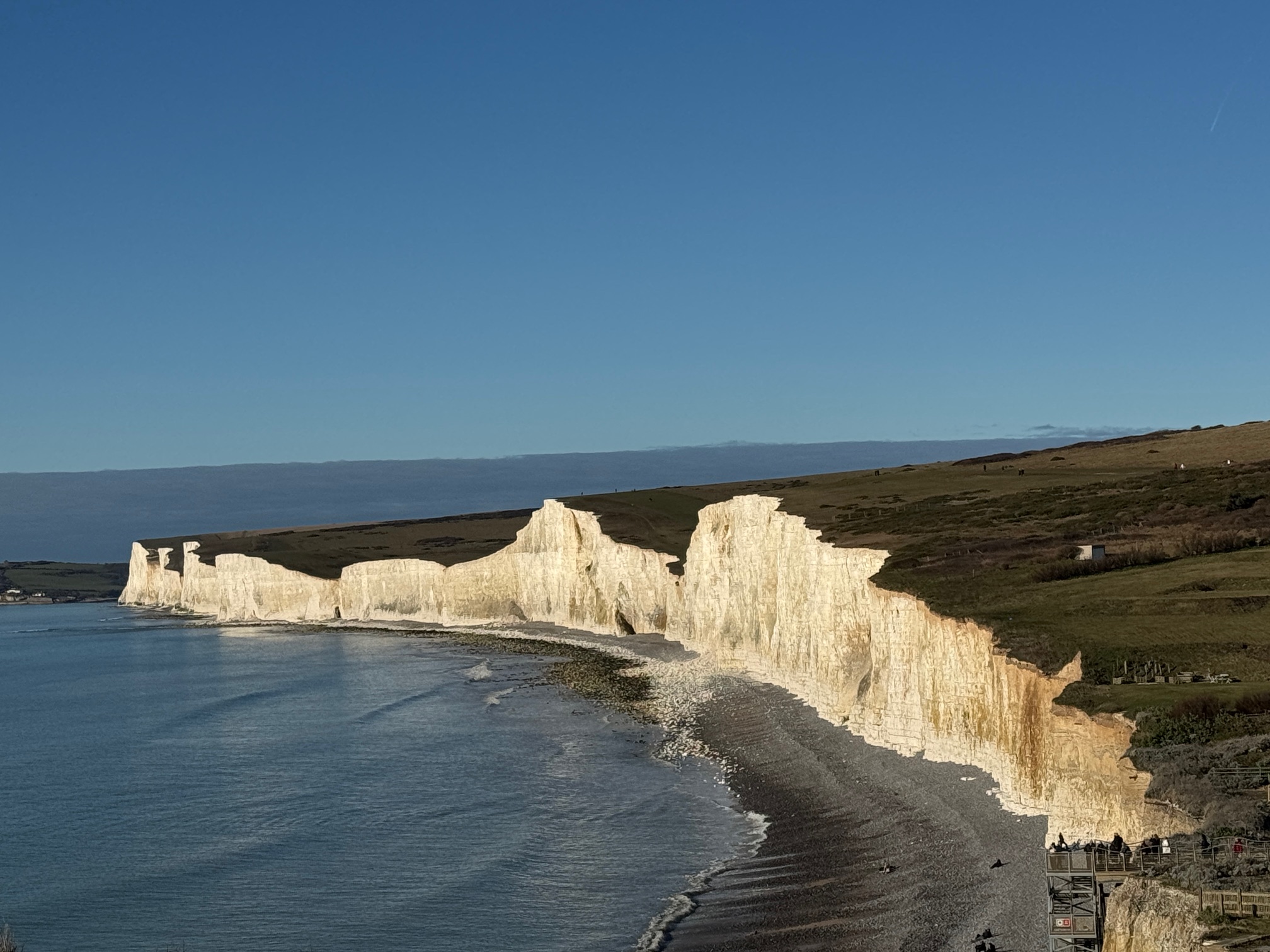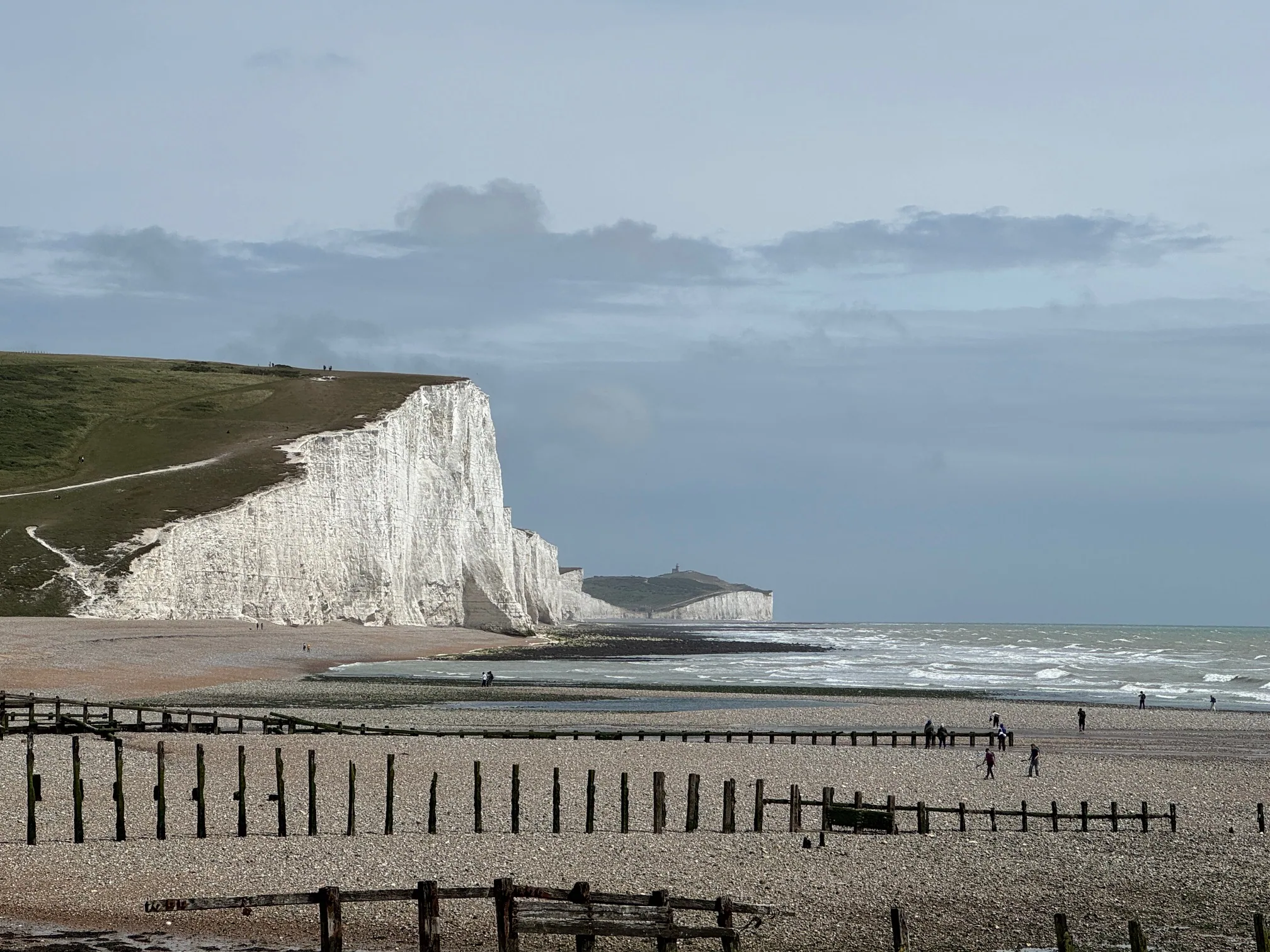
The Sea Fog Arrived 20 Minutes After We Left the Car Park: What Happened Next
It was a Tuesday in July. The Met Office had forecast sunshine, a light southwesterly, and 22°C for Seaford. We left Birling Gap at 10:40am in short sleeves. By 11:05am we were in zero-visibility sea fog, the temperature had dropped to 16°C, and the chalk path 30 centimetres ahead of us was invisible.
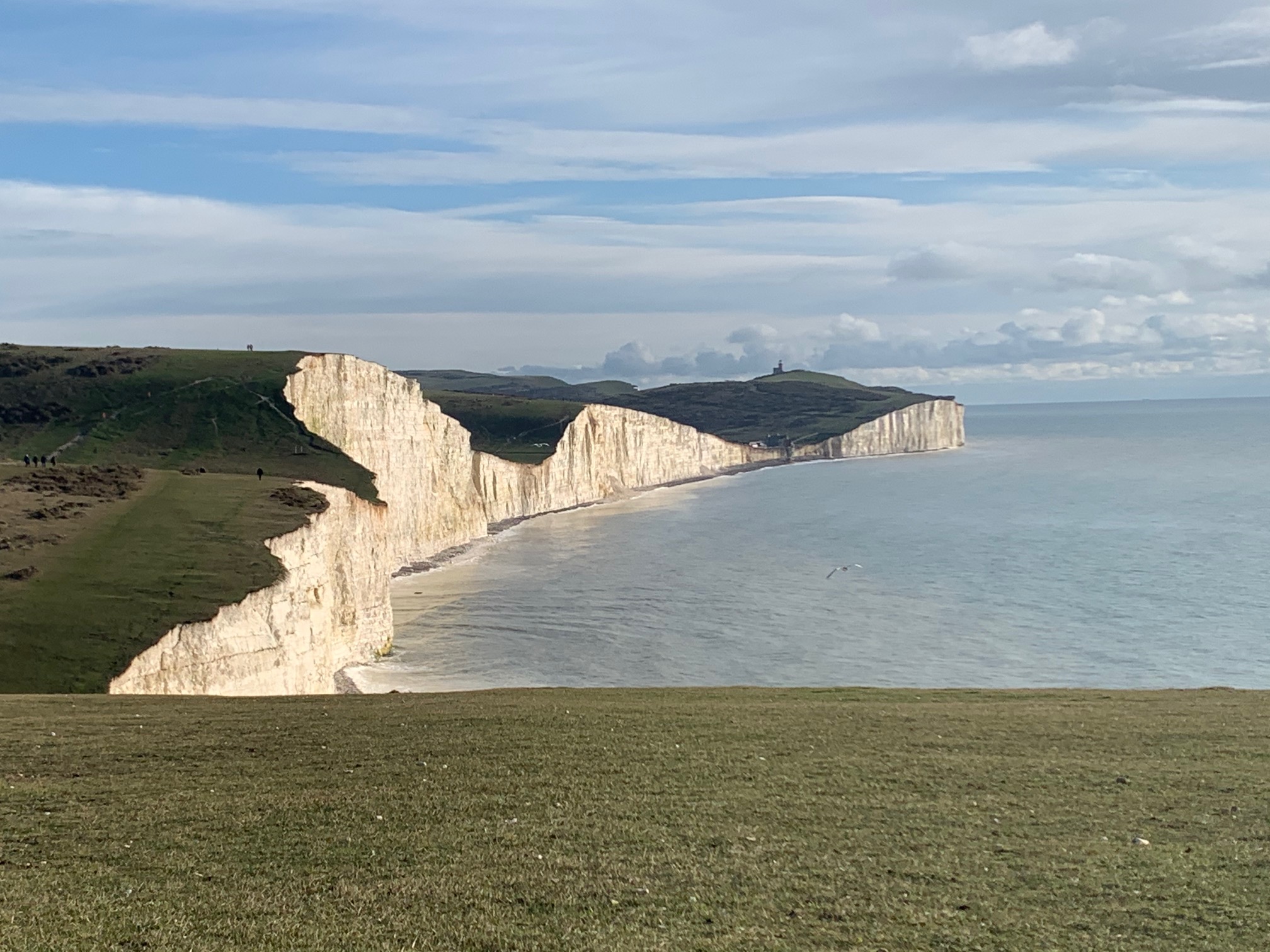
Nobody warned us. There was nothing in the forecast. There was no gradual build-up. The fog came in off the Channel, reached the cliff edge, and within about 90 seconds had consumed the entire ridge. That is not an exaggeration. One moment we could see the full Seven Sisters stretching west. The next we couldn't see our own hands at arm's length.
This is not an unusual event at Seven Sisters. It's called a sea fret — a low coastal fog that forms over the cold Channel water in warm weather and rolls inland, particularly in late morning when the land heats up and creates convection. It happens several times a summer. Most walkers have no idea it's coming.
What Sea Fog at the Seven Sisters Actually Feels Like
The temperature drop happens faster than you expect. We measured 22°C at the car park and 16°C on the ridge within 25 minutes of the fog arriving — a 6°C drop with no change in actual air temperature, just the loss of direct sun and the arrival of cold damp air off the sea. If you're in a t-shirt and shorts, this is instantly uncomfortable. If you're a child, it can lead to distress quickly.
The visibility drops to somewhere between 5 and 20 metres depending on the density of the fret. You can see the path immediately in front of you. The cliff edge is invisible. The chalk is still there, obviously, but the line between the white chalk path and the white fog is difficult to read, which is exactly the kind of situation where you do not want to be walking confidently toward the edge.
The sound changes too. Wind that was audible becomes muffled. The sea, which you'd been hearing below all morning, goes quiet. Other walkers become voices without faces. The whole landscape, which was open and dramatic a minute ago, has shrunk to a circle of damp grass.
What We Did, and What We Should Have Done
What we did: stopped immediately. Sat down on the path. Put on the layers we'd brought (we'd been walking these cliffs long enough to carry a waterproof and a fleece regardless of forecast). Checked our position on OS Maps offline — this matters because phone signal becomes unreliable in heavy fog. Waited fifteen minutes to see if the fog would clear, which it didn't. Then walked slowly back east toward Birling Gap, staying well away from the cliff edge.
What we should also have done: told someone our route before leaving. We hadn't, because it was a familiar Tuesday morning walk in sunshine. If the fog had been more severe and we'd had a navigational problem, nobody would have known where to look.
If you're in sea fog on the clifftop, stop moving toward the edge. The cliff is still there. Your instinct is to check where you are by walking toward the view. That instinct is wrong. Sit down on the path, orient yourself using an offline map, and move inland — away from the edge — before doing anything else.
How to Recognise a Sea Fret Before It Arrives
We've now watched frets arrive enough times to recognise the warning signs — though not always fast enough to act on them.
The horizon disappears first. If you're walking on a clear day and notice that you can no longer see where the sea meets the sky — it's gone flat and hazy rather than showing a clear line — that's sea fog building offshore. It may come in. It may not. But it's a signal to check your position and ensure you have a layer accessible.
The air temperature drops before the fog arrives. In our experience, there's sometimes a 3–5 minute period where the air cools noticeably before visibility drops. It feels like moving into shade, except there's no shade. If this happens and the horizon is already hazy, the fog is close.
Check the sea, not the sky. Standard weather forecasting models use air temperature data from inland stations. They don't capture what's happening on the surface of the Channel, which is where frets originate. A forecast that says clear sky is accurately forecasting the sky. It's saying nothing about what the sea is doing 2km offshore.
The Fret Pattern Through the Season
Sea frets at Seven Sisters are most common in May, June, and July — the months when the land is warming fastest but the Channel water is still cold from winter. The temperature differential between air and sea is greatest during these months, which is what creates the fog.
August tends to see fewer frets because the sea surface has warmed enough to reduce the differential. September onwards, sea mist becomes more of an early morning phenomenon that usually burns off by mid-morning rather than rolling in mid-afternoon.
The worst combination for unexpected sea fog is: warm sunny morning, light southerly or southwesterly wind, sea temperature still below 15°C. If all three apply, carry your layers accessible, not buried in your pack.
How Long It Lasts
Unpredictably. The fret that caught us that July Tuesday lasted 40 minutes on the ridge before lifting. We've seen frets that cleared in 10 minutes. We've seen frets that settled for three hours and didn't clear until a fresh onshore wind drove them back out to sea.
The useful thing to know: if you're caught in fog and can see the cliff edge, you're not in danger — you just have lower visibility than ideal. Walk to the inland side of the path, move toward the nearest safe exit point (Birling Gap visitor centre or the descent to Exceat), and wait it out there if needed. The café at Birling Gap is a genuinely good place to wait — they've seen people come in from fog-stranded ridge walks before.
Practical Sea Fog Preparation
- Always carry a layer: Not in your bag at the bottom — accessible. A mid-layer you can reach in 30 seconds. 6°C in 20 minutes is a significant body temperature challenge for children in particular.
- Download offline maps before leaving: OS Maps or Ordnance Survey app, with your route pre-loaded. In heavy fog, phone signal goes. If your map is cloud-only, you're navigating by memory.
- Tell someone your route: Five seconds before you leave. "We're walking from Birling Gap to Cuckmere and back, back by 3pm." That's the whole thing. If something goes wrong, rescuers need to know where to look.
- Know the two nearest exit points: For the main ridge, that's Birling Gap (east end) and the descent to Exceat (west end). If fog closes in, you should know which is closer.
- Watch the horizon at the start of your walk: If you can't see a clear sea-sky line when you set out on a warm day, you're already in a fret-risk window. Note it and plan accordingly.
What the Fog Actually Looks Like (When You're Safe)
Once we'd moved to a safe position that July, we did something that might seem odd: we sat and watched. The fret was, at close range, genuinely beautiful. The chalk cliff edge appeared and disappeared. Other walkers materialised and vanished. The grass had drops of condensation on every blade — we were inside a cloud, which is technically what we were. The sound was strange: the sea below us was audible again but distorted, echoey, closer-sounding than when we'd been able to see it.
If you're with experienced walkers, in a safe position away from the cliff edge, with layers on and a map downloaded — sea fog at Seven Sisters is one of the more unusual outdoor experiences on the south coast. The cliffs are still there. They just don't want you to walk on them right now.
More Seven Sisters Weather and Safety Guides
For the full weather pattern guide including wind patterns and microclimate mechanics, see our Seven Sisters weather guide. For safety essentials before your walk, see our safety guide. For the complete route guide and what to expect on the ridge, see our complete walk guide.
Planning the walk itself?
Four routes run along these cliffs and they are not interchangeable — a flat 3km riverside stroll, the classic 6.5km Exceat to Birling Gap crossing, a short Birling Gap loop, and the full 21.9km Seaford to Eastbourne ridge. Compare distance, ascent and difficulty before you pick one.
- Easy Birling Gap Short Loop 2 km 45 min
- Easy Cuckmere Haven Beach 3 km 1 hour
- Moderate Exceat to Birling Gap 6.5 km 2-3 hours
- Challenging Seaford to Eastbourne 21.9 km 6-7 hours
We may earn a small commission on bookings made through this link, at no extra cost to you. More info.
£4.99 · 24-page PDF · Instant download
The Seven Sisters Ultimate Guide
The complete 24-page companion built from first-hand walks — every cliff, all four graded routes, tide windows and a parking strategy. Designed to work offline, right on the cliff top.
- All 7 cliffs — heights, geology & viewpoints
- Four graded walking routes, compared
- Tide windows, light calendar & day plans
- Parking strategy & seasonal planner
Just want the basics? Download the free 2-page walk guide
Want an expert-led Seven Sisters tour?
From guided cliff walks and wildlife safaris to geology hikes and photography tours — explore all our curated experiences with local guides.