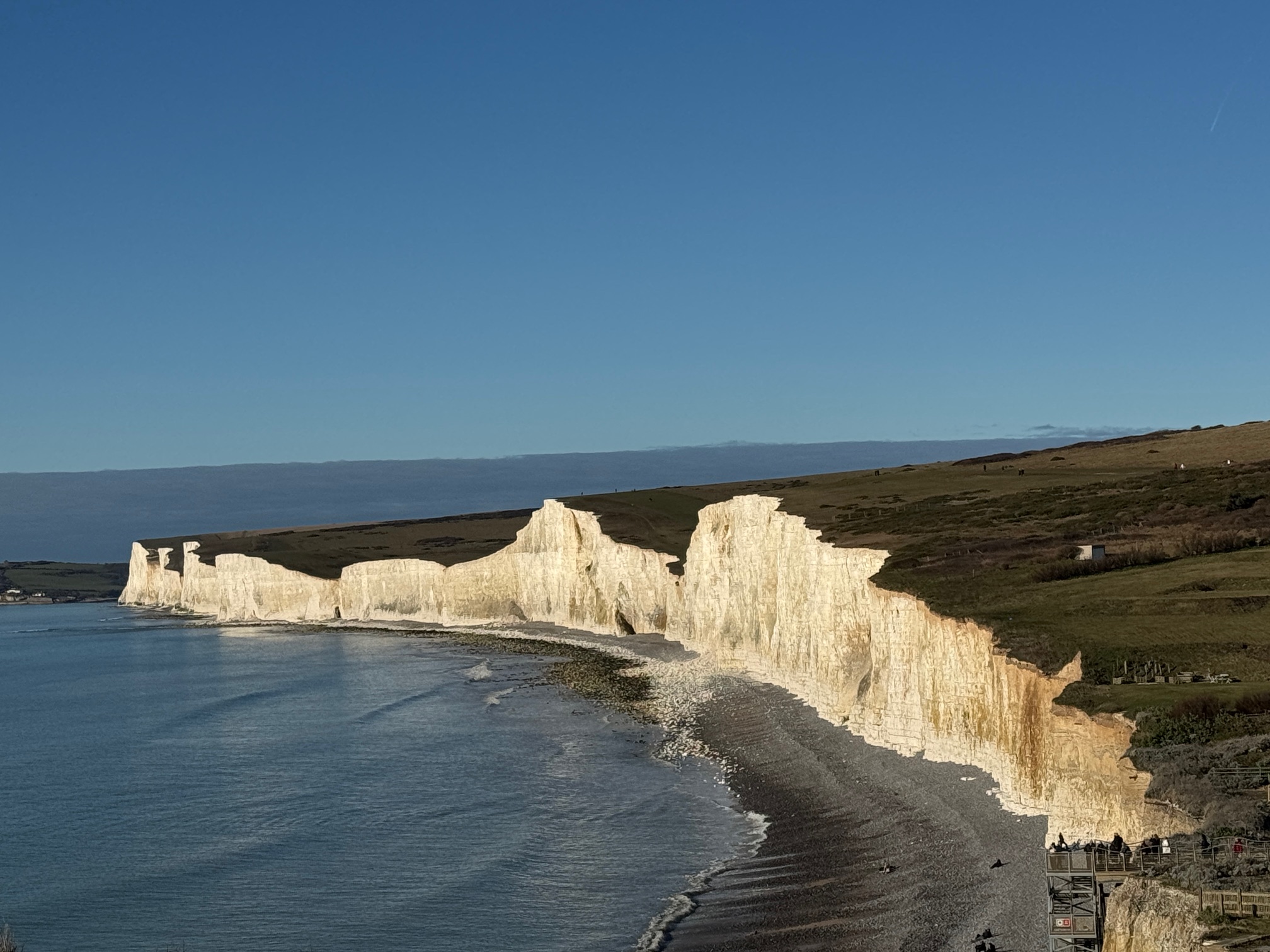
Seven Sisters
Seven Sisters National Nature Reserve
Designated by King Charles III on 19 March 2026 — England's most celebrated chalk coastline, now protected in perpetuity.
Designated by King Charles III on 19 March 2026 — England's most celebrated chalk coastline, now protected in perpetuity.
What is the Seven Sisters National Nature Reserve?
The Seven Sisters National Nature Reserve is a protected coastal landscape on the East Sussex coast of England, covering over 1,500 hectares (3,700 acres) of chalk cliffs, chalk grassland, Cuckmere River estuary, and intertidal zone between Seaford and Eastbourne. It was inaugurated by King Charles III on 19 March 2026 as the 13th in his planned series of 25 National Nature Reserves — the highest level of legal nature protection in England. The reserve sits within the South Downs National Park, remains free and open to the public, and is managed by Natural England.
On 19 March 2026, King Charles III designated Seven Sisters as a National Nature Reserve — the 13th in his planned series of 25 reserves, and the first major coastal NNR in south-east England. (Natural England / gov.uk)
The designation covers over 1,500 hectares of chalk downland, cliff face, Cuckmere valley estuary, and intertidal zone between Seaford and Eastbourne. It is the highest level of nature protection available in England — above SSSI, above AONB, above the South Downs National Park designation that was already in place.
For visitors, the cliffs remain free and fully accessible. What changes is the legal framework governing how the land is managed in perpetuity — development is now essentially impossible, and conservation management is legally mandated.
National Nature Reserve is the UK's highest designation for land of exceptional nature conservation importance. There are 224 NNRs in England, covering about 94,000 hectares. Most people have heard of them but few understand what the designation actually entails.
NNR status gives Natural England statutory powers to manage the site for conservation. Any development proposal must demonstrate it would not harm the NNR's conservation objectives — in practice, this makes development near-impossible.
Natural England must produce and maintain a management plan for the reserve that prioritises biodiversity. This includes chalk grassland restoration, invasive species control, coastal process management, and monitoring of protected species populations.
Designation does not restrict public access. The cliff paths, beaches, and countryside remain free and open. The cliffs were always a public right of way; NNR status does not change that, nor introduce any entry fees or permit requirements.
NNRs are designated as outdoor laboratories for ecological research. Universities, Natural England, and conservation bodies have formal access rights for long-term monitoring, species surveys, and habitat research.
The Seven Sisters NNR protects one of England's most biodiverse coastal systems. The chalk cliff environment supports species that exist almost nowhere else in the country.
The plateau above the cliffs is ancient chalk grassland — one of Europe's most biodiverse habitat types, containing more species per square metre than tropical rainforest in some surveys. It hosts Early Spider Orchid, Burnt Orchid, Pyramidal Orchid, Adonis Blue Butterfly, Chalkhill Blue Butterfly, and over 40 species of chalk-specialist plants.
The chalk cliff faces support nesting Peregrine Falcons (a protected species that returned to this stretch of coast in the 1990s), Fulmars, Kittiwakes, and Rock Pigeons. The unstable chalk also creates habitat for cliff-face specialists like Wall Rue fern and certain chalk-boring invertebrates.
The Cuckmere estuary is one of England's few remaining unmodified river mouths — the straightened channel runs alongside original oxbow meanders that now form brackish lagoons. These support rare wetland plants, otters, water voles, and nationally important populations of wading birds including Lapwing and Redshank.
The wave-cut chalk platform at the base of the cliffs is exposed at low tide and forms a rich intertidal ecosystem: Beadlet Anemones, Edible Crabs, Shore Crabs, Limpets, Periwinkles, Blennies, and — seasonally — Grey Seals haul out on the rocks between Birling Gap and Beachy Head.
The reserve boundary runs from Seaford Head in the west to Birling Gap in the east, encompassing the full Seven Sisters cliff sequence, the Cuckmere valley, and the farmland plateau above the cliffs. The core zone includes the cliff faces and intertidal platform; a surrounding buffer zone covers the chalk grassland and valley habitats.
NNR status has not changed how you visit. The cliffs remain free, open, and accessible from multiple entry points. What has changed is the long-term certainty that this coastline will never be compromised by development.
Train from London in 90 minutes. Parking at Birling Gap (tiered £2–£8, NT members free), Exceat (~£7/day), or Seaford town. Arrive before 9am weekends in summer.
From 45-minute easy beach walks to the full 21.9km ridge challenge. Seven graded routes with maps, timing, and difficulty ratings.
Ecology walks, geology tours, coastal safaris, and photography expeditions led by local specialists who know the reserve deeply.
The chalk cliffs erode rapidly. Essential safety rules for cliff edges, tides, weather, and what to do in an emergency on the reserve.
This page explains what NNR status means for visitors. For official conservation updates, access notices, and management plans for the reserve, see Seven Sisters Country Park, run by the South Downs National Park Authority, and Natural England's official designation notice.
Yes. Seven Sisters was officially designated a National Nature Reserve by King Charles III on 19 March 2026 — the 13th in his planned series of 25 reserves. It protects over 1,500 hectares of chalk downland, Heritage Coast, and wildlife habitat between Seaford and Eastbourne in East Sussex.
Nothing changes for visitors day-to-day. Access is free, open, and unrestricted as before. The significance is long-term: the designation legally protects the coastline against development in perpetuity and mandates active conservation management by Natural England.
19 March 2026. The designation ceremony was presided over by King Charles III at a formal event on the cliff plateau. It is the 13th National Nature Reserve in his series of planned 25 new reserves.
Over 1,500 hectares (roughly 3,700 acres), spanning the coastline between Seaford Head and Beachy Head. The reserve includes cliff faces, chalk grassland plateau, Cuckmere valley, estuary, and intertidal zone.
Protected species include Peregrine Falcon, Adonis Blue Butterfly, Chalkhill Blue Butterfly, Early Spider Orchid, Burnt Orchid, Grey Seal, Otter, Water Vole, Lapwing, Redshank, Skylark, and Yellowhammer — alongside over 200 species of chalk-specialist wildflowers, invertebrates, and coastal plants.
First-hand guides to the wildlife and ecology of the Seven Sisters NNR.
A few more corners of the Seven Sisters worth your time.
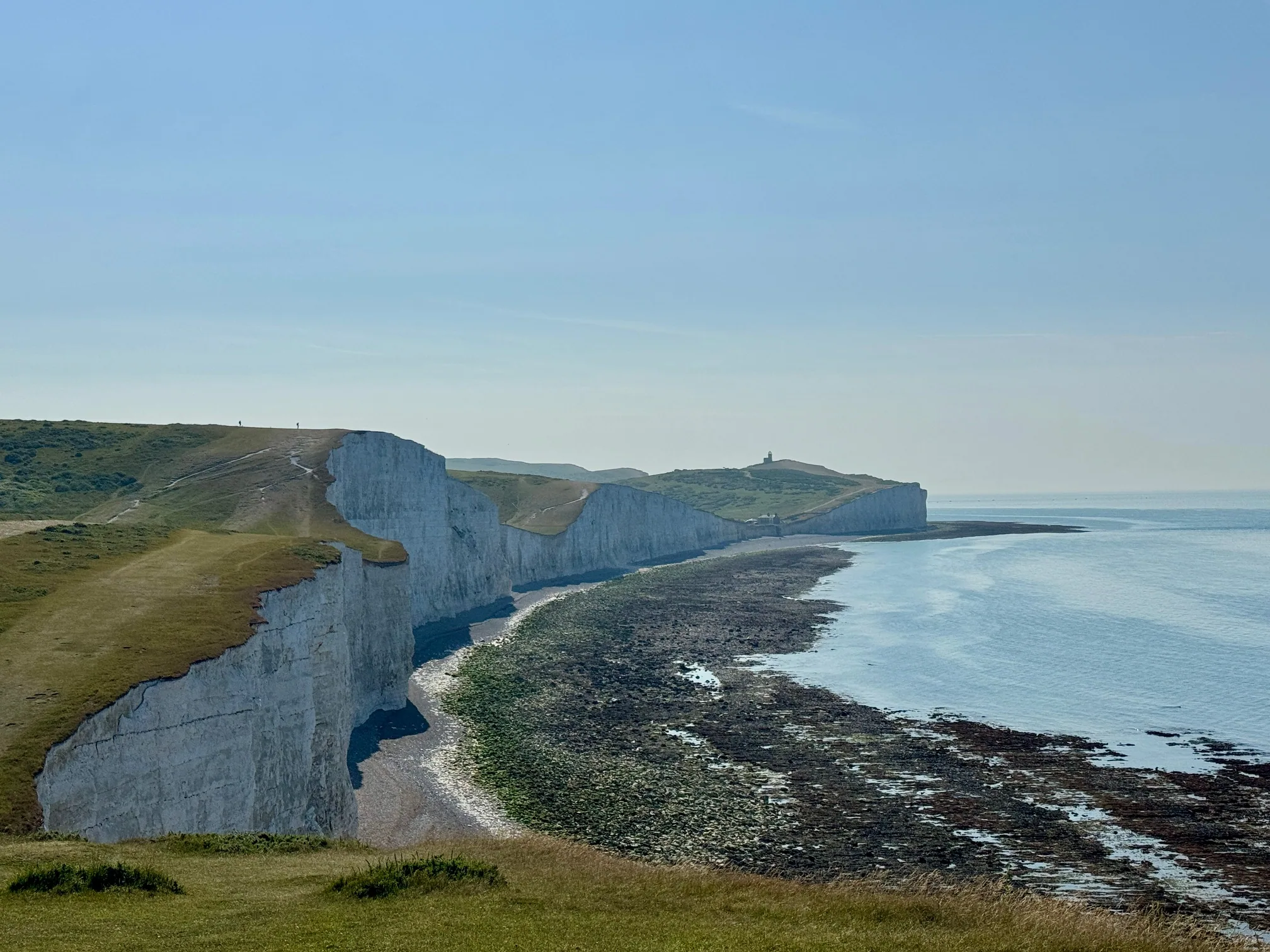 Walking routes
From the easy riverside stroll to the full clifftop traverse — pick your walk.
Explore
Guide
Walking routes
From the easy riverside stroll to the full clifftop traverse — pick your walk.
Explore
Guide
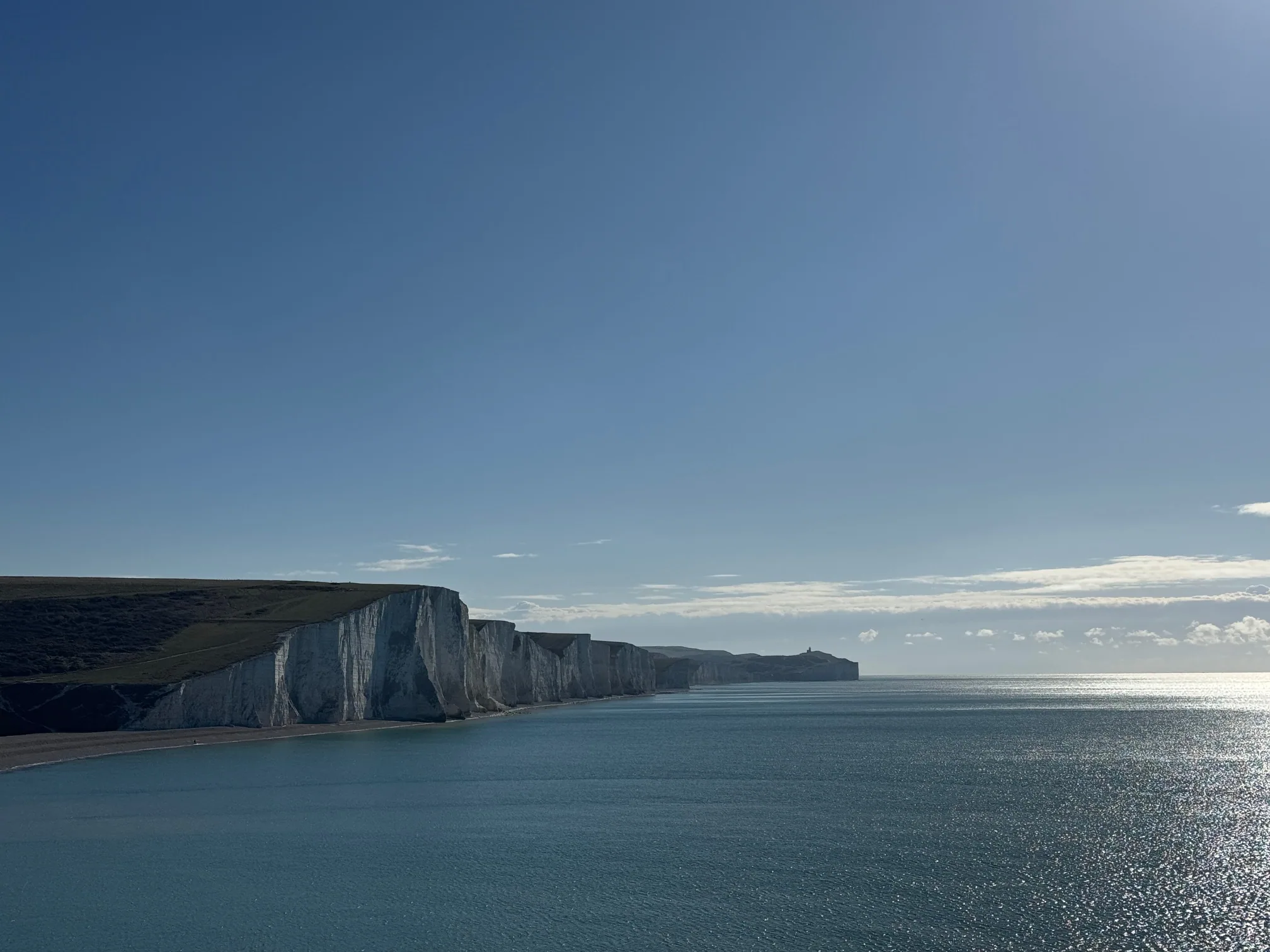 The complete guide
The complete first-hand guide to walking the Seven Sisters, start to finish.
Explore
Travel
The complete guide
The complete first-hand guide to walking the Seven Sisters, start to finish.
Explore
Travel
 From London
A door-to-door day trip from the capital, by train or car.
Explore
Stay
From London
A door-to-door day trip from the capital, by train or car.
Explore
Stay
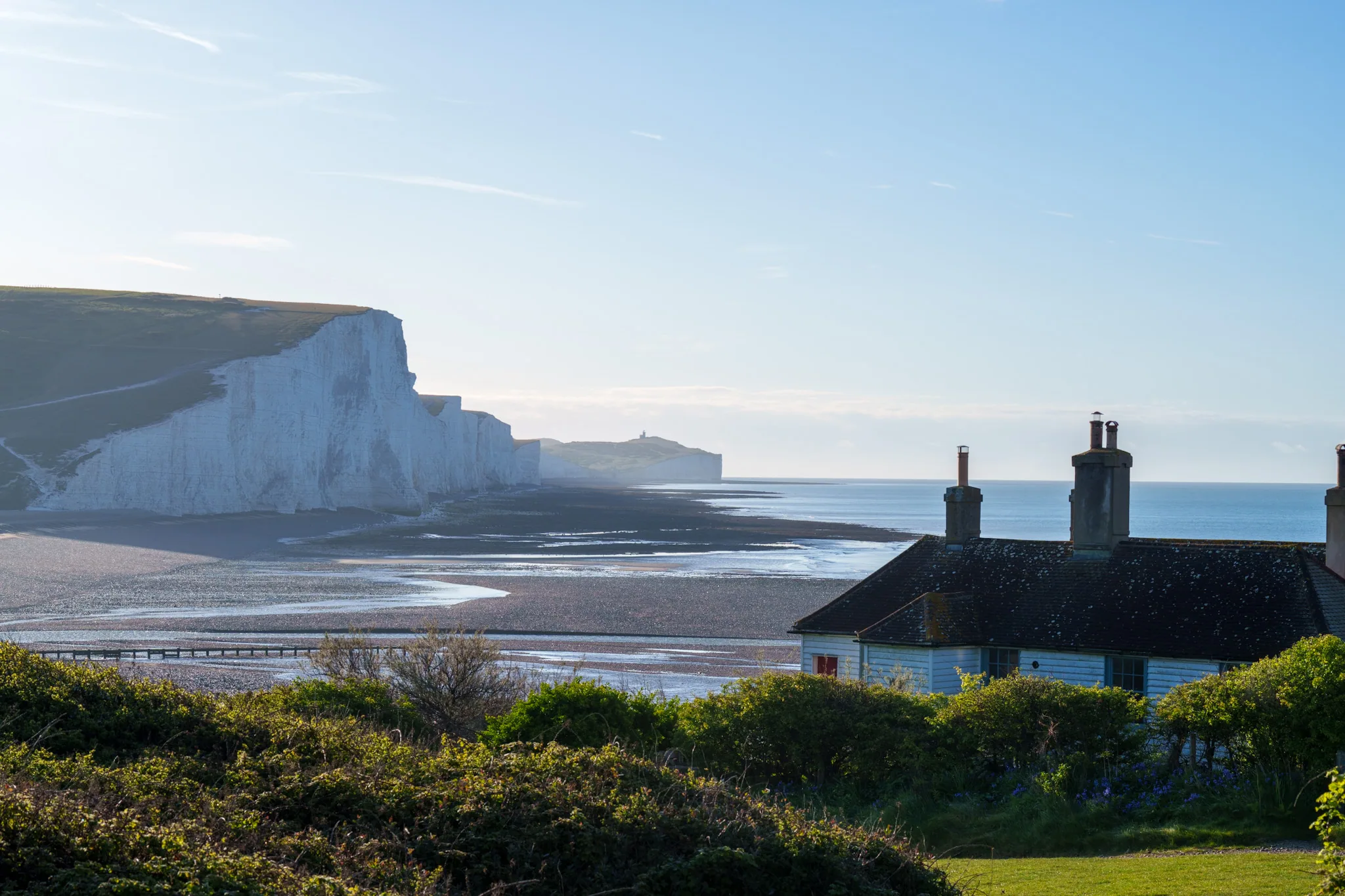 Where to stay
Cottages, inns and campsites within reach of the cliffs.
Explore
Plan
Where to stay
Cottages, inns and campsites within reach of the cliffs.
Explore
Plan
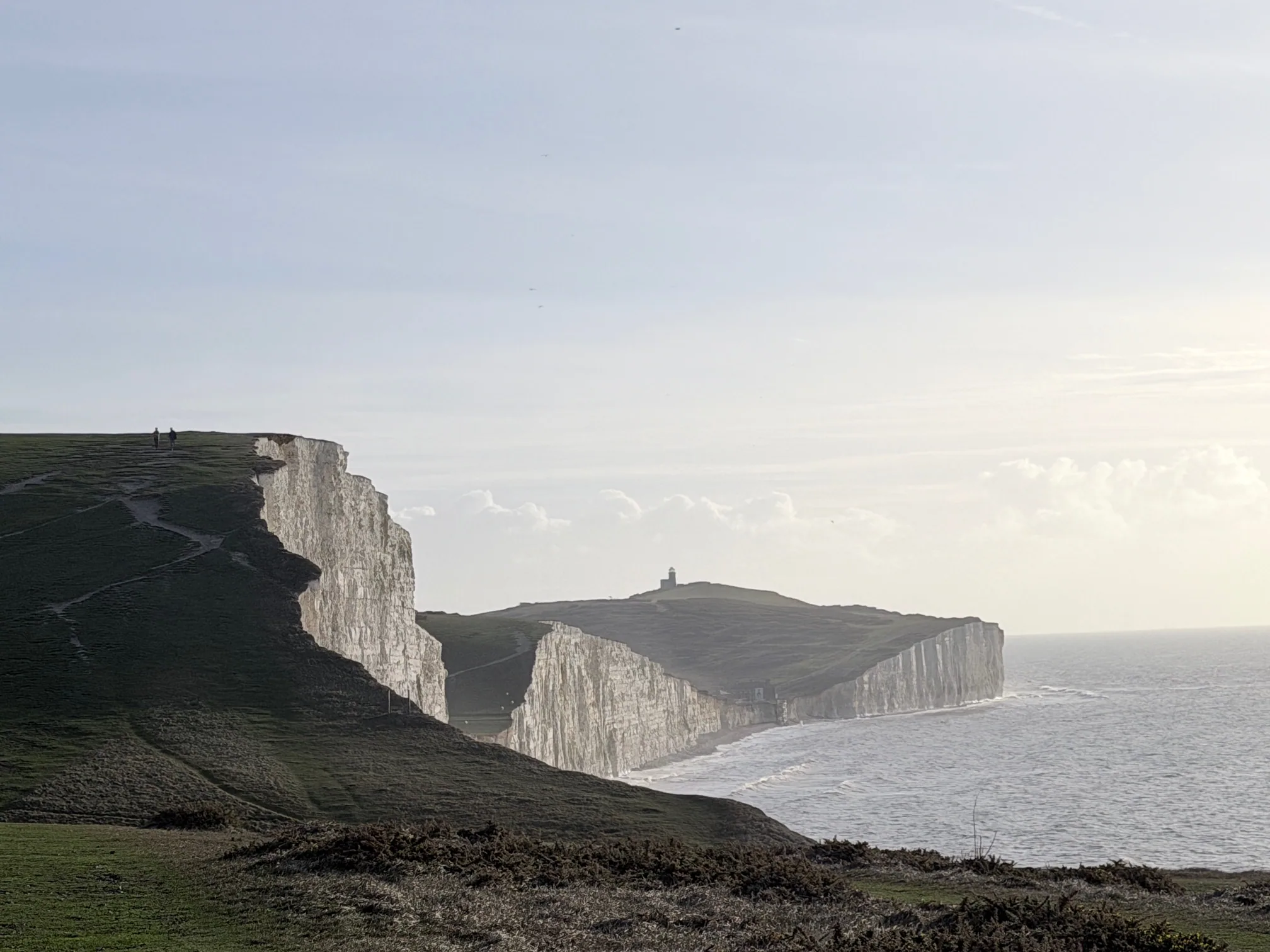 Plan your visit
Everything in one place — routes, parking, tides and the best times to come.
Explore
Safety
Plan your visit
Everything in one place — routes, parking, tides and the best times to come.
Explore
Safety
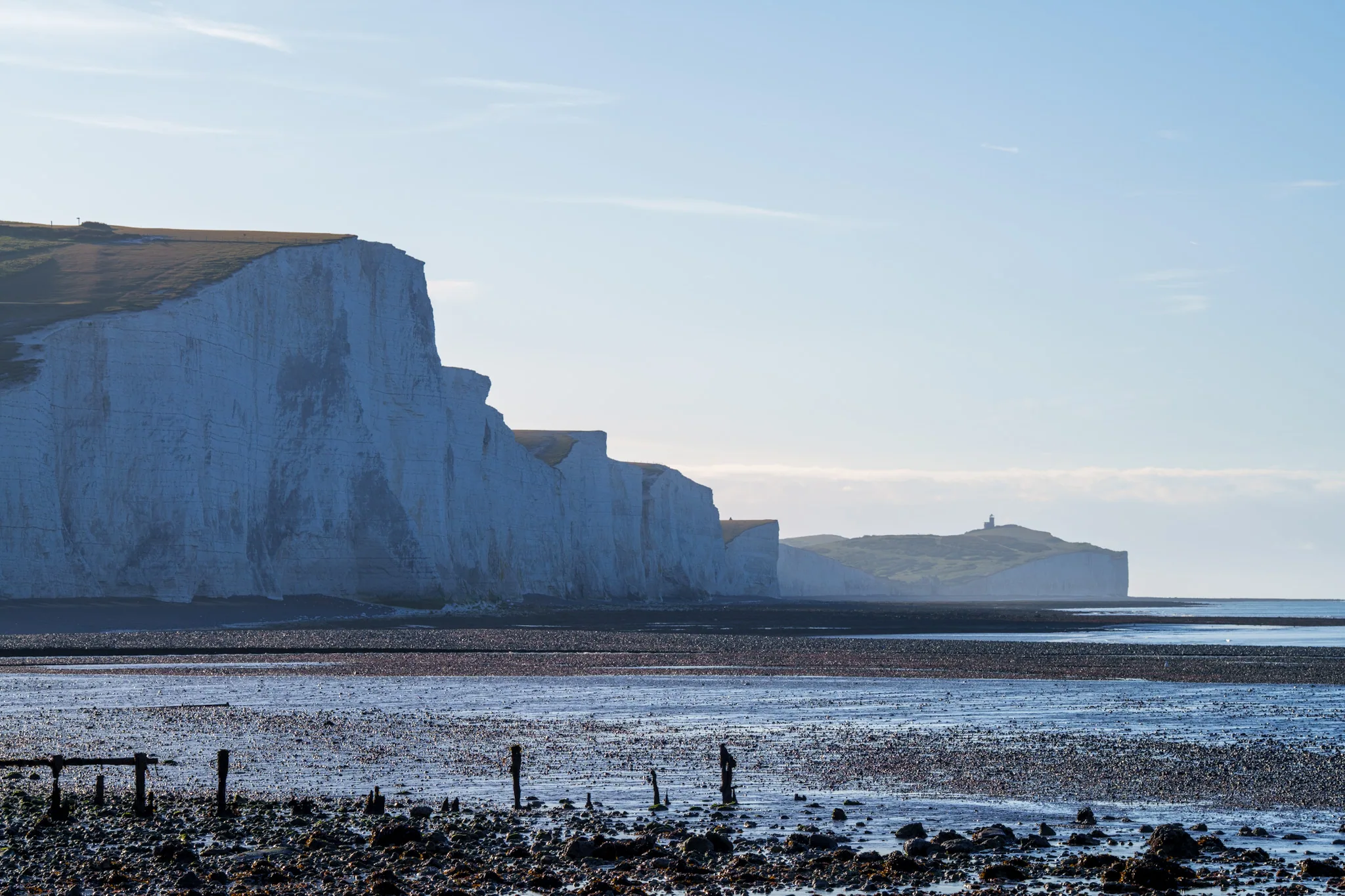 Tides & safety
Read the tide before you walk the beach — the rule that keeps you safe.
Explore
Tides & safety
Read the tide before you walk the beach — the rule that keeps you safe.
Explore
Free PDF · Instant download, saved to your phone
Built on first-hand walks from Seaford to Eastbourne — the named cliffs, route waypoints with distances, tide windows and emergency access points. Everything you need to set off with confidence.
Planning the whole day? Get the complete 24-page Ultimate Guide — £4.99
Stay up to date with seasonal guides, crowd forecasts, and local tips — direct to your inbox.
No spam. Only coastal inspiration and timing tips — unsubscribe any time.