We Ranked All Seven Sisters Individually After Walking Every Peak Many Times
Most people walk the Seven Sisters as a single experience: the cliffs, the view, the path. Which is fine, and which is exactly what we did for the first year. The seven peaks have names — Haven Brow, Short Brow, Rough Brow, Brass Point, Flagstaff Point, Bailey's Hill, Went Hill Brow — but they function in most guides as a collective noun rather than seven distinct places.
After walking the ridge with enough frequency to stop thinking about it as a route and start thinking about it as a collection of specific locations, each peak started to feel genuinely different. Different views, different light conditions, different wildlife, different exposure to wind. Some reward a long visit. Some are best walked through. One — and I'll tell you which at the end — we make a specific effort to reach, even when there isn't time for the full traverse.
This ranking is based on the cumulative experience of having been to each one many times across different seasons, light conditions, and tidal states. It is subjective, argued about within our household, and not intended to be definitive. But it's grounded in actual time at each location rather than a theoretical assessment.
The Peaks, West to East
Before the ranking, a quick orientation. Walking from Cuckmere Haven eastward toward Birling Gap, you climb and descend seven times. Each high point is a "Sister." From west to east: Haven Brow (the highest, ~77m), Short Brow, Rough Brow, Brass Point, Flagstaff Point, Bailey's Hill, Went Hill Brow (the easternmost, nearest Birling Gap).
Most people walk from Birling Gap, which means they walk west and encounter the Sisters in reverse order. For the purposes of this ranking, position refers to their geographical order, not the typical walking direction.
#7 — Brass Point
Why it's last: Brass Point is the least distinct peak on the ridge. At roughly 64m, it lacks the drama of Haven Brow, the light-catching geometry of Short Brow, and the memorable features of the peaks at either end. It's a high point on the ridge that you walk through rather than to. The views are good — the Seven Sisters views are always good — but nothing specifically unique to Brass Point isn't also visible from any of the surrounding peaks.
That said: on a clear day in February with nobody else on the ridge, Brass Point in slanted winter light is genuinely beautiful. It's just that the same could be said about every other point on the ridge, and several of them have something extra to offer that Brass Point doesn't.
#6 — Bailey's Hill
Bailey's Hill sits between Flagstaff Point and Went Hill Brow. Its notable characteristic is exposure: it catches the full weight of southwesterly weather more directly than most of the other peaks, which makes it frequently miserable in wind and intermittently spectacular in dramatic light. We've been on Bailey's Hill in conditions where standing upright required active effort. We've also been there in the kind of post-storm calm where the sea is an extraordinary deep green and the chalk is washed clean and bright.
The variance is the problem. Bailey's Hill can be the best peak on the ridge or the worst depending on conditions, in a way that's less true of the others. It ranks sixth because consistency matters on a long walk.
#5 — Flagstaff Point
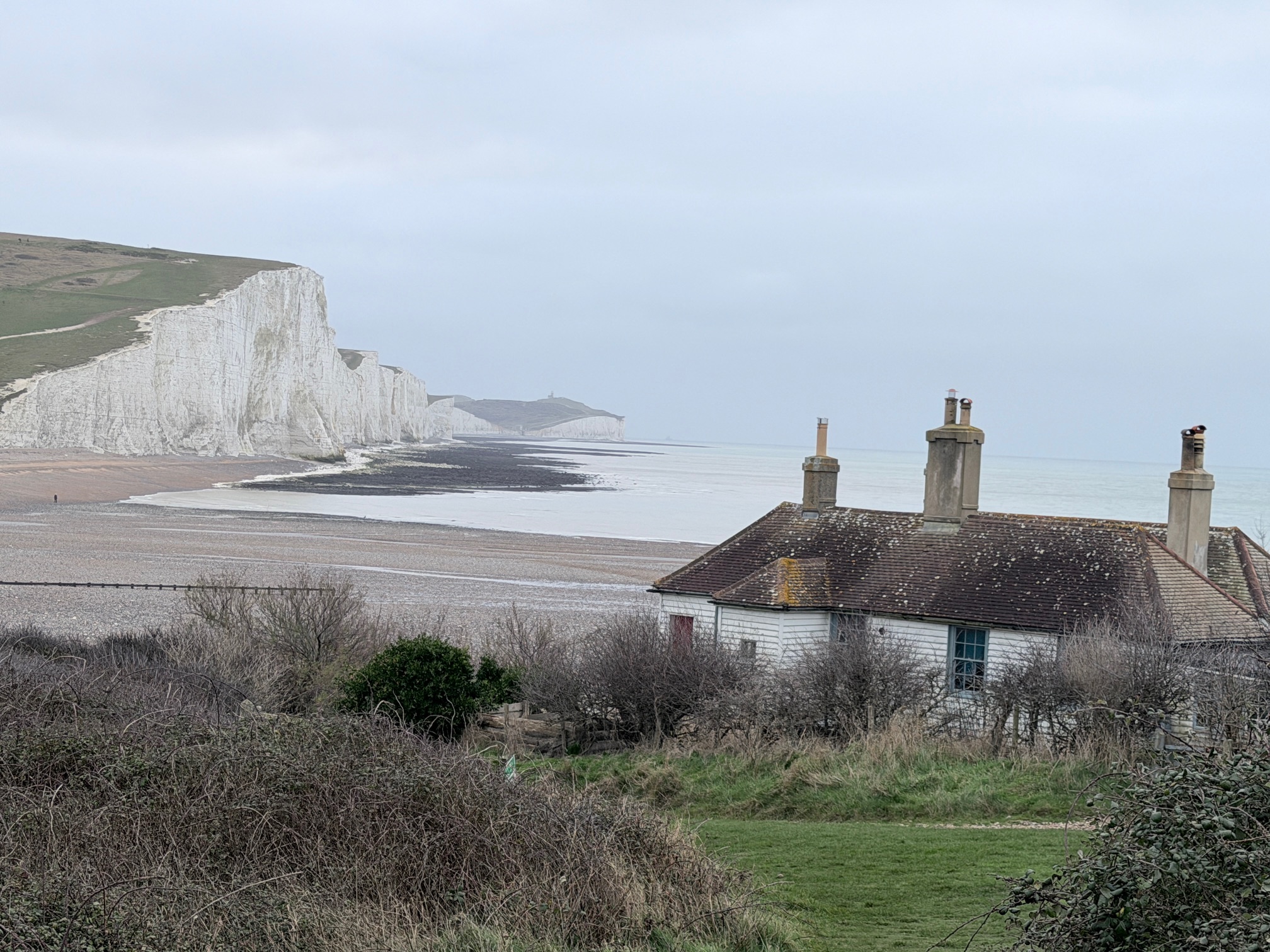
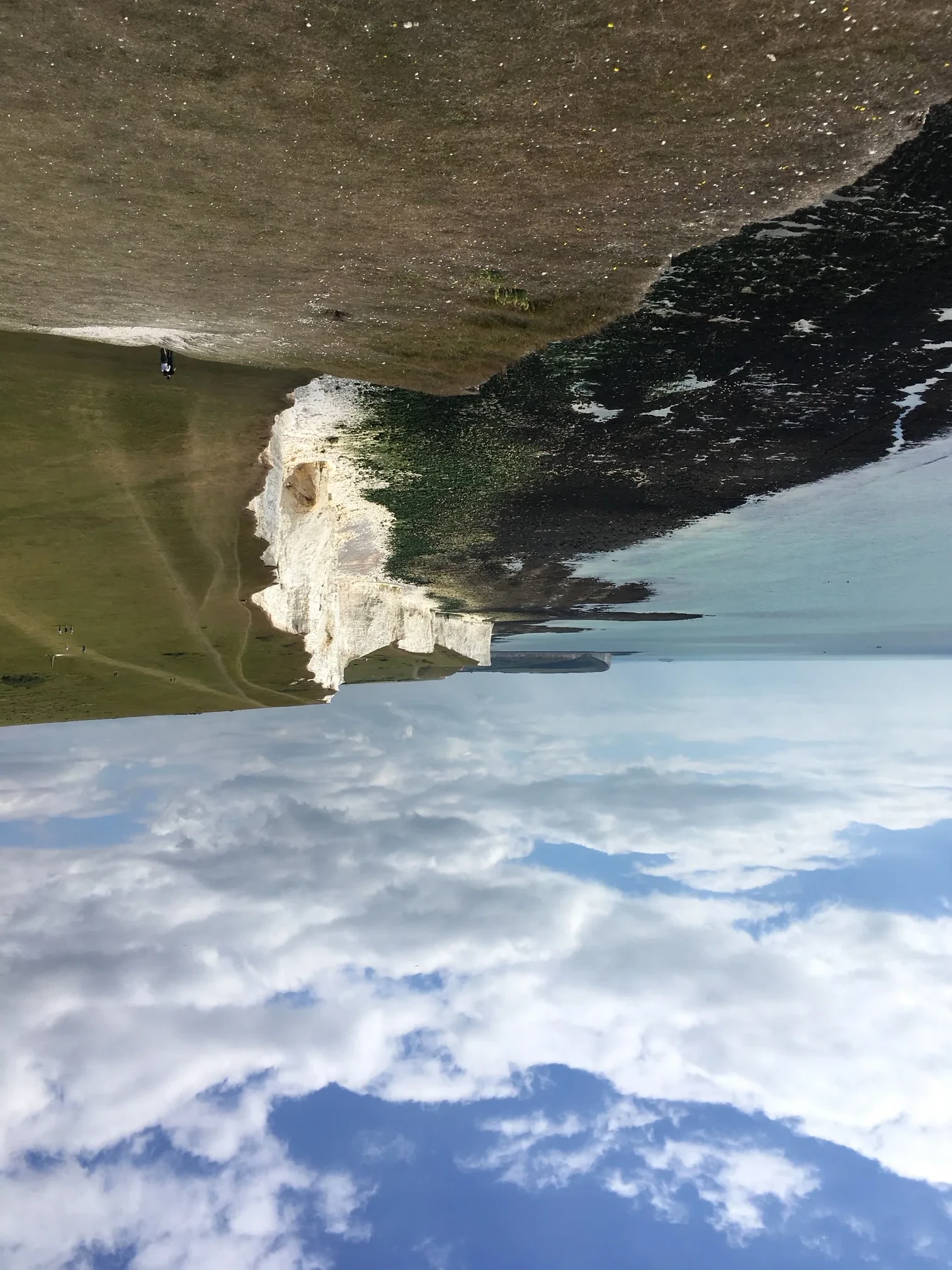
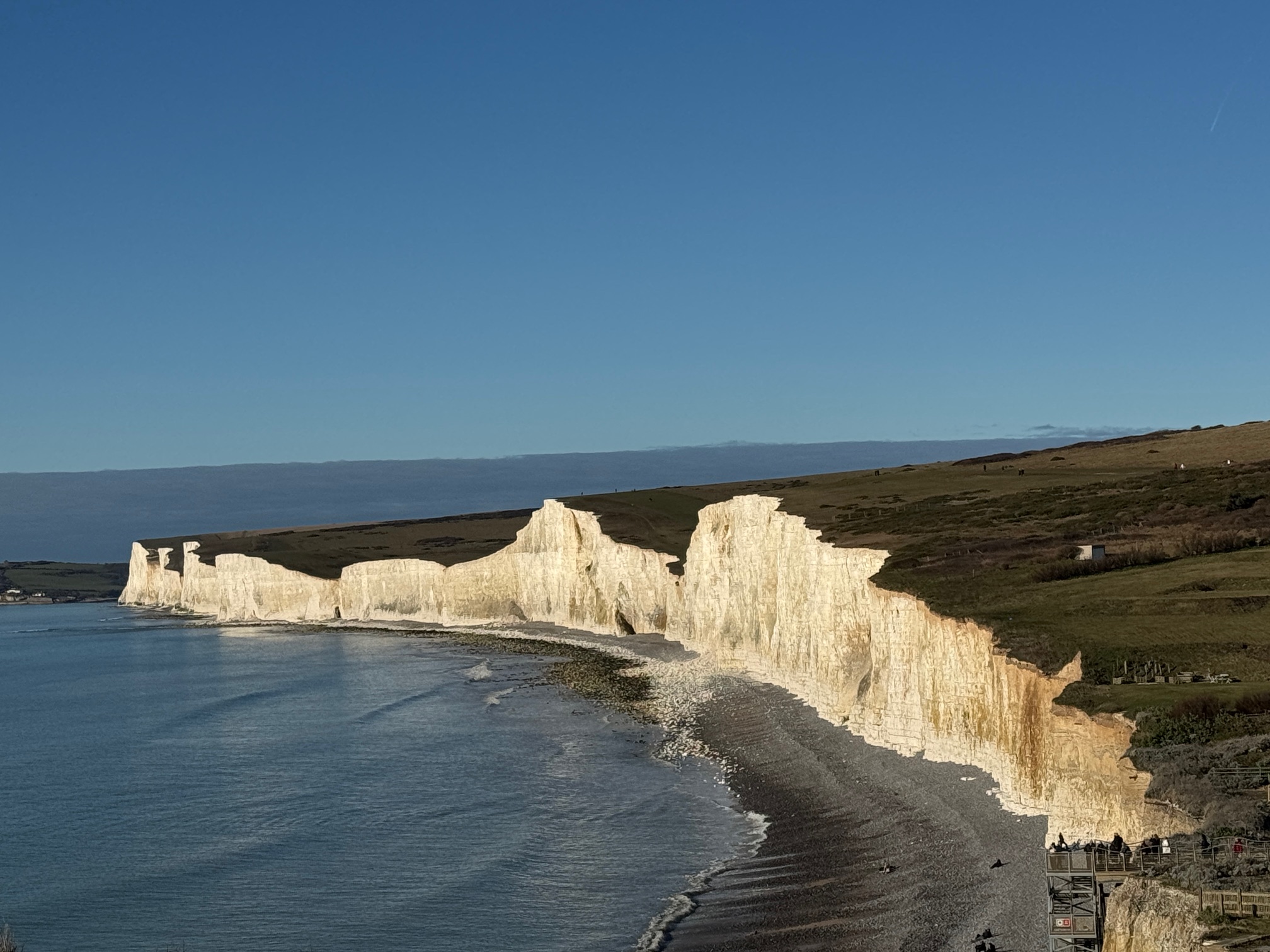
Just east of the midpoint of the ridge, and a point from which — on a clear day — you can see roughly equal distance in both directions. Flagstaff Point is where you understand the Seven Sisters as a system rather than a path. West: Haven Brow and the Cuckmere valley. East: the cliffs continuing toward Birling Gap and beyond to Beachy Head. The Channel in both directions.
It's also the point at which many walkers turn around if they've started from Birling Gap and are doing an out-and-back rather than a full traverse. Which means on a busy summer day, Flagstaff Point is where the walkers going west are thinning out and the walkers going east haven't arrived yet. There's a brief, counterintuitive quiet in the middle of the ridge that you don't get at either end.
#4 — Rough Brow
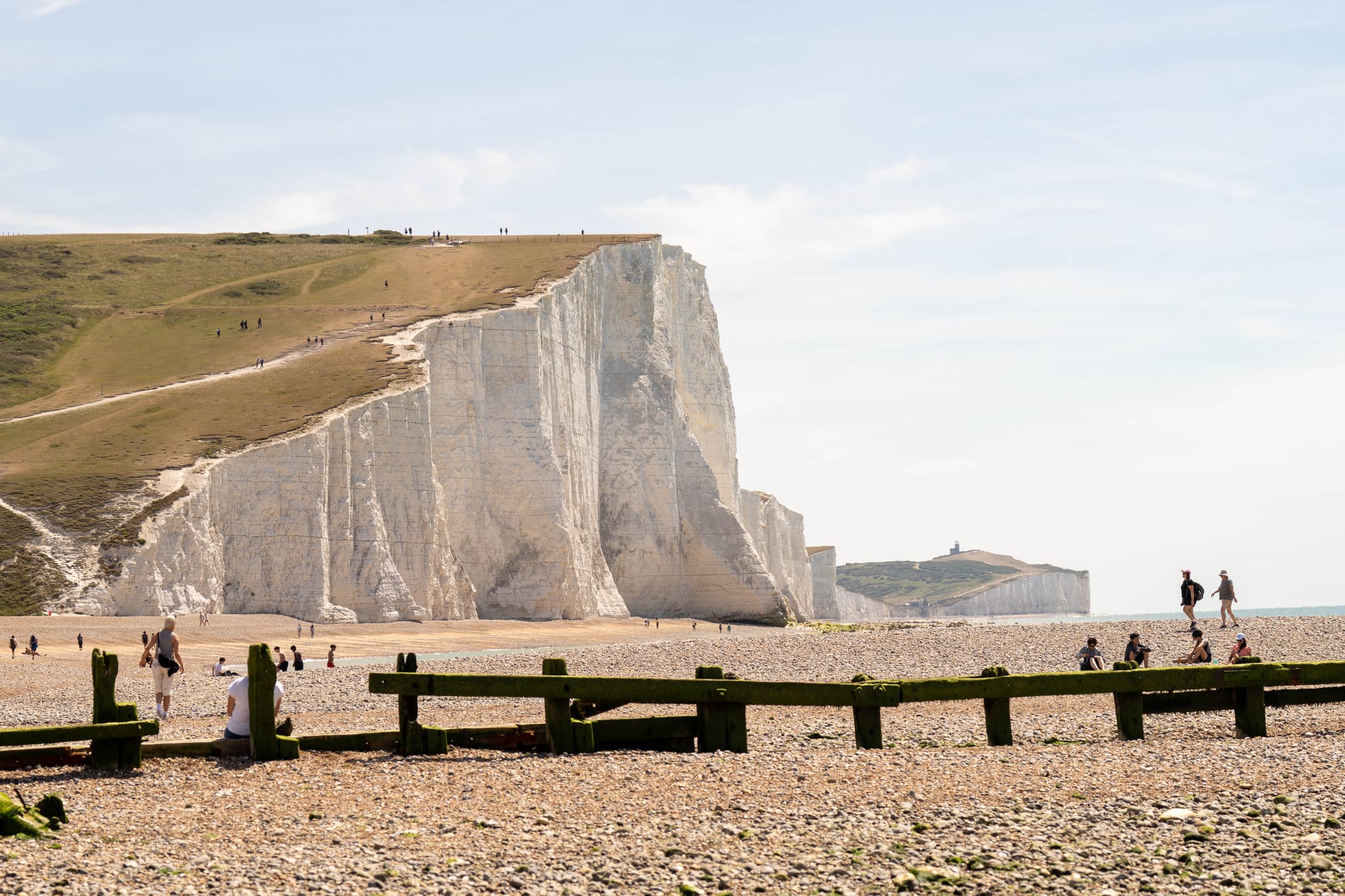
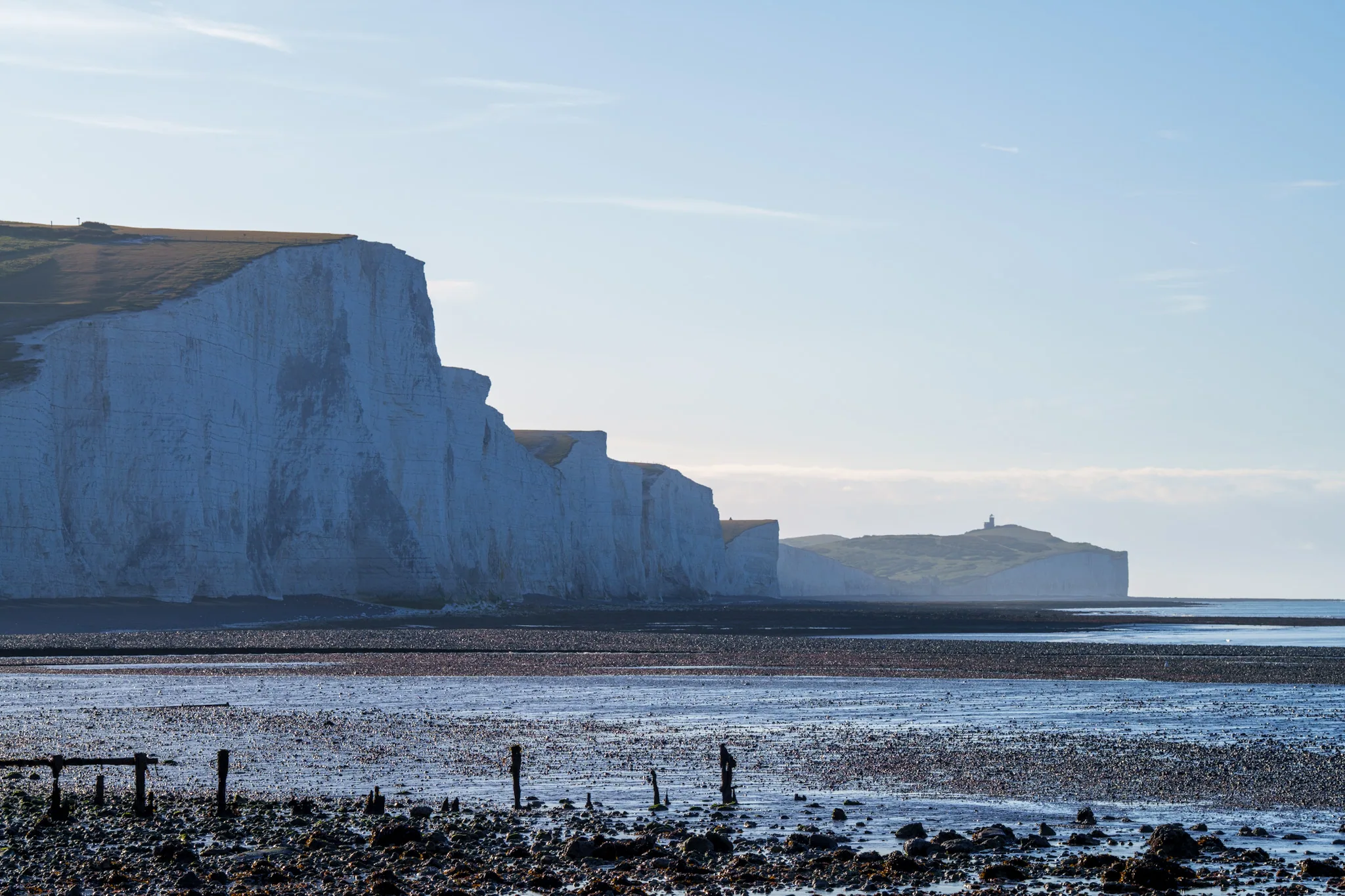
Rough Brow has the most interesting chalk cliff geometry of any of the Sisters — not the most dramatic drop, but the most complex face. The cliff here has eroded into a series of stepped sections and protruding chalk buttresses that create shadow and texture at low sun angles in a way the smoother faces don't. In early morning or late afternoon, Rough Brow photographs better than it walks. From the clifftop you can't fully see its own face — you need to look back at it from Short Brow to appreciate it.
In spring, Rough Brow's south-facing slope is one of the better spots for Adonis Blue butterflies — the chalk grassland here gets full afternoon sun on a face that's sheltered from the northerly winds that affect the more exposed peaks. We've found orchids in May within a metre of the path here.
#3 — Went Hill Brow
The easternmost Sister, and the most underrated. Most visitors walking from Birling Gap treat Went Hill Brow as the starting ascent before the walk properly begins — it's the first climb, the warm-up. Which means it gets less attention than it deserves.
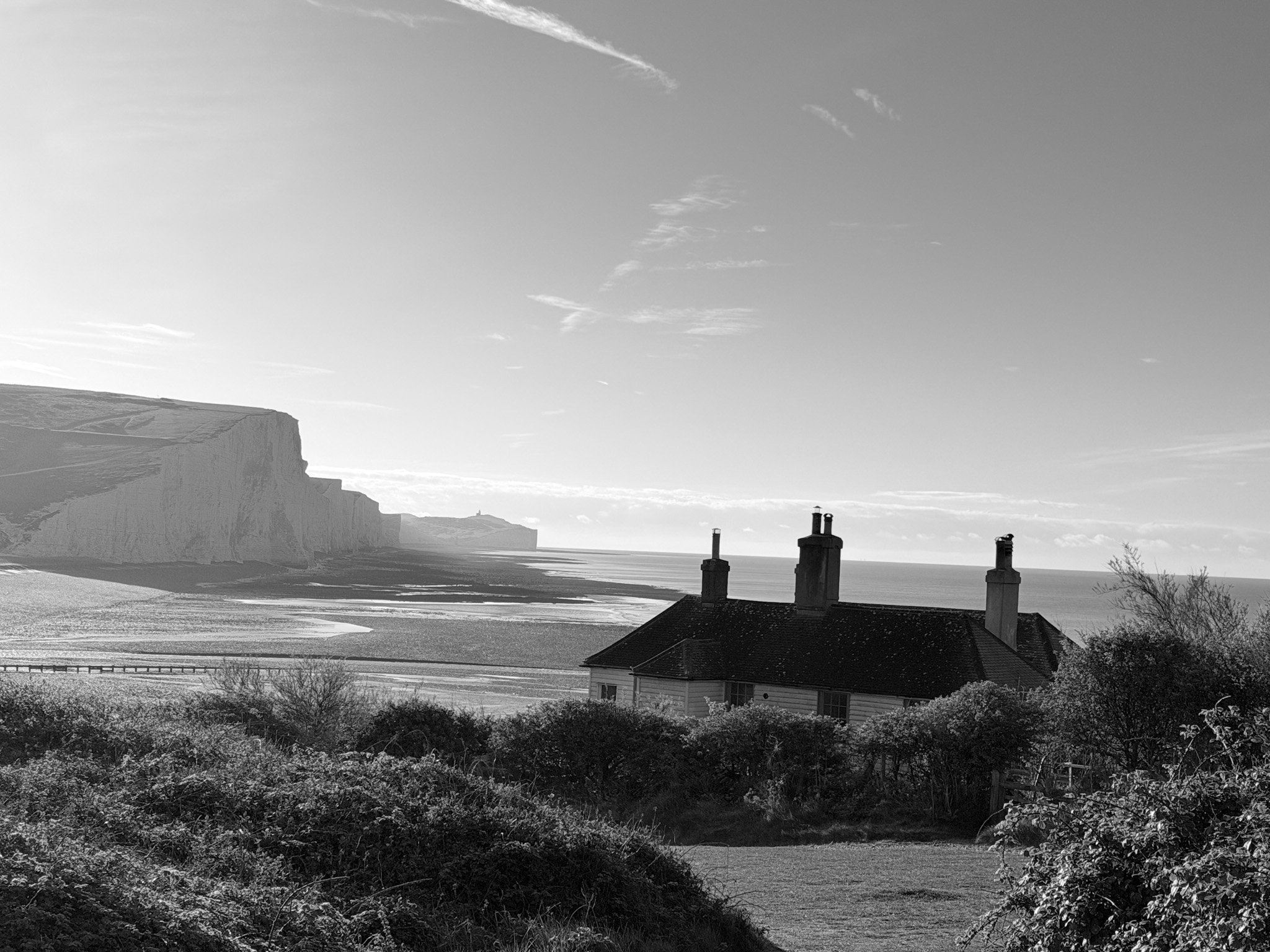
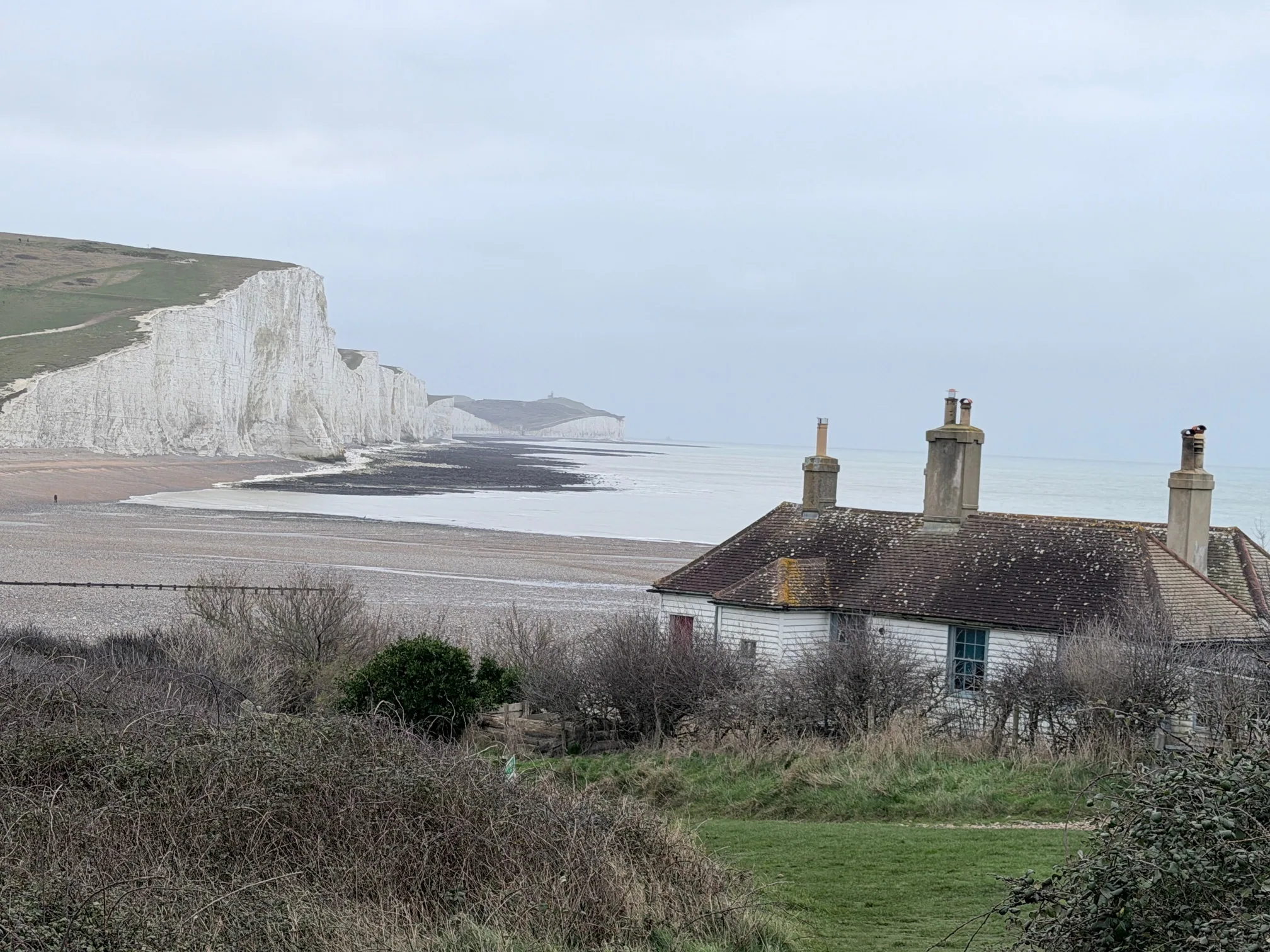
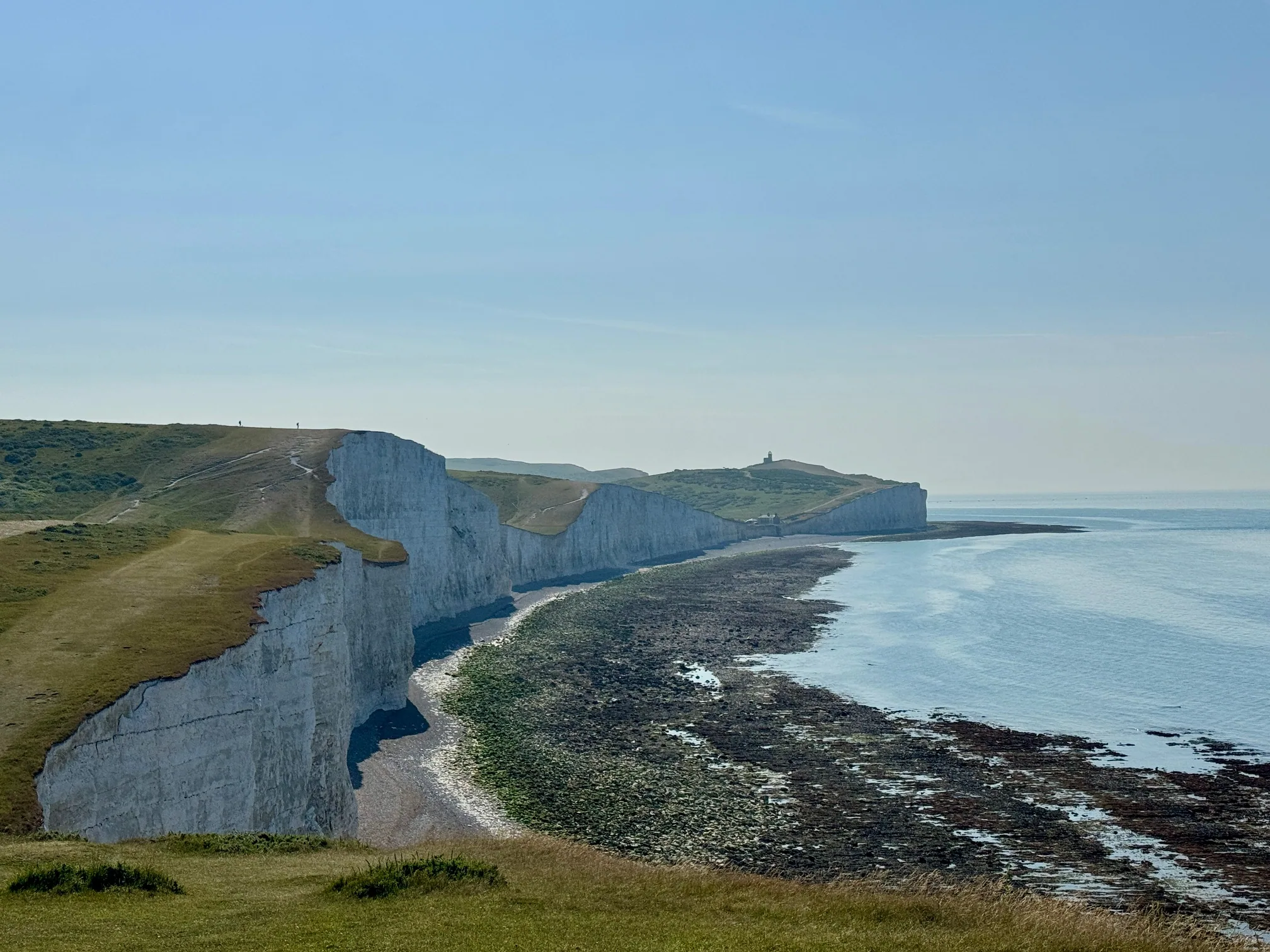
The view from Went Hill Brow looking west — the full Seven Sisters stretching away, peaks receding into the distance — is actually the best composition of the full ridge from any single point. You're at the end, looking at all seven, with enough elevation to see the full profile. This is the photograph that captures what the Seven Sisters actually look like. The more famous Seaford Head viewpoint to the west shows the sisters from further away; Went Hill Brow shows them from within, which is its own kind of perspective.
The wind shelter on the eastern face makes this a surprisingly good picnic spot on westerly days — you're behind the cliff, out of the prevailing wind, with a view of the cliffs themselves rather than the sea. On a busy day, people have already moved west and you're often alone up here within 20 minutes of leaving the Birling Gap car park.
#2 — Short Brow
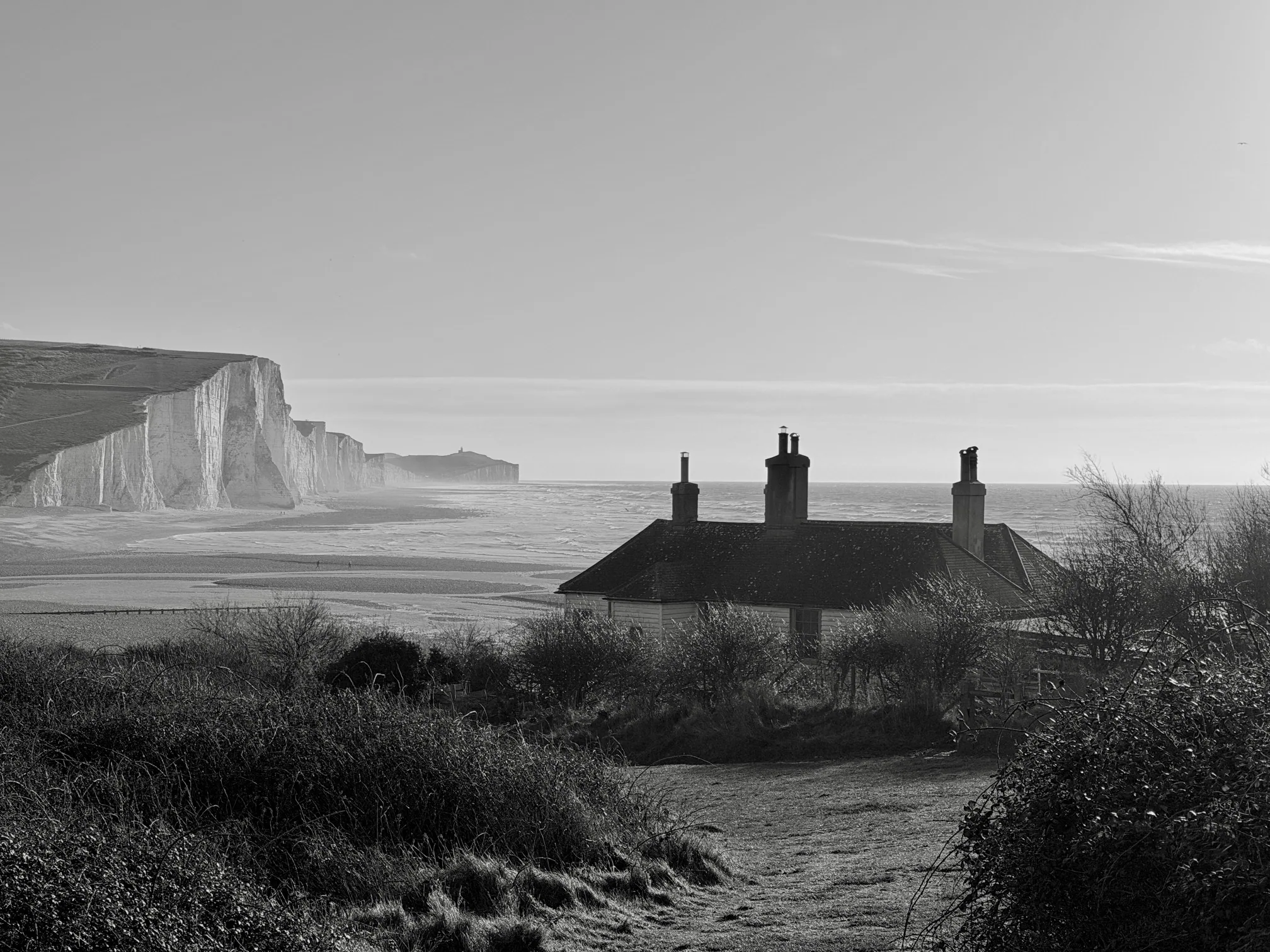
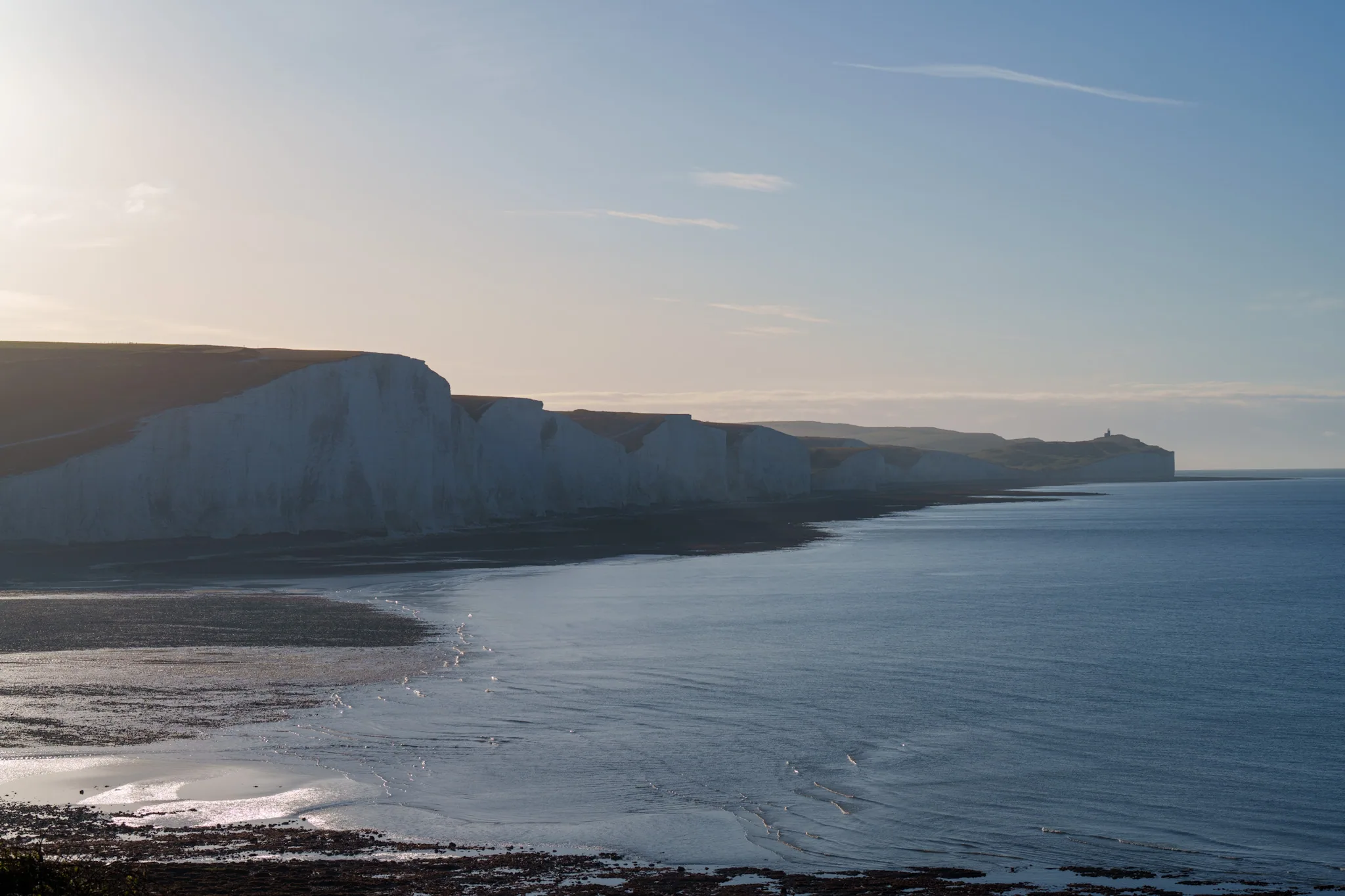
The peak we most consistently return to. Not the highest. Not the most dramatic on paper. But Short Brow faces northwest at an angle that catches the last light of the day in late spring and summer in a way that turns the chalk from white to deep amber over the course of about 45 minutes around sunset. We've watched this happen more times than we can count and it has not become less impressive.
Short Brow also has the most useful wind shelter of any peak: a slight depression on the eastern face, just below the summit, where you can sit completely out of the southwesterly wind that makes the rest of the ridge uncomfortable on anything other than a calm day. Combined with the evening light, this makes Short Brow the place we go when we specifically want to be on the cliffs rather than walking through them.
If we had 90 minutes and could only reach one point on the ridge, we would walk to Short Brow, watch the light, and walk back.
#1 — Haven Brow
The highest Sister at around 77 metres, the furthest from Birling Gap (the most common start point), and the one that most visitors either don't reach or arrive at exhausted having pushed too hard to get there. It is ranked first precisely because the effort is proportional to the view.
From Haven Brow, looking east, the full Seven Sisters are visible — all seven peaks, the full ridge, Beachy Head beyond. Looking west, the Cuckmere Haven meander is directly below, the river curving through its valley, the estuary meeting the sea. Looking south, the English Channel, with the French coast around 100km beyond the horizon — too far to see from here, whatever the postcards suggest.
Haven Brow also has the largest and most diverse chalk downland habitat of any of the peaks — the western approach is wider, slower to erode at the summit level, and supports a more established grassland community than the narrower peaks further east. In May and June the downland here has a density and diversity of wildflowers — including several orchid species — that exceeds most of the rest of the ridge.
It is not the most accessible peak. It is the best one.
The honest caveat: All seven Sisters are worth walking to. The ranking reflects preferences built over years of repeat visits — not a suggestion that any of them are worth skipping. If your only visit to Seven Sisters is the full ridge traverse, you'll experience all seven and form your own opinion. Ours may not be yours.
Planning Around the Ranking
- If you have 2 hours: Walk from Birling Gap to Went Hill Brow and back. Best first-Sisters view, usually quiet, modest effort.
- If you have 3.5 hours: Walk to Short Brow and back. Best evening light, good wind shelter, better photography than anywhere else on the ridge.
- If you have a full day: Full traverse, west to east from Cuckmere Haven, ending at Went Hill Brow before descending to Birling Gap. See them all, in the order that makes geographical sense.
- If you only ever do one: Haven Brow. Walk from Cuckmere Haven, climb the ridge, stand at ~77m, turn around. 5km, 2 hours, the best view on the south coast.
More Seven Sisters Walking Guides
For the full ridge traverse from Cuckmere to Birling Gap with route notes, see our full ridge walk guide. For the Cuckmere Valley approach to Haven Brow from the west, see our Cuckmere Valley walk guide. For the complete Beachy Head and Seven Sisters traverse, see our complete walk guide.
Planning the walk itself?
Four routes run along these cliffs and they are not interchangeable — a flat 3km riverside stroll, the classic 6.5km Exceat to Birling Gap crossing, a short Birling Gap loop, and the full 21.9km Seaford to Eastbourne ridge. Compare distance, ascent and difficulty before you pick one.
- Easy Birling Gap Short Loop 2 km 45 min
- Easy Cuckmere Haven Beach 3 km 1 hour
- Moderate Exceat to Birling Gap 6.5 km 2-3 hours
- Challenging Seaford to Eastbourne 21.9 km 6-7 hours
We may earn a small commission on bookings made through this link, at no extra cost to you. More info.
£4.99 · 24-page PDF · Instant download
The Seven Sisters Ultimate Guide
The complete 24-page companion built from first-hand walks — every cliff, all four graded routes, tide windows and a parking strategy. Designed to work offline, right on the cliff top.
- All 7 cliffs — heights, geology & viewpoints
- Four graded walking routes, compared
- Tide windows, light calendar & day plans
- Parking strategy & seasonal planner
Just want the basics? Download the free 2-page walk guide
Want an expert-led Seven Sisters tour?
From guided cliff walks and wildlife safaris to geology hikes and photography tours — explore all our curated experiences with local guides.