The Seven Sisters Cliffs England: What They Are, Where They Are and Why They Matter
The Seven Sisters Cliffs
What they are, where they are, why they are white — and everything you need before your first visit
What Are the Seven Sisters?
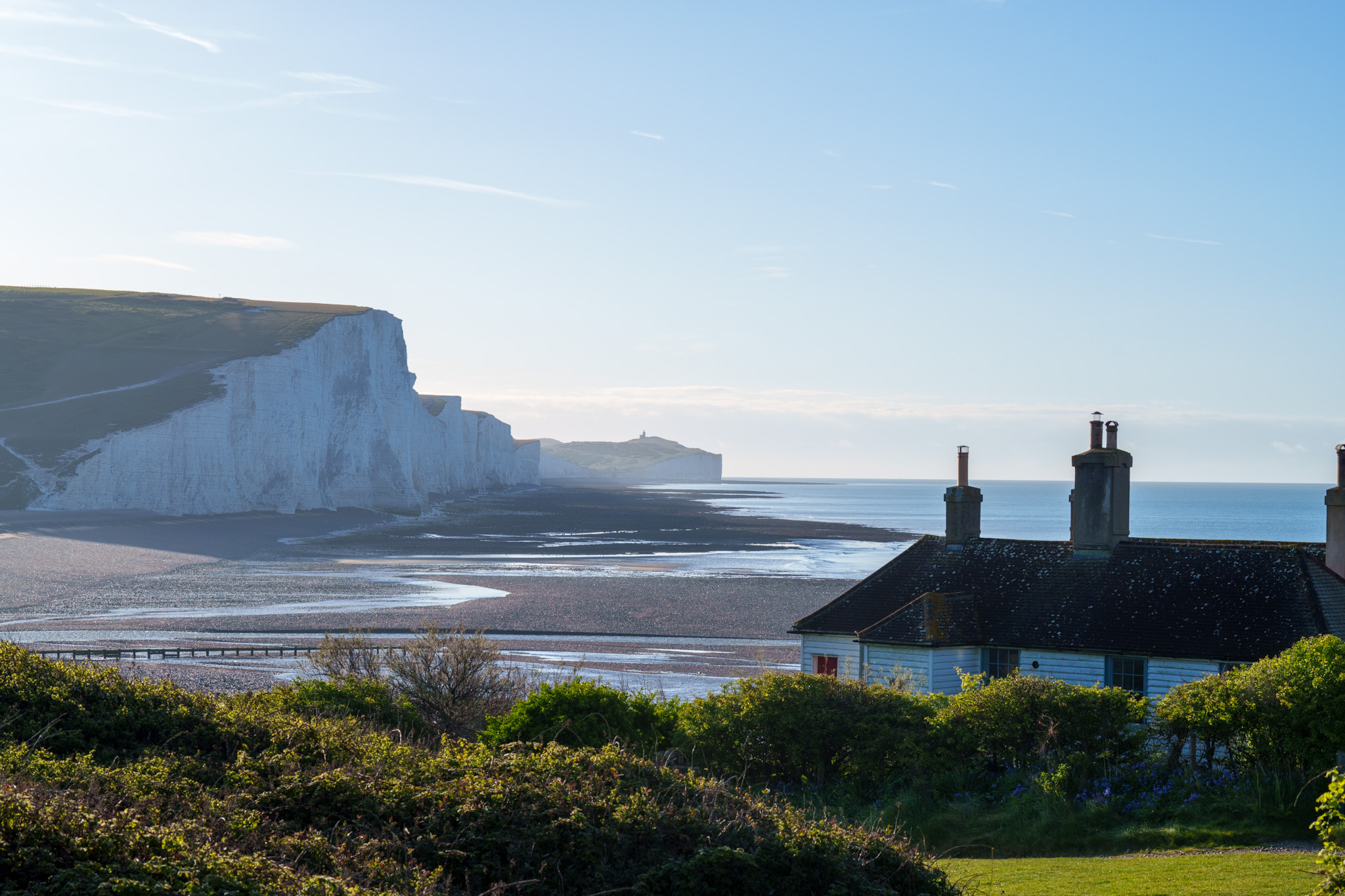
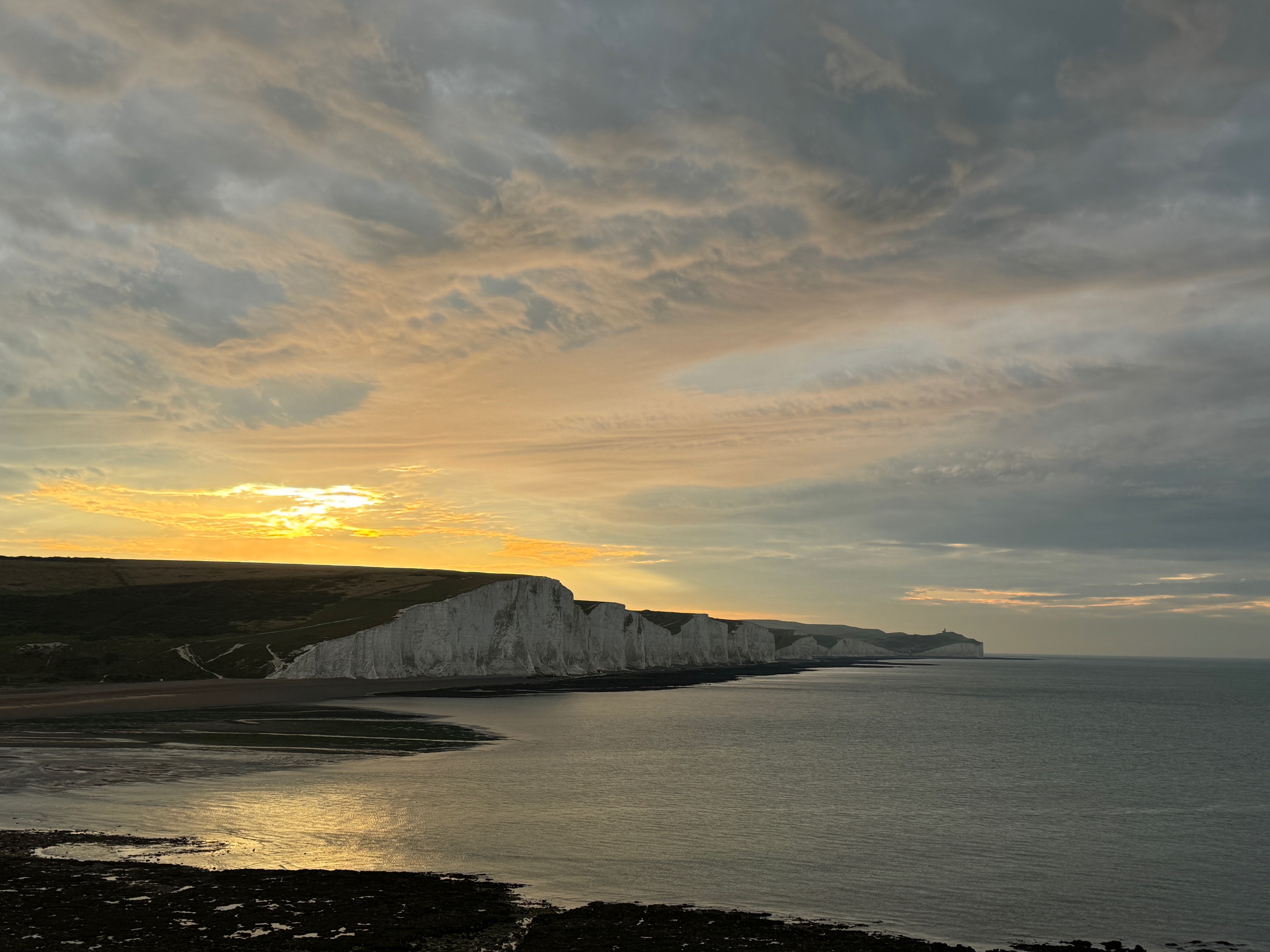
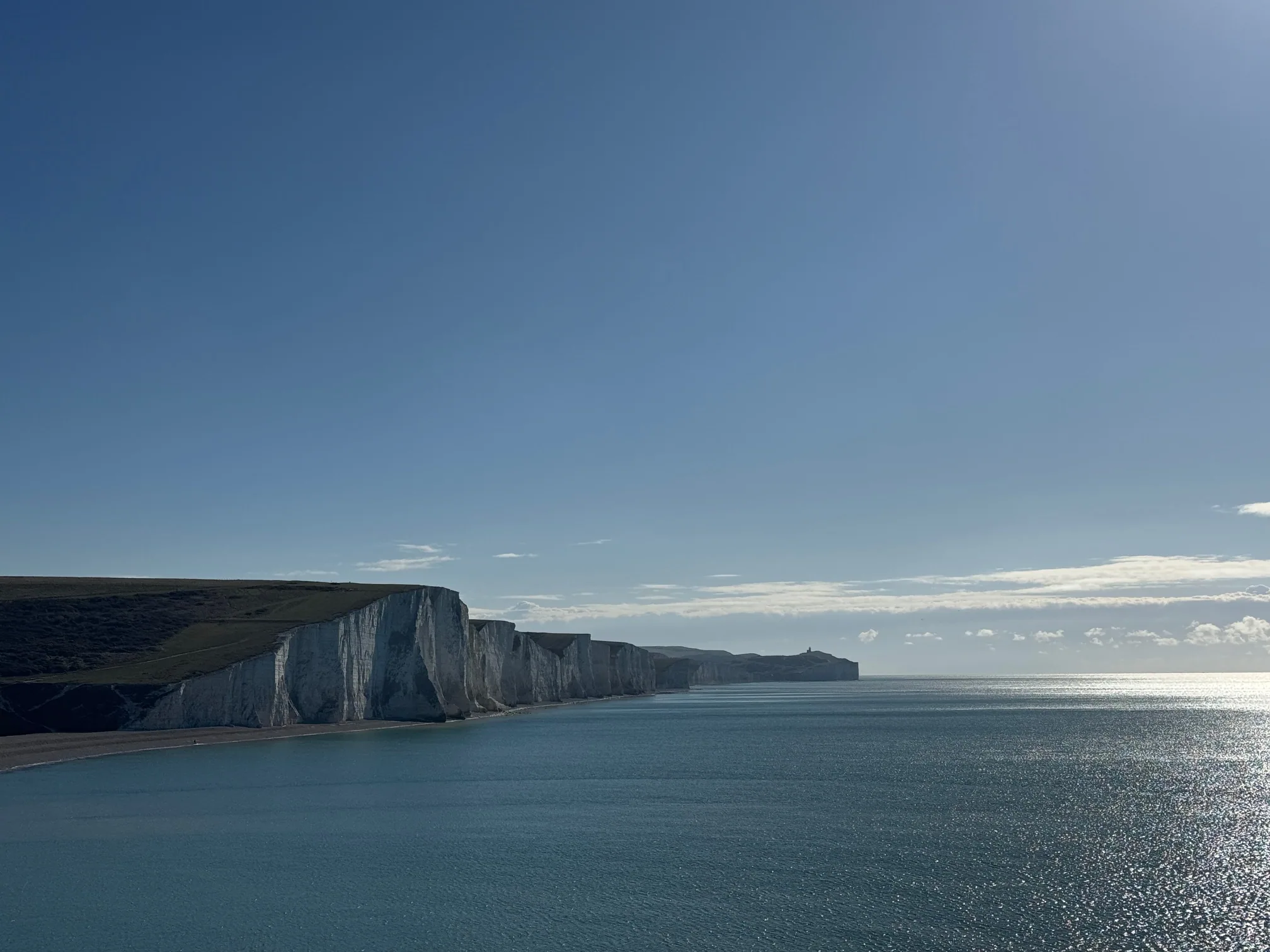
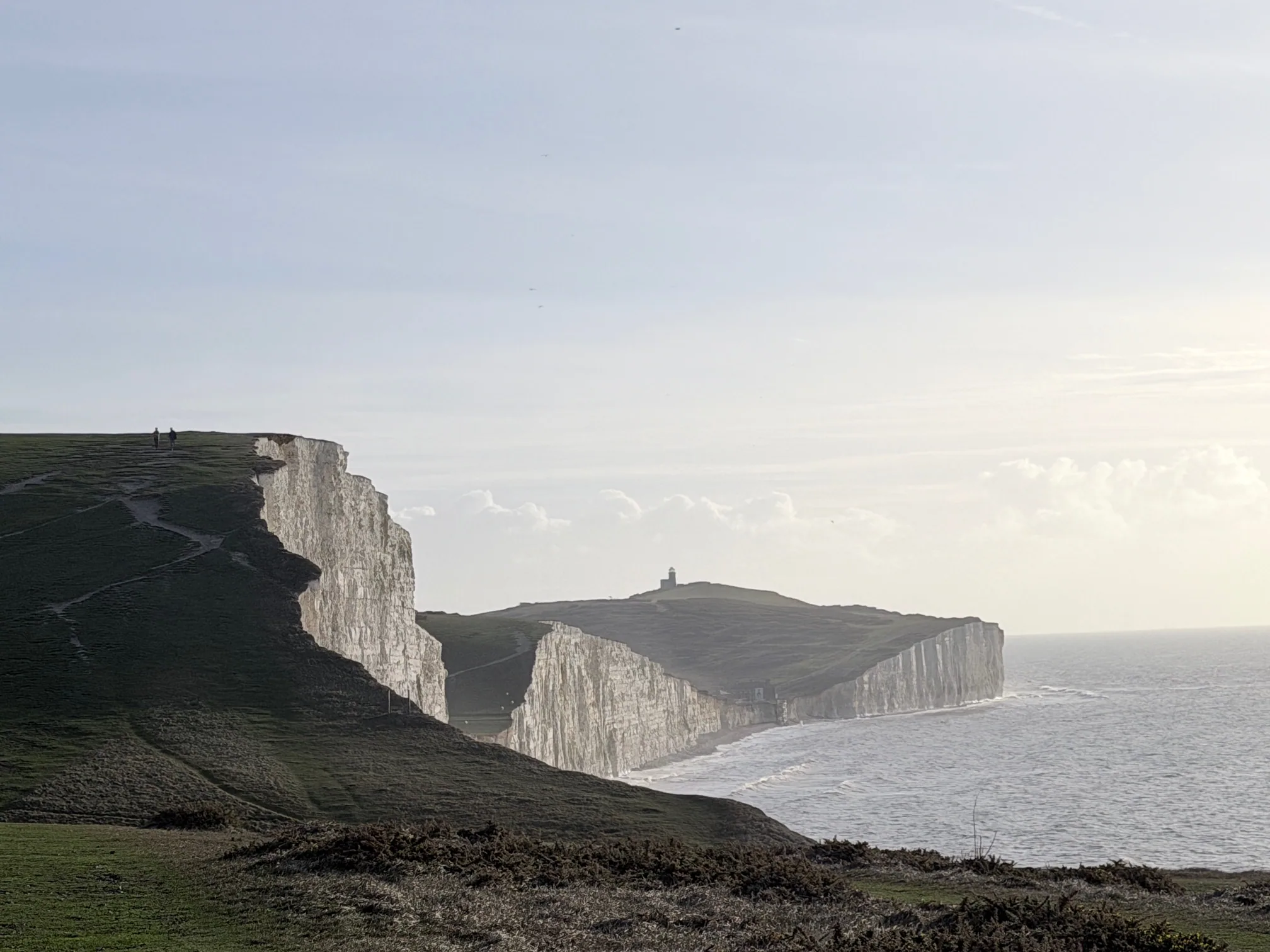
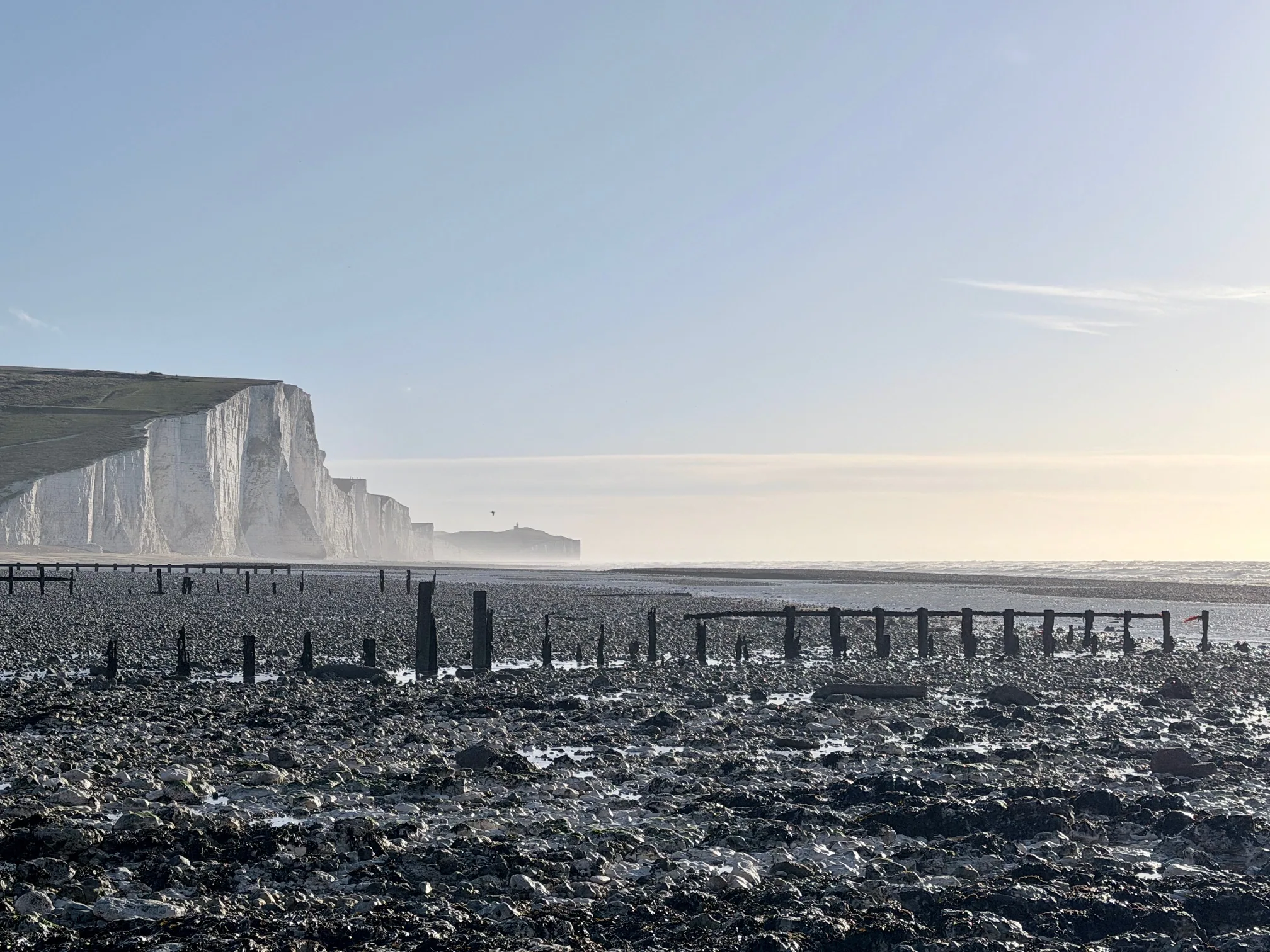
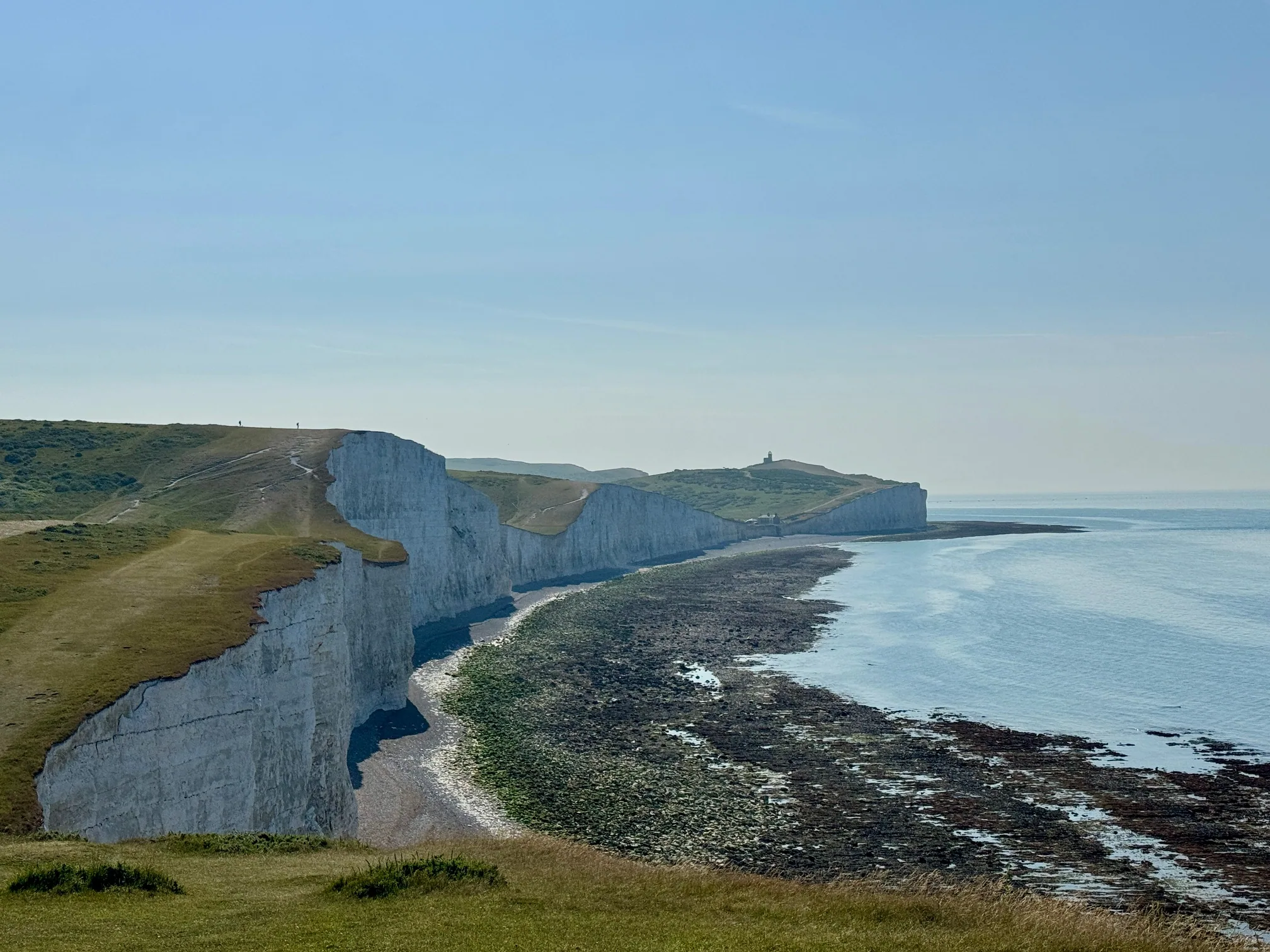
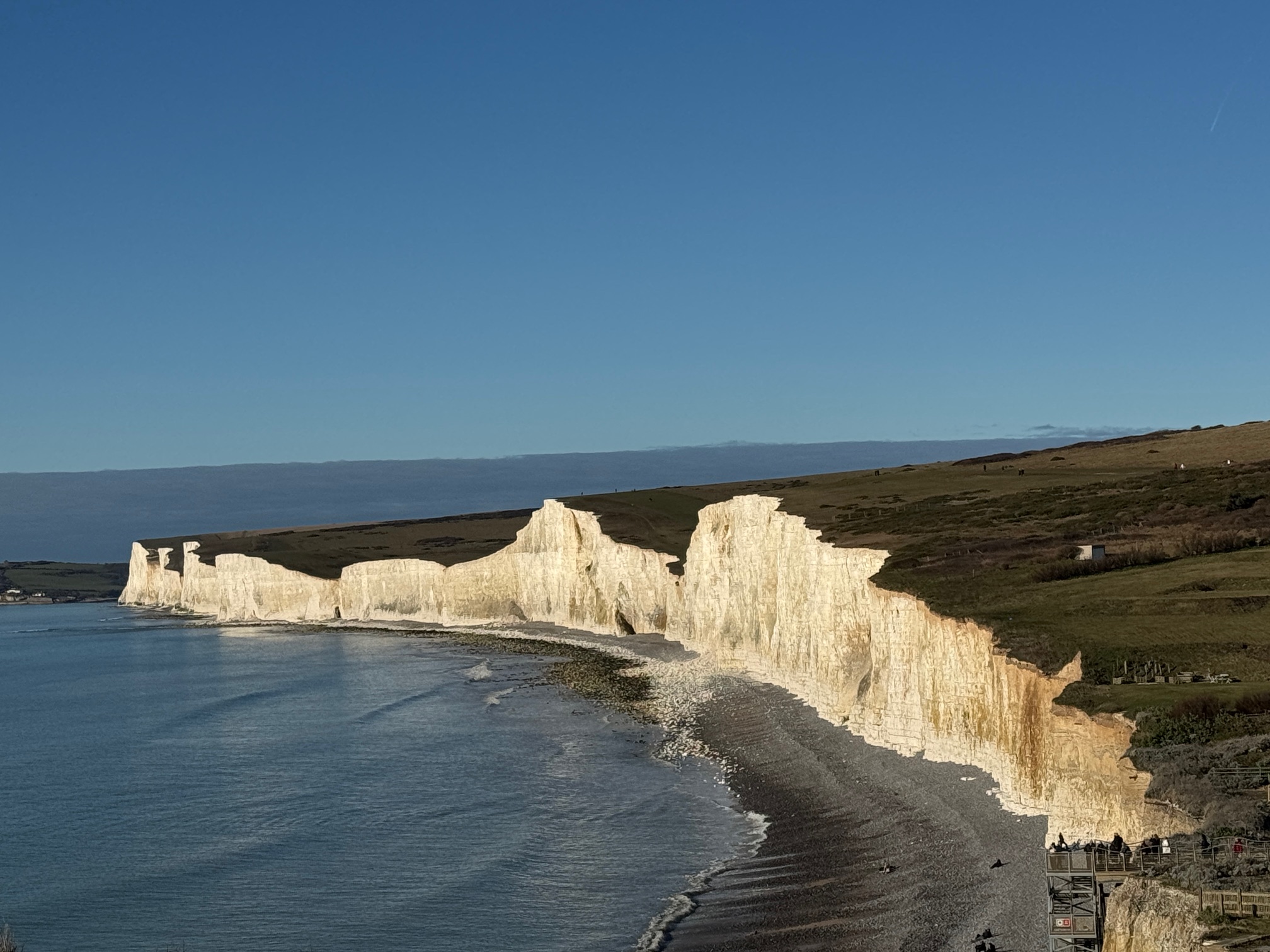
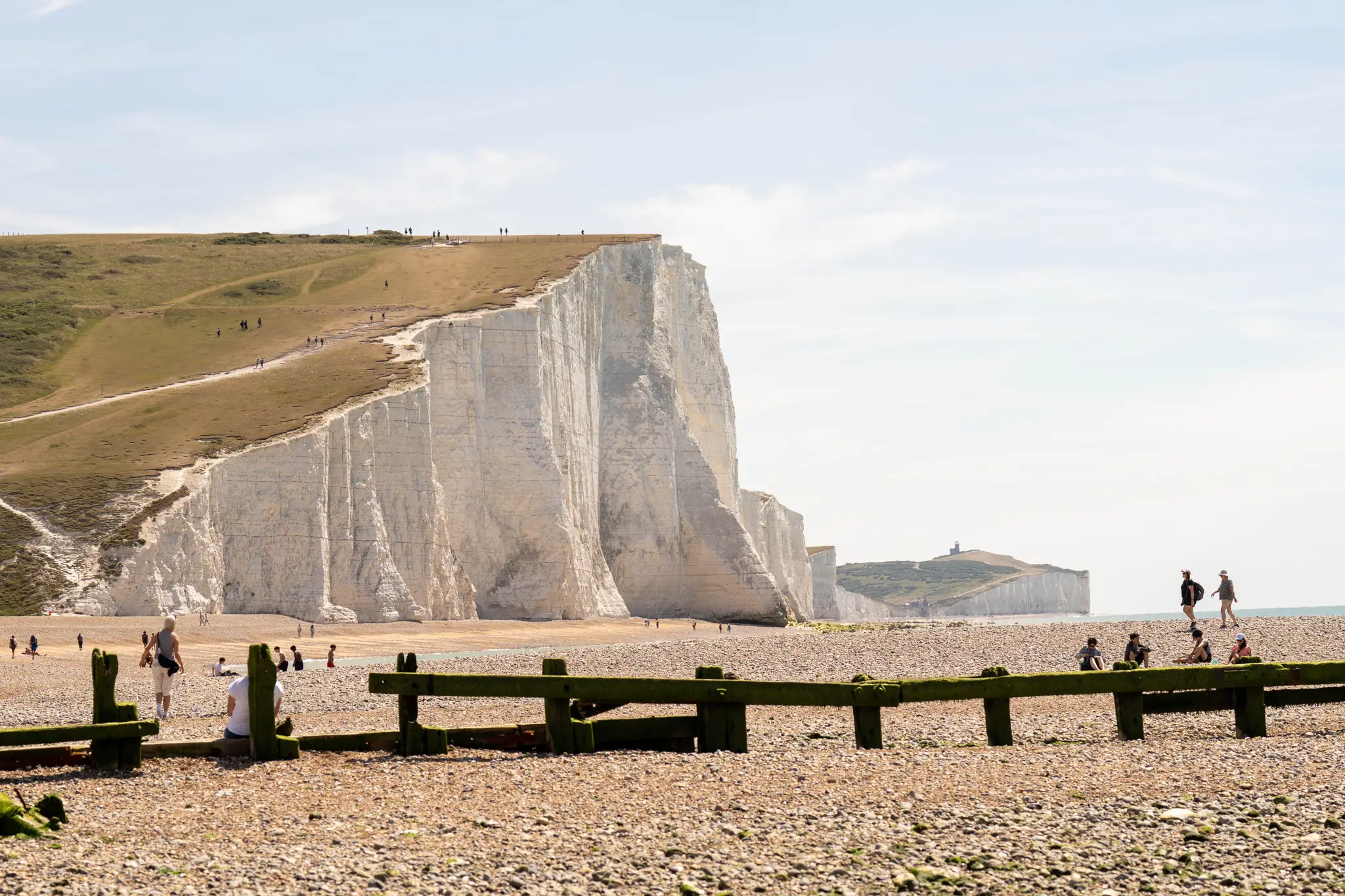
The Seven Sisters are seven chalk sea cliffs on the East Sussex coast in southern England. They sit between the village of Birling Gap to the east and Cuckmere Haven to the west — a stretch of coastline about 6.1 kilometres (3.8 miles) long that forms part of the South Downs National Park.
They are named after the seven distinct cliff peaks that rise and fall along the ridge. Each peak is a separate "Sister." Walking the Seven Sisters means climbing and descending all seven, one after another, along a chalk clifftop path above the English Channel.
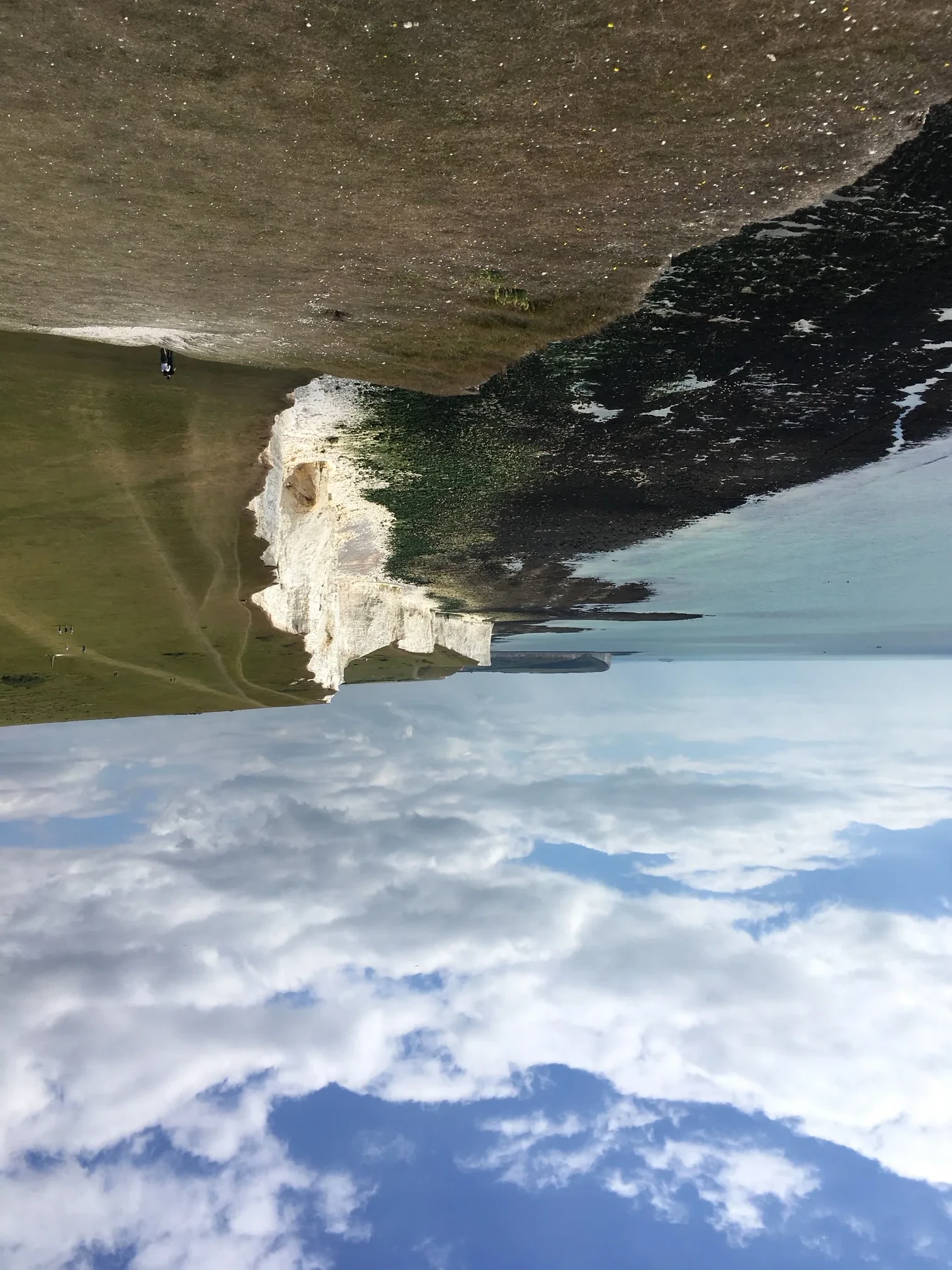
The cliffs are white because they are made of chalk — a soft, pure form of calcium carbonate formed from the compressed shells of microscopic marine organisms that lived in a shallow tropical sea here around 85 million years ago. The whiteness comes from the calcium carbonate in the chalk, which has almost no impurities. Fresh rockfalls reveal brilliant white chalk; older exposed faces weather to off-white. After heavy rain, the cliffs look their cleanest and brightest.
The Seven Sisters by Name
Each cliff has a name, though most visitors experience them collectively rather than individually. Walking west from Birling Gap, you encounter them in this order:
1
Went Hill Brow
Easternmost Sister, nearest Birling Gap. Often the turnaround point for short visits.
2
Bailey's Hill
Exposed to prevailing southwesterly winds. Dramatic in storm conditions.
3
Flagstaff Point
Roughly the midpoint of the ridge. Views in both directions along the full cliff line.
4
Brass Point
The least distinct peak in terms of individual character, but part of the continuous ridge.
5
Rough Brow
Complex cliff geometry with stepped chalk faces. Particularly good for wildflowers in spring.
6
Short Brow
Catches evening light in late spring and summer in a way no other peak does. The most rewarding at dusk.
7
Haven Brow
The highest and westernmost Sister, directly above Cuckmere Haven. The furthest from Birling Gap and the most rewarding to reach.
Note on the naming: The cliffs are sometimes called the "Seven Sisters" and sometimes people count them differently, reaching figures of six or eight depending on how each peak is defined. The conventional list is seven and the names above are those used by the South Downs National Park and Ordnance Survey. The Birling Gap to Cuckmere Haven route crosses all seven.
Key Facts at a Glance
Location
East Sussex, southern England. Between Seaford to the west and Eastbourne to the east. The cliffs themselves run between Cuckmere Haven and Birling Gap.
Distance along the ridge
Approximately 6.1km (3.8 miles) from Birling Gap to Cuckmere Haven (one-way), crossing all seven peaks.
Height
The peaks rise to approximately 77 metres (253 feet) at their highest. Haven Brow is the tallest Sister. Beachy Head, 3km east of Birling Gap, is a separate headland and is the highest chalk sea cliff in Britain at 162 metres.
Designation
Site of Special Scientific Interest (SSSI). Part of the South Downs National Park. The Cuckmere Haven section is managed by the National Trust and East Sussex County Council.
Geology
Pure chalk, approximately 85 million years old. Formed from coccolithophores — microscopic marine organisms — deposited on a Cretaceous seabed and compressed over millions of years.
Erosion rate
Approximately 30–50cm per year on average, though rockfalls can remove several metres at once. The cliff edge is not fixed. What looks solid at the top can be undercut below.
Wildlife
Chalk downland habitats support rare wildflowers including orchids, and butterflies including the Adonis Blue and Chalkhill Blue. The clifftops are good for Peregrine Falcons. Cuckmere Haven estuary is nationally important for migratory birds.
Nearest train stations
Seaford (western approach) and Eastbourne (eastern approach). Both are on Southern rail from London Victoria, approximately 90 minutes journey time.
Where Exactly Are They?
The Seven Sisters are in East Sussex, on the south coast of England. They are not near Dover (where the more famous White Cliffs are) — they are 80km to the west, between the towns of Seaford and Eastbourne.
From London
90 minutes by train from London Victoria to Seaford or Eastbourne. Direct services run regularly throughout the day. No car required.
From Brighton
35-40 minutes by train to Seaford, or 35-40 minutes to Eastbourne. Brighton is the closest major city to the cliffs. Perfectly viable as a day trip from Brighton.
By car
The main car parks are at Birling Gap (National Trust, BN20 0AB) and Exceat/Cuckmere Haven (East Sussex County Council, BN25 4AB). Both are signposted from the A259 coast road.
The key access points
Birling Gap (east end)
National Trust visitor centre, cafe, toilets, cliff steps to the beach (when open). The most popular start point. Signposted from the A259 between Eastbourne and Seaford.
Exceat / Cuckmere Haven (west end)
Large car park on the A259. The Seven Sisters Country Park visitor centre is here. A short path leads to Cuckmere Haven beach and the start of the cliff climb to Haven Brow.
Seaford
Seaford is the closest town. Start from the seafront to access Seaford Head and the western approach to the Sisters. Free street parking available near the beach.
East Dean village
Small village 1.5 miles (2.4km) from Birling Gap. The Tiger Inn is here. Some walkers park in East Dean when Birling Gap is full (with permission from the pub if eating/drinking).
What to Expect on Your Visit
The Seven Sisters is a working clifftop — no fencing along the path, no managed surfaces, no visitor infrastructure beyond the Birling Gap cafe and the Exceat car park. It is a proper natural landscape, which is precisely what makes it remarkable and what requires some preparation.
What is genuinely exceptional
- • The view from Seaford Head of all seven sisters in profile — the photograph that made the location famous
- • The height and exposure of the clifftops, with unobstructed Channel views on clear days
- • The chalk downland wildflower communities in May and June — orchids, cowslips, early purple orchid
- • The absence of development — no buildings, no roads, no fencing along the ridge
- • The Cuckmere Haven meander, visible from Haven Brow — one of the most photographed river bends in England
- • Dawn and dusk on the ridge in good conditions — light on chalk cliffs at low sun angles is extraordinary
What to know before you go
- • The walk is physically demanding — seven sustained climbs with steep descents on chalk that can be slippery when wet
- • Cliff edges are unfenced and actively eroding — 5 metres back from the edge is the recommended minimum
- • There is no water source between Birling Gap and Exceat — bring enough for the full walk
- • Birling Gap car park fills early on summer weekends — arrive before 9am or come by bus
- • Mobile signal is weak on parts of the ridge — download offline maps before you leave
- • Weather changes quickly on an exposed south-facing coast — check the forecast and bring layers even in summer
Are the Seven Sisters the Same as the White Cliffs of Dover?
No. They are made of the same rock — chalk — and are similarly white, but they are different places. The White Cliffs of Dover are near Dover, in Kent, on the eastern side of the Channel. The Seven Sisters are in East Sussex, approximately 80km to the west.
Both sets of cliffs are part of the same chalk band that runs across southern England, which continues beneath the English Channel and reappears as the cliffs near Calais on the French side. The geology is identical. The landscapes are different.
The Seven Sisters are generally considered more dramatic as a walking destination. The ridge is wilder, the clifftop path is more exposed, and the undulating peaks give the landscape a character that the flatter Dover cliffs do not have. Dover is more accessible and more famous internationally; the Seven Sisters are the preference of walkers and photographers who know the Sussex coast.
Frequently Asked Questions
Why are they called the Seven Sisters?
They are named after the seven individual chalk cliff peaks that make up the ridge. Each peak is a "Sister." The name is old — it appears in local records from at least the 18th century — though the exact origin is not definitively recorded. The seven peaks simply became known collectively by the family analogy.
How tall are the Seven Sisters cliffs?
The peaks reach approximately 77 metres (253 feet) at their highest — Haven Brow, the westernmost Sister. This makes them substantial but not the tallest chalk cliffs in the area: Beachy Head, 3km east of Birling Gap and separate from the Seven Sisters, reaches 162 metres (531 feet) and is the highest chalk sea cliff in Britain.
Can you swim at the Seven Sisters?
Yes, at Cuckmere Haven beach (at the western end of the Sisters) and at Birling Gap beach (at the eastern end), when the tide allows and the Birling Gap steps are open. Both are shingle beaches. There are no lifeguards. Currents in the Channel can be strong and the water is cold. See the tide guide before planning a swim.
Are the Seven Sisters in a national park?
Yes. The Seven Sisters are within the South Downs National Park, established in 2010. This is one of England's 15 national parks. The Cuckmere Haven area is additionally managed by the National Trust and East Sussex County Council as part of Seven Sisters Country Park.
Is the Seven Sisters walk safe?
Yes, if you follow standard safety guidance. Stay at least 5 metres back from the cliff edge — the chalk is actively eroding and overhangs that appear solid can collapse without warning. Wear appropriate footwear for uneven chalk terrain. Check the weather before you go. Tell someone your route and return time if doing a long walk. The path itself is well-marked and presents no unusual hazard beyond the cliff edge proximity.
What films and TV programmes have used the Seven Sisters?
The Seven Sisters have appeared as a filming location for numerous productions, frequently used to represent the White Cliffs of Dover when those cliffs are less accessible. Notable appearances include Atonement (2007), Episode 4 of The Crown, and various BBC documentaries. The Cuckmere Haven meander is also widely photographed and used in wildlife and landscape programming.
Planning the walk itself?
Four routes run along these cliffs and they are not interchangeable — a flat 3km riverside stroll, the classic 6.5km Exceat to Birling Gap crossing, a short Birling Gap loop, and the full 21.9km Seaford to Eastbourne ridge. Compare distance, ascent and difficulty before you pick one.
- Easy Birling Gap Short Loop 2 km 45 min
- Easy Cuckmere Haven Beach 3 km 1 hour
- Moderate Exceat to Birling Gap 6.5 km 2-3 hours
- Challenging Seaford to Eastbourne 21.9 km 6-7 hours
We may earn a small commission on bookings made through this link, at no extra cost to you. More info.
£4.99 · 24-page PDF · Instant download
The Seven Sisters Ultimate Guide
The complete 24-page companion built from first-hand walks — every cliff, all four graded routes, tide windows and a parking strategy. Designed to work offline, right on the cliff top.
- All 7 cliffs — heights, geology & viewpoints
- Four graded walking routes, compared
- Tide windows, light calendar & day plans
- Parking strategy & seasonal planner
Just want the basics? Download the free 2-page walk guide
Want an expert-led Seven Sisters tour?
From guided cliff walks and wildlife safaris to geology hikes and photography tours — explore all our curated experiences with local guides.