Seven Sisters Food Foraging: What You'll Find, Eat & Learn on a Guided Tour
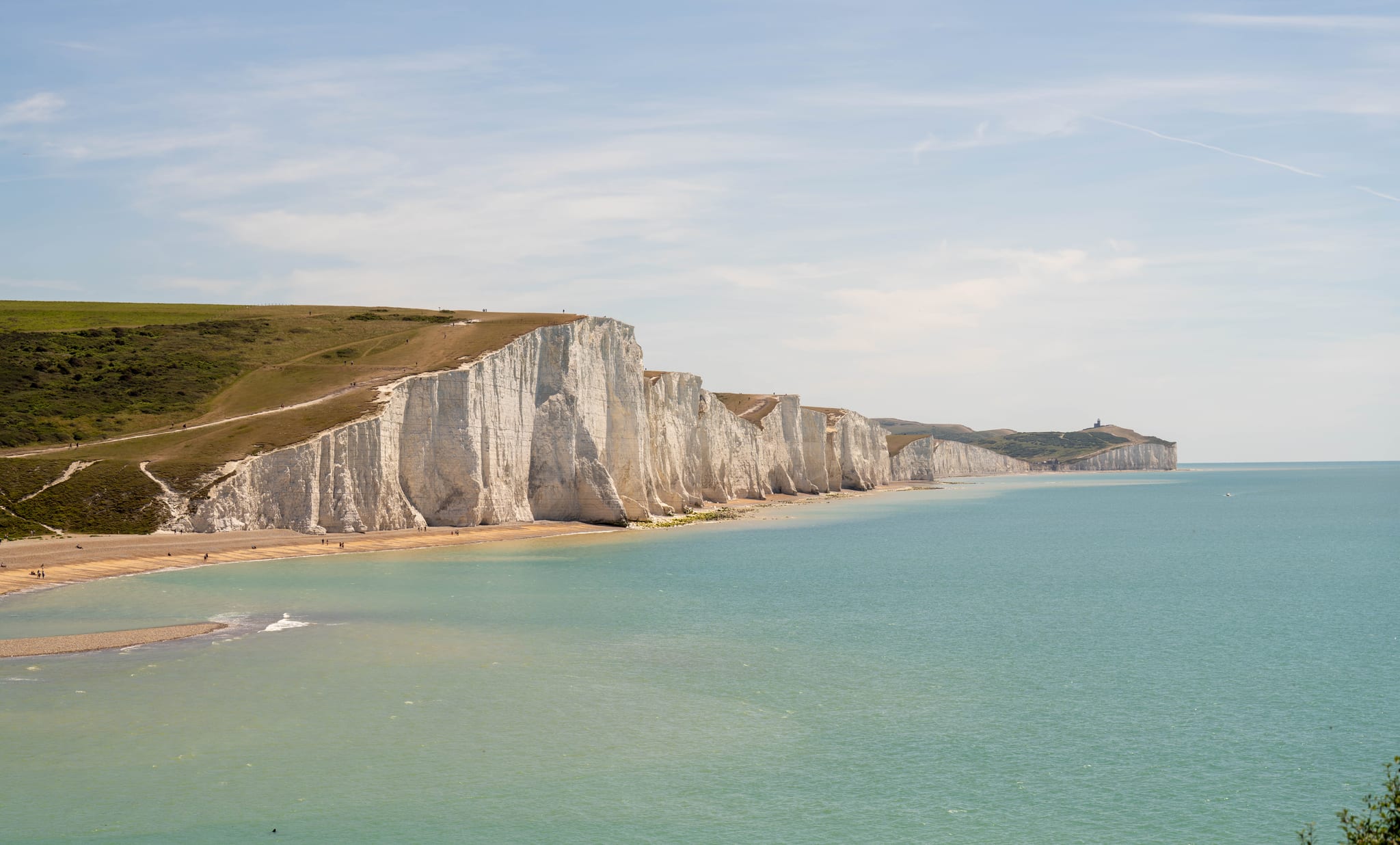
The Seven Sisters coastline is one of the most productive wild food environments in southern England. The combination of chalk downland (rich in wild herbs and greens), saltmarsh and estuary (sea vegetables and coastal plants), and open clifftop grassland (aromatic plants and specialist chalk species) means that a skilled forager can find edible plants here in every season of the year.
A guided foraging tour at Seven Sisters is one of the more unusual things you can do on the Sussex coast — and consistently one of the most memorable. Here is what you will actually find, taste, and learn.
The Landscape as a Larder
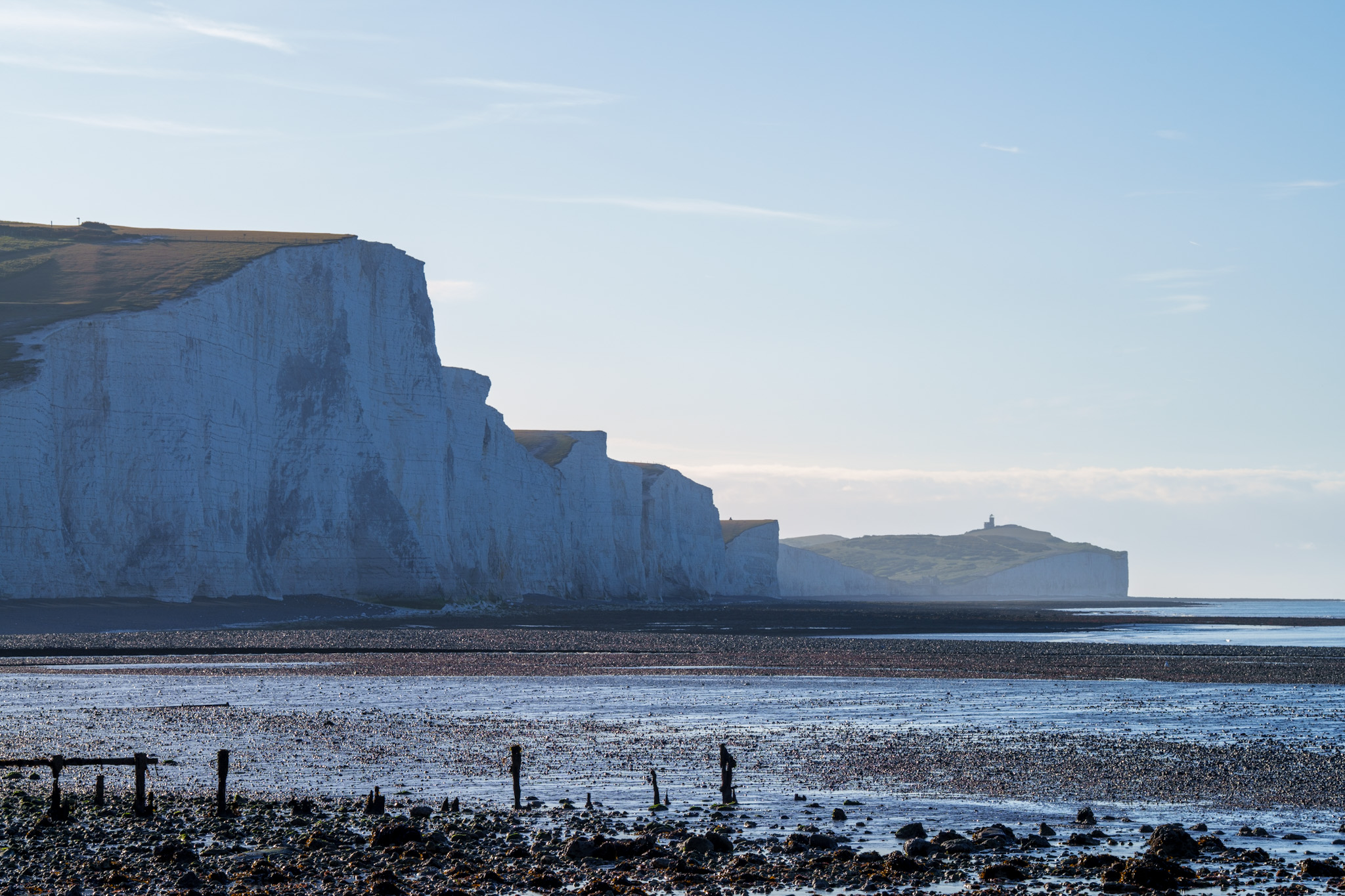
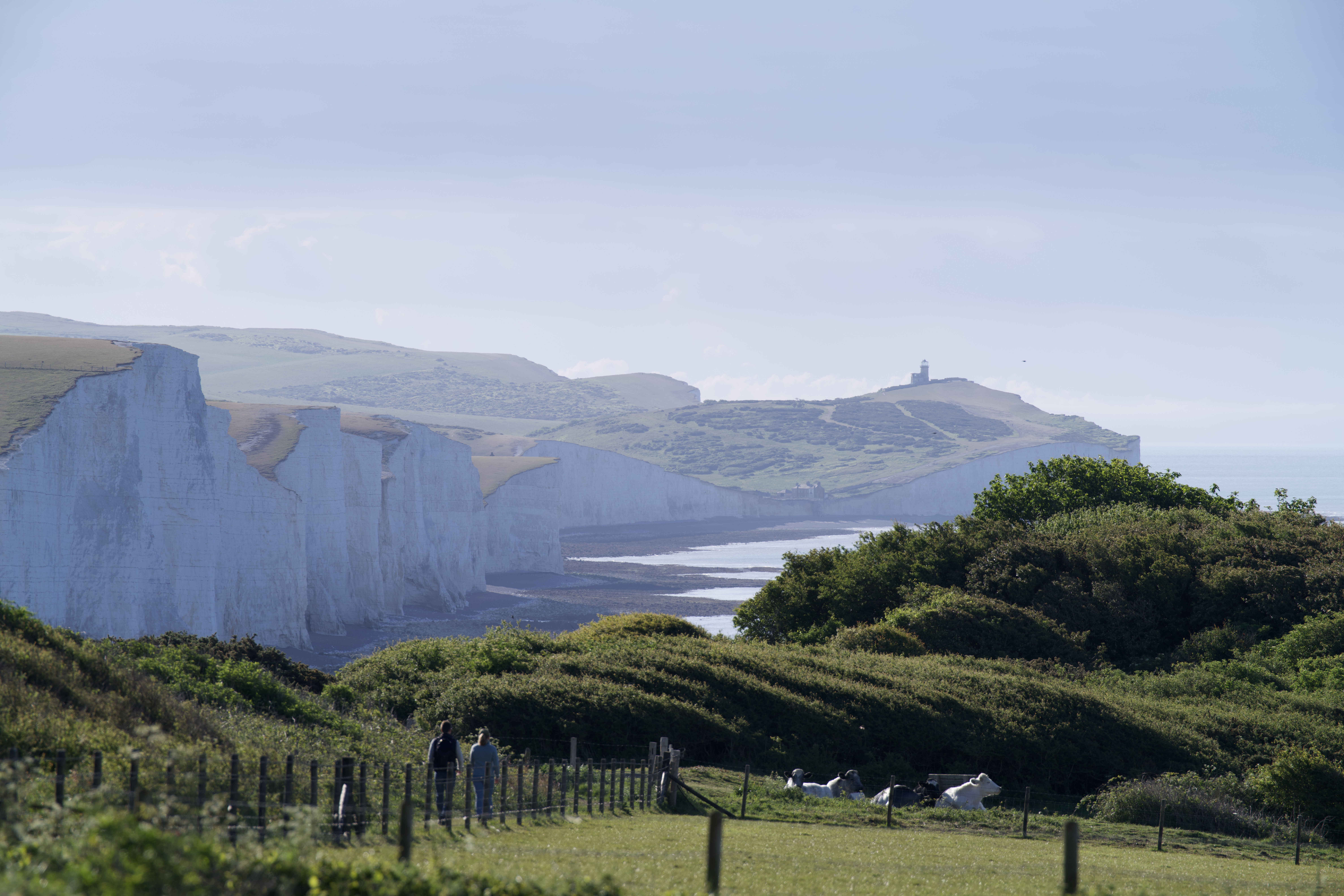
The Seven Sisters NNR covers three distinct habitats, each with its own foraging character:
- Chalk grassland (clifftop plateau): Aromatic herbs — wild marjoram, thyme, salad burnet. Chalk-specialist plants. Early in the season, young hawthorn leaves and alexanders.
- Cuckmere Valley and estuary edges: Sea beet (the wild ancestor of all cultivated beets and spinach), alexanders (the first spring green), sea purslane, rock samphire, and three-cornered leek.
- Coastal scrub and hedgerow: Elderflower (late May–June), sloe berries (September–October), hawthorn berries, blackberries, rosehips.
What You'll Forage by Season
Spring (March–May) — The Most Abundant Season
Spring is peak foraging season on the Sussex coast. Plants are in their prime growth phase, tender and flavourful before the summer heat coarsens them.
- Alexanders (Smyrnium olusatrum): The first significant spring green. A Mediterranean introduction that naturalised along British coastlines centuries ago. Tall, hollow-stemmed, bright yellow-green. Tastes something like celery crossed with parsley. The young shoots and leaves are eaten raw or cooked. Abundant along the paths between Exceat and Cuckmere Haven.
- Sea Beet (Beta vulgaris subsp. maritima): Dark green, glossy, fleshy leaves. The wild ancestor of spinach, chard, and beetroot — flavour more intense and slightly saltier than cultivated spinach. Grows along the shingle margins and estuary edges. Available year-round but at its best in spring and autumn.
- Three-Cornered Leek (Allium triquetrum): White bell-shaped flowers, triangular stem. Tastes of mild garlic/onion. Used raw in salads or cooked. Very common along the sheltered paths in the Cuckmere Valley.
- Rock Samphire (Crithmum maritimum): Found on cliff ledges and rocky shoreline. Fleshy, bright green, strongly aromatic (described as fennel-carrot-petrol — bizarre but addictive). The most distinctively coastal flavour you will encounter. Best eaten raw in small quantities on the tour; too intense for large amounts.
- Hawthorn Leaf ("Bread and Cheese"): The bright young leaves emerging in late March and April. Nutty, mild, slightly sticky. Children eat these on the path — they are the original English "bread and cheese."
Late Spring / Early Summer (May–June)
- Elderflower (Sambucus nigra): The abundant elder trees along the hedgerows below the cliff plateau. Flat-headed cream flowers with a distinctive musky-sweet scent. On tour: tasted raw or infused into water on the spot. Take home: cordial base. Peak window: 10–14 days in late May–early June, when flowers are freshly opened but not yet beginning to brown.
- Wild Marjoram (Origanum vulgare): The chalk grassland aromatic. Identical to cultivated oregano (this is the wild form). Intensely fragrant when crushed. Tours often stop on the clifftop to taste this directly from the plant.
Autumn (September–November)
- Sloe Berries (Prunus spinosa): The deep purple berries of blackthorn. Intensely astringent raw (your mouth turns inside out) but the flavour is complex and gin-ready. The hedgerows between Exceat and the valley are productive sloe habitat.
- Sea Purslane (Atriplex portulacoides): Grey-green fleshy leaves, grows in dense mats on the upper saltmarsh margins of the Cuckmere estuary. Salty, crunchy, used as a garnish. Visually striking — silver-grey against the brown estuary mud.
- Sea Beet (Peak): At its sweetest and most intensely flavoured in September–October, after the summer heat has concentrated the sugars.
What a Guided Tour Includes (and What It Doesn't)
A guided foraging tour at Seven Sisters is not a supermarket shop for free food. The amounts gathered are small — enough to taste, identify, and understand. The experience is about knowledge transfer, identification skills, and connecting with the landscape as something that actively sustains life.
What's included:
- Expert identification of 6–12 edible species depending on season
- Tasting of each species where safe and legal to do so on the spot
- Basic preparation techniques (what to eat raw, what to cook, how to store)
- Ecological context — where each plant grows, why it grows there, what it signals about the habitat
- Legal guidance — what you can and cannot pick, and why
- A simple prepared dish using foraged ingredients at the conclusion of some tours (operator-dependent)
What it's not: A competitive foraging session, a recipe workshop, or a chance to collect large quantities of plants. Expert guides operate under strict sustainable harvesting protocols — never more than one-third of any stand, no digging, no picking of protected species.
Legal Position on Foraging at Seven Sisters
Seven Sisters is a National Nature Reserve and a Site of Special Scientific Interest. The legal position on foraging in NNRs is nuanced:
- Personal-use foraging of common plants is permitted under the Countryside and Rights of Way Act 2000 access provisions
- Digging, uprooting plants, or disturbing the soil surface is prohibited
- Commercial foraging requires a licence from Natural England
- Protected species cannot be disturbed or collected regardless of purpose
Guided foraging tours operate within these legal parameters. Expert guides know which species are protected (Early Spider Orchid, Burnt Orchid, and others on the NNR) and ensure the tour stays within legal and ecological limits.
Book a Guided Foraging Tour
Our Seven Sisters Food & Coastal Foraging Tour runs April–October with a guide who has spent years learning this specific coastline. Small groups (maximum 8 people), approximately 2.5 hours, seasonal tastings included. The best foraging experience on the Sussex coast.
Runs weekends and some weekdays. View dates and book →
Planning the walk itself?
Four routes run along these cliffs and they are not interchangeable — a flat 3km riverside stroll, the classic 6.5km Exceat to Birling Gap crossing, a short Birling Gap loop, and the full 21.9km Seaford to Eastbourne ridge. Compare distance, ascent and difficulty before you pick one.
- Easy Birling Gap Short Loop 2 km 45 min
- Easy Cuckmere Haven Beach 3 km 1 hour
- Moderate Exceat to Birling Gap 6.5 km 2-3 hours
- Challenging Seaford to Eastbourne 21.9 km 6-7 hours
We may earn a small commission on bookings made through this link, at no extra cost to you. More info.
£4.99 · 24-page PDF · Instant download
The Seven Sisters Ultimate Guide
The complete 24-page companion built from first-hand walks — every cliff, all four graded routes, tide windows and a parking strategy. Designed to work offline, right on the cliff top.
- All 7 cliffs — heights, geology & viewpoints
- Four graded walking routes, compared
- Tide windows, light calendar & day plans
- Parking strategy & seasonal planner
Just want the basics? Download the free 2-page walk guide
Want an expert-led Seven Sisters tour?
From guided cliff walks and wildlife safaris to geology hikes and photography tours — explore all our curated experiences with local guides.