Rock Pooling at Seven Sisters with Kids: The Complete Family Guide
The chalk platform at the base of the Seven Sisters cliffs is one of the richest rock-pooling environments in south-east England. The wave-cut chalk creates a complex of shallow pools, channels, and overhangs that trap an enormous variety of marine life at low tide. For children, it is genuinely spectacular — the kind of thing they remember years later. For adults, it is surprisingly absorbing.
But it requires planning. The rock pools are only accessible at low tide. The beach access at Birling Gap is via steep steps that can close without notice after cliff falls. And the shingle and chalk platform is uneven and demands appropriate footwear. Get those things right and a rock-pooling trip to Seven Sisters with children is one of the best half-days you can have on the Sussex coast.
The Best Rock-Pooling Spots at Seven Sisters
Birling Gap (Best Overall)
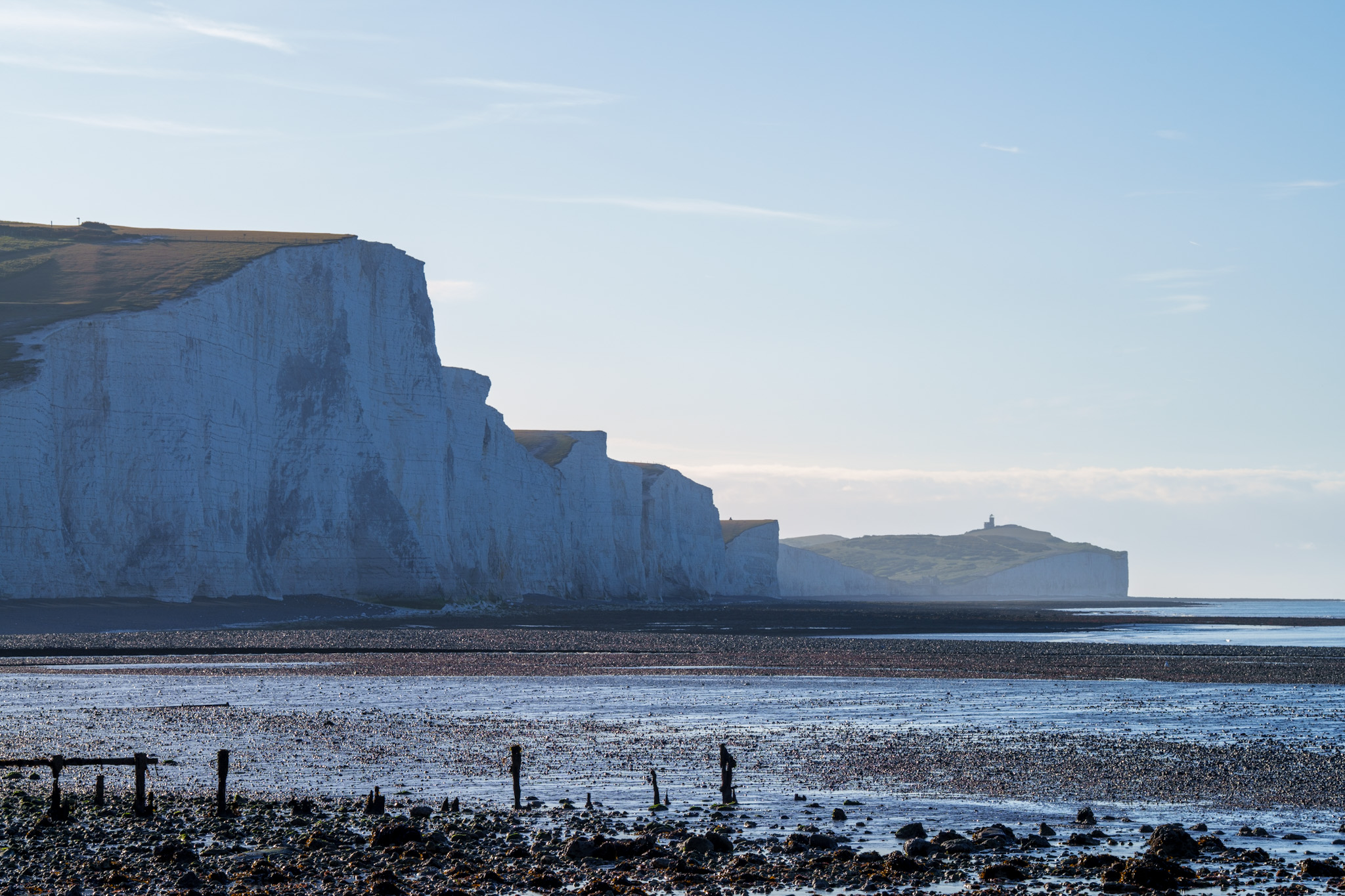
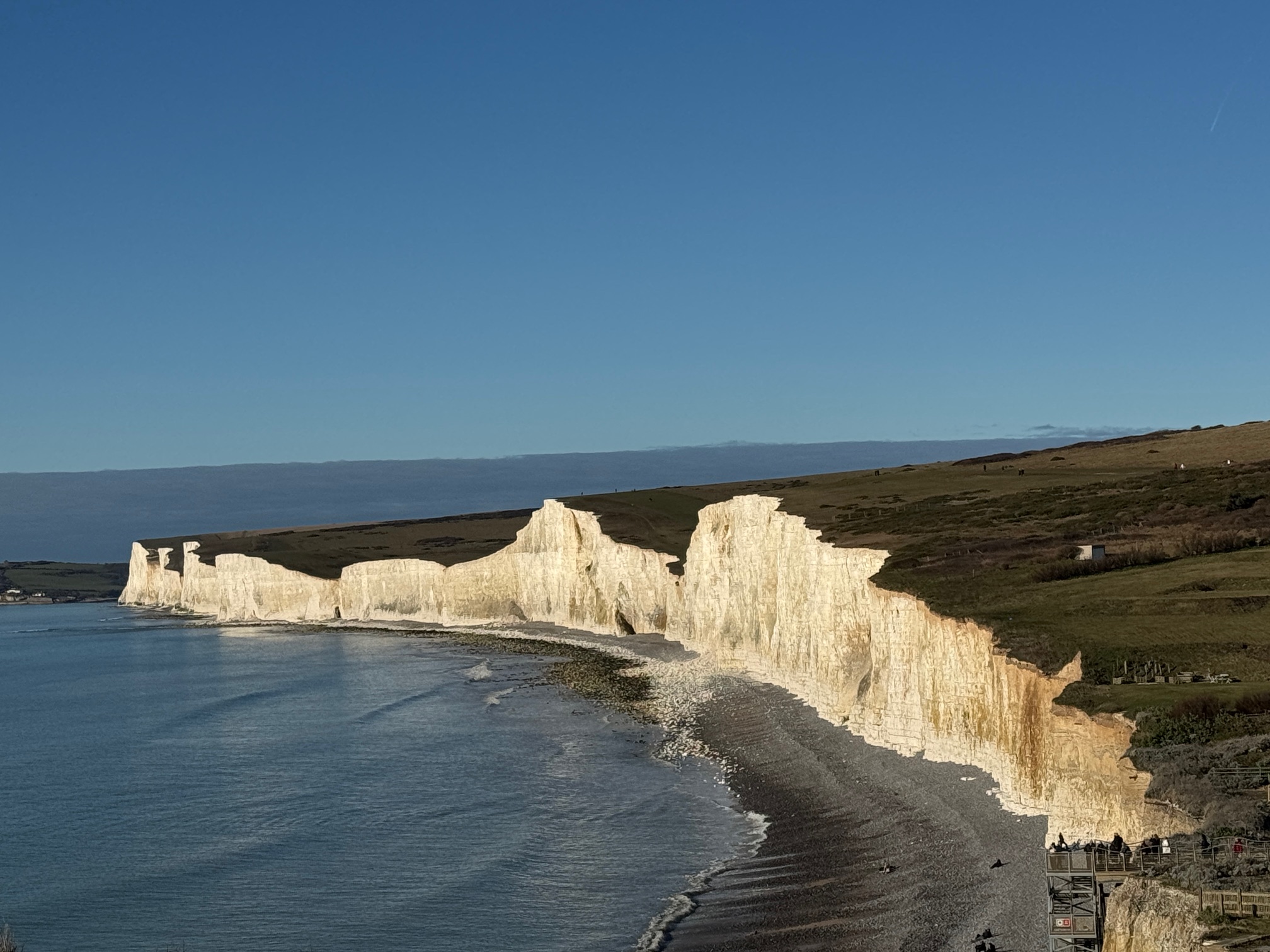
The most accessible rock-pooling location. Birling Gap has National Trust facilities at the top (toilets, café, car park), and beach access via wooden steps that descend to the chalk platform. At low tide, the chalk wave-cut bench extends 30–50 metres from the base of the cliffs and is dotted with pools ranging from rock-pool fingerprints to pools the size of small paddling pools.
The chalk is pale and the water often remarkably clear — you can see everything without putting your hand in. Anemones are visible from 2 metres. Crabs wedge themselves under chalk overhangs in almost every larger pool.
Access: Steps from Birling Gap. Check step status before visiting — they are periodically closed for repairs after cliff falls. Current status: National Trust Birling Gap page.
Hope Gap (Quieter, More Adventurous)
A hidden shingle and chalk cove accessible via a moderate descent from East Dean village — about 1.2km walk from the village green. The pools here are less visited and often richer as a result. Slightly more demanding to reach (the path down to the beach is steep and rough) but genuinely worth it for the solitude and the quality of the pools. Better suited to children aged 8 and above who are comfortable on rough ground.
Cuckmere Haven (Good for Young Children)
The beach at the mouth of the Cuckmere River is a long, wide shingle beach without the chalk platform of Birling Gap. Rock-pooling opportunities are limited, but the beach itself is excellent for young children — relatively flat, sheltered from south-westerly winds by the cliff line to the east, and a gentler environment than the exposed chalk platforms. The 20-minute walk from Exceat is manageable for children from about age 4.
What You'll Find in the Rock Pools
The chalk platform pools at Birling Gap and Hope Gap are rich in the following:
Always Present (Year-Round)
- Beadlet Anemones — red or green blobs at low tide, flowery tentacles when submerged. The most visually striking pool inhabitants for children. Found in almost every pool.
- Limpets — conical shells clamped to chalk rock. Prise one off and show a child the sucker foot underneath.
- Periwinkles — small dark snails. Graze on algae on every chalk surface.
- Shore Crabs — usually 2–5cm across. Wedge under overhangs. Move sideways when disturbed. Very common; children reliably find them.
- Hermit Crabs — inside whelk shells. Put one in a bucket of seawater and watch it emerge.
- Common Blennies — small fish that dart away when approached. Often visible resting on the pool bottom.
- Barnacles — encrust every exposed chalk surface. Explained well for children: "like a little shrimp inside a tiny castle."
Seasonal Highlights
- Spring (March–May): First prawns appear in shallow pools. Sea lettuce (bright green seaweed) at its most vivid. Good time to spot smaller crabs moulting.
- Summer (June–August): Greatest variety. Prawns are common and large. Blennies most active. Occasionally small Pipefish in the larger pools. Compass Jellyfish on the beach above the tideline.
- Autumn (September–October): Sea temperatures at highest (17–18°C). Whelks more visible. Dead Man's Fingers coral occasionally in deeper pool edges.
Timing: Getting the Tides Right
This is the most important practical consideration. The chalk platform is covered at high tide. You need low tide — specifically the 2 hours either side of low water — for productive rock-pooling.
Spring tides (new moon and full moon, roughly fortnightly) expose much more of the chalk platform than neap tides and offer the best rock-pooling. Check the predicted low water time and height for your visit date.
Useful tide resources:
- Eastbourne tide times (tidetimes.org.uk) — most relevant to Birling Gap and Hope Gap
- Our visit planner tool — combines tide times with parking and weather data
What to Bring for Rock-Pooling with Children
- Small bucket with handle — essential for containing creatures for a closer look. Return everything to its pool afterwards.
- Magnifying glass — reveals extraordinary detail on anemone tentacles, barnacle cirri, and small invertebrates. Children who are lukewarm about "looking at the sea" become fascinated with a magnifier.
- Field guide — "Collins Pocket Guide to the Seashore" or the RNLI/National Trust rock-pooling cards are excellent for identification on the spot.
- Old trainers or water shoes — the chalk platform is not dramatically slippery but it is wet and uneven. Wellington boots are too rigid for the surface. Closed-toe water shoes are ideal for children.
- Sun cream — the chalk and water reflect UV strongly on summer days. The beach feels cooler than it is.
- Snacks and water — the Birling Gap café is the nearest food source (top of the steps). Bring water for the beach — there is nothing down there.
Rules and Responsible Rock-Pooling
Seven Sisters is a National Nature Reserve. The rock-pool creatures are wild animals in their habitat:
- Look but don't take — return everything to its original pool, oriented the same way it was found.
- Don't pull anemones — they are attached and pulling damages them.
- Replace rocks and overhangs as you found them — the animals underneath depend on the cover.
- Don't collect shells, chalk, or flint — this is an SSSI and NNR.
- Keep buckets in the shade and return creatures within 10–15 minutes maximum.
Guided Rock-Pooling with Children
Our Family Rock-Pooling & Cliff Walk is a 2.5-hour guided session at Birling Gap, designed specifically for families with children aged 5 and above. The guide brings identification equipment, knows exactly where the best pools are, and makes the whole experience educational without being classroom-like. It's one of the most popular activities we offer — children who are reluctant at the start are genuinely absorbed by the end.
Runs May–September at low tide windows. View available dates →
Planning the walk itself?
Four routes run along these cliffs and they are not interchangeable — a flat 3km riverside stroll, the classic 6.5km Exceat to Birling Gap crossing, a short Birling Gap loop, and the full 21.9km Seaford to Eastbourne ridge. Compare distance, ascent and difficulty before you pick one.
- Easy Birling Gap Short Loop 2 km 45 min
- Easy Cuckmere Haven Beach 3 km 1 hour
- Moderate Exceat to Birling Gap 6.5 km 2-3 hours
- Challenging Seaford to Eastbourne 21.9 km 6-7 hours
We may earn a small commission on bookings made through this link, at no extra cost to you. More info.
£4.99 · 24-page PDF · Instant download
The Seven Sisters Ultimate Guide
The complete 24-page companion built from first-hand walks — every cliff, all four graded routes, tide windows and a parking strategy. Designed to work offline, right on the cliff top.
- All 7 cliffs — heights, geology & viewpoints
- Four graded walking routes, compared
- Tide windows, light calendar & day plans
- Parking strategy & seasonal planner
Just want the basics? Download the free 2-page walk guide
Want an expert-led Seven Sisters tour?
From guided cliff walks and wildlife safaris to geology hikes and photography tours — explore all our curated experiences with local guides.