We Were on the Beach When the Chalk Fell: What a Cliff Fall Sounds and Looks Like Up Close
It started with a sound we didn't immediately recognise — a deep, grinding crack from somewhere above and to our left, followed immediately by something between a rumble and a roar. By the time we had turned to look, the fall was already underway: a section of chalk face roughly the size of a transit van detaching from the cliff and beginning to move.
It happened in about four seconds. The chalk hit the beach approximately 80 metres from where we were standing, disintegrating on impact into a range of sizes from large blocks to powder. The dust cloud rose immediately — chalk is light and fine — and spread horizontally along the cliff base faster than we expected. We were upwind of it, which meant we stayed out of the cloud. The people who were downwind spent the next minute in a visibility-reducing chalk fog.
Nobody was hurt. The fall landed on an unoccupied section of beach. This is the most common outcome. But it was, standing there with the noise still in our ears and the dust settling on the shingle, a precise and memorable demonstration of why the signs say what they say.
What the Signs Actually Mean
The signs at Birling Gap and Cuckmere Haven warn visitors to stay away from the cliff base. Most people read this as a general caution — the kind of liability-driven instruction you see everywhere. It is not. It is a specific, accurate warning about a mechanism that kills people periodically on chalk cliff coastlines.
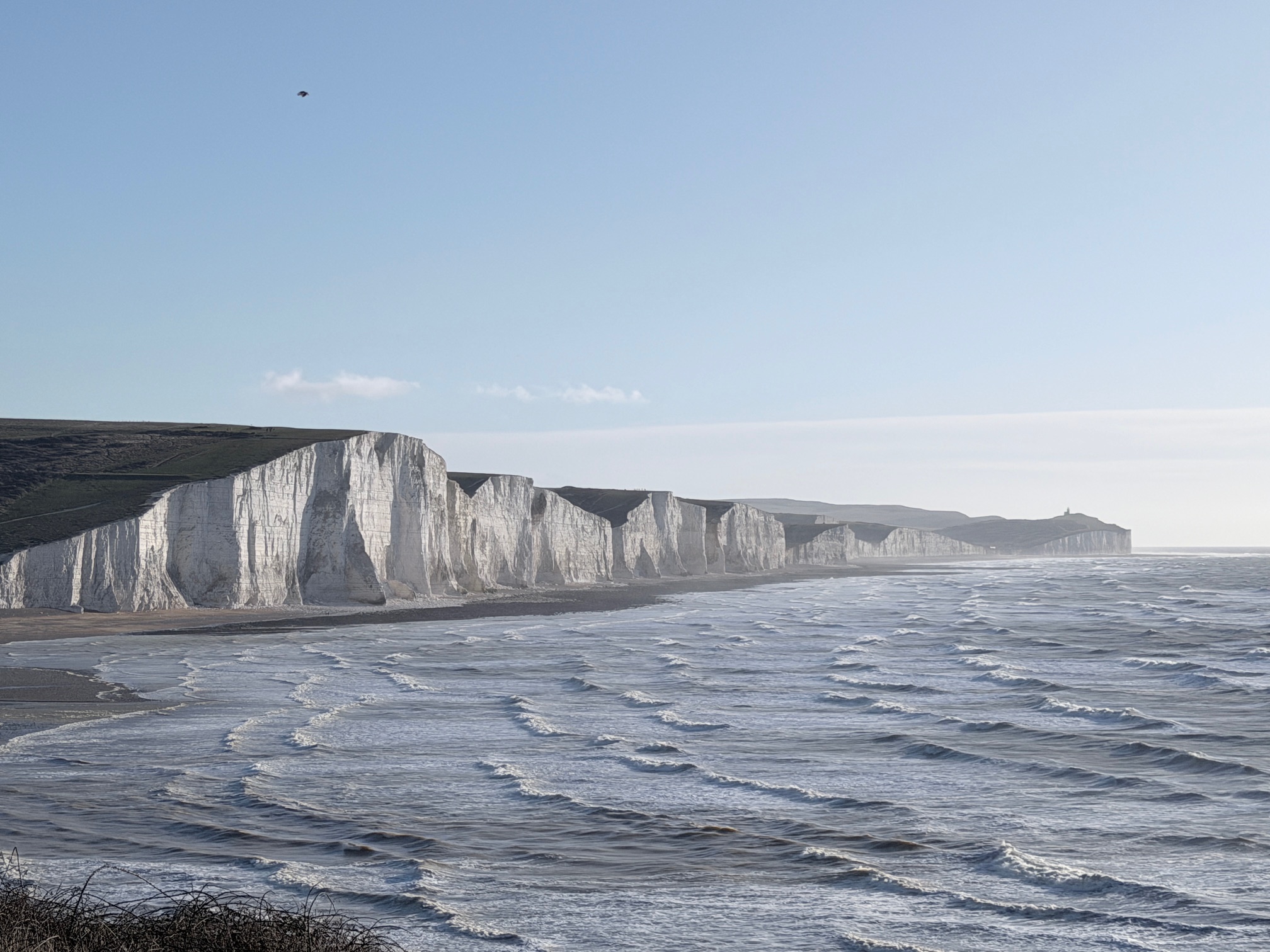
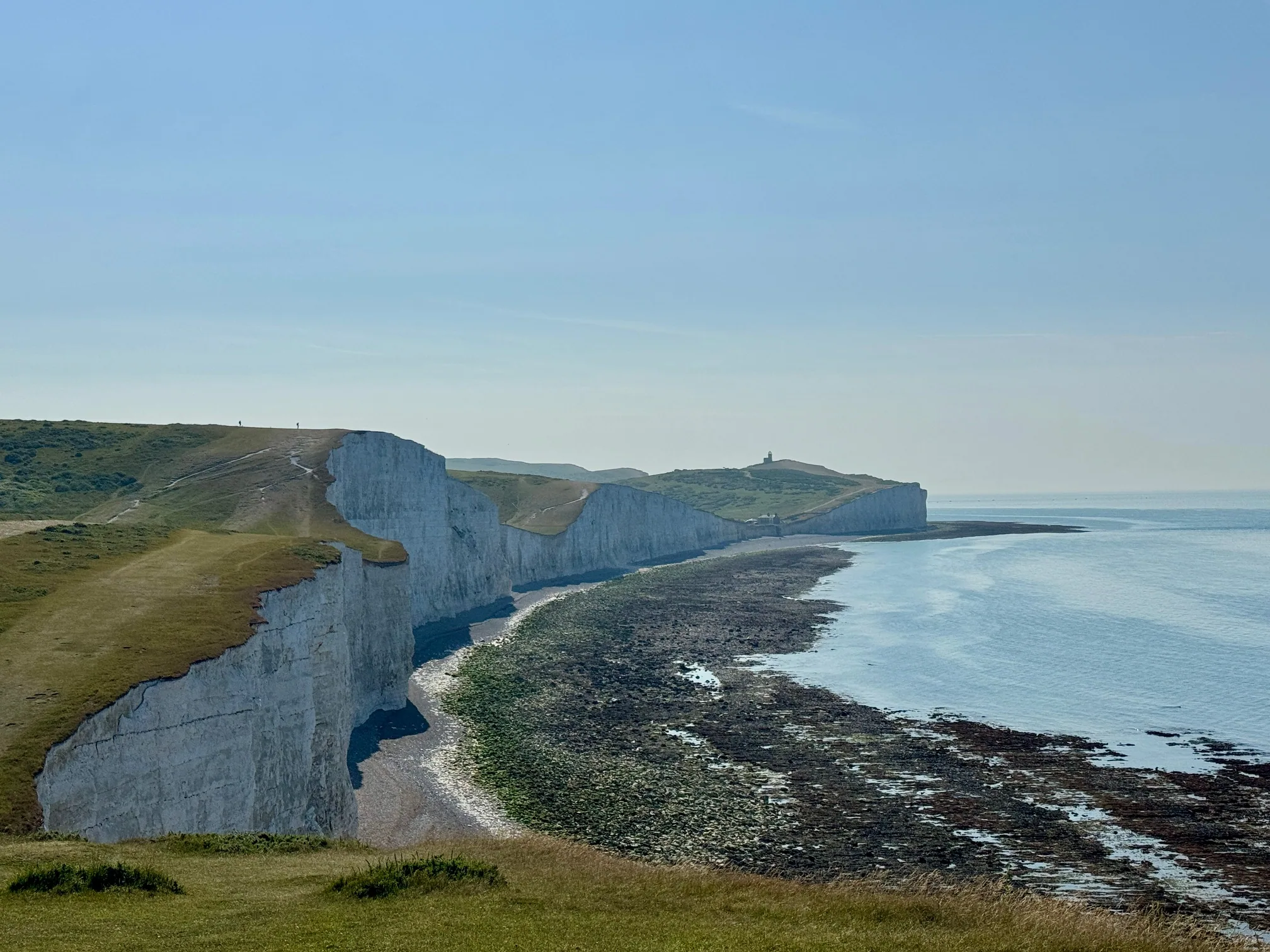
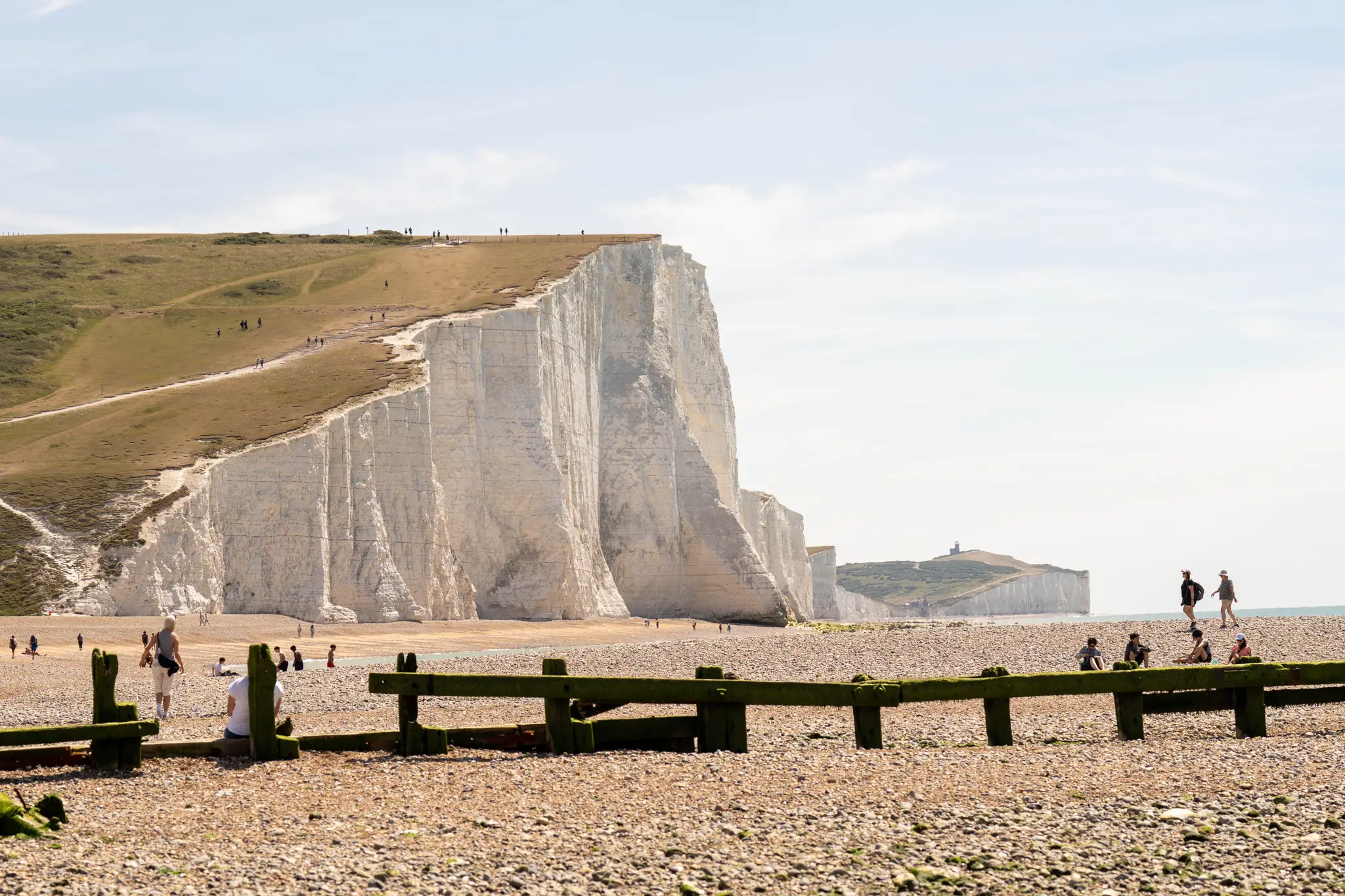
The mechanism is undercutting. Wave action at the base of the cliff removes chalk material at sea level, leaving an overhang above it. The overhang is structurally unsupported. It can hold for years or it can let go without warning on any given day. There is no visual indication from the beach of when a section is close to failure. The cliff face above can look completely solid right up to the moment it isn't.
The recommended safe distance varies by source — the National Trust suggests at least 5 metres from the cliff base, many cliff safety guides suggest further. What the fall we witnessed demonstrated practically is that 80 metres was a comfortable margin. 20 metres would not have felt comfortable. The debris field from that fall extended roughly 15 metres from the cliff base.
The Sequence of Events
In our case, the sequence was: crack, roar, movement, impact, dust cloud, silence. The whole active phase lasted about six seconds. There was no warning we could have acted on — no preliminary crumbling, no visible movement before the crack, no sounds in the minutes preceding it.
After the fall, the silence lasted about 10 seconds. Then the chalk dust reached the people nearest the fall, the sound of wave action returned, and everyone on that section of beach started moving away from the cliff base simultaneously without anyone apparently saying anything.
What was striking in retrospect was how instinctive the response was. Nobody needed to be told what had happened or what to do. The sound and sight of a cliff fall produces an immediate and correct response in most people: move away from the cliff. The problem is that by the time the sound reaches you, the fall has already happened. You're responding to what just occurred, not to what's about to.
The practical rule: If you hear a cliff fall anywhere near your location on the beach, move away from the cliff face immediately and quickly. Do not stop to photograph it. Do not approach to look at the fallen material. Secondary falls — smaller sections destabilised by the primary fall — are common in the minutes and hours after a significant fall. The debris field is active.
When Falls Are Most Likely
Cliff falls at Seven Sisters are most common in winter and spring. This is when Atlantic storms drive the largest wave energy against the cliff base, when freeze-thaw cycles crack chalk from the face, and when the accumulated undercutting of the summer months reaches a structural failure threshold.
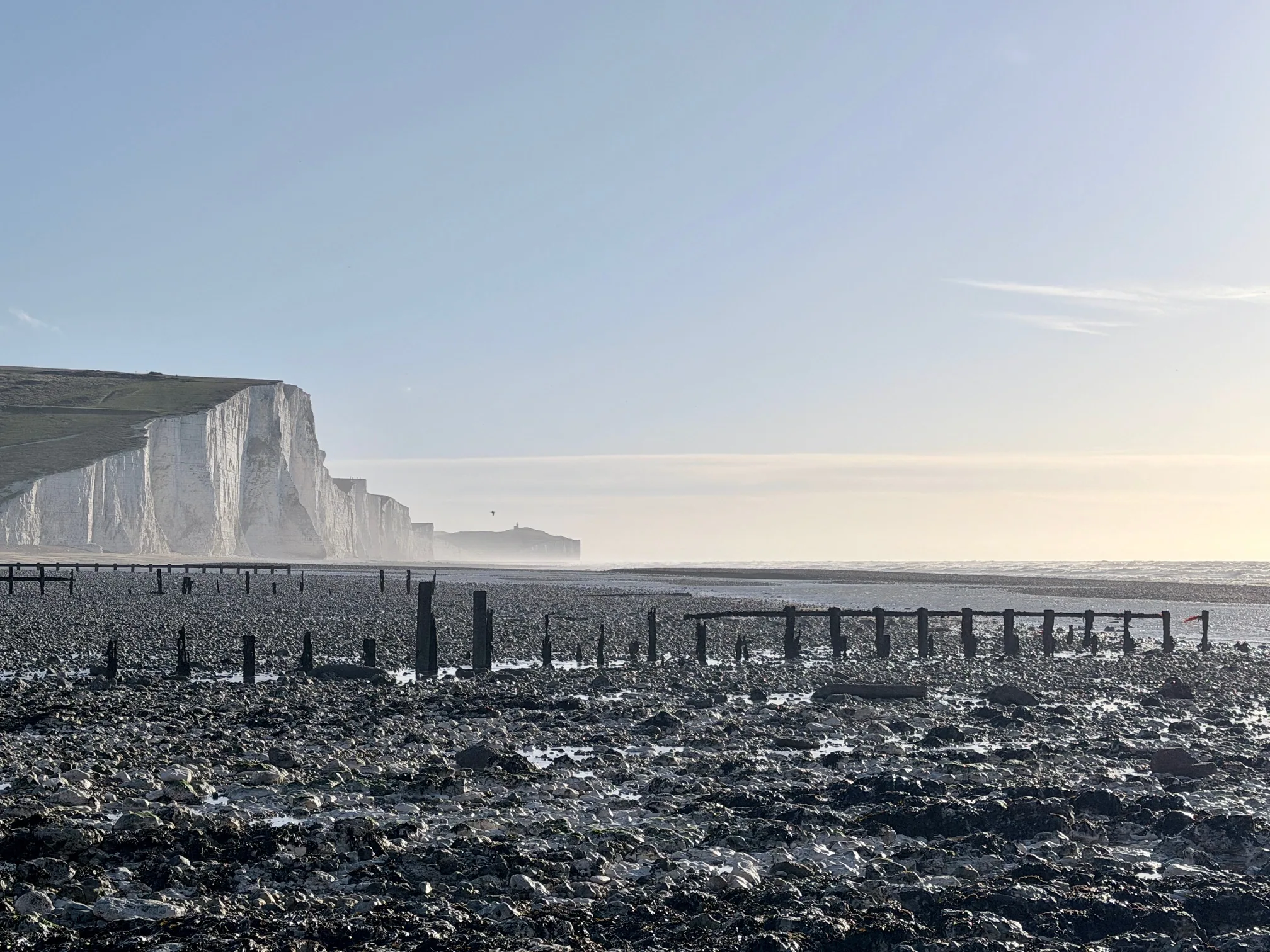
Large falls are often preceded and followed by smaller ones. If you visit shortly after a significant storm, the chalk faces will typically show fresh material and the beach may have obvious recent fall debris — bright white chalk, angular and unweathered, against the older grey material. Fresh bright chalk on the beach is a signal that the cliff above it has recently been active.
Summer and autumn see fewer falls, which is one reason beach access at Seven Sisters is more practical during these months. But "fewer" is not "none." Falls occur in all seasons. The beach at Birling Gap and the beach at Cuckmere Haven are not safe to stand against the cliff base at any time of year.
What the Cliff Face Looks Like Afterward
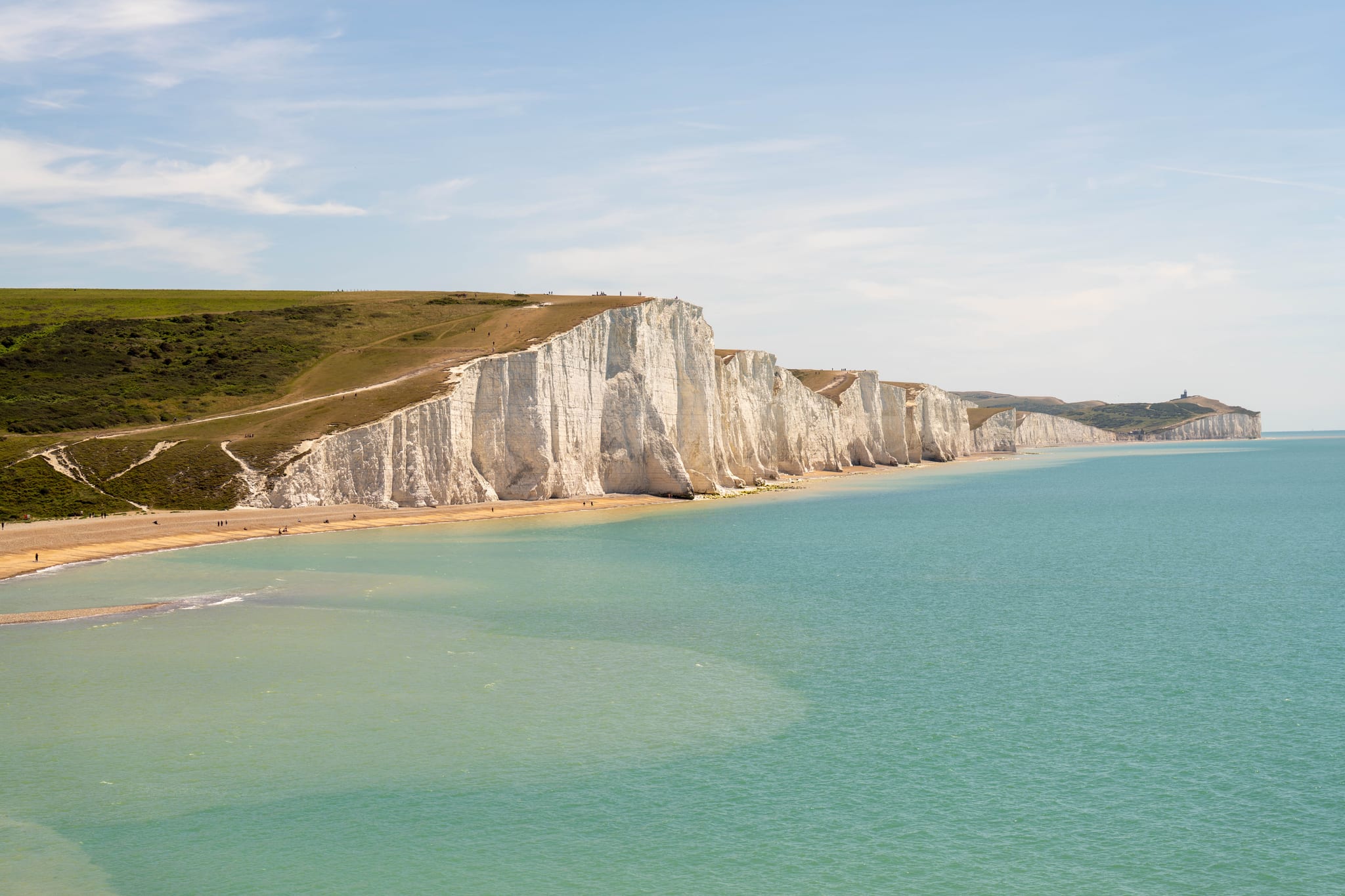
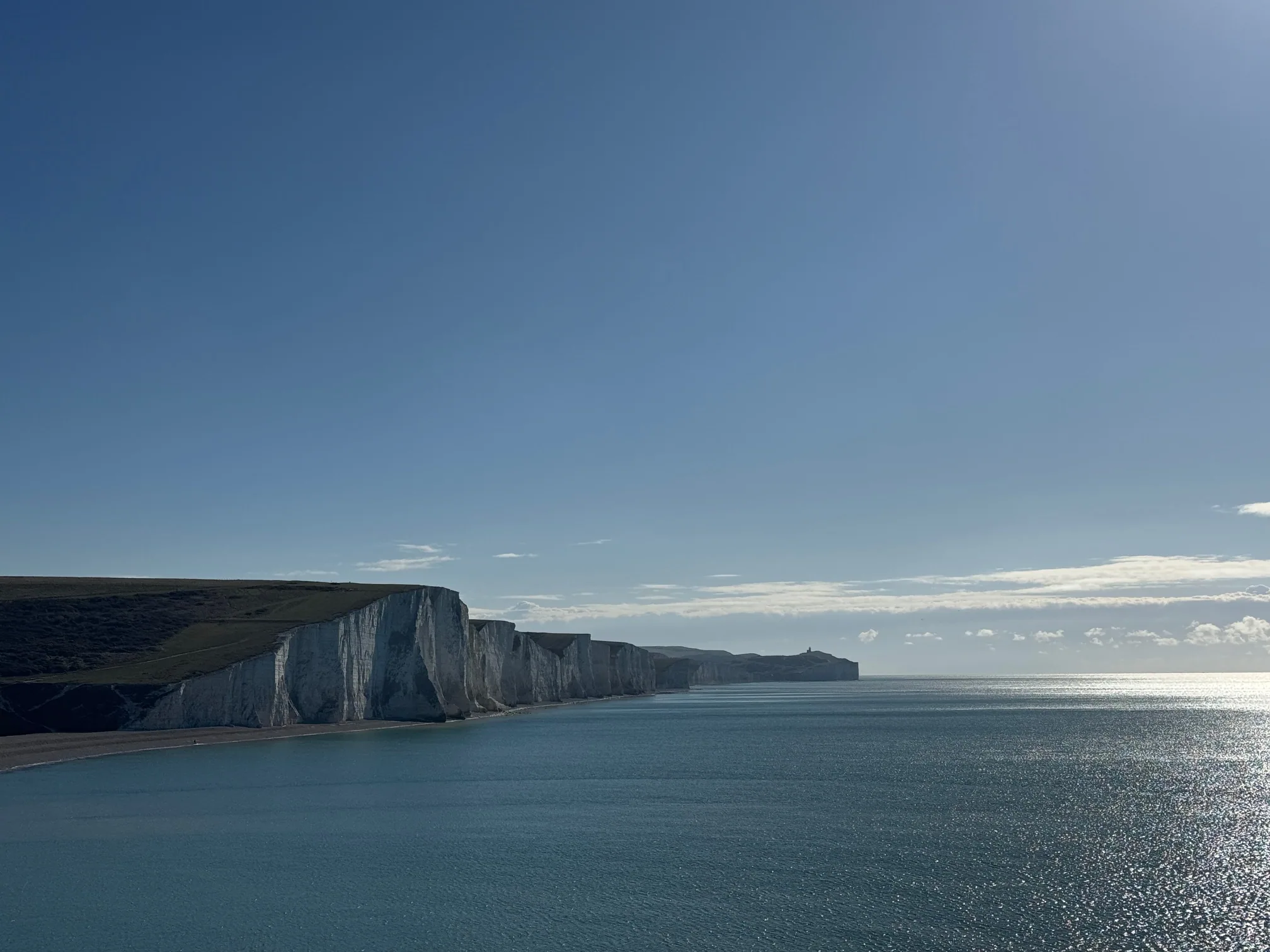
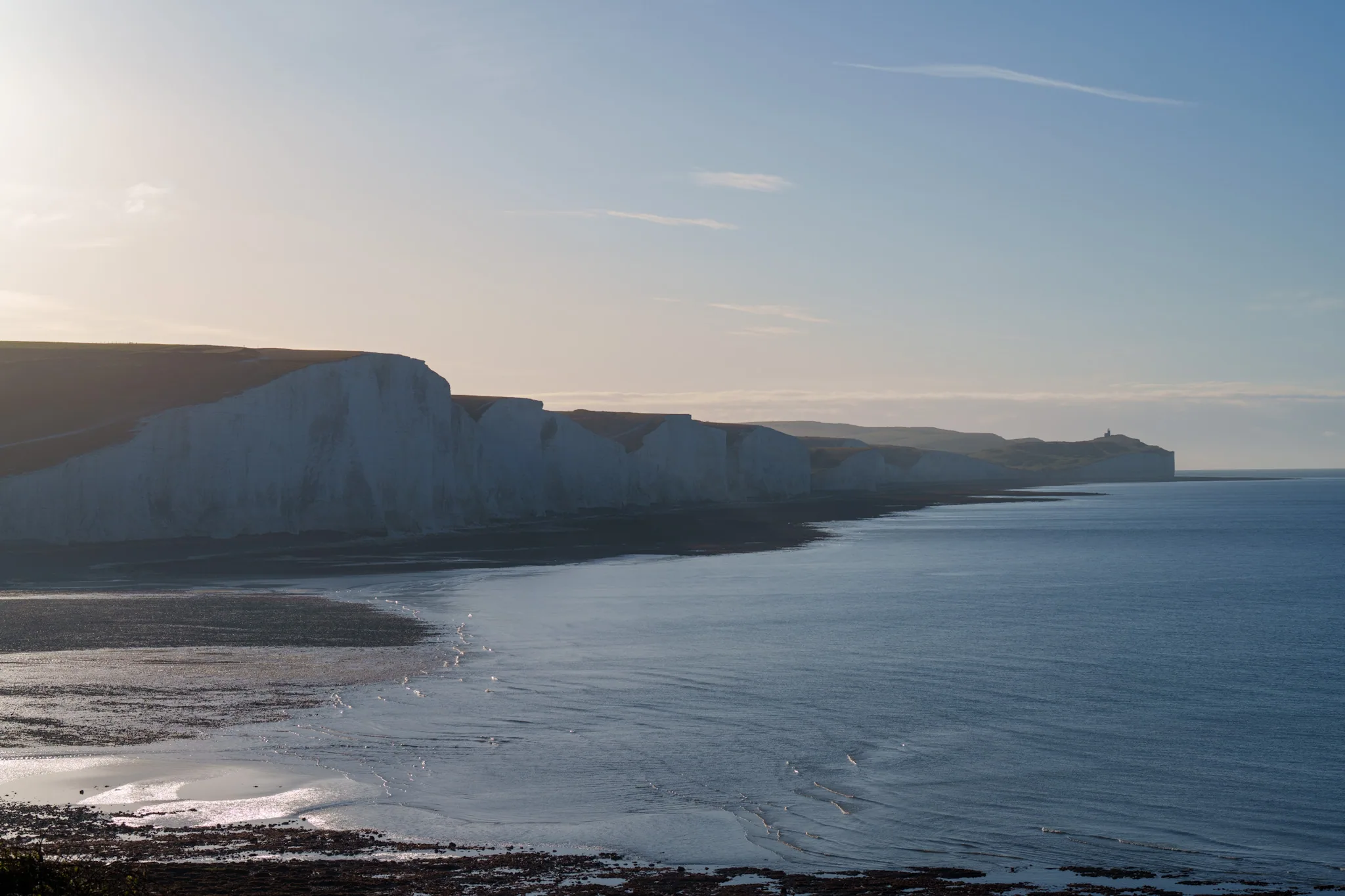
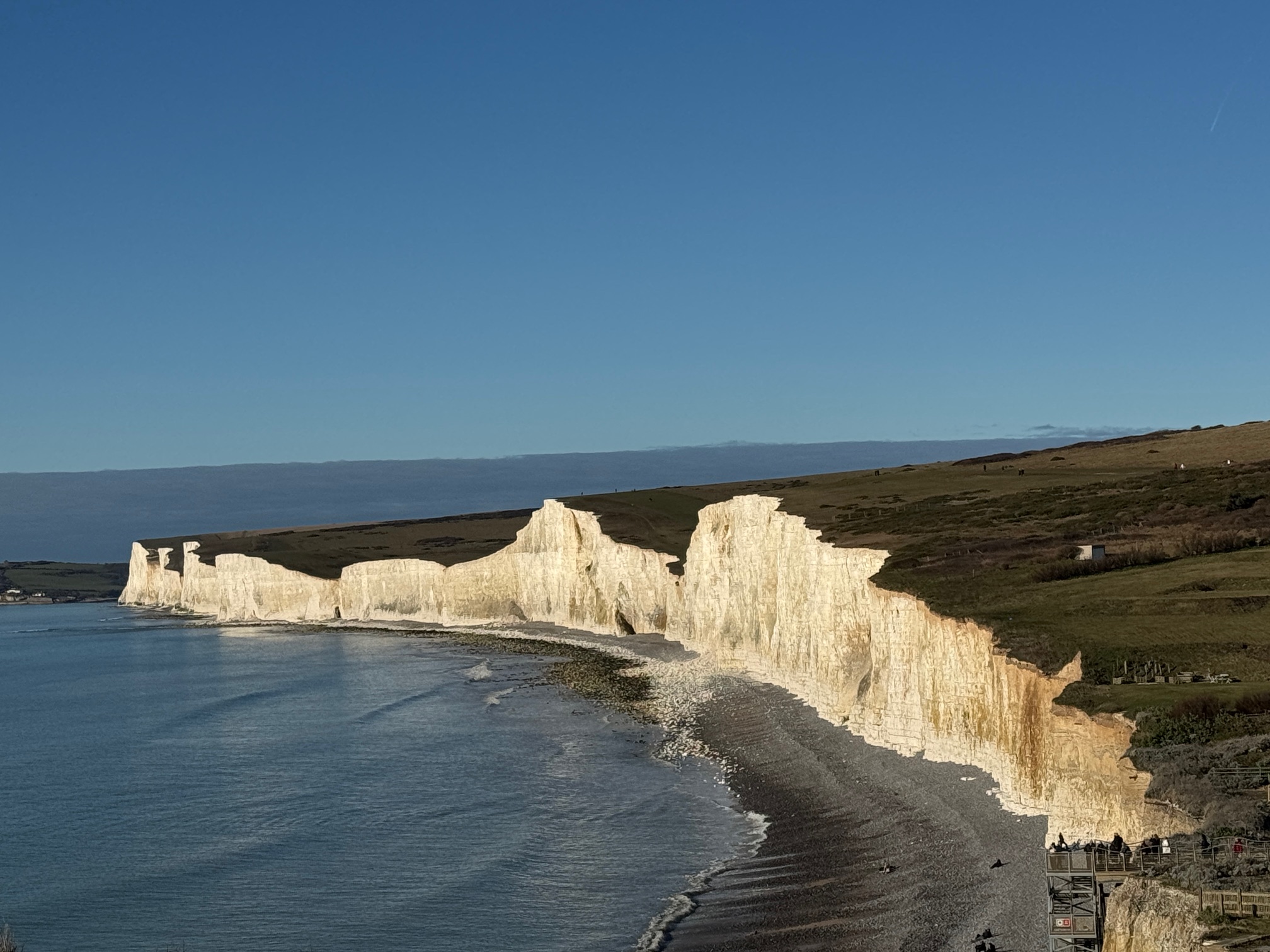
The fresh face exposed by a chalk fall is brilliant white — the same startling white as fresh chalk. It weathers relatively quickly; within a season or two it begins to develop the grey-green discolouration from algae that characterises the older faces. The whiteness of the Seven Sisters as a whole is maintained by the ongoing erosion — each fall exposes new chalk and renews the white. Without the erosion, the cliffs would gradually turn grey.
The section of cliff face where the fall occurred is visibly different from the surrounding material for months afterward. The edges are sharp and angular rather than smoothed by weathering. The colour is distinct. Looking at the cliff from a distance shortly after a fall, you can usually identify the exact section that came down.
The Scale Question
People often ask how large cliff falls are. The honest answer is: they range enormously. Small falls — a few hundred kilograms of chalk — happen regularly enough that beach-goers encounter fresh small debris on most visits without ever seeing the fall occur. Medium falls — tonnes of material — happen several times per year across the cliff system. Large falls — the kind that make the news, reshape sections of beach, and occasionally damage or require the closure of the Birling Gap beach steps — happen several times per decade at any given point on the cliff.
The fall we witnessed was in the medium category: significant enough to be clearly dramatic, not large enough to be structurally unusual. It produced about 20–30 tonnes of material by rough visual estimate. Large enough that being directly beneath it would have been unsurvivable. Small enough that 80 metres of distance was more than adequate.
This is why distance matters, not just awareness. You cannot outrun a cliff fall. You can only be far enough away that the debris field doesn't reach you.
Beach Safety at Seven Sisters: The Rules That Matter
- Never stand against the cliff base: Not to shelter from wind, not for a photo, not because it looks stable. The debris field from even a medium fall extends 10–20 metres from the cliff.
- Fresh bright chalk on the beach = recent activity: If you see bright white angular chalk among the darker older material, that cliff face has recently fallen. Be more conservative about distance near that section.
- After storms, the cliff is more active: Give the cliff faces extra margin in the days and weeks after significant weather. Secondary falls are common.
- If you hear a fall: move away immediately. Don't assess, don't photograph, don't approach. Move away from the cliff and wait before returning to that section of beach.
- Keep children away from the cliff base: Children are drawn to cliff faces for the shelter and the dramatic scale. This is the wrong instinct at the Seven Sisters. Keep them in the open, away from the cliff.
- Dogs off leads can run toward falls: A cliff fall sends debris and dust in multiple directions including toward the water — dogs may run toward it. Keep dogs on leads on the beach sections near cliff faces.
More Seven Sisters Safety and Geology Guides
For the geology of how the chalk cliffs form and erode, see our geology guide. For the Belle Tout lighthouse erosion story and what it tells you about the cliff edge, see our Belle Tout guide. For full safety guidance before your walk, see our safety guide.
Planning the walk itself?
Four routes run along these cliffs and they are not interchangeable — a flat 3km riverside stroll, the classic 6.5km Exceat to Birling Gap crossing, a short Birling Gap loop, and the full 21.9km Seaford to Eastbourne ridge. Compare distance, ascent and difficulty before you pick one.
- Easy Birling Gap Short Loop 2 km 45 min
- Easy Cuckmere Haven Beach 3 km 1 hour
- Moderate Exceat to Birling Gap 6.5 km 2-3 hours
- Challenging Seaford to Eastbourne 21.9 km 6-7 hours
We may earn a small commission on bookings made through this link, at no extra cost to you. More info.
£4.99 · 24-page PDF · Instant download
The Seven Sisters Ultimate Guide
The complete 24-page companion built from first-hand walks — every cliff, all four graded routes, tide windows and a parking strategy. Designed to work offline, right on the cliff top.
- All 7 cliffs — heights, geology & viewpoints
- Four graded walking routes, compared
- Tide windows, light calendar & day plans
- Parking strategy & seasonal planner
Just want the basics? Download the free 2-page walk guide
Want an expert-led Seven Sisters tour?
From guided cliff walks and wildlife safaris to geology hikes and photography tours — explore all our curated experiences with local guides.