How to Use CoastMetric's Live Conditions Checker to Plan Your Seven Sisters Walk
Using CoastMetric to Plan Your Seven Sisters Walk
One score built from eight live data feeds — here's what it means and how to use it
Stop Guessing. Start Checking.
Most people check the weather app, maybe glance at tide times, and call that planning. That covers perhaps 40% of what actually determines whether a Seven Sisters walk is enjoyable or genuinely dangerous. Wind speed, path grip, visibility, sea swell, air quality, daylight window — these all matter, and they often tell a completely different story to "partly cloudy, 15°C."
CoastMetric's Seven Sisters conditions page pulls eight authoritative data sources into a single Visit Score from 0 to 100, updated continuously. This post explains what each component means on the ground at Seven Sisters, so the number actually tells you something useful.
What a score looks like
A score of 82 means good walking conditions overall. Scores above 70 are generally good, 50–70 are acceptable with caveats, below 50 means one or more components are in poor shape — worth checking which one before you commit to a 10-mile round trip.
The Eight Components Explained
Each component is weighted by how much it typically affects a cliff-path walk. Here's what each one means at Seven Sisters specifically.
Wind Safety
22% weightThe single most important factor on an exposed chalk headland. At Seven Sisters, there's no tree cover and the cliff edge is often within a metre of the path. Gusts above 35 mph make the exposed sections genuinely hazardous — particularly between Birling Gap and Cuckmere Haven where the path runs right along the cliff top.
What to watch for: A wind score below 50 means gusts are likely to be strong enough to affect stability. Check the forecast direction too — a northerly pushes you toward the cliff edge; a southerly away from it.
Precipitation Risk
18% weightRain itself is rarely dangerous on this walk — but it transforms the experience. The chalk cliff path becomes slippery when wet (chalk has almost no friction when saturated). The Cuckmere valley floor paths become muddy and waterlogged after heavy rain, making the low-level route significantly harder going. Photography, obviously, suffers.
What to watch for: Heavy rain in the previous 24 hours matters as much as current precipitation. That's factored into the path grip component below.
Path Grip
15% weightThis is unique to CoastMetric and particularly relevant at Seven Sisters. The chalk and clay paths along the cliff top become treacherous after rain — clay sections especially turn into something resembling ice. The model accounts for recent rainfall, soil saturation, and drainage patterns.
What to watch for: A grip score below 60 after recent rain means waterproof boots with good ankle support are essential. Trainers on wet chalk are a bad idea at any time.
Visibility
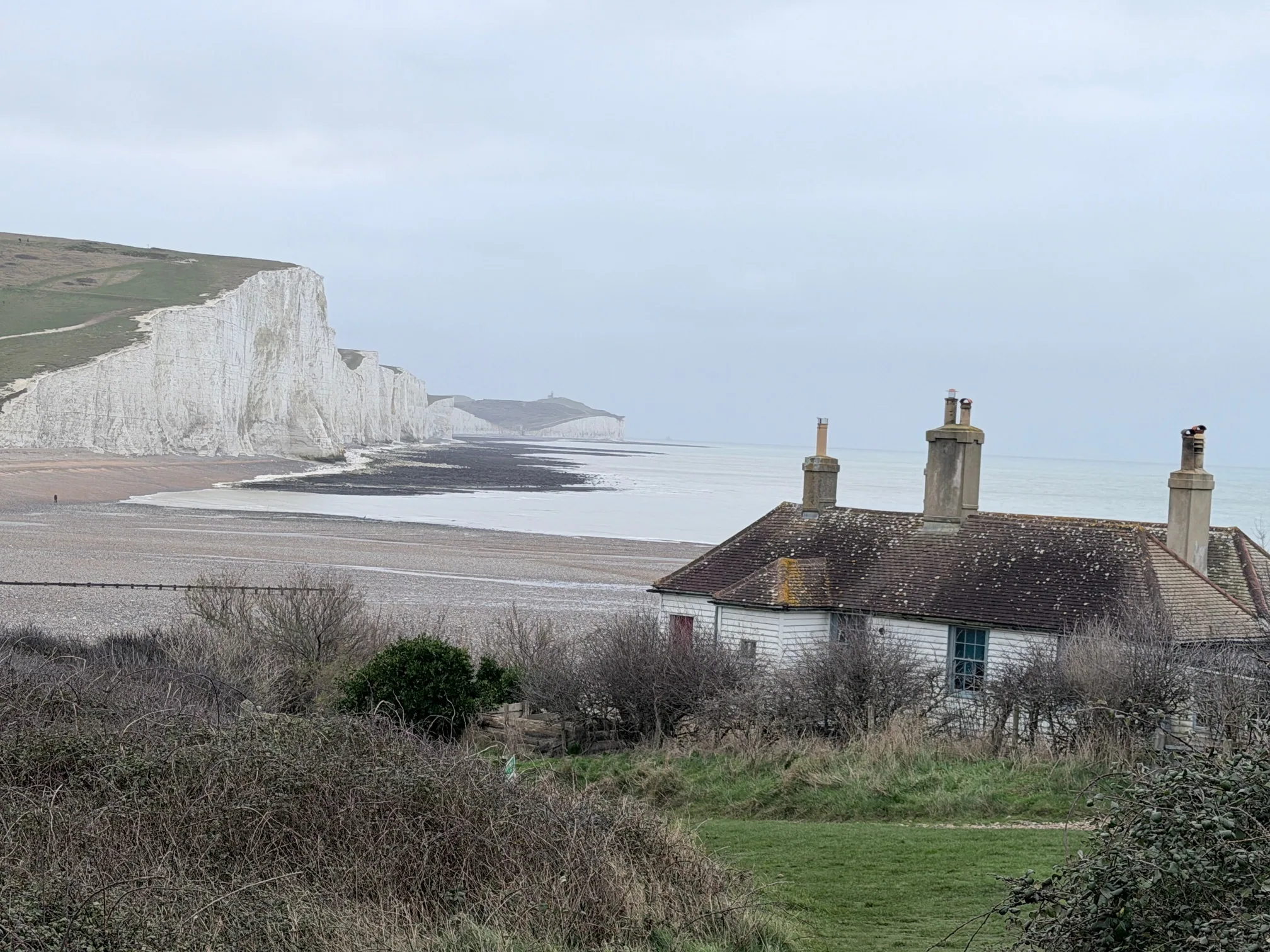
12% weightSeven Sisters in sea fog is an entirely different walk to clear-day Seven Sisters. The famous views across the Channel, the cliff faces, the meanders at Cuckmere — all gone. We've done it both ways. It can be atmospheric; it can also mean you've walked 5 miles and seen nothing.
What to watch for: Spring and early summer mornings bring coastal sea fog that often burns off by 11am. Check the forecast window — a low morning visibility score that improves by midday is often fine if you time your start.
Temperature
12% weightThe cliff top is always several degrees cooler and windier than inland forecasts suggest. The full Birling Gap to Cuckmere walk is 7 miles — enough time for temperature and exertion to become a real factor, especially in winter when daylight is short and the temperature can feel significantly colder than the air temperature suggests due to wind chill.
What to watch for: Below 5°C combined with high wind makes the cliff top genuinely cold. Factor in a wind chill adjustment of 5-10°C on exposed sections.
Daylight
8% weightThe full Birling Gap to Seaford walk takes 3.5–5 hours depending on pace and stops. In December, you have around 7.5 usable daylight hours. In June, 16 hours. The daylight component reflects whether you have enough of a window to complete your intended route safely.
What to watch for: Start time matters as much as daylight hours. A 2pm winter start gives you a margin problem. Check our early morning visit guide alongside the CoastMetric score for winter walks.
Air Quality
8% weightSeven Sisters air quality is almost always excellent — it's one of the best reasons to come. Clean Channel air, minimal traffic pollution, high pollen only in peak spring. The score rarely drops here, but during unusual pollution events (Saharan dust, high-pressure inversions) it's worth checking if you have respiratory sensitivities.
What to watch for: High pollen days in May and June can coincide with the best wildflower season. If hayfever is an issue, check this component alongside the wildflower timing guide.
Sea Conditions
5% weightLowest weighting but not irrelevant. High swell and rough seas push spray onto the lower cliff paths, create audible roar that can be disorientating in fog, and make beach access at Birling Gap's lower steps more hazardous. If you're planning beach time or swimming, the sea conditions component matters more than its 5% weighting suggests — check it alongside tide times.
How to Actually Use It: A Step-by-Step
Check the overall Visit Score first
Go to coastmetric.com/app?location=seven-sisters. The headline number tells you whether conditions are broadly good. If it's above 70, drill down for detail. If it's below 50, check which component is dragging it down before deciding whether to go.
Use the intraday forecast
CoastMetric projects conditions 3, 6, 9 and 12 hours ahead. If you're planning a 4-hour walk starting at 9am, check the 9am and 1pm scores. A morning that starts at 65 and climbs to 80 by midday is usually fine. A score that starts at 75 and drops to 40 by afternoon means building weather — start early or reconsider.
Cross-reference the tide window
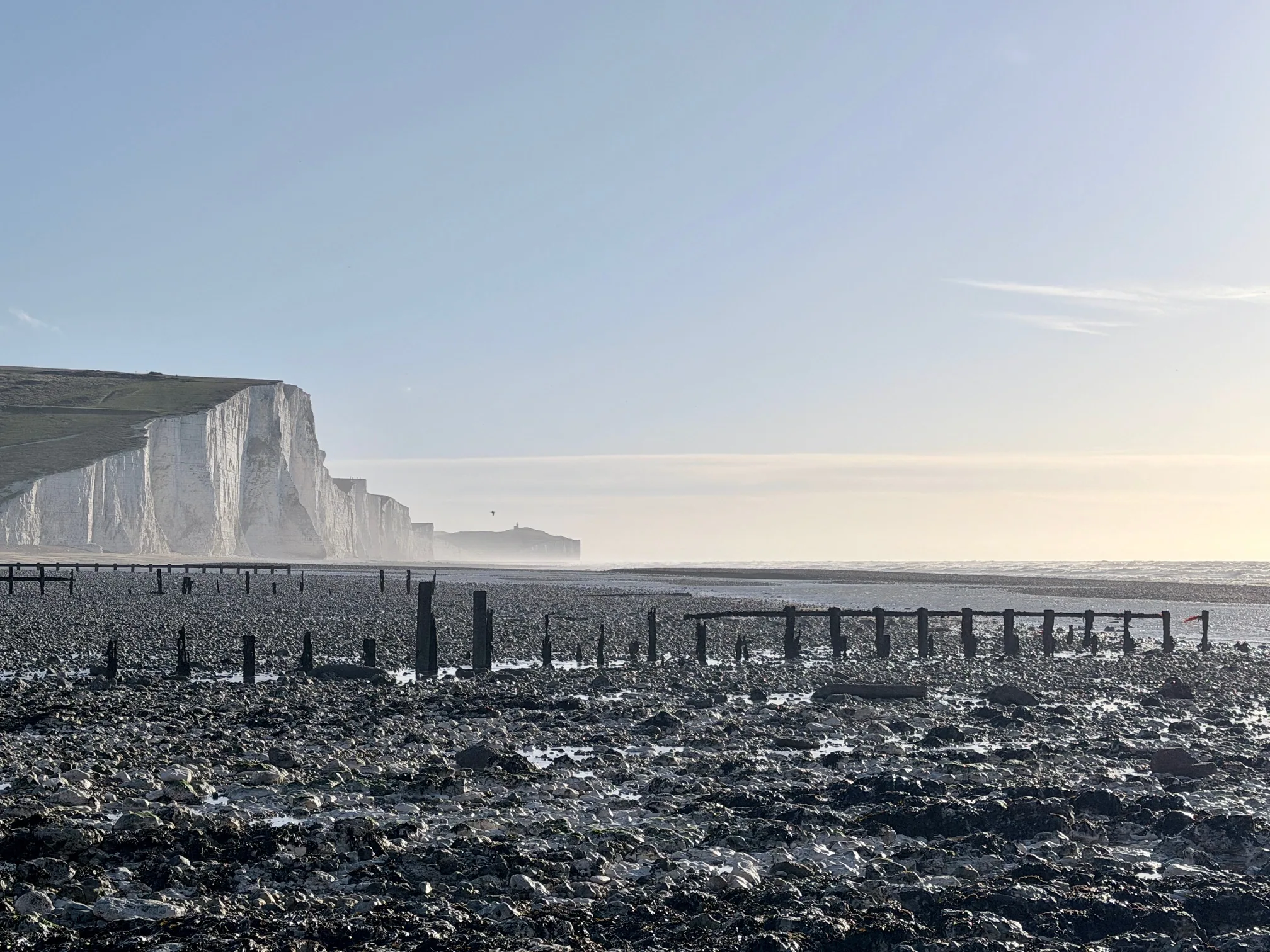
CoastMetric shows tide predictions from UKHO Admiralty data. Layer this with the Visit Score for your chosen time slot. A Visit Score of 80 at 10am means little if high tide cuts off Cuckmere Haven beach at exactly 10:30am. The best windows have both a good Visit Score and the tide in your favour — see our full tide guide for timing details.
Check transport departures
If you're doing the one-way walk from Seaford to Eastbourne (or vice versa), CoastMetric shows live bus departures near the trailheads. The year-round 12/12X (Seaford–East Dean–Exceat–Eastbourne) and the seasonal 13X — the only bus that reaches Birling Gap directly — can be unreliable, so checking live departures before you commit to the one-way route is genuinely useful.
What Each Score Range Means at Seven Sisters
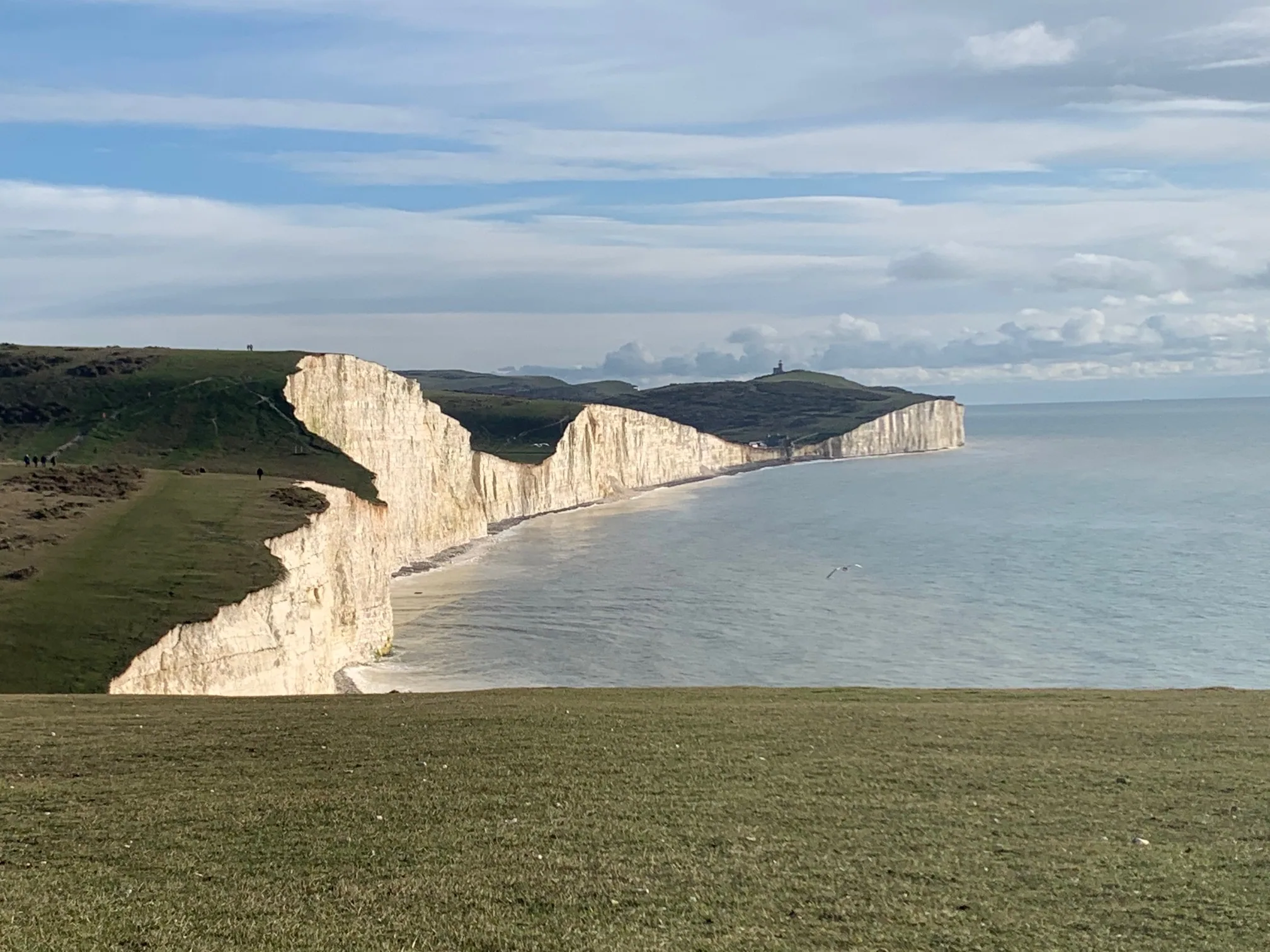
Rare enough to savour. Clear visibility across the Channel, stable wind, firm paths. These are the days the cliffs earn their reputation. If you've been waiting for the right moment, this is it — check the photography guide and make the most of it.
Most of the good Seven Sisters days fall here. One or two components are sub-optimal but nothing that changes the walk fundamentally. Check which component is dragging the score — usually wind or precipitation — and dress accordingly.
Worth walking but with adjustments. A 55 driven by poor visibility might still be fine if you know the route well. A 55 driven by high wind and low path grip on a winter day is a different proposition. Read the component breakdown, not just the headline number.
At least one component is genuinely poor. On an exposed cliff path with no shelter, no phone signal in places, and no ability to call for rescue quickly, this matters more than on an inland walk. The Seven Sisters in a force 7 with low visibility is not a walk — it's an endurance test you probably didn't sign up for.
Seasonal Score Patterns at Seven Sisters
Spring (March–May)
Highly variable. Excellent scores on calm high-pressure days, low scores when Atlantic fronts come through. Morning sea fog common until May — check visibility before early starts. Path grip often low after winter rain. Best months for wildflowers when conditions cooperate.
Typical range: 45–85, often volatile day-to-day.
Summer (June–August)
Consistently higher scores, but not without issues. Heat stress in July and August means temperature can actually drag the score down on very hot days — unusual for a UK coastal walk. Daylight component is maxed out. Crowds affect enjoyment, not the score.
Typical range: 65–90. Most reliable walking season.
Autumn (September–November)
Often the best-kept secret. September and October frequently deliver excellent scores — stable weather, lower crowds, good visibility, comfortable temperatures. November gets stormy; wind scores start dropping. Path grip deteriorates as rainfall increases.
Typical range: 50–85. September often rivals summer.
Winter (December–February)
Low scores are common but not universal. Calm winter days — bright, cold, low sun — can still score 65+ and deliver spectacular cliff walks with zero crowds. The daylight window is the real constraint. Plan for 4-hour walks maximum, starting by 10am.
Typical range: 30–70. Extremes in both directions.
Check Today's Conditions
Free, no login, works on any device. Updated continuously from eight live data sources.
Open CoastMetric for Seven SistersPlanning the walk itself?
Four routes run along these cliffs and they are not interchangeable — a flat 3km riverside stroll, the classic 6.5km Exceat to Birling Gap crossing, a short Birling Gap loop, and the full 21.9km Seaford to Eastbourne ridge. Compare distance, ascent and difficulty before you pick one.
- Easy Birling Gap Short Loop 2 km 45 min
- Easy Cuckmere Haven Beach 3 km 1 hour
- Moderate Exceat to Birling Gap 6.5 km 2-3 hours
- Challenging Seaford to Eastbourne 21.9 km 6-7 hours
We may earn a small commission on bookings made through this link, at no extra cost to you. More info.
£4.99 · 24-page PDF · Instant download
The Seven Sisters Ultimate Guide
The complete 24-page companion built from first-hand walks — every cliff, all four graded routes, tide windows and a parking strategy. Designed to work offline, right on the cliff top.
- All 7 cliffs — heights, geology & viewpoints
- Four graded walking routes, compared
- Tide windows, light calendar & day plans
- Parking strategy & seasonal planner
Just want the basics? Download the free 2-page walk guide
Want an expert-led Seven Sisters tour?
From guided cliff walks and wildlife safaris to geology hikes and photography tours — explore all our curated experiences with local guides.