Knowledge Hub · Nature
Nature & Geology
How the white chalk formed, why it keeps falling, and the wildlife that thrives on this living coast
How the white chalk formed, why it keeps falling, and the wildlife that thrives on this living coast
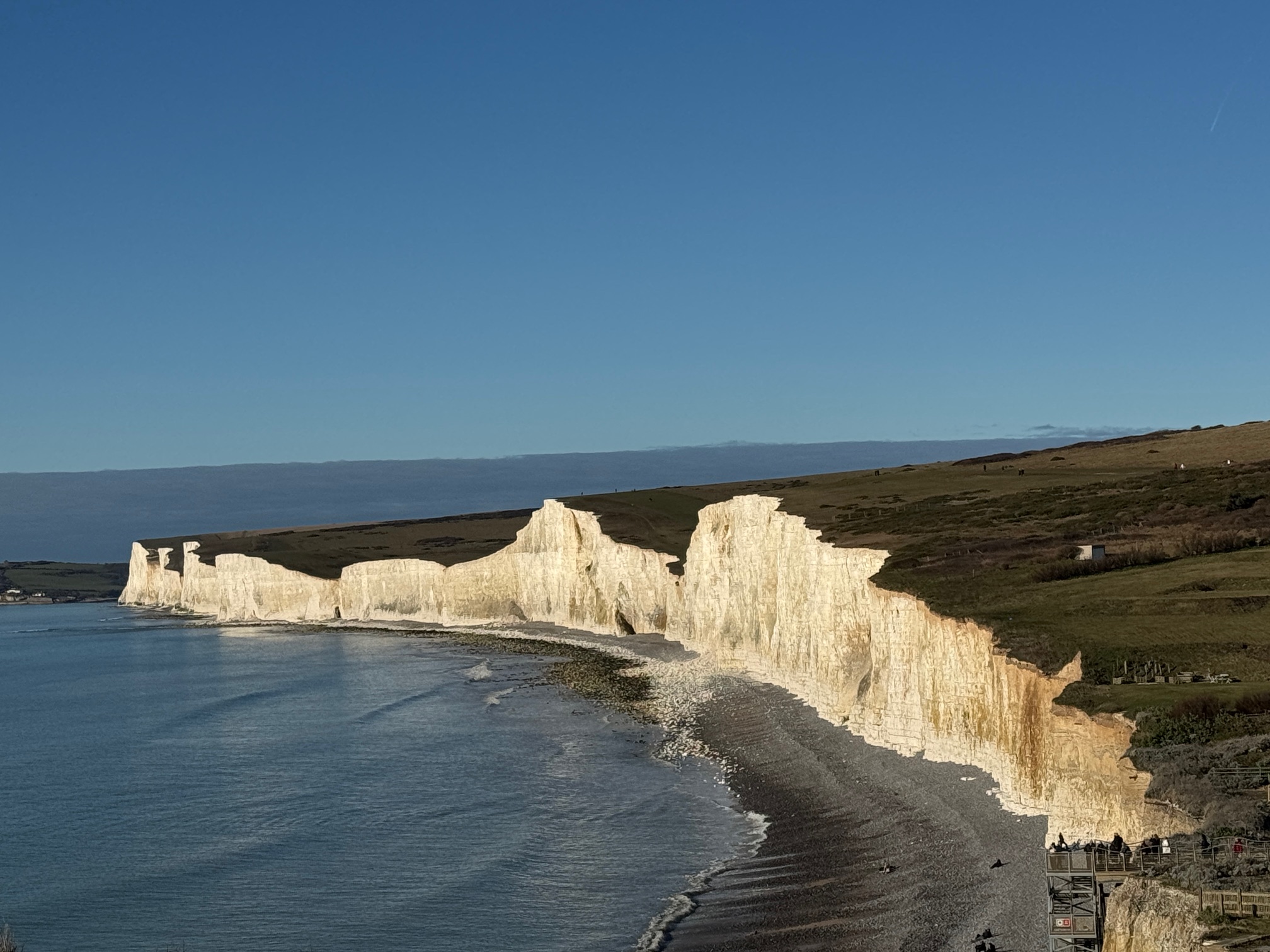
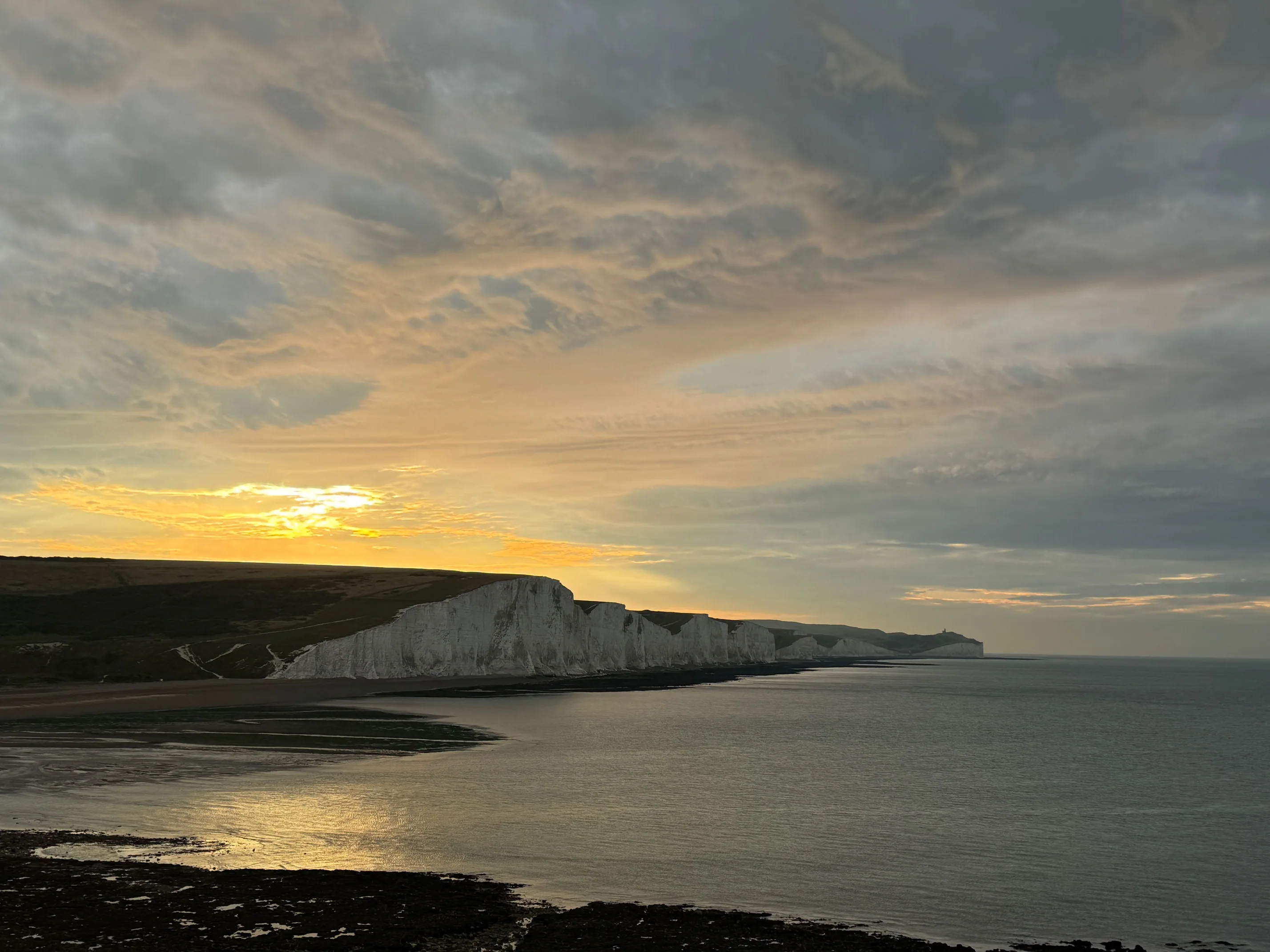
The Seven Sisters are among the youngest-looking ancient landscapes in Britain. The chalk is tens of millions of years old, yet the dazzling white faces you photograph were exposed within the last few years — because this coast is eroding faster than almost anywhere in England. Understanding that single fact explains the geology, the wildlife and the safety rules all at once.
The cliffs are chalk — the compacted skeletons of microscopic marine algae that settled on a warm sea floor in the Late Cretaceous, around 85 million years ago (the Seaford Chalk Formation — British Geological Survey). Earth movements later lifted the chalk into the South Downs, and during the Ice Ages frozen ground forced meltwater to carve the dry valleys that give the cliffs their distinctive rolling, up-and-down profile. Today the sea undercuts the base and sections collapse, keeping the faces brilliant white.
From a warm tropical sea around 85 million years ago to the eroding cliff edge you stand near today — four chapters.
Southern England lay beneath a warm, shallow sea. Countless microscopic algae called coccolithophores bloomed, died and sank, their calcite plates settling as a fine white ooze. Over millions of years this compacted into hundreds of metres of pure chalk, with bands of flint formed from silica-rich sponges.
Slow earth movements — the same forces that built the Alps — folded and lifted the chalk into a great dome. Erosion stripped the top, leaving the chalk hills of the South Downs running east to the coast.
In glacial periods the chalk was frozen solid, so meltwater could not soak in and instead ran across the surface, cutting steep dry valleys. Where the sea later cut back the land, these valleys were sliced through — creating the famous rise-and-fall profile of the “sisters”.
Waves undercut the soft chalk and whole sections collapse — on average the cliff retreats 30–50 cm a year (Environment Agency). This is geology you can watch happening, and exactly why the 5-metre cliff-edge rule exists.
Three forces act on the chalk simultaneously. None can be predicted to the day — which is exactly why the 5-metre edge rule exists.
The Belle Tout lighthouse near Beachy Head had to be moved 17 metres inland in 1999 to escape the retreating edge — a vivid illustration of how fast this coast changes. For the science of sudden collapse, read cliff collapse risk explained, and for what it means on the day, the cliff edge safety guide.
The reserve changes through the year. Here is what to look (and listen) for, season by season.
The fastest animal on Earth nests on these cliffs, stooping at over 200 mph after pigeons and seabirds. Scan the cliff faces and listen for their sharp “kek-kek” call.
A stiff-winged, gull-like seabird that glides along the cliff updraughts and nests on ledges. It defends its nest by spitting a foul oil — another reason to keep back from the edge.
A jewel of the chalk grassland, the male an electric blue. It depends on horseshoe vetch and short, grazed turf — a sign of healthy downland found nowhere but limestone and chalk.
Nicknamed the “Pride of Sussex”, this rounded blue flower head is the county flower and a classic chalk-grassland species, blooming through mid to late summer.
Britain’s largest land-breeding mammal hauls out and feeds along this coast. Look for smooth heads bobbing offshore, especially in calmer autumn and winter seas.
At low tide the wave-cut platform below Birling Gap reveals beadlet anemones, shore crabs, blennies and limpets — superb, safe exploring for families within the tide window.
In 2026 the Seven Sisters were inaugurated as a National Nature Reserve, joining the wider South Downs National Park in protecting over 1,500 hectares of chalk grassland, cliff, river valley and shingle. It is a fragile mosaic: chalk grassland is one of Europe’s most species-rich habitats, but it depends on grazing and on visitors keeping to paths.
Conservation grazing, habitat management and ground-nesting bird closures are run by the Seven Sisters Country Park team — check their site for the latest conservation notices before you visit.
Join a guided geology & history walk or a wildlife safari with a local naturalist, or plan a self-guided visit timed for the season.
Chalk grassland, saltmarsh and seabird cliffs sit on different stretches of this coast. Compare the four routes to reach the habitat you want.
Free PDF · Instant download, saved to your phone
Built on first-hand walks from Seaford to Eastbourne — the named cliffs, route waypoints with distances, tide windows and emergency access points. Everything you need to set off with confidence.
Planning the whole day? Get the complete 24-page Ultimate Guide — £4.99
Stay up to date with seasonal guides, crowd forecasts, and local tips — direct to your inbox.
No spam. Only coastal inspiration and timing tips — unsubscribe any time.