Knowledge Hub · Photography
Photography
Where to shoot, when the light is best, and the tide windows that make the famous frames
Where to shoot, when the light is best, and the tide windows that make the famous frames
The Seven Sisters reward planning more than gear. The difference between a snapshot and the shot is knowing which viewpoint faces the light, what the tide is doing, and when the chalk glows. This guide gives you all three — and keeps you well away from the edge while you do it.
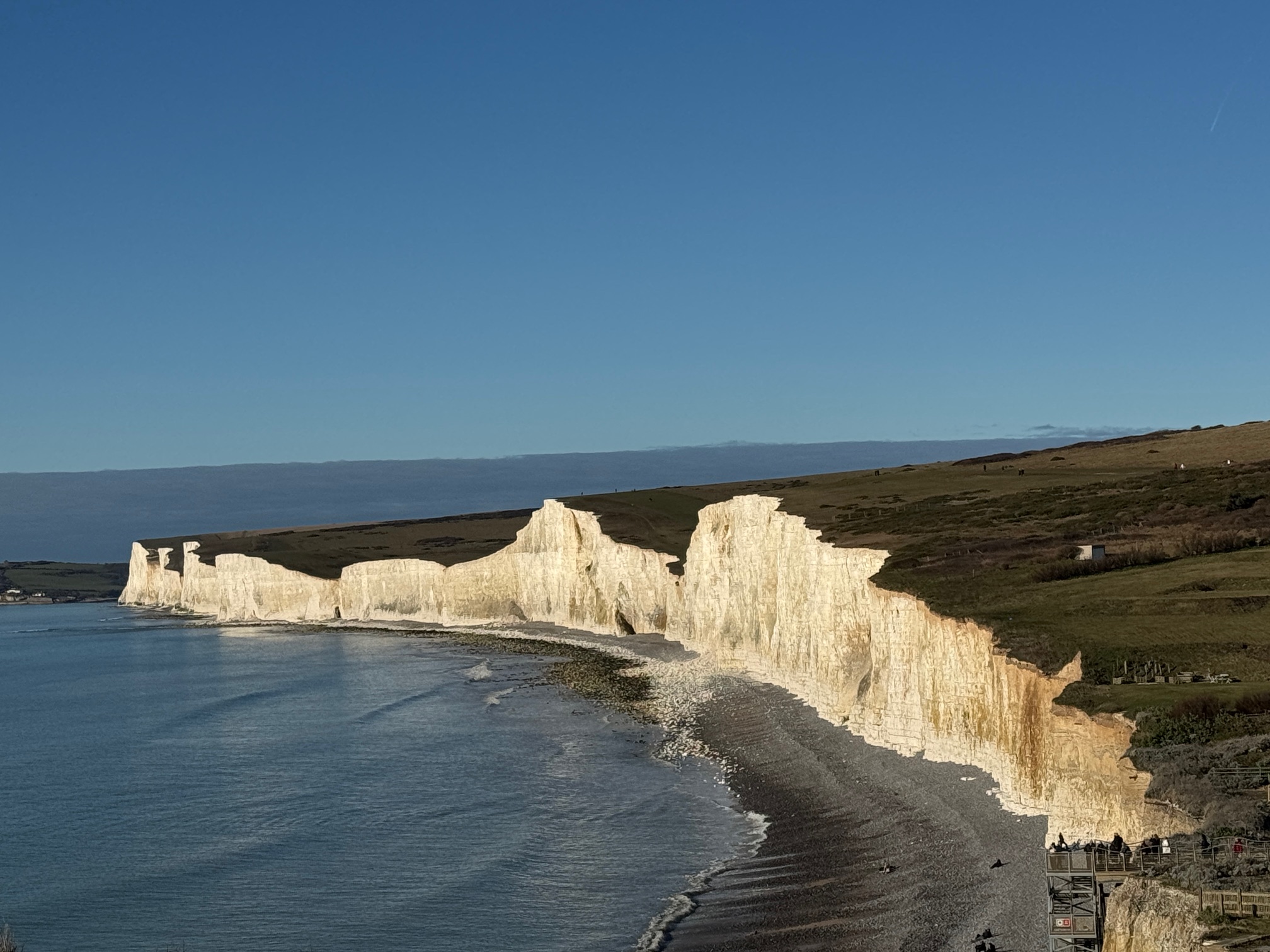
For the classic image of all the peaks together, walk to Seaford Head / Hope Gap on the western side of Cuckmere Haven and shoot east across the river mouth — best at sunrise and golden hour. For drama beneath the chalk, head to the beach at Birling Gap at low tide. Always check the tide window before going down to the beach.
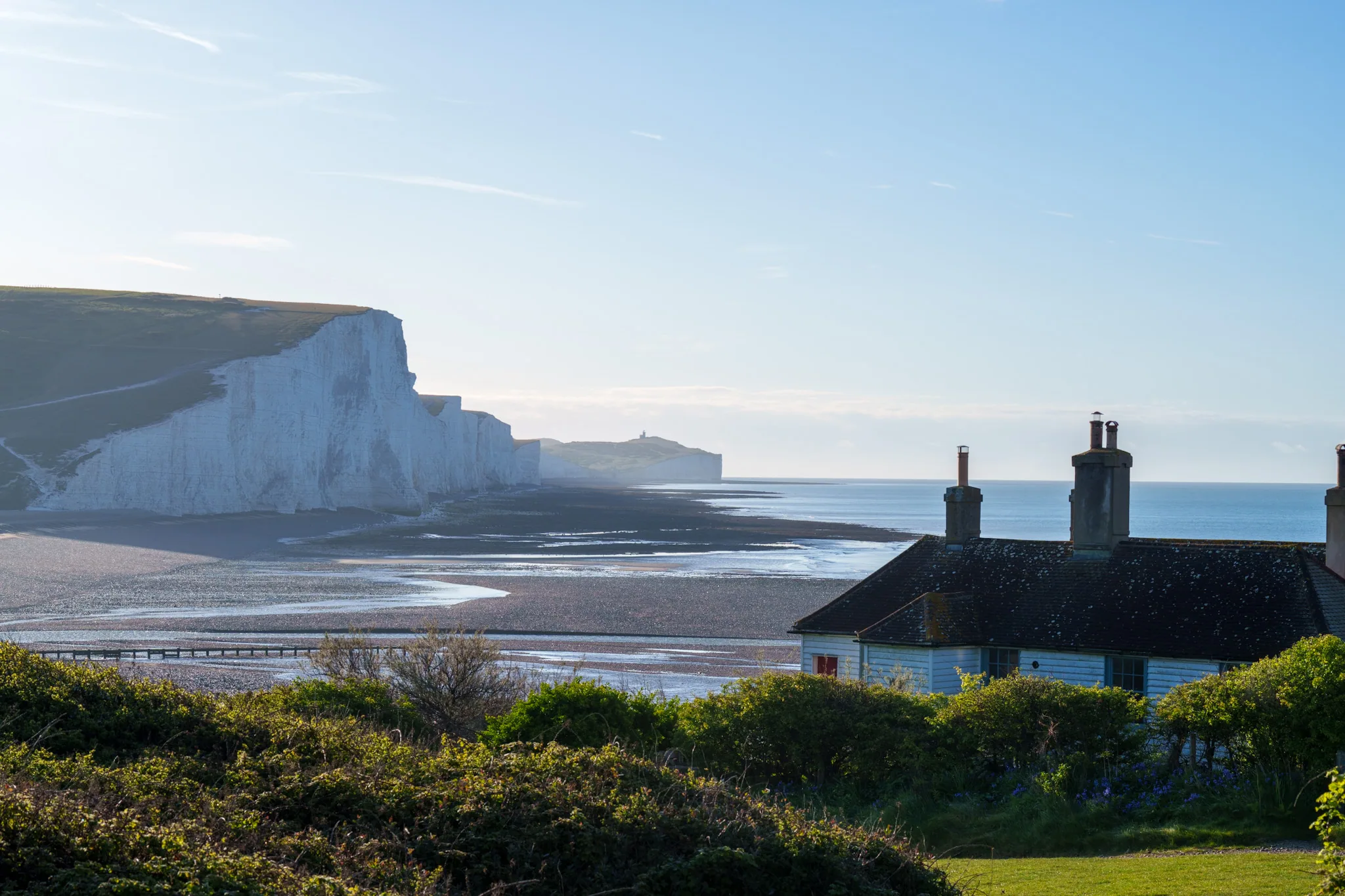
The postcard view of all seven peaks rolling east, with the Coastguard Cottages as foreground. Faces east-southeast — superb at sunrise. A 20-minute walk from Seaford.
The white cottages perched before the cliffs — the most recognisable Seven Sisters composition. Shoot from the western bank shingle at golden hour.
At low tide, the wave-cut platform gives a towering upward view of the white face and flint bands. Reflections in wet sand at sunset. Mind the tide.
Walking the ridge, look back west for layered cliff profiles fading into haze. Long lens compresses the “sisters” beautifully.
East of Birling Gap, the Belle Tout and red-and-white Beachy Head lighthouses add a focal point against the chalk. See the Beachy Head comparison.
Each viewpoint requires a different approach. Use this to match your energy and timing.
| Viewpoint | Park here | Walk from car | Best light | Tide matters? |
|---|---|---|---|---|
| Seaford Head / Hope Gap Classic all-seven-peaks profile |
Seaford station or Seaford Head car park | 20–35 min | Sunrise, morning | No — clifftop view |
| Cuckmere Haven cottages Cottages-and-cliffs foreground |
Exceat (BN25 4AD) | 20 min flat walk | Late afternoon, golden hour | Yes — meanders reflect at low-mid tide |
| Birling Gap beach Towering upward chalk view |
Birling Gap (BN20 0AB) | 5 min + 83 steps | Sunset, blue hour | Yes — beach only at low tide ±2 hrs |
| Haven Brow ridge Layered peaks from the west |
Exceat (BN25 4AD) | 45–60 min to summit | Any — long lens from the top | No — clifftop |
| Belle Tout & Beachy Head Lighthouse focal point |
Birling Gap (BN20 0AB) | 30–40 min east | Sunrise, storm light | No — clifftop |
Always check current conditions and tide times before beach-level shoots. The cliff edge is unfenced — stay 5m back at all times.
Chalk is highly reflective, so soft, low, directional light flatters it most. Use these windows.
Through autumn and winter the sun sits lower all day, so good light lasts longer and the cliffs take on warm tones even mid-morning. In summer the best light is squeezed into early and late, but you gain the green downland and wildflowers. Plan the day around the forecast — the ridge is exposed, and weather sets the mood. See the conditions guide and when to visit.
| Month | Sunrise | Sunset | Golden hour window | What to shoot |
|---|---|---|---|---|
| January | ~08:00 | ~16:10 GMT | 15:00–16:10 | Storm light, empty cliffs, fresh chalk faces after winter erosion |
| February | ~07:25 | ~17:10 GMT | 16:00–17:10 | Snowdrops on the downland; low sun all afternoon |
| March | ~06:30 | ~18:00 GMT | 16:45–18:00 | Early wildflowers; clocks change late month — dramatic spring skies |
| April | ~05:20 BST | ~20:00 BST | 18:30–20:00 | Kidney vetch and early orchids; chalk brilliant white after winter; Adonis Blue butterflies beginning |
| May | ~04:40 BST | ~20:50 BST | 19:20–20:50 | Peak wildflowers. Horseshoe vetch, orchids, butterflies. Meanders reflect at low tide. Ideal month overall. |
| June | ~04:20 BST | ~21:15 BST | 19:45–21:15 | Solstice sunrise tours. 4:45am starts. Book months ahead. Chalk at maximum white brightness. |
| July | ~04:45 BST | ~21:10 BST | 19:30–21:10 | Long evenings; hazy light; channel sea traffic for telephoto. Butterfly season peak. |
| August | ~05:25 BST | ~20:30 BST | 18:50–20:30 | Warm golden tones; crowds thin mid-August. Good for long-exposure sea at Birling Gap. |
| September | ~06:10 BST | ~19:25 BST | 17:45–19:25 | Autumn mist in the valley; dramatic cloud formations; paths quiet again. |
| October | ~06:50 BST | ~18:20 BST | 16:40–18:20 | Storm season begins. Dramatic skies, powerful seas, autumn colour in Cuckmere Valley. Clocks back late month. |
| November | ~07:15 GMT | ~16:30 GMT | 15:00–16:30 | Low sun all day — warm chalk tones even at noon. Almost no tourists. Best for minimalist clifftop shots. |
| December | ~08:00 GMT | ~16:00 GMT | 14:30–16:00 | Frost on the turf, low winter light. Rare clear days give extraordinary visibility to France. Short windows — plan tight. |
Times are approximate for the Seven Sisters area (~50.75°N). Use a sunrise/sunset calculator for your exact date. All BST times apply late March–late October; GMT applies otherwise.
For the big sweeping cliff-and-sky scenes and beach-level drama at Birling Gap. Get low and use foreground chalk or wet sand.
Compress the rolling peaks into stacked layers from the ridge, and isolate the cottages or lighthouses. The single most under-used lens here.
Essential for blue-hour, long exposures of moving sea, and pin-sharp astro. A 6–10 stop ND smooths the Channel into mist.
For pre-dawn arrivals and astro. Red-light mode preserves night vision. The clifftop is cold and windy long after sunset.
Drones can capture this coast superbly, but the rules are real and enforced:
The coast sits within the South Downs International Dark Sky Reserve — among the darkest skies on the south coast.
Experienced coastal photographers. Groups of 8 max. Timed precisely to golden hour — they check the tide charts and forecast before every session.
We may earn a small commission on bookings made through this link, at no extra cost to you. More info.
We earn a small commission on bookings at no extra cost to you. More info.
A local photographer takes you to the right spot at the right moment — and keeps you safe near the edge while you concentrate on the frame.
The classic Seven Sisters views sit at specific points along the coast path. Compare the four routes and see which one takes you there.
Free PDF · Instant download, saved to your phone
Built on first-hand walks from Seaford to Eastbourne — the named cliffs, route waypoints with distances, tide windows and emergency access points. Everything you need to set off with confidence.
Planning the whole day? Get the complete 24-page Ultimate Guide — £4.99
Stay up to date with seasonal guides, crowd forecasts, and local tips — direct to your inbox.
No spam. Only coastal inspiration and timing tips — unsubscribe any time.