Seven Sisters
Heat & Sun Safety
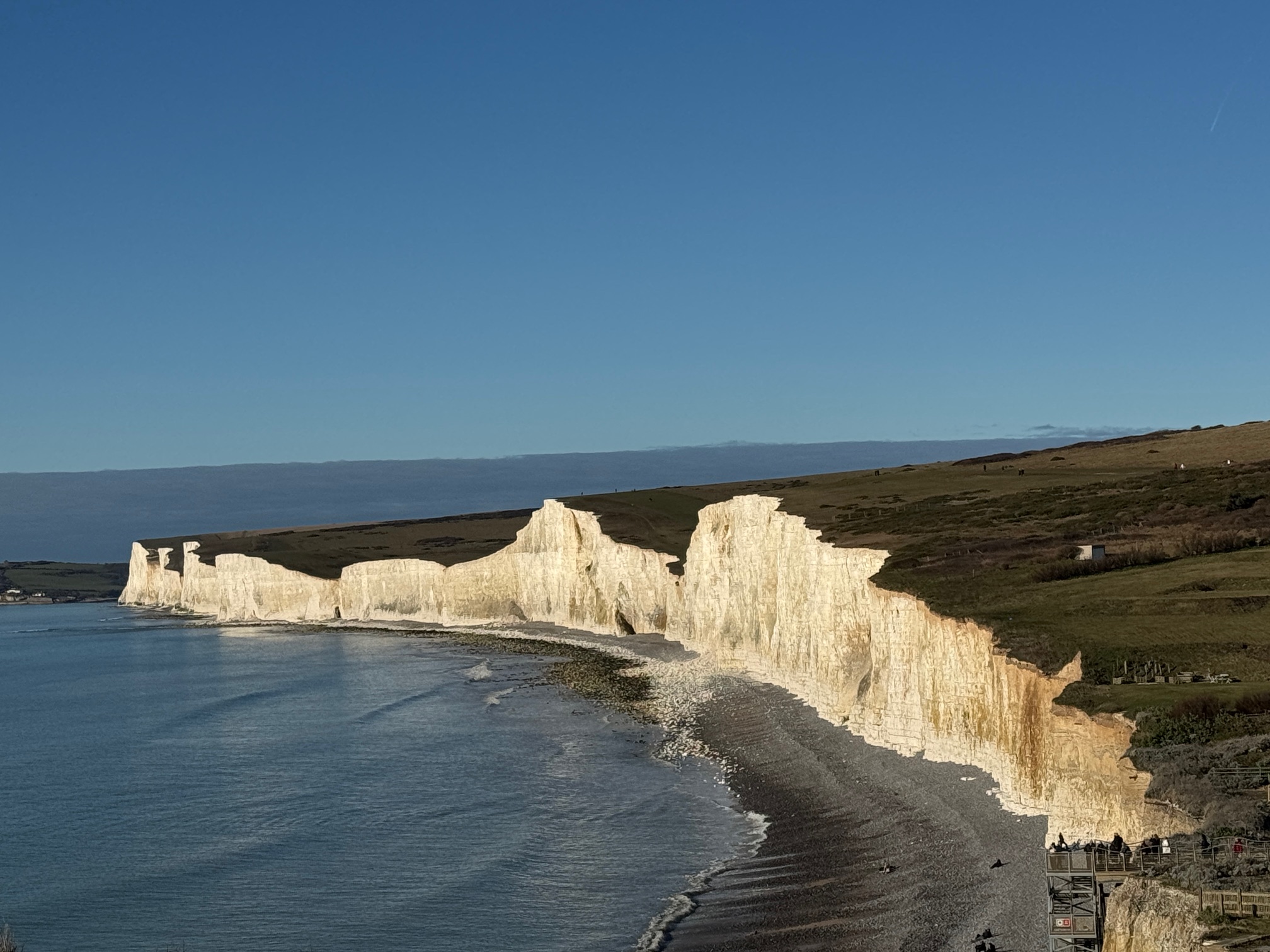
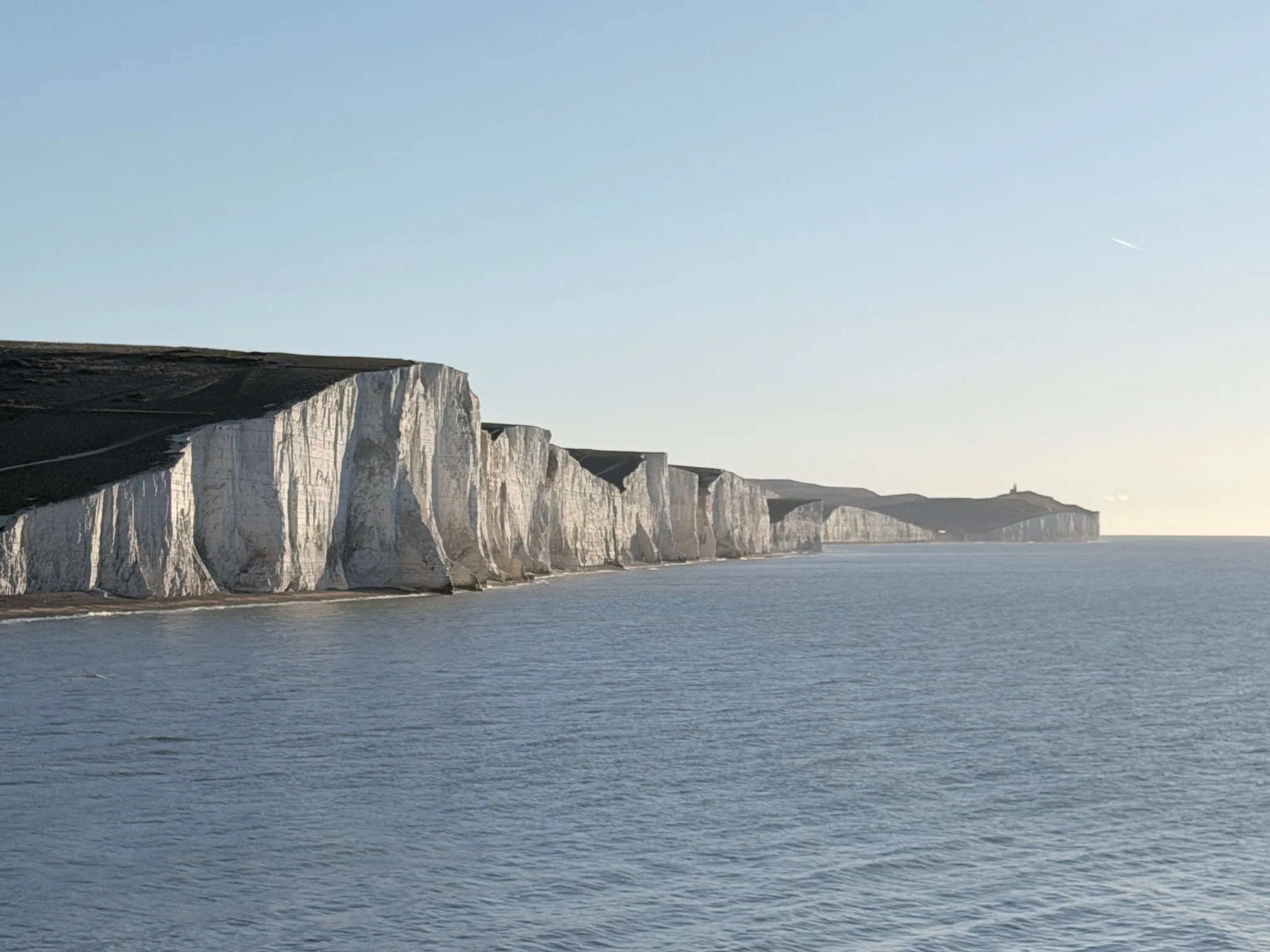
Zero shade for 6km and chalk that reflects UV upward. Here is what that means in practice.
Zero shade for 6km and chalk that reflects UV upward. Here is what that means in practice.
Zero shade for the entire 6km ridge walk. White chalk that reflects UV upward as well as receiving it from above. Here is what this means and how to manage it.
Updated May 2026. Guidance reflects direct experience of heatwave conditions on this coast in July and August, including observing heat-related incidents on the ridge.
Quick Answer — Heat & Sun at Seven Sisters
The Seven Sisters ridge has zero shade for 6km and chalk reflects UV both upward and downward, meaning you receive sun exposure from two directions. In summer, walk before 9am or after 5pm to avoid peak heat. Carry at least 1.5L of water — there is no water source on the ridge and the café at Birling Gap runs out by mid-afternoon on hot days. Wear SPF 50+ and a hat. Heat exhaustion symptoms (dizziness, heavy sweating, confusion) require immediate descent to shade and rest.
The first thing most people notice about Seven Sisters in warm weather is how beautiful it looks. The second thing — usually about 45 minutes in — is how exposed they are. There is no shade on the ridge. Not a tree, not an overhang, not a sheltered hollow. The chalk path runs across open downland from one end to the other and the sun hits it from above, while the white chalk bounces UV back upward. You are being baked from both directions.
This is not dramatic. It is just the reality of the terrain, and it catches people out who brought sunscreen for a day at the beach but did not think of it as a walking hazard. The combination of direct sun overhead and reflected UV from the chalk produces sunburn faster than most people expect, even on days that feel moderate.
There is no water on the ridge. The only place to buy drinks between Birling Gap and Exceat (the two car parks at either end of the main walk) is the Birling Gap café — and it regularly runs out of bottled water by 1pm on hot summer days. We have watched the queue for drinks at Birling Gap café stretch to 30 people on August weekends, with the café apologetically explaining they have no water left.
The minimum water to carry: 1 litre per person for a short out-and-back walk; 1.5 to 2 litres per person for the full ridge walk in warm weather. Children typically need proportionally more than adults in heat, not less — their bodies heat up faster and they are often less aware of the sensation of thirst as a warning signal.
Bring water from the car. Bring more than you think you need. If you are visiting with children and there is any chance of them running rather than walking — which there always is — add 500ml per child on top of whatever you planned. The cost of carrying too much water is a slightly heavier bag. The cost of running out on the ridge in 25°C heat with a six-year-old is a very unpleasant hour and a potential medical situation.
Apply sunscreen before you leave the car park, not when you remember. By the time you notice you are starting to burn — which is often 20–30 minutes after you already are — the damage is done for that exposure window.
Use SPF 30 minimum. SPF 50 is better for this environment specifically because of the chalk reflection factor. The white chalk surface reflects a meaningful proportion of UV upward, which means your chin, under your nose, the underside of your arms, and the back of your knees — areas that normally receive less direct sun — are receiving more UV than usual. People get unexpected sunburn in unexpected places at Seven Sisters. Applying sunscreen to the normally-shadowed parts of your body is not excessive here — it is the appropriate response to the specific terrain.
Sunglasses are worth mentioning for the same reason. The glare off the chalk on a bright day is significant. Looking across the white ridge in full sunshine without sunglasses for three hours produces eye fatigue and headaches that arrive on the drive home and are difficult to explain until you connect them to the cause.
Heat exhaustion is more common than people expect on this walk, particularly in children and older visitors in July and August. The early signs — feeling hotter than the effort justifies, headache, fatigue, slight nausea — are easy to attribute to "just the walk" rather than the beginning of a heat-related problem.
The progression matters. Light-headedness and heavy sweating that has suddenly stopped — or significantly reduced — are signals to act immediately. Stop walking, find the most sheltered position available (against a flint wall if there is one, or sitting on the inland side of the path rather than on the exposed southern side), and cool down actively. Pour water on the back of the neck. Fan if possible. Get into shade if there is any accessible (the valley path down to Cuckmere is shaded in places, the descent to Exceat via the inland path has some tree shelter). If symptoms include confusion or loss of consciousness, call 999 immediately.
The important point about Seven Sisters specifically: the nearest shade if you are on the ridge is always either the valley path (a descent that takes 10–15 minutes from the ridge) or the far end of the walk. There is no shortcut to shade in the middle. This is why managing heat before it becomes a problem — water, sunscreen, rest — is more important here than almost any other popular walking location in the south of England.
Before 9am or after 5pm in July and August. The sun is lower, the temperature is meaningfully cooler (typically 4–7°C lower than peak afternoon heat), and the chalk reflection effect is reduced because the angle of light is less direct. The car parks are also quieter, which is a separate benefit.
If you cannot do early morning or evening, the Cuckmere valley inland path is a substantially cooler alternative to the cliff ridge on hot days. It is shaded by willows and scrub in places, involves no cliff exposure, and takes you along the river to the same beach destination at Cuckmere Haven without the ridge climb. It is not as dramatic as the cliff top, but it is a genuinely good walk in conditions where the ridge would be uncomfortable.
Midday in July and August — roughly 11am to 3pm — is the period we would actively advise against on the exposed ridge in warm weather, particularly with young children or anyone who struggles in heat. Not because the cliffs are not worth seeing at that time — they are spectacular at any time — but because the heat management challenge in those hours is unnecessary when the same walk in the same week at 8am or 6pm is dramatically more comfortable.
No — there is no shade on the ridge path between Birling Gap and Cuckmere Haven. The entire 6km walk is open downland with no trees or overhead cover. The Cuckmere valley path (the lower inland route) has intermittent shade from willows and scrub. On hot summer days, the valley path is a substantially cooler alternative to the cliff ridge.
Minimum 1.5 litres per person for the full ridge walk in warm weather; 2 litres on hot days (above 22°C). Children need proportionally more than adults in heat. The Birling Gap café sells drinks but regularly runs out of bottled water by early afternoon on hot summer days. There are no water sources on the ridge between the two car parks. Bring water from the car.
Early signs: headache, feeling hotter than the effort justifies, heavy sweating, muscle cramps. Progressing signs: pale or clammy skin, fast or weak pulse, nausea, dizziness, fatigue. If sweating suddenly reduces or stops, act immediately — this signals heat stroke risk. Move the person to the most sheltered position available, give cool water in small sips, cool with wet clothing. If confusion develops or the person loses consciousness, call 999.
Before 9am or after 5pm. The UV index peaks between 11am and 3pm on summer days, and this is also when temperatures on the shadeless ridge are highest. An early morning walk also avoids summer car park congestion — Birling Gap fills by 10am on sunny weekends. Evening walks before sunset (midsummer sunset is around 9pm BST) are cooler and the light is exceptional for photography.
Yes, in terms of UV exposure. The white chalk surface reflects a meaningful proportion of UV upward, which means areas that normally receive less direct sun — your chin, under your arms, the backs of your knees — receive more UV than usual. The sea breeze also creates a cooling effect that masks how much sun you are getting, so people consistently underestimate sun exposure. Use SPF 50 and apply it to normally-shadowed skin as well as the obvious areas.
No — not reliably on the hottest summer days. The National Trust café at Birling Gap runs out of bottled water by early afternoon on August weekends with high footfall. The queue can stretch to 30 people on busy Saturday mornings. Do not plan to restock water at the café; bring what you need from home or from a shop before arriving. The café serves food and hot drinks reliably, but cold water is the item that runs out first.
For the best times to visit and seasonal crowd patterns, see the when to visit guide. For what to bring including clothing and sun protection, see our complete visitor guide. For the full safety overview, see the safety hub.
There is almost no shade on the clifftop and water points are widely spaced. Compare the four routes for distance, ascent and where the facilities fall.
Stay up to date with seasonal guides, crowd forecasts, and local tips — direct to your inbox.
No spam. Only coastal inspiration and timing tips — unsubscribe any time.