Everything about the Seven Sisters, in one place
A practical, first-hand guide to England’s iconic chalk cliffs — geology and wildlife, walking routes, live conditions, safety, photography and how this coast compares to Dover, Beachy Head and beyond.
A complete, trustworthy picture of one stretch of coast
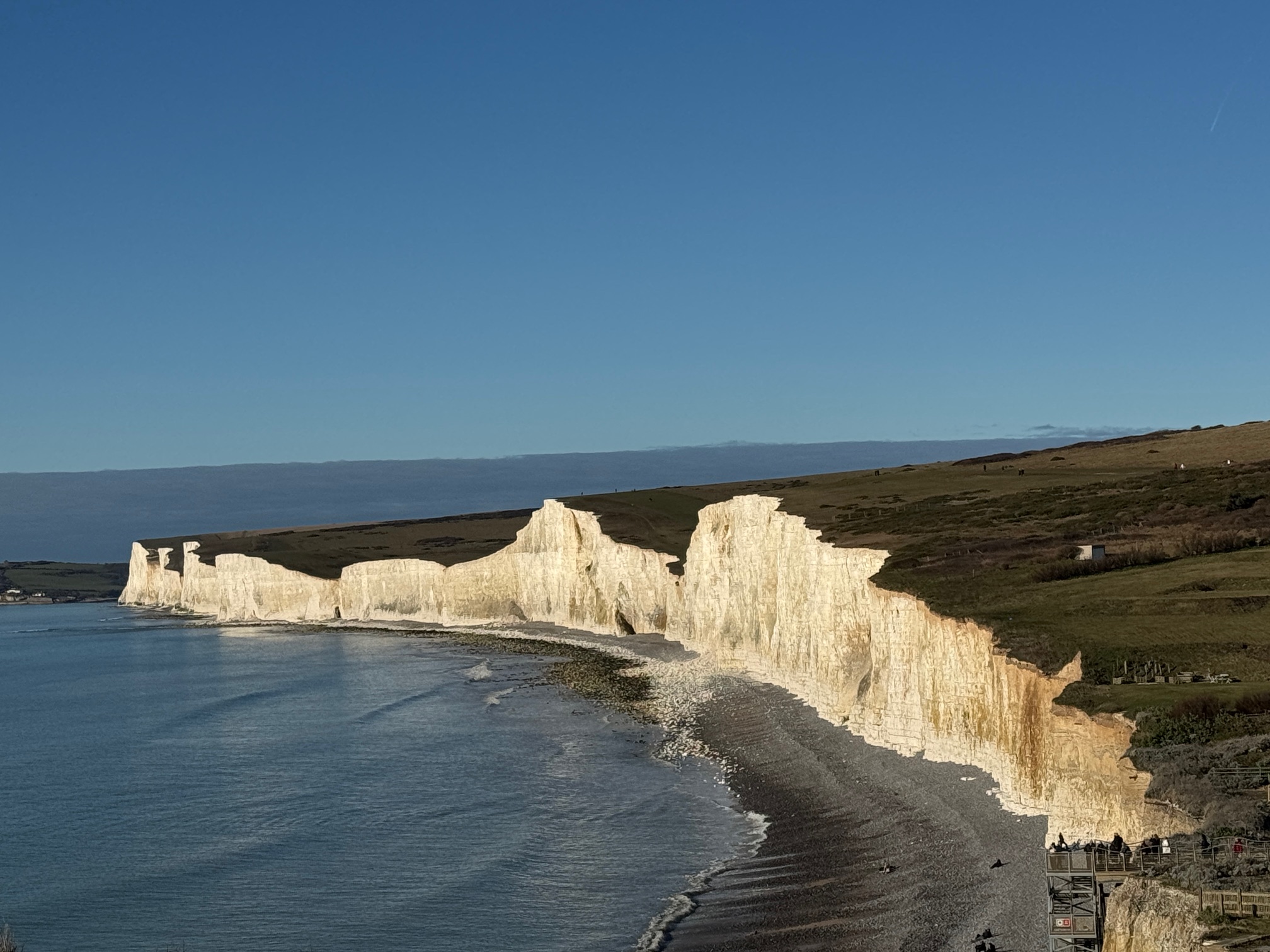
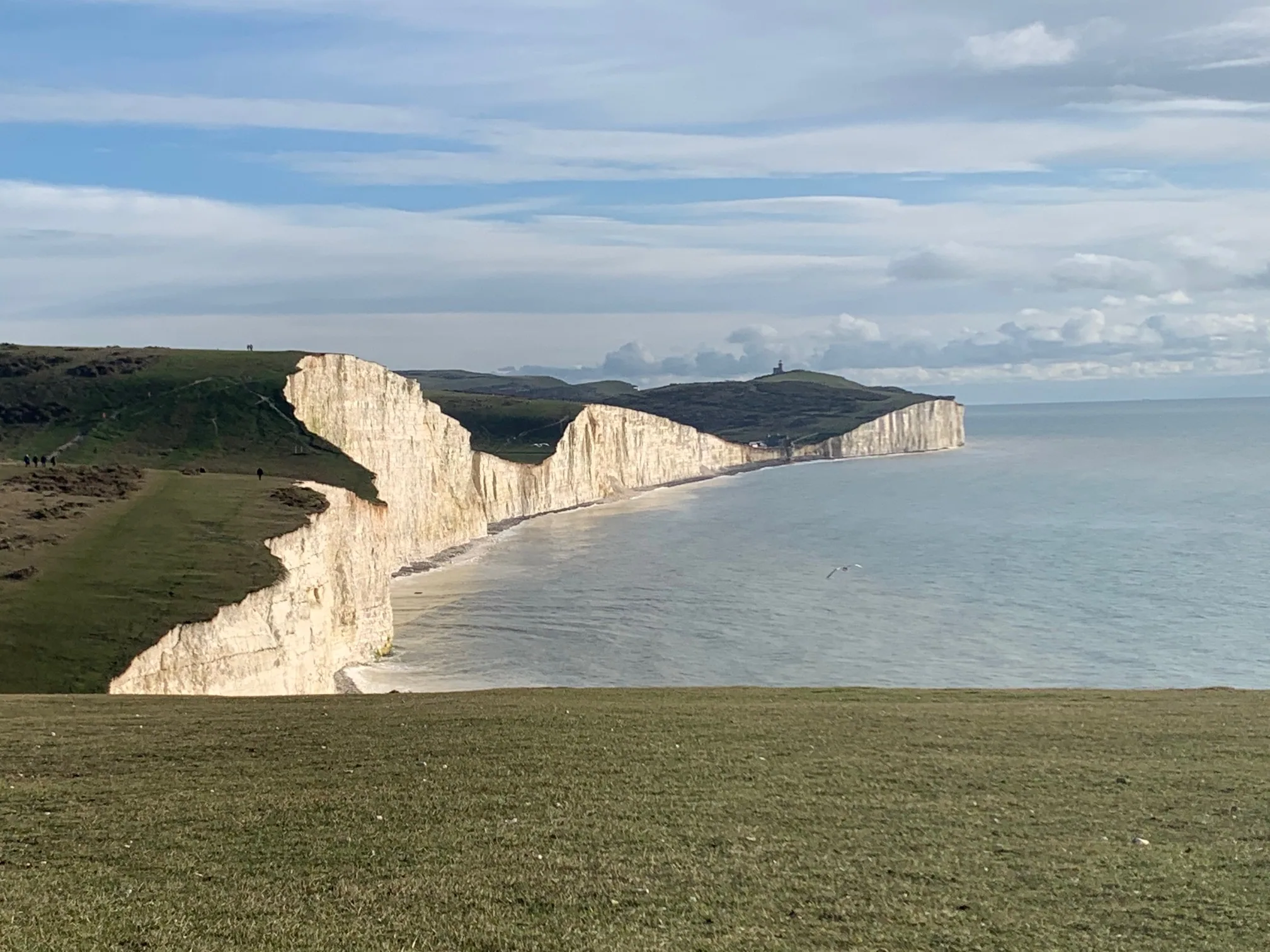
The Seven Sisters are a series of chalk sea cliffs on the English Channel coast of East Sussex, southern England — stretching between Cuckmere Haven and Birling Gap within the South Downs National Park and the Seven Sisters National Nature Reserve, designated in 2026. The cliffs are free to walk year-round, roughly 90 minutes from London, and neighbour Beachy Head — Britain's highest chalk sea cliff. This hub brings together every guide on this coast: geology, wildlife, walking routes, conditions, safety, photography and destination comparisons.
The Seven Sisters are a series of chalk sea cliffs on the East Sussex coast of southern England, between Seaford and Eastbourne. They form the heart of the Seven Sisters National Nature Reserve within the South Downs National Park, and sit beside their taller neighbour Beachy Head. The white chalk was laid down on a warm Cretaceous sea floor around 85 million years ago; constant erosion keeps the faces brilliant white and is also why walkers must keep well back from the edge.
What would you like to know?
Search or filter across every guide in the hub. Seven core categories, each opening into deeper, practical detail.
Nature & Geology
How the chalk formed, why it keeps eroding, and the birds, butterflies, orchids and marine life of the reserve.
Open guideWalking & Routes
Every route from a 3 km family stroll to the full ridge — difficulty, timings, elevation and the best viewpoints.
Open guideConditions & Weather
Wind, tide, visibility and mud — how to read coastal conditions correctly and what each level means for your plan.
Open guideVisiting & Access
Parking, trains, buses, toilets, food, dogs and the best season to come — everything to plan a smooth visit.
Open guideSafety
Cliff edge, tides, fog, heat and emergencies — clear, calm guidance so you can explore with confidence.
Open guidePhotography
Where to shoot, when the light is best, drone rules and the tide windows that make the famous frames.
Open guideComparisons
Seven Sisters vs Dover, Beachy Head, the Jurassic Coast and the wider South Downs — which is right for you.
Open guideNational Nature Reserve
Inaugurated by King Charles III in 2026 — what reserve status means for habitats and access.
Open guideAll Walking Routes
The full route library with maps, distances and difficulty for every clifftop and valley walk.
Open guideSeven Sisters with Kids
Family-tested routes, rock-pooling, pushchair advice and how to keep little ones safe near the edge.
Open guideWhen to Visit
Month-by-month guide to weather, crowds, wildlife and light so you pick the perfect day.
Open guideWeather & Wind
Why inland apps understate ridge wind by 8–15 mph, and the go / no-go thresholds that keep you safe.
Open guideFog & Visibility
Sea fret arrives in under two minutes. A simple decision guide for each visibility level.
Open guideTide Danger
The beach vanishes at high tide. The safe access window and exactly how to check before you go.
Open guideGetting There
Every route in — car, train, bus and on foot — with journey times from London and Brighton.
Open guideParking Guide
Where to park at Exceat, Birling Gap and Cuckmere — costs, capacity and the busy-day overflow plan.
Open guideFrom London
The fastest train + bus combinations, day-trip timings and how to do it without a car.
Open guideWhere to Stay
Hotels, inns and cottages in Seaford, Eastbourne, Alfriston and the surrounding downland villages.
Open guideCliff Edge Rules
Why the 5-metre rule exists and why the true edge is further inland than it looks from above.
Open guideEmergency Guide
Who to call, what to say, signal zones, what3words and the nearest A&E — saved for when it matters.
Open guidePhotography Safety
Why the best frames never require the edge — and how to get them without the risk.
Open guideSeven Sisters vs Beachy Head
Two faces of the same chalk coast — which to walk, photograph or combine in one route.
Open guideSeven Sisters vs Dover
England’s two great white-cliff destinations compared on scenery, walking, access and crowds.
Open guideNo guides match that search. Try a broader term, or .
Today at Seven Sisters
The ridge is far more exposed than any inland forecast suggests — sea breeze, fog and tide change the day completely. Check live wind, tide and visibility before you set out, then match it to the right route.
The essentials, fast
Browse every guide
No dead ends. Every page on the site connects back here, and from here to everywhere.
Safety, in depth
Places along the coast
Seven Sisters, answered
Ready to walk the white cliffs?
Use the free visit planner to build your day around the conditions, or browse small-group guided walks, photography tours and boat trips along the coast.