Seven Sisters
Photography Safety
The best photographs of Seven Sisters do not require standing at the cliff edge. Here is the evidence and the safe alternatives.
The best photographs of Seven Sisters do not require standing at the cliff edge. Here is the evidence and the safe alternatives.
Approaching the cliff edge for photographs is the most common cause of cliff incidents at Seven Sisters. The good news: the best shots do not require it. Here is the evidence and the safe alternatives.
Quick Answer
Photography at Seven Sisters is excellent and completely safe from the marked path, at least 5 metres from the cliff edge. The compositions that make Seven Sisters famous — the long chalk wall, the ridge profile, the Cuckmere meanders — all require distance from the edge, not proximity to it. The beach at Birling Gap at low tide gives the best cliff face photograph with zero risk.
Cliff emergency: 999 → Coastguard. Nearest A&E: Eastbourne DGH, Kings Drive, BN21 2UD.
Quick Answer — Photography Safety at Seven Sisters
The cliff edge does not give better photographs of Seven Sisters — it gives you a narrower angle and removes the cliffs from your frame. The best viewpoints are Seaford Head (looking east toward the sisters), the ridge path itself (looking back toward Birling Gap), the Cuckmere valley (looking north toward the meanders), and Birling Gap beach at low tide (looking up at the chalk face). Never back toward the edge while looking at your screen. Every photography death on these cliffs involved movement toward the edge, not a stumble.
The instinct is understandable. You are at a dramatic cliff. Getting closer to the edge seems like it would give you a more dramatic photograph. The cliff is spectacular, so the edge must be the most spectacular position. This logic is wrong at Seven Sisters, and it is worth understanding why, because knowing this removes the temptation.
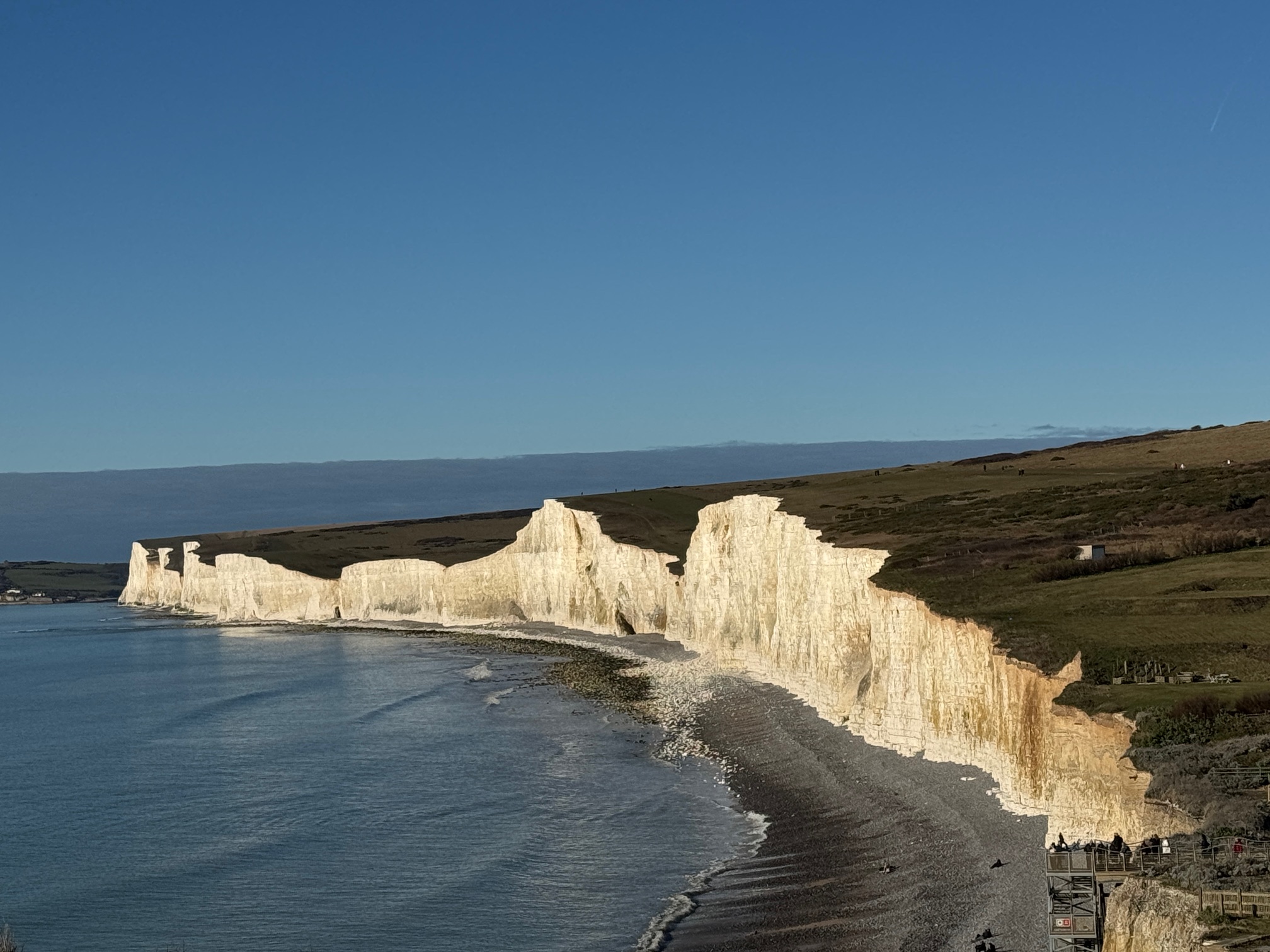
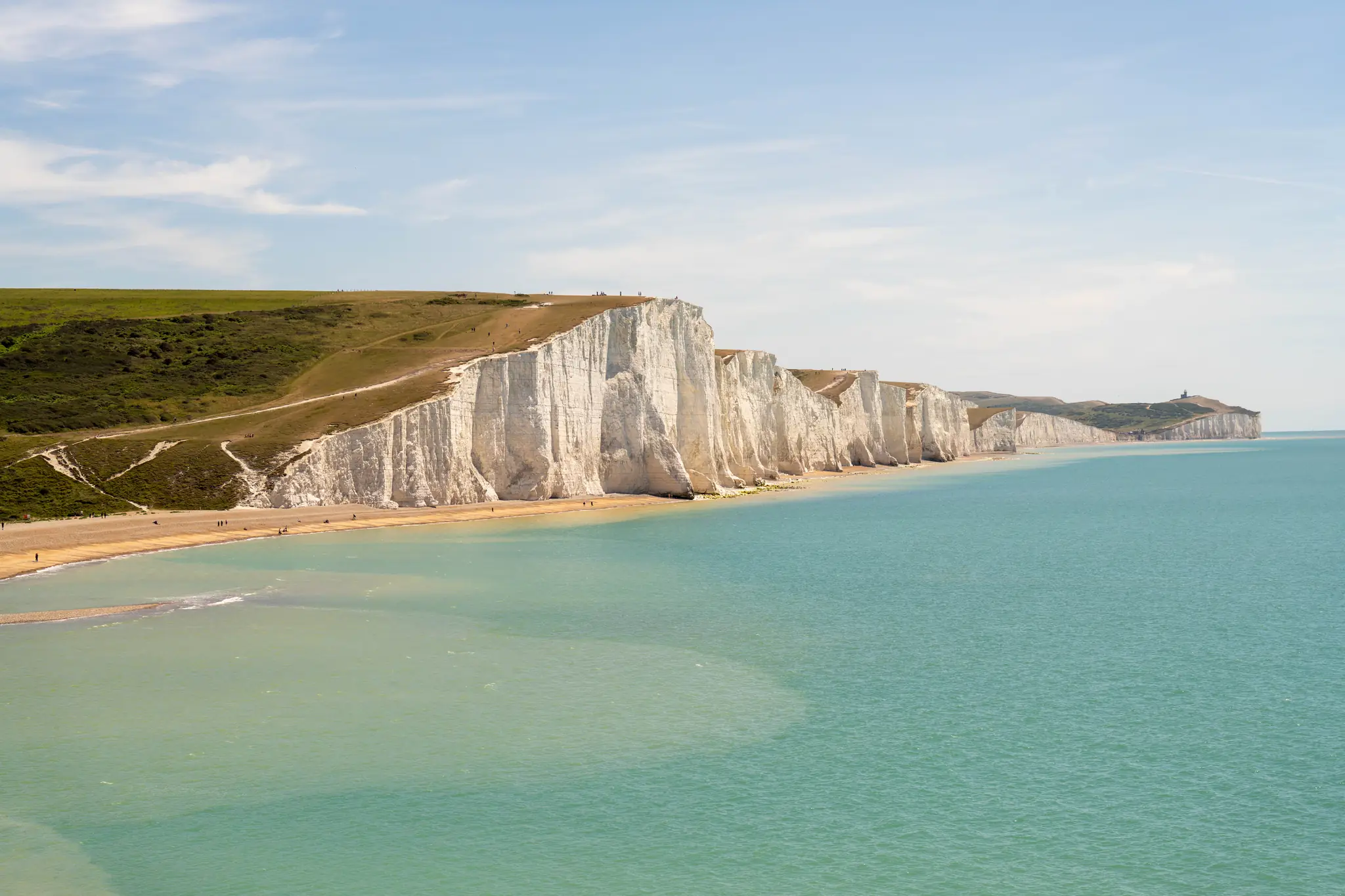
The famous Seven Sisters photograph — the one that appears in every travel guide, on every social media post, in the background of every film shot here — is the view of the long white cliff wall extending into the distance. It shows multiple peaks receding away from the viewer, with sea below and sky above. That photograph is taken from a position on the ridge, looking along it. The further from the edge you are, the more clearly you see the full cliff profile against the sky.
From the cliff edge, looking down, you see a close-up of chalk and water directly below. The perspective compresses. The drama of the long cliff wall is gone because you are standing on it. What you get at the edge is a narrow downward view. What you get 15 metres back is the photograph people actually recognise.
We have taken several hundred photographs at Seven Sisters over the years from every vantage point on and around the cliffs. The portfolio does not include a single good photograph taken within five metres of the cliff edge. Every strong image comes from a position further back — sometimes significantly further back. This is not a safety trade-off. The better-safe choice is also the better-photography choice.
The specific behaviour that causes the most cliff incidents — not just at Seven Sisters but on chalk cliffs across Sussex — is the selfie taken backing toward the edge. The process: see the cliff, want the cliff in the background of a selfie, back up toward it while looking at the screen. The problem: backward movement near a cliff edge while looking at a phone screen eliminates every safety instinct that would otherwise apply.
HM Coastguard Birling Gap runs awareness campaigns about this specifically. It is not a hypothetical. The incidents happen, they happen to experienced-looking adults, and they happen because the instinct to get the best frame overrides the awareness of what is behind.
The safe selfie at Seven Sisters: stand on the ridge path, face the cliff direction, hold your phone above shoulder height and angle it slightly downward to include the cliff behind you. You get the cliff in shot, you get the sky, and you are standing on the path rather than backing toward the edge. The photograph is better — you can see more of the cliff — and you are not near the edge.
Seaford Head viewpoint: This gives the full frontal view of all seven sisters from the west. You are standing on Seaford Head looking east, with the complete row of white cliff peaks laid out in front of you across the Cuckmere valley. This is the composition. It is a safe cliff-top path on Seaford Head, not the Seven Sisters ridge itself, and it gives the view most people are actually trying to get. Reached from Seaford on foot via the South Downs Way.
The ridge path itself: Walking along the ridge, look west from any elevated peak. You see the cliff faces falling away below and the chalk wall extending into the distance. A wide-angle lens or phone ultra-wide setting captures the full extent. Stay on the path — the photographs work from the path.
Above the Cuckmere meanders: The viewpoint above the Cuckmere Haven river mouth — reached via the west bank path from Exceat — gives the classic Seven Sisters photograph of the white cliffs framing the river meanders below. This is the image used on most guides and maps of the area. It requires zero proximity to the cliff edge; you are looking down from an inland elevation across a valley.
Birling Gap beach at low tide: The upward view from the beach directly below the chalk face is extraordinary and genuinely not replicable from above. Stand on the beach, point the camera upward, and you see 160 metres of white chalk rising vertically. This is the cliff face photograph. It is also the safest photography position — you are at beach level, on shingle, looking up. The safe access window is two hours before to two hours after low tide.
For the complete photography guide to Seven Sisters including GPS viewpoint coordinates, camera settings, and golden hour timing, see our photography guide. For the cliff edge safety rules that underpin this guide, see the cliff edge safety guide. For tide times to access Birling Gap beach, see the tide guide.
The vantage points photographers want sit on different sections of this coast. Compare the four routes and take the one that reaches your shot.
Stay up to date with seasonal guides, crowd forecasts, and local tips — direct to your inbox.
No spam. Only coastal inspiration and timing tips — unsubscribe any time.