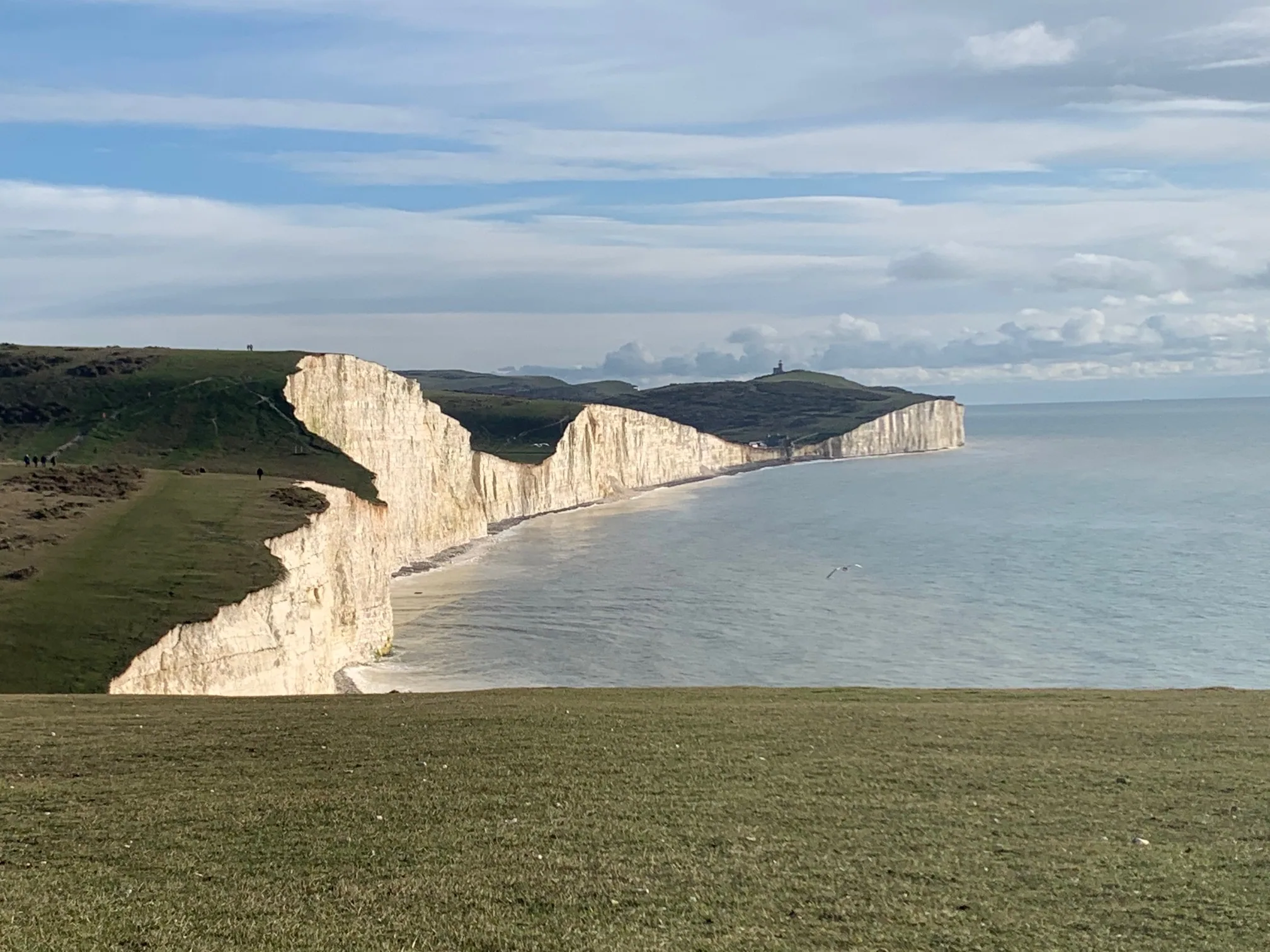
We Counted 23 Cars Turning Around at Birling Gap on an August Bank Holiday: The Real Numbers
Every year, the same thing happens on bank holiday weekends. Thousands of people wake up, see the sun, and decide to drive to Seven Sisters. By 10am, the Birling Gap car park is full. Cars are parked on grass verges for half a mile. The path from the car park looks like Oxford Street on Christmas Eve. And somewhere in all this, people are still having a brilliant time — because the cliffs genuinely are that good.
This guide gives you the real picture and practical strategies so you're one of the people having a brilliant time, not one of the people sitting in traffic for 45 minutes before giving up.
Understanding Bank Holiday Crowd Patterns
Visitor numbers at Seven Sisters are almost entirely weather-driven. A bank holiday forecast of 18°C and sunshine will bring 4–6 times more visitors than a forecast showing cloud and 12°C. This unpredictability is actually useful — it means that choosing a slightly less perfect forecast day can mean far quieter conditions with a still-pleasant walk.
Typical Arrival Pattern on a Sunny Bank Holiday
- Before 9am: 10–20 cars in the Birling Gap car park. The cliffs are nearly empty. This is the best window.
- 9–10am: Car park filling rapidly. Still manageable on the paths.
- 10am–12pm: Peak arrival. Car park full. Overflow parking fills. Significant queuing on approach roads.
- 12pm–3pm: Maximum crowding. The clifftop path is at its busiest. Café queues are long.
- 3–5pm: Families with young children start leaving. Slight thinning on paths.
- After 5pm: Noticeable reduction. Late afternoon light is excellent and conditions are improving.
The sweet spot: If you can't do early morning, arriving at 5pm on a bank holiday gives you 3+ hours of walking in the best light with dramatically fewer people. Bring a torch for the return if needed.
The Parking Reality in Numbers
- Birling Gap: ~120 spaces. Fills by 9:30am on peak days. National Trust members free; others pay-and-display.
- Exceat / Seven Sisters Country Park: ~200 spaces plus overflow field. Fills by 11am on peak bank holidays. Managed by East Sussex County Council.
- East Dean village: ~30 free spaces on village green and surrounding lanes. No charge. Often the last to fill.
- Seaford town centre: Multiple free car parks (Church Street, Dane Road). 30–40 minute walk to the cliff path at Hope Gap.
The Best Alternatives When Birling Gap Is Rammed
Option 1: Come from Eastbourne Instead
The coastal path from Eastbourne passes through Holywell (free parking near the Western Lawns) and follows the base of the cliffs via Beachy Head towards Seven Sisters. It takes longer but the walk is spectacular and parking in Eastbourne is much easier. On a bank holiday, this is often the most enjoyable option.
Option 2: The Seaford Approach
Park in Seaford, walk east along the undercliff path to Hope Gap, then up to the clifftop at Seaford Head. You'll reach the western end of the Seven Sisters and can walk the whole ridge eastward. Many visitors doing this route report significantly fewer people in the first hour of walking.
Option 3: The Bus
The 13X bus runs from Eastbourne to Birling Gap and Exceat. On bank holiday weekends, Brighton & Hove often runs additional services. No parking stress, no sitting in traffic, and the bus drops you directly at the cliffs. Check the Brighton & Hove website for live timetables.
Option 4: Cuckmere Valley Instead
If crowds are genuinely overwhelming on the clifftop, descend to Cuckmere Valley and walk the river path. Far fewer people, beautiful scenery, and the famous Cuckmere meanders from the valley floor. The classic postcard view of the Seven Sisters from the beach is actually best seen from this valley approach anyway.
Bank Holiday Survival Kit
- Pack your own lunch. The Birling Gap café is excellent but slow on peak days — queue time can be 30–45 minutes.
- Arrive with a full tank of fuel. The nearest petrol station is in Eastbourne — don't get caught out on the return.
- Wear layers. Even on warm spring days, the clifftop wind can be 10–15°C colder than the car park.
- Keep children away from cliff edges. On busy days, the path near the edge gets congested.
- Download an offline map before you go. Phone signal is unreliable on sections of the clifftop.
- Tell someone your route and return time. Emergency rescue on the cliffs is a real thing — help make it unnecessary.
The Honest Assessment
Bank holidays at Seven Sisters are worth doing. The cliffs don't get worse because there are other people admiring them. The view from the top is still one of the best in southern England. The key is having realistic expectations: you won't have the place to yourself, the car parks will be busy, and some sections of the path will feel crowded. Work with that reality rather than against it.
The people who have the worst bank holiday experiences are the ones who turn up at 11am, can't park, and spend the whole day frustrated. The people who have the best experiences are the ones who planned around the crowds — early morning, late afternoon, alternative approaches, or simply a different route on the day.
Guided Tours as an Alternative
For bank holiday visits, guided tours are genuinely worth considering. Operators handle the logistics — transport, route planning, timing — and you get context that makes the experience richer. Several operators run specific Easter and bank holiday departures from Eastbourne and Seaford. Booking in advance is essential as these sell out weeks ahead.
Planning the walk itself?
Four routes run along these cliffs and they are not interchangeable — a flat 3km riverside stroll, the classic 6.5km Exceat to Birling Gap crossing, a short Birling Gap loop, and the full 21.9km Seaford to Eastbourne ridge. Compare distance, ascent and difficulty before you pick one.
- Easy Birling Gap Short Loop 2 km 45 min
- Easy Cuckmere Haven Beach 3 km 1 hour
- Moderate Exceat to Birling Gap 6.5 km 2-3 hours
- Challenging Seaford to Eastbourne 21.9 km 6-7 hours
We may earn a small commission on bookings made through this link, at no extra cost to you. More info.
£4.99 · 24-page PDF · Instant download
The Seven Sisters Ultimate Guide
The complete 24-page companion built from first-hand walks — every cliff, all four graded routes, tide windows and a parking strategy. Designed to work offline, right on the cliff top.
- All 7 cliffs — heights, geology & viewpoints
- Four graded walking routes, compared
- Tide windows, light calendar & day plans
- Parking strategy & seasonal planner
Just want the basics? Download the free 2-page walk guide
Want an expert-led Seven Sisters tour?
From guided cliff walks and wildlife safaris to geology hikes and photography tours — explore all our curated experiences with local guides.