Seven Sisters · Nearby
Beachy Head
Britain's highest chalk sea cliff, the neighbouring headland east of the Seven Sisters
Britain's highest chalk sea cliff, the neighbouring headland east of the Seven Sisters
Last updated: October 2026 · Written by Alen Marrick
We may earn a small commission on bookings made through this link, at no extra cost to you. More info.
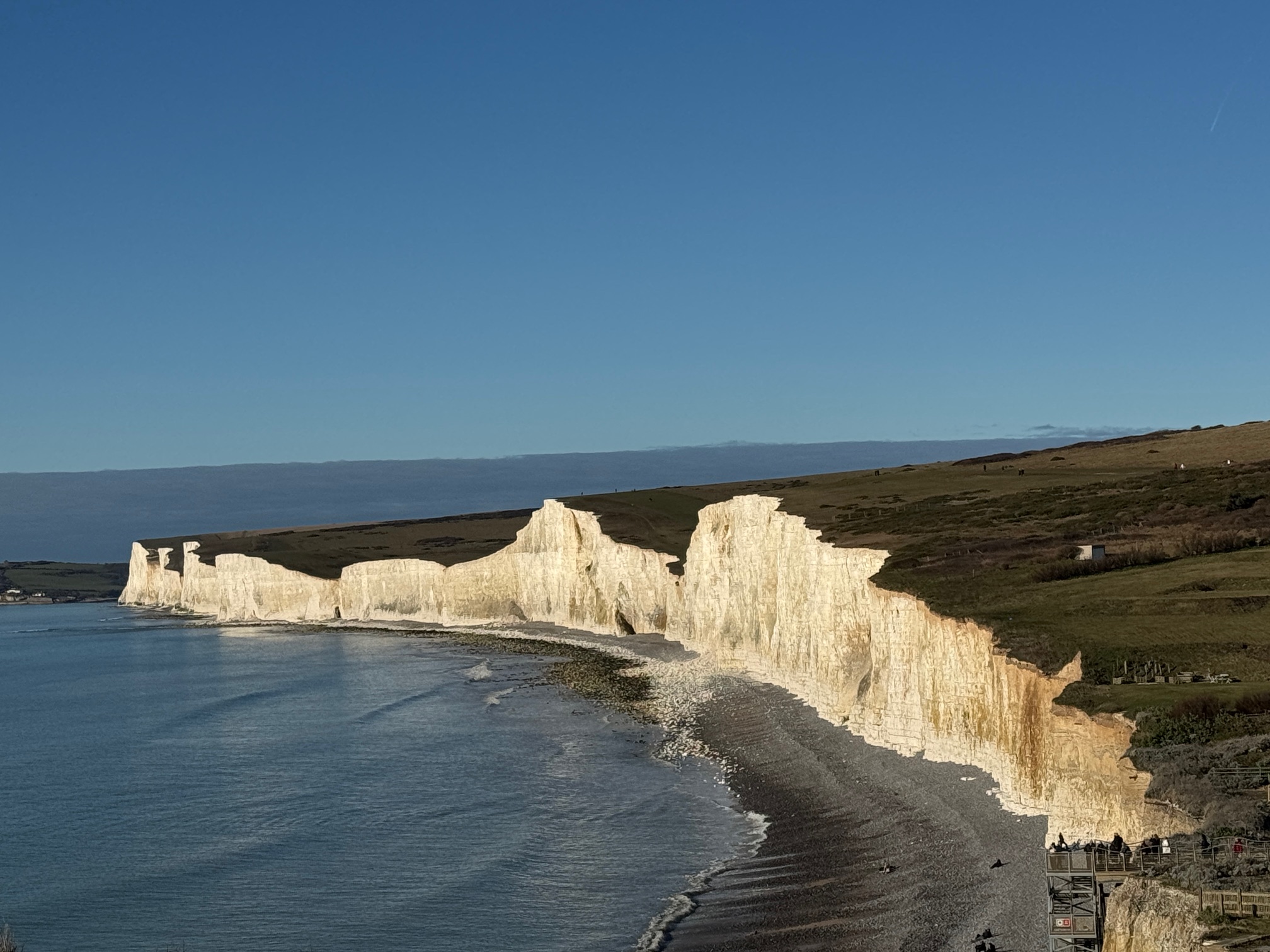
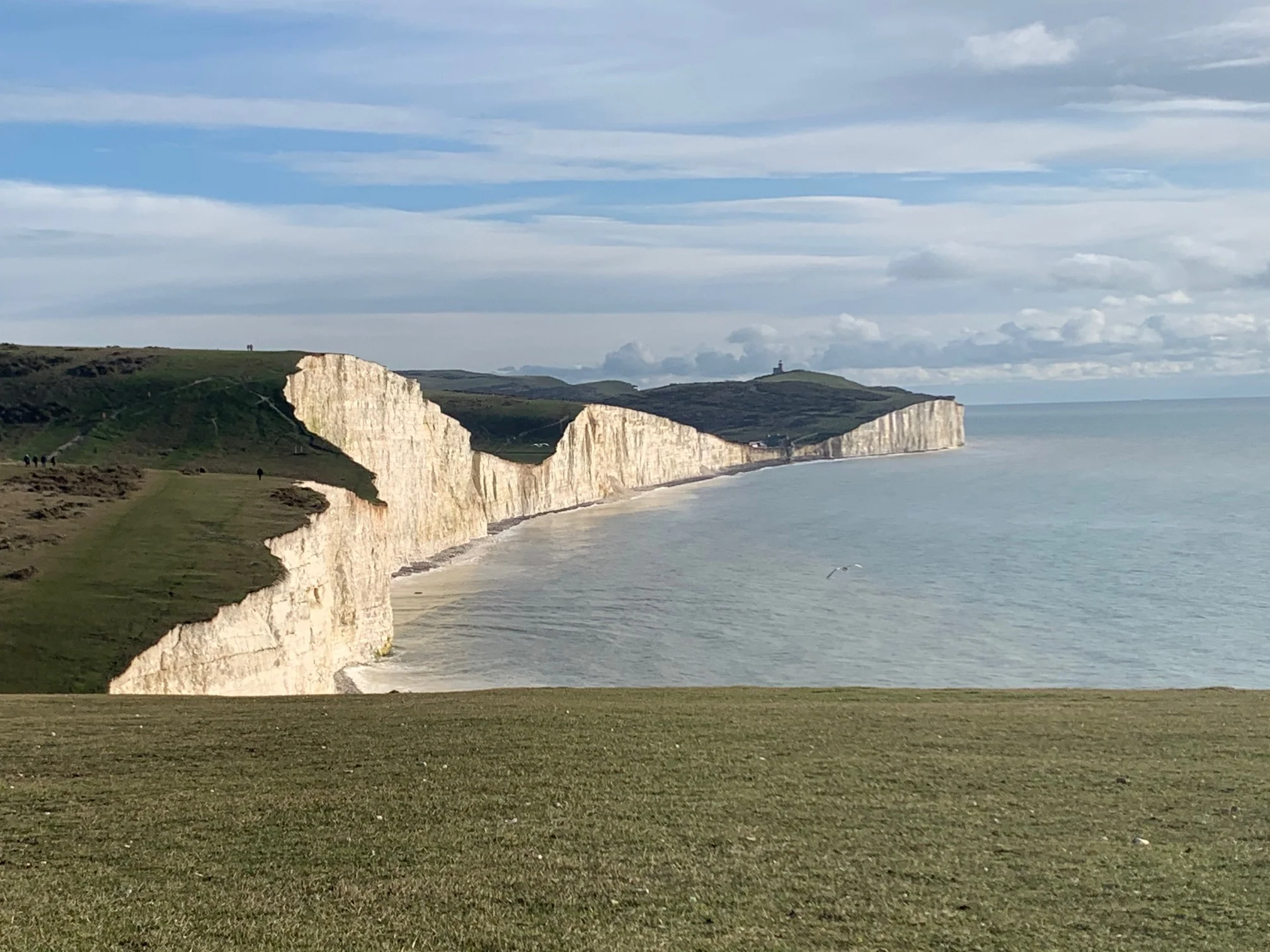
Beachy Head is the great chalk headland immediately east of the Seven Sisters, beyond Birling Gap. Rising to 162 metres (531 feet) above the waves, it is the highest chalk sea cliff in Britain — noticeably higher than any of the Seven Sisters themselves. It is a separate landmark, not an eighth sister, but the two belong to the same sweep of protected coast and most visitors take them in together.
From the clifftop the view runs west over the full rhythm of the Seven Sisters and east across Eastbourne to the pier. Far below, the red-and-white Beachy Head Lighthouse stands in the sea, while the older Belle Tout lighthouse sits back on the grass. It is one of the most recognisable coastal scenes in England.
Beachy Head sits at the eastern tip of the South Downs National Park and forms part of the Sussex Heritage Coast, the first stretch of Heritage Coast defined in England, back in 1973. That protected coast runs Eastbourne → Beachy Head → the Seven Sisters → Cuckmere Haven → Seaford, tying this headland and the Sisters into one continuous walk.
We may earn a small commission on bookings made through this link, at no extra cost to you. More info.
Two height figures get quoted for Beachy Head, and both are right. The headland rises to 162 metres (531 feet) above sea level at its highest point — the number behind its title as Britain's highest chalk sea cliff. The sheer cliff face, measured from the beach at the foot, stands up to around 160 metres. One is the height of the summit above the sea; the other is the drop of the vertical wall.
Beachy Head is pure chalk, laid down in the Late Cretaceous — between roughly 66 and 100 million years ago — when this whole area lay beneath a warm sea and the remains of countless tiny marine organisms settled as lime mud. Later earth movements lifted the chalk, and the opening of the English Channel cut the profile you see today.
The uppermost, gleaming-white band is the Seaford Chalk Formation, threaded with bands of hard flint nodules — the same chalk that forms the Seven Sisters. It is soft, porous and jointed, which is exactly why this coast erodes and why the cliffs stay so brilliantly white: fresh chalk is constantly exposed.
The famous one: the red-and-white banded tower standing in the sea at the base of the cliff. It was built in 1902 to replace the older clifftop light, and it is still the image most people picture when they hear the name Beachy Head. You see it best from the clifftop path a little west of the summit, or from a boat trip out of Eastbourne.
Set on the wave-cut platform at sea level, so its light sits below the frequent hilltop mist.
The older light, sitting back on the cliff top to the west. Construction began in 1831, but it was decommissioned in 1902: too often mist and low cloud settled over the high ground and hid its beam from ships. Its replacement was therefore built down at sea level. Belle Tout survives today as a private clifftop building and a landmark on the coastal walk.
A neat lesson in why the newer lighthouse went low rather than high.
Beachy Head is beautiful and genuinely hazardous. The chalk is riddled with vertical joints, and large sections fail without warning as deep cracks open and slabs slide away. This is an actively retreating cliff — not a fixed edge.
The grass can overhang thin air, and there is no fence along most of the top. Keep well back from the edge, keep children and dogs close, and never sit with your legs over. At the foot, falling chalk makes the cliff base equally dangerous — do not stand directly beneath it. Read the full cliff-safety guide →
Beachy Head is, sadly, also known as a place people come to in crisis. The Beachy Head Chaplaincy Team patrols the headland day and evening, and the Samaritans can be reached any time, free, on 116 123 — you do not have to be suicidal to call, and no problem is too small.
If someone is in immediate danger, call 999.
The seasonal 13X Coaster (Brighton & Hove Buses) is the only bus that stops directly at Birling Gap and Beachy Head; the year-round 12/12X Coaster run the coast road to Seaford, Exceat and East Dean. One bus links Beachy Head, the Seven Sisters and the coast road.
Always check the current Brighton & Hove timetable before travelling — services are seasonal and times change. See Getting There for full bus details.
There are Beachy Head car parks run by Eastbourne Borough Council, the main one closest to the headland. Pay-and-display charges start from around £1.50 for an hour up to a few pounds for the day.
Charges change — check the on-site signs for current rates. Overnight parking is not permitted.
The nearest railway station is Eastbourne, a short bus or taxi ride away. Coming from further afield, see getting here from London.
The classic way to see Beachy Head is on foot, as the eastern bookend of a Seven Sisters walk. The path links the two seamlessly along the clifftop.
From Birling Gap the path climbs steadily east, over the grassy hump of the old Belle Tout lighthouse, up to the Beachy Head summit at 162m, then down towards the lighthouse viewpoint. The views back over the Seven Sisters are the reward. It is very exposed — dangerous in strong wind, and best avoided in fog.
Despite how it reads, Beachy Head is not named after any beach. The name is a worn-down version of the medieval French beau chef — "beautiful headland." Norman-French settlers described the great white promontory, and English tongues slowly reshaped the words into something that only sounds like "beach."
Human remains found near here in the 1950s belong to a woman who lived in Roman-era Britain, around 200–250 CE. She is often called the "Beachy Head Lady." For years she was described as being of sub-Saharan African origin, but DNA analysis reported in 2021 pointed instead to a southern European ancestry, most likely from Cyprus — a reminder that even long-settled "facts" get revised as the science improves.
Every Seven Sisters walk with distances and difficulty ratings
🪜The neighbouring viewpoint and the start of the walk east
⚠️Essential cliff-edge safety and emergency information
🏖️The nearest town, seafront and railway station
🌊The western end of the Seven Sisters walk
🚗Transport from London, Brighton and by public transport
Guides to walks and views around Beachy Head and the Seven Sisters.
A few more corners of the Seven Sisters worth your time.
 Walking routes
From the easy riverside stroll to the full clifftop traverse — pick your walk.
Explore
Places
Walking routes
From the easy riverside stroll to the full clifftop traverse — pick your walk.
Explore
Places
 Eastbourne
The classic resort town at the eastern end of the coast path.
Explore
Safety
Eastbourne
The classic resort town at the eastern end of the coast path.
Explore
Safety
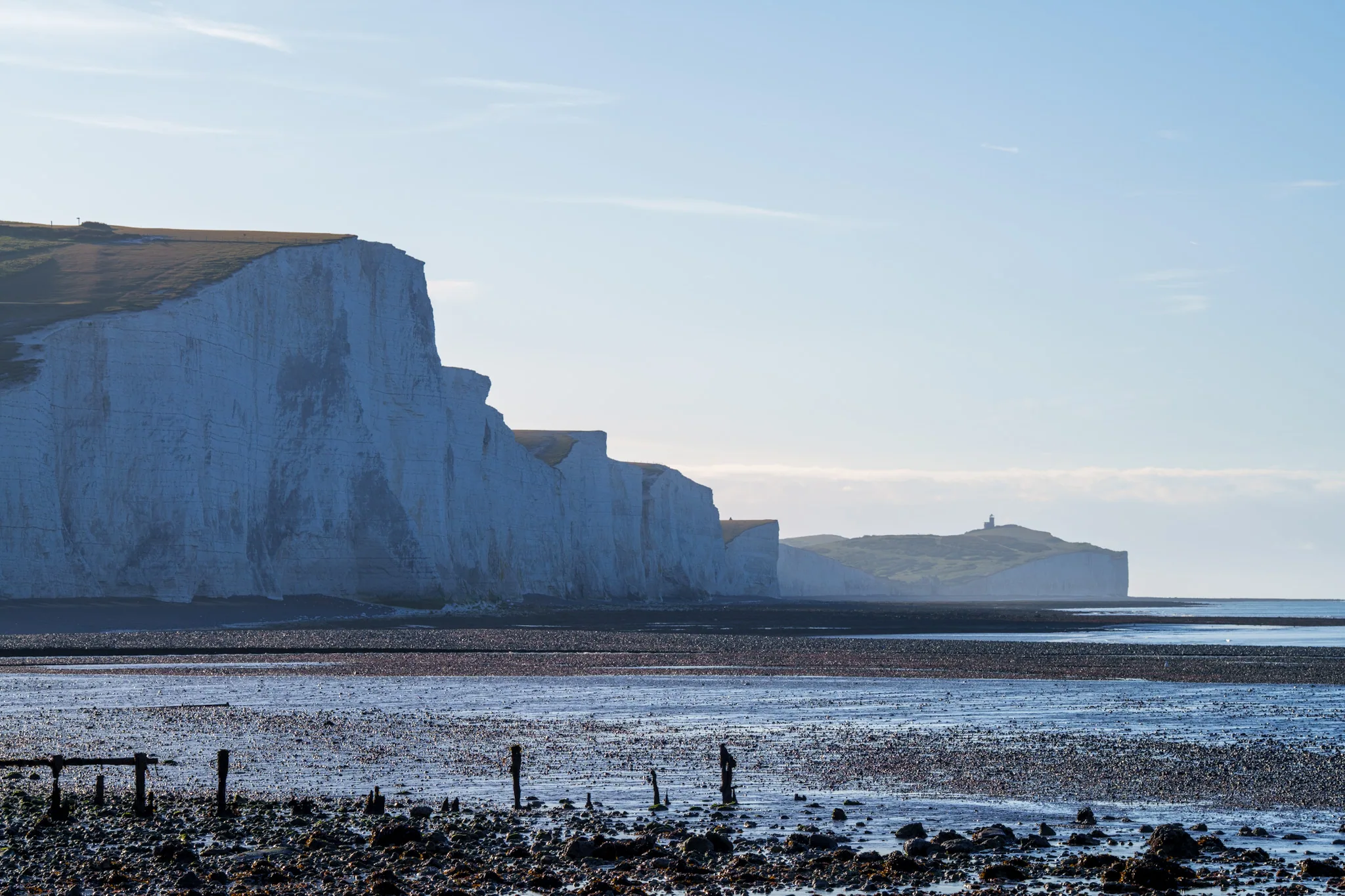 Tides & safety
Read the tide before you walk the beach — the rule that keeps you safe.
Explore
Plan
Tides & safety
Read the tide before you walk the beach — the rule that keeps you safe.
Explore
Plan
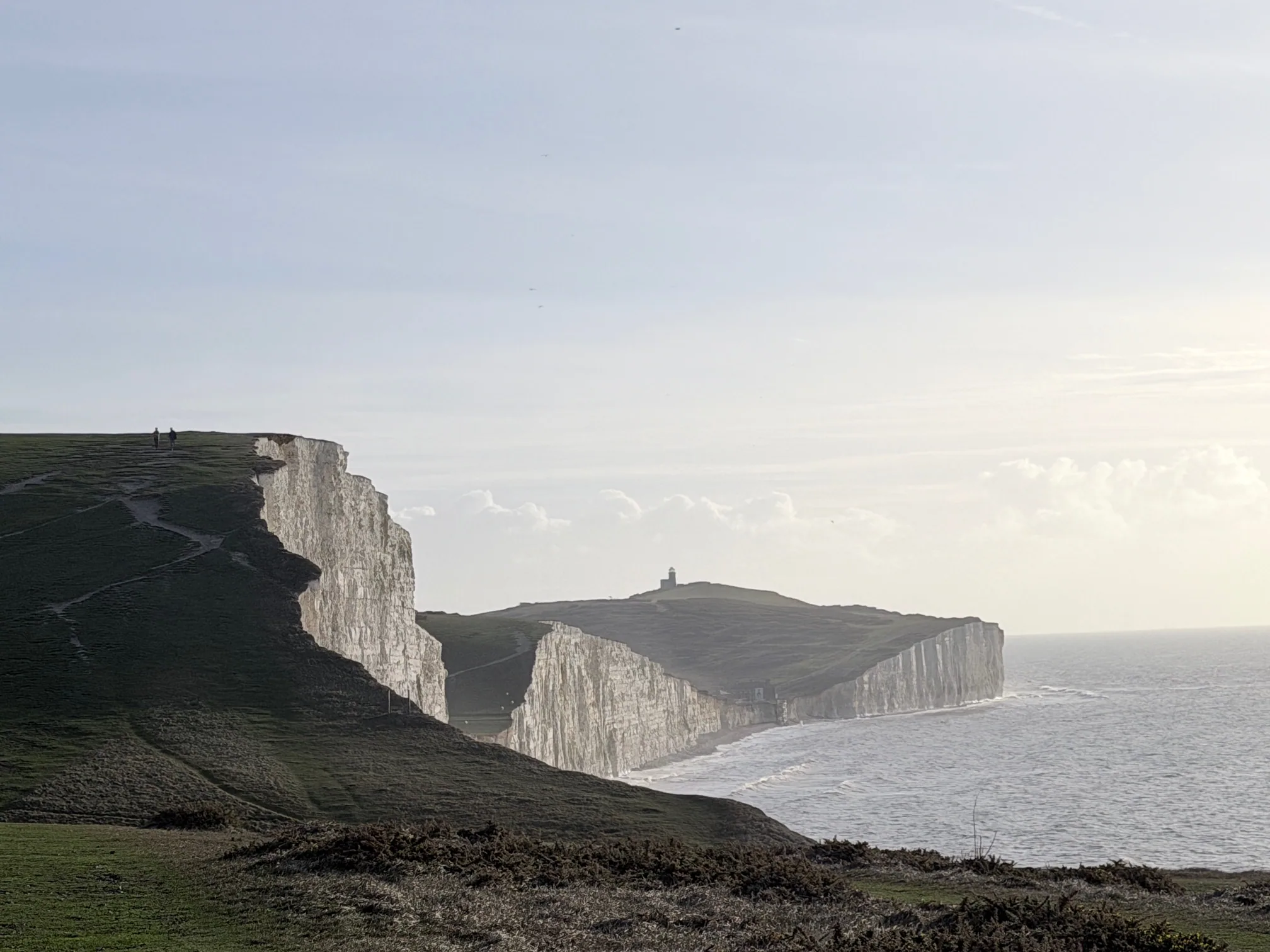 Plan your visit
Everything in one place — routes, parking, tides and the best times to come.
Explore
Guide
Plan your visit
Everything in one place — routes, parking, tides and the best times to come.
Explore
Guide
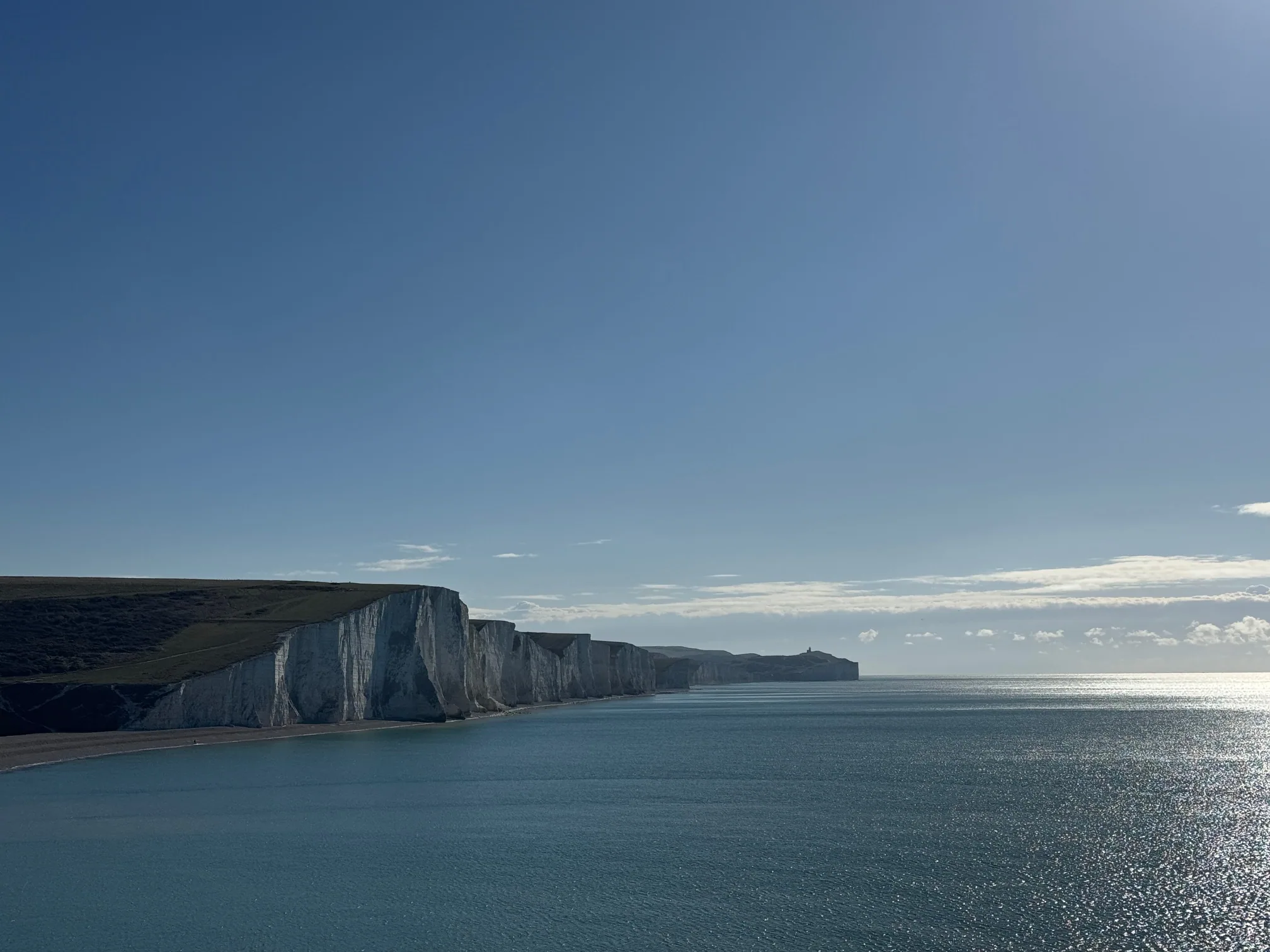 The complete guide
The complete first-hand guide to walking the Seven Sisters, start to finish.
Explore
Plan
The complete guide
The complete first-hand guide to walking the Seven Sisters, start to finish.
Explore
Plan
 When to visit
Light, crowds and weather through the seasons — when to time your trip.
Explore
When to visit
Light, crowds and weather through the seasons — when to time your trip.
Explore
£4.99 · 24-page PDF · Instant download
The complete 24-page companion built from first-hand walks — every cliff, all four graded routes, tide windows and a parking strategy. Designed to work offline, right on the cliff top.
Just want the basics? Download the free 2-page walk guide
Stay up to date with seasonal guides, crowd forecasts, and local tips — direct to your inbox.
No spam. Only coastal inspiration and timing tips — unsubscribe any time.