The Best Cliff Walk Near London: Seven Sisters vs Dover vs Thanet vs Beachy Head
The question sounds simple. If you live in London and you want to stand on a chalk cliff looking out at the Channel, where do you go? There are several options within two hours — the White Cliffs of Dover, Beachy Head and Seven Sisters, the Isle of Thanet, the North Kent coast — and they are not equivalent. The differences between them are significant, and they are not the differences most guides talk about.
This is the honest version. Not the tourism board version.
The Four Options
Within a reasonable two-hour reach from central London, there are four meaningful chalk cliff destinations: the White Cliffs of Dover, Seven Sisters and Beachy Head in East Sussex, the headlands around Margate on the Isle of Thanet, and the less-visited chalk stacks at Botany Bay. That is the field. Here is what each actually offers.
White Cliffs of Dover: The Famous One That Disappoints in Person
Dover is the one people know from the songs and the films. The cliffs are real, they are genuinely white, and from a distance — from a ferry, or from a photograph taken in good light — they are extraordinary. Up close, as a walk, they are considerably less extraordinary than their reputation suggests.
The National Trust South Foreland to St Margaret's route is the best of the Dover cliff walks, and it is a good walk. But the cliffs here are not walkable along their full length — the path runs inland of the cliff edge for much of the route, particularly near the famous viewpoints, because the erosion and Ministry of Defence land ownership have restricted access for decades. The most famous viewpoint — the one you recognise from pictures — requires walking along a managed path and looking at the cliffs from a perspective that is less impressive than the photographs suggest. The chalk is white, yes. The scale is impressive. The walk itself is a 3–4 mile managed National Trust trail through land that was heavily industrialised for two centuries and is only partially recovered.
Dover also has a specific access challenge: there is no good train-only route to the best cliff viewpoints. The railway station is in the town, not at the cliffs. Getting to the South Foreland route requires either a bus or a 40-minute walk from the station through town, which most guides fail to mention.
Beachy Head: Spectacular But One-Dimensional
Beachy Head is the tallest chalk sea cliff in England at 162 metres. This is not a small claim. Standing at the top and looking down at the lighthouse below you is a genuinely arresting experience. The view from Beachy Head is arguably the single most dramatic cliff viewpoint in the south of England.
The limitation is that Beachy Head, as a walk, is essentially one viewpoint. You park, you walk to the edge, you look. The headland is open downland with good views in multiple directions, but there is no route structure comparable to Seven Sisters — no series of peaks and valleys, no beach access, no layered experience as you move through the landscape. Beachy Head is a destination, not a walk. Which makes it excellent for an hour and not much more.
Beachy Head is also the site of a significant number of suicides each year, which the Samaritans volunteers who patrol it will tell you is the most important fact about the place. This does not make it wrong to visit, but it gives the headland an atmosphere that some people find heavy in a way that Seven Sisters — a few miles west along the coast — does not.
Isle of Thanet: Underrated But a Different Proposition
The chalk stacks at Botany Bay, the headlands at North Foreland, the white cliffs at Broadstairs — Thanet has cliff scenery that almost nobody from London knows about. It is a genuine secret and worth knowing.
The problem is access. Thanet requires a Southern/Southeastern rail journey of around 90 minutes to Margate, then further travel to the specific viewpoints. The cliff walks are short, fragmented, and lack the coherent multi-hour route structure that makes Seven Sisters worth the journey. You are driving or taxiing between viewpoints rather than walking between them. For dedicated chalk cliff enthusiasts who have already done Seven Sisters multiple times, Thanet is an interesting alternative. As a "best cliff walk near London" recommendation for a first visit, it is not the answer.
Seven Sisters: Why It Wins
Let us be direct about this, because we have walked all of these options and the comparison is not close.
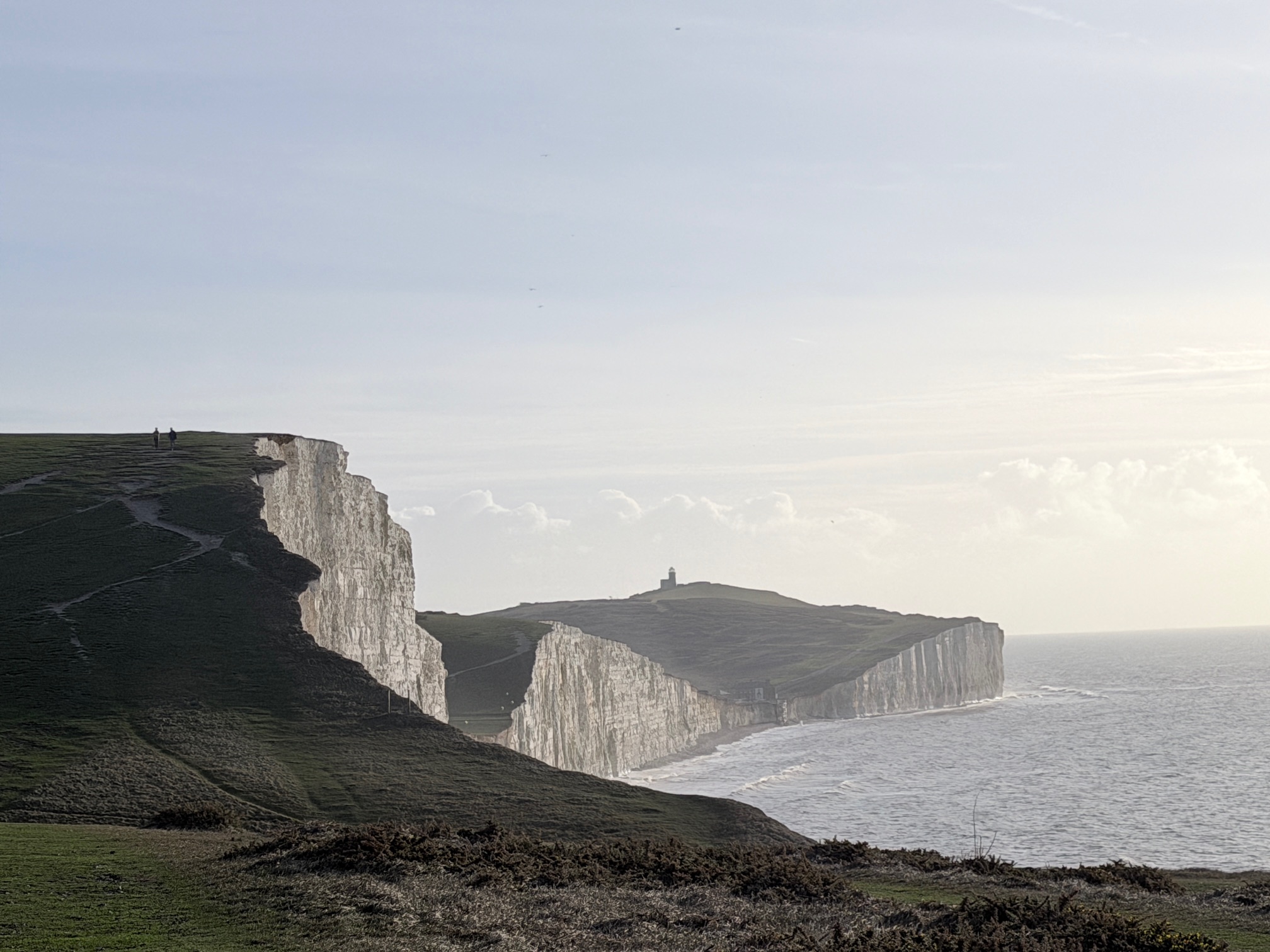
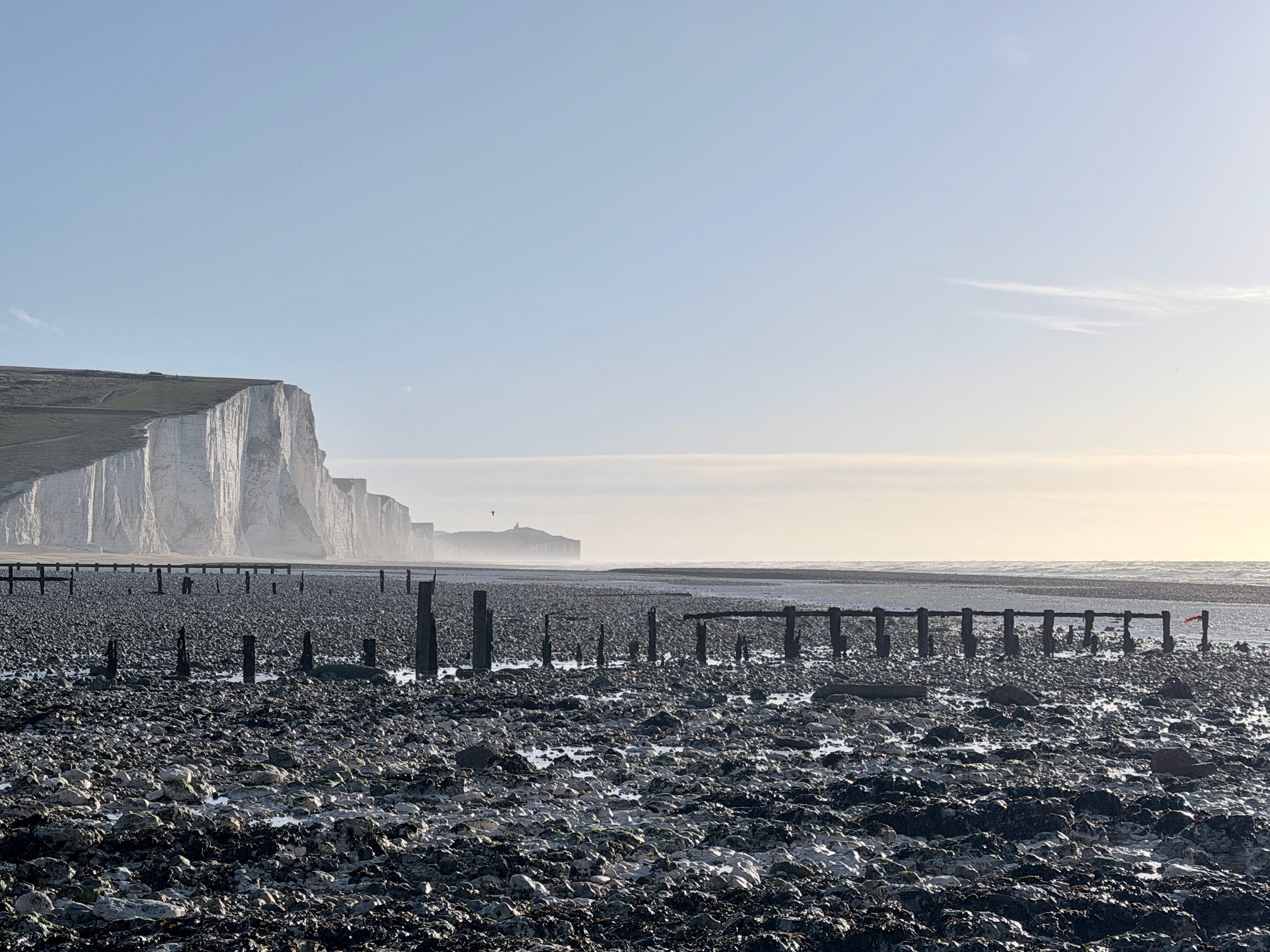
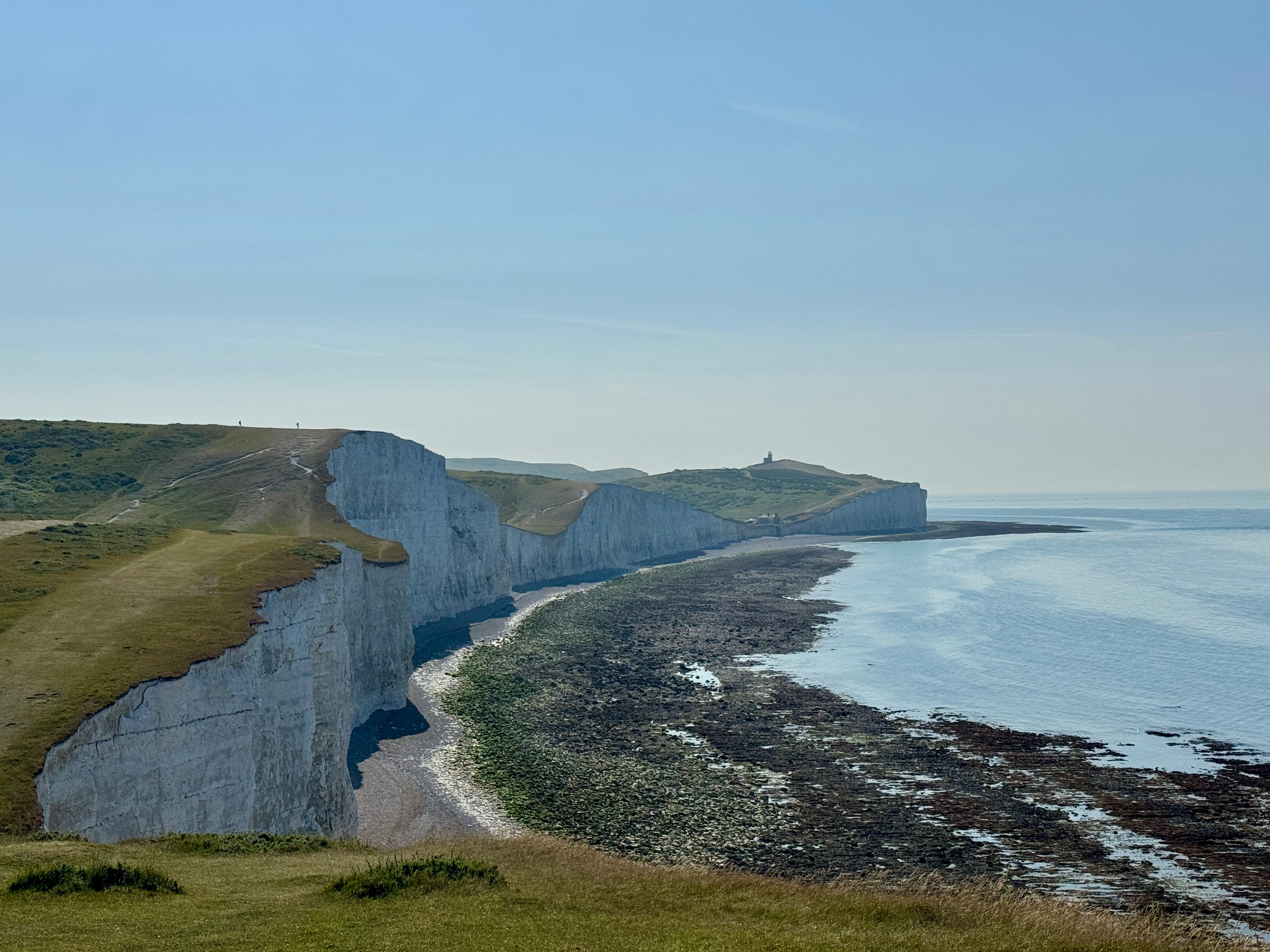
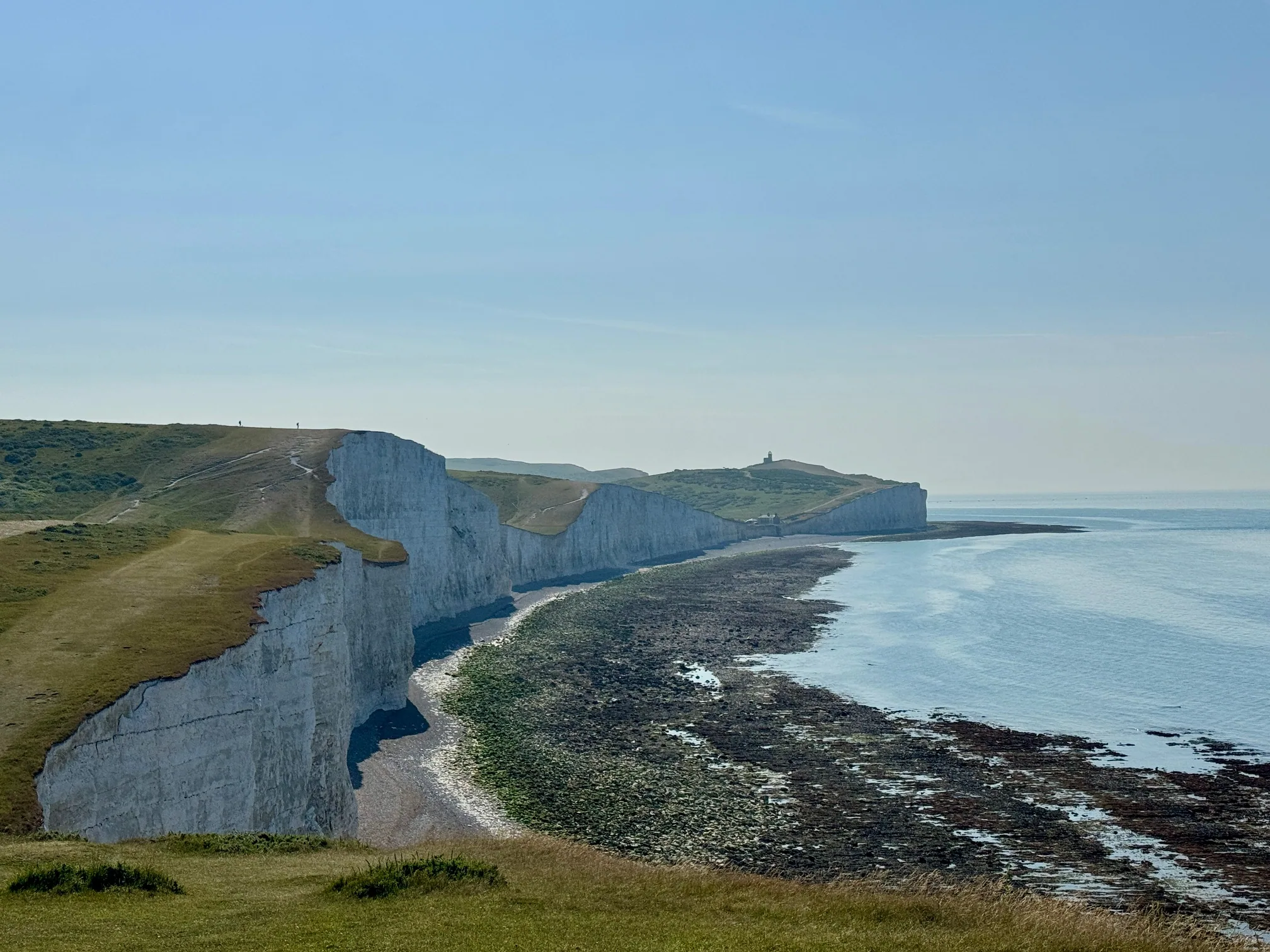
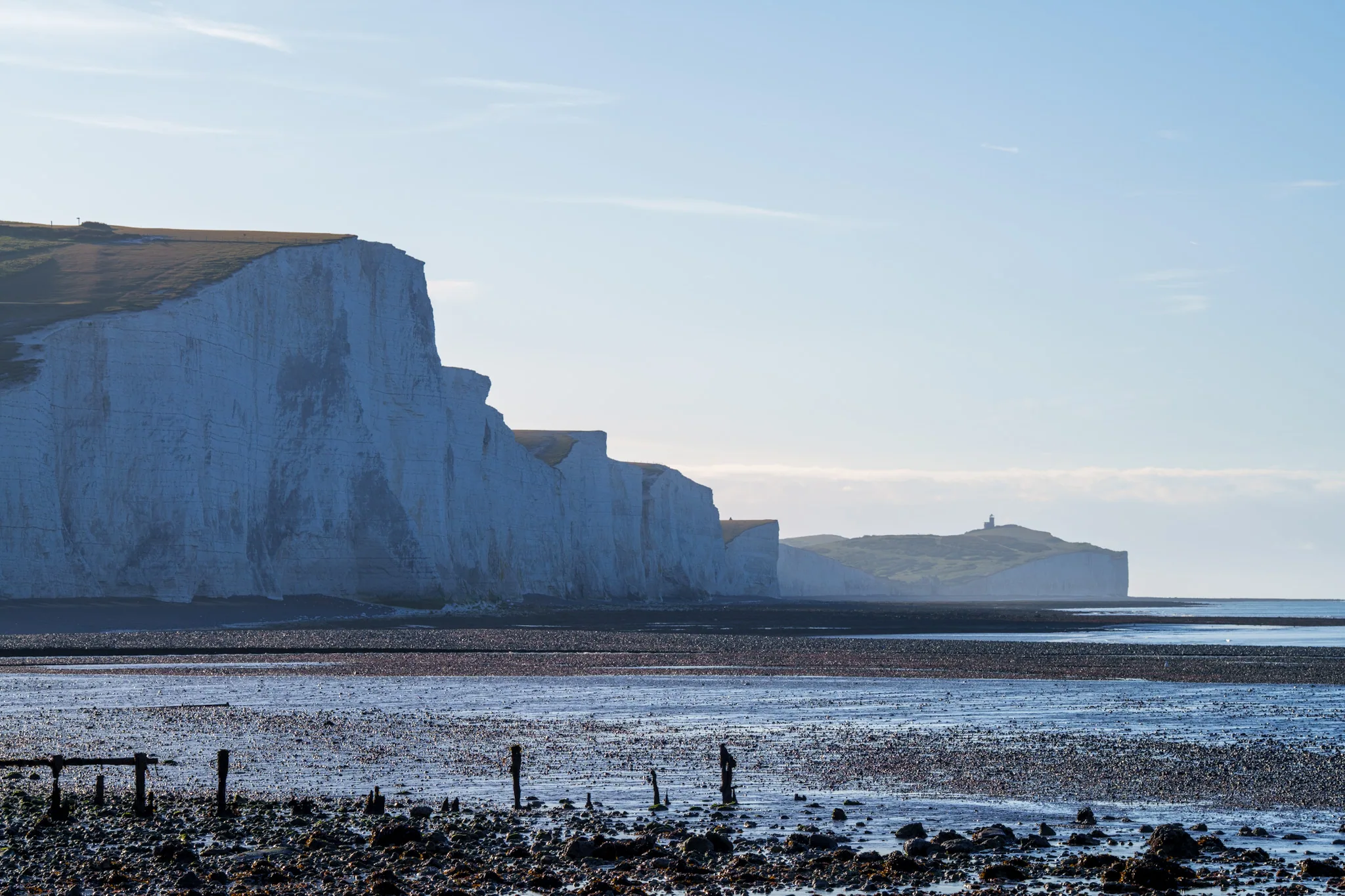
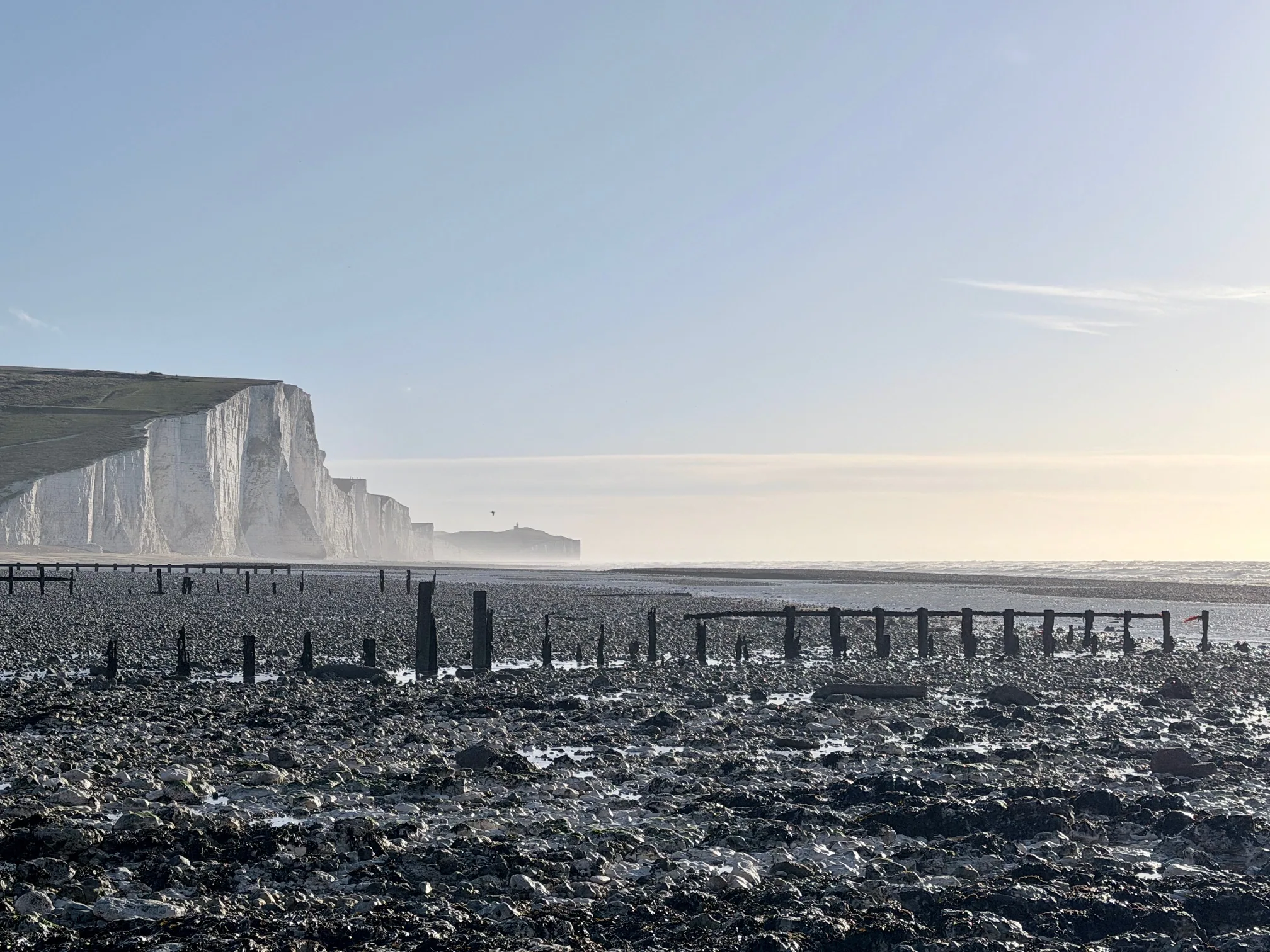
Seven Sisters offers something none of the others do: a continuous 6km ridge walk with seven distinct cliff peaks, descending and ascending between each one, with the sea visible and audible below you for the entire route. The path is challenging enough to feel like a proper walk — each ascent is 30–40 metres of climbing — but accessible enough that families with children complete it regularly. The start and end points have visitor facilities. There is beach access at Birling Gap and Cuckmere Haven at low tide. There are pubs and villages within walking distance. The National Trust manages the land exceptionally well.
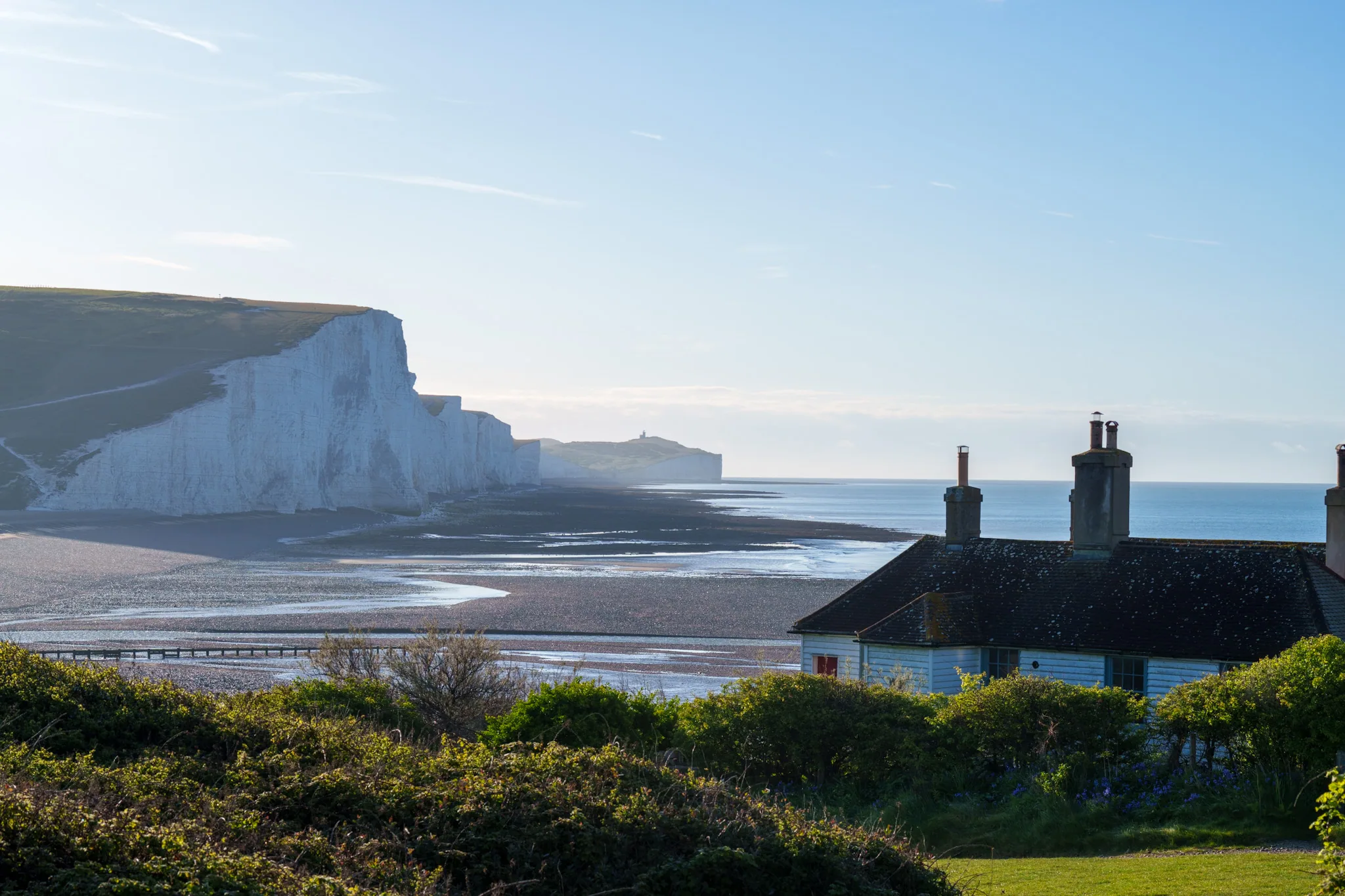
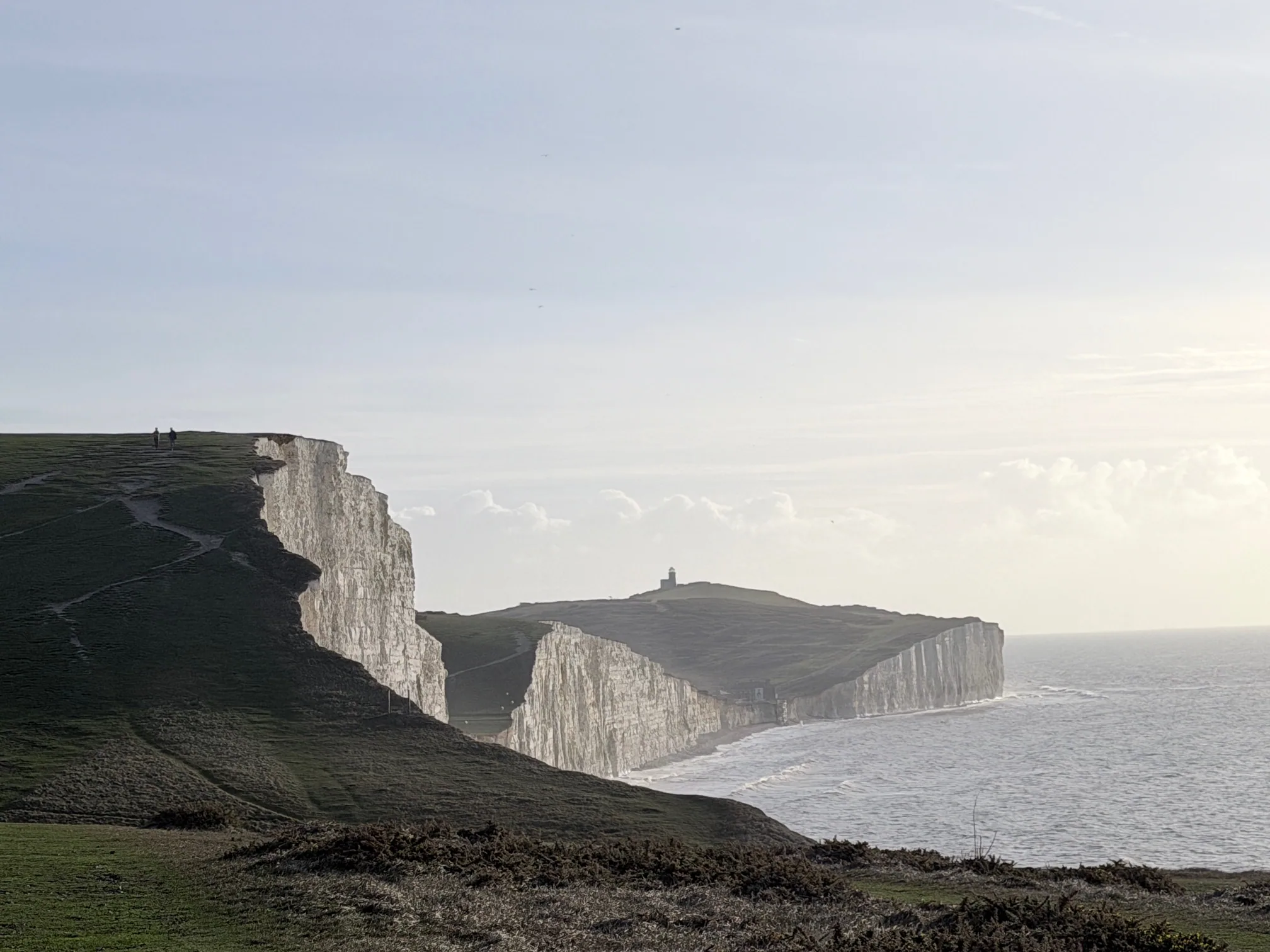
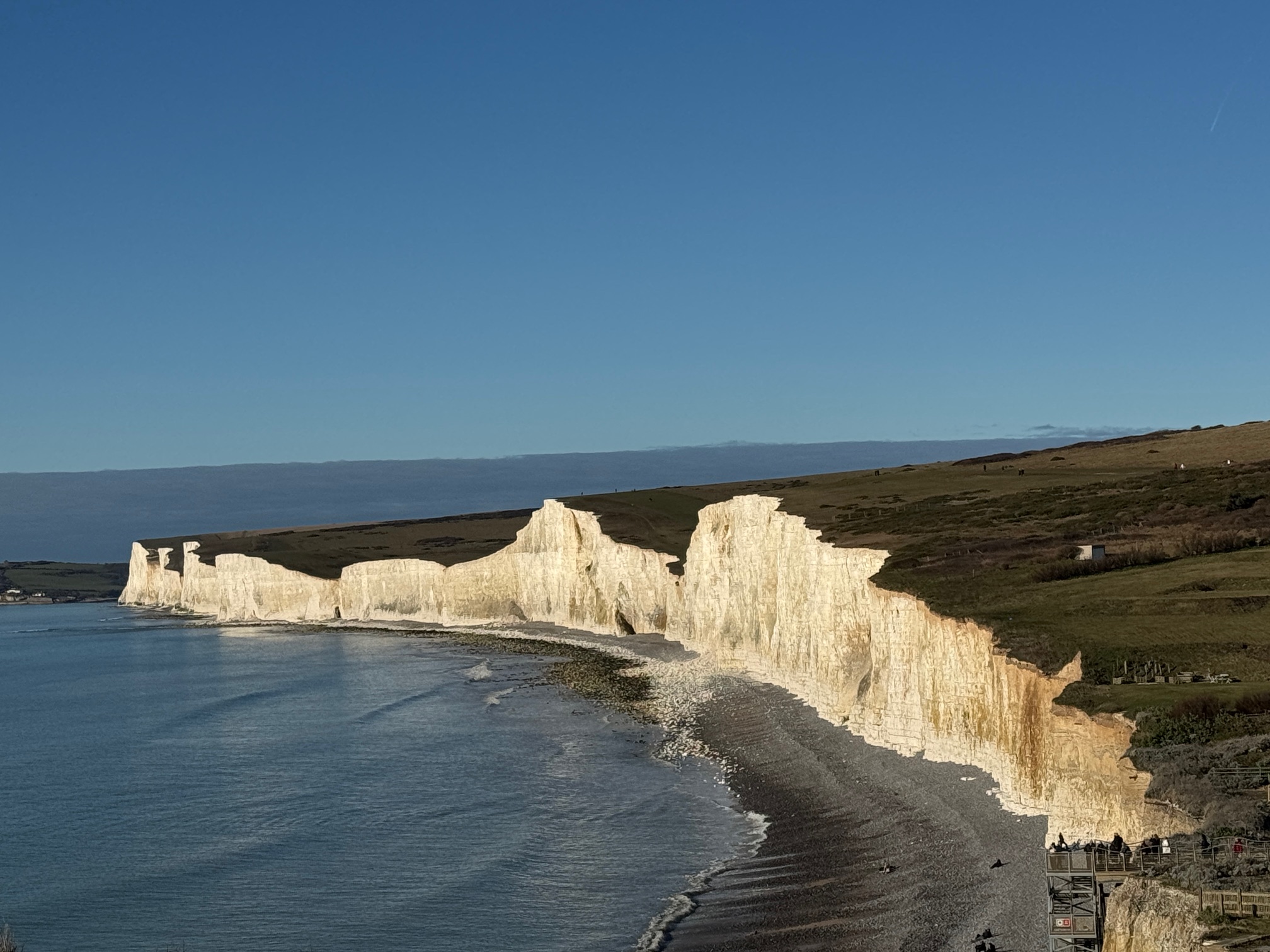
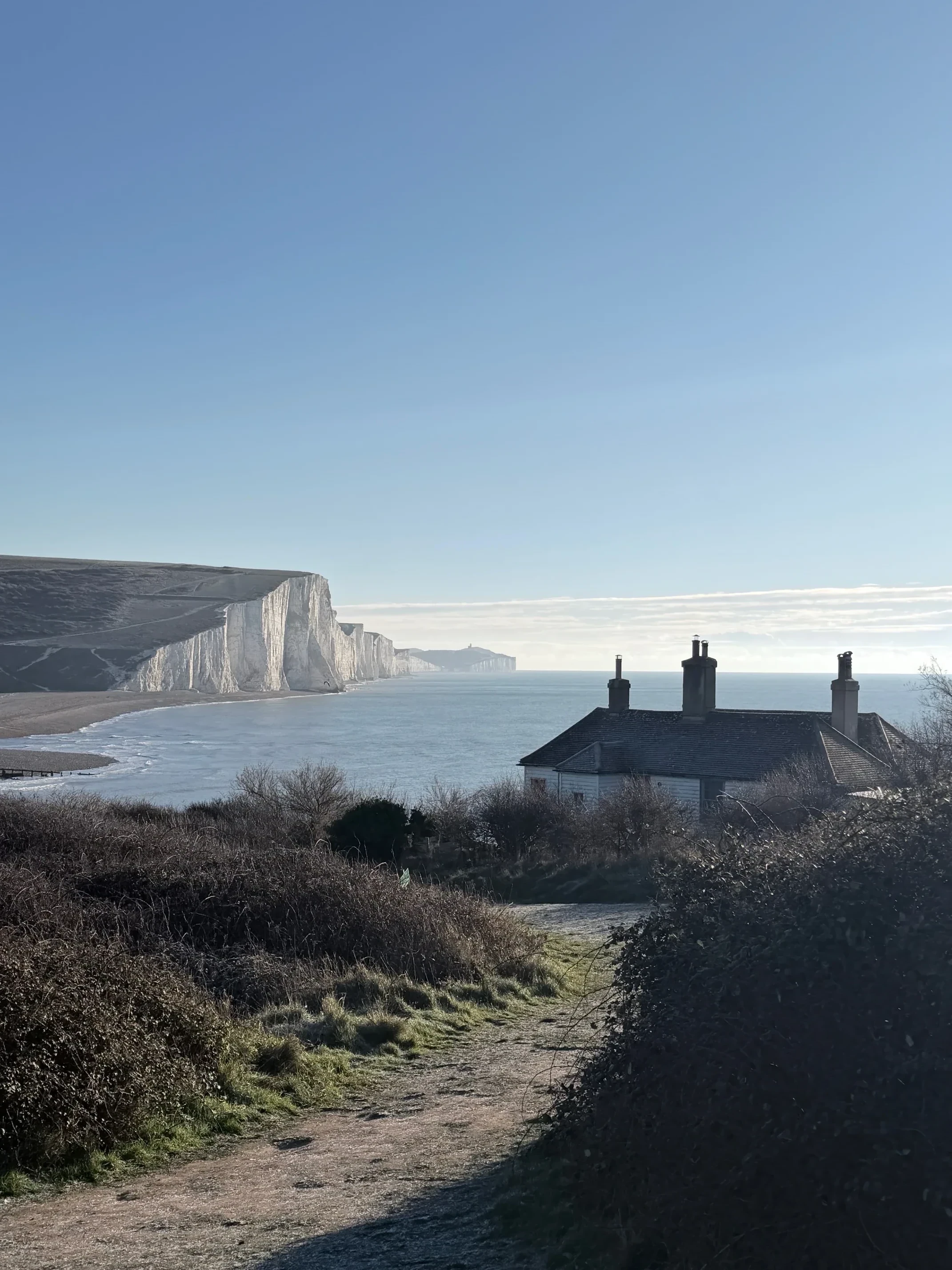
The view from the Seven Sisters ridge is not the same as looking at a cliff from above. It is walking along the top of a cliff while the cliff performs around you — the peaks appearing and receding as you move, the shadow of each headland falling across the face below, the chalk changing colour through the day as the light angle shifts. The famous Cuckmere Haven view — the chalk cliffs curving around the green river valley from above — is one of the most photographed landscapes in England because it is one of the most beautiful.
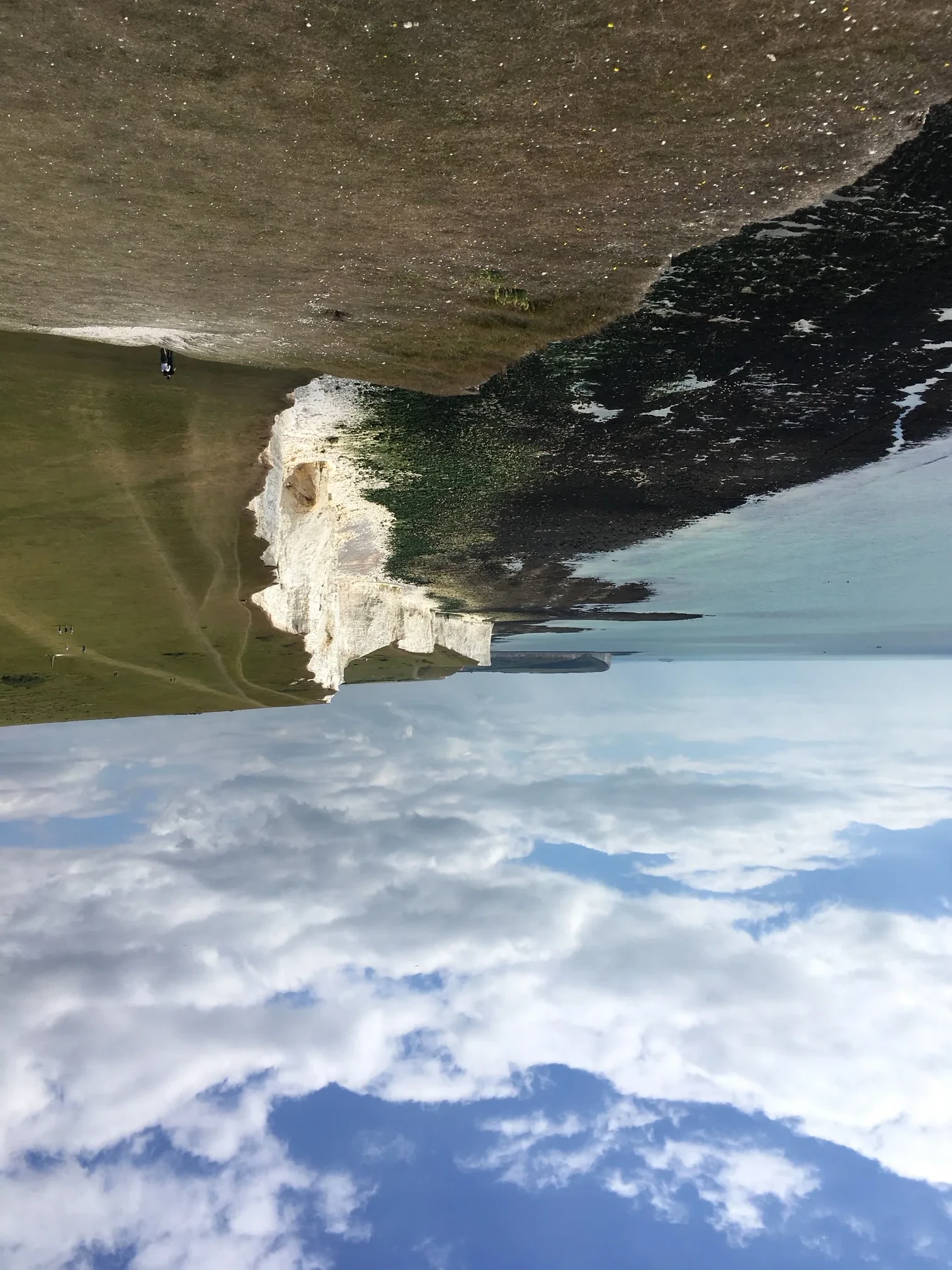
The specific thing that makes Seven Sisters different: you are not looking at the cliffs from a distance. You are walking on top of them for 6km, with the cliff face dropping away below you and the sea filling the horizon. Dover has taller cliffs. Beachy Head has a more dramatic single viewpoint. Seven Sisters has the walk.
Getting There from London
By train, Seven Sisters is around 2 hours from central London. The cleanest route is Victoria to Seaford (1h 25min, change at Lewes) — walk 20 minutes to the cliff path with no bus needed. Or Victoria to Eastbourne direct (~1h 30min), then Bus 13X to Birling Gap (seasonal — check timetables). Either way, the train runs through the Weald — rolling farmland and hop gardens — which is a nicer journey than the Kent coast option.
By car, Birling Gap is 90 minutes from central London via the M23 and A27, or the A22 direct from East Croydon. Traffic on summer weekends adds 30–60 minutes to this. The Birling Gap car park fills by 10am on peak summer weekends — either arrive early or use the Exceat car park (Seven Sisters Country Park) on the A259 as an alternative starting point.
From Gatwick, Seven Sisters is 45–60 minutes by car — faster than Dover. If you are flying in specifically for this walk (which happens — we have met Australian visitors who built their UK trip around it), Gatwick is the airport to use.
The Honest Recommendation
If you want to see the iconic English Channel chalk cliffs with the symbolic resonance of the White Cliffs of Dover, go to Dover. The cultural weight is real and the South Foreland walk is decent.
If you want the single most dramatic cliff viewpoint, go to Beachy Head. Nothing quite matches looking down 162 metres at a lighthouse from above.
If you want the best cliff walk — the one that earns its reputation as a full experience rather than a single viewpoint — go to Seven Sisters. It is the only chalk cliff destination near London that works as a proper multi-hour walk with layered landscapes, beach access, a memorable route with genuine topography, and facilities that justify the journey for a full day out.
We are not unbiased here. But we have also done all the others, and the recommendation stands.
Planning Your Seven Sisters Visit from London
- Best starting point by train: Take Southern Rail to Seaford (from London Bridge via Lewes), then the seasonal 13X toward Eastbourne and get off directly at Birling Gap, or the 12/12X for Seven Sisters Country Park (Exceat). Alternatively, train to Eastbourne and bus west.
- Best starting point by car: Birling Gap for the eastern ridge; Exceat (Seven Sisters Country Park) for the Cuckmere valley and western approach. Exceat is less busy and the parking charges are lower.
- How long to allow: The full ridge walk (Birling Gap to Cuckmere and back) is 3–4 hours. Add 30 minutes for beach time at low tide. A full day allows for lunch at the Cuckmere Inn or the Tiger Inn in East Dean.
- What the White Cliffs of Dover are not: They are not Seven Sisters. The chalk at Dover is the same geology, the same age, the same white colour. The walk experience is not the same thing. If someone recommends Dover when you ask about cliff walks near London, they have not done both.
Plan Your Seven Sisters Visit
For the complete route options from every starting point with distances and timings, see our walk duration guide. For the train and bus routes from London in detail, see our Seven Sisters from London by train guide. For all the safety information before you go, see the safety hub.
Planning the walk itself?
Four routes run along these cliffs and they are not interchangeable — a flat 3km riverside stroll, the classic 6.5km Exceat to Birling Gap crossing, a short Birling Gap loop, and the full 21.9km Seaford to Eastbourne ridge. Compare distance, ascent and difficulty before you pick one.
- Easy Birling Gap Short Loop 2 km 45 min
- Easy Cuckmere Haven Beach 3 km 1 hour
- Moderate Exceat to Birling Gap 6.5 km 2-3 hours
- Challenging Seaford to Eastbourne 21.9 km 6-7 hours
Check live train times and fares
Both stations for the cliffs are reached from London Victoria — Seaford with a change at Lewes, Eastbourne direct. Off-peak day returns are usually cheapest booked a few days ahead; walk-up fares on a summer weekend can be steep.
- London Victoria to Seaford approx. 1 hr 25 min, change at Lewes · walk to the cliff path, no bus needed Live times & fares
- London Victoria to Eastbourne approx. 1 hr 30 min direct · 13X bus to Birling Gap Live times & fares
Fares and Railcards are sold by Trainline. We earn a small commission on bookings made through these links at no extra cost to you. Affiliate disclosure.
We may earn a small commission on bookings made through this link, at no extra cost to you. More info.
£4.99 · 24-page PDF · Instant download
The Seven Sisters Ultimate Guide
The complete 24-page companion built from first-hand walks — every cliff, all four graded routes, tide windows and a parking strategy. Designed to work offline, right on the cliff top.
- All 7 cliffs — heights, geology & viewpoints
- Four graded walking routes, compared
- Tide windows, light calendar & day plans
- Parking strategy & seasonal planner
Just want the basics? Download the free 2-page walk guide
Want an expert-led Seven Sisters tour?
From guided cliff walks and wildlife safaris to geology hikes and photography tours — explore all our curated experiences with local guides.