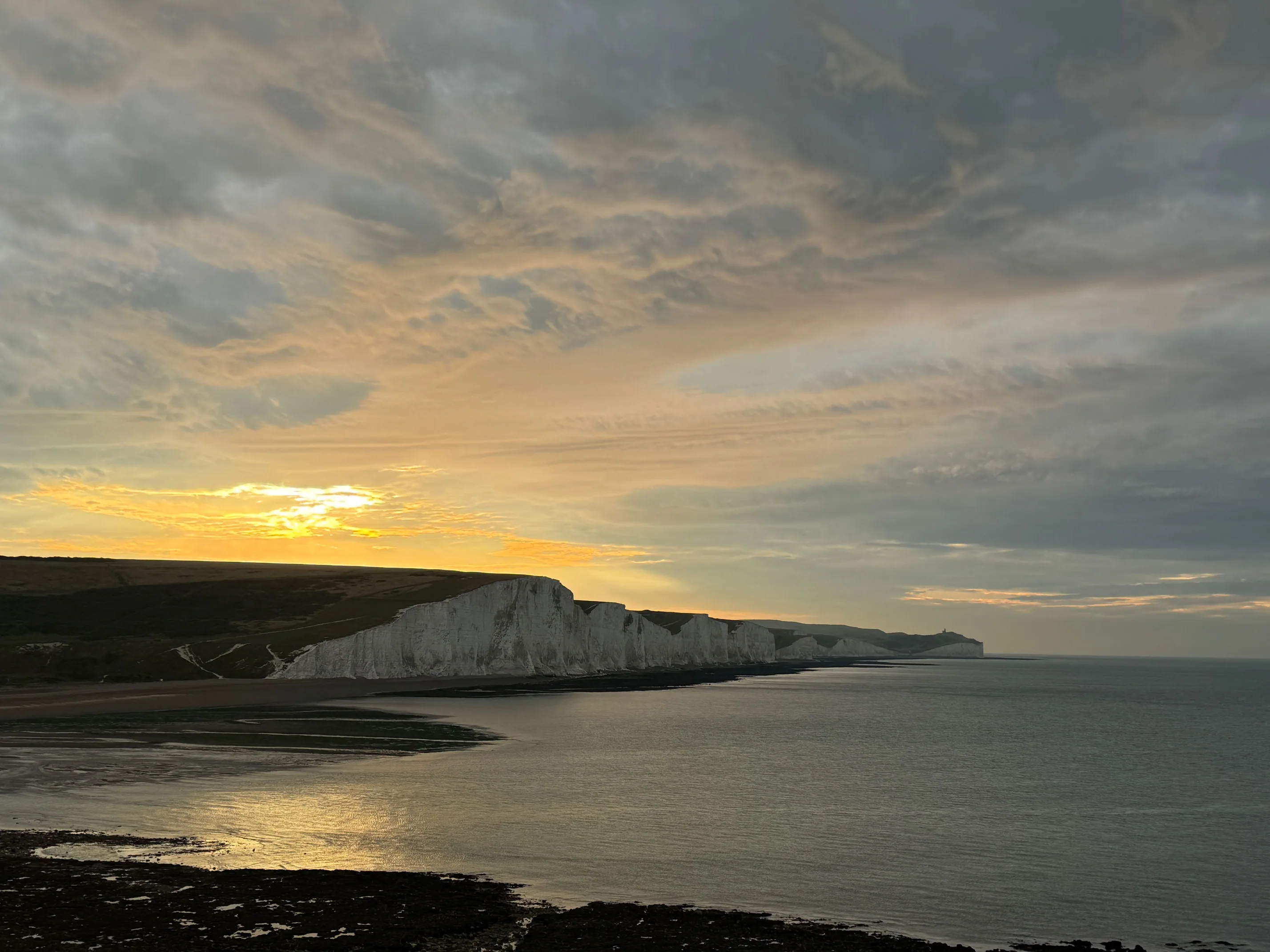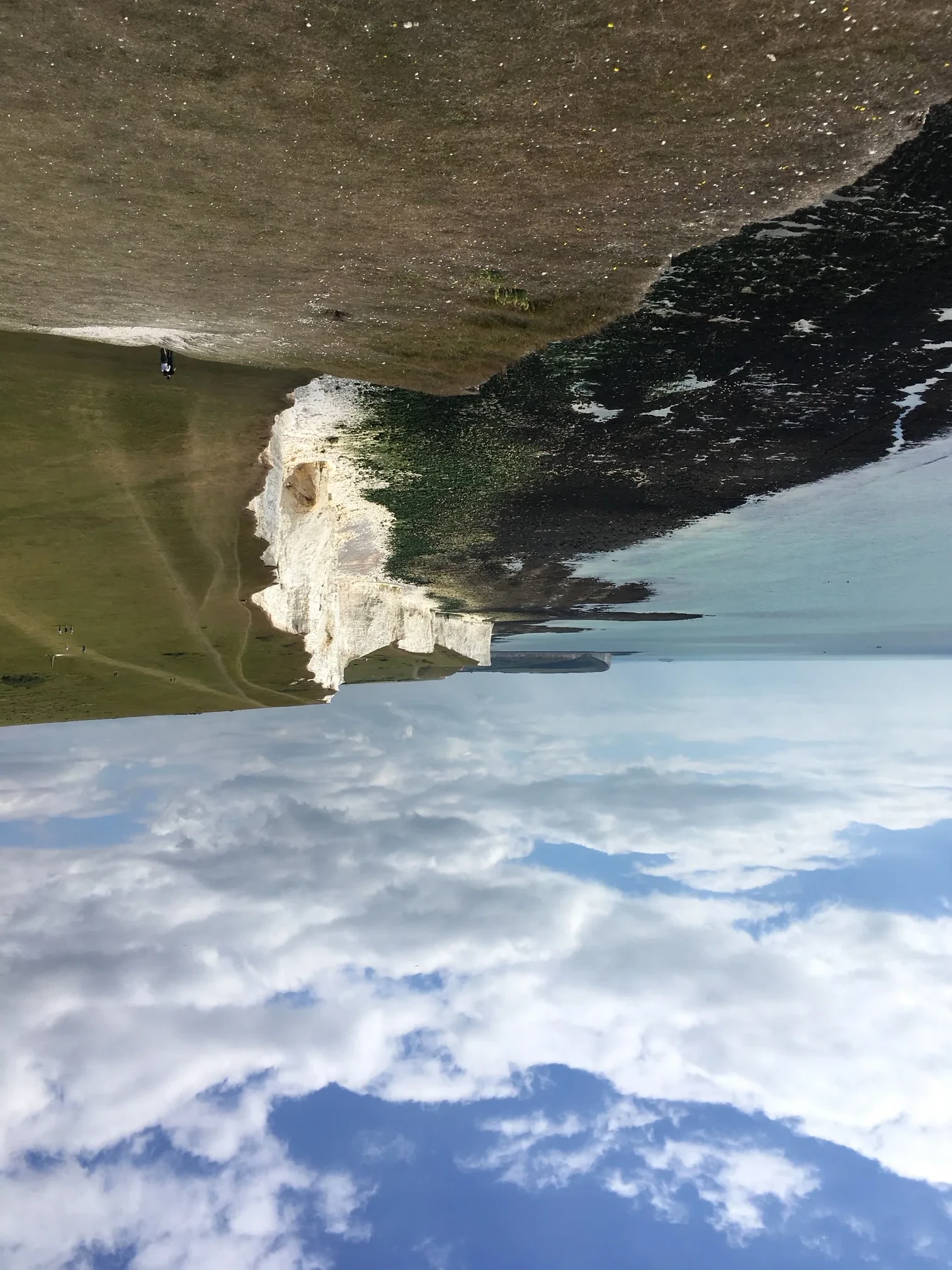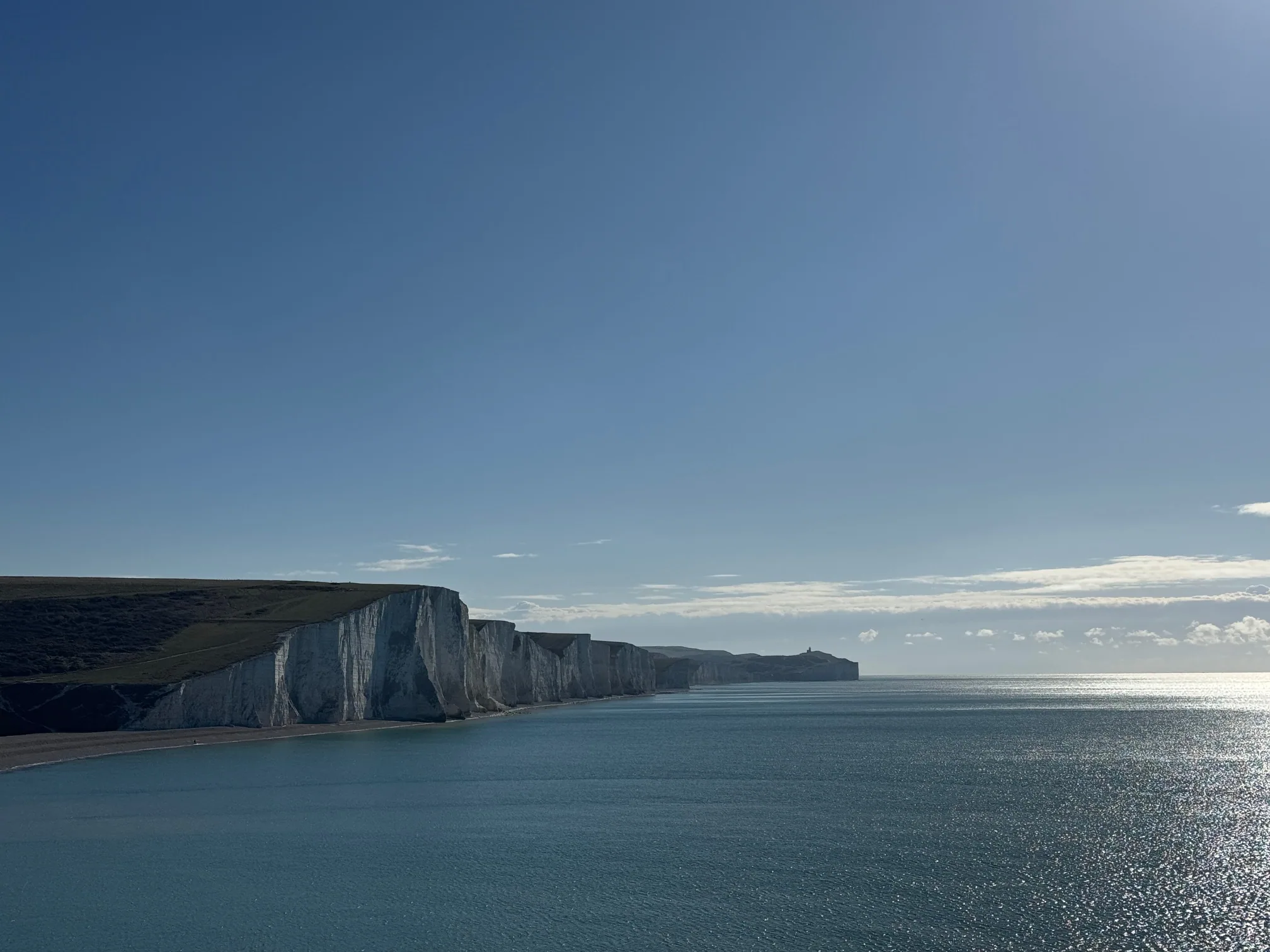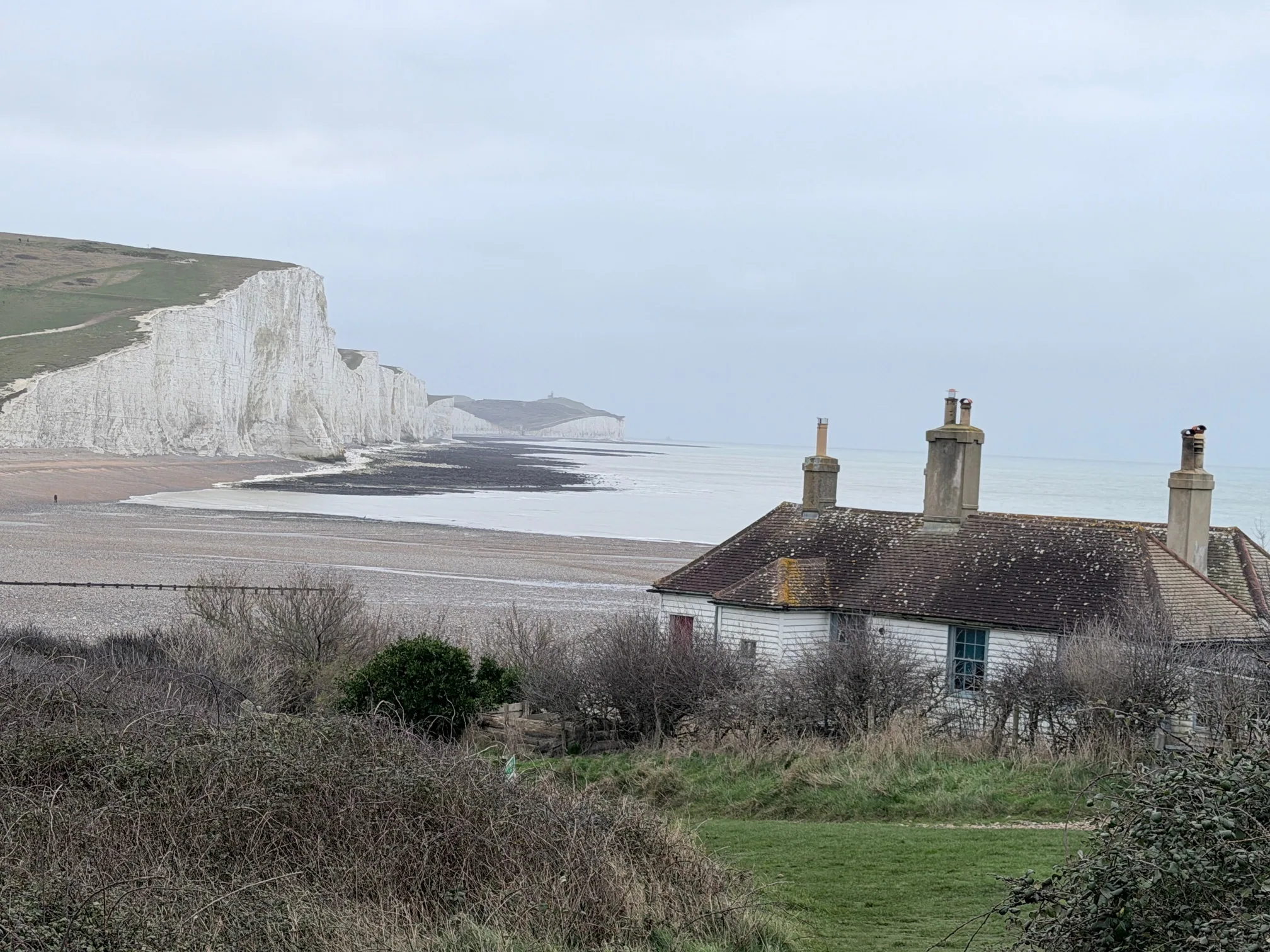
We Got the Tide Wrong at Hope Gap: What the Return Walk Actually Looked Like
We'd checked the tide the night before. Low tide at Cuckmere Haven was 11:20am. We left Birling Gap at 10:40am, walked west along the clifftop, descended to Hope Gap at around 11:10am, and spent forty minutes on the beach below. When we turned to leave, the route back along the base of the cliff — the way we'd come — had six inches of water moving quickly across the chalk ledge we'd walked dry-footed an hour earlier.
The tide hadn't gone wrong. We had. We'd checked the time of low tide and then not thought about what that meant for the tidal window on either side of it. Low tide at 11:20am means the tide is rising again by noon. By 11:50am — when we were looking at the return route — it had been rising for thirty minutes. The ledge we needed to cross had gone from exposed chalk to an active wash of cold, knee-deep water moving with purpose.
This was not a dangerous situation. It was a wet and annoying one. But the gap between the two is smaller than it looks from above, and it gets smaller quickly.
What the Tidal Problem at Hope Gap Actually Is
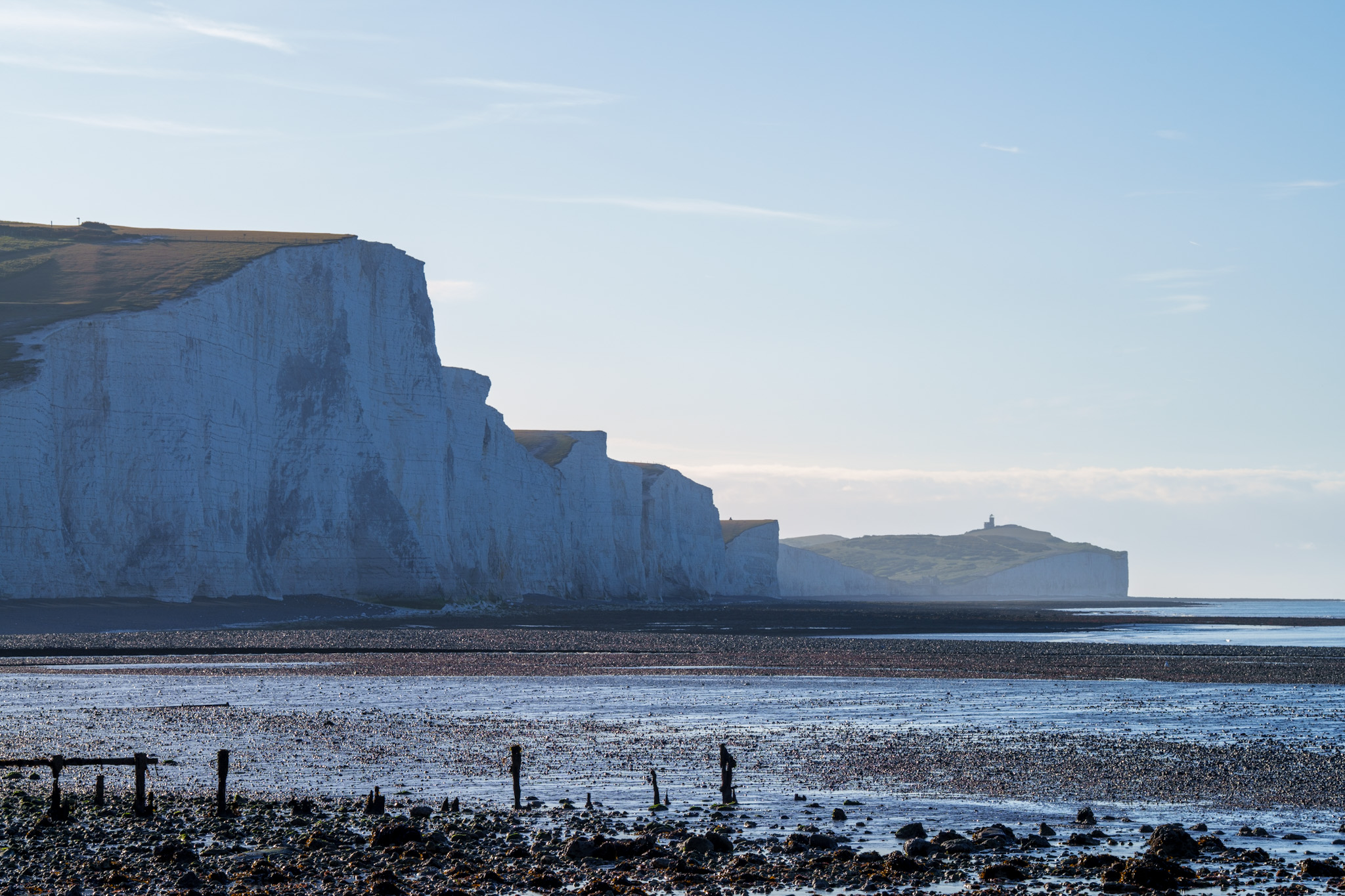
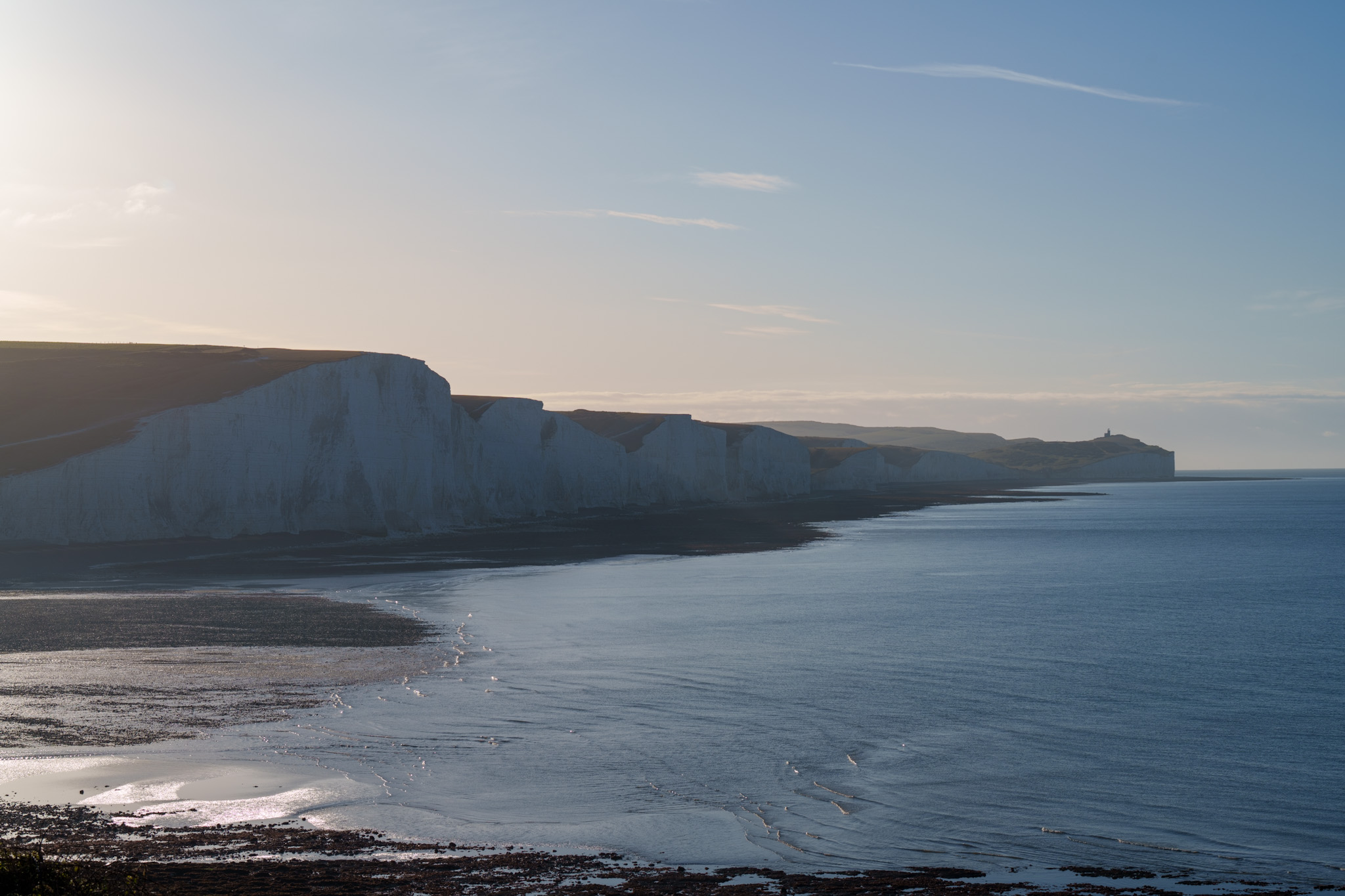
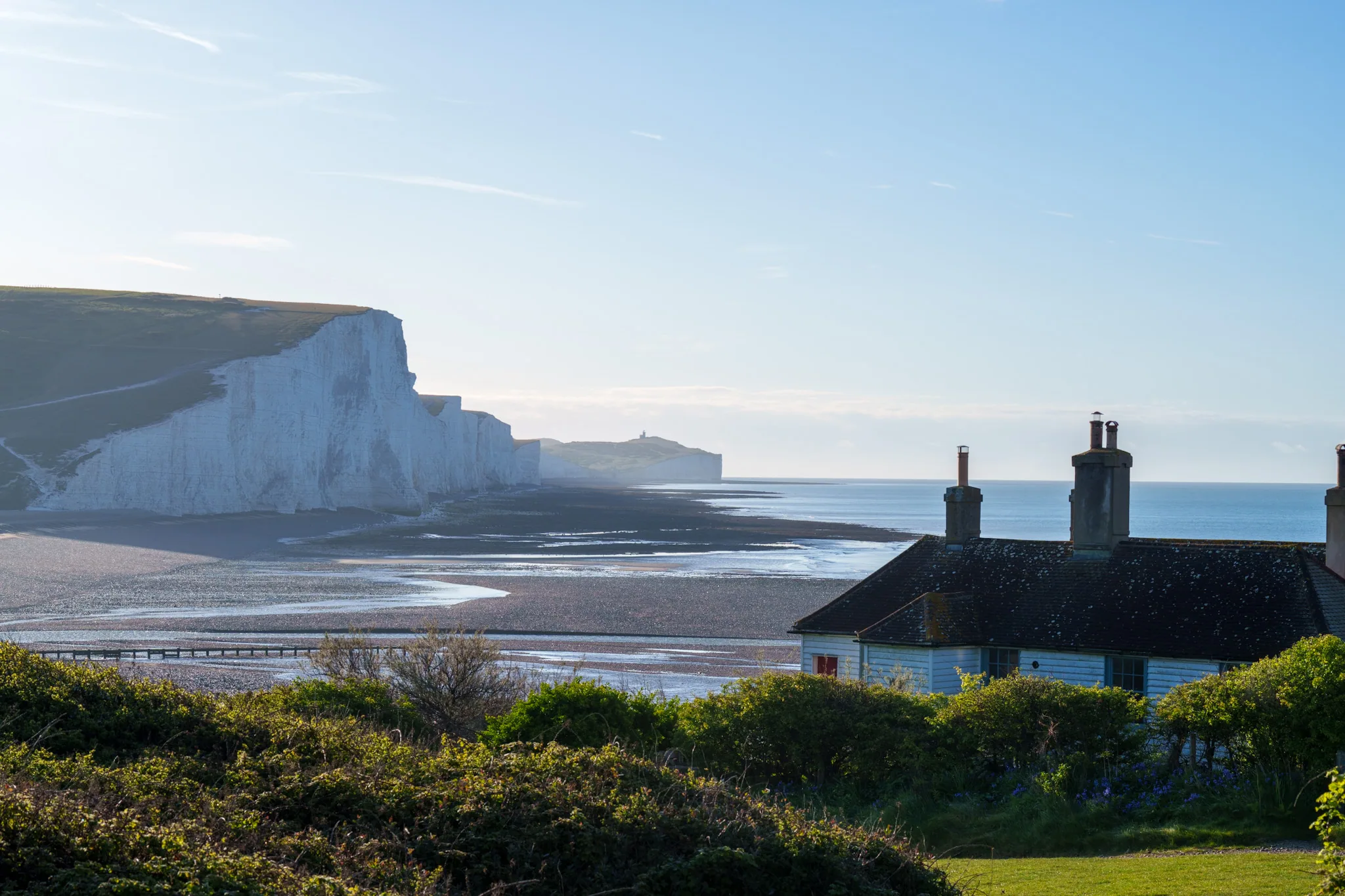
Hope Gap beach is accessible from the clifftop via a steep descent — about 10 minutes of careful scrambling. Once on the beach, the cove is sheltered, dramatic, and genuinely beautiful. The problem is the section of chalk wave-cut platform immediately east of the cove, which connects the beach to the wider shingle section running toward Birling Gap.
At low tide, this chalk platform is exposed: flat, slippery, but walkable. It's roughly 30 metres across and sits about 30–50cm above mean sea level. At mid-tide and above, it disappears completely. The sea moves over it without ceremony. There is no path behind it — the cliff face comes straight down to the platform with no ledge to walk on. When the platform is submerged, the beach at Hope Gap is only accessible via the clifftop descent. It's not an island exactly, but it functions like one during the incoming tide.
The complication is speed. The tidal range here is between 5 and 7 metres depending on the lunar cycle. Water rises at a meaningful rate — roughly 20–30cm per hour on average during the mid-tide period, faster around the halfway point. The platform can go from dry to impassable in about 45 minutes.
The timing rule for Hope Gap beach access: Arrive no later than 90 minutes before low tide. Leave no later than 60 minutes after low tide. This gives you a 2.5-hour window centred on low tide in which the platform is reliably accessible. Outside this window, plan to exit via the clifftop scramble rather than along the base of the cliff.
What We Actually Did
When we saw the water on the platform, we did not attempt to cross it. This is the right call. Wet chalk is extremely slippery — far worse than it looks — and 45 minutes of water moving at that pace means you don't know what depth you're stepping into or how far the movement extends. Knee-deep water moving across a wet chalk surface is genuinely unstable footing. We knew people who had fallen on dry chalk. Wet chalk with water movement is not the place to experiment.
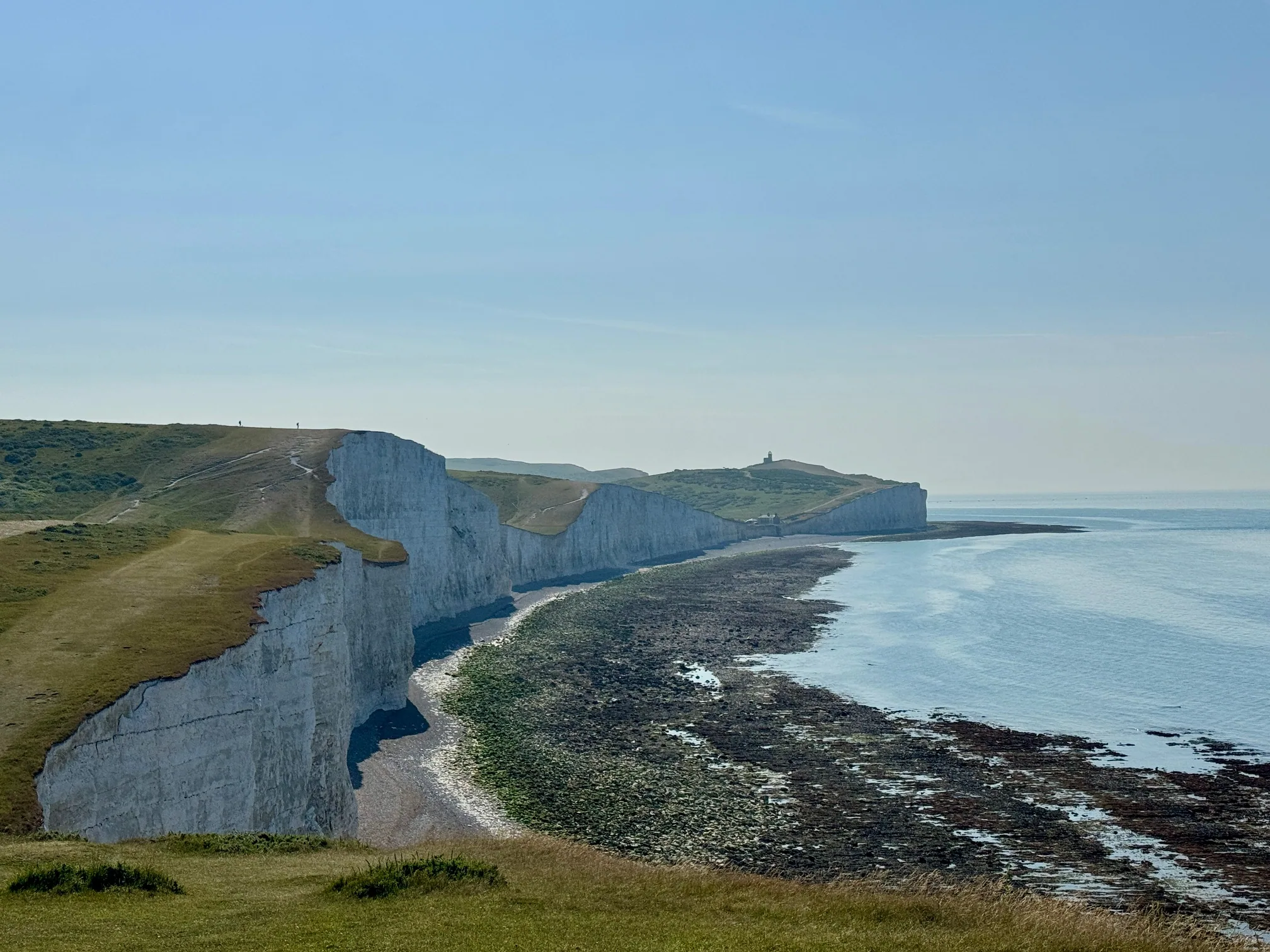
We went back up the clifftop scramble. It took about 12 minutes and required using hands as well as feet. We were wearing the right boots — which helped — and there were no children in the group. If we had been with young children, that descent-turned-ascent would have been significantly more difficult and taken longer.
From the clifftop, we walked back east to Birling Gap along the ridge path. Total addition to the planned walk: about 35 minutes. Not a disaster. A lesson.
The Calculation We Should Have Done
Low tide at 11:20am. We wanted to be on the beach for 45 minutes. That meant arriving at the beach no later than 11:35am (to give us a 45-minute window before the 12:20pm mark where the platform becomes unreliable). We left Birling Gap at 10:40am — 25 minutes before low tide — and took 30 minutes to walk and descend. We arrived at 11:10am, which was fine for arrival. We spent 40 minutes on the beach, leaving at 11:50am — 30 minutes after low tide, well into the incoming tide window.
The fix was trivial: we needed to either arrive 20 minutes earlier or leave 20 minutes sooner. We did neither because we hadn't done the calculation before we left. We'd checked when low tide was, felt like we had plenty of time, and let the beauty of the cove extend the visit past the sensible window.
How to Get the Calculation Right
Step 1: Find the low tide time for Cuckmere Haven or Newhaven (the nearest reference point) on the day of your walk. Use the Met Office app, BBC Weather coastline tides, or Tide Times UK.
Step 2: Work backwards. How long will it take to walk from your start point to Hope Gap beach? Add that to your departure time to find your beach arrival time.
Step 3: Check that your beach arrival is no more than 90 minutes before low tide, and that you plan to leave the beach no more than 60 minutes after low tide.
Step 4: Set a timer when you arrive at the beach. Don't trust yourself to remember — the cove is distracting.
The Seals Change the Calculation
Between September and March, grey seals haul out on the Hope Gap shingle. This is one of the genuinely spectacular wildlife encounters at Seven Sisters — grey seals are large (adults reach 2 metres), unperturbed by human presence at a respectful distance, and spending time near them on a quiet autumn morning is unlike almost any other wildlife experience in East Sussex.
The seals also mean that the temptation to extend your beach visit is highest precisely when the tidal window is most unforgiving in terms of daylight hours. Autumn tides can run fast in the afternoon. The combination of seals to watch and a shortening tidal window is exactly how an innocent beach visit becomes a wet clifftop scramble.
The rule applies more strictly in autumn and winter: set the timer, know when you're leaving, and do not let the seals negotiate it.
What Changes With a Spring vs Neap Tide
Not all tides are equal. Spring tides — which occur around new and full moon, twice monthly — have a significantly larger tidal range than neap tides (which occur at quarter moons). At Hope Gap, a spring tide can mean the chalk platform is submerged far more deeply at high tide and exposed far more widely at low tide.
A spring low tide gives you more beach, exposed for longer, with lower risk of the platform being marginal. A spring high tide means the platform is deeper underwater and the window for beach access may be tighter than the 90/60-minute rule suggests.
Check whether your visit coincides with spring or neap tides. If it's a large spring tide, give yourself extra margin. If it's a gentle neap tide, the window may be slightly more forgiving. The Met Office tidal predictions include tide height in metres — this is more useful than the time alone.
Hope Gap Tidal Checklist
- Check tide height as well as time: A low tide at 0.4m is very different to a low tide at 1.2m. The Met Office app shows both.
- Set a departure timer on the beach: Decide when you're leaving before you descend, and set a phone alarm. Don't negotiate it on the beach.
- The exit scramble is steep: If you have children, older walkers, or anyone with limited mobility, factor in that the clifftop exit takes longer than the descent — allow more time for the return.
- Don't cross a wet chalk platform in any moving water: Even 10cm of water moving across chalk is a falls risk. If it looks marginal, it isn't marginal — it's wet chalk. Go up.
- Boots, not trainers: The clifftop scramble exit requires ankle support and grip. If your footwear wouldn't be comfortable on a steep muddy slope, it's not appropriate for Hope Gap.
- September to March: seals extend dwell time: Budget for longer on the beach in autumn and winter. Then subtract 15 minutes from your planned exit time to account for it.
More Seven Sisters Access Guides
For the Hope Gap location and access route from the clifftop, see our Hope Gap guide. For the returning-from-Cuckmere logistics problem that catches out linear walkers, see our Cuckmere return guide. For Seven Sisters coastal weather patterns that affect beach access, see our weather guide.
Planning the walk itself?
Four routes run along these cliffs and they are not interchangeable — a flat 3km riverside stroll, the classic 6.5km Exceat to Birling Gap crossing, a short Birling Gap loop, and the full 21.9km Seaford to Eastbourne ridge. Compare distance, ascent and difficulty before you pick one.
- Easy Birling Gap Short Loop 2 km 45 min
- Easy Cuckmere Haven Beach 3 km 1 hour
- Moderate Exceat to Birling Gap 6.5 km 2-3 hours
- Challenging Seaford to Eastbourne 21.9 km 6-7 hours
We may earn a small commission on bookings made through this link, at no extra cost to you. More info.
£4.99 · 24-page PDF · Instant download
The Seven Sisters Ultimate Guide
The complete 24-page companion built from first-hand walks — every cliff, all four graded routes, tide windows and a parking strategy. Designed to work offline, right on the cliff top.
- All 7 cliffs — heights, geology & viewpoints
- Four graded walking routes, compared
- Tide windows, light calendar & day plans
- Parking strategy & seasonal planner
Just want the basics? Download the free 2-page walk guide
Want an expert-led Seven Sisters tour?
From guided cliff walks and wildlife safaris to geology hikes and photography tours — explore all our curated experiences with local guides.