Comparisons
Seven Sisters vs the Jurassic Coast
A single dramatic chalk day near London, or a 96-mile World Heritage road trip through deep time
A single dramatic chalk day near London, or a 96-mile World Heritage road trip through deep time
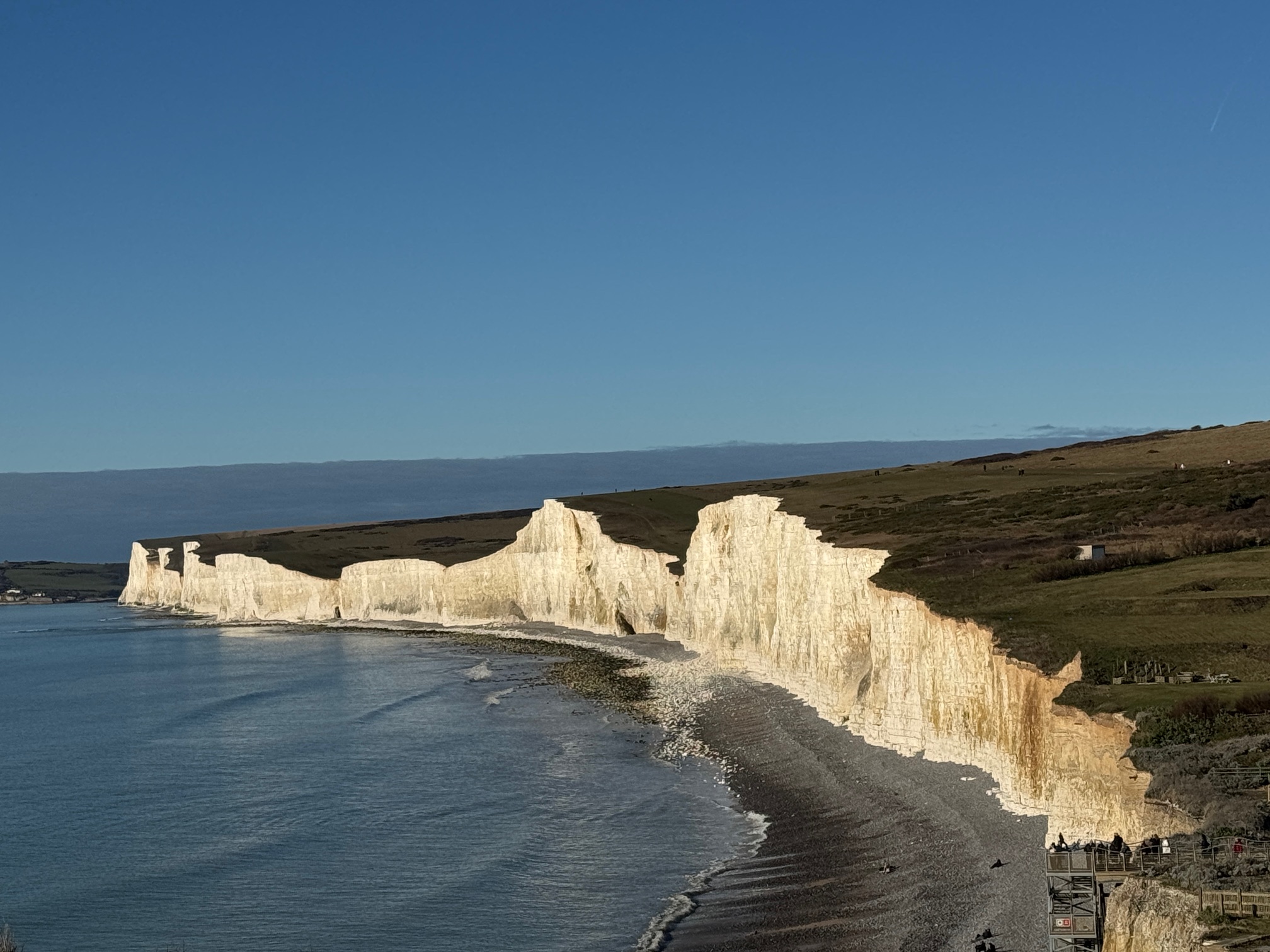
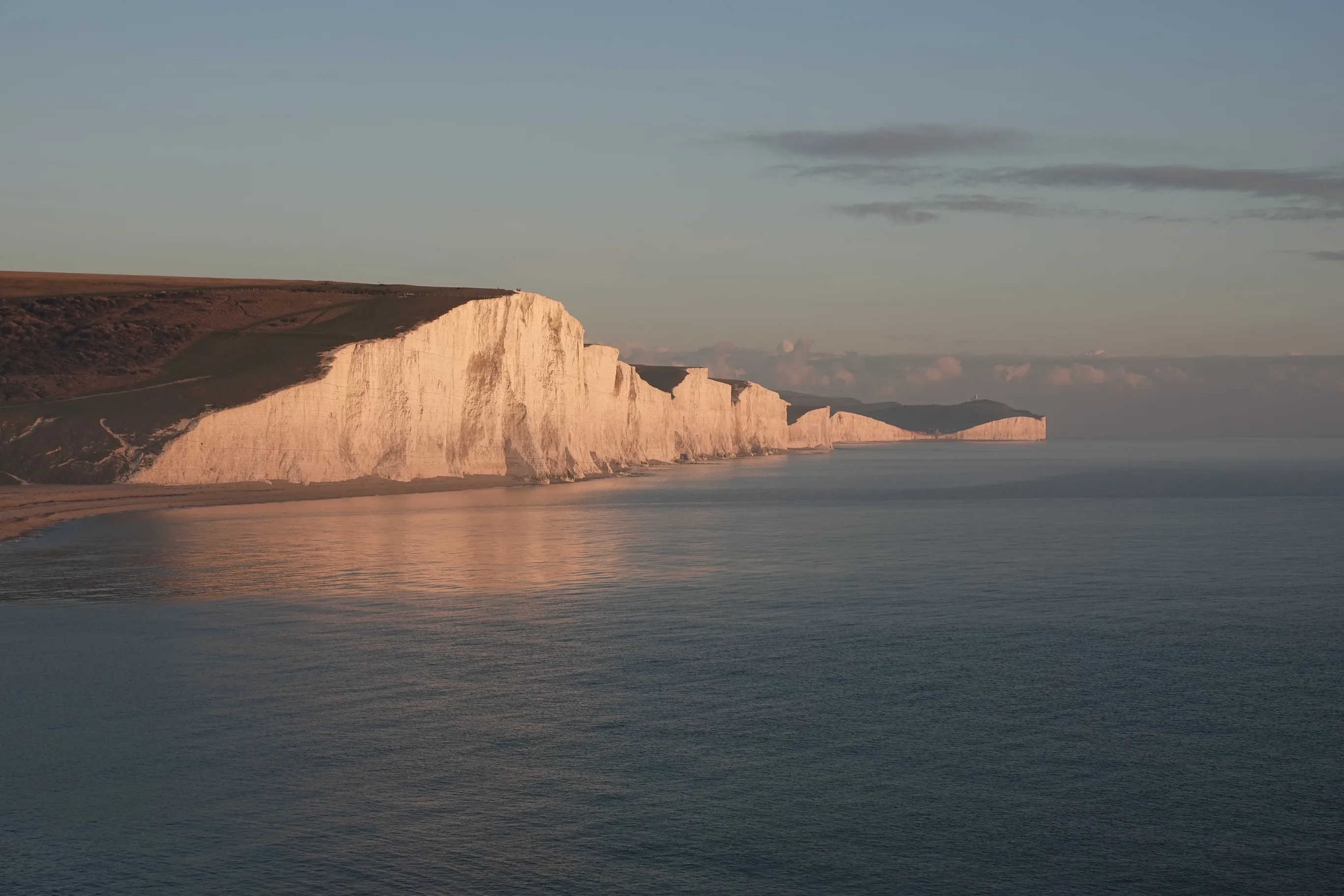
The Seven Sisters and the Jurassic Coast are both renowned coastal destinations in southern England, but they offer entirely different experiences. The Seven Sisters are chalk sea cliffs in East Sussex, within the South Downs National Park on the English Channel coast — a single concentrated stretch, perfect for a half-day or full-day visit about 90 minutes from London. The Jurassic Coast is a 96-mile UNESCO World Heritage Site spanning Dorset and East Devon, where 185 million years of geological history is exposed in cliffs of varied rock, including the famous fossil beaches of Lyme Regis and landmarks such as Durdle Door and Lulworth Cove — three hours or more from London, best explored over several days.
The Seven Sisters are a single, concentrated chalk-cliff day just 90 minutes from London. The Jurassic Coast is a 96-mile Dorset & Devon World Heritage coastline — fossils, Durdle Door, 185 million years of geology — that needs a road trip and ideally an overnight. Short on time and near London? Seven Sisters. Geology obsessive with a few days? Jurassic Coast.
| Seven Sisters | Jurassic Coast | |
|---|---|---|
| Where | East Sussex | Dorset & East Devon |
| Scale | One stretch — a day out | 96 miles — a road trip |
| Geology | White Cretaceous chalk | Mixed rock, ~185M years |
| Star sights | Rolling peaks, Cuckmere, Birling Gap | Durdle Door, Lulworth Cove, Old Harry |
| Fossils | Some in chalk & flint | World-famous (Lyme & Charmouth) |
| From London | ~90 min | ~3 hr+ |
| Time needed | Half to full day | 2+ days ideally |
Good to know: the Jurassic Coast is England’s only natural UNESCO World Heritage Site. The Seven Sisters answer a different brief — the most accessible, photogenic chalk-cliff walk in the south-east. Many people do both, in different trips. For the geology you can see in Sussex, read our nature & geology guide.
Four routes run along these cliffs, from a flat riverside path to a full-day traverse. Compare distance, ascent and difficulty.
Free PDF · Instant download, saved to your phone
Built on first-hand walks from Seaford to Eastbourne — the named cliffs, route waypoints with distances, tide windows and emergency access points. Everything you need to set off with confidence.
Planning the whole day? Get the complete 24-page Ultimate Guide — £4.99
Stay up to date with seasonal guides, crowd forecasts, and local tips — direct to your inbox.
No spam. Only coastal inspiration and timing tips — unsubscribe any time.