Cuckmere Haven in Autumn: Wildlife, Walks and the Estuary at Its Best
Cuckmere Haven in Autumn
Grey seals, migrant waders, and the estuary at its most dramatic — September to November
Most people discover Cuckmere Haven in summer, when the beach is the point and the river meanders make the photographs. Fewer people know it in autumn, when the estuary becomes one of the best wildlife-watching sites on the Sussex coast. The summer crowds have gone. The habitat is at its most productive. Grey seals begin to appear on the beach. Wading birds that have been absent all summer move through in numbers. The valley itself, framed by chalk downland, turns a spectrum of tawny and gold. This is Cuckmere at its most interesting.
Grey Seals at Cuckmere Haven
Atlantic grey seals (Halichoerus grypus) haul out on the beach at Cuckmere Haven in autumn and winter, typically from September onwards. They are most commonly seen resting on the shingle bank at the river mouth, or in the sea just offshore. Numbers vary year to year — single animals and small groups of two or three are typical, occasionally more.
Seals on the beach appear motionless and may seem in distress. This is normal behaviour — hauling out to rest is essential for seals. Do not approach, attempt to return them to the sea, or allow dogs near them. The Marine Conservation Society guidelines recommend staying at least 100 metres from a resting seal. Binoculars are the correct tool here. View from the valley path bank or the top of the beach ridge, well back from the animal.
The best time to look is on a falling tide, when the beach at the river mouth is most exposed. Early morning visits before the main footfall of the day disturbs the shoreline produce the most reliable sightings.
Waders and Estuary Birds
The Cuckmere estuary at low tide exposes mudflats along the river channel, which attract wading birds from August onwards. September and October are the richest months for variety:
- Dunlin: Small, fast, buff-brown waders that feed in flocks along the mud edge. The most reliably present wader in autumn. Look for their slightly drooped bill tip and hunched feeding posture.
- Ringed Plover: Compact, upright, with a distinctive black breast-band. Runs rapidly between food items rather than probing steadily like dunlin. Often found on the gravelly sections of the beach near the river mouth.
- Grey Plover: Larger than ringed plover, with a grey-spangled back in autumn plumage. More solitary. The black patch in the armpit — visible in flight — is the clearest identification feature.
- Common Sandpiper: Small, with a constant bobbing motion when standing. Flies low and fast over the water with rapid, shallow wingbeats. Present from July into October.
- Redshank: Medium-sized, red-legged, with a distinctive loud alarm call. Breeds in small numbers in the valley and remains through winter.
Autumn Migration Over the Estuary
The Cuckmere valley acts as a natural corridor for migrating birds moving south. Watching from the valley bottom or the cliff above the estuary on a clear September morning, you can see:
- Swallows: The swallow departure reaches its peak in September. On calm mornings they gather in large numbers over the river, hawking insects, before moving south in loose streams. Some mornings hundreds are visible from a single viewpoint.
- Sand martins: Depart ahead of swallows, peaking in August–early September. Often roost in the reedbeds at the estuary edge.
- Hobbies: These small falcons follow the hirundine migration south, hunting swallows and dragonflies. September is the peak month for hobbies at Cuckmere.
- Raptors: Marsh harriers pass through the valley in autumn, sometimes hunting the reedbeds. Ospreys are occasionally seen over the estuary on southward migration in September.
The bird migration guide gives the full month-by-month picture for the wider Seven Sisters area.
The Valley in Autumn Light
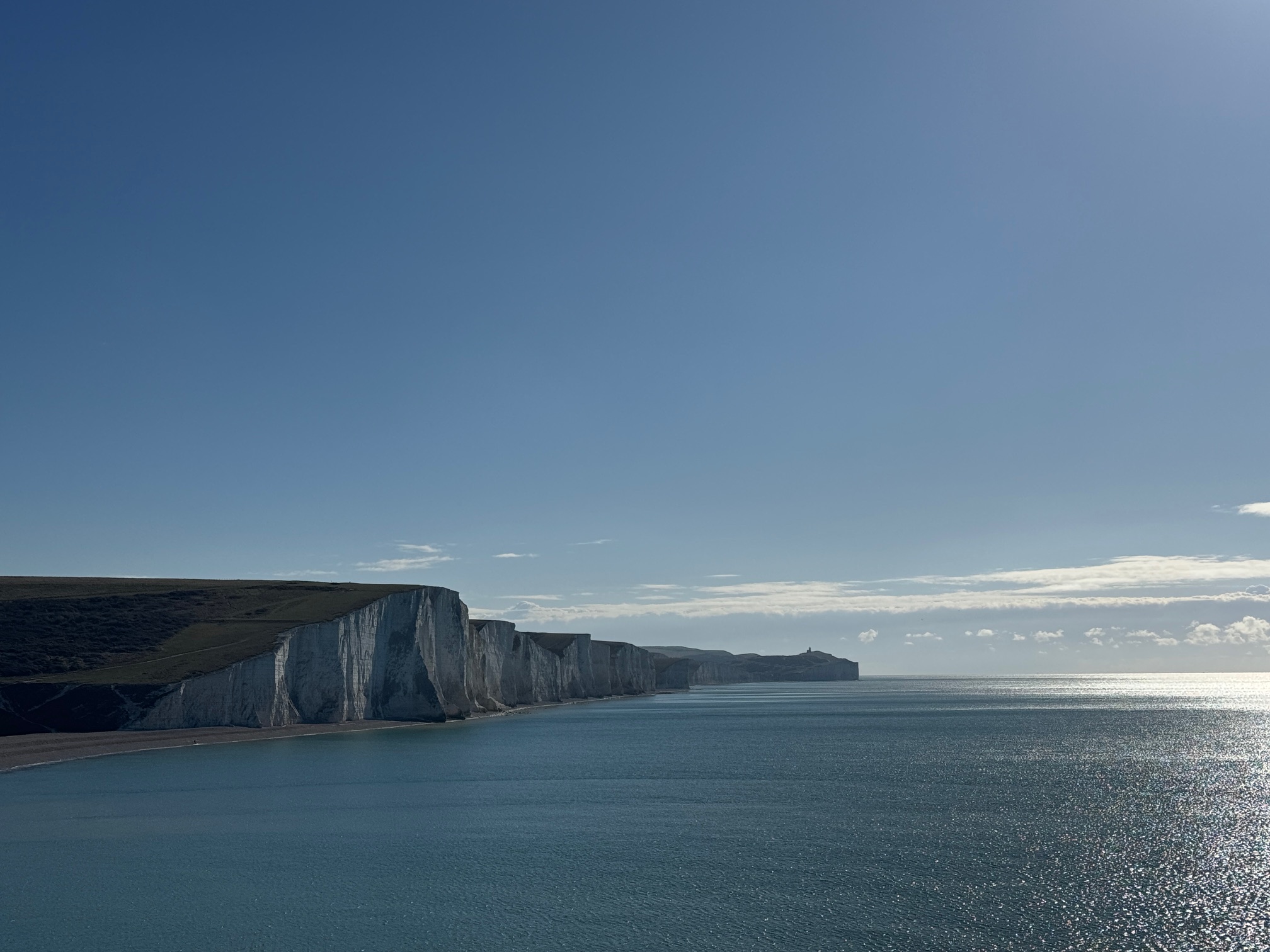
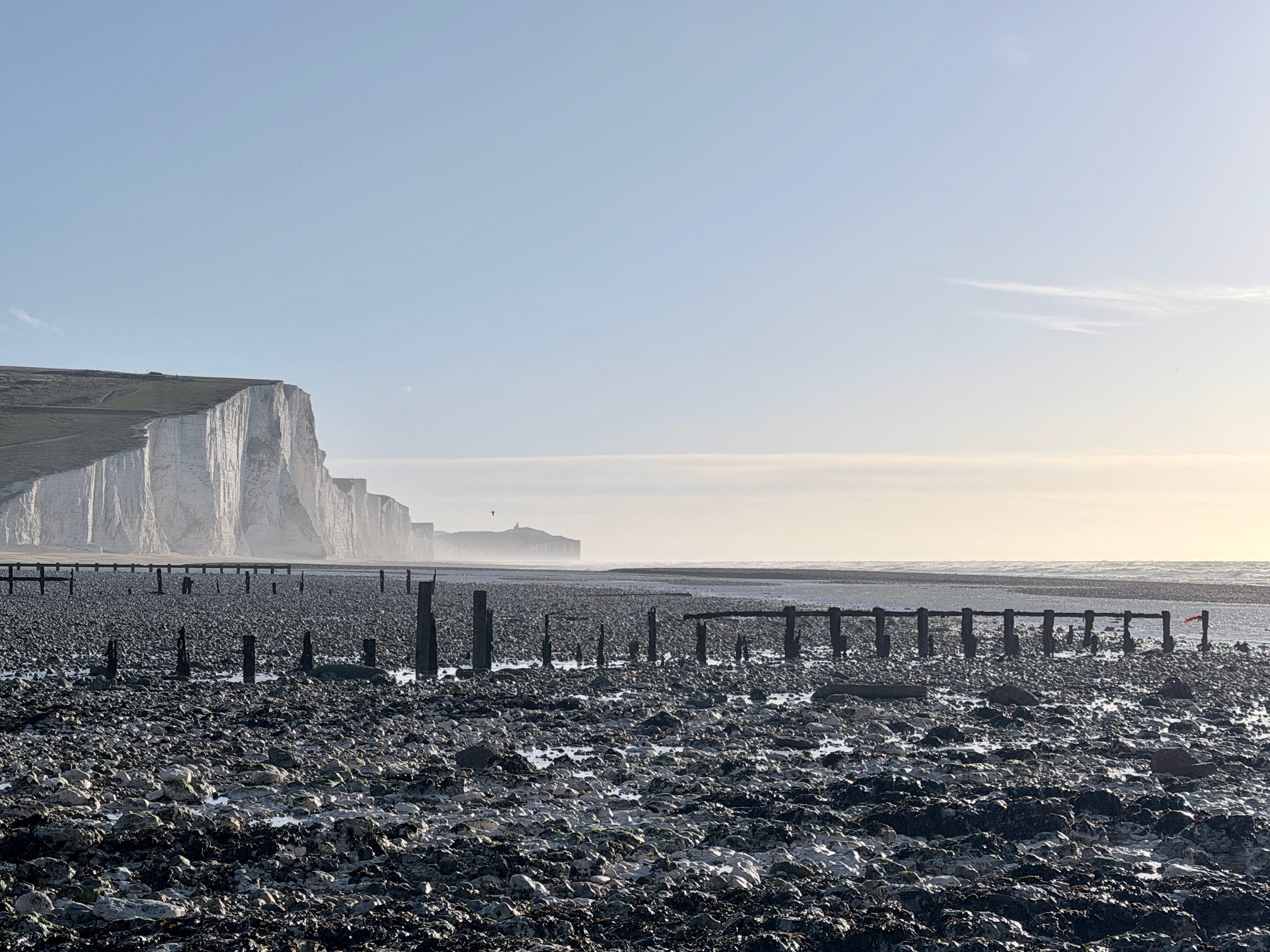
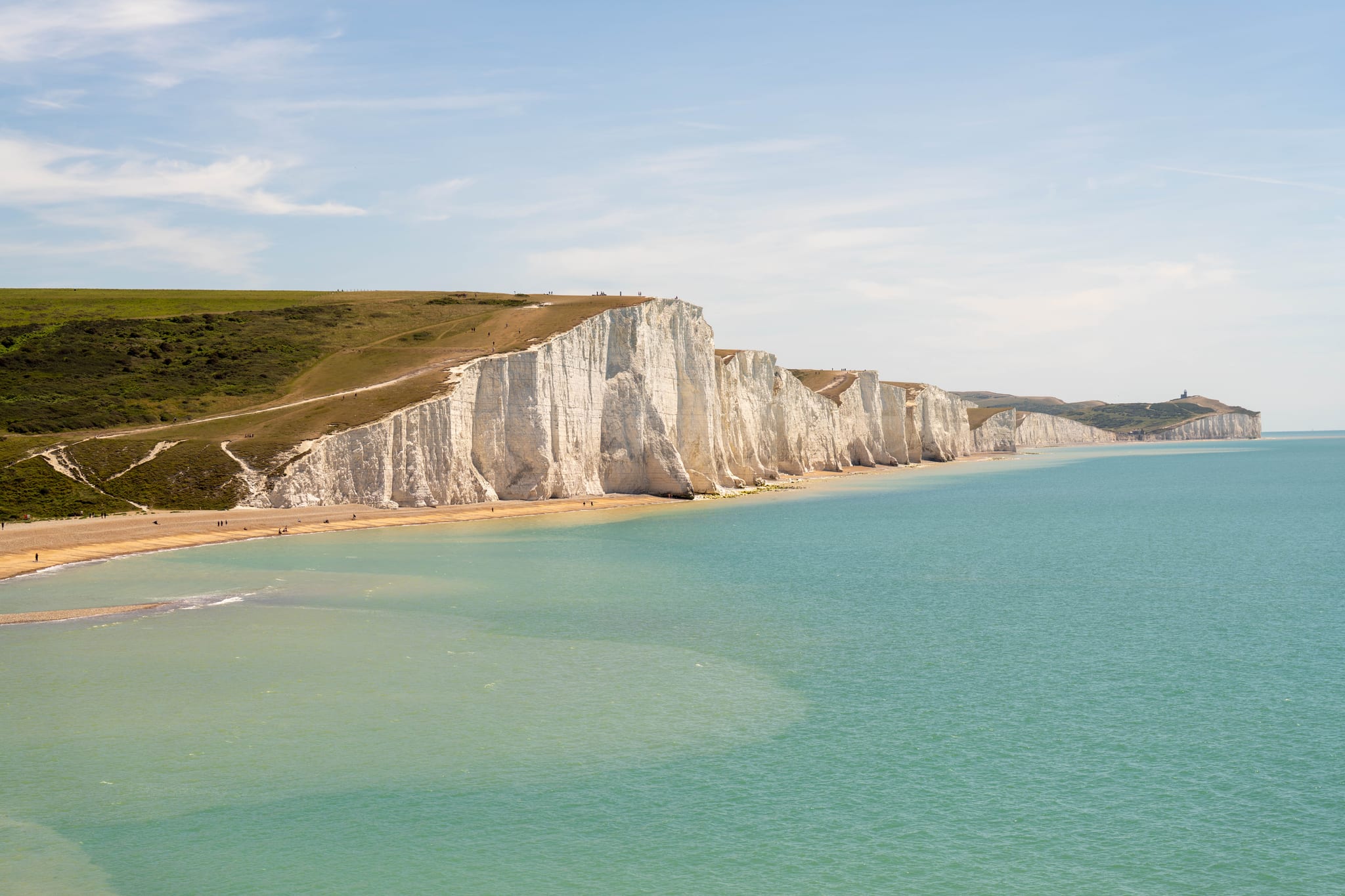
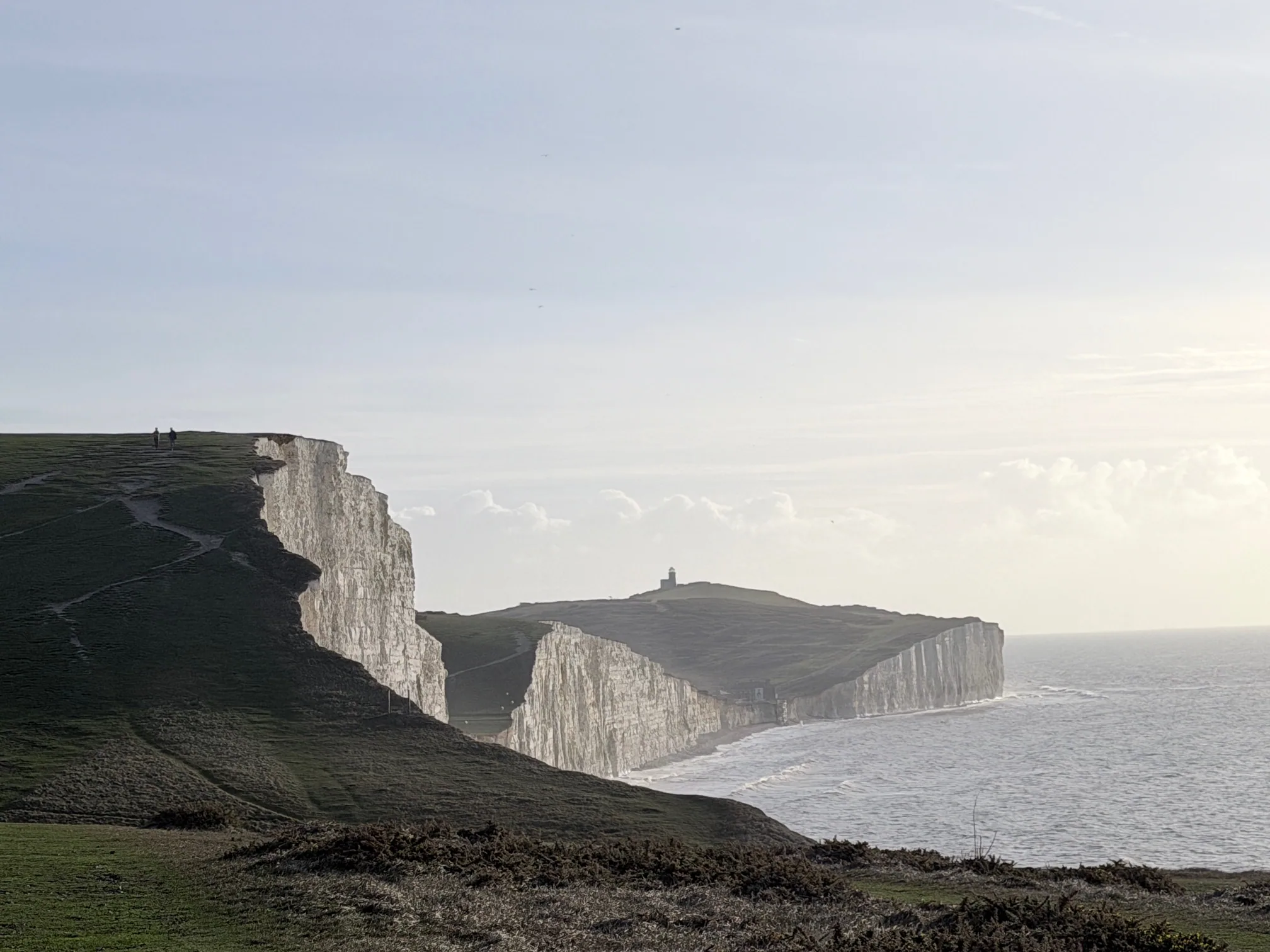
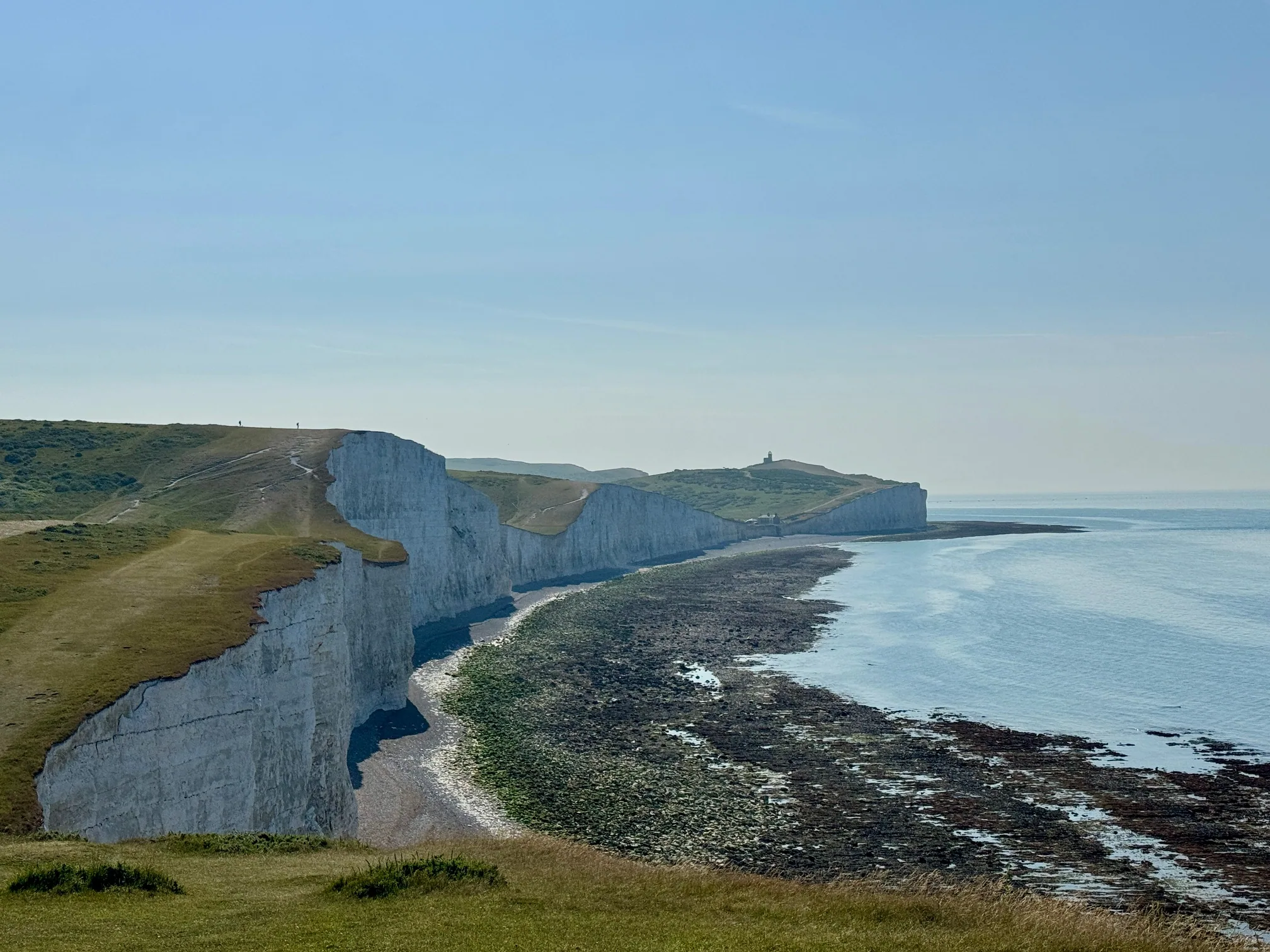
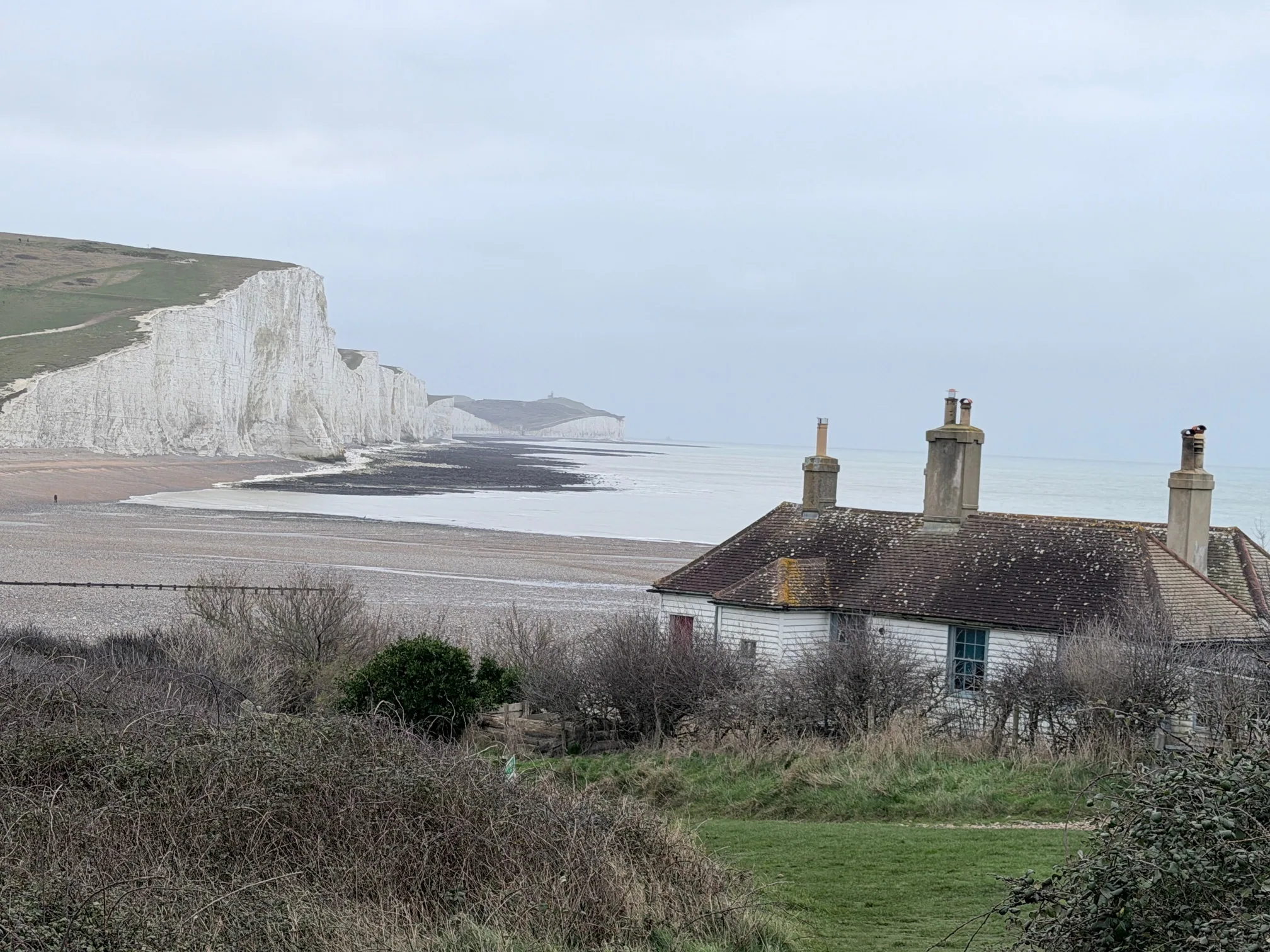
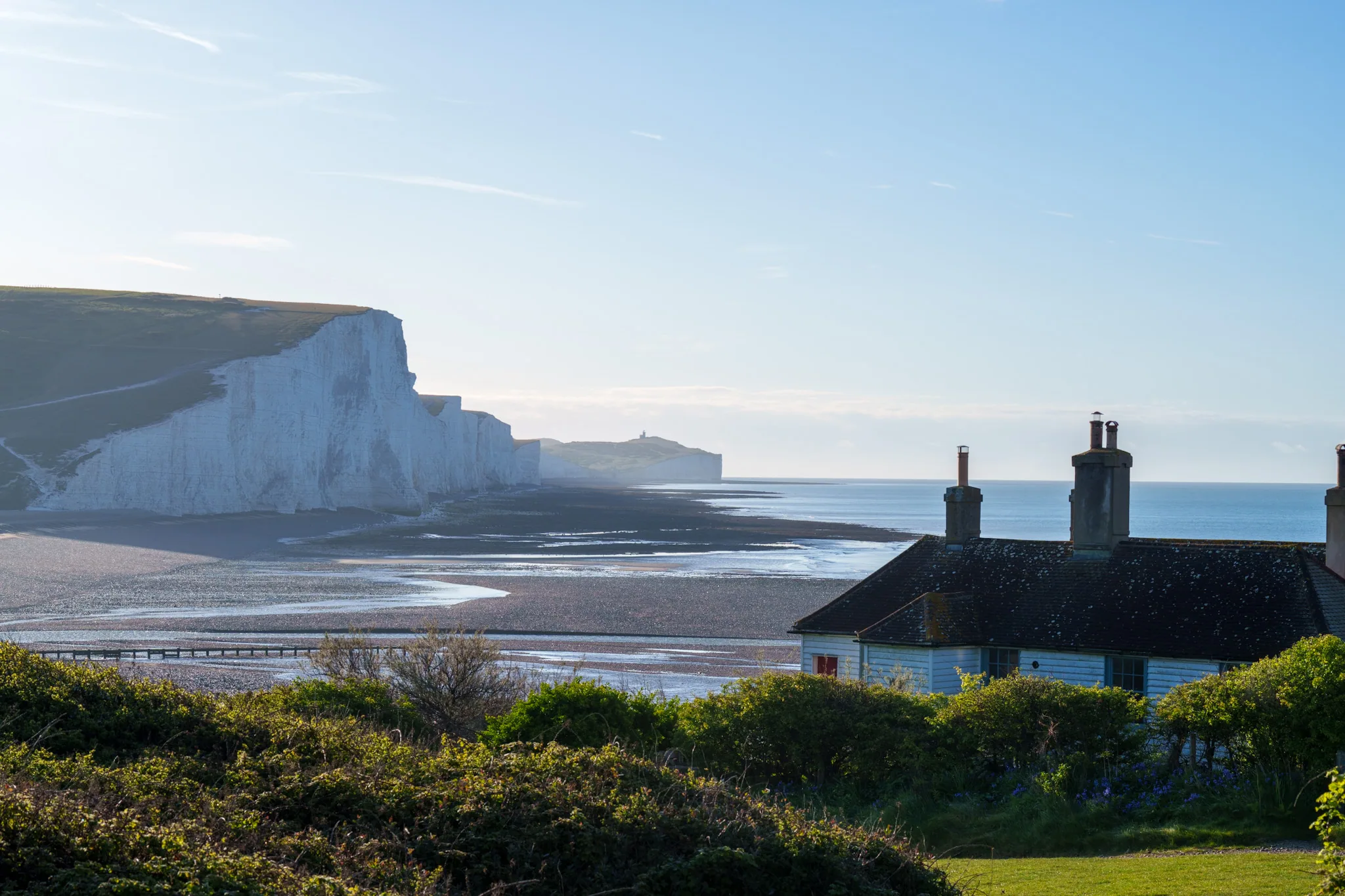
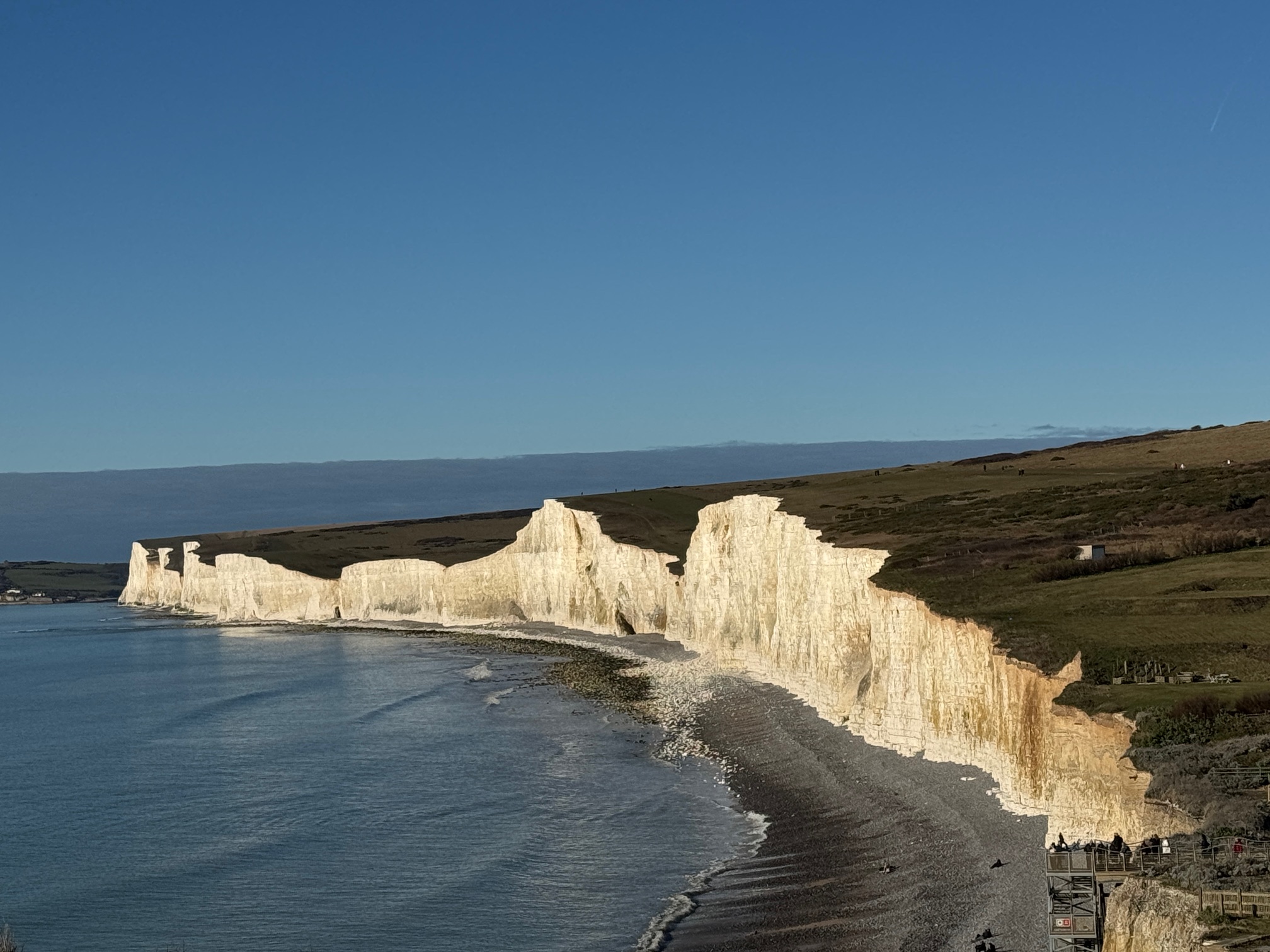
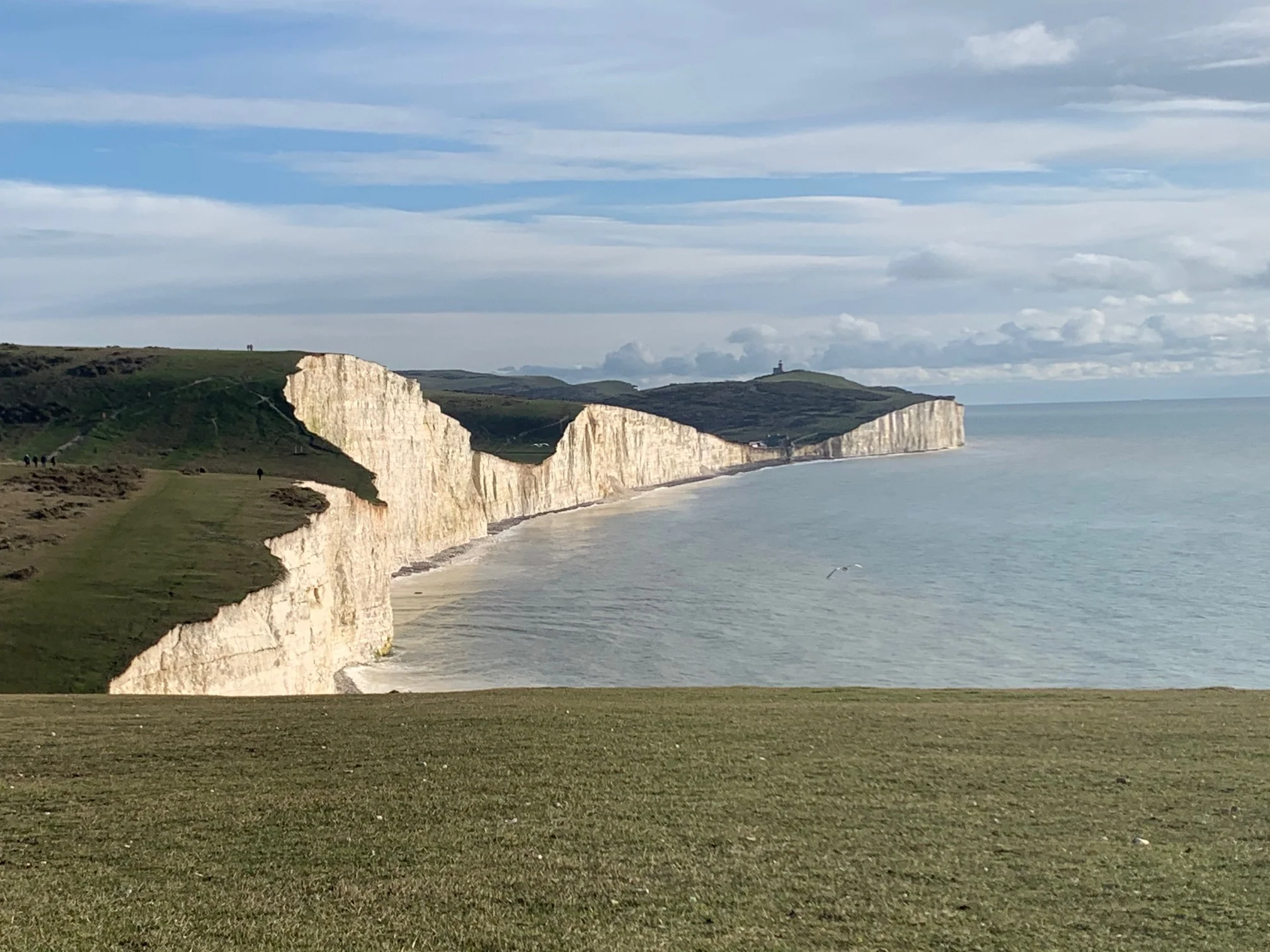
The Seven Sisters chalk ridge catches the low autumn sun at a flatter angle than in summer, throwing the cliff face into relief. From the Cuckmere Haven beach looking north-east along the meanders, the water acts as a mirror for the chalk and the sky — the combination of white cliffs, golden valley grassland, and still water in early October morning light is among the finest landscape views in southern England.
The light is best in the two hours after sunrise and the hour before sunset. In October, sunrise is around 7–7:30am. An early start from Exceat, walking east to the beach along the river, positions you at the viewpoint as the light improves. The return journey, north along the west bank, catches the valley in the full warmth of late morning.
Autumn Walking Routes
Exceat Circular (4.5 miles)
The standard circuit: park at Exceat (Seven Sisters Country Park), cross the river at Exceat Bridge (the A259 road bridge), then walk south along the west bank of the Cuckmere to the beach, and return north along the east bank to Exceat. Note: there is no crossing at the river mouth — the only river crossing is Exceat Bridge at the north end. The west bank path offers the best views of the river meanders and is consistently less busy than the east. Allow 1.5 to 2 hours. The path is largely flat and suitable for all abilities. The Cuckmere circular walk guide covers this route in full.
Exceat to Hope Gap (7 miles, linear)
For a longer day, follow the coast west from Cuckmere Haven beach to Hope Gap. The path crosses the beach and then climbs via steps onto the Seven Sisters coastal path at Haven Brow. From here, the clifftop path runs west to Hope Gap, from where you can descend to the beach below before returning by bus or pre-arranged transport. In autumn, this route gives you migrant-watching at the cliff edge, views back along the full line of the Sisters, and potential seal sightings from the clifftop above the river mouth.
Photography in Autumn at Cuckmere
The combination of low light, reflective water, and wildlife concentration makes Cuckmere Haven one of the most rewarding photography locations in East Sussex in autumn:
- Light direction: Morning light illuminates the west bank and cliff face from behind your position if you are on the east bank. Afternoon light reverses this. Plan accordingly.
- Tides: The estuary is most photogenic at low tide, when the mud is exposed and the meanders are most visible. The beach is most productive for seal and wader photography on a falling tide.
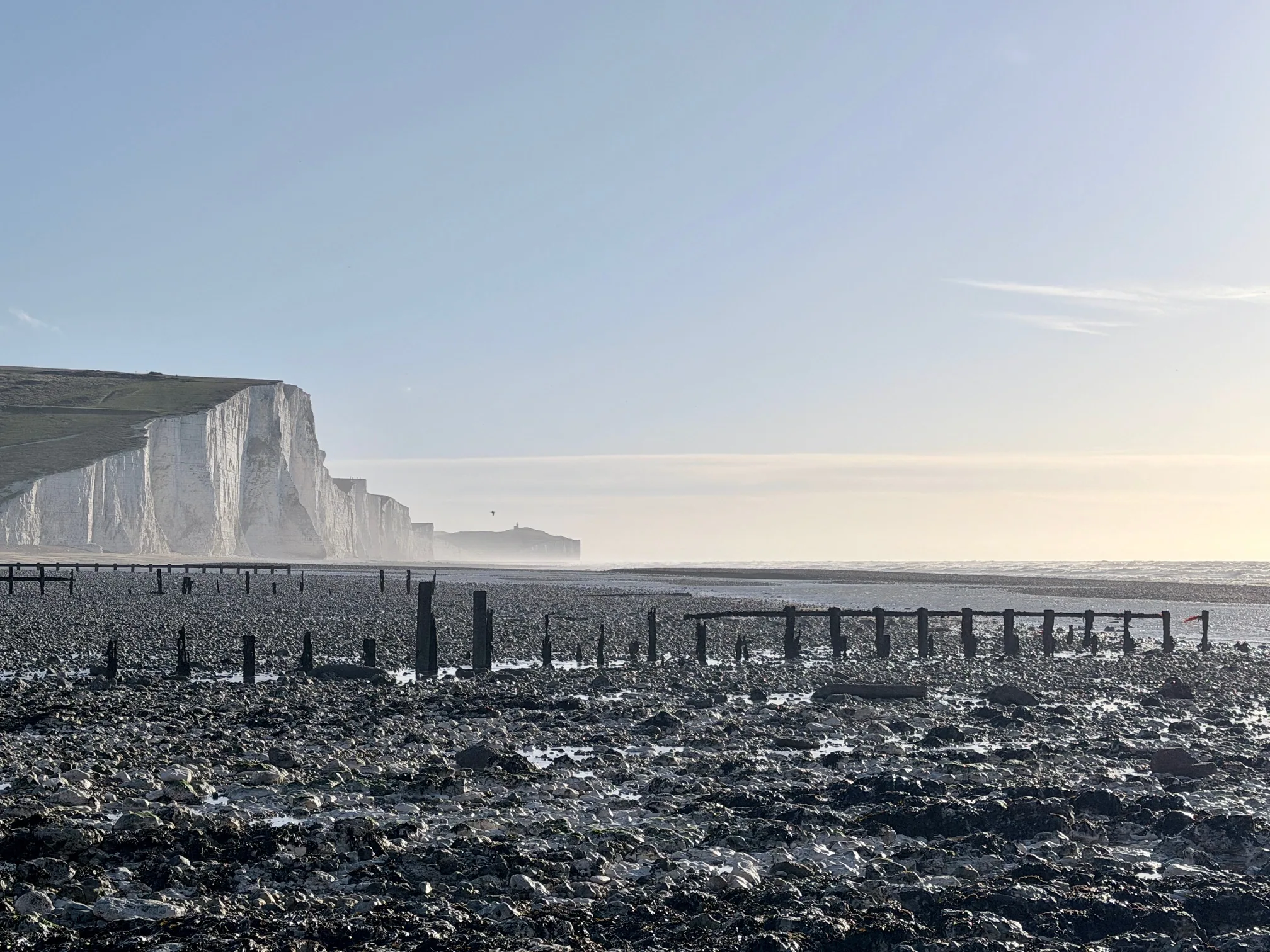
- Mist: Autumn sea mist is common at Cuckmere, particularly in September. On mist mornings, the river meanders can produce extraordinary atmospheric images. Mist usually lifts by late morning.
Guided Autumn Walks at Cuckmere Haven
Wildlife-focused guided walks through the Cuckmere valley in autumn include estuary wader identification, seal-watching guidance, and the full migration picture from an expert who knows the site. View available autumn experiences.
Practical Information
Parking: Exceat (Seven Sisters Country Park car park) is the main access point. In autumn, parking is rarely a problem except on fine October weekend afternoons. By bus: The 12X Eastbourne–Seaford service stops at Exceat. Check the transport guide for connections from London and Brighton. Facilities: The visitor centre at Exceat is open at weekends in autumn. The Cuckmere Inn opposite is open daily and serves food.
For the broader autumn picture — colour, timing, and the chalk ridge itself — the autumn colours guide is the companion piece to this post.
Planning the walk itself?
Four routes run along these cliffs and they are not interchangeable — a flat 3km riverside stroll, the classic 6.5km Exceat to Birling Gap crossing, a short Birling Gap loop, and the full 21.9km Seaford to Eastbourne ridge. Compare distance, ascent and difficulty before you pick one.
- Easy Birling Gap Short Loop 2 km 45 min
- Easy Cuckmere Haven Beach 3 km 1 hour
- Moderate Exceat to Birling Gap 6.5 km 2-3 hours
- Challenging Seaford to Eastbourne 21.9 km 6-7 hours
We may earn a small commission on bookings made through this link, at no extra cost to you. More info.
£4.99 · 24-page PDF · Instant download
The Seven Sisters Ultimate Guide
The complete 24-page companion built from first-hand walks — every cliff, all four graded routes, tide windows and a parking strategy. Designed to work offline, right on the cliff top.
- All 7 cliffs — heights, geology & viewpoints
- Four graded walking routes, compared
- Tide windows, light calendar & day plans
- Parking strategy & seasonal planner
Just want the basics? Download the free 2-page walk guide
Want an expert-led Seven Sisters tour?
From guided cliff walks and wildlife safaris to geology hikes and photography tours — explore all our curated experiences with local guides.