Butterflies of the Seven Sisters and Cuckmere Valley: A Walker's Guide
Butterflies of the Seven Sisters
Electric-blue chalk specialists, chequerboard Marbled Whites, and migrants fresh in off the Channel — where and when to find them
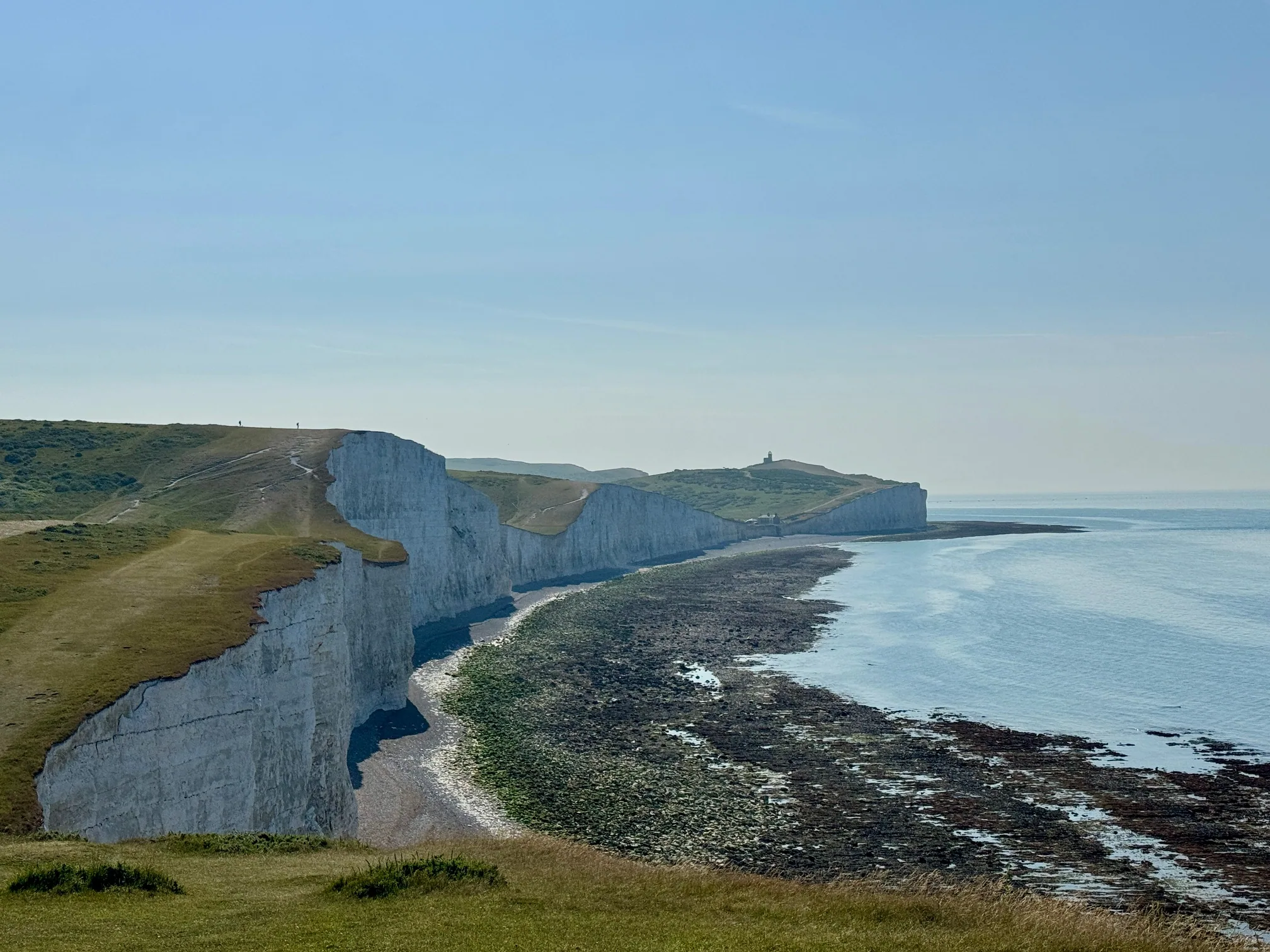
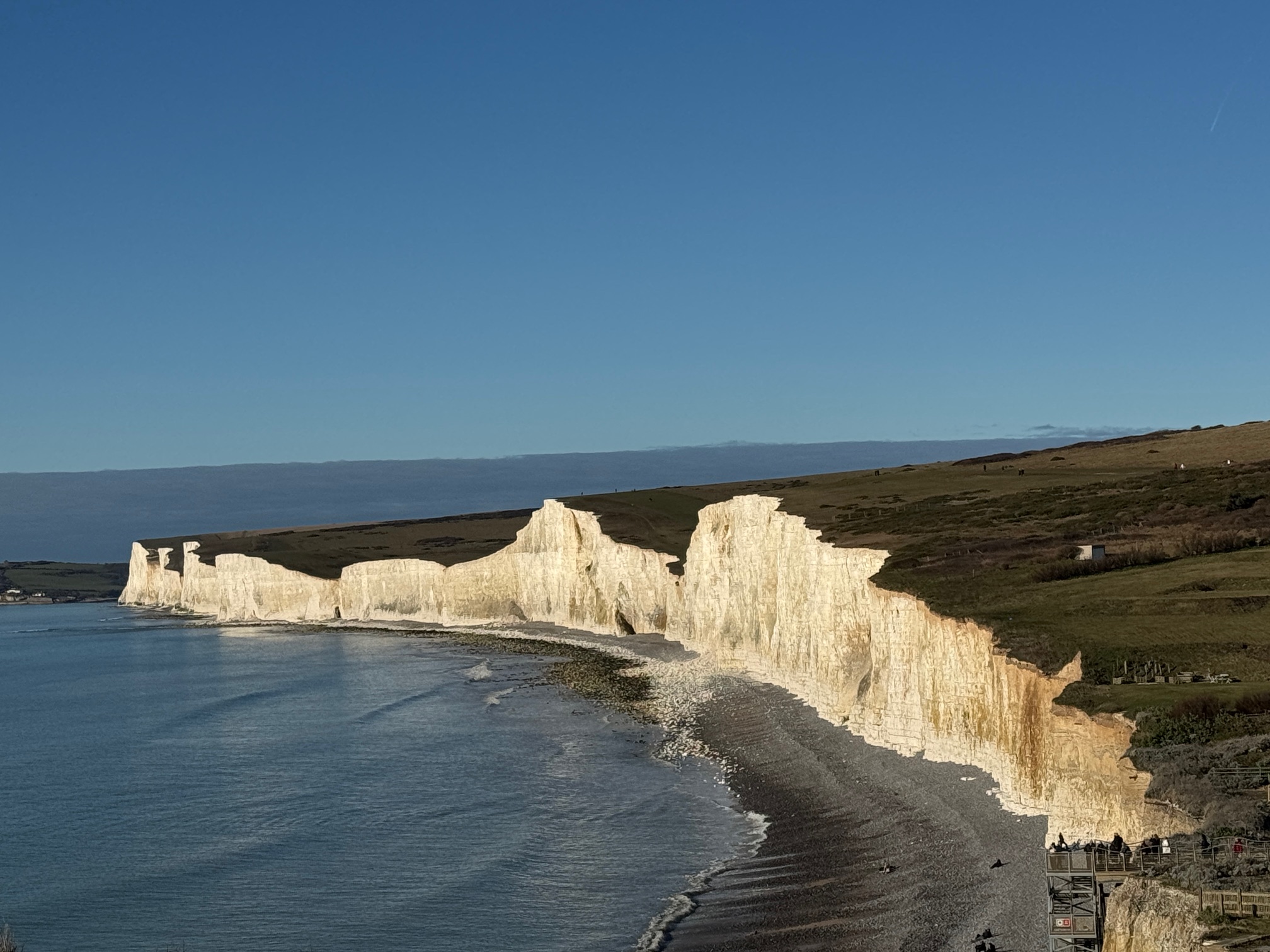
The chalk grassland on top of the Seven Sisters is one of the best butterfly habitats in southern England. Thin, nutrient-poor soil over chalk produces a short, flower-rich turf that supports species found almost nowhere else in Britain — including the Adonis Blue, whose males are a blue so intense it looks artificial the first time you see one. Add the sheltered valley floor of the Cuckmere, the scrub at Hope Gap, and the woodland edges of Friston Forest, and a single day's walking here can produce well over a dozen butterfly species without any special effort. This guide covers what you can see, where to look, and which months deliver the most.
Why the Chalk Matters
Butterflies are fussy. Most of the special species here lay their eggs on a single plant, and those plants grow only in old, unfertilised chalk turf. Horseshoe vetch — the small yellow pea-flower that spreads across the clifftop in early summer — is the sole food plant for Adonis Blue caterpillars, and Chalkhill Blue caterpillars depend on it too. Kidney vetch feeds the Small Blue. Common rock-rose feeds the Brown Argus. Most of England's flower-rich chalk grassland has been lost to ploughing and fertiliser since the mid-twentieth century, which is why the surviving fragments — and the Seven Sisters clifftop is a large, well-grazed one — matter so much. The chalk flora guide covers the plants that make it all work.
The Chalk Specialists
Adonis Blue
The star of the site. Males are a brilliant, almost electric sky-blue with fine black-and-white chequered wing fringes; females are chocolate brown and much harder to spot. There are two broods: the first flies from late May into June, and a second — the individuals smaller but often more richly coloured — from August into September. Look on warm, south-facing slopes where horseshoe vetch grows and the turf is short. The Adonis Blue is one of Britain's rarest and most beautiful butterflies, and the population here is critically dependent on that one plant.
Chalkhill Blue
Paler than the Adonis — the males a silvery, milky blue — and at its best later in the season. Chalkhill Blues emerge from mid-July, and by August they are at peak numbers, with males forming loose congregations on the clifftop downland between Birling Gap and Belle Tout Lighthouse. On a still August morning you can watch dozens drifting low over the turf in the same field of view. Like the Adonis, its caterpillars feed on horseshoe vetch.
Small Blue
Britain's smallest butterfly, with a wingspan barely bigger than a thumbnail — dusky dark above rather than blue, and easy to walk straight past. It flies mainly in May and June, with a partial second brood in late summer, and sticks to sheltered hollows and banks where kidney vetch grows. The dry valleys between the Sisters and the sheltered slopes above Cuckmere Haven are the places to check.
Brown Argus
Looks like a small female Common Blue — brown above with orange spots along the wing edges — but it is a chalk grassland species in its own right, breeding on common rock-rose. Two broods, May–June and July–August. Close views of the underside pattern separate it from the blues; watching where it settles and re-settles low over short turf is usually the first clue.
Silver-spotted Skipper
The latest and most easily missed of the specialists: small, fast, moss-green and orange, with silver-white spots on the underwings. It flies from late July through August into early September, and only on hot afternoons, keeping to the steepest, shortest-cropped south-facing chalk slopes. You have to go looking for this one — but late August on a steep sunny slope, it is genuinely findable here.
The Grassland Regulars
- Common Blue: The blue you will see most often, from May right through to September, anywhere bird's-foot trefoil grows — which is most of the clifftop and the valley. Males are violet-blue; the Adonis is noticeably more electric when you finally see the two side by side.
- Marbled White: Unmistakable — a black-and-white chequerboard drifting lazily over longer grass from late June to mid-August. It loves knapweed and scabious flowers, and the field edges along the Cuckmere valley sides can hold dozens.
- Meadow Brown: The abundant default brown butterfly of the whole area, flying June to September even in dull weather when everything else has gone quiet.
- Gatekeeper: Smaller and brighter orange than the Meadow Brown, appearing from mid-July around scrub, hedges and bramble patches — the scrubby path edges above Cuckmere Haven are typical spots.
- Small Heath: Small, sandy-orange, always settling with wings closed. Easy to overlook, present on the short turf for most of the season.
- Dark Green Fritillary: The big surprise for many walkers — a large, powerful orange fritillary that tears across the open downland from mid-June to August. Its caterpillars feed on violets hidden in the turf. Usually seen in fast flight; when one stops on a thistle head, take the chance to look.
- Wall: An orange-brown basking butterfly that has declined badly inland but holds on along this coast. Look for it sunning itself on bare chalk, path edges and cliff-fence posts, in spring and again in late summer.
- Small and Large Skippers: Little golden-orange moth-like butterflies buzzing through the longer grass from June to August.
Spring Openers
Before the summer show starts, three smaller species reward an April–June visit. The Dingy Skipper and Grizzled Skipper — both small, fast and easily dismissed as moths — fly over short turf and bare ground from late April to June. The Green Hairstreak, Britain's only green butterfly, perches on scrub edges around Hope Gap and the valley sides in April and May; it always sits with wings closed, so the green underside is what you see. Add spring Brimstones (sulphur-yellow, often the first butterfly of the year, wandering up from the Friston Forest edges), Peacocks, Small Tortoiseshells and Commas out of hibernation along the valley floor, and April here is far from empty.
Migrants off the Sea
The Seven Sisters face the Channel, so this stretch of coast is often the first landfall for butterflies that migrate to Britain from the continent:
- Painted Lady: Arrives from late May onwards in most years; in big invasion years they come through the Cuckmere gap in a steady, purposeful stream, all flying north. Numbers vary enormously from year to year.
- Red Admiral: Present from spring to late autumn, and one of the last butterflies flying in November. Common along the valley and around Birling Gap.
- Clouded Yellow: The classic chalk-coast migrant — a deep mustard-yellow butterfly powering low over the clifftop, rarely stopping. Late summer is best, and warm south-facing slopes here are exactly the sort of place they turn up.
Where to Look: The Five Best Areas
1. Birling Gap to Belle Tout
The single most reliable stretch, and the one already flagged in our summer guide: flower-rich downland with plenty of horseshoe vetch, at its best for Chalkhill Blue in August and good for Adonis Blue, Common Blue and Dark Green Fritillary through the summer.
2. The Dry Valleys Between the Sisters
The dips between the seven summits are the secret weapon on windy days. Butterflies abandon the exposed clifftop in anything above a stiff breeze, but the valley bottoms stay sheltered, and the butterflies concentrate there. If the clifftop seems dead, drop thirty metres into a bottom and it often comes alive.
3. Hope Gap and Seaford Head
The scrub-and-grassland mosaic on the west side of the Cuckmere is excellent for Green Hairstreak in spring, Wall along the path edges, and migrants arriving off the sea. The Hope Gap guide covers access; combine it with the Seaford start for a full butterfly day.
4. The Cuckmere Valley Floor
Not chalk-specialist territory, but the riverside grassland and scrub between Exceat and the beach hold Marbled Whites, Meadow Browns, Gatekeepers, whites and the hibernating species in good numbers, and the flat paths make it the easiest butterfly walking on the site. The Cuckmere circular (about 4.5 miles) samples both banks.
5. Friston Forest Edges
Where the downland meets the trees, Speckled Woods hold territories in the dappled shade, and Brimstones and Ringlets work the sunny rides in summer. The Friston Forest walk is also the sensible fallback on days too windy for the clifftop entirely.
Month by Month
| Month | Highlights |
|---|---|
| April | Brimstone, Peacock, Small Tortoiseshell, Comma; first Green Hairstreaks and Grizzled/Dingy Skippers late in the month |
| May | Small Blue and Brown Argus begin; Green Hairstreak peak; Common Blues emerge; first Adonis Blues late in the month |
| June | Adonis Blue first brood; Dark Green Fritillary and Marbled White emerge; Small and Large Skippers |
| July | Peak variety: Marbled White at its best, Chalkhill Blues emerging from mid-month, Gatekeepers appear, Dark Green Fritillary still flying |
| August | Chalkhill Blue peak between Birling Gap and Belle Tout; Adonis Blue second brood begins; Silver-spotted Skipper on hot afternoons; Clouded Yellow chances |
| September | Adonis Blue second brood continues; late Silver-spotted Skippers; Red Admirals and other migrants along the coast |
How to Actually See Them
- Pick the weather, not the date: Butterflies need sunshine, warmth (roughly 15°C and above) and light wind. A sunny, calm day in early July beats a grey day in "peak" August every time.
- Time of day: Roughly 10am to 4pm is the main activity window. Early morning is for photographers — butterflies roosting on grass heads before they warm up are the easiest to approach.
- Work with the wind: This is a windy clifftop. On breezy days, ignore the exposed top and search the sheltered dry valleys and the lee side of scrub. This one habit doubles what you will see.
- Walk slowly and look down: The specialists — Small Blue, Brown Argus, Silver-spotted Skipper — fly low and settle often. A steady amble finds far more than a route march.
- Stay on the paths, take nothing: The clifftop grassland is protected habitat within the South Downs National Park, grazed specifically to keep it butterfly-friendly. Photograph freely; never net or collect.
Make It a Wildlife Day
Butterflies are one layer of what this landscape holds. The complete wildlife guide covers the birds and mammals that share the chalk, and the wildflower identification guide covers the plants the butterflies depend on. Guided nature walks are available if you want an expert eye along.
Practical Information
Best access points: Exceat (Seven Sisters Country Park car park) for the Cuckmere valley and the western Sisters; Birling Gap (National Trust car park) for the Belle Tout downland. By bus: the year-round 12/12X (Brighton and Hove buses) serves Exceat, and the seasonal 13X runs to Birling Gap — see getting there for current details. Kit: none needed, but close-focusing binoculars transform blue-butterfly identification, and a phone camera is enough for records — most of these species sit still long enough if you approach slowly.
For planning the walk itself around the butterfly hotspots, the July and August guide covers timing, crowds and parking during the peak flight season.
Planning the walk itself?
Four routes run along these cliffs and they are not interchangeable — a flat 3km riverside stroll, the classic 6.5km Exceat to Birling Gap crossing, a short Birling Gap loop, and the full 21.9km Seaford to Eastbourne ridge. Compare distance, ascent and difficulty before you pick one.
- Easy Birling Gap Short Loop 2 km 45 min
- Easy Cuckmere Haven Beach 3 km 1 hour
- Moderate Exceat to Birling Gap 6.5 km 2-3 hours
- Challenging Seaford to Eastbourne 21.9 km 6-7 hours
We may earn a small commission on bookings made through this link, at no extra cost to you. More info.
£4.99 · 24-page PDF · Instant download
The Seven Sisters Ultimate Guide
The complete 24-page companion built from first-hand walks — every cliff, all four graded routes, tide windows and a parking strategy. Designed to work offline, right on the cliff top.
- All 7 cliffs — heights, geology & viewpoints
- Four graded walking routes, compared
- Tide windows, light calendar & day plans
- Parking strategy & seasonal planner
Just want the basics? Download the free 2-page walk guide
Want an expert-led Seven Sisters tour?
From guided cliff walks and wildlife safaris to geology hikes and photography tours — explore all our curated experiences with local guides.