Friston Forest in October: Fungi, Autumn Colour and Walking in the Quiet Season
Friston Forest in October
The forest that draws crowds for bluebells in spring becomes a fungi and autumn colour reserve in October — and almost nobody visits
Most people know Friston Forest for one thing: bluebells in late April. The images circulate widely — beech woodland floor carpeted in blue, shafts of light through new leaf canopy, the smell of wild garlic. It is deservedly popular. What is less known is that the same forest in October is equally spectacular in a different register: fungi along every path, beech and oak in their full autumn colour, the forest floor deep in new leaf fall, and almost nobody there. The spring-to-autumn symmetry is exact. Same forest. Entirely different rewards.
Why October Is the Right Month
Fungi fruiting bodies — what most people call mushrooms — appear from September onwards but reach peak variety and abundance in October and November in Sussex woodland. The conditions Friston Forest provides are close to ideal: mixed woodland with established beech, oak, and sweet chestnut on chalk bedrock, damp leaf litter, minimal disturbance, and the kind of mycorrhizal network that develops over decades under undisturbed woodland. After a wet September, an October walk through Friston produces more fungal variety per metre of path than most fungal foray events in managed woodland can demonstrate.
The autumn colour follows a separate but overlapping calendar. Beech turns from mid-October — initially pale yellow, deepening through orange to a rich amber-copper by late October. Sweet chestnut yellows earlier, its large leaves catching low autumn light in a way that beech cannot. Oak holds its leaves later, still green in early October but bronze by November. The result through October is a gradual transition: the forest moves through its colour range over four to six weeks, and each visit in that window catches a different stage.
What Fungi to Look For
A note before the species list: do not eat anything you find in Friston Forest unless you have confirmed identification training. Several common woodland fungi are dangerously toxic and closely resemble edible species. This is a guide to identification for the purpose of understanding and photographing the forest, not a foraging guide. For foraging, go with a qualified guide or attend a foray event run by a mycological society.
Fly Agaric (Amanita muscaria)
The most immediately recognisable woodland fungus in Britain — red cap with white spots, rising from a white sheath. Friston has a reliable population along the beech woodland sections, particularly where there are older trees. Fly Agaric forms a mycorrhizal relationship with birch and pine as well as beech. It is toxic and has a long history in European folk culture; both facts are visible in any field guide. As an identification exercise and as a photographic subject, it is the most rewarding find in the forest.
Penny Bun / Cep (Boletus edulis)
The most sought-after edible woodland fungus in Britain, found occasionally in Friston under beech and oak. The characteristic brown domed cap, white pores on the underside (rather than gills), and thick white stem with a fine network pattern on its surface are reliable identifiers. Ceps in Friston are not abundant but they are present — a good year for woodland fungi following a wet September will produce them along the main beech sections.
Amethyst Deceiver (Laccaria amethystina)
One of the most striking fungi in the forest — a vivid violet-purple cap and stem that is genuinely unlike anything else on the forest floor. Small to medium in size, found in groups under beech and oak. It fades to a greyish lavender as it ages, which is how it earns its common name. Abundant in Friston in good fungal years and unmissable once you know what to look for.
Velvet Shank (Flammulina velutipes)
A late-season species that appears on dead and dying wood from October into December and sometimes persists through frost. Orange-yellow caps in clusters on stumps and fallen logs, with a distinctive dark velvety stem base. It is one of the last fungi visible in the forest before winter and one of the most photogenic — the orange clusters against grey bark in low autumn light are excellent subjects.
Birch Polypore (Fomitopsis betulina)
Present year-round but most visible in autumn when fresh growth appears. A large, bracket-like fungus growing directly from birch trunks and fallen birch logs — pale cream above, white pore surface below, firm and kidney-shaped. An important decomposer species in woodland ecology and historically significant in British folk medicine. Easy to identify and impossible to confuse with anything problematic.
Jelly Ear (Auricularia auricula-judae)
Found on dead elder branches throughout the year but particularly visible from October. Brown, ear-shaped, gelatinous — exactly what the name describes. One of the few fungi that grows reliably on elder. Found at the woodland edges and in the more scrubby transition zones of Friston where elder is common.
Route: The Fungi and Colour Walk
The following route is approximately 4 kilometres and designed for slow walking — fungi require you to slow down and look at ground level. Allow 2 to 2.5 hours for a thorough walk including stops.
Start point: Friston Forest car park, reached from the A259 at Friston village. The car park is signposted and free. It is the same starting point as the spring bluebell walk.
The route: From the car park, take the main forest track east, following it into the beech woodland section. The first fungi are typically found within 200 metres of the car park along the base of established beech trunks and in the leaf litter on either side of the path. Continue east through the dense beech section — this is the highest-density area for species including Fly Agaric, Amethyst Deceiver, and various Russula species. After approximately 1 kilometre, bear right onto a subsidiary track that curves south and then west back through mixed oak and sweet chestnut woodland. The colour here in mid-October is at its best — oak and chestnut turn later and more richly than the beech. Return via the northern track back to the car park.
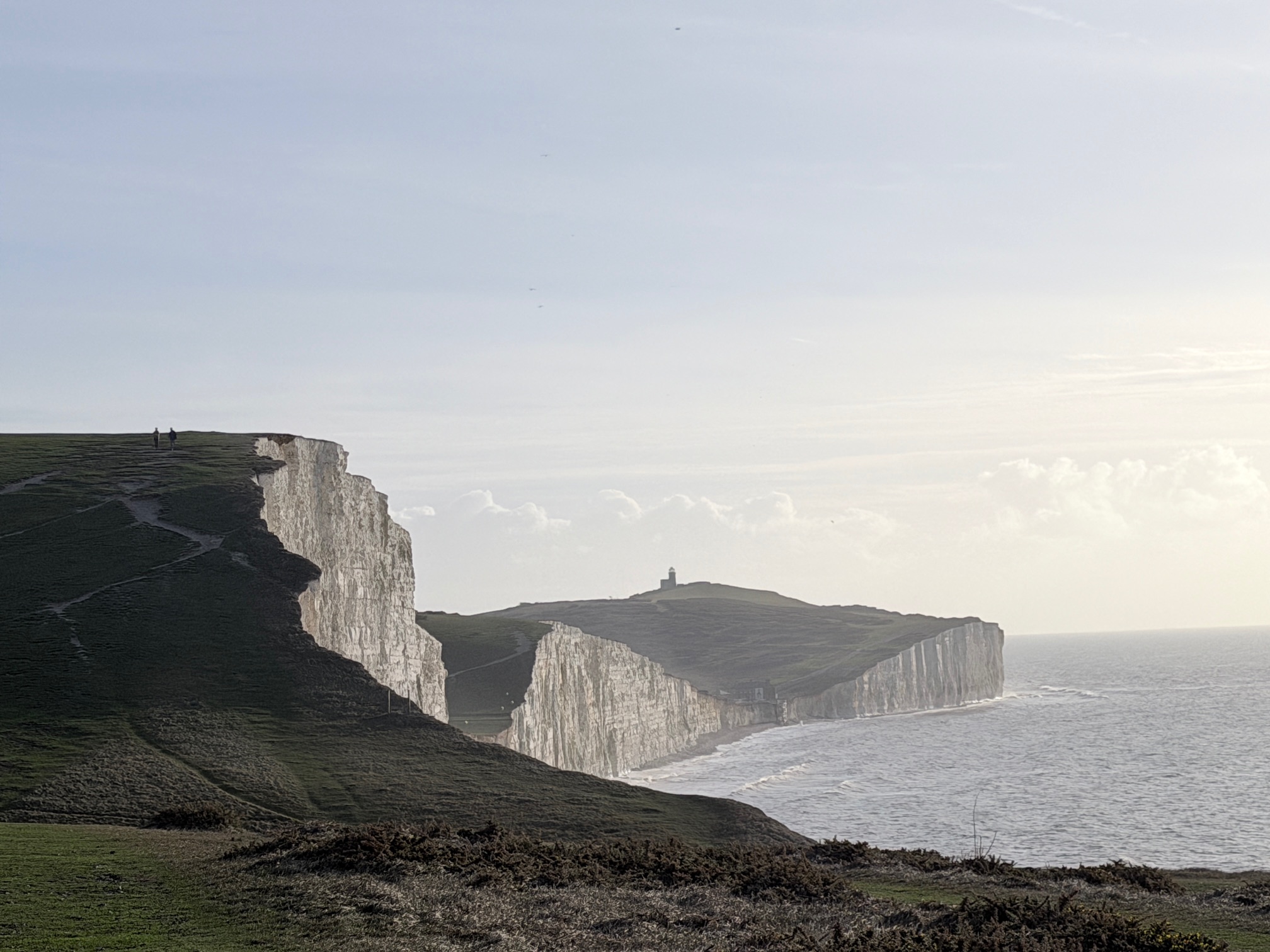
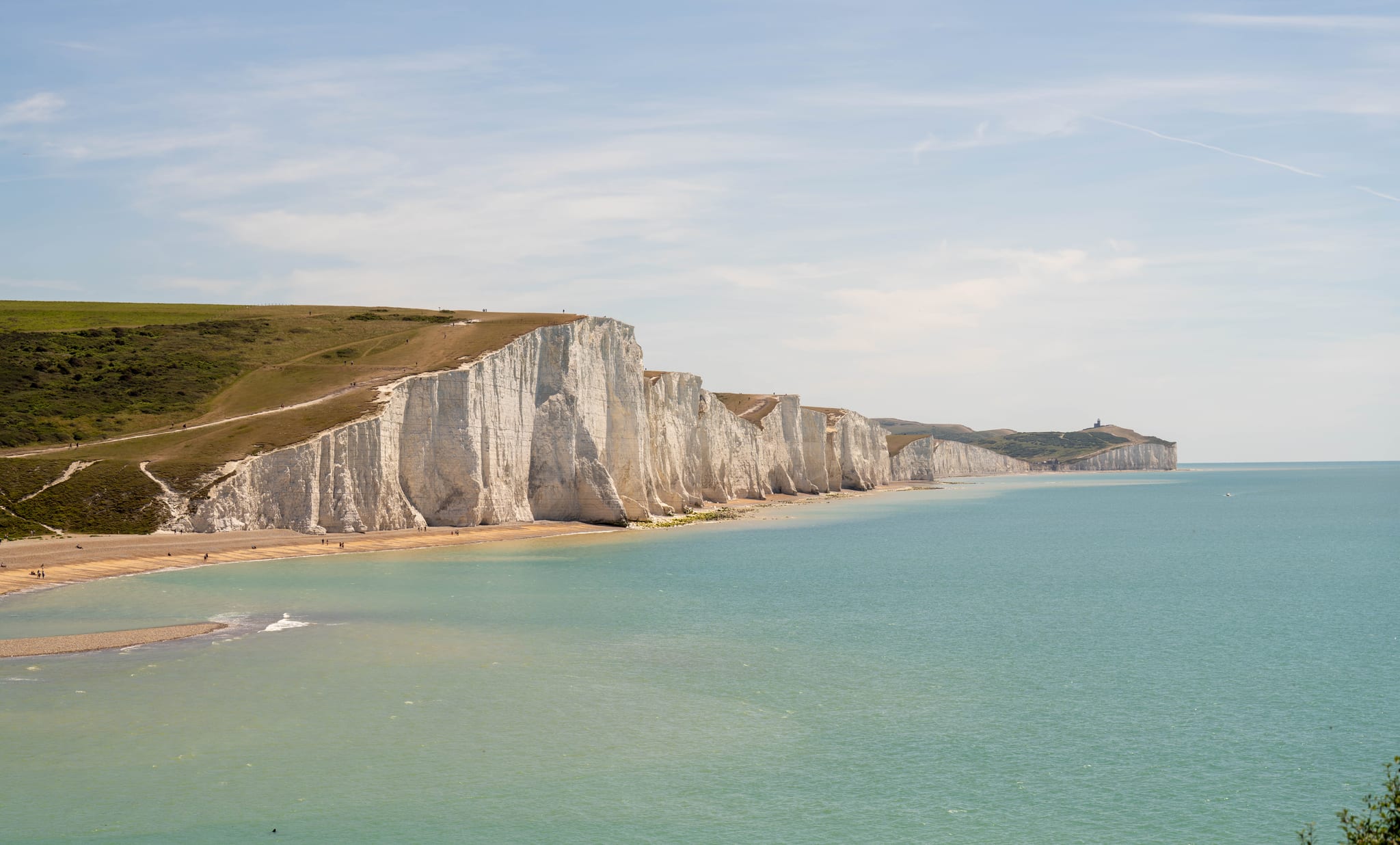
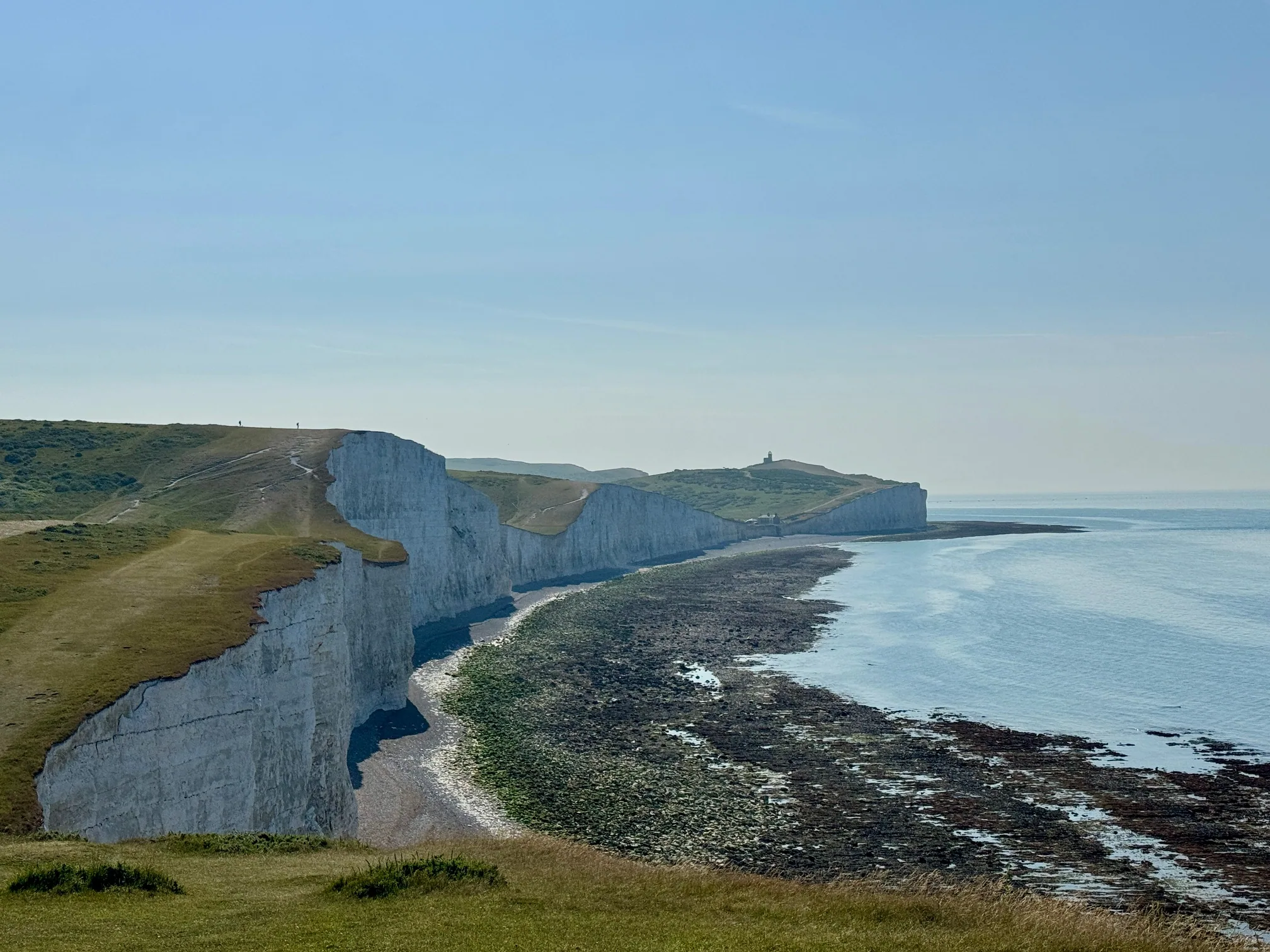
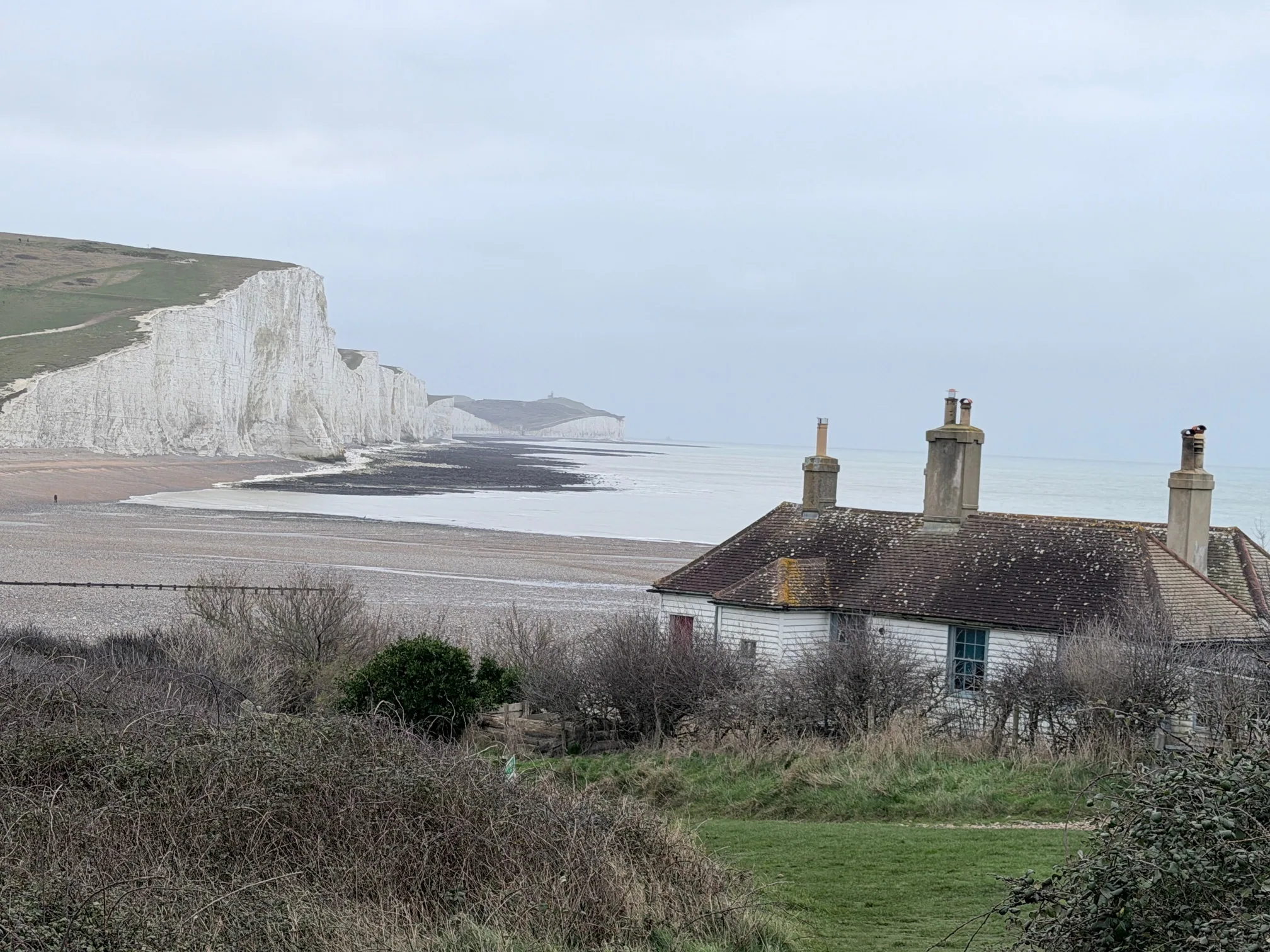
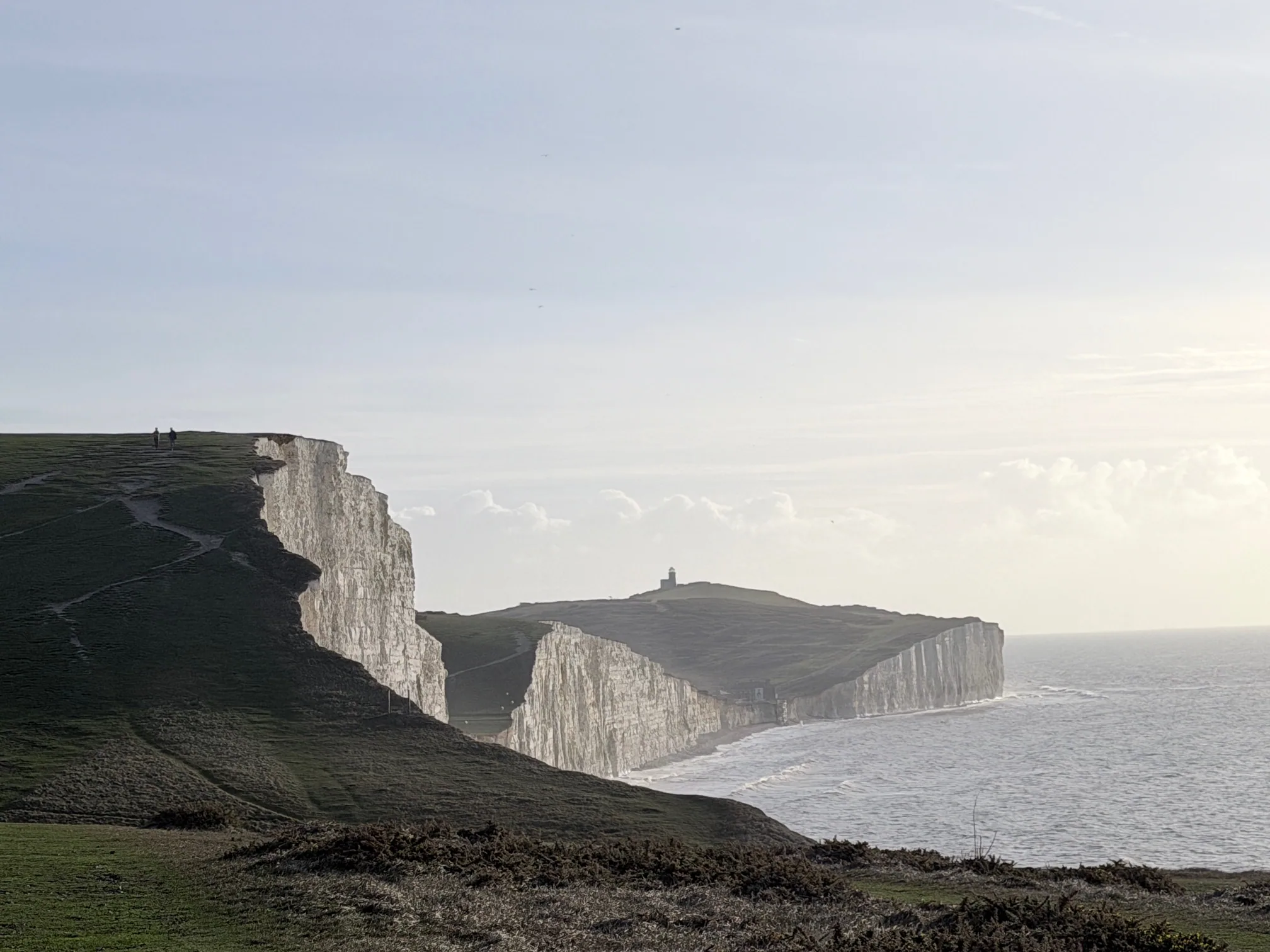
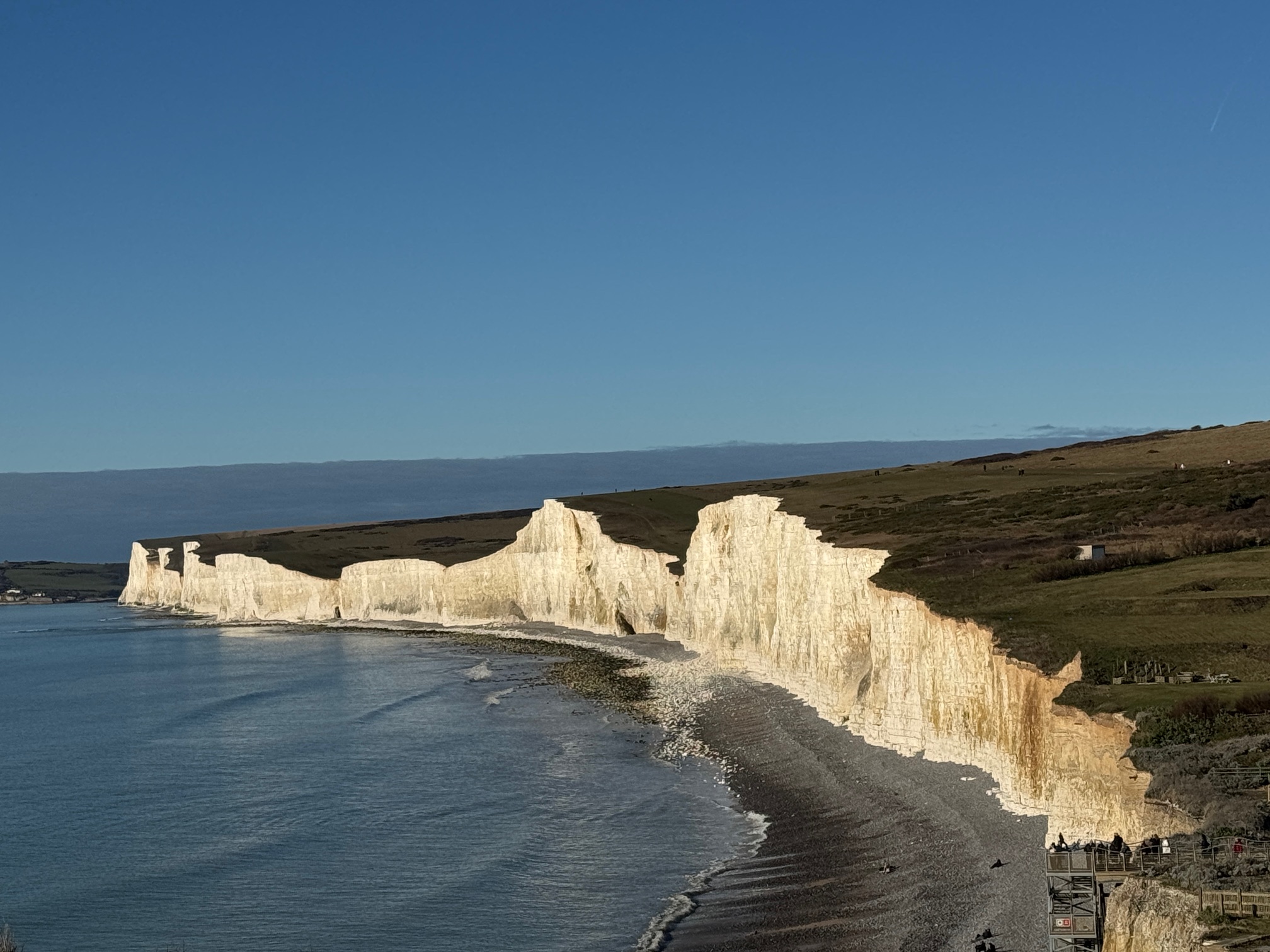
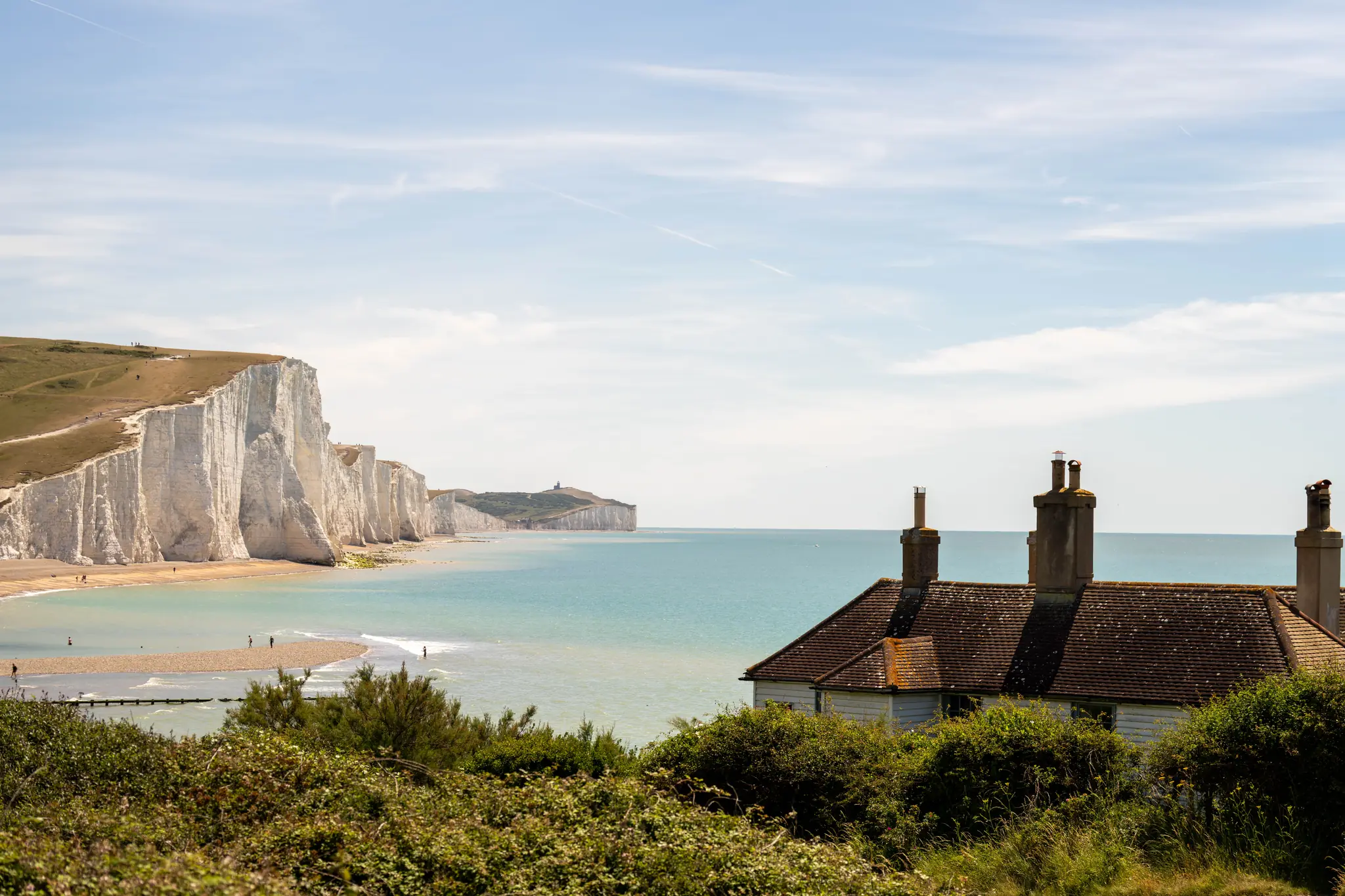
The route can be extended toward the cliff-edge viewpoints at the southern margin of the forest, where the trees give way to open chalk downland and the view south toward the Seven Sisters cliffs opens. This extension adds approximately 2 kilometres and changes the character of the walk from woodland immersion to the cliff-grassland combination that the Friston Forest alternative walk guide covers in detail.
Combining with the Seven Sisters
Friston Forest sits directly above Seven Sisters Country Park, with a continuous footpath connection from the southern margin of the forest to the valley floor at Exceat. A combined walk — Friston Forest for fungi and colour in the morning, the Cuckmere Valley to the beach in the afternoon — works extremely well in October. The valley walk in autumn light, with the chalk downland surrounding it and the first grey seals potentially visible at the river mouth, is a very different experience from the same walk in summer.
Allow the full day. The forest section takes 2 to 3 hours done properly. The valley circuit from Exceat to the beach and back is a further 1.5 hours. Total distance is approximately 8 to 10 kilometres depending on the route options taken. The Cuckmere Inn at Exceat is the logical endpoint.
Photography in October
October in Friston Forest is one of the better photography locations on the South Downs. The combination of golden canopy, warm autumn light, and fungi subjects at ground level produces a specific type of woodland photography that is hard to achieve elsewhere in the area. Key conditions:
- Morning light: The beech sections face roughly south and east — morning light penetrates the canopy from the east and creates shafts of light through the golden leaves that are the defining autumn woodland image. Arrive early.
- After rain: Fungi are most photogenic immediately after rain — caps freshly opened, surfaces clean and vivid. A walk the morning after rain in October is the optimum time for both species variety and photographic quality.
- Low perspective: Ground-level composition for fungi subjects. A macro lens or close-focusing zoom is useful. A small tripod or beanbag for ground-level shots pays dividends on the smaller species.
Practical Details
- When to go: The first two weeks of October for peak colour alongside fungi. The last two weeks for the deepest autumn colours and the best chance of late-season species. Both weeks have different and equally valid rewards.
- What to wear: The forest paths are muddy in October after rain. Waterproof walking shoes or boots are the minimum — the forest floor off the main tracks is particularly soggy in wet periods. Layers are needed: the forest interior is several degrees cooler than open ground.
- Dogs: Friston Forest is on-lead for dogs in the woodland sections (forestry tracks are shared with management vehicles). The adjacent South Downs path network allows dogs off-lead. Several species of fungi are toxic to dogs — the risk is not from the dog eating large amounts but from puppies or scavenging dogs investigating and chewing ground-level fungi. Keep an eye on dogs near fungi clusters.
- What to bring: A field guide to British fungi (the Collins Complete Guide to British Mushrooms and Toadstools is the most practical format). A hand lens (10x). A camera with close-focusing capability. A bag for collecting only if you have confirmed identification training.
The Other Side of Friston Forest
The same forest in late April is carpeted in bluebells. For a comparison of the two seasons — and to plan a visit for each — see the spring bluebell guide. The autumn walk uses the same car park and many of the same paths, but shares almost nothing else with the spring visit.
Planning the walk itself?
Four routes run along these cliffs and they are not interchangeable — a flat 3km riverside stroll, the classic 6.5km Exceat to Birling Gap crossing, a short Birling Gap loop, and the full 21.9km Seaford to Eastbourne ridge. Compare distance, ascent and difficulty before you pick one.
- Easy Birling Gap Short Loop 2 km 45 min
- Easy Cuckmere Haven Beach 3 km 1 hour
- Moderate Exceat to Birling Gap 6.5 km 2-3 hours
- Challenging Seaford to Eastbourne 21.9 km 6-7 hours
We may earn a small commission on bookings made through this link, at no extra cost to you. More info.
£4.99 · 24-page PDF · Instant download
The Seven Sisters Ultimate Guide
The complete 24-page companion built from first-hand walks — every cliff, all four graded routes, tide windows and a parking strategy. Designed to work offline, right on the cliff top.
- All 7 cliffs — heights, geology & viewpoints
- Four graded walking routes, compared
- Tide windows, light calendar & day plans
- Parking strategy & seasonal planner
Just want the basics? Download the free 2-page walk guide
Want an expert-led Seven Sisters tour?
From guided cliff walks and wildlife safaris to geology hikes and photography tours — explore all our curated experiences with local guides.