Friston Forest Bluebell Walk: Route, Timings and What to Expect
Friston Forest Bluebell Walk
The specific route, best entry point, and what to expect in the peak bluebell weeks
Friston Forest is the most reliable place near Seven Sisters to see bluebells in quantity. The forest covers around 850 hectares of managed woodland on the chalk downs above Eastbourne, and in late April the understorey turns blue-violet for roughly three weeks. Most visitors find it by accident. This guide gives you the specific route that finds the densest carpets, the parking that actually works, and the exact timing that determines whether you see a display or a disappointment.
The Route
The most productive bluebell circuit starts and finishes at the Forestry England car park on Litlington Road, just off the A259 between Seaford and Eastbourne. The car park is signposted for Friston Forest and has space for around 30 cars — arrive before 9:30am on weekends during peak bluebell season, as it fills quickly.
Distance: 3.5 miles (circular). Time: 1.5 to 2 hours at a relaxed pace. Terrain: Forest tracks, some chalky path — sturdy footwear recommended after wet weather, though the main tracks are firm.
Stage 1: From the car park into the forest (0–0.5 miles)
Take the main forest track heading north-west from the car park. Within five minutes you enter full woodland canopy. The first bluebells appear here but are not dense — this is not the destination, just the beginning. Continue on the main track, ignoring side paths for now.
Stage 2: The northern and western edges (0.5–2 miles)
The densest bluebell carpets are consistently found on the north-western edges of the forest, where the canopy is not too dense and the ground receives enough light for the flowers to mass. Follow the track as it curves left (west), keeping to paths that skirt the forest edges rather than heading deep into the interior. Where the trees thin and you can see sky through the canopy, look down — this is where the carpets form. In a good year, these sections produce the kind of solid blue-violet ground cover that feels implausible until you see it.
Stage 3: The Jevington extension (optional, adds 1.5 miles)
If conditions are good and you want more, a clear track leads out of the western forest edge and drops into Jevington village, approximately 0.75 miles from the main route. The hedgerow banks on this stretch hold smaller bluebell patches outside the main woodland. Jevington has the Eight Bells pub (kitchen open lunchtimes Thursday to Sunday) and a medieval church worth a brief stop. Return the same way or loop back via the valley path — allow an additional 45 minutes.
Stage 4: Return
Return through the forest interior. The main central tracks are faster and less muddy than the edge paths. The woodland smells extraordinary in late April — the combination of bluebells, damp chalk soil, and emerging beech leaves is specific to this moment of the year and fades within a fortnight.
When to Go: The Timing Question
Bluebell timing in Friston Forest shifts by 1–3 weeks depending on the spring. Cold springs push peak bloom into early May; warm springs can bring it to mid-April. In most years, the reliable window is the last two weeks of April.
- Before mid-April: First blooms on south-facing edges. Not yet worth the trip for the carpets.
- Late April (peak): Full display on the northern and western edges. Best time for photography, scent, and spectacle.
- First week of May: Carpets still strong but slightly past peak. Deeper shade areas often still good. Orchids starting on the chalk grassland outside the forest.
- After mid-May: Bluebells largely finished. The forest is still beautiful — the beech canopy closes and turns the interior a rich green — but the bluebell show is over.
For real-time conditions: the spring wildflower guide covers the broader flowering calendar for the area, and the South Downs bluebells post covers the wider regional picture.
What Affects the Display
Light: Bluebells on overcast days have a more saturated, intense colour than on bright sunny days, where the petals bleach slightly in direct sun. For photography, an overcast morning is preferable. For comfort and overall enjoyment, a clear morning with dappled light through the canopy is hard to beat.
Wind: High winds flatten the flowers. After a windy night, the display is noticeably worse. Calm mornings in late April tend to produce the most upright, photogenic carpets.
Rain: The forest tracks remain passable even after heavy rain. The bluebells themselves look extraordinary with water droplets on the petals. Bring waterproof footwear.
What to Bring
- Waterproof boots or trail shoes — chalk paths become slick after rain
- Layers — the forest is sheltered but the exposed sections of the route can be 3–4 degrees colder on a spring morning
- A camera — the light in the forest canopy in late April is genuinely exceptional
- Water and a packed lunch — the nearest cafe to the car park is in Seaford (20 minutes on foot) or Eastbourne
Combining the Walk with Seven Sisters
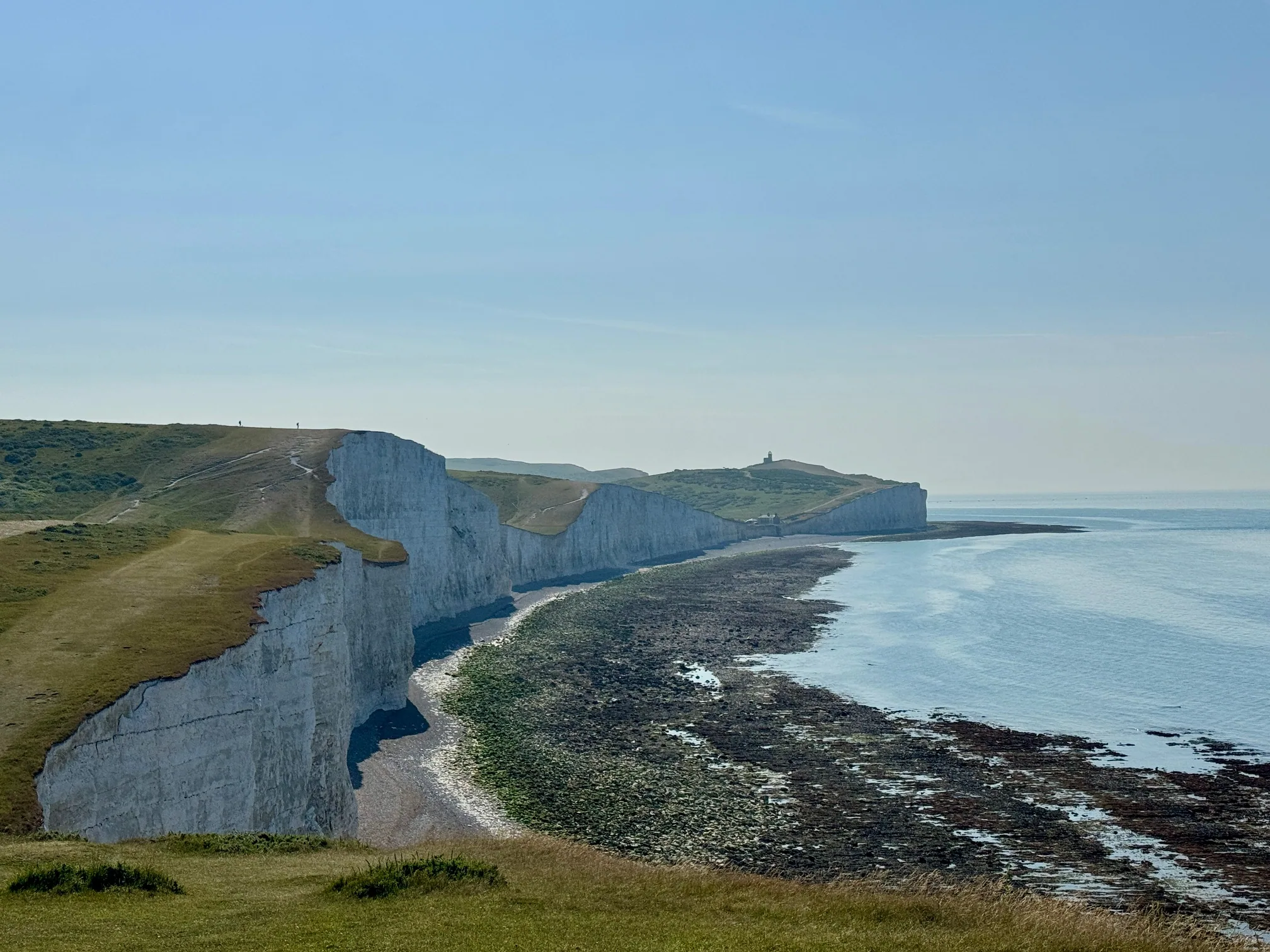
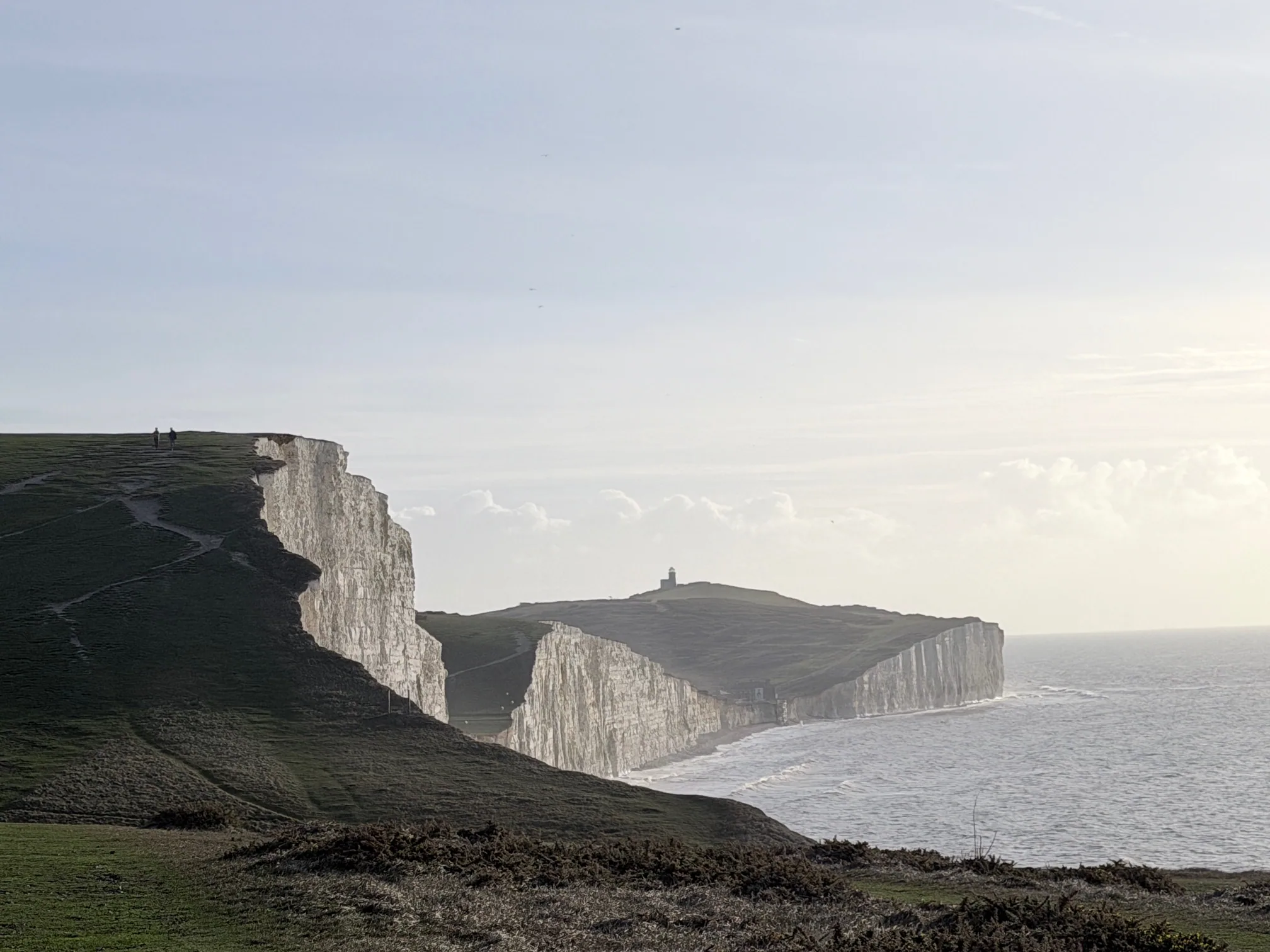
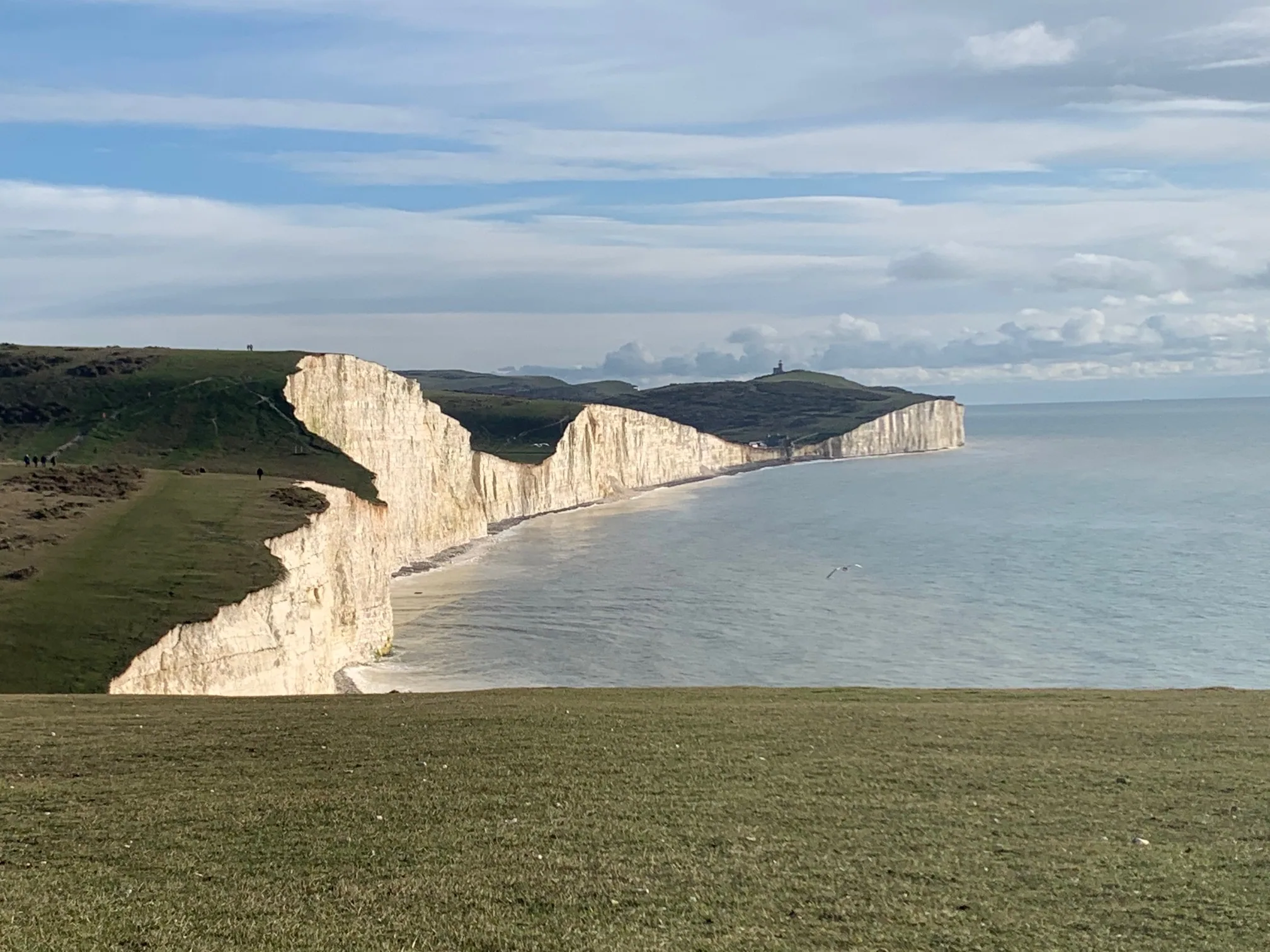
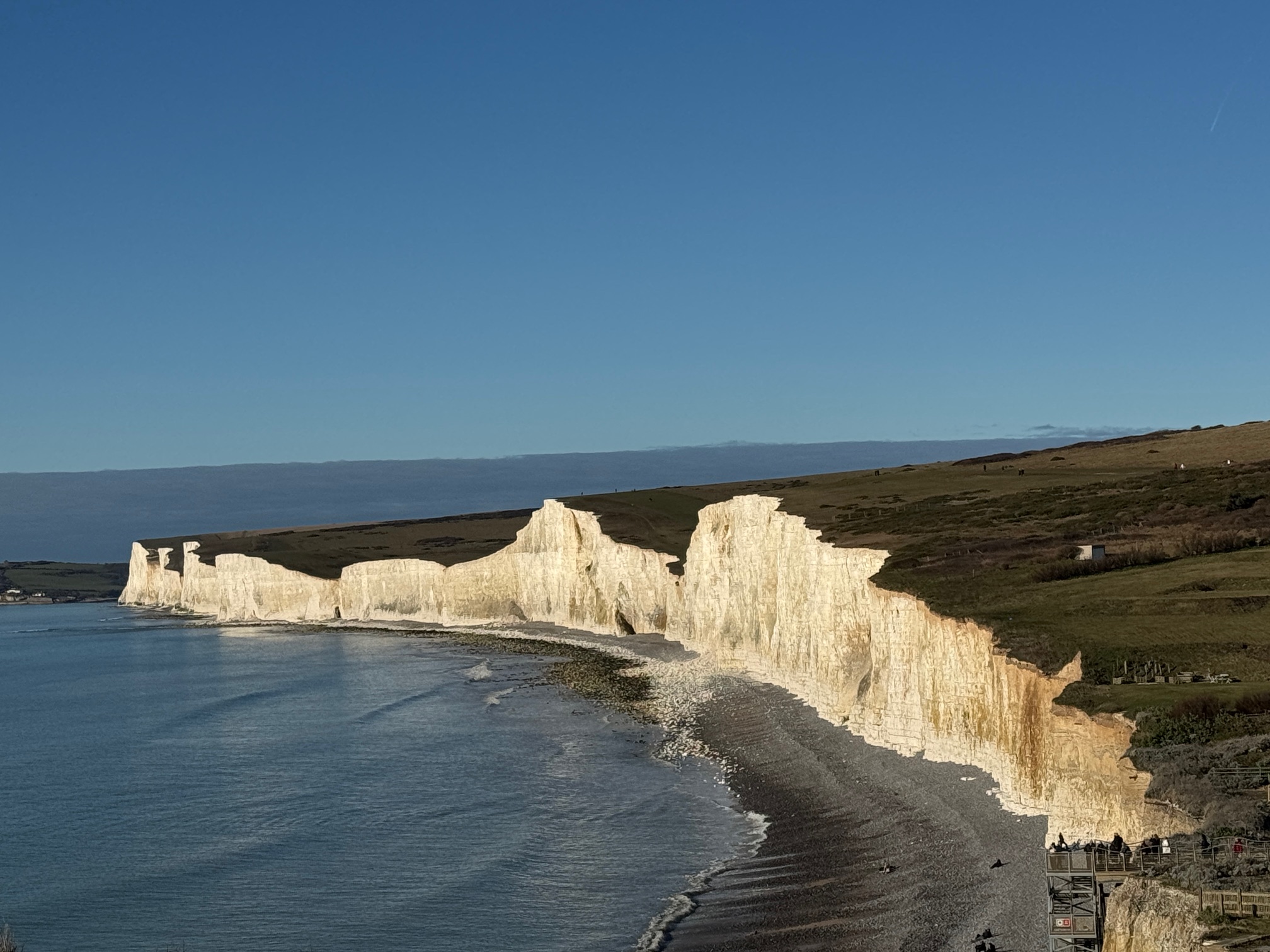
Friston Forest sits directly above the Seven Sisters coastal path. From the south-eastern edge of the forest, a path leads down to Birling Gap in approximately 1.5 miles — you emerge at the cliff edge where you can walk the full Sisters ridge. This makes a natural full-day combination: bluebells in the morning, cliff walking after lunch. Total distance with both sections is around 7–8 miles depending on how far along the Sisters you walk.
See the Seven Sisters with a Guide
Guided spring walks in the area cover both the forest bluebells and the cliff wildflowers in a single morning, with expert commentary on the chalk grassland flora. View available guided experiences.
Getting There
By car: Friston Forest car park on Litlington Road, near the A259. Postcode for satnav: BN20 0AB (Friston village — the car park is signed from here).
By bus: Brighton & Hove Coaster services (12/12X/13X) between Eastbourne and Seaford stop at or near Friston village on the A259, a short walk from the car park. Check the current Brighton & Hove timetable for the most accurate service information. See the public transport guide for connections from further afield.
Planning the walk itself?
Four routes run along these cliffs and they are not interchangeable — a flat 3km riverside stroll, the classic 6.5km Exceat to Birling Gap crossing, a short Birling Gap loop, and the full 21.9km Seaford to Eastbourne ridge. Compare distance, ascent and difficulty before you pick one.
- Easy Birling Gap Short Loop 2 km 45 min
- Easy Cuckmere Haven Beach 3 km 1 hour
- Moderate Exceat to Birling Gap 6.5 km 2-3 hours
- Challenging Seaford to Eastbourne 21.9 km 6-7 hours
We may earn a small commission on bookings made through this link, at no extra cost to you. More info.
£4.99 · 24-page PDF · Instant download
The Seven Sisters Ultimate Guide
The complete 24-page companion built from first-hand walks — every cliff, all four graded routes, tide windows and a parking strategy. Designed to work offline, right on the cliff top.
- All 7 cliffs — heights, geology & viewpoints
- Four graded walking routes, compared
- Tide windows, light calendar & day plans
- Parking strategy & seasonal planner
Just want the basics? Download the free 2-page walk guide
Want an expert-led Seven Sisters tour?
From guided cliff walks and wildlife safaris to geology hikes and photography tours — explore all our curated experiences with local guides.