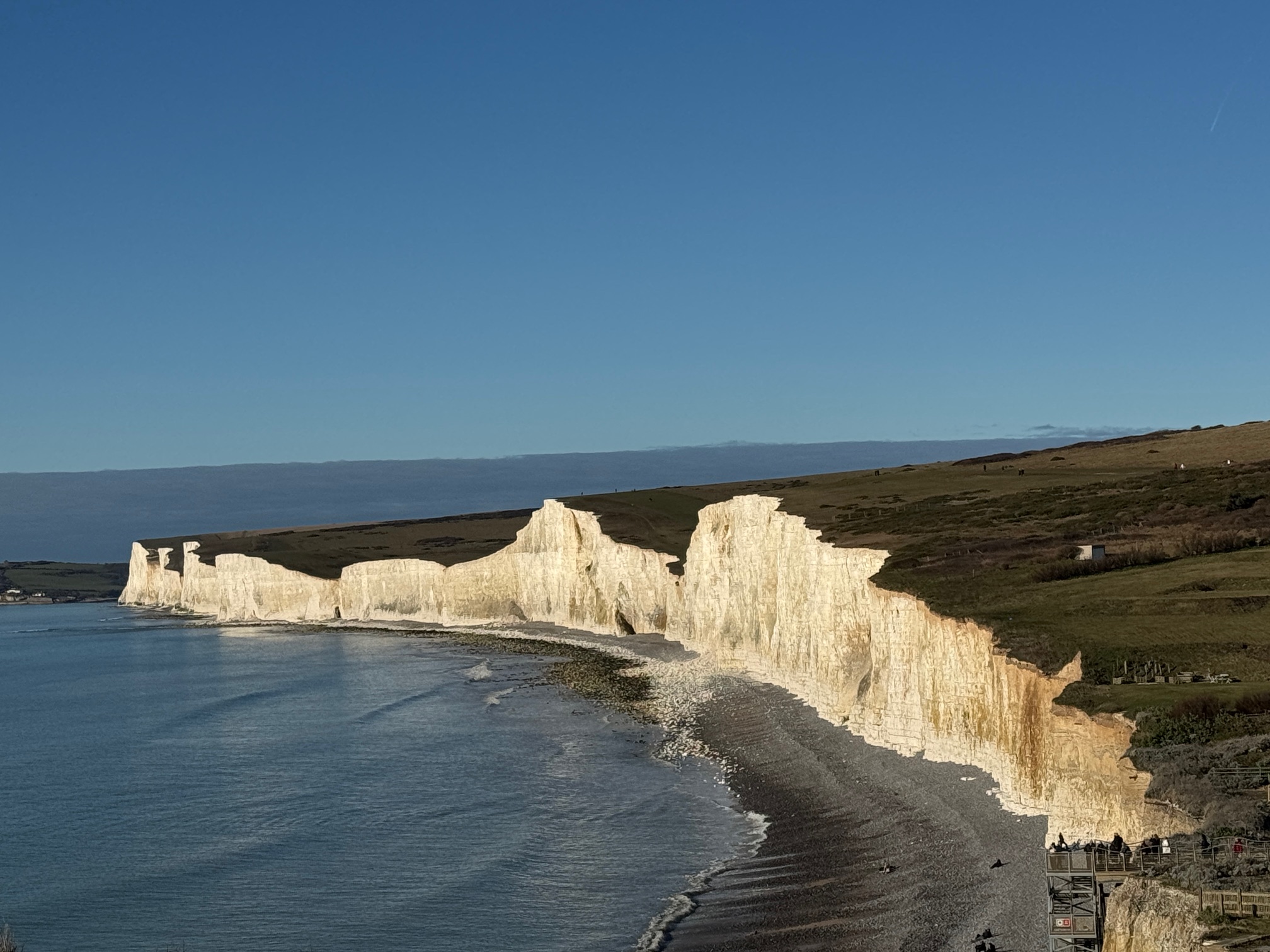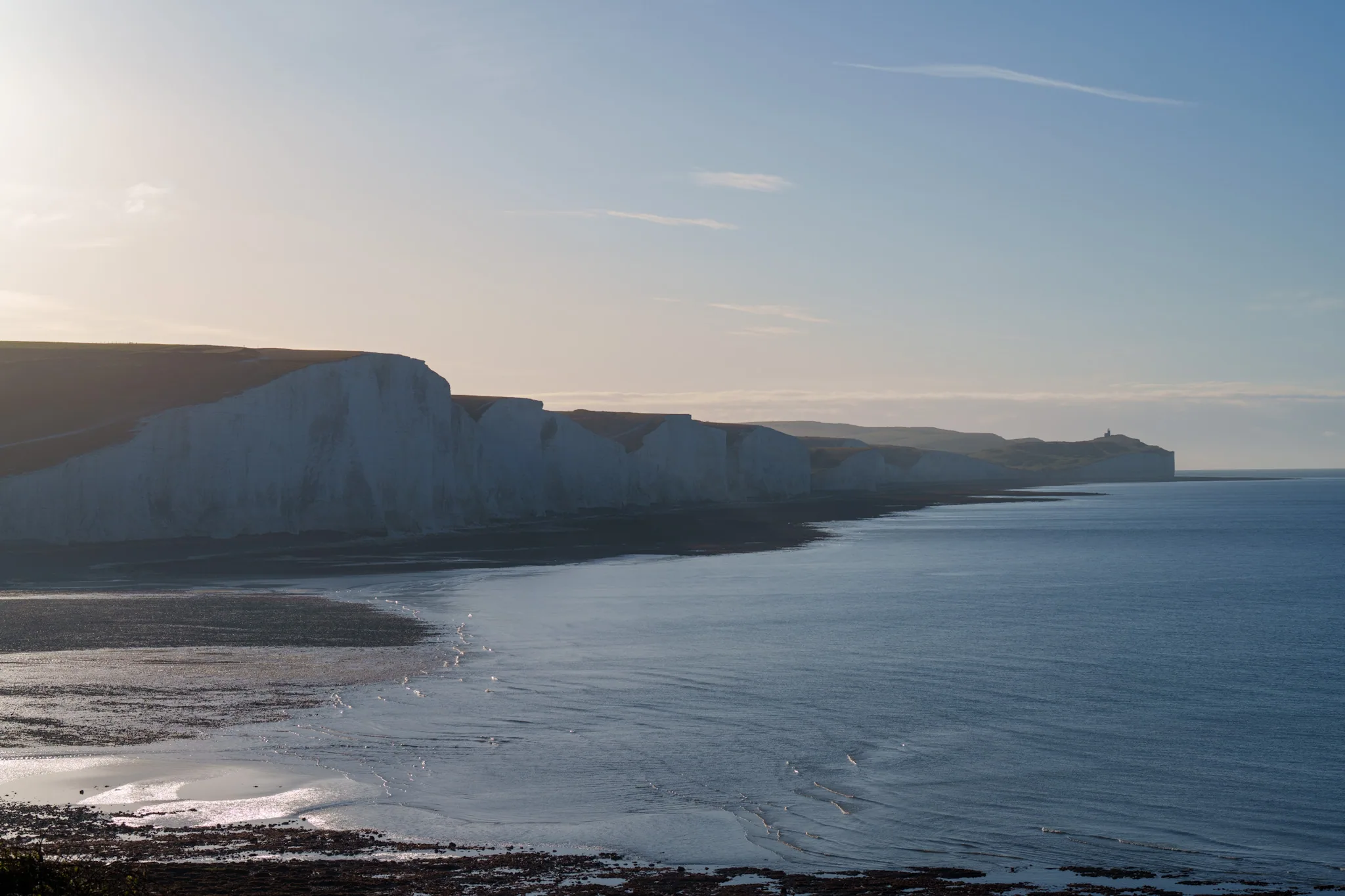
Seven Sisters in October: Nature, Colour and Half-Term Walks
Seven Sisters in October
Fungi, autumn colour, grey seals, and uncrowded paths — why October half-term is underrated
October half-term has a reputation problem at Seven Sisters. People assume the cliffs are a summer destination — that October means grey skies, empty car parks, and a walk where the wind drowns out conversation. This is wrong. October at Seven Sisters is genuinely excellent: the chalk grassland produces a fungi season that lasts through the month, the valley and scrub turn colour, grey seals appear on the beach at Cuckmere Haven, and the site is comfortably busy rather than overwhelmingly crowded. For families who want nature rather than a beach day, October half-term is one of the best weeks of the year.
Fungi on the Chalk Grassland
Unimproved chalk grassland is one of the rarest habitats in Britain, and one of its most distinctive features in autumn is its fungi. The ancient chalk downland of the Seven Sisters supports several species that are essentially absent from improved agricultural land:
- Waxcaps (Hygrocybe species): These waxy, brightly coloured fungi are a reliable indicator of ancient, undisturbed grassland. Various species produce red, orange, yellow, and white caps across the downland. Meadow Waxcap (Hygrocybe pratensis) and Parrot Waxcap (Gliophorus psittacinus), which changes colour as it matures, are both found here. Peak season is October into November.
- Earthballs and puffballs: Common Earthball (Scleroderma citrinum) appears near woodland edges in Friston Forest from September. Giant puffballs can occur in the valley margins, though less predictably.
- Beefsteak fungus (Fistulina hepatica): This extraordinary bracket fungus, which resembles a piece of raw meat and bleeds red juice when cut, grows on oak and sweet chestnut stumps in Friston Forest. It is most abundant in September and October.
Important: All fungi on National Trust land and within the National Park are legally protected. Do not pick or remove them. Look closely, photograph them, and leave them in place. This is not a guideline — it is law.
Autumn Colour at Seven Sisters
The chalk downland itself does not produce dramatic autumn colour — grassland does not turn. But the surrounding landscape does:
- Friston Forest: The forest contains beech, which turns a rich copper-gold in October, and some planted larch, which goes bright yellow before dropping needles. October is one of the best months to walk the forest tracks. The bluebell route (usable year-round) offers a beautiful autumn perspective on the same woodland carpeted with leaves rather than flowers.
- Scrub and hedgerows: The chalk scrub along the valley edges — bramble, wayfaring tree, spindle, and dogwood — produces the most varied colour. Spindle (Euonymus europaeus) turns bright pink and orange; dogwood goes deep red. The hedgerow banks around Jevington and along the Cuckmere Valley are particularly good.
- The Cuckmere valley: The valley grassland and reeds turn ochre and gold. In October morning light reflected in the river meanders, the valley looks entirely different from its summer self.
Grey Seals at Cuckmere Haven
October is one of the more reliable months for grey seal sightings at the river mouth. See the Cuckmere autumn wildlife guide for full details on timing and viewing guidance. The key points: visit on a falling tide, use binoculars, stay well back, keep dogs away. For families with children, a seal sighting at 50 metres through binoculars is a genuinely memorable experience. The walk from Exceat to the river mouth is 2 miles each way on a flat track — appropriate for most ages.
Rock Pooling in October
October often brings some of the lowest tides of the year, and the rock pools at Birling Gap are more productive in autumn than in summer. The summer disturbance from bathers thins out, the pools are less picked-over, and the cooler water brings some species to the surface. Velvet swimming crabs, common blennies, prawns, and shore crabs are all reliably found. The rock pooling guide covers the best pools and what to look for at each tide level.
Check the tide times before you go — you need a low or ebbing tide for the best pool access. Birling Gap steps give beach access, and the rock platforms to the west of the steps produce the richest pools.
The Best Family Route for Half-Term
The Exceat Circular (4 miles, roughly 1.5 hours walking) is the most family-appropriate route at Seven Sisters in October:
- Park at Exceat (Seven Sisters Country Park car park). The visitor centre is worth a brief stop for orientation.
- Walk south along the east bank of the Cuckmere river to Cuckmere Haven beach — 2 miles, flat, well-surfaced track, pushchair-friendly to the beach edge.
- At the beach, look north for the river meanders framed by the chalk cliffs, and scan the river mouth for seals. Walk along the beach westward for views back up to the Seven Sisters cliff line.
- Return via the west bank path — slightly rougher underfoot, better views across the meanders.
This route is also one of the few at Seven Sisters that is genuinely accessible with a pushchair in dry conditions.
Parking During Half-Term Week
October half-term creates a noticeable but manageable increase in visitors compared to the quiet September weeks. On fine days:
- Exceat is the busiest car park and fills by 11am on the best days. Arrive by 10am or plan for the bus.
- Birling Gap is more predictable — it is less suited to the valley/seal walk and therefore draws different visitors. Usually has space until mid-morning even in half-term.
- The 13X bus from Eastbourne to Birling Gap and the 12X to Exceat both remain good options. Half-term week services are checked on the Brighton & Hove website.
Half-Term Nature Walks for Families
Guided half-term family walks at Seven Sisters focus on fungi identification, rock pooling, and autumn wildlife — structured activities that work well with children of all ages. Booking in advance is recommended for half-term week slots. View available family experiences.
What to Bring in October
- Waterproof layers — October weather at the coast is changeable. A warm, waterproof layer is non-negotiable.
- Binoculars — essential for seals and migrating birds at the estuary.
- A tide table — check tide times at Newhaven (the nearest tide gauge) if rock pooling is on the agenda. Low tide is roughly 50 minutes later at Birling Gap than at Newhaven.
- Sturdy footwear — the valley paths are fine in light trainers, but the clifftop and forest tracks benefit from waterproof boots after rain.
For the broader seasonal context, the Cuckmere autumn guide covers September and October in detail, and the autumn colours guide covers the chalk ridge in this season.
Planning the walk itself?
Four routes run along these cliffs and they are not interchangeable — a flat 3km riverside stroll, the classic 6.5km Exceat to Birling Gap crossing, a short Birling Gap loop, and the full 21.9km Seaford to Eastbourne ridge. Compare distance, ascent and difficulty before you pick one.
- Easy Birling Gap Short Loop 2 km 45 min
- Easy Cuckmere Haven Beach 3 km 1 hour
- Moderate Exceat to Birling Gap 6.5 km 2-3 hours
- Challenging Seaford to Eastbourne 21.9 km 6-7 hours
We may earn a small commission on bookings made through this link, at no extra cost to you. More info.
£4.99 · 24-page PDF · Instant download
The Seven Sisters Ultimate Guide
The complete 24-page companion built from first-hand walks — every cliff, all four graded routes, tide windows and a parking strategy. Designed to work offline, right on the cliff top.
- All 7 cliffs — heights, geology & viewpoints
- Four graded walking routes, compared
- Tide windows, light calendar & day plans
- Parking strategy & seasonal planner
Just want the basics? Download the free 2-page walk guide
Want an expert-led Seven Sisters tour?
From guided cliff walks and wildlife safaris to geology hikes and photography tours — explore all our curated experiences with local guides.