Seven Sisters vs White Cliffs of Dover: Are They the Same? The Honest Comparison
We get some version of this question regularly, and it is a reasonable one. Both are white chalk cliffs on the English Channel. Both are famous. The photographs of both look similar to someone who has not been to either. Many travel articles and even some guide books use images of Seven Sisters when talking about the White Cliffs of Dover, and vice versa, which does not help.
The short answer: they are not the same, they are not near each other, and if you visit one expecting the other you will be confused. Here is the long answer — including which one to go to for what you are actually trying to do.
Where They Are
The White Cliffs of Dover are at Dover, on the Kent coast. They face France — on a very clear day you can see the French coast from the top, roughly 34km away. They are part of the North Downs chalk formation. Dover itself is a busy port town with a castle and a significant traffic infrastructure around it. The cliffs are west and east of the town and the port.
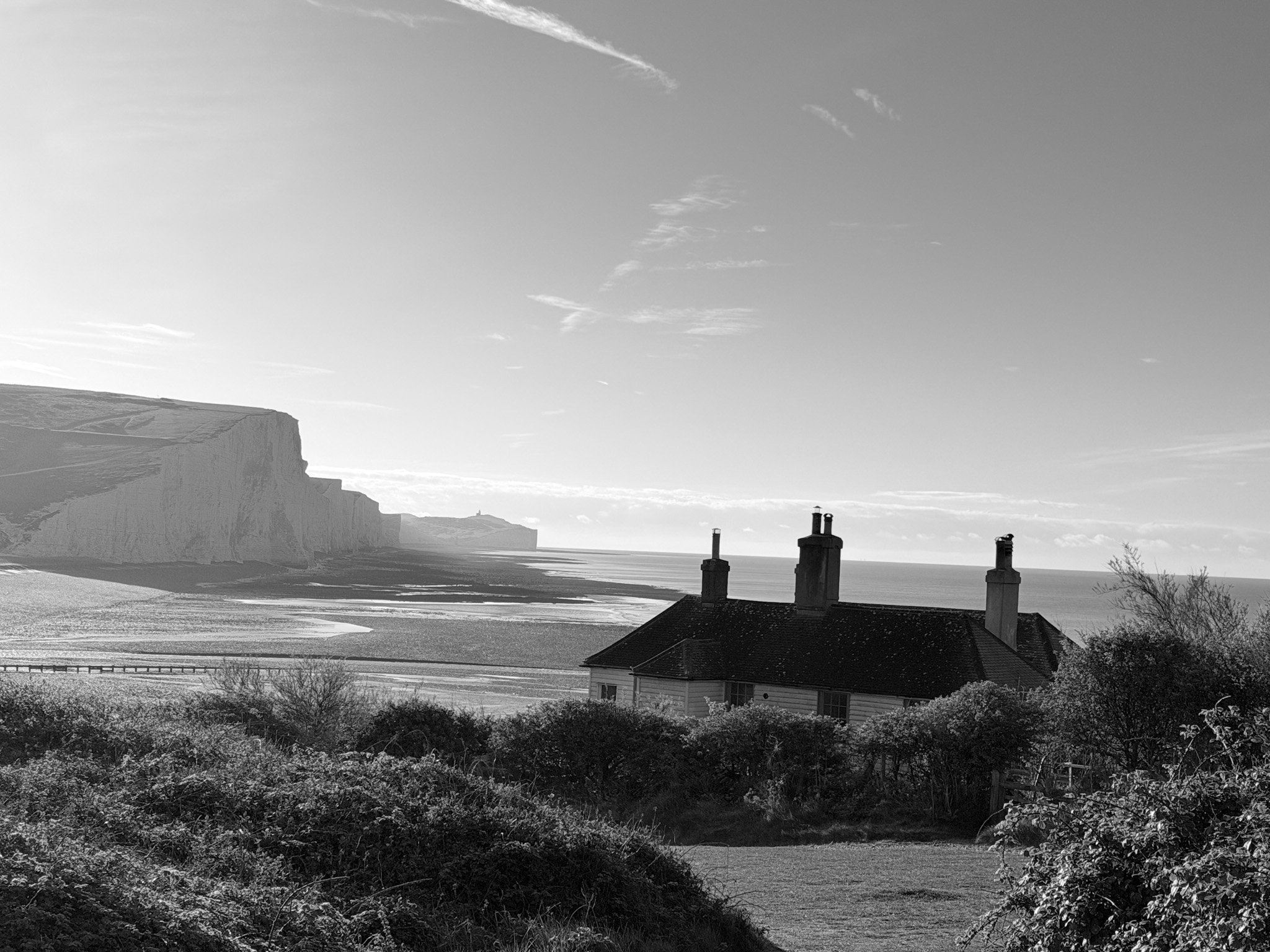
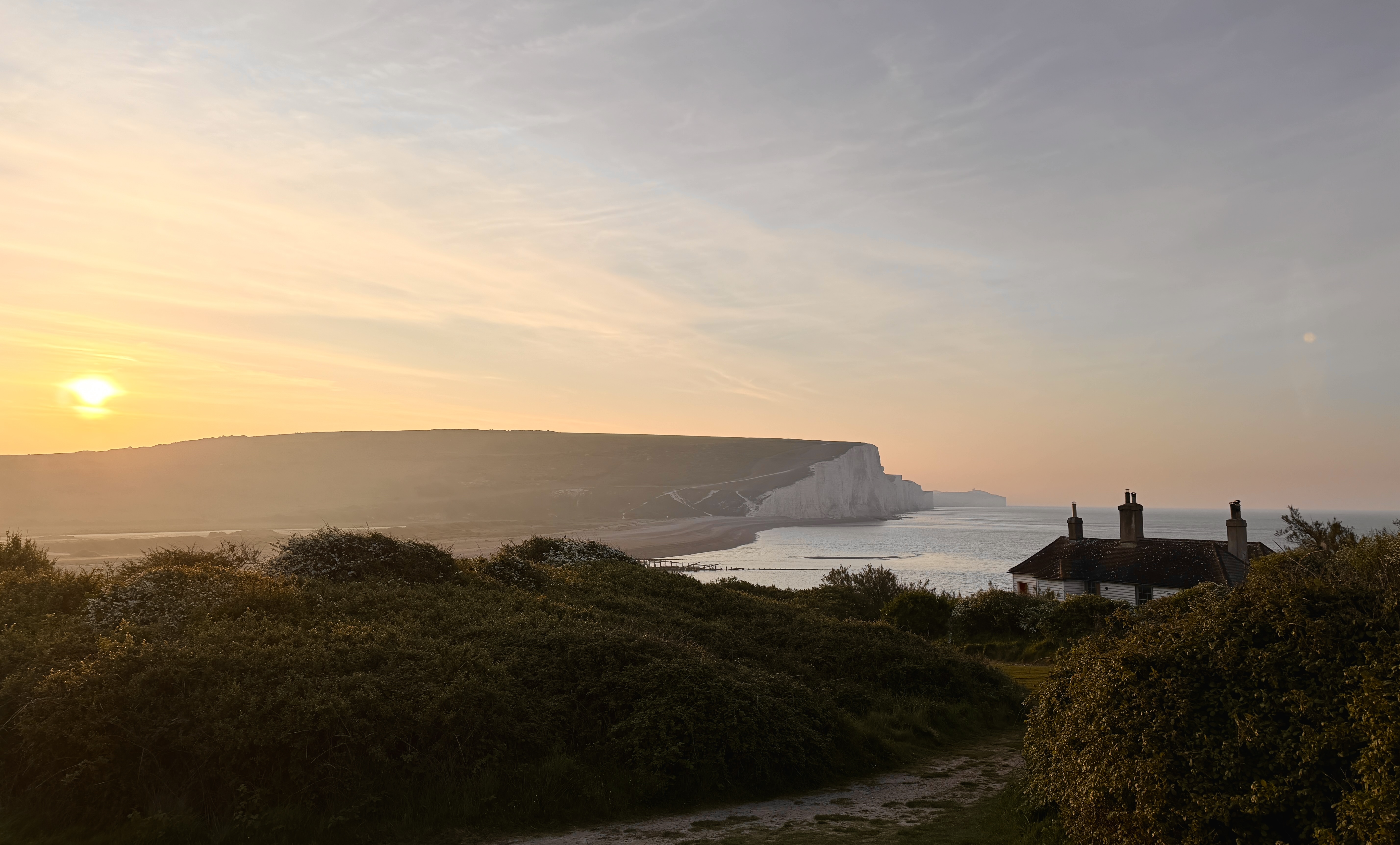
Seven Sisters are in East Sussex, about 85km to the west of Dover along the coast. They are part of the South Downs National Park, near the town of Eastbourne to the east and the town of Seaford to the west. The nearest significant town is Eastbourne. There is no port. There is no town at the base of the cliffs. There is a car park, a National Trust café, and a beach.
The driving distance between the two, along the coast, is roughly 100km — about 90 minutes to 2 hours by car, depending on your route. They are not day-trip adjacent. If you visit one, you are not popping to the other on the same day unless you have a very specific itinerary.
The Cliffs Themselves
Both are made of the same material: Upper Cretaceous chalk, formed from the compressed remains of marine organisms around 85 million years ago. The geology is the same. The chalk in Dover and the chalk at Seven Sisters is the same age and the same type. Both erode rapidly and both have the characteristic bright white appearance in sunlight.
The differences are in scale and character. The White Cliffs of Dover are taller in their highest sections — around 110 metres at their highest near the South Foreland — and the chalk face is largely unbroken for several kilometres. The scale is impressive, particularly from the sea.
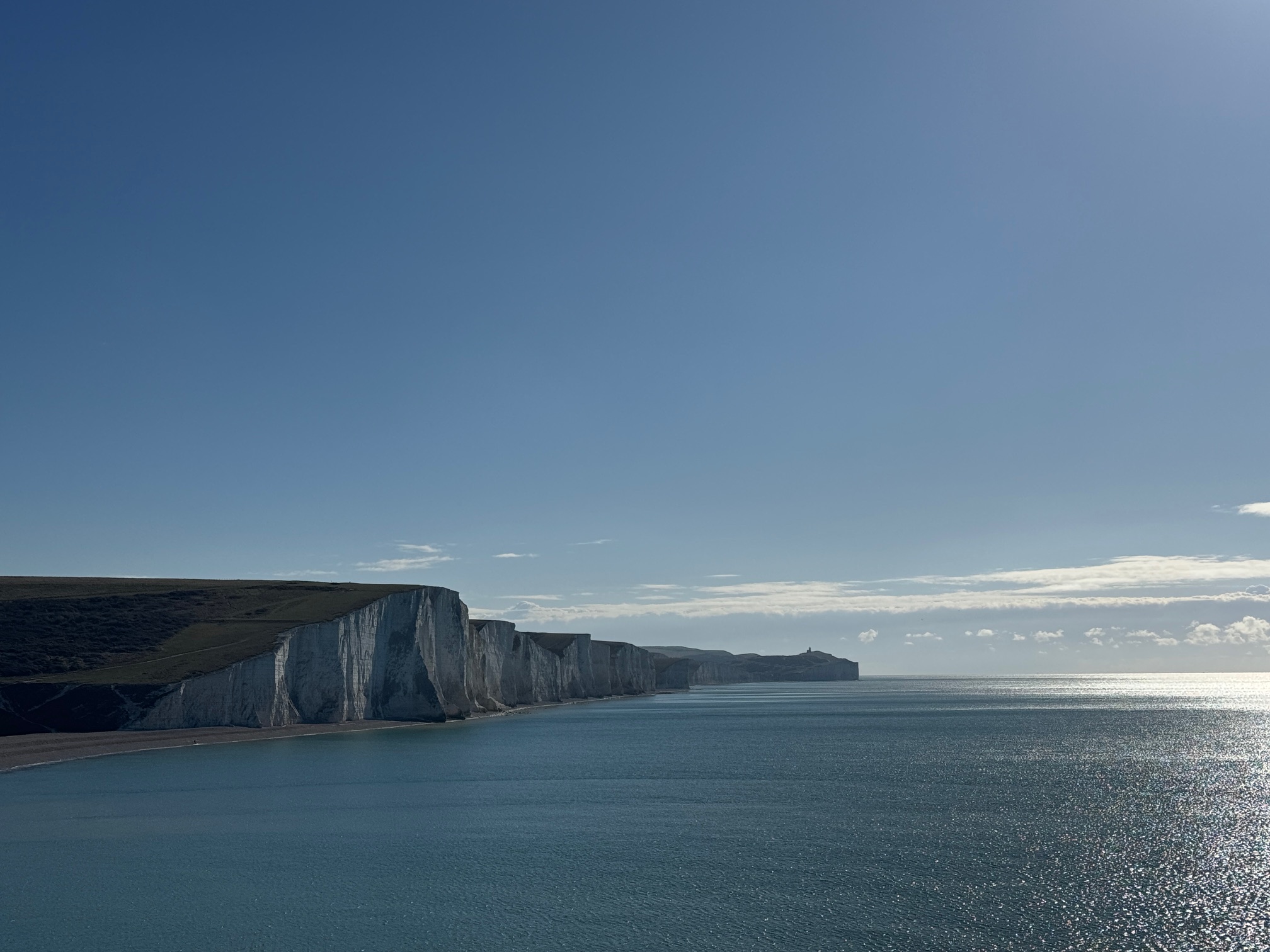
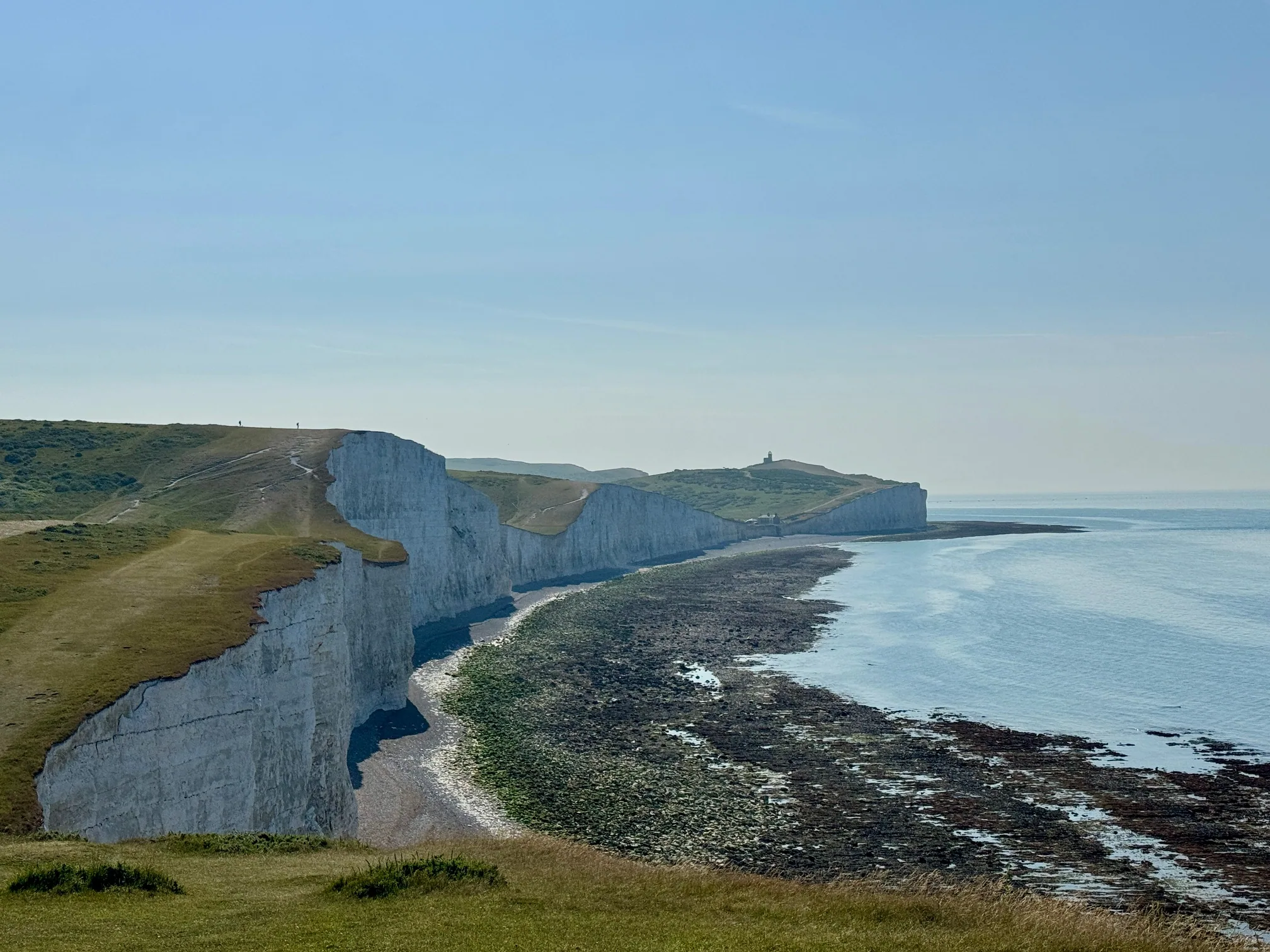
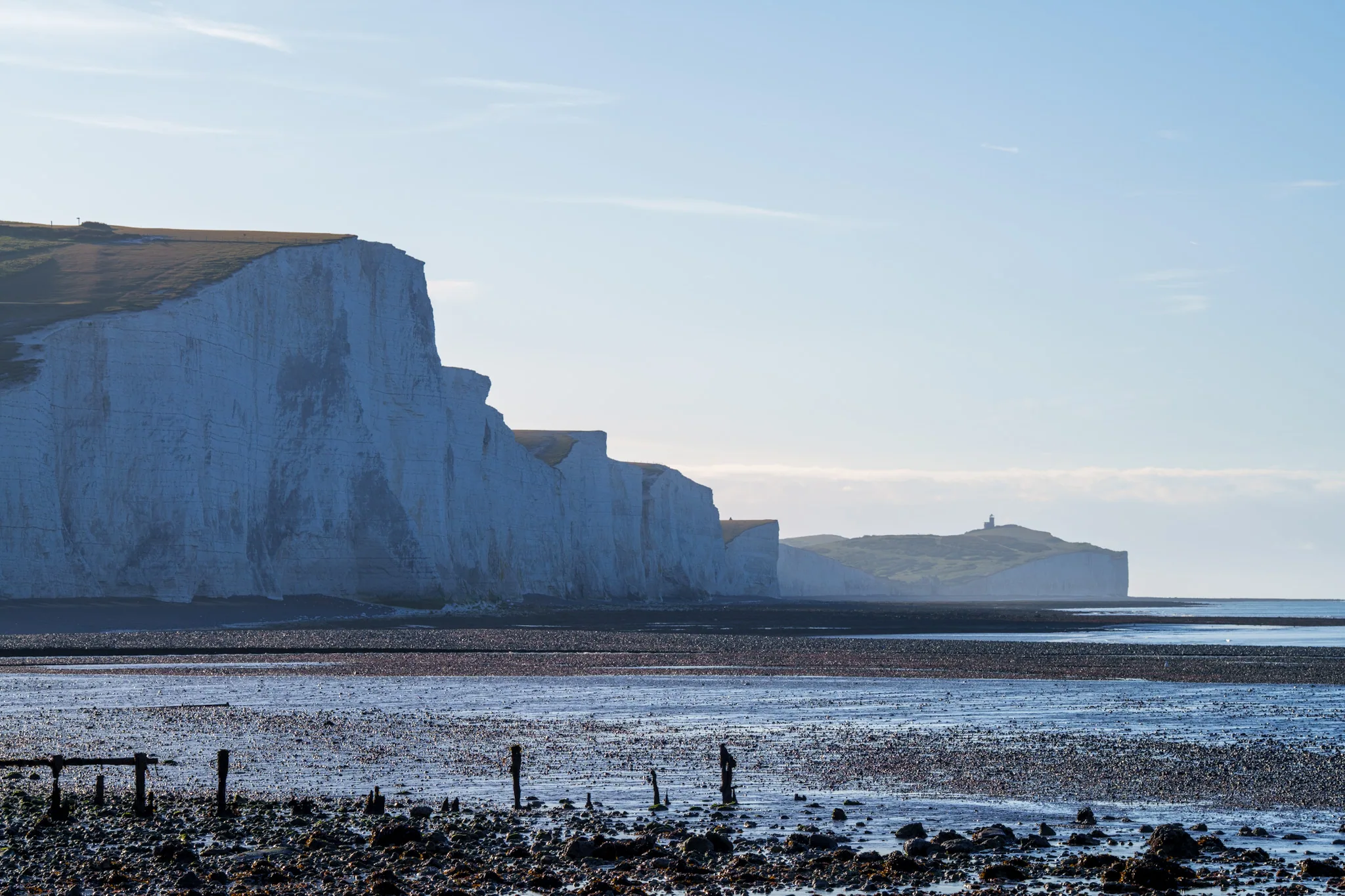
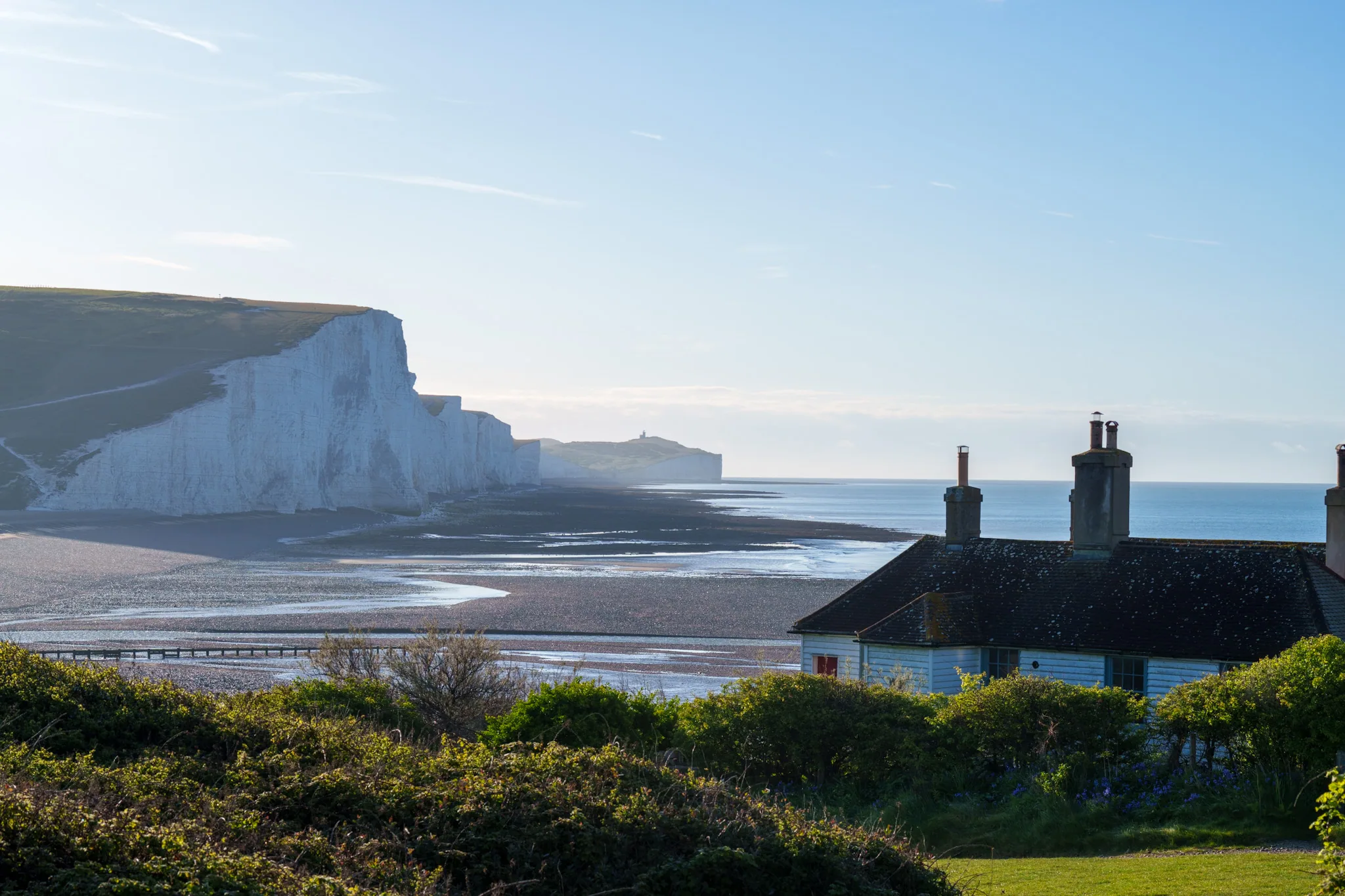
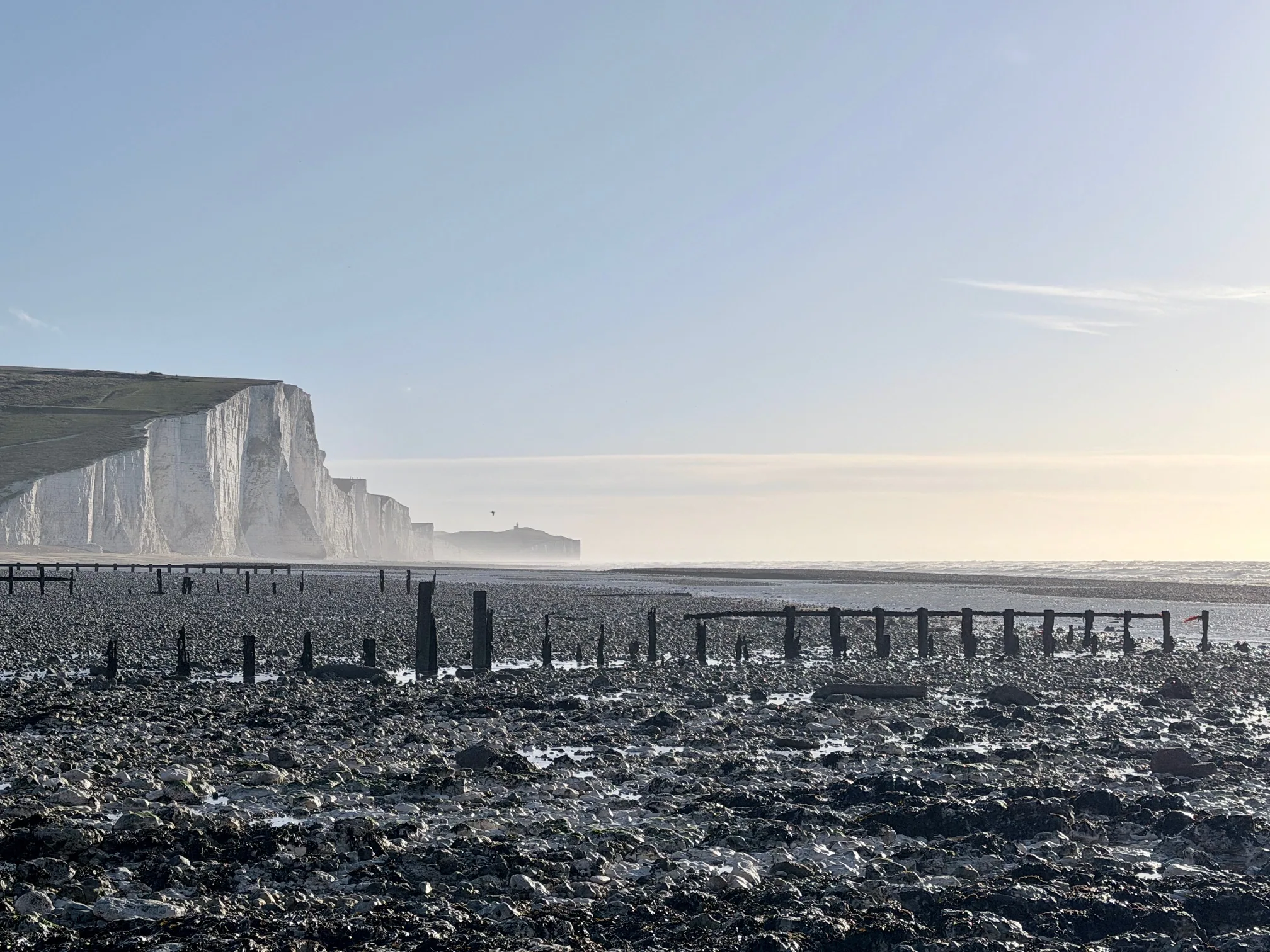
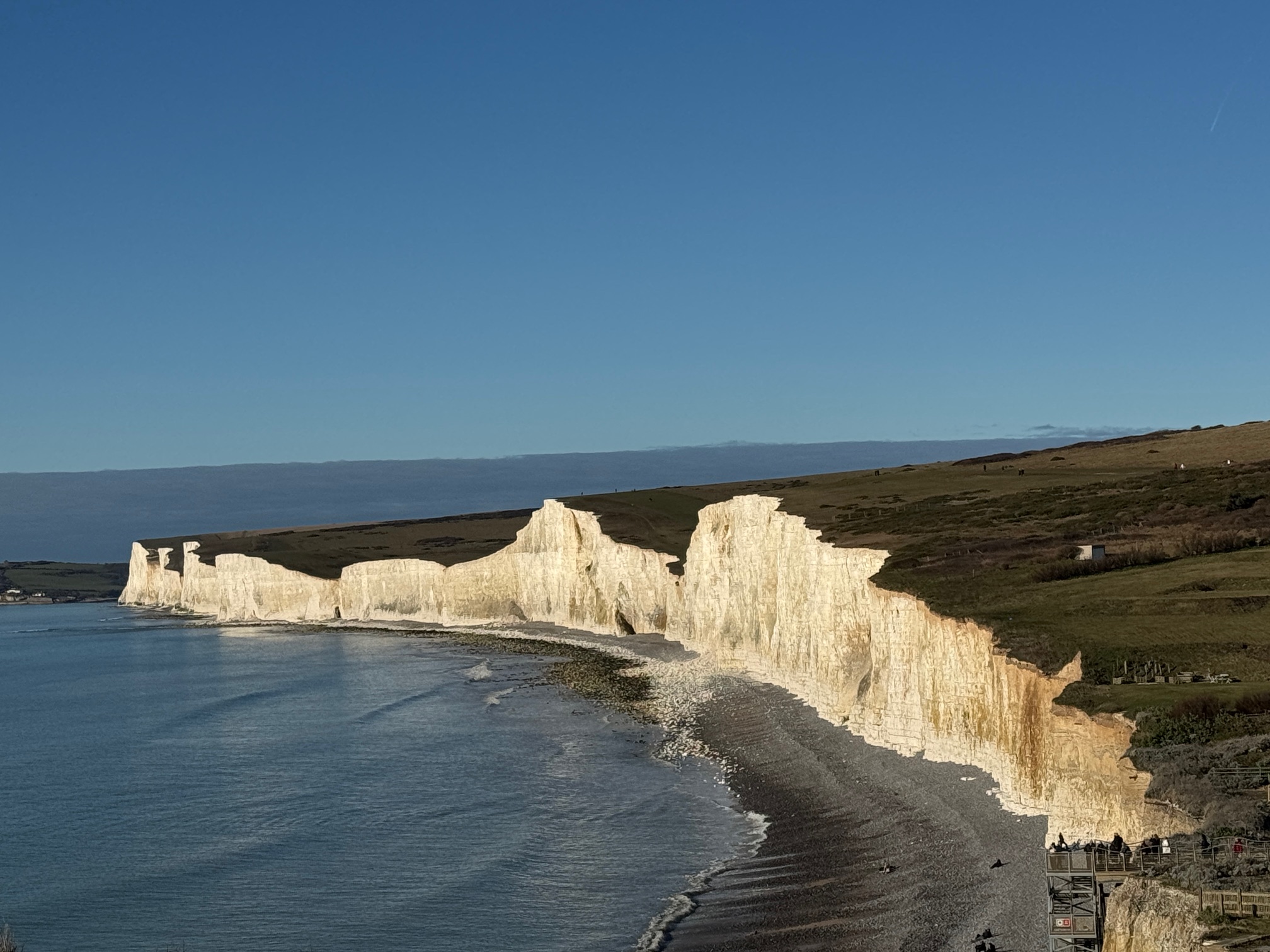
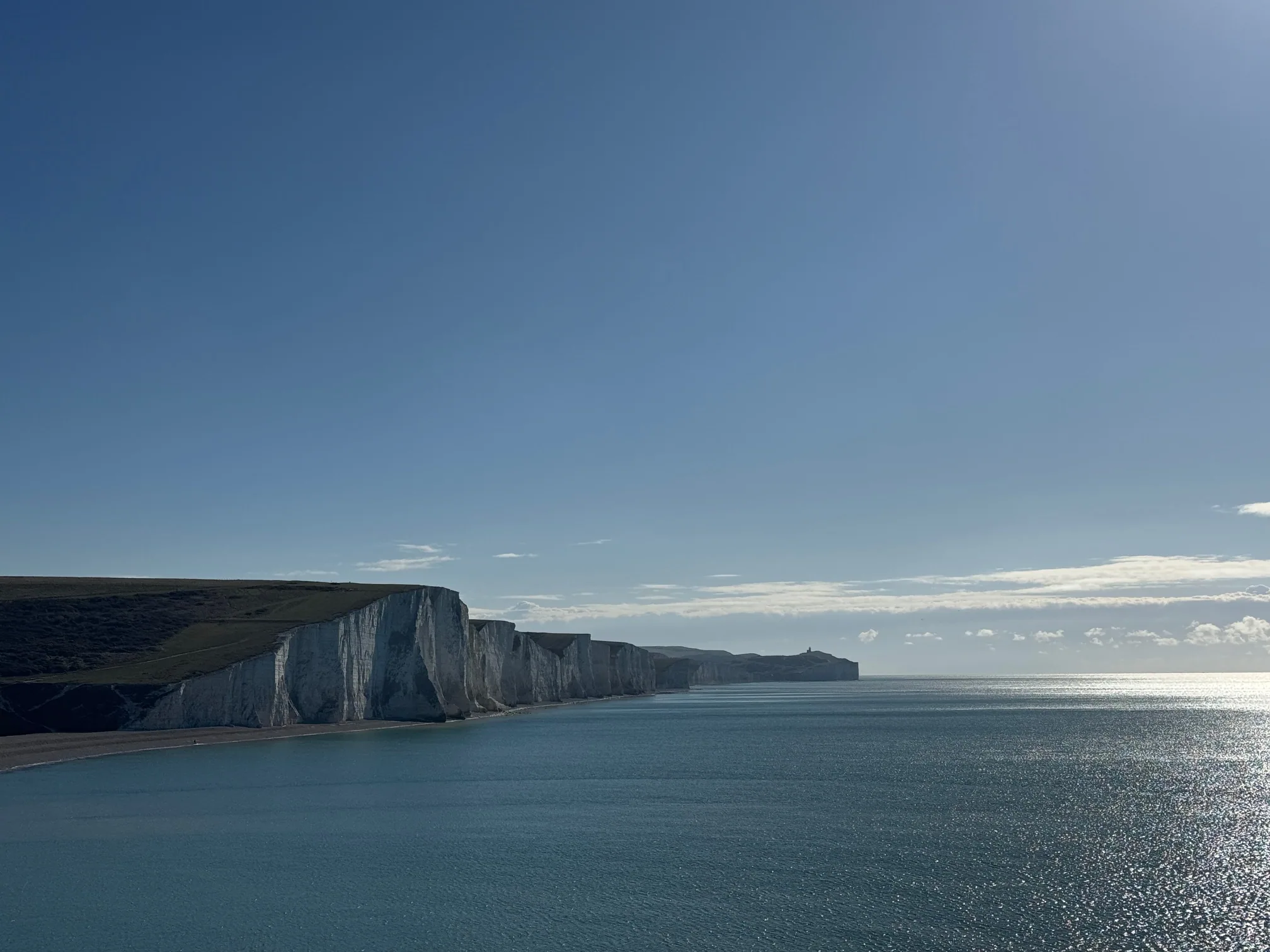
Seven Sisters is not one continuous cliff face. It is seven distinct headlands — seven "sisters" — each with its own peak, separated by dry valleys that descend to the cliff edge. The highest is Haven Brow at 77 metres. What Seven Sisters lacks in raw height it makes up in topographic variety: walking along the top is a constant series of ascents and descents, with the cliff geometry changing at every peak. The alternation of white chalk face and green valley, repeated seven times, is what produces the photographs that look like rolling waves of cliff.
A useful way to think about it: the White Cliffs of Dover are a wall. Seven Sisters is a ridge with character.
The Visit Experience
This is where the difference is most significant, and where most confusion arises.
At Dover, the most famous viewpoint requires walking along managed paths and looking at the cliffs from above or from a distance. The specific view that most people associate with the White Cliffs of Dover — the long white wall stretching along the coastline, seen from slightly offshore — is what you see from a ferry, not what you see standing on top. From the top, you see the sea and France. The cliff face is below you and behind you simultaneously. It is a different view to what the photographs suggest.
At Seven Sisters, the experience is walking along the top of the cliff for 6km while the cliff performs around you. Because the headlands jut out at different angles, you are frequently looking back at the previous cliff face you just walked across, and forward at the next one. The cliff is always in view. The structure of the seven-sister ridgeline means that at almost any point on the walk, there are white chalk faces visible in multiple directions. The photograph of Seven Sisters that most people recognise — the chalk wall stretching west, viewed from the first peak above Birling Gap — is something you see from exactly the place you walk. The famous view and the walking route are the same thing.
Seven Sisters also has beach access at Birling Gap (metal steps down to the beach at the base of the cliff) and at Cuckmere Haven. Standing at the base of the chalk and looking upward — watching the cliff reach 60–70 metres above you, the chalk face catching morning light — is an experience that is not available at Dover without specific boat access.
The Association with England and the Second World War
The White Cliffs of Dover carry specific historical and cultural resonance that Seven Sisters do not. The cliffs at Dover were the last thing soldiers saw leaving for France and the first thing they saw returning — or not returning. The Vera Lynn song "The White Cliffs of Dover" refers to Dover specifically. The connection between those cliffs and a particular version of English wartime identity is part of why they are famous in a way that Seven Sisters, for all its visual drama, is not.
If you are visiting England and the White Cliffs of Dover are on your list because of that historical meaning — because you want to stand where that specific emotional geography has been, to see what they saw — go to Dover. That is the right choice and Seven Sisters is not a substitute.
If you are visiting England and you want the most spectacular chalk cliff walk, the best photography, and the most rewarding full-day experience — go to Seven Sisters. The historical resonance is different (this is the South Downs, this is the landscape of wildflowers and smugglers and Eric Ravilious paintings), but the experience is better.
The practical question most people are actually asking: which one should I go to on my trip? If you only have time for one, and your priority is the walk and the scenery rather than the Dover-specific history, Seven Sisters is the answer. If both are feasible, they are different enough to be worth doing separately.
Which Is More Accessible from London?
Dover is closer to London geographically — about 80km from central London versus 105km to Birling Gap. But the access comparison is more nuanced than distance.
Dover by train is around 60–75 minutes on Southeastern services from St Pancras or London Bridge. The station is in the town. Getting to the South Foreland clifftop walk from the station requires either a bus or a 40-minute walk through town — a detail that most articles omit. The iconic viewpoints at the White Cliffs are not in walking distance of the station in any convenient sense.
Seven Sisters by train is approximately 1 hour 30 minutes to Eastbourne or 1 hour 25 minutes to Seaford, then a bus (or, from Seaford, a 25-minute walk). The total journey time is longer. But the train journeys pass through genuinely nice countryside, and the arrival at Birling Gap or Exceat puts you immediately at the start of the walk, not 40 minutes of town walking away from it.
By car: Dover is 90 minutes from London. Seven Sisters is 90 minutes to 2 hours from London depending on traffic. Roughly equivalent. Seven Sisters parking, on weekdays and in shoulder season, is easier to manage than the Kent coast on busy summer days.
What the Films and TV Shows Got Wrong
A specific source of confusion: several major films and television productions that are set at the "White Cliffs of Dover" were actually filmed at Seven Sisters. The distinctive seven-peak ridgeline of Seven Sisters photographs more dramatically than the Dover cliffs — it reads more clearly as "chalk cliff" from a film camera's perspective. The 2015 film Atonement used Seven Sisters. Several BBC productions have done the same.
If you saw a film and thought "I want to visit those white cliffs," there is a meaningful chance the cliffs you saw were Seven Sisters, even if the dialogue said Dover. This is worth knowing before you plan your trip.
Quick Reference: Seven Sisters vs White Cliffs of Dover
- Location: Seven Sisters = East Sussex, near Eastbourne. White Cliffs = Kent, at Dover. About 85km apart along the coast.
- Height: White Cliffs of Dover up to 110m. Seven Sisters up to 77m (Haven Brow). Dover is taller.
- Walk: Seven Sisters has a 6km ridge route with seven peaks. Dover has a managed National Trust path along the clifftop. Seven Sisters is the better walk.
- Beach access: Seven Sisters has steps to the beach at Birling Gap and Cuckmere Haven at low tide. Dover has limited beach access at the cliff base.
- From London by train: Dover: 65–75 min to the town (not the cliffs). Seven Sisters: approx 1 hr 25 min to Seaford or 1 hr 30 min to Eastbourne, then bus or a 25-minute walk.
- For historical/cultural significance: White Cliffs of Dover. For the best cliff walk experience: Seven Sisters. For the view from the films: probably Seven Sisters.
Planning a Seven Sisters Visit
For the complete route guide to Seven Sisters with distances, timings and starting points, see our complete walk guide. For getting there from London by train, see our London transport guide. For the geology of the chalk and why it looks the way it does, see our geology guide.
Planning the walk itself?
Four routes run along these cliffs and they are not interchangeable — a flat 3km riverside stroll, the classic 6.5km Exceat to Birling Gap crossing, a short Birling Gap loop, and the full 21.9km Seaford to Eastbourne ridge. Compare distance, ascent and difficulty before you pick one.
- Easy Birling Gap Short Loop 2 km 45 min
- Easy Cuckmere Haven Beach 3 km 1 hour
- Moderate Exceat to Birling Gap 6.5 km 2-3 hours
- Challenging Seaford to Eastbourne 21.9 km 6-7 hours
We may earn a small commission on bookings made through this link, at no extra cost to you. More info.
£4.99 · 24-page PDF · Instant download
The Seven Sisters Ultimate Guide
The complete 24-page companion built from first-hand walks — every cliff, all four graded routes, tide windows and a parking strategy. Designed to work offline, right on the cliff top.
- All 7 cliffs — heights, geology & viewpoints
- Four graded walking routes, compared
- Tide windows, light calendar & day plans
- Parking strategy & seasonal planner
Just want the basics? Download the free 2-page walk guide
Want an expert-led Seven Sisters tour?
From guided cliff walks and wildlife safaris to geology hikes and photography tours — explore all our curated experiences with local guides.