Seven Sisters After a Storm: When to Return, What Changes, and the Hidden Rewards
Seven Sisters After a Storm
The 48-hour window that most visitors never think to use — and why it produces some of the best experiences on the coast
Most visitors wait for the weather to clear before visiting Seven Sisters. They check the forecast, see rain or strong winds, and postpone. What they miss is that the 24 to 48 hours after a storm passes is one of the most rewarding windows of the entire year to visit — the cliffs are dramatically altered, the air is scrubbed clean, the sea is still churned and vivid, and there are almost nobody else there. This guide covers what happens to the site after bad weather, what is safe to do, what is worth looking for, and how to approach the visit correctly.
What a Storm Does to Seven Sisters
The chalk cliffs at Seven Sisters are in constant motion. Erosion is not a slow, invisible process — it is punctuated by events, and storms are the most significant of those events. A night of heavy rain followed by strong onshore winds can change the cliff face measurably. The sequence is predictable: rain saturates the chalk, which weakens the bond between layers. Wave action at the base undercuts the cliff. The overhang fails. Chalk falls.
After a significant storm you will typically find:
- Fresh chalk debris on the beach. Sometimes small rubble; sometimes massive white boulders that were part of the cliff face 12 hours earlier. These falls can be spectacular in scale — chunks of chalk the size of a house are not unusual after a severe storm.
- A whitened sea. The chalky water around fresh falls turns an extraordinary pale turquoise-white, quite unlike the usual deep blue-green. From the clifftop looking down, a fresh fall turns the sea below it almost opaque.
- Exposed fossil beds. Fresh cliff faces expose material that has been inside the chalk for millions of years. The storm debris on the beach frequently contains ammonites, bivalves, echinoids, and other Cretaceous fossils that are visible on the surface of newly fallen chalk.
- Changed paths. Clifftop paths can be affected by the storm. Erosion of the cliff edge is sometimes rapid enough to alter the path line overnight. The National Trust or South Downs National Park may have closed sections.
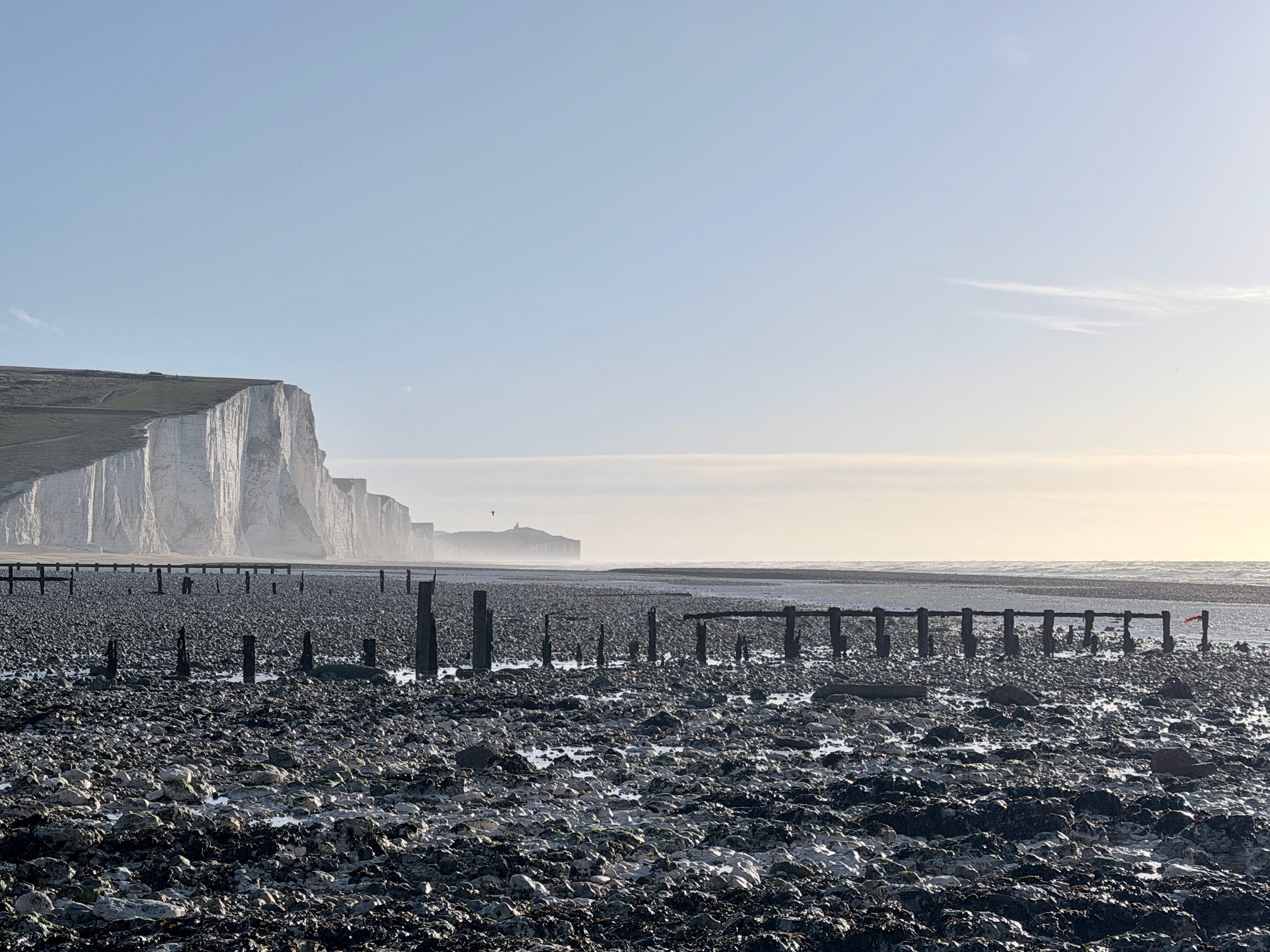
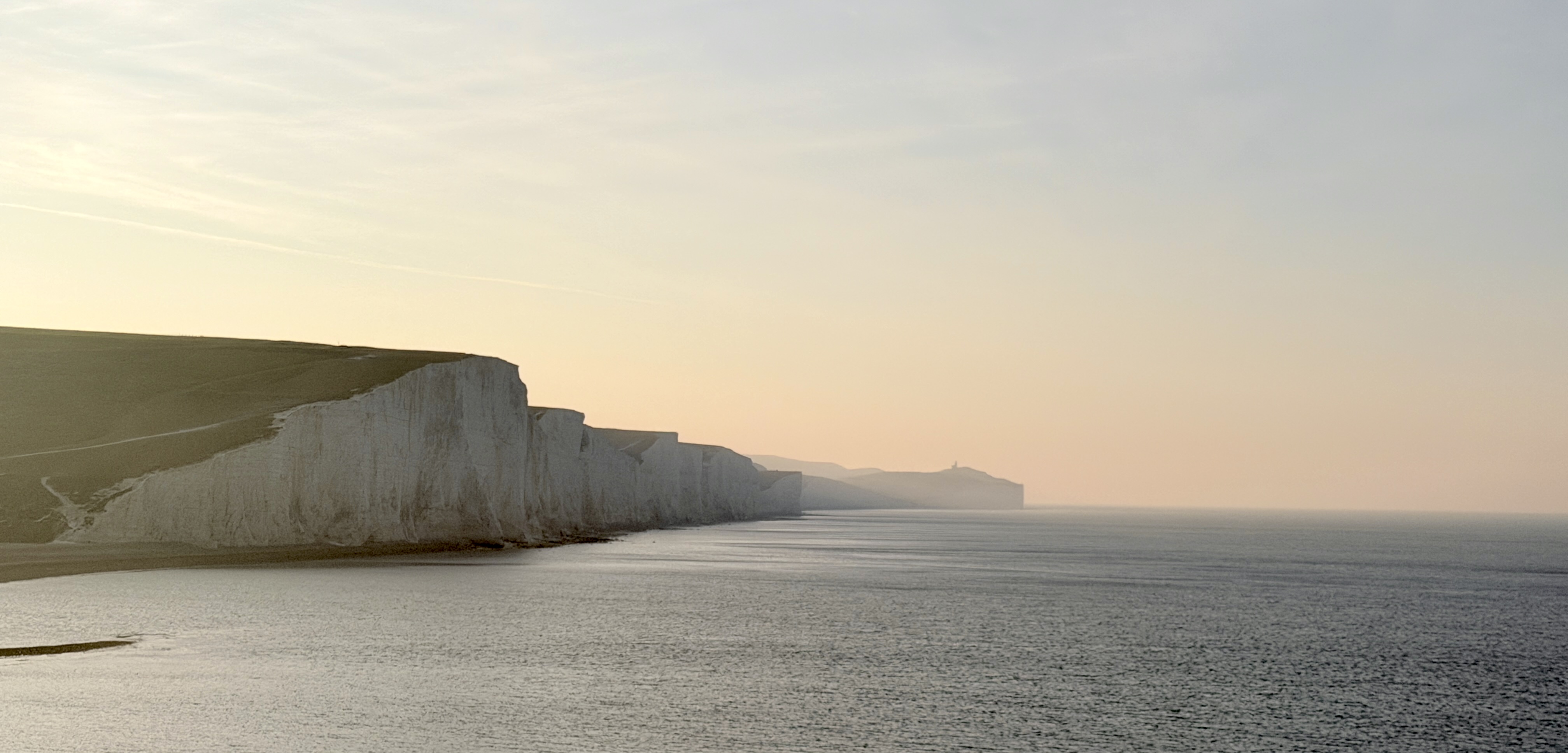
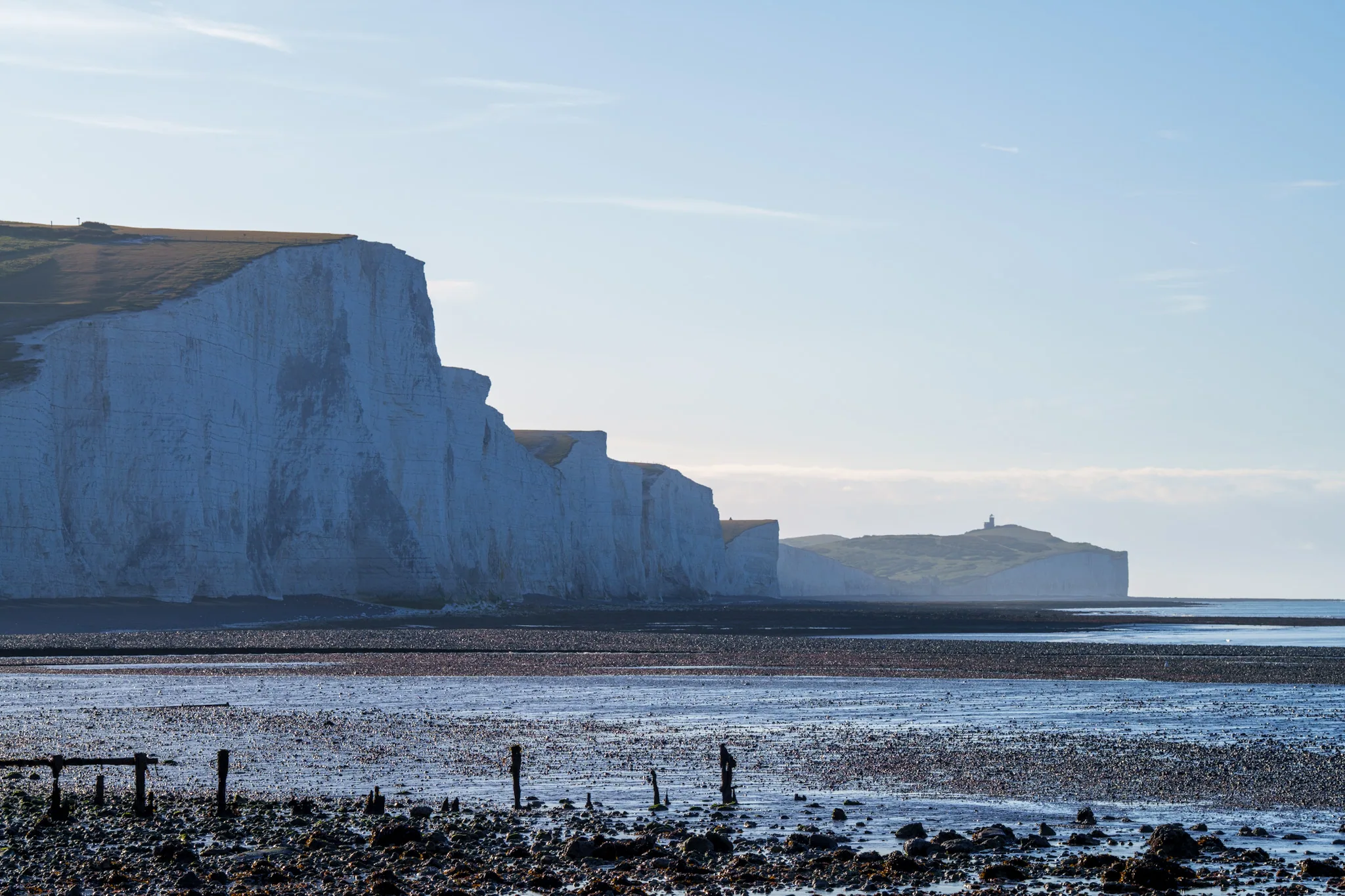
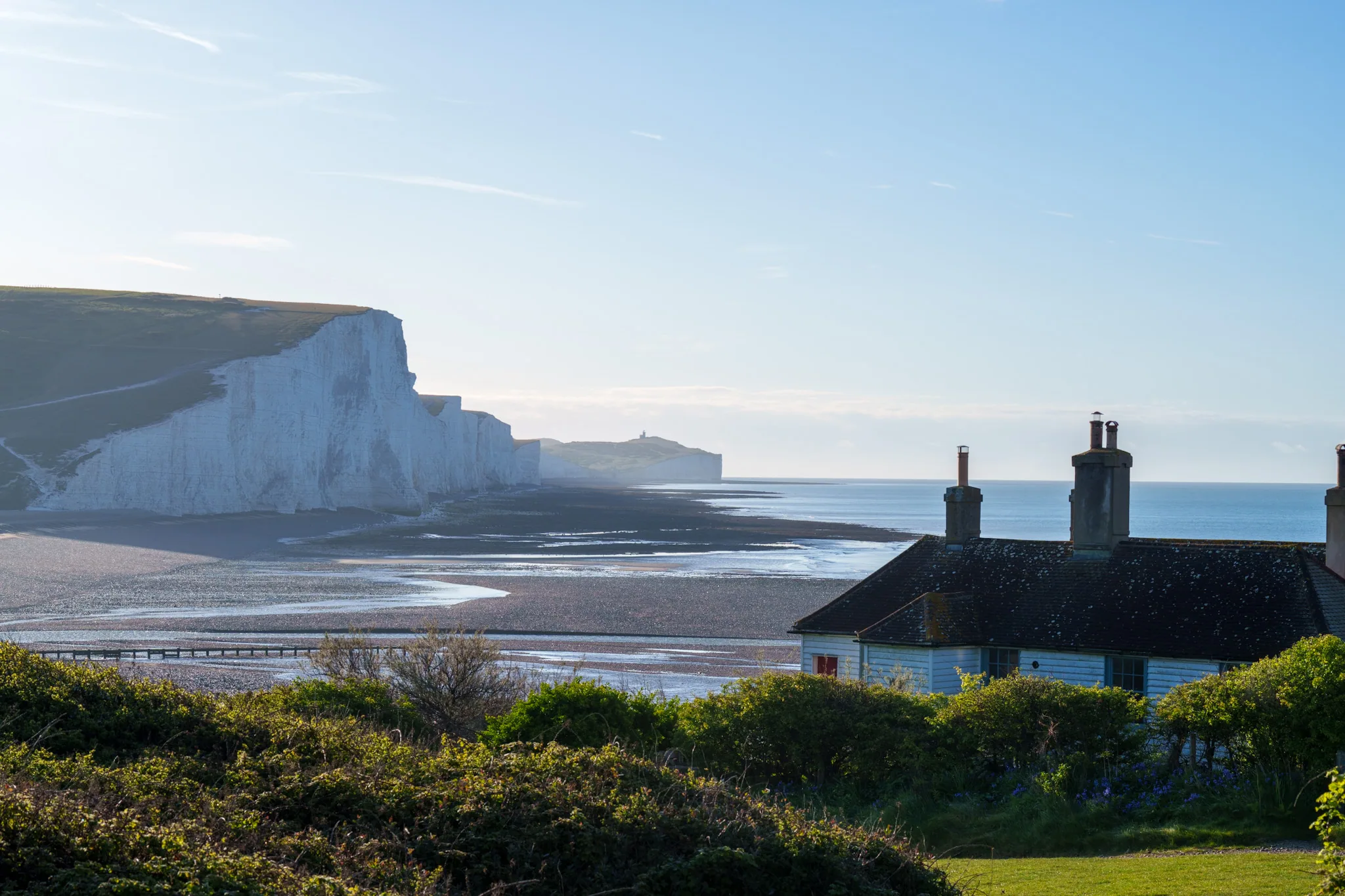
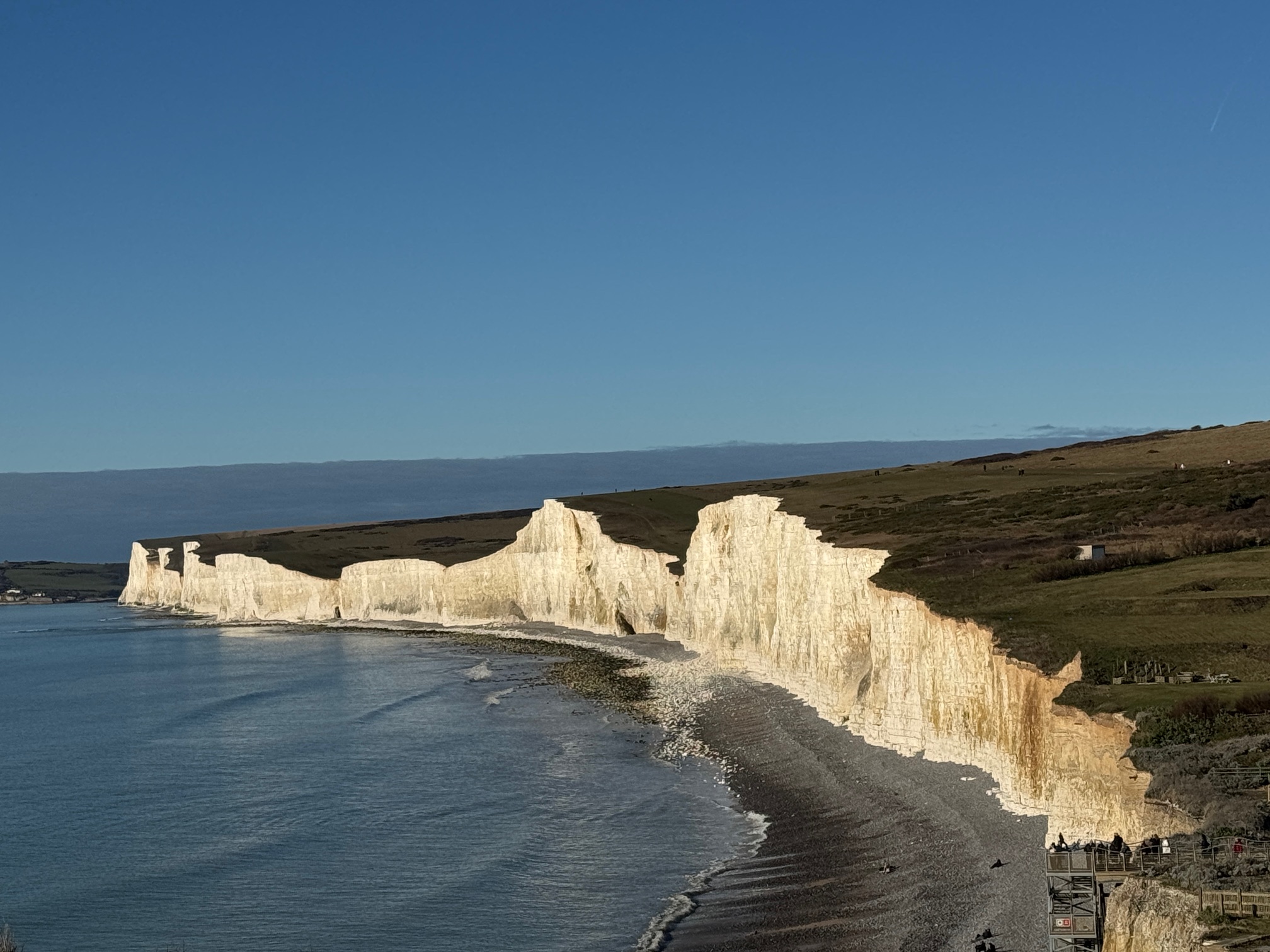
- Dramatically altered light. The air after a storm at the coast is genuinely cleaner. Visibility can extend 30 to 40 miles. The chalk appears whiter against a post-storm sky than at almost any other time.
The Safety Rules — Read These Before Going
Post-storm visits require more care than a standard sunny-day walk. The cliff edge is the primary risk, and it is a higher risk than usual in the hours after a storm.
Stay well back from the cliff edge
The standard advice at Seven Sisters is to stay at least 5 metres from the cliff edge at all times. In the 48 hours after a significant storm, treat that as a minimum and err considerably further back. The ground near the edge may have been weakened by rain saturation and is not visually distinguishable from stable ground. The falls that occur in the days after a storm are often secondary — the main event has passed but destabilised sections continue to release.
Check the beach access situation before descending
If you plan to visit the beach at Birling Gap, check the steps are open before travelling — the National Trust closes them during and immediately after storms when there is active debris or wave risk. Their website and social media carry closure notices. Going down to the beach in the immediate aftermath of a major storm requires specific caution: fresh chalk falls mean unstable boulders on the beach, and wave action may still be significant even if the wind has dropped.
Do not stand below fresh falls
This is not a minor precaution. Fresh chalk falls are unstable. The cliff face above a recent fall is the most likely point for a secondary release. Do not position yourself beneath it or directly in front of it on the beach. View from a distance.
Check the path status
The South Downs National Park and National Trust both post path closures on their websites. After a significant storm, it is worth checking before setting out whether the clifftop path between Birling Gap and Cuckmere Haven is fully open.
What to Look For: The Post-Storm Rewards
Fossils in fresh debris
This is the most tangible reward of a post-storm visit. The beach at Birling Gap after a cliff fall is scattered with freshly exposed chalk containing Cretaceous fossils — ammonites, sea urchins (echinoids), bivalves, and occasionally larger finds. You are looking for pieces of chalk with clearly patterned surfaces, star-shaped impressions, or ribbed spiral forms. The chalk weathers quickly once exposed, so fossils visible immediately after a fall become harder to see as the surface bleaches and breaks up over subsequent weeks. The 24-to-72-hour window is optimal.
You are not permitted to extract fossils from the cliff face (the site is an SSSI) but fossils found loose on the beach can be taken under the terms of the Marine and Coastal Access Act. Keep what you find reasonably modest — taking a handful of specimens is fine; systematically clearing the beach is not.
The chalk-white sea
Photographically, the chalky white water below a fresh fall is unlike anything else on the Seven Sisters coast. The contrast between the white cliff, the pale milky sea immediately below the fall, and the dark blue-green sea beyond it is one of the most striking images the site produces. From the clifftop, the effect lasts roughly 24 to 48 hours before tidal action disperses the chalk suspension.
The empty cliff path
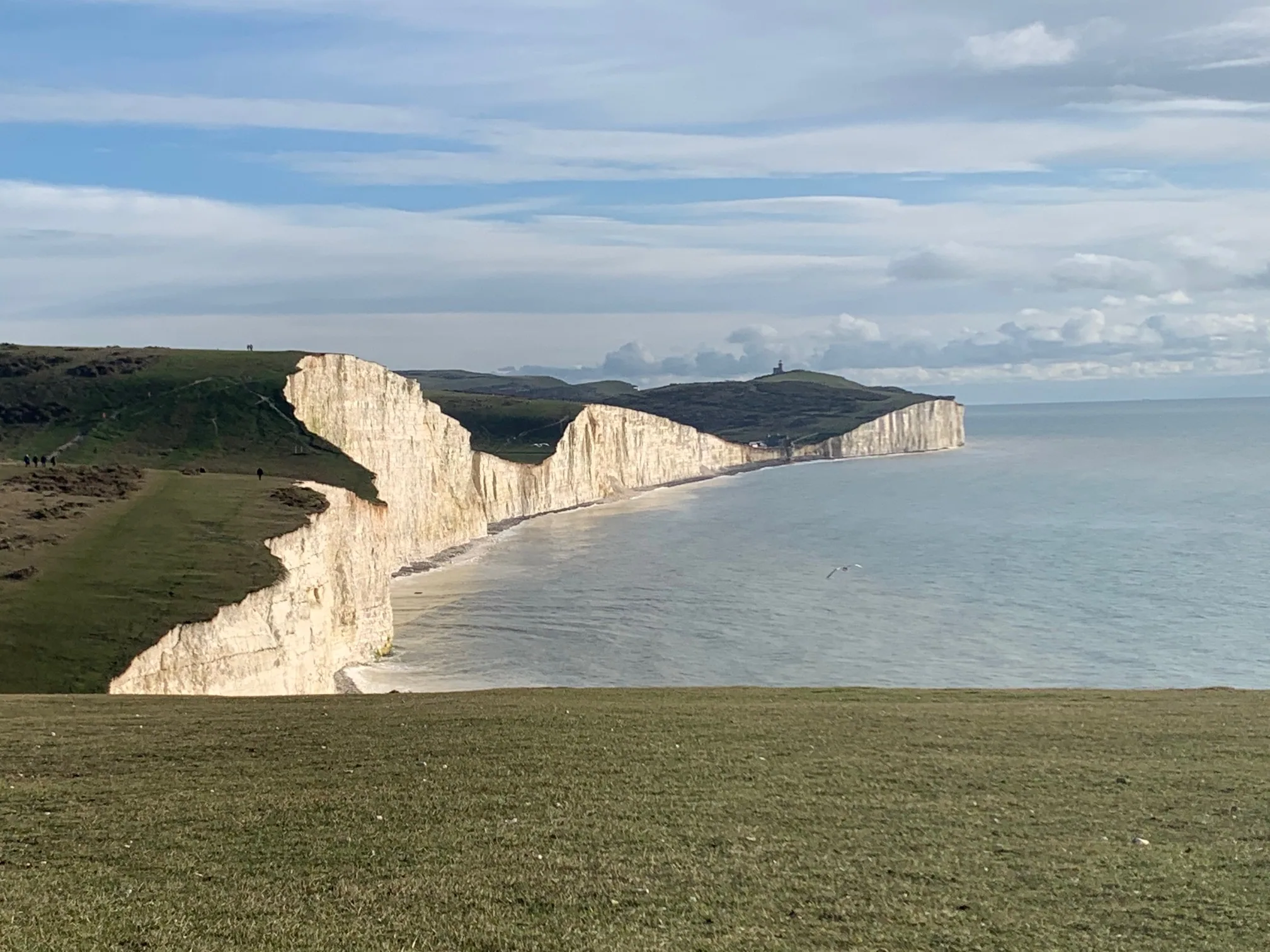
In August, the Seven Sisters clifftop path between Birling Gap and Cuckmere Haven holds hundreds of people on a clear day. After a storm, the number drops dramatically. Many people have postponed their visit. The path is quieter than it will be for months. You get the full experience of the coast — the sound of the sea, the wind across the grassland, the uninterrupted views — in a way that is simply not available on a busy August weekend.
Post-storm birdwatching
Bad weather grounds migrating birds. A storm with easterly or south-easterly winds, followed by clearing conditions, can produce extraordinary concentrations of migrants on the clifftop scrub. In autumn in particular, the morning after a storm is the single best day of the year for seeing migrant passerines — warblers, flycatchers, chats — resting in the vegetation along the path before moving on. The bird migration guide explains what to look for by month.
Which Access Point Is Best After a Storm
Birling Gap
The primary location for post-storm visits. The National Trust café provides a base and is usually open unless the storm was severe enough to cause structural damage. The beach (if the steps are open) gives direct access to the fall debris. The clifftop path west toward Cuckmere Haven provides views of the full Sisters line in post-storm lighting conditions that are exceptional.
Seaford Head approach
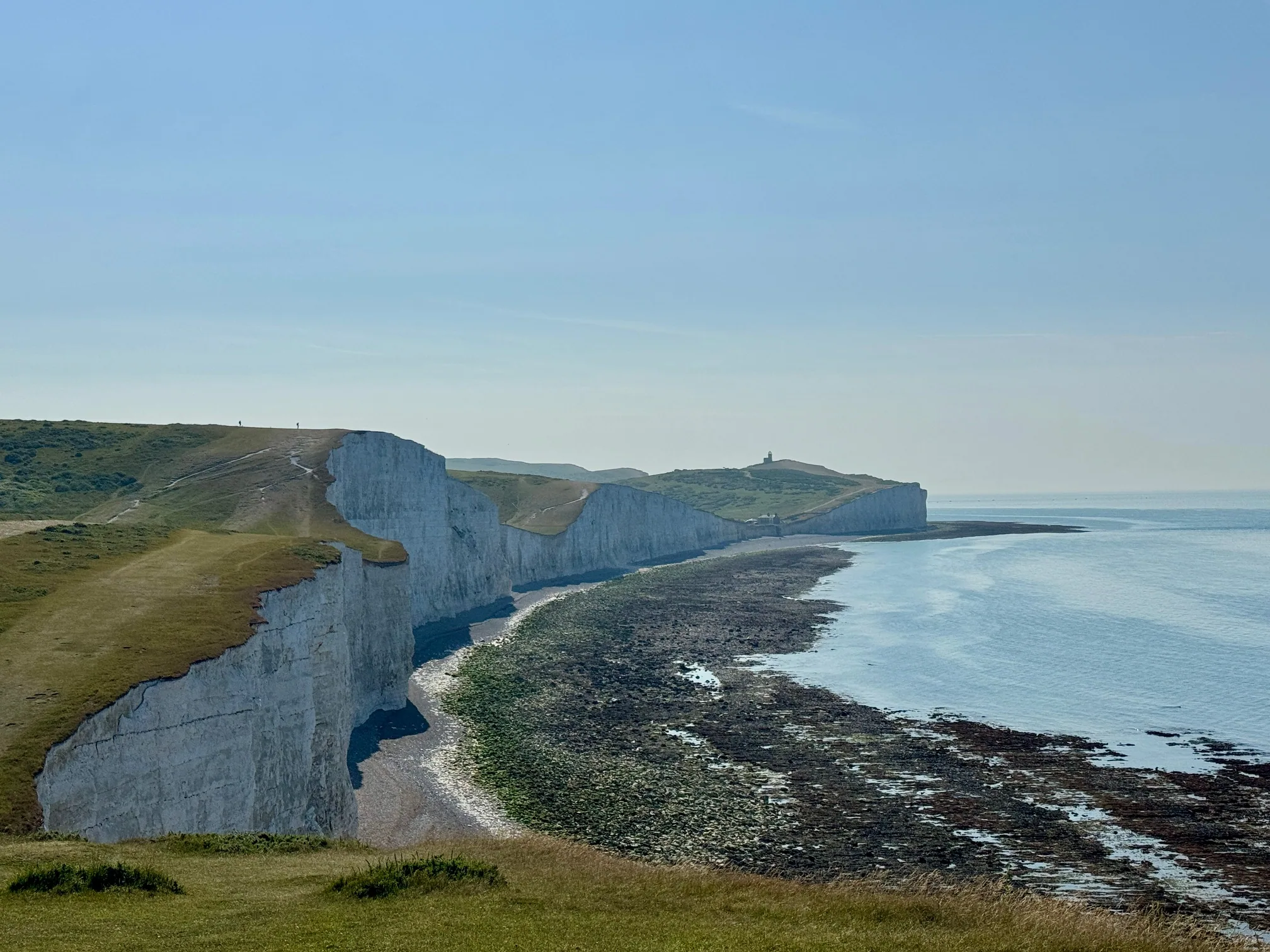
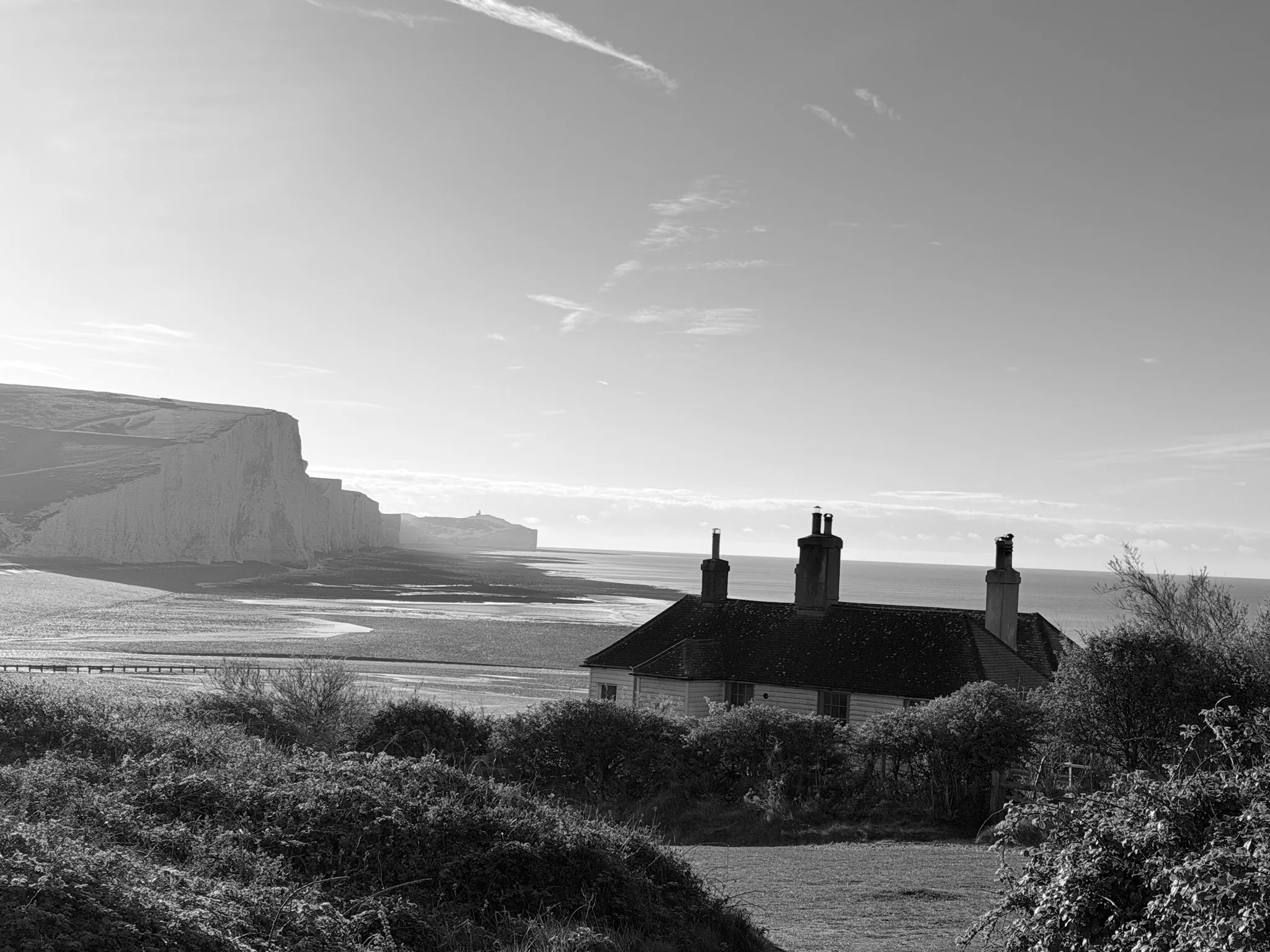
If you want to look at the Sisters from a distance and see the full cliff line including any visible fresh falls, the viewpoint above Hope Gap on the Seaford Head approach is ideal. You are positioned well back from the cliffs and looking along them, which gives a perspective on the scale and character of the cliff face that you cannot get from within the Sisters themselves.
Exceat (Cuckmere Valley)
The valley route from Exceat to the beach is the safest post-storm option for anyone uncertain about conditions — the path is flat, well away from cliff edges, and the beach at the Cuckmere Haven river mouth has a different character to Birling Gap. The Cuckmere estuary after a storm is also interesting for birdwatching, with waders and wildfowl pushed into the estuary by rough coastal conditions.
Photographing Seven Sisters After a Storm
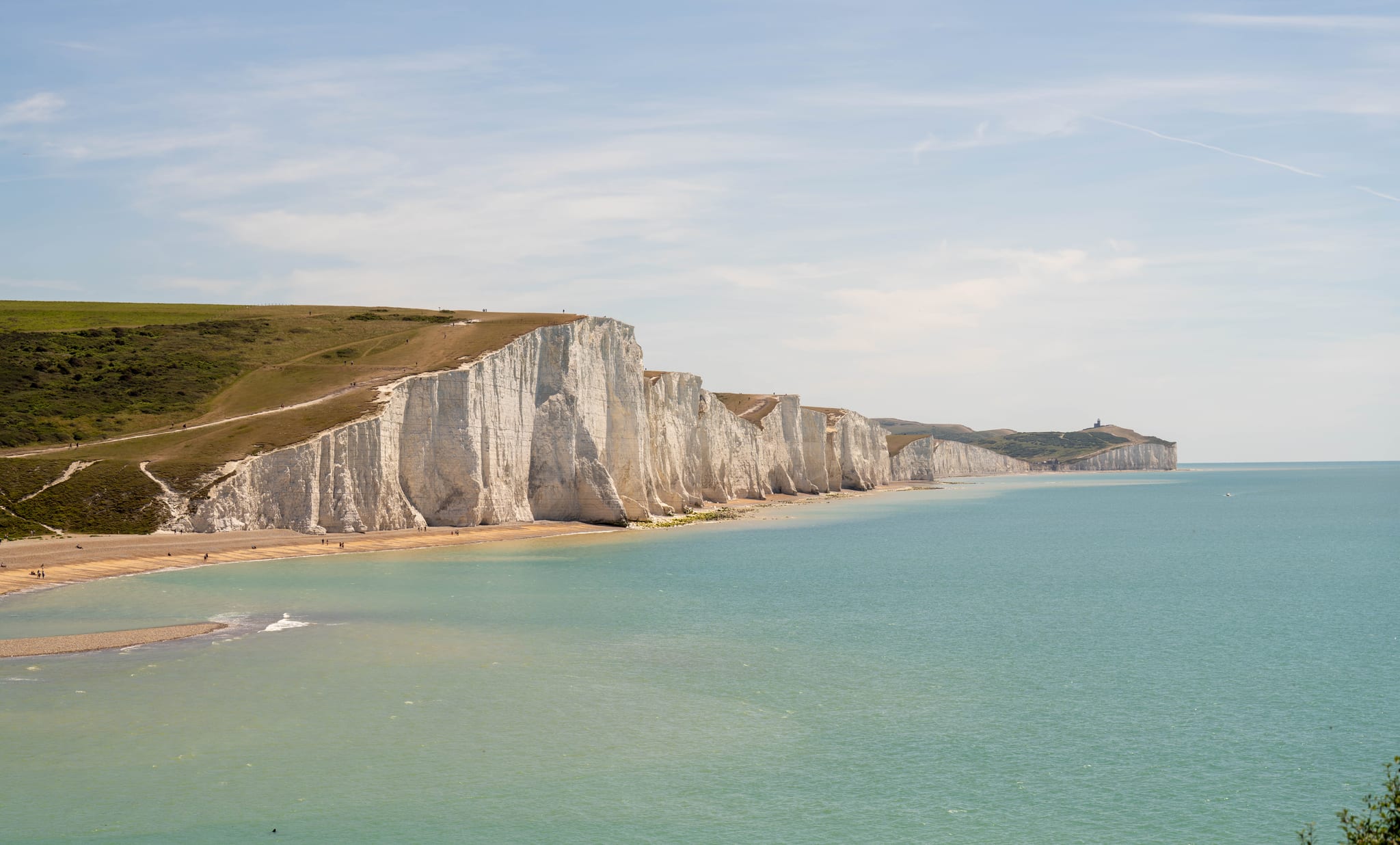
The light conditions after a storm are exceptional. The post-storm sky — often a mix of heavy cloud and sudden clearing intervals — produces the most dramatic light of the year. The chalk appears almost luminous against dark cloud. Rainbows over the channel are not uncommon. The combination of freshly cleaned air, moody sky, wild sea, and white cliffs is the classic dramatic Seven Sisters image, and it only occurs reliably after a storm has passed.
For photography: position yourself on the clifftop above Birling Gap looking west along the Sisters line. In the first hour after a storm clears, the interplay of light and shadow on the cliff faces changes by the minute as gaps in cloud move across the sun. A wide lens captures the full cliff panorama. A telephoto from Hope Gap allows detail shots of the chalk face that reveal the layering and the fresh fall debris at the base.
Plan Your Post-Storm Visit
The Seven Sisters weather patterns guide explains the storm season timing by month. For live cliff and path conditions, the National Trust posts updates when access changes.
Timing: When Is Storm Season?
The Sussex coast experiences significant storms in every month, but the pattern is not uniform. The most dramatic post-storm conditions tend to occur:
- August–September: Late summer Atlantic low-pressure systems. Often intense but brief. The post-storm clearing can produce spectacular conditions within 6 to 12 hours.
- October–November: The main autumn storm season. These storms are often slower and heavier than summer systems. The debris after an October or November storm is typically larger in scale.
- January–February: Winter storms. The most significant cliff falls historically occur in winter. The site is almost empty, the light is extraordinary, and the post-storm conditions can persist for days before tourists arrive to find them.
The flip side of summer is that storms in August and September clear faster — a storm overnight means good post-storm conditions by the following morning rather than waiting multiple days. The timing works well for visitors with flexible plans.
What Not to Do
- Do not ignore path closure signs. They exist because the edge has been assessed as unstable.
- Do not approach fresh cliff fall debris from directly below. View from a distance.
- Do not go in the sea immediately after a storm. Chalk turbidity aside, the swell may have dropped but rip currents and unpredictable wave action persist for 12 to 24 hours after the wind has calmed.
- Do not let children run on clifftop paths after heavy rain. The chalk grass paths are slippery when wet in a way that dry-day visitors do not encounter.
Approached correctly, the 48 hours after a storm at Seven Sisters is not a risk to manage but an opportunity. The site is never more itself than in the aftermath of bad weather — raw, dramatic, almost completely empty, and full of things to find and see that the sunny-day crowds entirely miss.
Planning the walk itself?
Four routes run along these cliffs and they are not interchangeable — a flat 3km riverside stroll, the classic 6.5km Exceat to Birling Gap crossing, a short Birling Gap loop, and the full 21.9km Seaford to Eastbourne ridge. Compare distance, ascent and difficulty before you pick one.
- Easy Birling Gap Short Loop 2 km 45 min
- Easy Cuckmere Haven Beach 3 km 1 hour
- Moderate Exceat to Birling Gap 6.5 km 2-3 hours
- Challenging Seaford to Eastbourne 21.9 km 6-7 hours
We may earn a small commission on bookings made through this link, at no extra cost to you. More info.
£4.99 · 24-page PDF · Instant download
The Seven Sisters Ultimate Guide
The complete 24-page companion built from first-hand walks — every cliff, all four graded routes, tide windows and a parking strategy. Designed to work offline, right on the cliff top.
- All 7 cliffs — heights, geology & viewpoints
- Four graded walking routes, compared
- Tide windows, light calendar & day plans
- Parking strategy & seasonal planner
Just want the basics? Download the free 2-page walk guide
Want an expert-led Seven Sisters tour?
From guided cliff walks and wildlife safaris to geology hikes and photography tours — explore all our curated experiences with local guides.