Walking the Seven Sisters in Wind and Rain: An Honest Guide to the Autumn Shoulder Season
Walking Seven Sisters in Wind and Rain
Most people cancel when the forecast turns. The ones who go anyway find a completely different coast
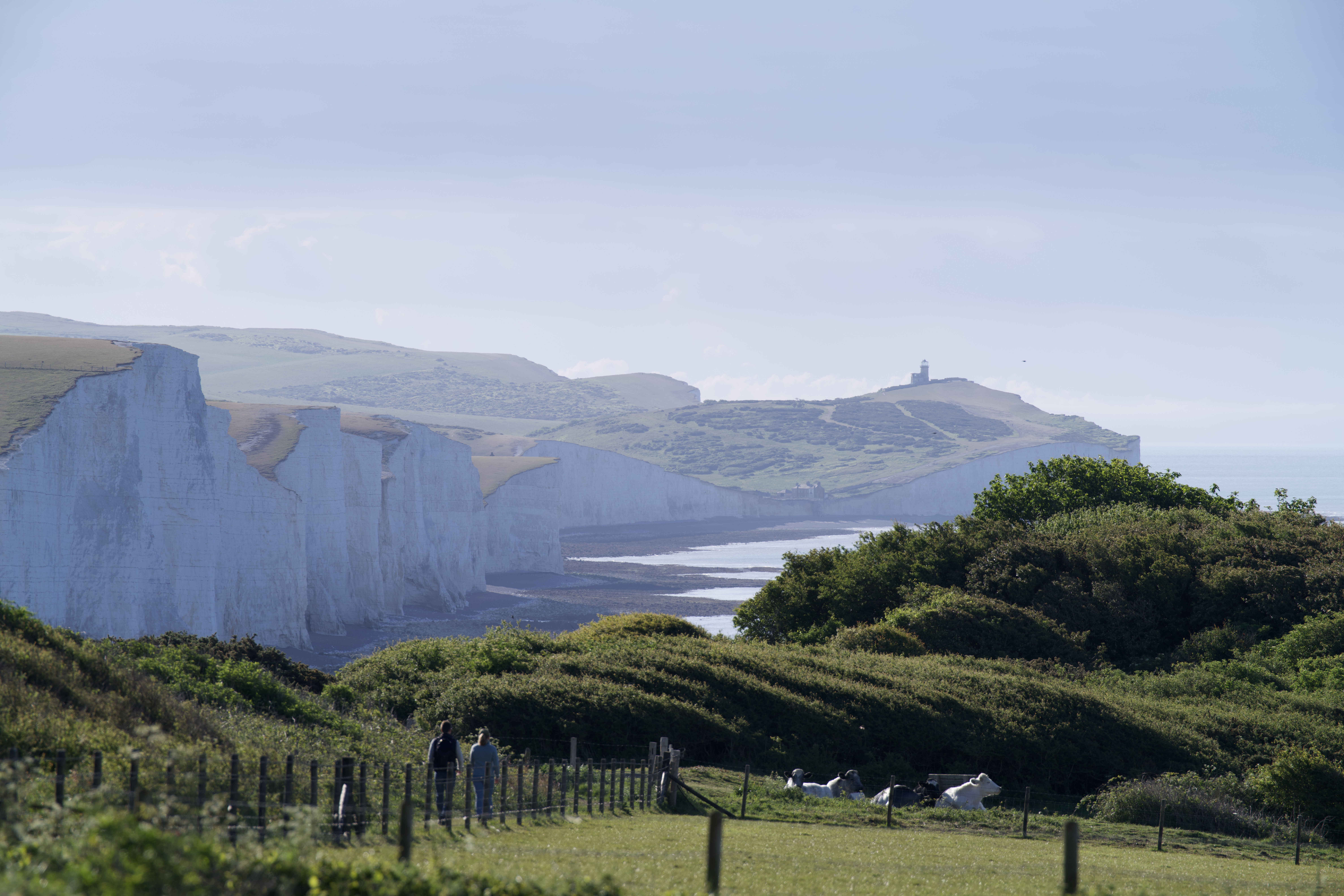
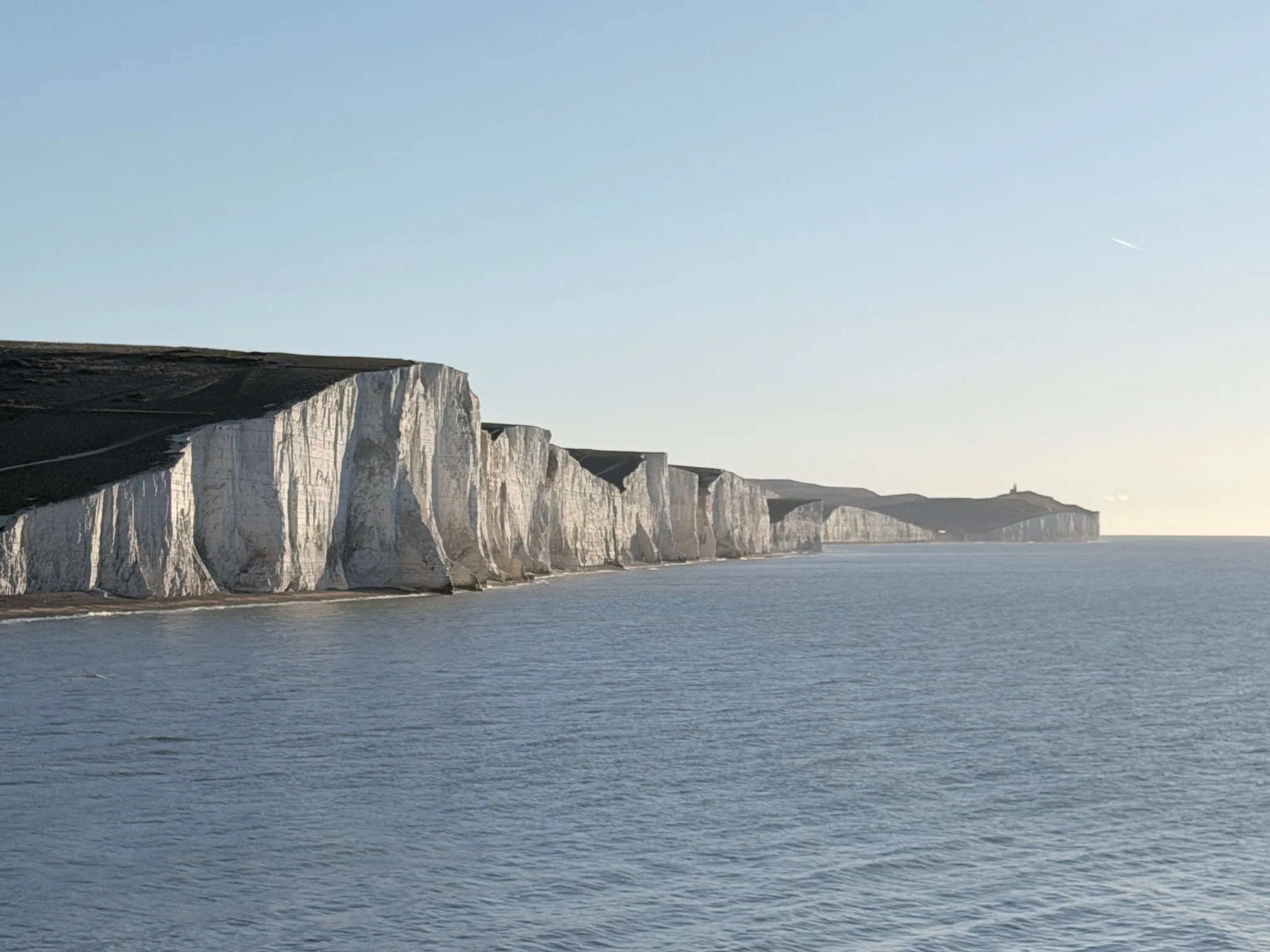
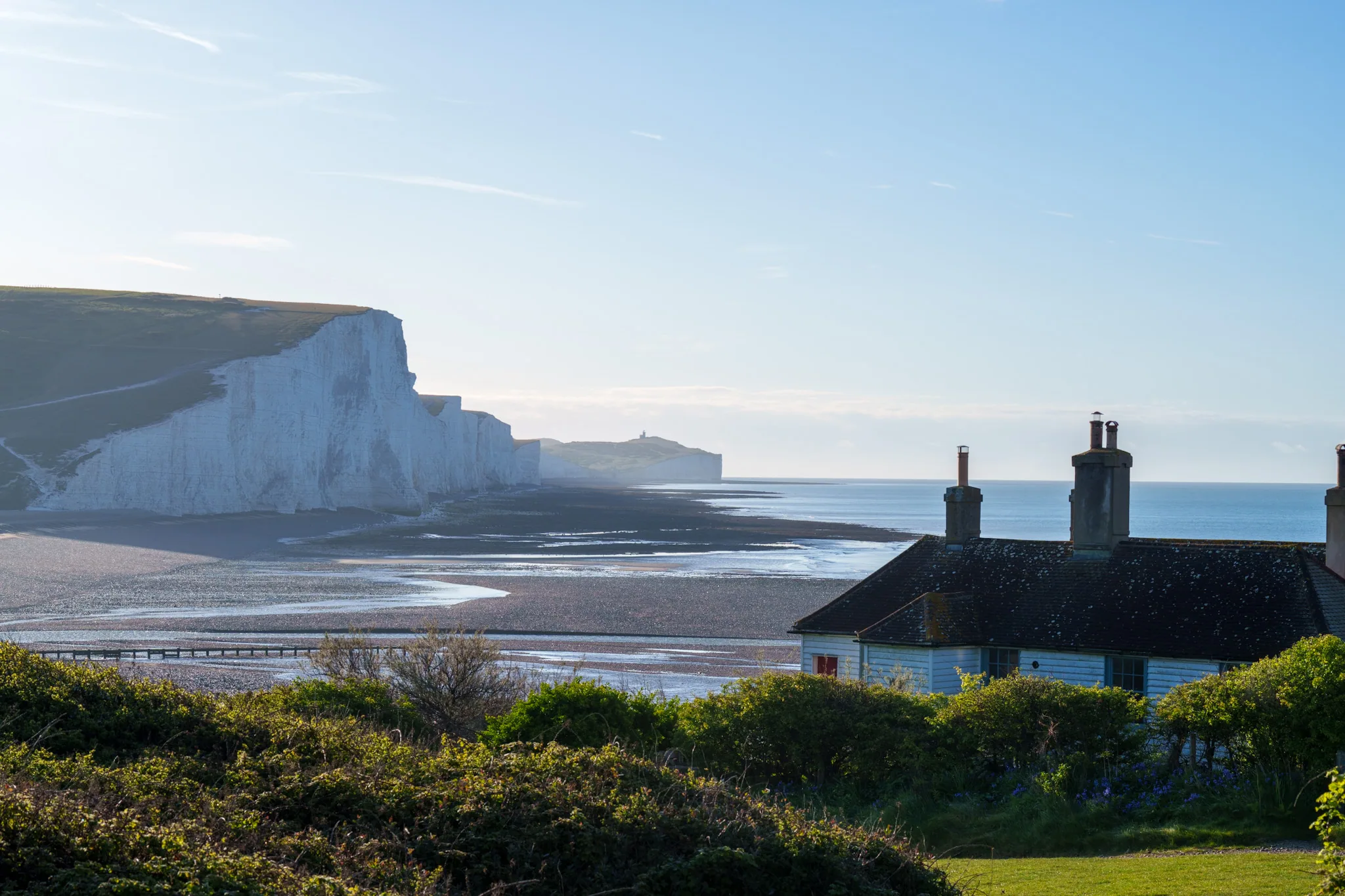
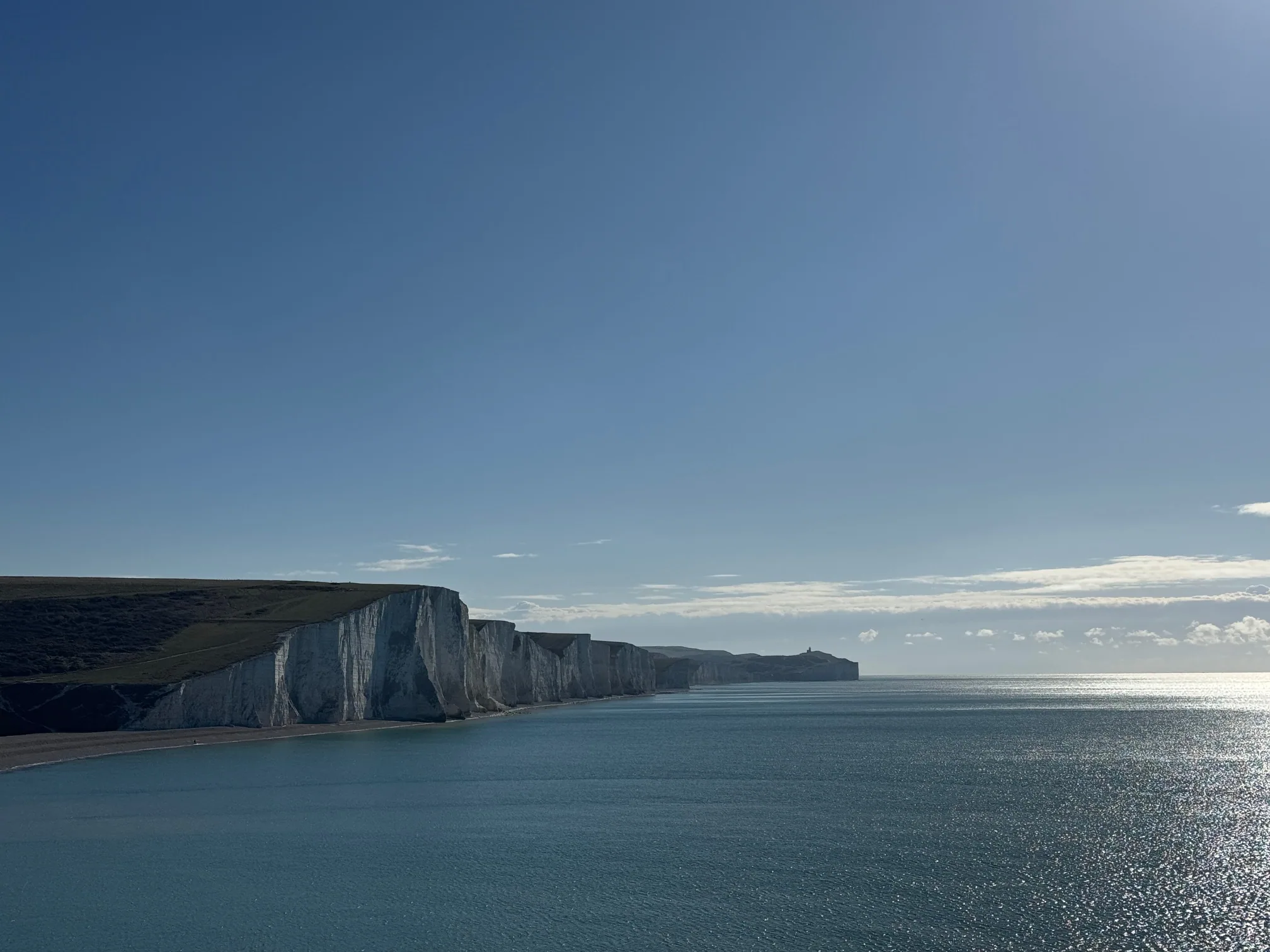
The Seven Sisters in rough weather is not a lesser experience. It is a different one — and for a specific kind of visitor, it is the better one. The chalk cliffs under grey autumn skies, with the Channel heaving below and the wind pressing hard off the sea, are more elemental and more dramatic than anything the site produces on a calm summer afternoon. The crowds are gone. The path is yours. The cliff edge sounds like nothing else in England. This guide is for the people who look at a forecast showing 25mph winds and intermittent rain and think: that might actually be good.
What Makes Rough Weather Walking Good Here
Several things converge at Seven Sisters in bad weather that make it worth going rather than waiting:
Empty paths
A forecast of rain removes approximately 80% of the visitors who would otherwise be there. The clifftop path between Cuckmere Haven and Birling Gap — which in summer can hold hundreds of people — on a wet September or October morning might have a dozen. The car parks have space. The café has seats. The cliff edge feels like it belongs to you in a way that the height of summer never allows.
Dramatic sea conditions
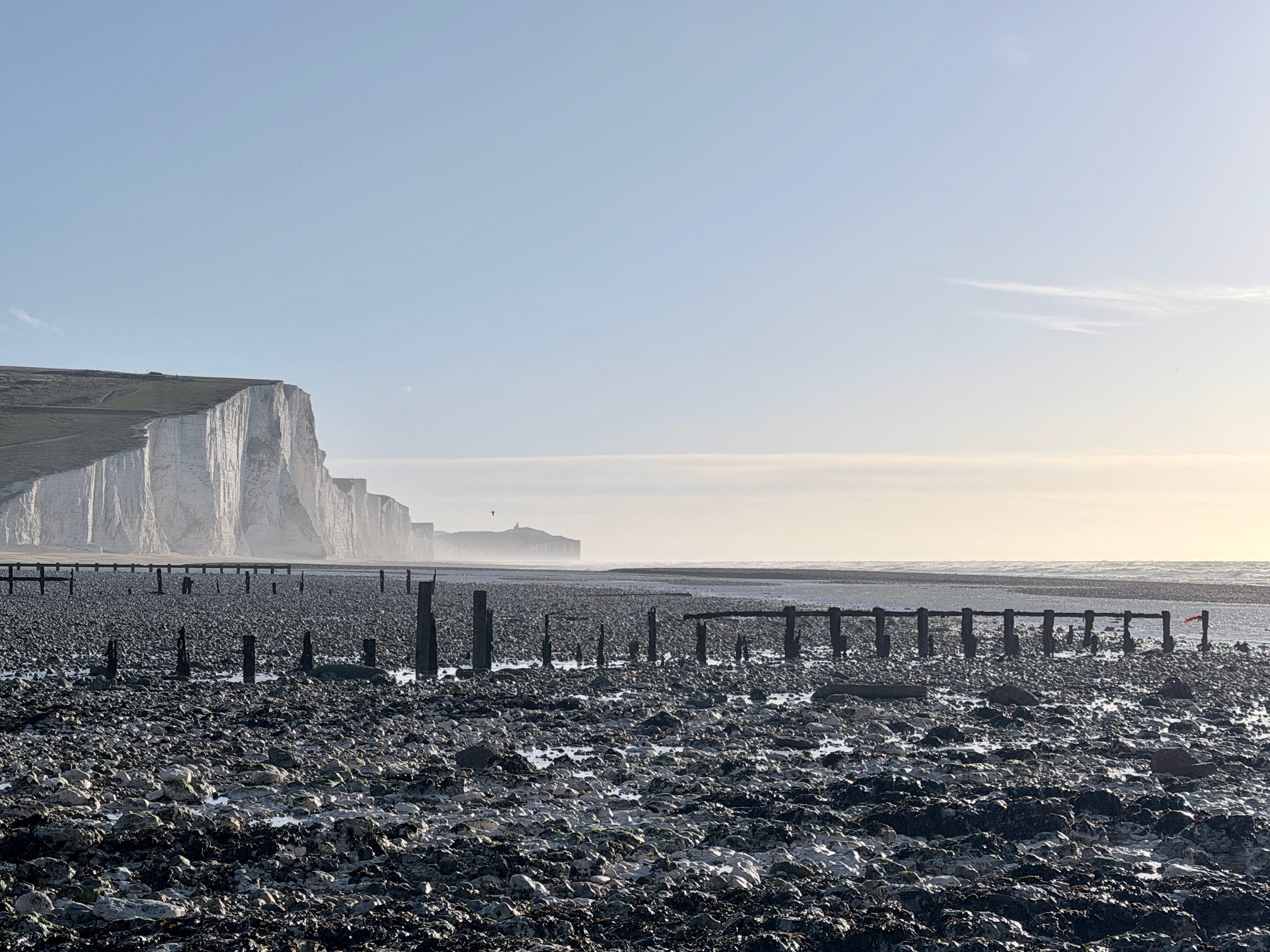
The Channel in rough autumn weather is not the flat blue surface of a July postcard. It is grey-green, heaving, breaking white at the cliff base in a way that makes the scale of the cliffs viscerally clear. Watching a sustained swell reach the chalk platform below Birling Gap from the clifftop is one of the more impressive things the Sussex coast produces. The spray reaches surprising heights on the bigger sets. The noise — a periodic deep concussion as each wave takes the cliff base — carries up to the path above.
Photography conditions
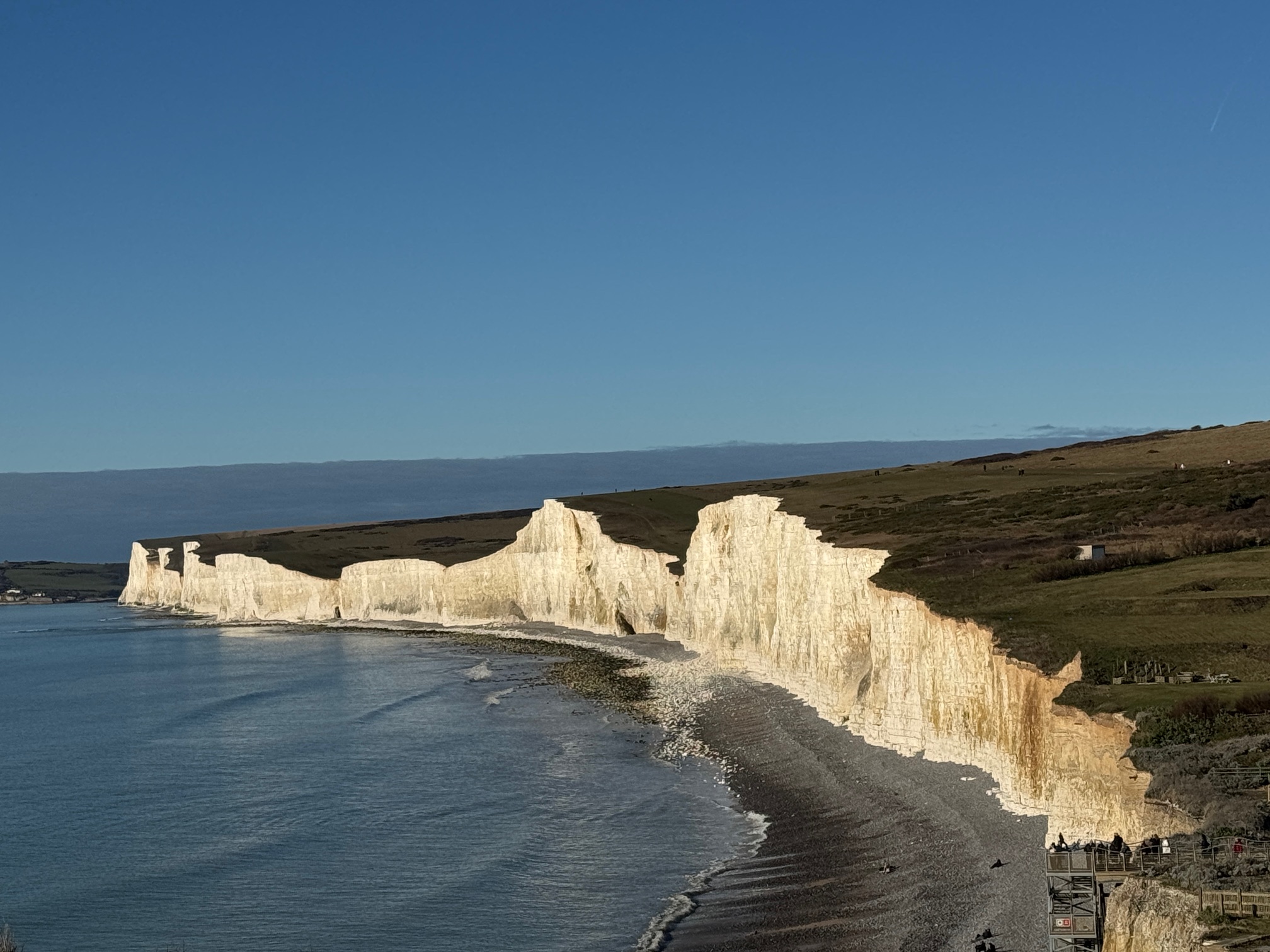
Dramatic skies, moving light, white spray against white chalk, and the absence of other people in shot. The autumn shoulder-season produces the photographs that look like they came from a different, more atmospheric coast than the one most summer visitors experience. The photography guide covers technique; the weather itself does the dramatic work.
Post-storm rewards
If the rain is followed by clearing — an autumn pattern of heavy morning rain giving way to intervals of sharp brightness — the post-storm conditions at Seven Sisters are exceptional. The chalk seems more luminous, the sea more vivid. The post-storm visit guide covers what to look for in that window.
What to Wear: No Shortcuts
The difference between a miserable wet-weather walk and an excellent one is almost entirely kit. Seven Sisters in 25mph winds and intermittent rain is manageable and enjoyable in the right clothing. In the wrong clothing, it is the fastest way to get cold and wet on the Sussex coast.
Waterproof jacket — the single most important item
Not water-resistant. Waterproof. There is a meaningful difference. A water-resistant softshell will handle light drizzle. It will not handle 40 minutes of sustained rain with wind. A proper hardshell — Gore-Tex or equivalent — keeps you dry for the full walk regardless of how long the rain continues. Hood adjustment matters: in strong wind, a hood that cannot be tightened becomes a sail. Hoods that cinch down to a narrow opening and have a peak are the right design for coastal walking.
Waterproof trousers
Polarising option: many experienced walkers do not bother in light to moderate rain (legs dry faster than upper body; the wind does some of the work). In sustained heavy rain or for anyone prone to cold, they are worth it. Lightweight packable waterproofs that go over walking trousers take almost no space in a bag.
Footwear
The chalk grass paths at Seven Sisters become genuinely slippery when wet — more so than most walkers expect on their first autumn visit. The grass, short from summer grazing, compresses into a hard, smooth surface when wet that is comparable to wet mud on a slope. Trail shoes with decent grip (Vibram or equivalent lug sole) are the minimum. Walking poles are worthwhile on any wet-day walk that includes the cliff-edge ridge between peaks.
Layers
The layering principle applies particularly in autumn: the walk-in temperature (cool, possibly raining) and the exertion temperature (warm, once you are moving on the inclines) can differ by 10 degrees. Start with a mid-layer you can easily remove and carry. A thermal base layer in October and November is sensible. The kit list covers the full packing approach for a Sussex coastal walk.
Gloves and hat
On a 15°C October day with 25mph wind, the wind chill on the exposed clifftop is significant. Thin liner gloves and a beanie take up virtually no space and transform the experience on a blustery day. Bring them even if the forecast looks marginal.
Where to Walk in Bad Weather: Route Adjustments
The valley route (sheltered option)
If the wind is genuinely severe — Beaufort 6 or above, gusting to 40mph or more — the clifftop walk is hard going and can be dangerous near the edge. The flat valley route from Exceat to the Cuckmere Haven beach is the correct choice in these conditions. It is almost entirely sheltered from wind by the surrounding Downs. The sea is still visible from the beach end; the walk is still rewarding; and you are not battling lateral gusts within 5 metres of an unfenced 70-metre chalk drop.
Read the Cuckmere Valley walk guide for the full route from Exceat.
Seaford Head approach (moderate wind)
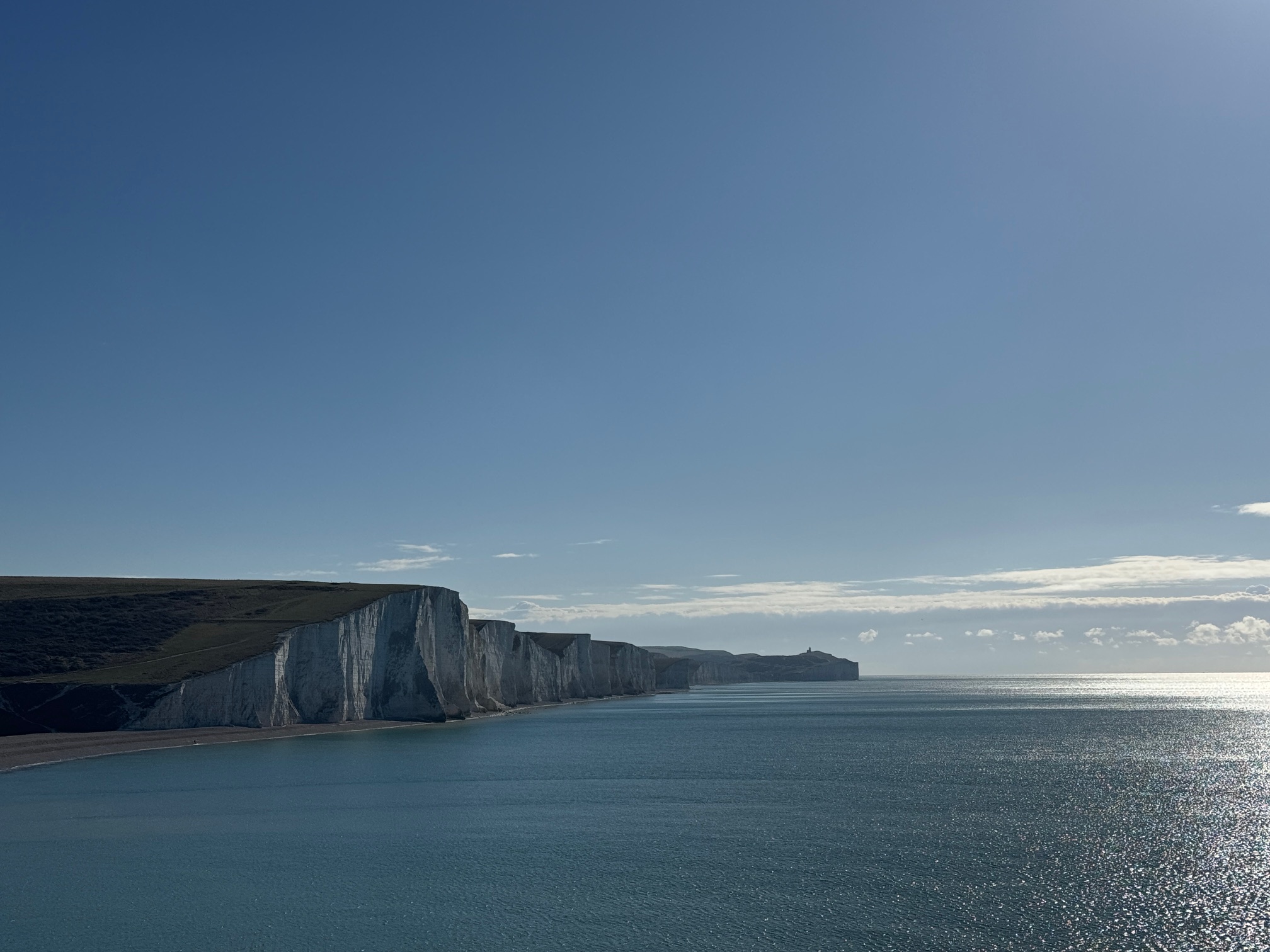
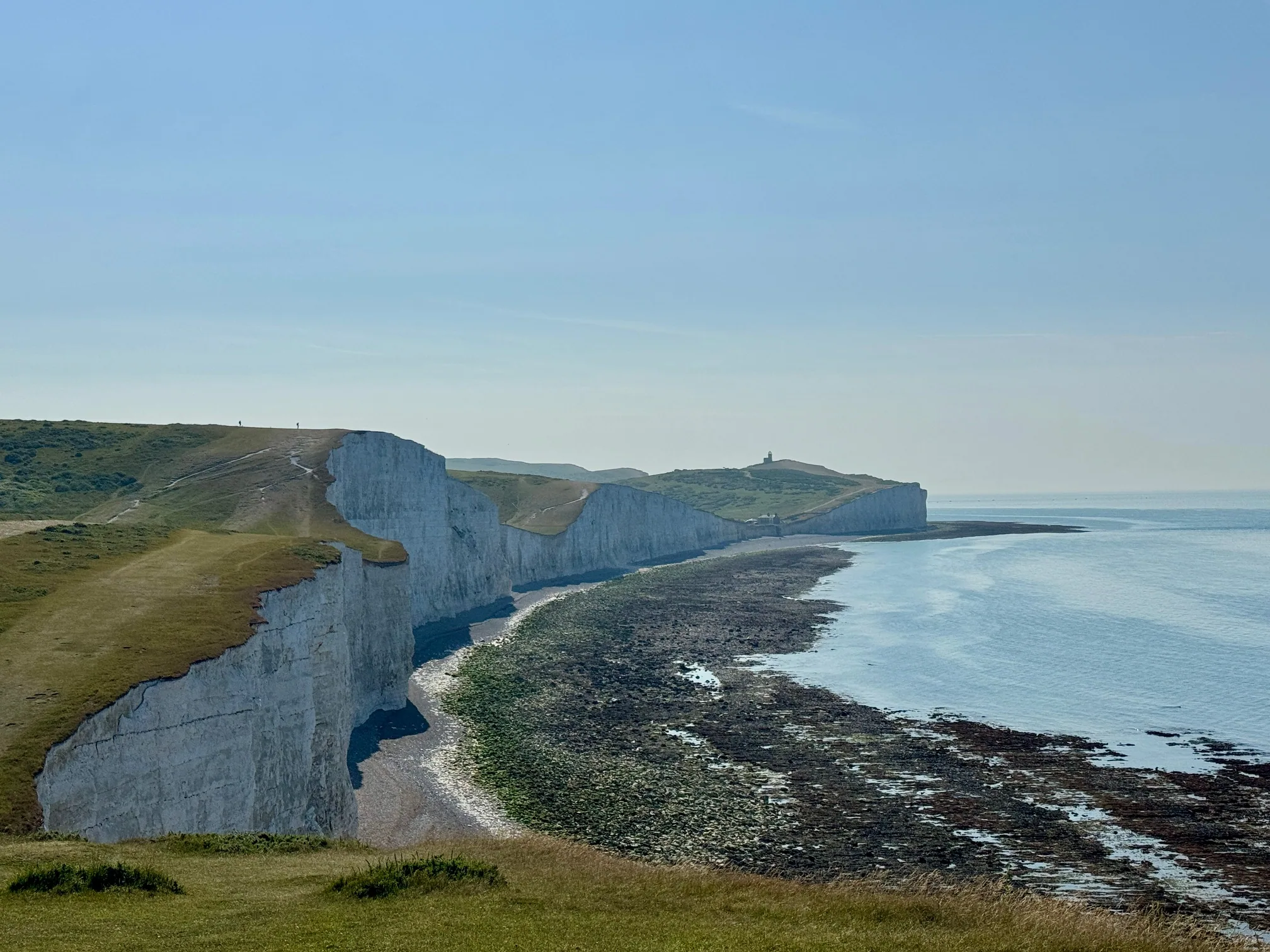
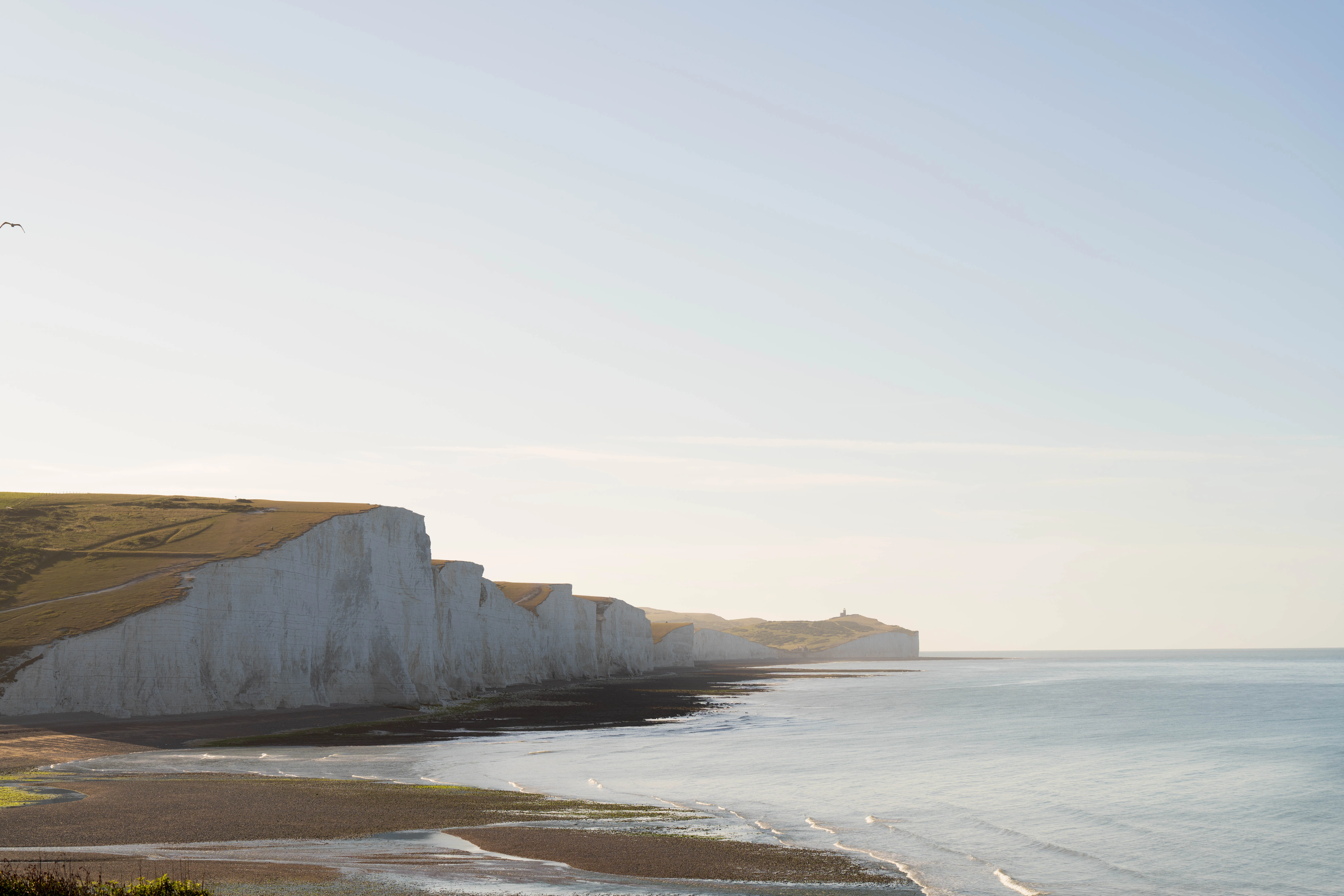
The approach from Seaford along the cliff from Seaford Head is slightly more sheltered than the exposed ridgeline between the Sisters peaks because the path runs along the back of the headland before emerging onto the cliff edge. It also provides views across to the Sisters from the west — often the best angle for dramatic weather photography, showing the full cliff line with the sea breaking at the base.
Full clifftop ridge (moderate to fresh conditions)
In winds up to around 25 to 30mph, the full walk along the ridge — the undulating path over each of the seven chalk summits — is perfectly manageable with the right kit. It is harder work into a headwind and the descent into each valley requires more care on wet grass, but it is the walk that Seven Sisters is known for and the one that shows the site at its most dramatic in rough conditions.
Walking west to east (Seaford toward Birling Gap) puts any headwind at your back in the most common south-westerly conditions. If the wind is from the east, reverse the route. The Seaford route guide has full navigation details.
What to avoid in rough weather
- The cliff edge in winds above Force 6. The rule of staying 5 metres back from the edge becomes more important, not less, in high wind. Gusts can be significantly stronger than the average wind speed. The edge is unfenced.
- The beach at Birling Gap in swell. The chalk platform that is excellent for rock pooling in calm conditions becomes hazardous in swell. Even moderate swell surges unpredictably over the chalk ledges. If there is any significant wave activity, stay off the lower beach and the chalk reef.
- The cliff base route (if attempting to walk along the beach between access points). The beach below the Sisters is not a continuous walkable route at all states of tide and weather. In rough conditions, sections become impassable or dangerous. Do not plan a route that requires uninterrupted beach access.
The Cafes and Pubs: Wet-Weather Essentials
One of the genuine pleasures of a rough-weather walk is the quality of the warm-up afterwards. The options near Seven Sisters are better than most coastal walks in England:
- National Trust café at Birling Gap. Hot food, coffee, and a terrace that is enclosed enough to use in light rain. Opens at 10am most days. In autumn, expect a shorter menu than peak summer but a warm interior and zero queue.
- The Cuckmere Inn at Exceat. Pub food and a proper pint at the valley floor, immediately adjacent to the main car park. The best wet-weather endpoint for a Cuckmere Valley circuit.
- The Tiger Inn, East Dean. The village pub 1 mile inland from Birling Gap. Low-ceilinged, properly old, open fire in autumn. One of the better walks-with-pub combinations on the South Downs.
- The Golden Galleon, Exceat. The sister establishment to the Cuckmere Inn — slightly different atmosphere, equally close to the car park.
The pub guide covers all the walking-distance options with honest assessments.
Autumn Storm Season Calendar
The rough-weather season at Seven Sisters follows a predictable pattern:
- September: First Atlantic lows arrive. Brief, intense. Often followed by rapid clearing and exceptional post-storm conditions. The best months for the storm-and-sunshine combination.
- October: More sustained unsettled weather. The classic grey-sky, blustery Downs experience. Strong enough wind to make coastal walking genuinely demanding on exposed ridges.
- November: Deepest autumn. Shortest days, longest storms. The coast is almost empty. The light between storms is extraordinary — low winter sun, crisp visibility, chalk luminous against dark sky. The mood is different from every other month of the year.
None of these conditions should be avoided. They are the other half of the Seven Sisters experience — the half that the summer visitor brochures do not show, and the half that many regular visitors consider the better one.
Ready to Walk in Any Weather
The Seven Sisters weather patterns guide explains what to expect month by month, including the typical storm window and the best post-storm windows. For live conditions before you travel, the National Trust and South Downs National Park both post alerts when paths or beach access are affected. When to visit guide.
Planning the walk itself?
Four routes run along these cliffs and they are not interchangeable — a flat 3km riverside stroll, the classic 6.5km Exceat to Birling Gap crossing, a short Birling Gap loop, and the full 21.9km Seaford to Eastbourne ridge. Compare distance, ascent and difficulty before you pick one.
- Easy Birling Gap Short Loop 2 km 45 min
- Easy Cuckmere Haven Beach 3 km 1 hour
- Moderate Exceat to Birling Gap 6.5 km 2-3 hours
- Challenging Seaford to Eastbourne 21.9 km 6-7 hours
We may earn a small commission on bookings made through this link, at no extra cost to you. More info.
£4.99 · 24-page PDF · Instant download
The Seven Sisters Ultimate Guide
The complete 24-page companion built from first-hand walks — every cliff, all four graded routes, tide windows and a parking strategy. Designed to work offline, right on the cliff top.
- All 7 cliffs — heights, geology & viewpoints
- Four graded walking routes, compared
- Tide windows, light calendar & day plans
- Parking strategy & seasonal planner
Just want the basics? Download the free 2-page walk guide
Want an expert-led Seven Sisters tour?
From guided cliff walks and wildlife safaris to geology hikes and photography tours — explore all our curated experiences with local guides.