What to Pack for the Seven Sisters: The Complete Kit List from the Cliffs
What to Pack for the Seven Sisters
The kit list we have refined across many visits. What matters, what gets forgotten, what has never once been needed.
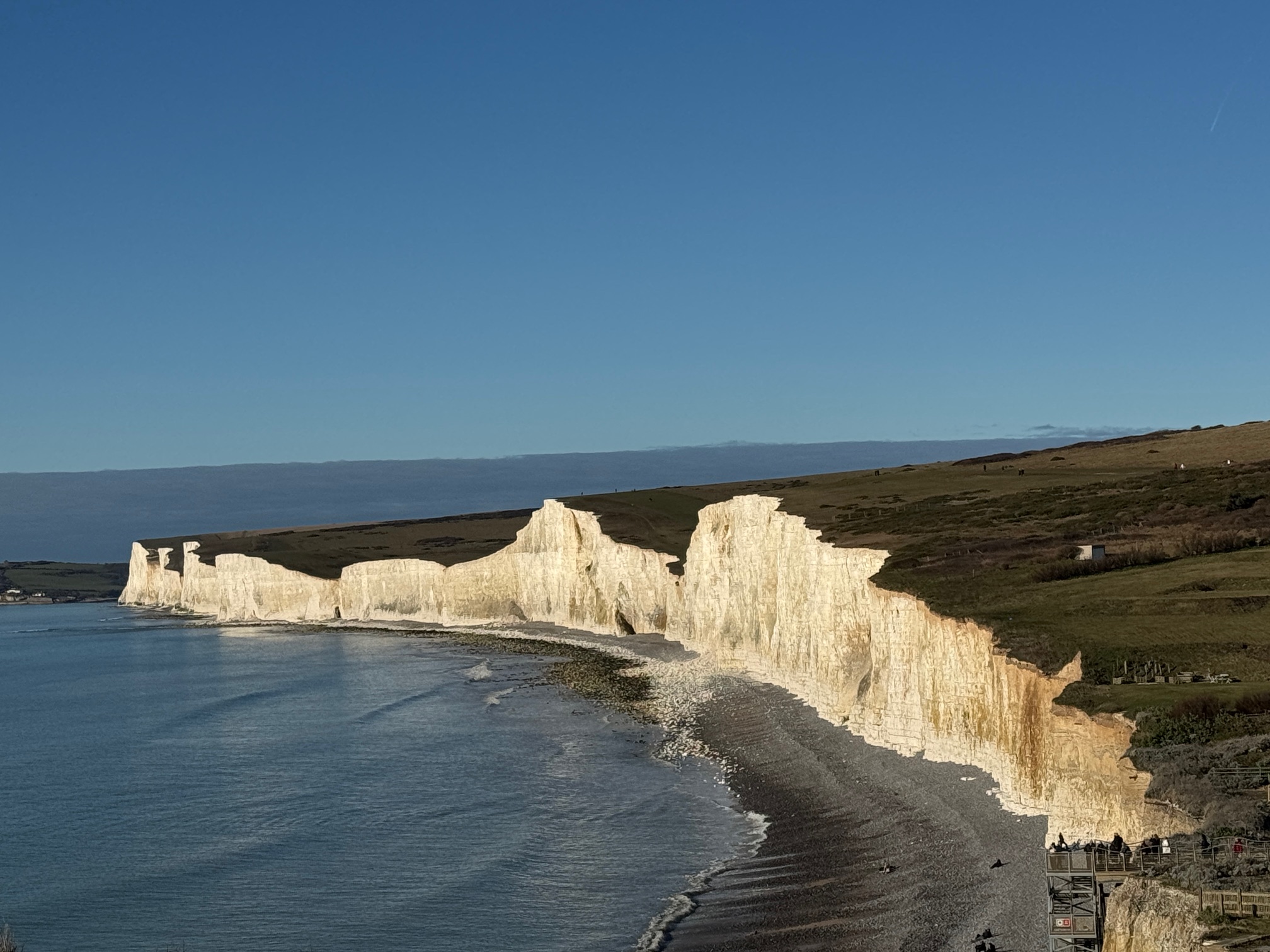
The Seven Sisters is an exposed chalk ridge above the English Channel. The weather changes faster than any inland walk, the sun reflects off white chalk with more intensity than most visitors expect, the path alternates between firm grassland and loose chalk shingle, and there is nothing between Seaford Head and Birling Gap — about 10.5km — in the way of food, water, shelter or any facility at all, apart from the visitor centre and Cuckmere Inn where the path drops to Exceat.
We have walked the ridge in brilliant June sunshine wearing too little. In September rain wearing too much. With boots that were wrong for chalk mud (once — never again). Without enough water in August (twice — the second time was unforgivable). After many visits across every season, the kit list has settled into something refined by failure rather than optimism.
This guide covers what you actually need for the ridge walk. The valley walk (Exceat to Cuckmere Haven) is more forgiving and the list is proportionally shorter — we note where the requirements differ.
Non-Negotiable Items
These are the items that produce a bad day when absent. Not "would have been useful" — actually bad.
Waterproof jacket — not water-resistant, waterproof
The distinction matters. A water-resistant shell jacket is a light-rain garment. On the Seven Sisters ridge in a Channel squall, it is wet through in 15 minutes. A proper waterproof — sealed seams, waterproof membrane, hood that stays on in wind — keeps you dry in the rain that actually falls on this coast.
We have been caught without a proper waterproof in June, which is statistically one of the better months. A front moved in from the Atlantic at 11am. We were on peak 5 with 3km to go. It was one of the most comprehensively unpleasant walking experiences we have had. The jacket has never been left behind since.
What to look for: 2.5-layer or 3-layer waterproof membrane (not "showerproof"). Packable designs compress small enough to live permanently in your bag. The extra weight of carrying it on dry days is offset by never being cold and wet on unexpected days.
Proper walking footwear — not trail runners or trainers
The Seven Sisters ridge is firm chalk grassland in dry conditions and chalk mud in wet ones. Trainers manage the dry ridge adequately but slip badly on wet chalk. Trail runners are better but suffer the same problem in the muddy descent sections after rain.
For the ridge: ankle-supporting walking boots with a Vibram or equivalent sole. The ankle support matters specifically for the steep descents between peaks — the ground is uneven and missteps on a descent are the most common walking injury we see at the Sisters. For the Cuckmere valley floor: trail runners or even wellies work fine — it is flat and well-maintained.
The chalk mud situation: In winter and after heavy rain, the descent paths between cliff peaks become very greasy chalk mud. This is the condition that takes people off their feet. High ankle support and a sole with deep lugs is the answer. If this is your first time on wet chalk, err towards caution at the descents.
More water than you think you need
There is no water source on the Seven Sisters ridge. The Birling Gap café at the eastern end is the nearest tap, and it closes at 5pm. On a warm day, a full ridge walk (~6km) requires approximately 1.5–2 litres per adult. Most people carry 500ml and are thirsty by peak 4.
We carry 2 litres per person for any ridge walk and have used all of it on hot August days. The dehydration headache that develops by 3pm when you ran out at midday is not a minor inconvenience — it ruins the drive home and sometimes the evening. Water is cheap and light. Carry more than you think you need.
Sun protection — including for scalp and lips
Chalk reflects UV. The ridge has minimal shade. On a clear summer day, you are walking on an exposed white surface for several hours. SPF 30 minimum for exposed skin, reapplied at midday. A sun hat. Lip balm with sun protection — lips burn on the ridge and nobody thinks about this until they do not think about anything else.
The number of visitors we see on the ridge in July in short sleeves without any sun protection is remarkable. The response when this is mentioned is usually "it is not that hot." The burn arrives later. The chalk amplifies it. This is not optional in summer.
What to Wear on the Seven Sisters
The right boots and clothing are the difference between a great walk and a miserable one. These are what we genuinely recommend for chalk clifftop paths.
As an Amazon Associate we earn from qualifying purchases — at no extra cost to you. Affiliate info.
Strongly Recommended
These items have improved the quality of enough visits that we consider them near-essential.
An extra mid-layer
The chalk ridge is exposed to coastal wind. On a warm day in summer with no wind, it can be genuinely hot. Ten minutes later, with a sea breeze picking up over the cliff edge, it can be significantly cooler. A packable fleece or lightweight insulating layer resolves this variability without adding meaningful weight or bulk.
We have seen visitors in t-shirts at 11am put on every layer they own by 1pm. We have done this ourselves. The extra layer now lives in the bag regardless of the forecast.
Food for the walk — not just snacks
The Birling Gap café runs out of good sandwiches before noon on busy days and closes at 5pm. There is nothing between Seaford and Birling Gap on the ridge. A proper lunch rather than a handful of cereal bars is the difference between finishing the ridge in good mood and finishing it focused entirely on the nearest warm meal.
We pack: sandwiches, fruit, something sweet, a small pack of nuts. The picnic on the cliff edge between peaks 3 and 4 with the channel below is one of the reliable pleasures of this walk. Bring food that deserves the setting.
Phone fully charged, OS Maps downloaded offline
The cliff path is not navigationally difficult, but knowing where you are on the ridge and how far each peak is to go helps make good decisions about pace and turnaround. Mobile reception on the ridge is variable — Ordnance Survey maps or similar downloaded offline ensure you have the map when you need it.
A portable battery pack: we always carry one. The ridge has no charging points and a dead phone when you need it for navigation, emergency contact, or photographing the orchids at peak is a specific frustration that a small battery solves.
Small first aid kit
The most common injuries on the ridge are blisters (descent in new boots) and twisted ankles (the loose chalk at peak bases). A small first aid kit — blister plasters, a support bandage, ibuprofen — adds minimal weight and has been needed more than once on the ridge.
For families: children fall on uneven ground. A small kit with plasters and antiseptic wipe for grazed knees makes the difference between a 5-minute stop and a 30-minute trauma that ends the walk.
What Goes in Your Pack
No shops or water taps on the ridge. These are the essentials that should be in your daypack before you start.
As an Amazon Associate we earn from qualifying purchases — at no extra cost to you. Affiliate info.
Seasonal Kit Variations
Spring (March–May)
The most unpredictable season. Warm days interrupt cold weeks without warning. Pack as if it will rain and as if the sun will be bright — both are likely in the same walk.
- • Add: Warm base layer. Spring mornings on the ridge are cold in wind.
- • Add: Waterproof trousers if the path is your priority over warmth
- • Add: Gaiters for the chalk mud on early spring paths
- • Sun: Still needed — May sun on chalk is more intense than it feels
- • Wildflower app: The spring orchid emergence is worth identifying
Summer (June–August)
The season most visitors choose. Hot days, the chalk reflects sun, the cliff edge wind is the main temperature variable. Sun protection moves from recommended to essential.
- • Essential: Sun hat. SPF 30+. Lip protection. Sunglasses.
- • Essential: Maximum water. 2 litres per adult on hot days.
- • Add: Lightweight packable waterproof (storms possible even in summer)
- • Swimming: If you plan to swim at Birling Gap, pack a towel and change of clothes
- • Footwear: Breathable boots. Hot feet on a long walk become blistered feet.
Autumn (September–November)
Often the most pleasant season to walk here. Quieter, the light is lower and more golden, the grassland transitions. The weather can be beautiful or abruptly poor.
- • Priority: Warm layers. October afternoons drop fast once the sun drops.
- • Add: Headtorch if walking to or from a late sunset
- • Add: Hat and gloves for November visits
- • Footwear: Boots that handle autumn mud — the path gets muddy in descents after September rain
- • Binoculars: Autumn migration brings interesting birds along the coast
Winter (December–February)
The ridge in winter is extraordinary and almost empty. The chalk is pale against grey sky, the wind is serious, and the days are short. Only experienced walkers in proper gear should attempt the ridge in poor winter conditions.
- • Essential: Warm base layer, fleece, waterproof jacket and trousers as a system
- • Essential: Hat and gloves. The cliff-edge wind chill in January is brutal.
- • Essential: Headtorch — days are short and descents in fading light are dangerous
- • Essential: Check weather before going. The ridge is not safe in gale-force wind.
- • Inform someone: Tell someone where you are going and your expected return
Specific Additions: With Children and With Dogs
Walking With Children
Rock pooling gear (under 12s)
If Birling Gap beach and rock pools are on the plan, small nets and a clear bucket transform the rock pool experience from looking to catching and releasing. Children who have these are occupied for significantly longer than children who do not. Check the tide times — pools exist at low tide, not at high.
Extra snacks above what you think you need
Children consume food as fuel on a walk at a rate that surprises first-time parents. What seemed like enough snacks at 9am is not enough snacks by noon. Bring 50% more than you think you need and use the excess as motivation at the hard sections ("two more peaks and then the cereal bar").
Spare trousers (for under 10s)
Children fall on chalk paths. They also wade into rock pools further than planned. Spare trousers in the day bag have saved at least four of our visits with children under 10. This is experience speaking.
A wildflower or wildlife identification app
Children who have something to identify stay engaged on a walk for longer. PictureThis (plants) and iNaturalist (all wildlife) both work offline with pre-downloaded species lists. The orchid identification moment for a child who has found and named their first common spotted orchid is a specific pleasure.
Walking With Dogs
Lead requirements — know before you go
Dogs must be kept on leads near the cliff edge at all times — the drop is severe and chalk is crumbly. In the ground-nesting bird season (April to July), leads are required across the chalk grassland on National Trust land. This is enforced. Check the current NT requirements for the section you are walking before your visit.
Water for dogs
Dogs dehydrate faster than humans on a chalk ridge walk in summer. There is no water source on the ridge. Carry 500ml extra per medium-large dog and a collapsible bowl. Dogs who have walked to peak 6 and have had no water are dogs who need to be carried on the way back, and medium-large dogs are heavy.
Paw protection
Chalk shingle on the beach at Birling Gap can be sharp on unprotected paws in summer. For dogs with sensitive paws, check before and after the beach section. The chalk grassland itself is fine — it is the loose shingle at the cliff base that occasionally causes problems.
Birling Gap beach access
Dogs are allowed on Birling Gap beach but check the seasonal restrictions on specific sections. The NT visitor centre at Birling Gap has current information. For the full dog-specific guide to the Seven Sisters, see our dog walking guide.
What You Do Not Need
Over-packing for the Seven Sisters is as common as under-packing. The things that reliably stay in the bag all day:
Walking poles for most people
Useful for those with knee problems on descents. For the majority of visitors on a standard summer or autumn ridge walk, poles are additional weight that does not earn its keep. The descents are steep enough to be interesting but not technical.
A full change of clothes
A waterproof layer and a warm layer cover the conditions you will actually encounter. A full change of clothes belongs at the car, not in the pack for the walk.
Heavy food provisions
Alfriston, Seaford, Eastbourne and the Birling Gap café all provide food and drink. Unless you are doing a dawn walk (before any café opens) or specifically want a clifftop picnic, there is no need to carry a full day of heavy provisions.
Navigation equipment beyond a phone
The Seven Sisters ridge path is clear and well-signed. A compass and full paper OS map are appropriate for unmarked terrain; the ridgeline walk with visible path and regular NT waymarkers does not require navigation equipment beyond a downloaded map on your phone.
Emergency bivouac equipment
Appropriate for multi-day remote hillwalking. The Seven Sisters ridge is ~6km long and has car park access at each end. Emergency procedures involve walking to a car park and calling from there. Bivouac equipment stays home.
A new pair of boots purchased for the walk
This deserves its own entry. New boots not broken in produce blisters on the Seven Sisters ridge at a rate that no blister kit can fully manage. Break boots in on short local walks before any ridge day. This is not a suggestion. It is one of the most common mistakes we see.
The 10-Item Core List
If you remember nothing else from this guide, leave with these. Every item has earned its place through repeated visits and on at least one occasion through not having it.
Waterproof jacket (proper, not showerproof)
Carry it always. The times you need it are the times you cannot predict.
Ankle-support walking boots (broken in)
Not trainers. Not trail runners if the path is wet. Not new.
2 litres of water per adult
No refill points on the ridge. This is the number.
Sun protection: SPF 30+, hat, lip balm
Chalk reflects UV. The burn arrives later than you think.
Extra warm layer
Packable fleece or down. The cliff-edge wind changes temperature fast.
Proper food for the walk
Sandwiches, not just snacks. ~6km with no café is ~6km with no café.
Phone: fully charged, maps downloaded offline
Reception is variable. Download OS Maps before you leave home.
Small portable battery pack
The charge you start with is never quite the charge you end with.
Small first aid kit with blister plasters
Descents are where blisters happen. Be ready for peak 3 onwards.
Tide times if the beach is on the plan
Not gear, but information. Worth the same as having the right kit.
Planning the walk itself?
Four routes run along these cliffs and they are not interchangeable — a flat 3km riverside stroll, the classic 6.5km Exceat to Birling Gap crossing, a short Birling Gap loop, and the full 21.9km Seaford to Eastbourne ridge. Compare distance, ascent and difficulty before you pick one.
- Easy Birling Gap Short Loop 2 km 45 min
- Easy Cuckmere Haven Beach 3 km 1 hour
- Moderate Exceat to Birling Gap 6.5 km 2-3 hours
- Challenging Seaford to Eastbourne 21.9 km 6-7 hours
We may earn a small commission on bookings made through this link, at no extra cost to you. More info.
£4.99 · 24-page PDF · Instant download
The Seven Sisters Ultimate Guide
The complete 24-page companion built from first-hand walks — every cliff, all four graded routes, tide windows and a parking strategy. Designed to work offline, right on the cliff top.
- All 7 cliffs — heights, geology & viewpoints
- Four graded walking routes, compared
- Tide windows, light calendar & day plans
- Parking strategy & seasonal planner
Just want the basics? Download the free 2-page walk guide
Want an expert-led Seven Sisters tour?
From guided cliff walks and wildlife safaris to geology hikes and photography tours — explore all our curated experiences with local guides.