Comparisons
South Coast Cliff Walks Compared
Eight coastal walks between Kent and the Isle of Wight, ranked by the numbers that decide a day out
Eight coastal walks between Kent and the Isle of Wight, ranked by the numbers that decide a day out
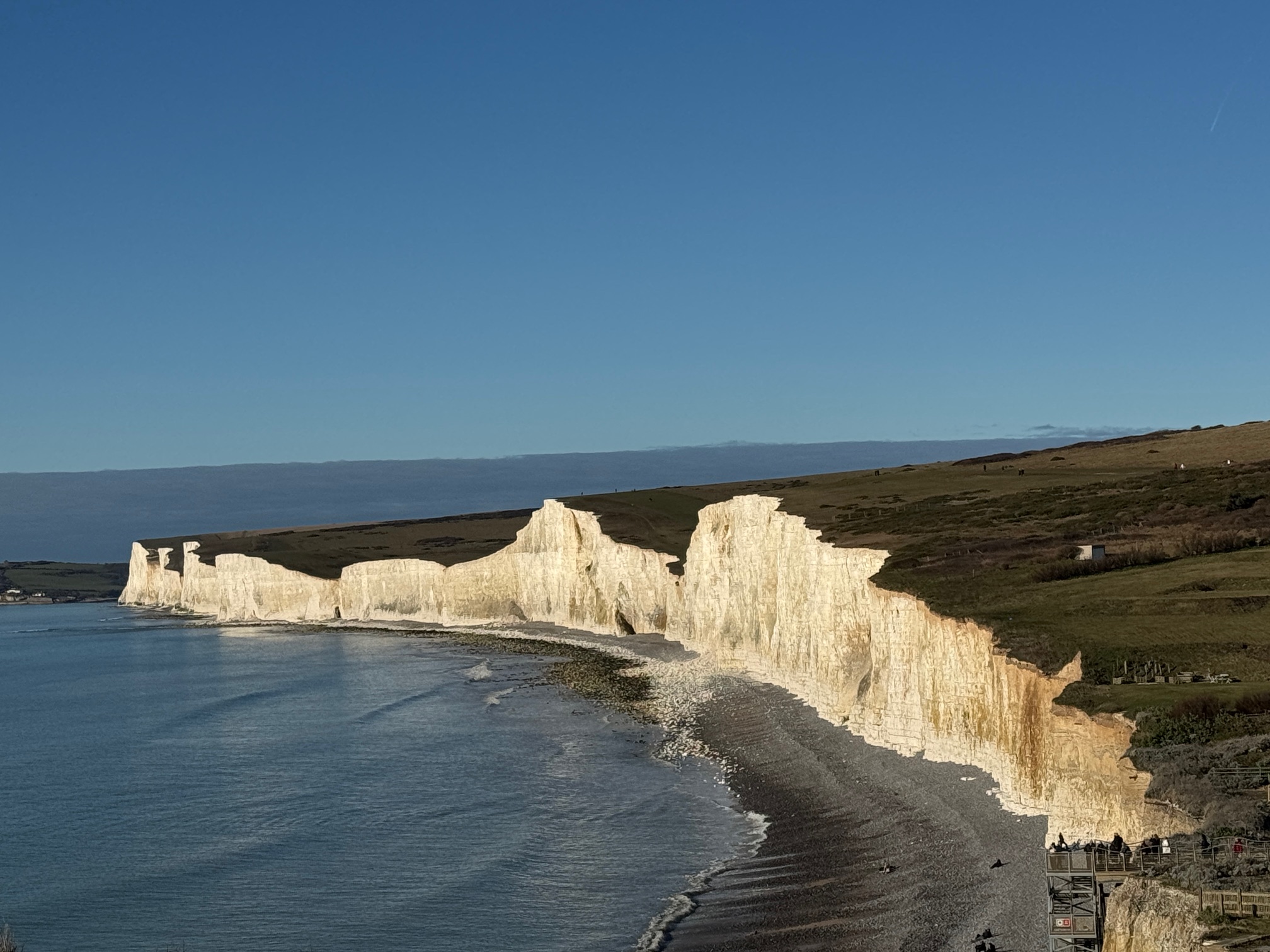
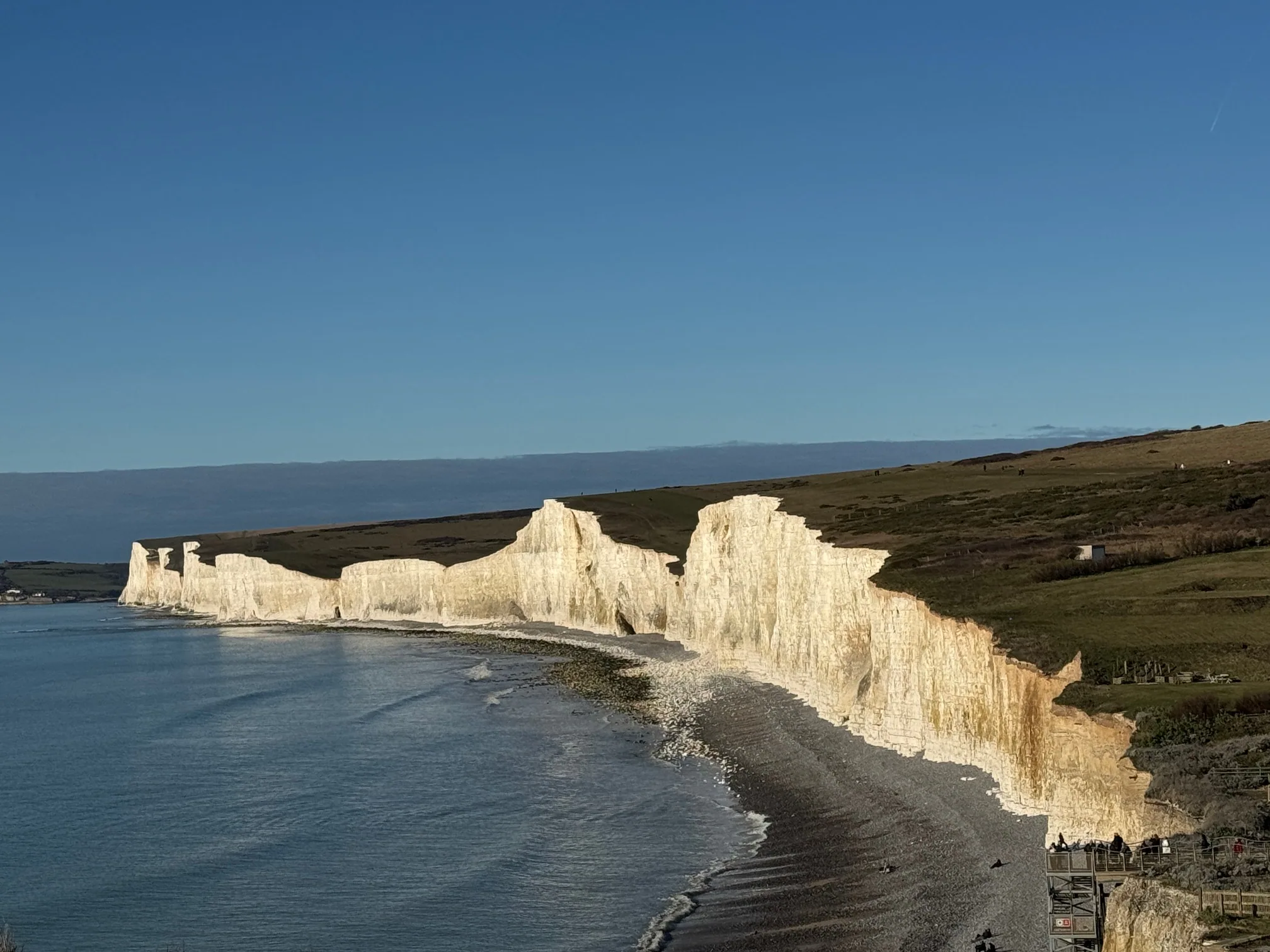
Most “best coastal walks” lists put a photograph of each place next to an adjective. This page puts them next to a number. Every walk below is chalk or limestone cliff, on the English Channel, and reachable in a day from London. The figures are distance, ascent, the train time that matters, and an honest note on crowds — the four things that actually decide whether a day out works. The Seven Sisters are one row of eight; where another walk wins a column, the table says so.
For a sustained walk with real climbs: the Seven Sisters ridge (6.1 km, ~280 m ascent) or Folkestone to Dover (12–14 km). For one famous view in under two hours: Durdle Door, Old Harry Rocks or Dover to South Foreland. For the biggest single climb: Golden Cap (191 m). Without a car, only the Sussex and Kent walks put a station within walking distance of the cliffs — everything in Dorset and on the Isle of Wight needs a bus, ferry or taxi after the train.
| Walk | Distance | Ascent / high point | Grade | From London by train | Crowds |
|---|---|---|---|---|---|
| Seven Sisters ridge Cuckmere Haven → Birling Gap, East Sussex | 6.1 km / 3.8 mi one way 12.4 km out-and-back | ~280 m over seven climbs Haven Brow 77 m | Moderate | Victoria → Seaford ~1 h 25 (change Lewes); walk to the cliffs, no bus | Busy at Birling Gap and the Coastguard Cottages; the ridge between is quieter |
| Beachy Head Eastbourne seafront → Birling Gap | ~9 km / 5.7 mi one way | Beachy Head 162 m — Britain’s tallest chalk sea cliff | Moderate | Victoria → Eastbourne ~1 h 30 direct; walk from the seafront | Busy at the Beachy Head car park; the path either side is open downland |
| White Cliffs of Dover NT visitor centre → South Foreland Lighthouse, Kent | ~3.2 km / 2 mi each way | Gentle; cliffs to ~110 m | Easy | St Pancras → Dover Priory ~65 min (high speed), then ~40 min on foot or a bus to the visitor centre | Busy at the viewpoints, thins quickly towards the lighthouse |
| Folkestone → Dover North Downs Way over Shakespeare Cliff, Kent | 12–14 km / 7–9 mi linear | Rolling; Shakespeare Cliff ~110 m | Moderate | St Pancras → Folkestone Central ~55 min; return by train from Dover Priory | Quiet — a linear path with no headline car park |
| Lulworth Cove → Durdle Door South West Coast Path, Dorset | ~2.1 km / 1.3 mi each way 3.8 mi circular option | ~100–120 m; steep steps at the arch | Easy–moderate, short and steep | Waterloo → Wool ~2 h 20, then seasonal bus or taxi (~8 km) | Very busy; the Durdle Door car park fills on summer weekends |
| Old Harry Rocks Studland South Beach → Handfast Point, Dorset | ~1.6 km / 1 mi each way 5.6 km circular via Ballard Down | Gentle; ~50 m to the headland | Easy | Waterloo → Wareham ~2 h 15, then Purbeck Breezer bus | Busy at the point on fine weekends; Ballard Down loop is quieter |
| Golden Cap From Seatown, Dorset | ~6 km / 4 mi circular | 191 m — the highest point on the south coast of England | Moderate–strenuous, one big climb | Waterloo → Axminster ~2 h 45, then bus to Chideock and 1.5 km on foot — a car is realistic | Quiet outside August |
| Tennyson Down & the Needles Freshwater Bay → Needles, Isle of Wight | ~10 km / 6 mi out-and-back | Tennyson Monument 147 m | Moderate | Waterloo → Lymington Pier ~1 h 50, Wightlink ferry to Yarmouth, then bus | Quiet on the down; busy only at the Needles attraction |
How this table was built. The Seven Sisters and Beachy Head rows are our own measured figures — the same canon used across this site, checked against OS mapping and GPS traces. The Kent, Dorset and Isle of Wight rows are compiled from the managing bodies’ published trail pages — National Trust (Dover, Old Harry Rocks, Golden Cap, Tennyson Down), the South West Coast Path Association and Kent Downs / Explore Kent — and from the operators’ fastest published rail times. Where sources disagree by a few hundred metres we give the range. We have walked the Sussex and Kent routes many times; the Dorset and Isle of Wight figures are researched, not paced, and we say so rather than pretend otherwise.
Three of the eight are viewpoints with a path attached: Durdle Door, Old Harry Rocks and Dover to South Foreland are each under 3.5 km each way and most people are back at the car in two hours. They photograph superbly and are ideal with small children or on a short winter day.
The other five are walks. The Seven Sisters ridge, Folkestone to Dover, Beachy Head from Eastbourne, Tennyson Down and the Golden Cap loop all take three hours or more and reward boots, a packed lunch and a plan for getting back. If the question is “where is the best walk” rather than “where is the best view”, the shortlist is those five.
Station-to-cliff is what decides a car-free day, not the headline rail time. Only four of the eight have a station you can walk from to the cliff path: Seaford and Eastbourne in Sussex, Folkestone and Dover in Kent. Dover’s catch is that the famous viewpoints are a 40-minute walk uphill from Dover Priory, or a bus.
Every Dorset and Isle of Wight walk needs a second leg after a train of two hours or more — a seasonal bus to Lulworth, the Purbeck Breezer to Studland, the Wightlink ferry and an island bus for the Needles. All are doable; none are quick. Golden Cap, with a 1.5 km walk in from the nearest bus stop, is the one where a car is realistically the answer.
Beachy Head is the tallest cliff in the table at 162 m, yet the walk to it from Eastbourne is a steady climb, not a hard one. Golden Cap is the highest point on the whole south coast at 191 m, and its one climb from sea level at Seatown is the steepest single pull of the eight.
The Seven Sisters are lower than either — the highest, Haven Brow, is 77 m — but the ridge climbs and drops seven times, which is why 6.1 km carries about 280 m of ascent and feels like a proper walk. Individual climbs are 20–72 m; the summit heights are not the size of each climb.
The busy places on this list share a shape: a car park, a short path, one landmark. Durdle Door, Old Harry Rocks and Birling Gap all fill by mid-morning on summer weekends and empty a kilometre either side of the landmark.
Linear walks with a station at each end — Folkestone to Dover above all — never develop that pinch point. On the Seven Sisters the same trick works: start from Seaford rather than Birling Gap and you walk the ridge with the crowd ahead of you, not around you. See visiting & access for the monthly pattern.
| If you want… | Go to | Why |
|---|---|---|
| The best all-round day walk from London without a car | Seven Sisters ridge | Station-to-cliff on foot, seven climbs, beaches at both ends, 90 minutes from Victoria |
| The tallest cliff and a lighthouse below you | Beachy Head | 162 m; walk in from Eastbourne seafront and on to Birling Gap |
| Views to France and wartime history | White Cliffs of Dover | France on a clear day; the lighthouse and Fan Bay tunnels at the far end |
| A long, quiet linear walk with a train at both ends | Folkestone → Dover | 12–14 km on the North Downs Way, no car-park crowds, return by train |
| One world-famous photograph | Durdle Door | The arch; accept the crowd and the 3-hour journey |
| An easy family walk to a landmark | Old Harry Rocks | 1.6 km each way on a level path from Studland |
| The biggest climb on the south coast | Golden Cap | 191 m from sea level; bring the car |
| Chalk downland with an island feel | Tennyson Down | A whale-back ridge to the Needles; ferry included in the day |
Four routes run along these cliffs, from a flat riverside path to the full 21.9 km traverse. Compare distance, ascent and difficulty before you book the train.
Free PDF · Instant download, saved to your phone
Built on first-hand walks from Seaford to Eastbourne — the named cliffs, route waypoints with distances, tide windows and emergency access points. Everything you need to set off with confidence.
Planning the whole day? Get the complete 24-page Ultimate Guide — £4.99
Stay up to date with seasonal guides, crowd forecasts, and local tips — direct to your inbox.
No spam. Only coastal inspiration and timing tips — unsubscribe any time.