Coastal Cliff Walks by Train from London: Eight Car-Free Days Out, Station to Cliff
Eight cliff walks you can start from a railway station
The number that matters for a car-free day is not the train time — it is how far the station is from the cliff path. Here it is for eight coastal walks, honestly.
Most lists of coastal walks near London assume a car. They open with the M23 or the A21 and put “nearest station” in a footnote, usually with a bus you would have to research yourself. This list starts from the other end. Every walk below can be done from London in a day with a rail ticket and, at most, one connecting bus or ferry — and for each one we give the figure that actually decides whether it works: the distance from the station to the cliff path.
They are sorted by that figure. The four at the top need no bus at all. The four below need one more leg, and we say how long it is and whether it runs all year.
1. Seven Sisters from Seaford — station to cliffs on foot, no bus
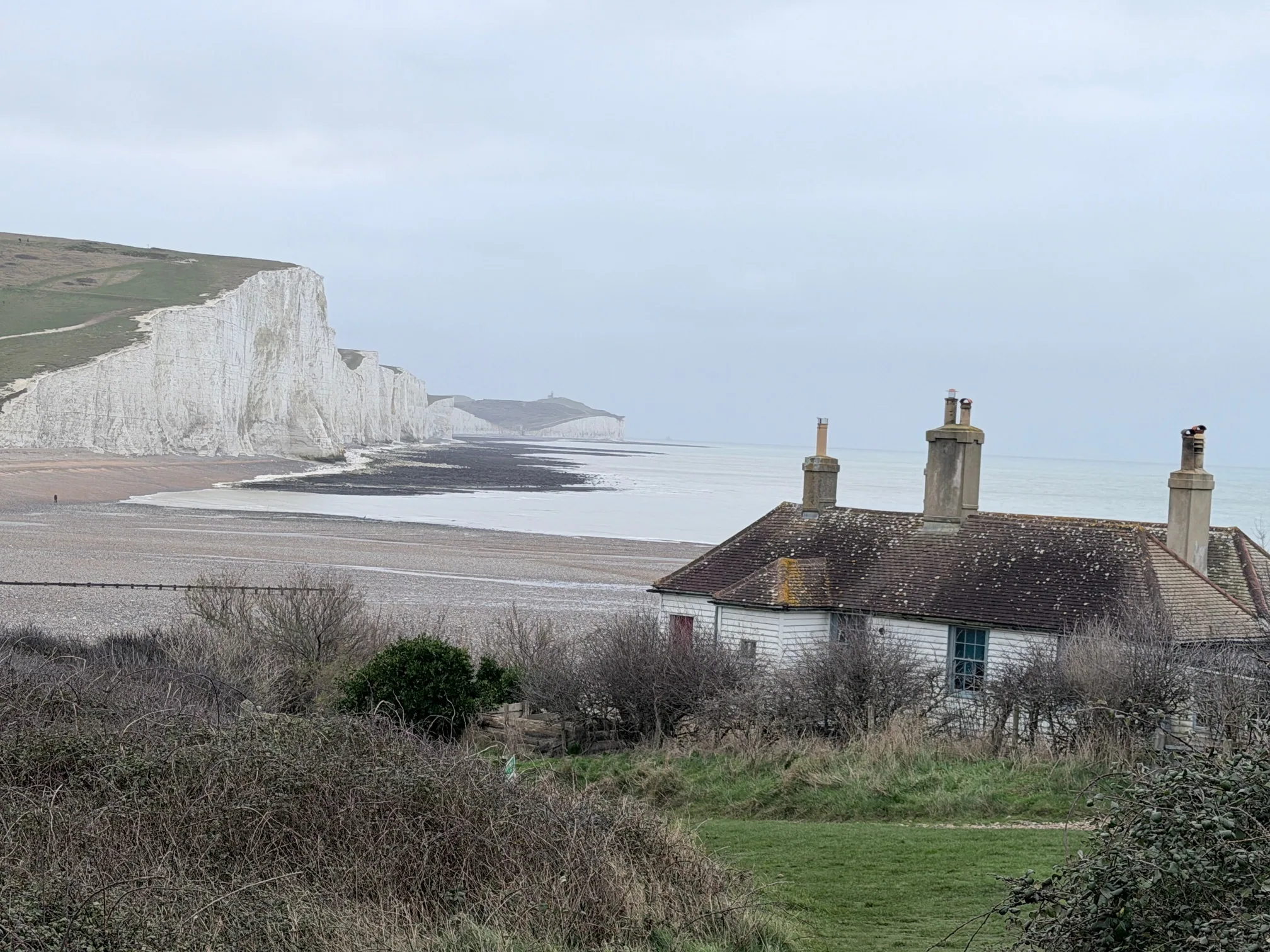
Train: London Victoria to Seaford, about 1 hour 25 minutes with one change at Lewes. Station to cliff: the seafront is a few hundred metres from the station and the foot of Seaford Head about 1.1 km — a quarter of an hour.
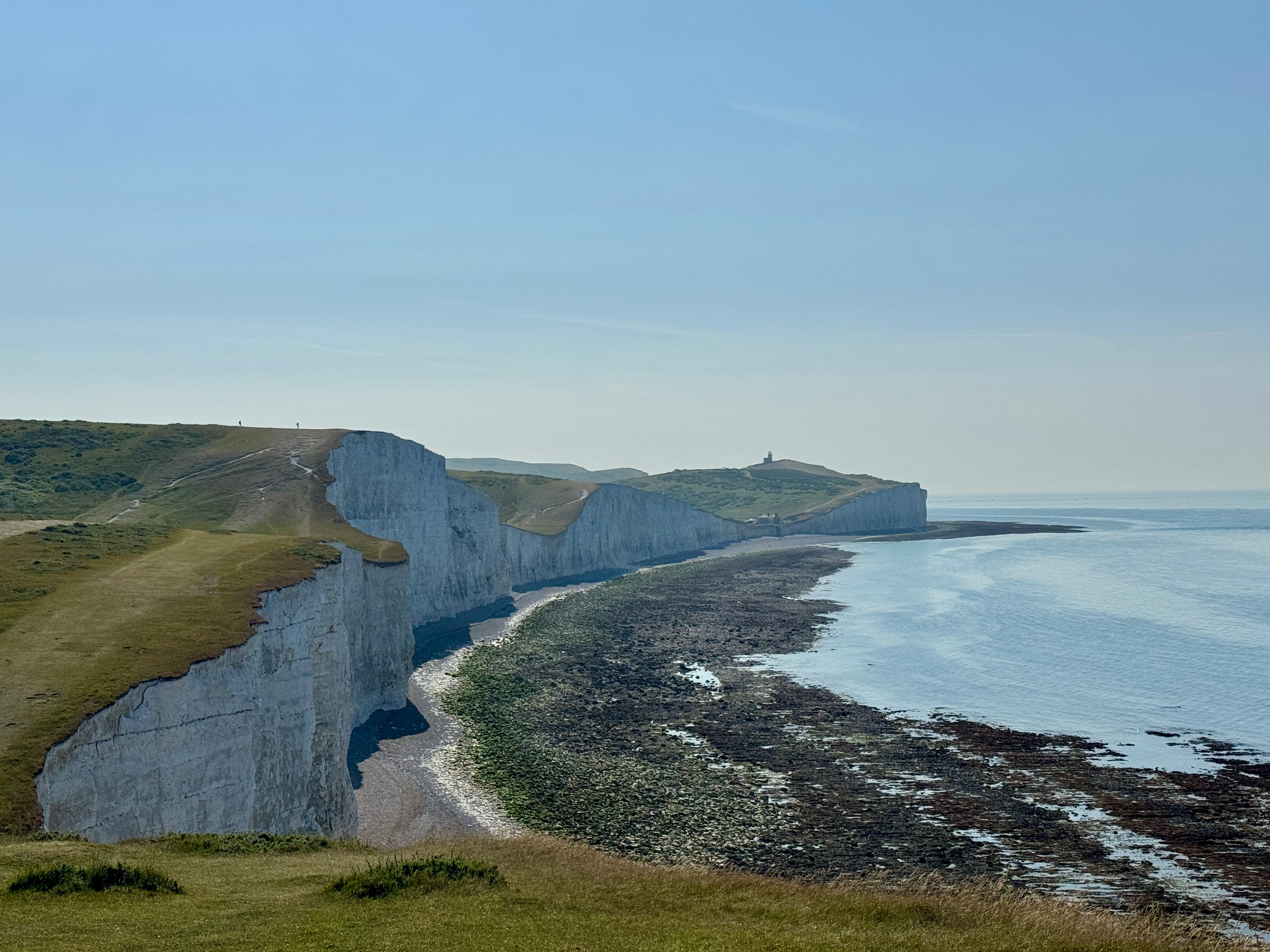
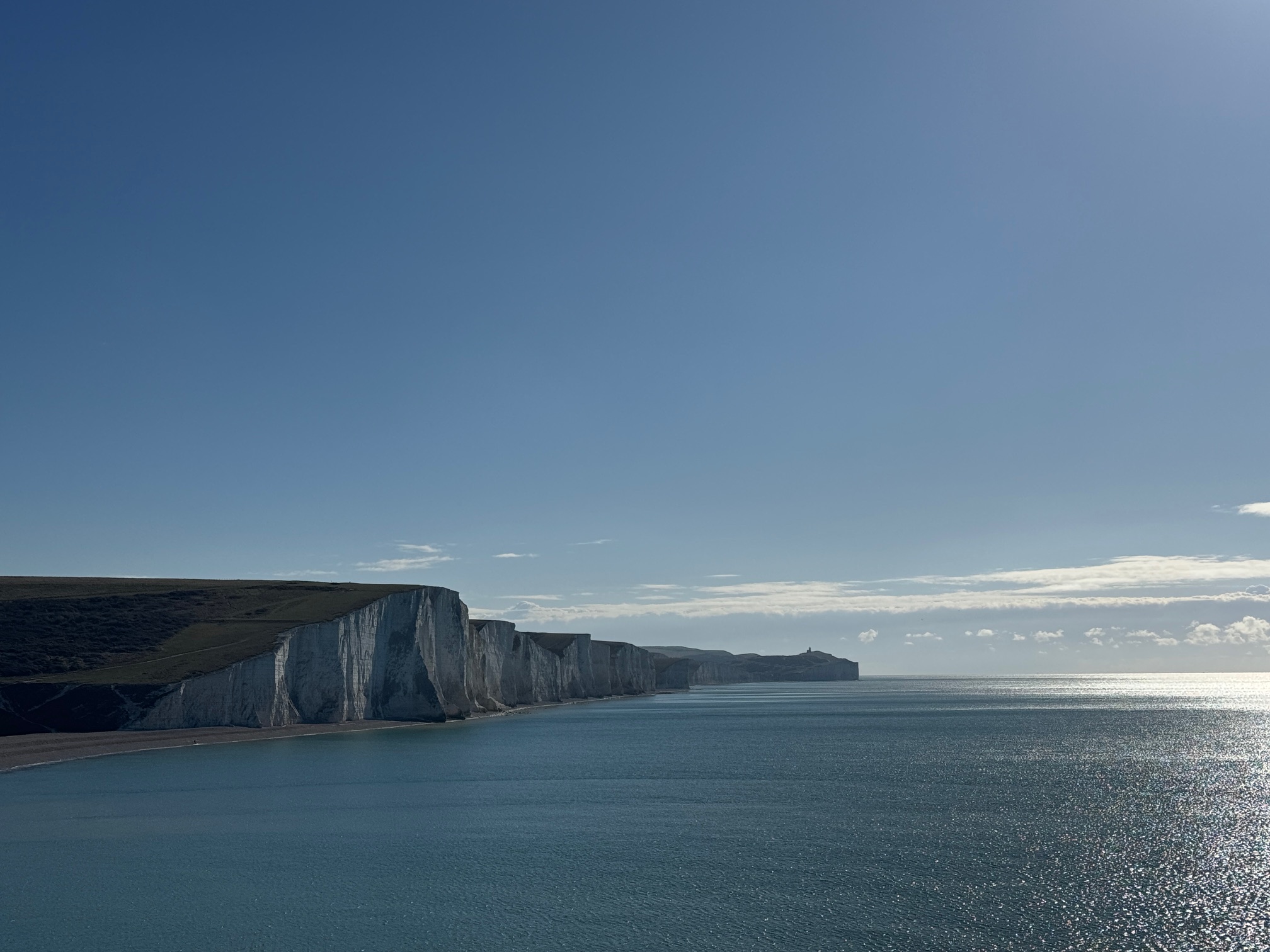
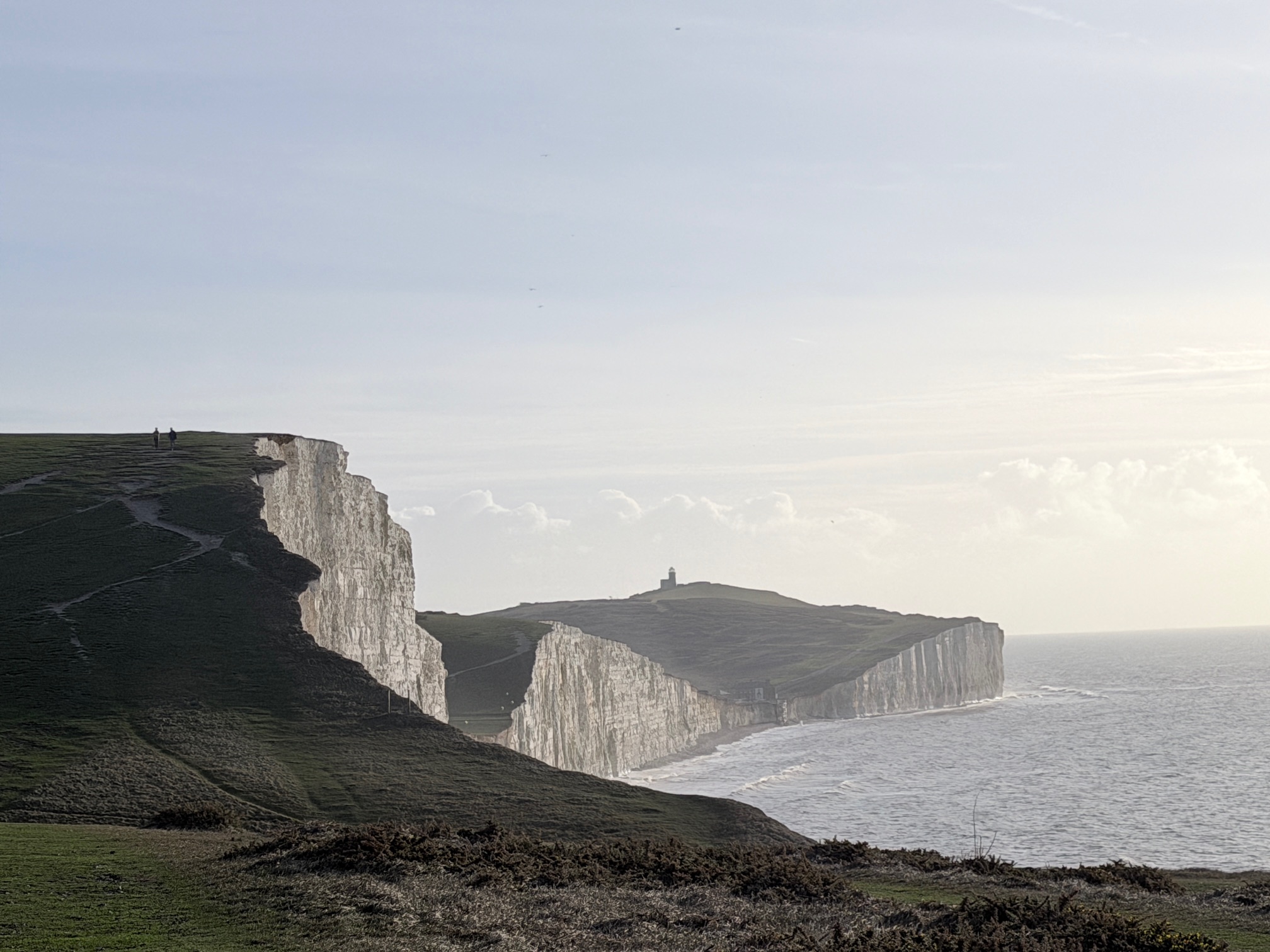
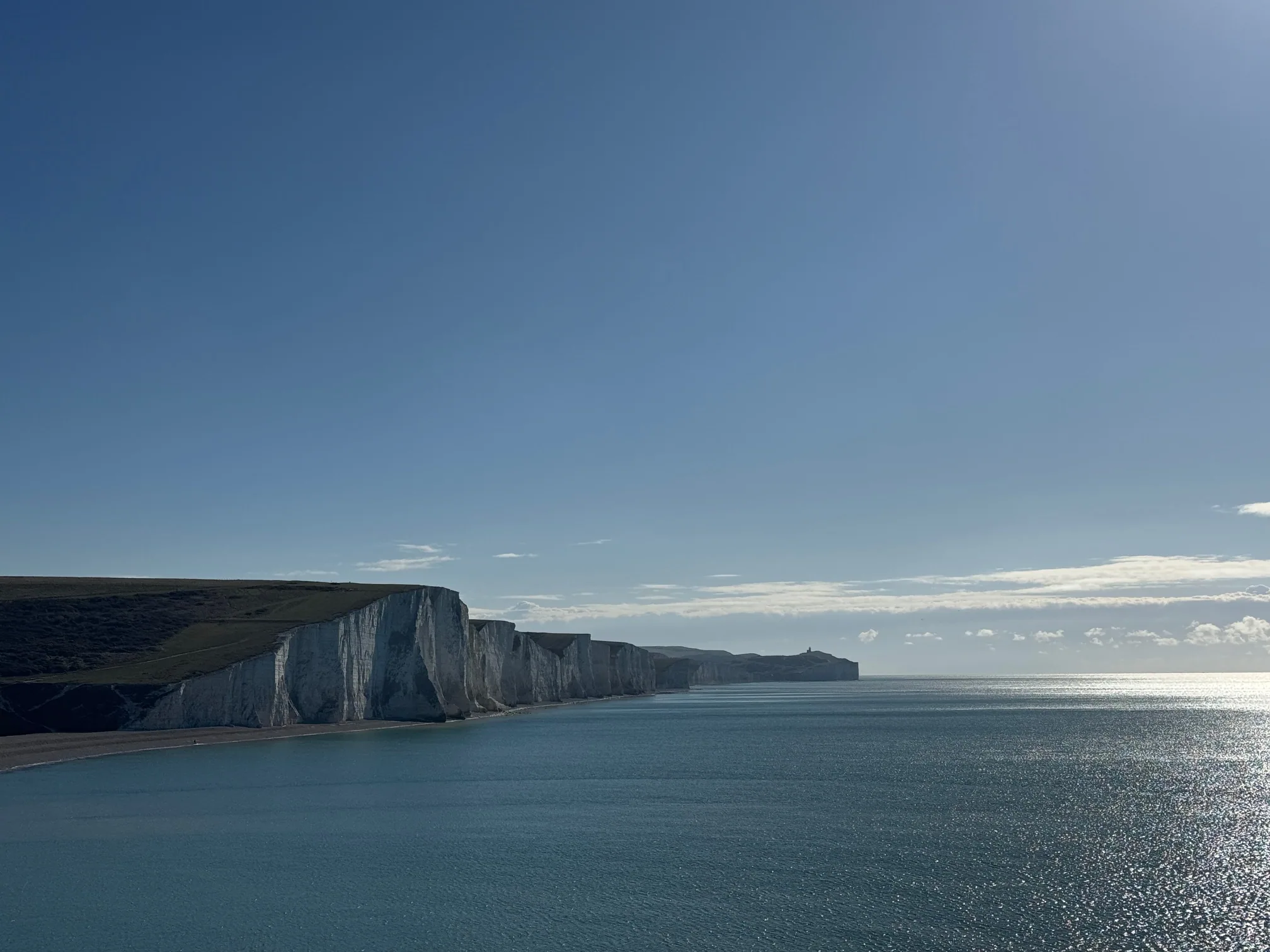
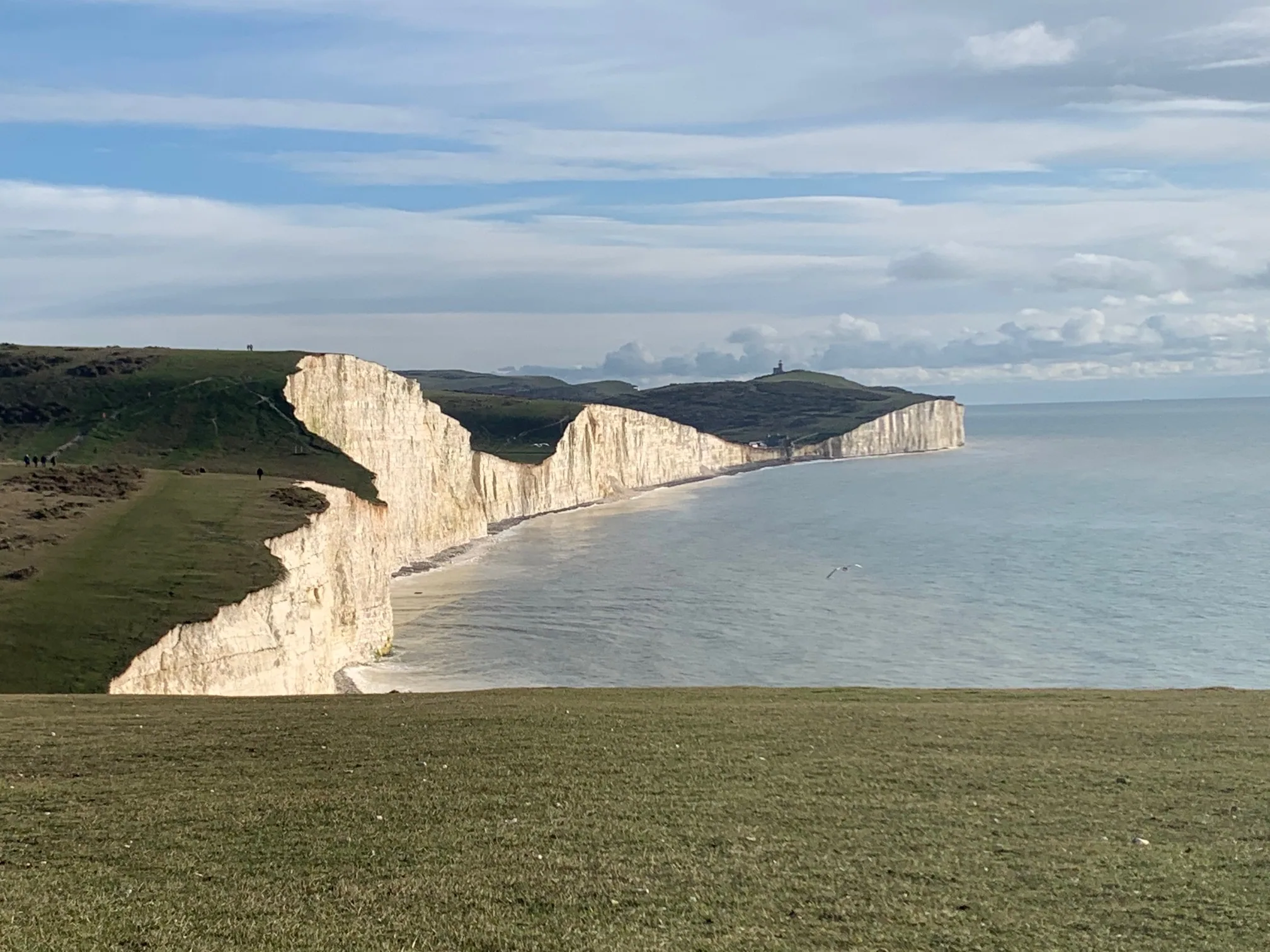
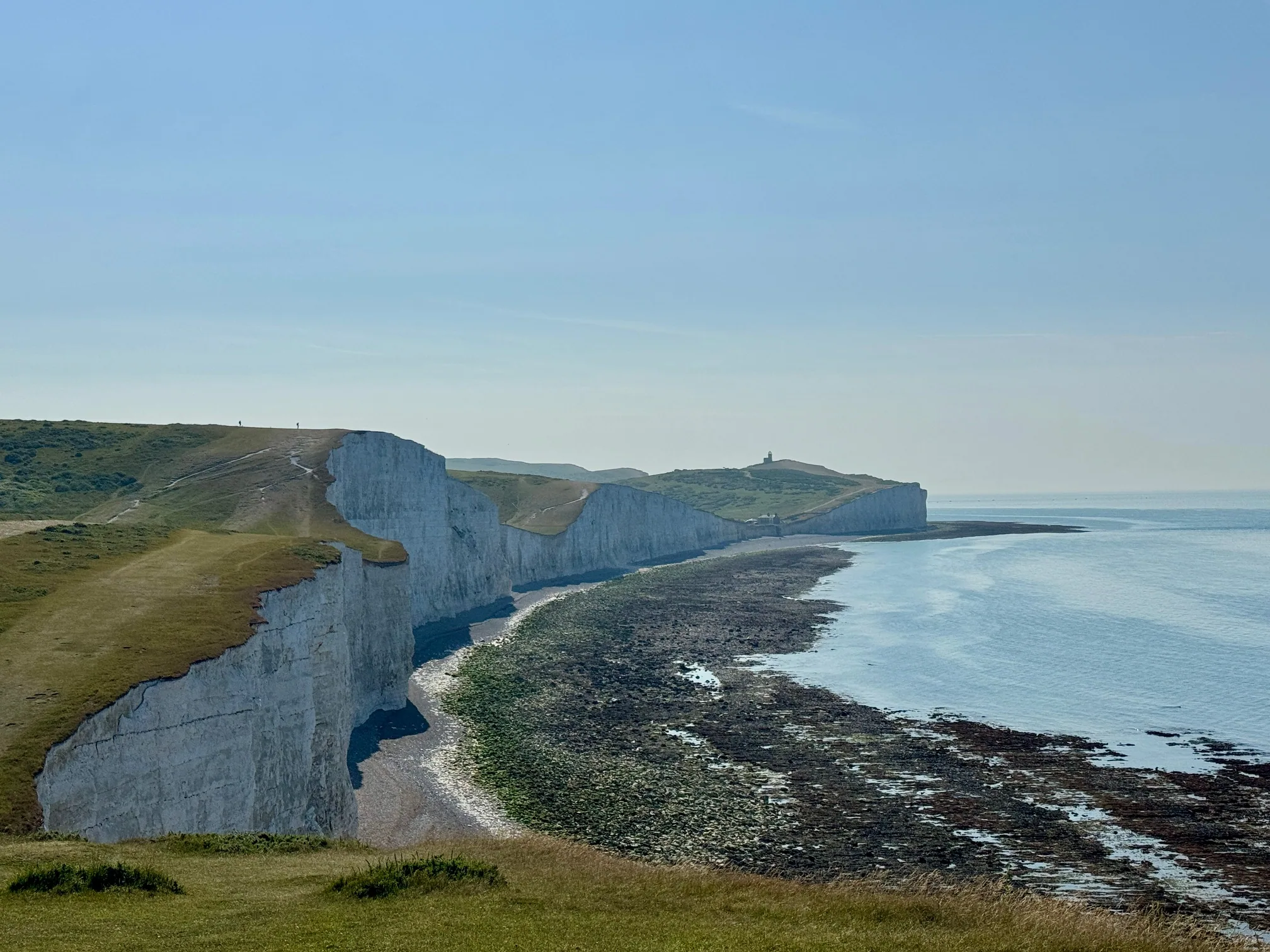
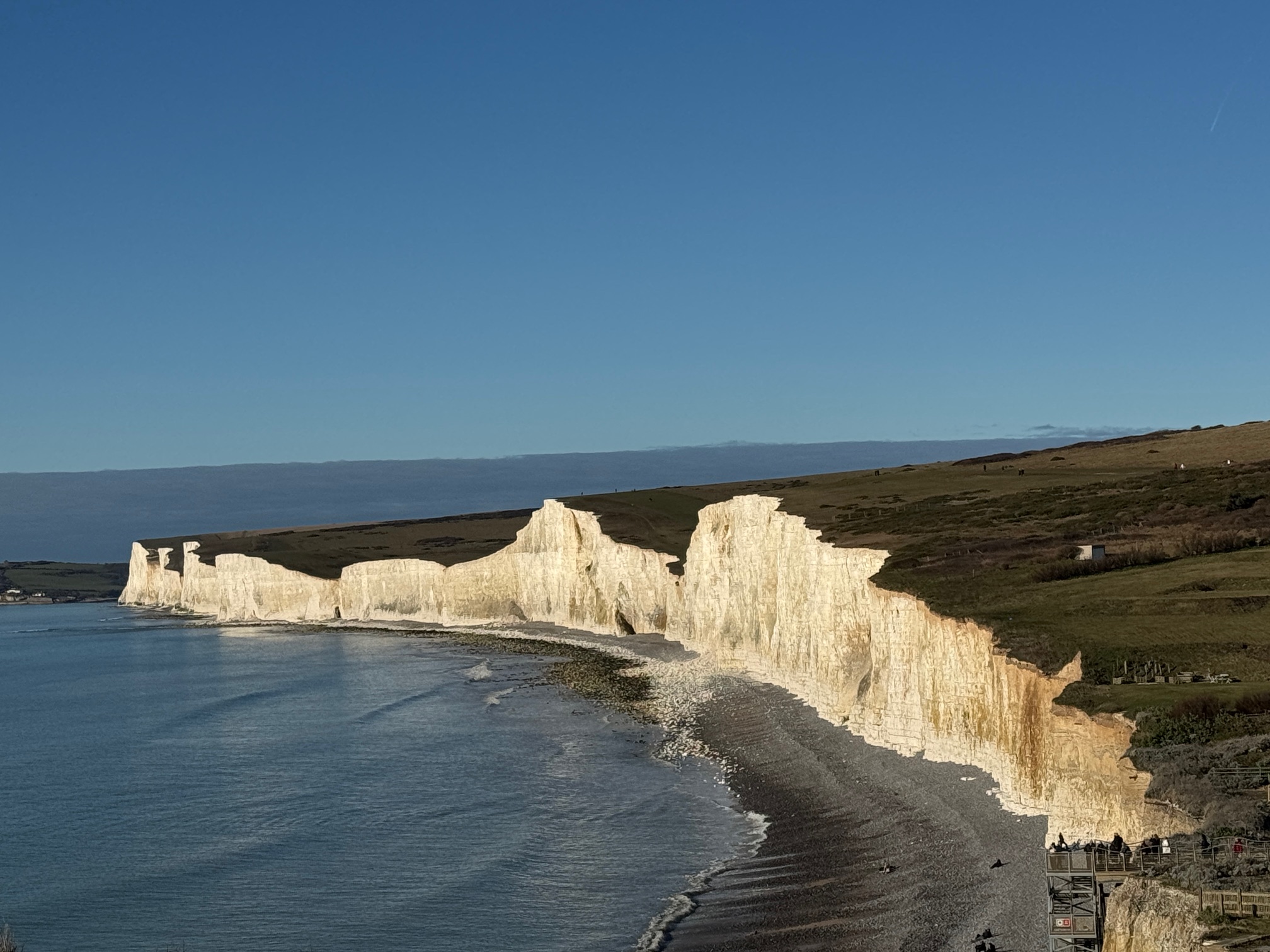
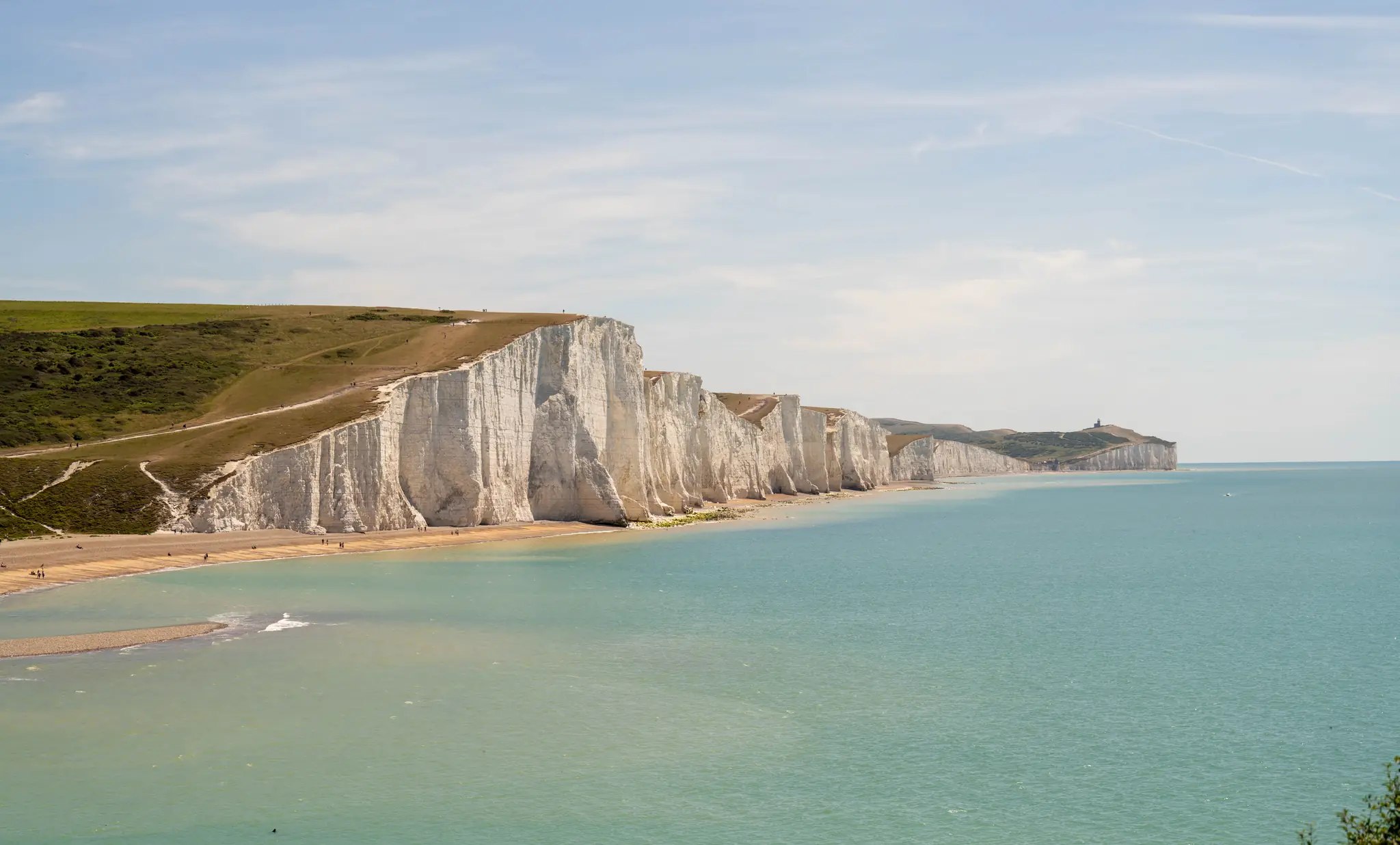
This is the easiest car-free cliff walk in the south of England and the reason most of this site exists. From Seaford esplanade the path climbs Seaford Head, runs east along the clifftop with the seven Sisters lined up ahead of you across the river mouth, drops to Cuckmere Haven, cuts inland to cross the river at Exceat Bridge, and climbs Haven Brow onto the ridge itself — 6.1 km of clifftop over the seven peaks to Birling Gap. From Birling Gap the seasonal 13X bus runs to Eastbourne for a direct train home, or you keep walking over Beachy Head to Eastbourne station and complete the 21.9 km traverse.
Every option, with the timings, is in the Seaford to Seven Sisters route guide; the four routes are compared on the routes page. Bus caveat: the 13X is seasonal and is the only bus that serves Birling Gap. The year-round 12/12X runs between Eastbourne, Exceat and Seaford but does not stop at Birling Gap — see getting there before you rely on it.
2. Beachy Head from Eastbourne — direct train, walk from the seafront
Train: London Victoria to Eastbourne, about 1 hour 30 minutes direct. Station to cliff: the seafront is a ten-minute walk; the climb onto the downs starts at its western end, and Beachy Head is about 4 km from the town centre.
Eastbourne has the direct train Seaford lacks, and the walk out of it is a steady climb onto open downland rather than a scramble. You reach the 162 m summit — the tallest chalk sea cliff in Britain — with the lighthouse below you, then continue west past Belle Tout to Birling Gap, about 9 km from the seafront. Return on the 13X in season, or turn round on the headland for a shorter day. Full route in Eastbourne to Seven Sisters: the complete Beachy Head route guide.
3. Folkestone to Dover — a station at both ends
Train: London St Pancras to Folkestone Central, about 55 minutes by high-speed train; back from Dover Priory, about 65 minutes. Station to cliff: the North Downs Way leaves from the edge of Folkestone and Dover Priory sits in the town below the path — both a short walk.
This is the cleanest linear coastal walk in the south-east because there is no return leg to plan: you walk 12 to 14 km along the cliffs — over the Warren, Samphire Hoe below you, then Shakespeare Cliff with Dover Castle and the harbour ahead — and catch a train home from the far end. Because there is no car park beside a single view, it is also the quietest walk on this list on a summer weekend.
4. White Cliffs of Dover to South Foreland — short, famous, and a walk from the station
Train: St Pancras to Dover Priory, about 65 minutes. Station to cliff: about 40 minutes on foot, uphill through the town to the National Trust visitor centre — or a local bus.
The classic Dover walk is the National Trust path from the visitor centre along the cliff top to South Foreland Lighthouse, about 3.2 km each way, gentle, with France visible on a clear day. The honest note is that the station is in the town and the famous viewpoints are on the hill above it, which most guides leave out. Combine it with number three and you have walked the whole Kent white-cliff coast in one long day. How the two white-cliff coasts compare is in Seven Sisters vs Dover.
5. Hastings Country Park — sandstone cliffs a mile from the station
Train: London to Hastings, about 1 hour 25 minutes on the fastest services from Charing Cross or St Pancras. Station to cliff: about a mile — twenty minutes through the Old Town to the East Hill.
Not chalk: Hastings Country Park is sandstone, wooded and steep, with glens running down to the shore at Ecclesbourne and Fairlight. The clifftop route east from the East Hill to Fairlight Glen is about 3 km, and a circular of 7 to 10 km takes in the glens and the ridge above. It is the walk on this list that feels least like the rest of the south coast, and it is quiet because the crowd stays in the Old Town.
6. Thanet chalk — Broadstairs to Botany Bay
Train: St Pancras to Broadstairs, about 1 hour 20 minutes by high-speed train. Station to cliff: ten minutes to Viking Bay.
The Viking Coastal Trail runs about 10 km from Broadstairs round the chalk headlands to Margate, past the stacks and arches at Kingsgate and Botany Bay, and there is a station at both ends. The cliffs are lower than Sussex — 20 to 30 m rather than 77 — and the path is promenade and clifftop rather than open downland, but the chalk is white, the bays are sandy and almost nobody from London knows it is there.
7. Tennyson Down and the Needles — train, ferry, bus
Train: London Waterloo to Lymington Pier, about 1 hour 50 minutes with a change at Brockenhurst, then the Wightlink ferry to Yarmouth (40 minutes) and a Southern Vectis bus to Freshwater Bay or Alum Bay. Station to cliff: the ferry and bus replace it — allow an hour from Lymington Pier to the start.
The reward is a chalk whale-back ridge rising to the Tennyson Monument at 147 m and running out to the Needles — about 10 km out and back from Freshwater Bay, or a loop. It is a long day from London, but every leg is a scheduled public service and the ferry crossing is part of the pleasure.
8. Durdle Door and Lulworth Cove — possible, but the bus is seasonal
Train: London Waterloo to Wool, about 2 hours 20 minutes. Station to cliff: about 8 km — a seasonal bus to Lulworth Cove in summer, otherwise a taxi from the station.
The walk itself is short: about 2.1 km each way on the South West Coast Path from Lulworth Cove over the hill to the arch, with steep steps at the far end. We include it because it is the one people ask about most, and to be clear that it is a five-hour round trip from London for a two-hour walk. If you go, go on a weekday. How it compares with Sussex is in Seven Sisters vs Jurassic Coast.
Three things that make a car-free day work
- Check the bus before the train. On every walk above the train is reliable and it is the last leg that fails. The Sussex 13X and the Lulworth bus are seasonal; the Purbeck and Isle of Wight buses run all year but thin out in winter. Read the current timetable the night before, not the one on a blog.
- Buy the ticket to the far station. A linear walk needs a ticket home from a different station. Seaford to Eastbourne, Folkestone to Dover, Broadstairs to Margate: book the outward and return legs separately or as a route that allows it, and you will not be arguing with a barrier at 5pm.
- A Railcard usually pays for itself on the first trip. A third off most off-peak fares means a London to Seaford day return saves around a tenner each time; two of these days a year and you are ahead. Detail in the from London guide.
Which one first
If you have never done any of them: Seaford. It has the shortest station-to-cliff walk, the best view of the Seven Sisters from Seaford Head before you are even on them, and a bus or a train at the far end whichever way the day goes. For a second trip, Folkestone to Dover for the station-at-both-ends simplicity. Everything on this list is compared by distance, ascent and crowds in south coast cliff walks compared, and if the aim is to avoid the busy bits of Sussex rather than leave it, the quieter alternatives to the Seven Sisters are all within a few miles of the cliffs.
Planning the walk itself?
Four routes run along these cliffs and they are not interchangeable — a flat 3km riverside stroll, the classic 6.5km Exceat to Birling Gap crossing, a short Birling Gap loop, and the full 21.9km Seaford to Eastbourne ridge. Compare distance, ascent and difficulty before you pick one.
- Easy Birling Gap Short Loop 2 km 45 min
- Easy Cuckmere Haven Beach 3 km 1 hour
- Moderate Exceat to Birling Gap 6.5 km 2-3 hours
- Challenging Seaford to Eastbourne 21.9 km 6-7 hours
Check live train times and fares
Both stations for the cliffs are reached from London Victoria — Seaford with a change at Lewes, Eastbourne direct. Off-peak day returns are usually cheapest booked a few days ahead; walk-up fares on a summer weekend can be steep.
- London Victoria to Seaford approx. 1 hr 25 min, change at Lewes · walk to the cliff path, no bus needed Live times & fares
- London Victoria to Eastbourne approx. 1 hr 30 min direct · 13X bus to Birling Gap Live times & fares
Fares and Railcards are sold by Trainline. We earn a small commission on bookings made through these links at no extra cost to you. Affiliate disclosure.
We may earn a small commission on bookings made through this link, at no extra cost to you. More info.
£4.99 · 24-page PDF · Instant download
The Seven Sisters Ultimate Guide
The complete 24-page companion built from first-hand walks — every cliff, all four graded routes, tide windows and a parking strategy. Designed to work offline, right on the cliff top.
- All 7 cliffs — heights, geology & viewpoints
- Four graded walking routes, compared
- Tide windows, light calendar & day plans
- Parking strategy & seasonal planner
Just want the basics? Download the free 2-page walk guide
Want an expert-led Seven Sisters tour?
From guided cliff walks and wildlife safaris to geology hikes and photography tours — explore all our curated experiences with local guides.