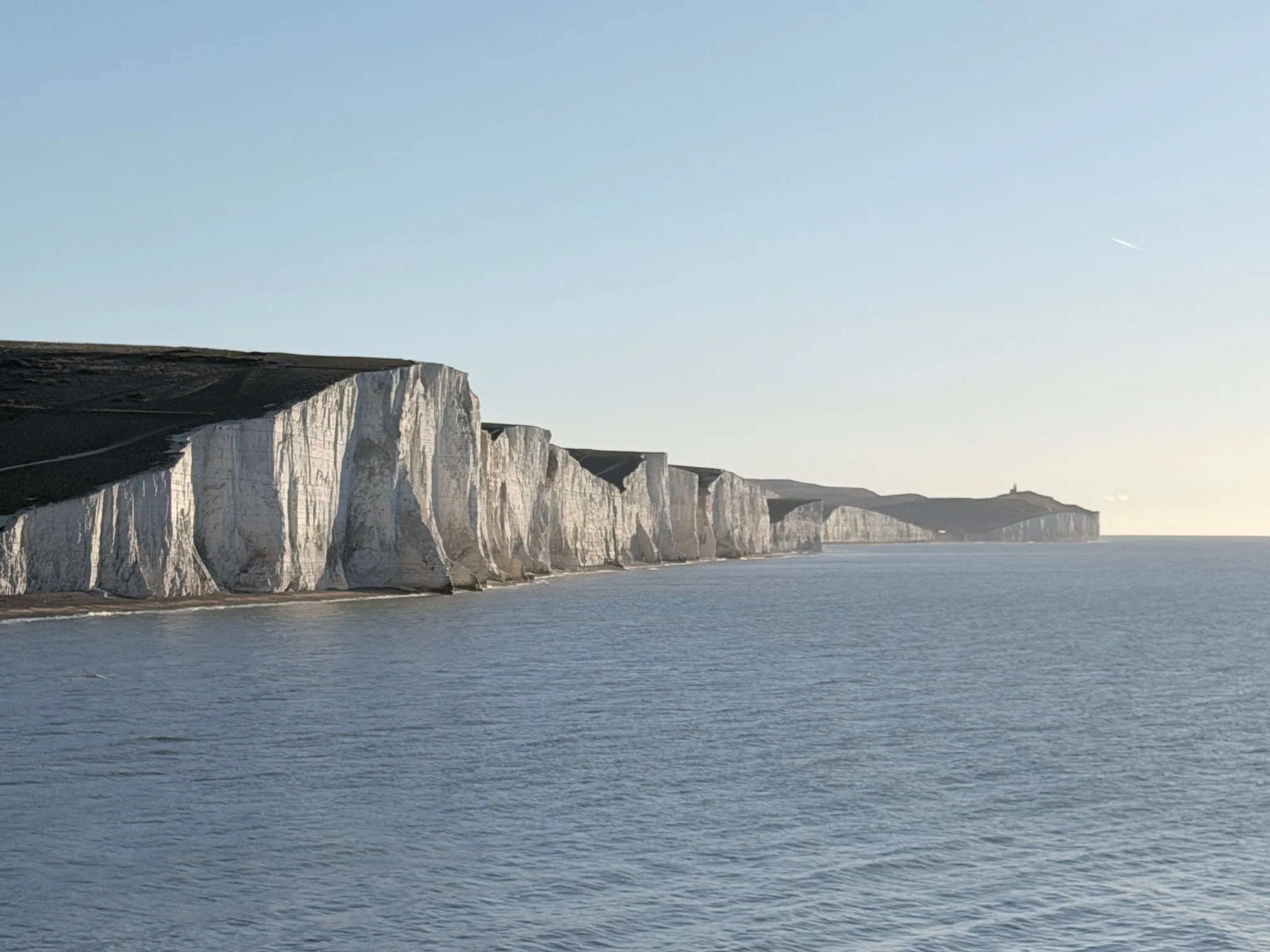
Alfriston Village: The Quiet Base for Seven Sisters That Most Visitors Drive Past
Alfriston Village
The medieval Cuckmere valley village that most Seven Sisters visitors drive past without stopping. Here is why that is worth correcting.
Most visitors to the Seven Sisters arrive at Birling Gap or Exceat, walk the cliff path or the valley, and drive home. The road between Seaford and Eastbourne — the A259 — takes them past the turning for Alfriston. Some see the sign and file it away. Most don't notice it at all.
Alfriston is a medieval village in the Cuckmere valley, four miles north of Exceat along the river path. It has a 14th-century church that earned the name "Cathedral of the Downs" from people who had seen it in the right light. It has the first property the National Trust ever acquired — a timber-framed clergy house from the 1370s, purchased in 1896 for £10. It has two ancient inns that have been feeding travellers on this route through the valley for centuries. And it has a footpath that follows the Cuckmere river south from the village all the way to the beach at Cuckmere Haven — a walk that connects Alfriston directly to the Seven Sisters system without any driving at all.
It is the best base in the area for visitors who want more than a single afternoon at the cliffs. Here is everything about it.
What Alfriston Actually Is
Alfriston is a village of approximately 800 people in the Cuckmere valley in East Sussex. It sits on the banks of the Cuckmere river where the valley floor widens, with the chalk Downs rising on both sides. The South Downs Way long-distance footpath passes through the village — walkers doing the 100-mile route from Winchester to Eastbourne pass through Alfriston approximately on their fourth day.
The High Street is the centre of the village: medieval timber-framed buildings, flint walls, the market cross, and the turning to the church and Clergy House. The layout has not changed fundamentally in 600 years. The village avoided the Victorian development that altered many East Sussex settlements and retained a medieval character that is now its most distinctive quality.
It is popular enough on summer weekends that the car park fills and the tearooms have queues — it is not an undiscovered secret. What it is not is overrun: the scale of the village prevents the tour-bus effect that affects some similarly attractive places, and the majority of visitors are there because they have sought it out rather than arrived by accident.
Key Facts
- • Distance from Birling Gap: 5 miles by road, 4 miles via Cuckmere valley footpath
- • Distance from Seaford: 5 miles by road
- • Distance from Lewes: 10 miles
- • On the South Downs Way: Yes
- • River: The Cuckmere passes through and beside the village
- • Character: Medieval, flint and timber, largely unchanged since the 14th century
- • Dog friendly: Highly — most pubs and the riverside paths welcome dogs
Parking
The village car park is off the High Street and is pay and display. It fills on summer weekend afternoons — arrive before 11am or after 3pm. There is also limited roadside parking near the church. Arriving on foot from the Cuckmere valley path resolves the parking question entirely.
What to See in Alfriston
The Clergy House
FIRST EVER NT PROPERTYThe Alfriston Clergy House is a timber-framed, thatched Wealden hall house built around 1370 — one of the finest surviving examples of a medieval yeoman's house in England. In 1896, it was the first building ever acquired by the National Trust, purchased for £10 when it was in danger of demolition. The Trust has now owned it for over 130 years.
Inside, the medieval hall is largely intact: the great hall with its high roof, the original chalk and sour milk floor (a historic building technique), the intimate scale of a house built for people who were considerably shorter than modern visitors. The garden beside the house, on the banks of the Cuckmere, is maintained in a traditional cottage style and has a quiet, specific beauty that the larger National Trust gardens do not always match.
Practical Notes
Admission charged (NT members free). Opening hours vary by season — check the NT website before visiting. The adjacent tearoom is popular: arrive early on summer weekends to avoid the queue. The garden alone is worth the visit.
St Andrew the Apostle Church
CATHEDRAL OF THE DOWNSSt Andrew the Apostle is the parish church of Alfriston, dating to the 14th century and built on a slightly raised position above the Cuckmere flood plain. The name "Cathedral of the Downs" reflects both its scale for a village church and its quality — it was built at a time when Alfriston was a prosperous trading centre and the church budget reflected that prosperity. The cruciform flint building, visible for miles across the Cuckmere valley, is one of the finest examples of the Perpendicular Gothic style in East Sussex.
Inside: high nave, medieval stonework, and a quality of light that comes from being positioned to catch the afternoon sun through the south-facing windows. The churchyard has old flint walls, views across the valley, and the general peace of a rural churchyard in the middle of a summer afternoon.
Worth Knowing
Free entry. Open daily during daylight hours. The path from the church gate to the Clergy House is 50 metres — see both in a single visit. The view from the churchyard south across the Cuckmere valley, with the Downs rising beyond, is one of the better views in the village that does not require any walking.
The High Street and Market Cross
Alfriston was granted a market charter in 1406 and the market cross at the centre of the High Street is the surviving marker of that medieval commercial life. The High Street itself — a mix of independent shops, galleries, and the two ancient inns — retains a scale and character that is rare in East Sussex. The buildings are largely intact 15th and 16th-century structures, with later additions that are generally sympathetic.
The independent shops along the High Street include a good bookshop, antique dealers, a deli, and a handful of galleries. These are worth time if the weather is poor or if you are combining a village morning with an afternoon walk. Nothing is chain-owned. This is genuinely unusual.
Walking From Alfriston to the Seven Sisters
The Cuckmere valley footpath connects Alfriston to the Seven Sisters system entirely on foot — no road walking, no car required. This is the practical reason why Alfriston works as a multi-day base: you can walk from your accommodation to the cliff path and back as a day trip, without touching a car.
Alfriston to Litlington (1 mile, 20 minutes)
From the village, take the path south along the east bank of the Cuckmere river. The valley floor is flat and the path follows the river through water meadows. Litlington is the first village you pass through — the Plough pub is here if you want to break the walk.
Litlington to Exceat (3 miles, 60 minutes)
Continue south along the river. The valley narrows as you approach Exceat and the South Downs rise on both sides. At Exceat, the Seven Sisters Country Park car park is on the A259 — you can continue on foot to Cuckmere Haven beach (30 minutes further south) or turn east to begin the ridge climb towards the Seven Sisters themselves.
Exceat to Cuckmere Haven Beach or the Ridge (2 miles, 45 minutes)
From Exceat, the path south to Cuckmere Haven beach follows the flat valley floor to the sea — easy, accessible, and ending at a shingle beach between chalk headlands. Alternatively, the ridge path climbs east from Exceat onto the Seven Sisters proper. The first cliff peak (Haven Brow) is approximately 30 minutes from Exceat by this route.
Total from Alfriston to Seven Sisters cliff path
Approximately 4 miles and 90 minutes at an easy pace to reach the start of the ridge. The full return trip (Alfriston → Exceat → ridge → Birling Gap → return to Alfriston via the same valley path) is approximately 14–16km and takes 5–6 hours with stops. This is a genuine full-day walk entirely on public footpath.
Why This Changes the Alfriston Equation
Most Seven Sisters bases require a car for every cliff visit. From Alfriston, you can do the full ridge and valley walk as a foot journey from your accommodation and back. If you are staying 3+ nights and want to walk the Sisters on one day, the Cuckmere valley on another, and explore the village on a third without ever needing to drive to a car park — Alfriston is the only base in the area that makes all three possible on foot.
Where to Eat, Drink and Stay
Food and Drink
The Star Inn (c. 1345)
One of the oldest inns in England. The carved lion outside the door and the low-beamed medieval bar inside are not decorative — they are original. Good food and well-kept ale. The historic setting adds something that newer pubs cannot replicate. Book ahead for summer weekends.
The George Inn
50 metres from the Star, with a larger garden and slightly more relaxed atmosphere. Good pub food, reliable ale, and a warmth of character that some visitors prefer to the Star's more formal reputation. The garden on a summer afternoon is excellent.
The Clergy House Tearoom (NT)
In the National Trust property. Good tea, proper scones, and the garden of the Clergy House to sit in while eating them. Popular — arrive early or late to avoid the peak queue. Open during NT property hours (check seasonally).
The Deli and Village Shops
The High Street deli is the right place to assemble provisions for a valley walk — local cheese, good bread, cold meats, fruit. Stock up here before the Cuckmere path rather than relying on anything between Alfriston and Exceat.
Where to Stay
The Star Inn (rooms above the bar)
Rooms vary considerably — some in the original medieval structure, some in later additions. Request a room in the original building if the historic atmosphere is a priority. Prices from approximately £130/night. Book well ahead for summer.
The George Inn (rooms)
Slightly better value than the Star, similar location, warmer atmosphere in the bar. Good for couples or small groups who want the village experience without the Star Inn price premium. Book 3–6 weeks ahead for summer weekends.
Self-Catering Cottages
Several self-catering properties in Alfriston and the immediate valley. Sykes Cottages and Airbnb both have listings. The best properties sleep 4–8 and have garden access — very good for families staying 3+ nights with the intention of using Alfriston as a walking base. Book 4–6 months ahead for school holiday weeks.
Alfriston Camping Park
The closest campsite to the Seven Sisters in the Cuckmere valley system — 8km from Birling Gap with the bus 12 connection nearby. Find more options in our accommodation guide. A genuine option for walkers who want valley access without full accommodation costs.
Practical Information
Getting There by Car
From Seaford: B2108 north, following signs to Alfriston. From Eastbourne: A22 or A259 west, signed from the road. From Lewes: A27 east, then south at Berwick. Alfriston is well signed from all main roads in the area.
Car park on the High Street (pay and display). Fills summer weekend afternoons. Off-peak arrival or walking-in from the valley path recommended.
Getting There by Bus
A bus service connects Alfriston to Seaford, Lewes and Eastbourne. Check the current East Sussex bus timetable for the Alfriston service — frequency varies by season and day. Combined with the train to Seaford from Brighton or London, this makes a car-free arrival possible.
Note: the bus service does not run very frequently. Check the return timetable before committing to public transport arrival.
What to Allow Time For
- • Clergy House and garden: 45–60 minutes
- • St Andrew the Apostle Church: 20–30 minutes
- • High Street browse and lunch: 90 minutes
- • Cuckmere river walk south to Litlington and back: 3 hours
- • Full Seven Sisters day via valley path: 6–7 hours
The Honest Case for Basing Here
Alfriston gives you the Seven Sisters by foot, the Cuckmere valley on foot, a medieval village to explore on foot, and two good pubs at the end of any combination. It is not spectacular in the way the cliff top is spectacular — the village works quietly, at human scale, in a way that the ridge does not. That contrast is part of its value. A stay that includes one day on the ridge, one day in the valley, and one evening in the Star Inn covers three completely different aspects of this corner of East Sussex without getting into a car after you arrive.
Planning the walk itself?
Four routes run along these cliffs and they are not interchangeable — a flat 3km riverside stroll, the classic 6.5km Exceat to Birling Gap crossing, a short Birling Gap loop, and the full 21.9km Seaford to Eastbourne ridge. Compare distance, ascent and difficulty before you pick one.
- Easy Birling Gap Short Loop 2 km 45 min
- Easy Cuckmere Haven Beach 3 km 1 hour
- Moderate Exceat to Birling Gap 6.5 km 2-3 hours
- Challenging Seaford to Eastbourne 21.9 km 6-7 hours
We may earn a small commission on bookings made through this link, at no extra cost to you. More info.
£4.99 · 24-page PDF · Instant download
The Seven Sisters Ultimate Guide
The complete 24-page companion built from first-hand walks — every cliff, all four graded routes, tide windows and a parking strategy. Designed to work offline, right on the cliff top.
- All 7 cliffs — heights, geology & viewpoints
- Four graded walking routes, compared
- Tide windows, light calendar & day plans
- Parking strategy & seasonal planner
Just want the basics? Download the free 2-page walk guide
Want an expert-led Seven Sisters tour?
From guided cliff walks and wildlife safaris to geology hikes and photography tours — explore all our curated experiences with local guides.