Big Butterfly Count at Seven Sisters: How to Take Part on the Chalk
Big Butterfly Count on the Seven Sisters
Fifteen minutes, a sunny patch of chalk grassland, and some of Britain's rarest butterflies — how to join the world's biggest butterfly survey right here on the cliffs
The Big Butterfly Count 2026 runs from Friday 17 July to Sunday 9 August — and few places in Britain offer a better fifteen minutes of counting than the Seven Sisters. Butterfly Conservation's annual citizen-science survey asks you to do one simple thing: pick a sunny spot, count the butterflies you see for fifteen minutes, and submit the result. Do it on the flower-rich chalk turf above these cliffs — just as the Chalkhill Blues reach peak emergence — and your quarter of an hour genuinely contributes to national conservation science. Seven Sisters Country Park is running a programme of butterfly events around the count too. Here is everything you need to take part.
What the Big Butterfly Count Is
The Big Butterfly Count is the world's largest butterfly survey, run every summer by the charity Butterfly Conservation. It is free, needs no experience and no booking. You choose a place, count butterflies for fifteen minutes in bright — ideally sunny — weather, and record what you see using the free Big Butterfly Count app or the website at bigbutterflycount.butterfly-conservation.org. An identification chart is built into both, so you do not need to know your species in advance.
The data matters. Because thousands of people count in the same three-week window every year, scientists can track how butterfly populations are shifting — and butterflies respond so quickly to change that they act as an early-warning system for the health of the wider environment. You can do as many counts as you like, in as many places as you like, throughout the count window.
Why Seven Sisters Is a Superb Place to Count
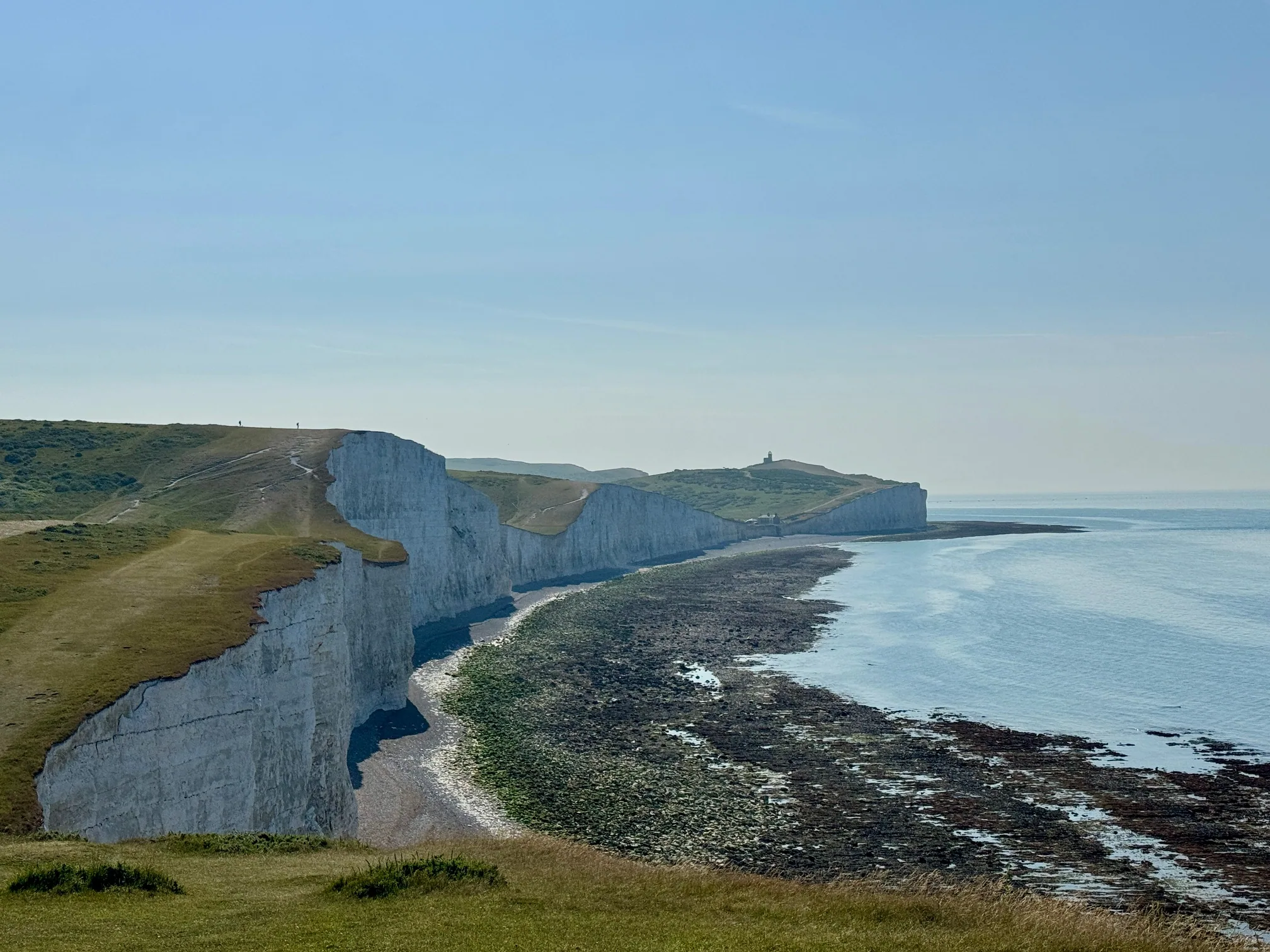
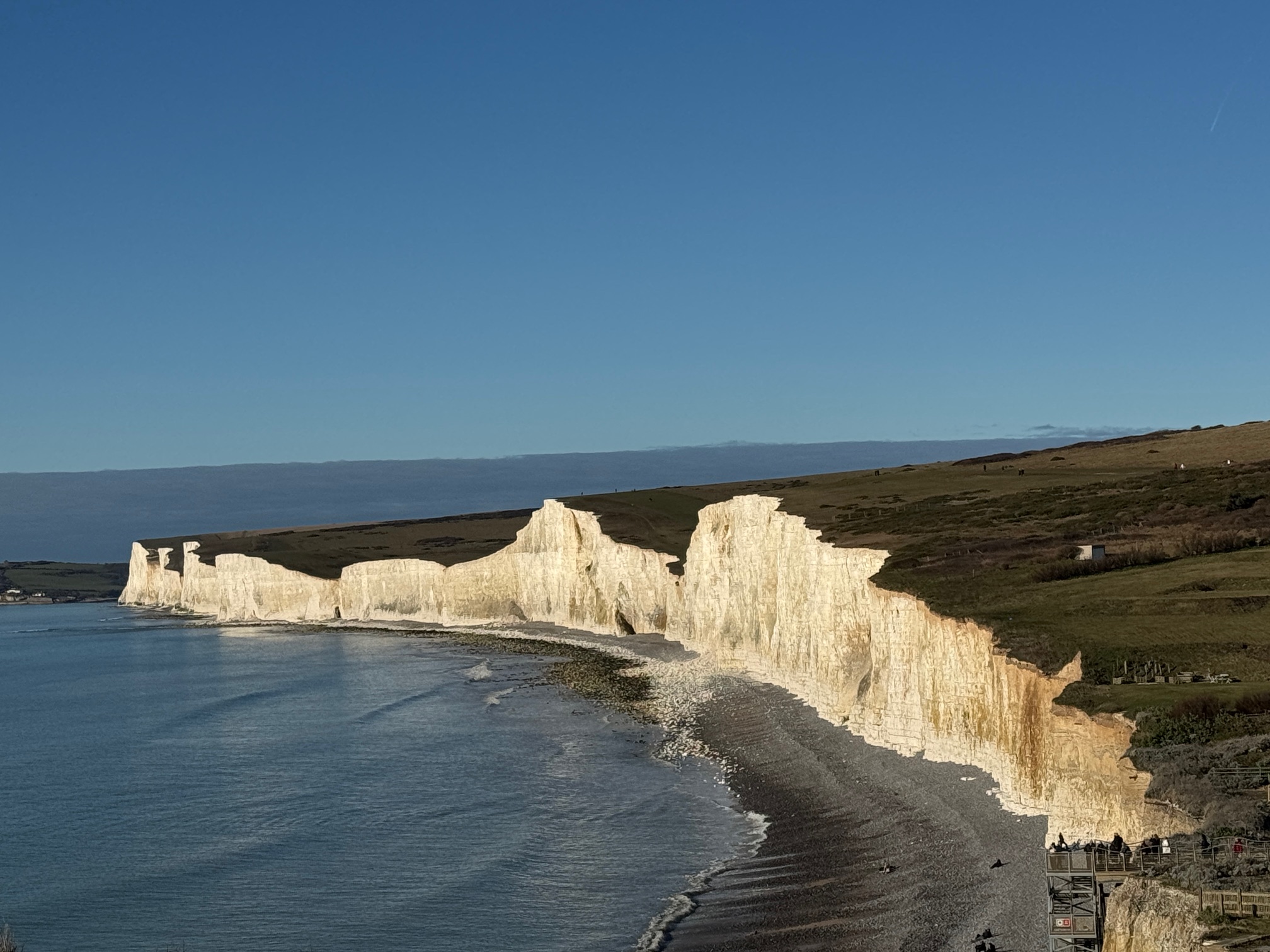
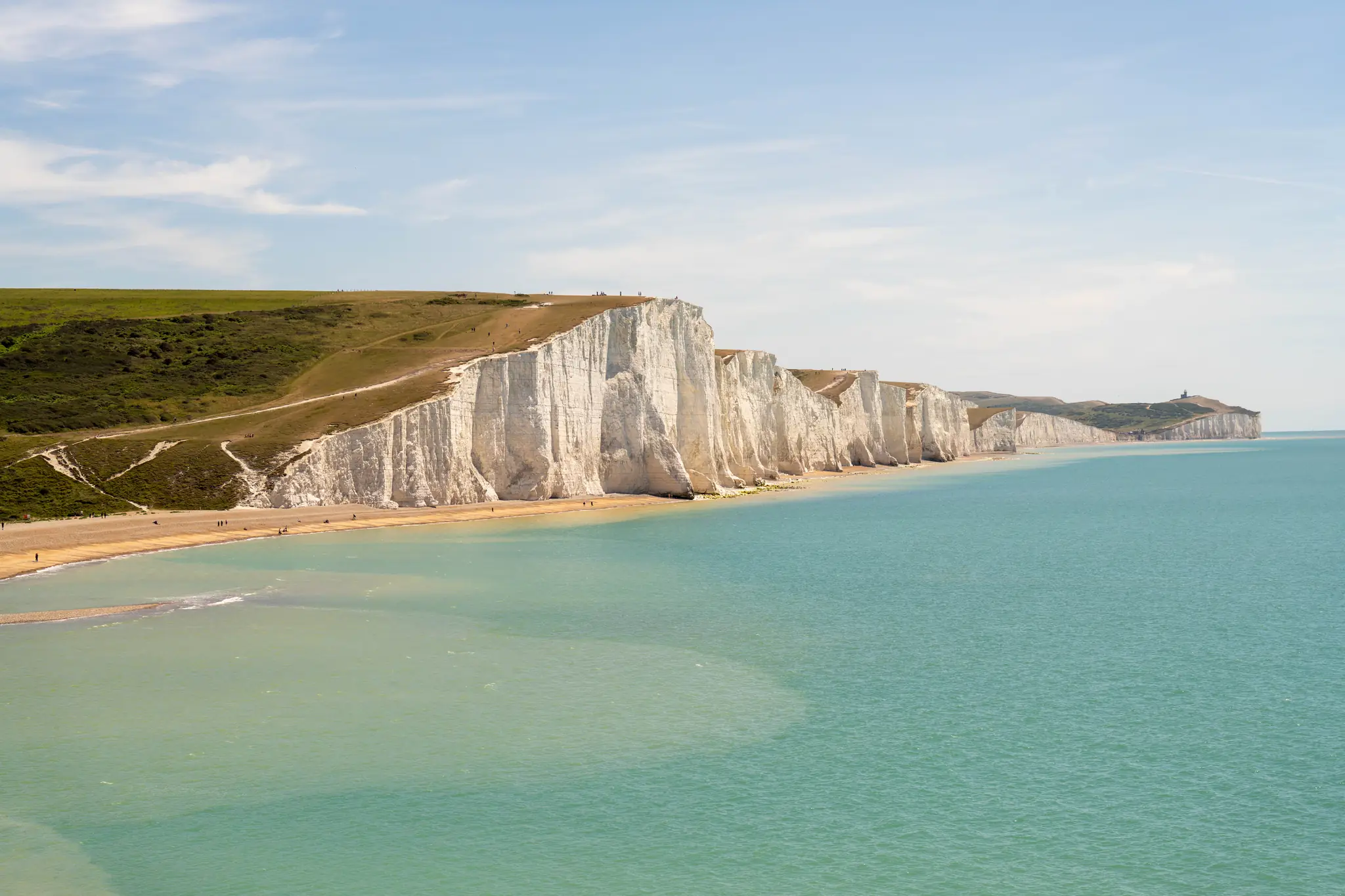
The clifftop turf here is old, unfertilised chalk grassland — one of the richest butterfly habitats in southern England, and now part of a National Nature Reserve. The count window is timed for peak butterfly season, and it lands exactly when this landscape is at its best: Chalkhill Blues emerge from mid-July and build to their August peak, Marbled Whites are drifting over the longer grass, Gatekeepers are appearing around the scrub, and Dark Green Fritillaries are still tearing across the open downland. A single fifteen-minute count in the right spot can log ten or more species.
Our full butterfly guide covers every species in detail. For the count itself, these are the four spots we would pick:
1. Birling Gap to Belle Tout
The most reliable stretch on the whole site. Flower-rich downland with plenty of horseshoe vetch — this is where the Chalkhill Blues congregate, and by the later part of the count window you can have dozens in view at once. Easy access from the National Trust car park at Birling Gap.
2. The Dry Valleys Between the Sisters
The sheltered dips between the summits are the smart choice on a breezy day. Butterflies abandon the exposed clifftop in wind and concentrate in the valley bottoms — if the top feels dead, drop into a dip and count there instead.
3. The Cuckmere Valley Floor
Flat, easy walking from Exceat, and ideal for counting with children: Marbled Whites, Meadow Browns, Gatekeepers and whites in good numbers along the riverside grassland. The Cuckmere circular walk samples both banks.
4. Hope Gap and Seaford Head
The scrub-and-grassland mosaic west of the Cuckmere adds Wall along the path edges and the chance of migrants arriving off the sea. The Hope Gap guide covers access.
Butterfly Events at Seven Sisters Country Park
Seven Sisters Country Park has built a run of butterfly-themed events around this year's count, based at Exceat:
- The Big Butterfly Count itself runs at the park for the full national window, 17 July to 9 August.
- 'The Shimmer' — a photography exhibition by Toby Lamborn celebrating the chalk grassland's butterflies, opening 17 July.
- Family butterfly crafts and activities over the opening weekend of 18 and 19 July.
- 'Blue Shimmer: a magnificent butterfly phenomenon' — an event on 20 July about the mass emergence of blue butterflies on the chalk.
- For moth lovers, a talk on the wonderful world of moths with Michael Blencowe on 16 July, the evening before the count opens.
Times, prices and booking details are on the park's What's On pages at sevensisters.org.uk — some events are drop-in, others need booking, so check before travelling. Visiting with children? The summer holiday guide for families pairs well with the opening-weekend activities.
How to Do Your Count Well
- Pick the weather, not the date: Butterflies need sunshine, warmth of roughly 15°C and above, and light wind. A calm, sunny morning beats a grey "free afternoon" every time.
- Count between about 10am and 4pm: That is the main activity window on the chalk.
- Stand still or walk slowly: The count method allows either a fixed spot or a slow wander — on this site, a slow amble along a sheltered valley bottom usually logs more.
- Use the ID chart for the blues: Common Blue, Chalkhill Blue and Adonis Blue all fly here. The Chalkhill is the milky, silvery one; the Adonis is electric. The app's chart makes the call easier than you would expect.
- Stay on the paths: The turf is protected habitat, grazed specifically to keep it butterfly-friendly. Count from the paths and take only records.
Getting Here for the Count
For the Cuckmere valley and the western Sisters, start at Exceat (Seven Sisters Country Park car park), served year-round by the 12/12X Brighton and Hove buses. For the Birling Gap and Belle Tout downland, use the National Trust car park at Birling Gap or the seasonal 13X bus — see getting there for current details, and the routes page for live walking conditions before you set out.
Make a Full Butterfly Day of It
The complete butterfly guide covers every species on the site and the best months for each, and the July and August guide handles timing, crowds and parking at the height of the season. Guided nature walks are available if you want an expert eye along for your count.
Planning the walk itself?
Four routes run along these cliffs and they are not interchangeable — a flat 3km riverside stroll, the classic 6.5km Exceat to Birling Gap crossing, a short Birling Gap loop, and the full 21.9km Seaford to Eastbourne ridge. Compare distance, ascent and difficulty before you pick one.
- Easy Birling Gap Short Loop 2 km 45 min
- Easy Cuckmere Haven Beach 3 km 1 hour
- Moderate Exceat to Birling Gap 6.5 km 2-3 hours
- Challenging Seaford to Eastbourne 21.9 km 6-7 hours
We may earn a small commission on bookings made through this link, at no extra cost to you. More info.
£4.99 · 24-page PDF · Instant download
The Seven Sisters Ultimate Guide
The complete 24-page companion built from first-hand walks — every cliff, all four graded routes, tide windows and a parking strategy. Designed to work offline, right on the cliff top.
- All 7 cliffs — heights, geology & viewpoints
- Four graded walking routes, compared
- Tide windows, light calendar & day plans
- Parking strategy & seasonal planner
Just want the basics? Download the free 2-page walk guide
Want an expert-led Seven Sisters tour?
From guided cliff walks and wildlife safaris to geology hikes and photography tours — explore all our curated experiences with local guides.