Fossil Hunting at Birling Gap: What to Find, When to Go, and How to Do It Right
Fossil Hunting at Birling Gap
The chalk cliffs are actively eroding — which means every visit reveals something that was locked inside the rock for around 85 million years
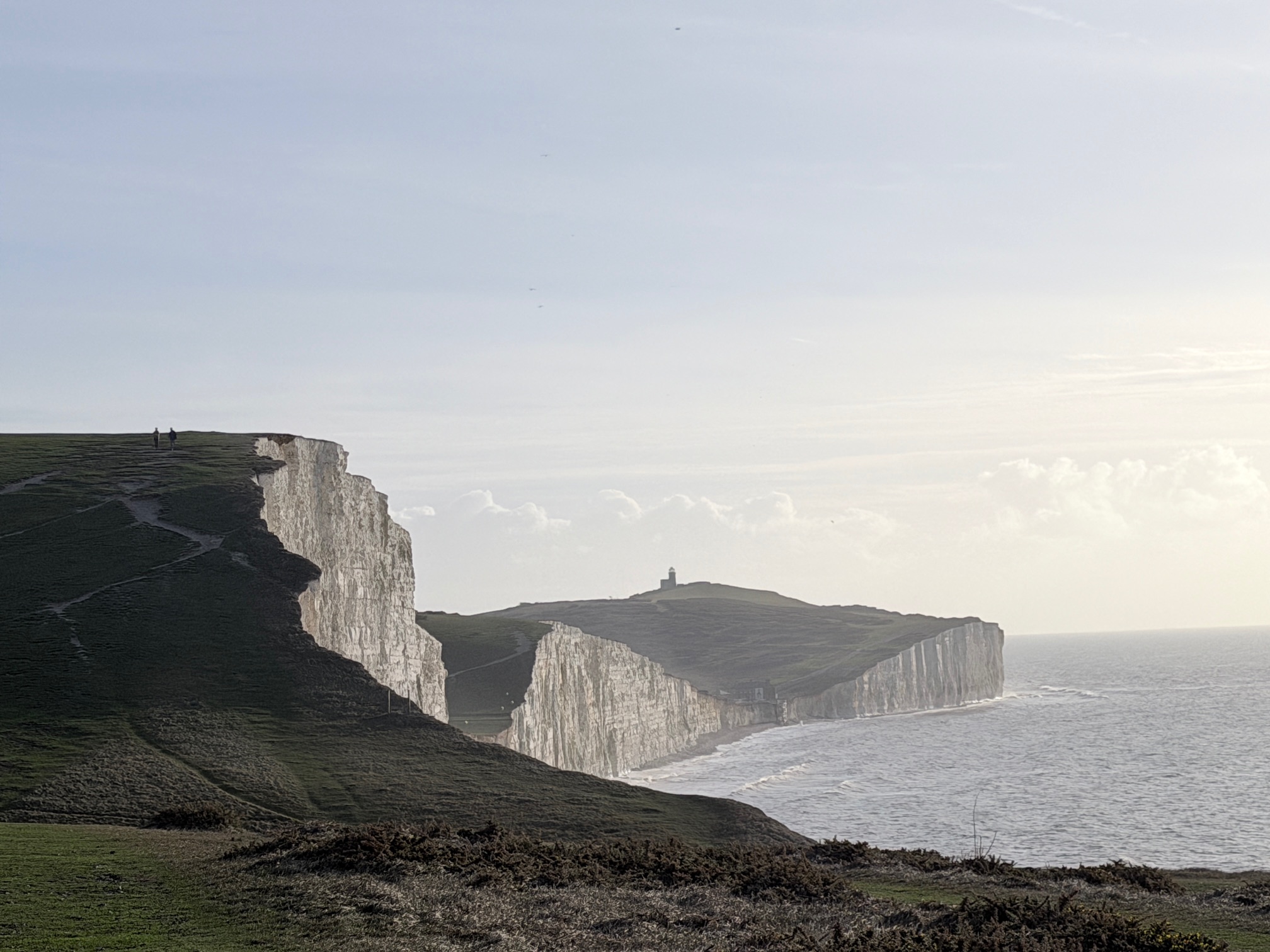
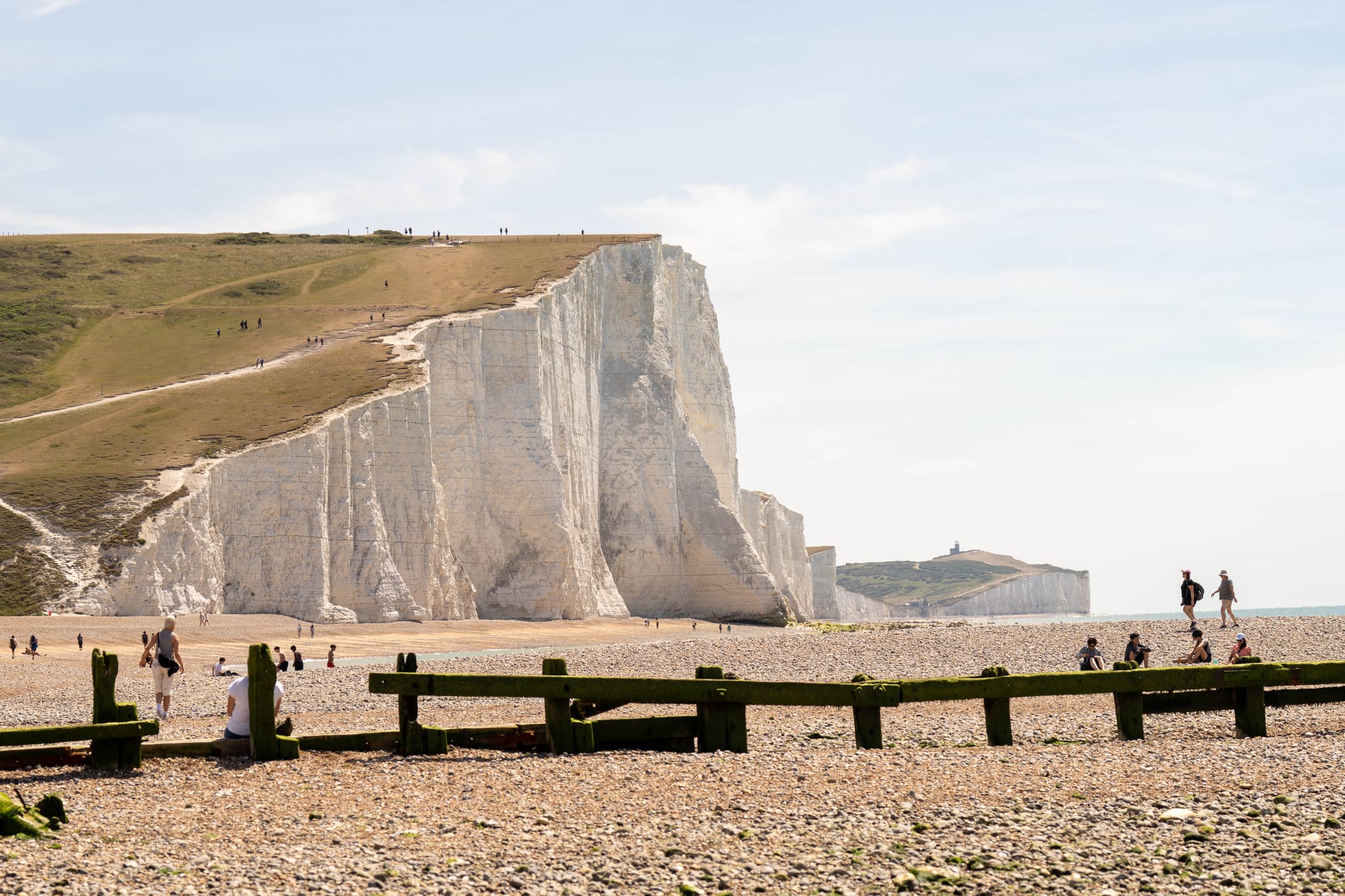
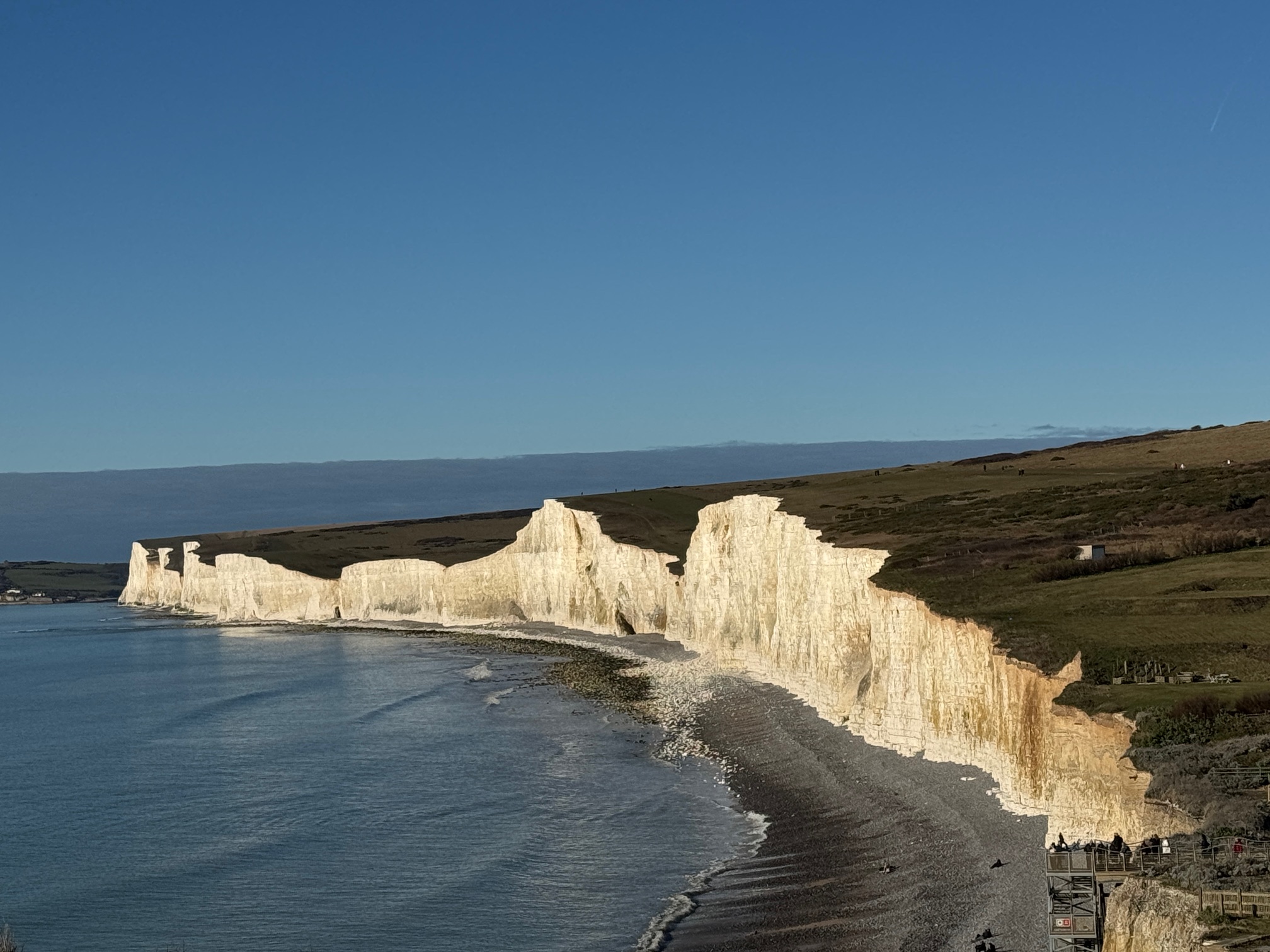
The chalk at Birling Gap is approximately 85 million years old. It formed at the bottom of a shallow tropical sea during the Cretaceous period, from the accumulated remains of microscopic marine organisms mixed with the shells and skeletons of larger creatures. Every cliff fall — and there are several each year — exposes material that has not seen daylight since the Cretaceous. The beach below the Sisters is one of the most accessible places in England to find Cretaceous marine fossils, and it requires no equipment, no expertise, and no expense. You just need to know what you are looking for and when to go.
What Fossils Are Found Here
Echinoids (fossil sea urchins)
These are the most commonly found fossils at Birling Gap and the most satisfying — a complete echinoid looks exactly like a sea urchin but in grey or brown chalk, perfectly preserved with its five-fold symmetry visible on the surface. The most common species are Micraster (heart-shaped, with a distinctive groove along the top) and Echinocorys (dome-shaped, like a small helmet). Both are found loose on the beach, having weathered out of the chalk face. They range in size from a thumbnail to a fist.
Bivalves and brachiopods
Bivalve shells — the ancestors of today's clams and oysters — are common in the chalk. You will find them as internal or external moulds in chalk nodules: the shell itself has dissolved over millions of years, but the cavity it left has filled with flint or calcite, preserving the shape. Look for oval or fan-shaped impressions in flat chalk pieces, with visible concentric growth lines or ribbing.
Sponges
Siliceous sponges are abundant in Cretaceous chalk and are often preserved in striking three-dimensional form as flint nodules. The flint forms around the sponge skeleton, preserving its shape. You will notice irregularly shaped flints with internal structure — tubes, channels, or layered forms — that distinguish them from featureless nodules. Vase-shaped sponges (Siphonia) are the most distinctive and occasionally found intact.
Ammonites
Ammonites are the most sought-after find but are also rarer than echinoids at this site. The chalk at Seven Sisters is Upper Cretaceous, by which time ammonites were already declining in diversity. They are present but less abundant than at Jurassic Coast sites such as Charmouth or Lyme Regis. When found, they appear as flat spiral forms in chalk or as flint replacements — the original shell replaced by silica over geological time. A clear spiral ribbed form on the surface of a chalk piece is a good indicator.
Belemnites
Belemnites — the bullet-shaped internal shells of ancient squid relatives — are found as smooth, cylindrical flint rods or chalk casts. They are easy to overlook as they resemble ordinary pebbles, but the characteristic torpedo shape and the small cup at one end (the alveolus) distinguish them. They are among the more common finds at Birling Gap and a good starting point for younger fossil hunters.
Trace fossils
Burrow traces from ancient worms and crustaceans appear as pale tubes or U-shapes on chalk surfaces. Thalassinoides — a complex branching burrow system — is common in the chalk and shows as a network of channels on a sawn or weathered chalk surface. These are technically fossils even though they are traces of behaviour rather than body parts, and they are abundant enough that most visitors find them without looking specifically.
Where Exactly on the Beach
Access the beach via the steps at Birling Gap (check they are operational — see the National Trust website for any closure notices). Once on the beach, the most productive areas are:
- Directly below fresh cliff falls. New falls expose material that has not been weathered, which means fossils on the chalk surface are still crisp. The chalk is white and unconsolidated — it crumbles easily and the fossils are readily visible. However, see the safety note below: do not stand directly beneath or close to a recent fall site.
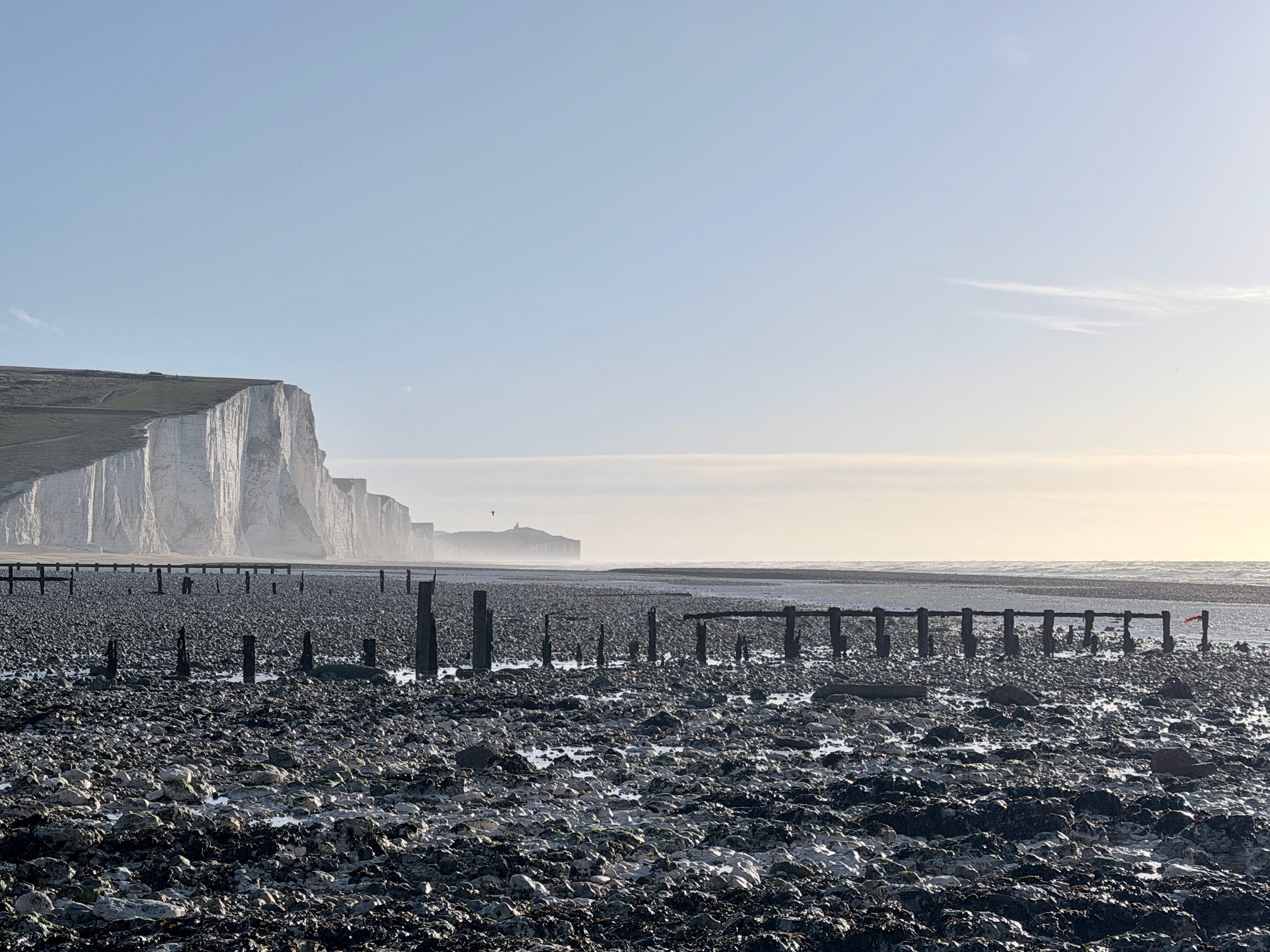
- The lower beach at low tide. As the tide drops, it exposes the chalk reef platform and the debris at the base of the cliff. Echinoids and bivalve moulds wash down to the lower beach over time and collect in the gravel hollows between chalk boulders.
- The base of large chalk boulders. Old falls become partially buried and then re-exposed by wave action. The base of boulders where shingle has been scoured away often reveals fresh fossil surfaces.
When to Go
Tidal timing
Low tide is essential. The beach at Birling Gap narrows significantly at high tide — chalk boulders from recent falls can make it impassable in places at a high spring tide. At low water, the beach widens by 30 to 50 metres and the chalk reef platform is exposed. This platform, particularly at its lower margins, is productive for loose fossils that have worked their way down from the cliff face.
The optimal window is the two hours either side of low water. Tide times for Birling Gap closely follow those for Eastbourne, which is the nearest tide gauge — check the tide times guide before visiting.
After storms
The single best time for fossil hunting at Birling Gap is in the 24 to 72 hours after a significant storm. Storm wave action removes beach material and exposes fresh chalk below, while cliff erosion during the storm brings new material down to beach level. Echinoids in particular are commonly found in the days after a storm, having been freshly released from the chalk face. The post-storm visit guide covers the conditions and safety considerations in detail.
Late summer and autumn
The autumn storm season begins in August and September, with the heaviest activity in October and November. Late summer is an excellent time to visit because the beach is most recently disturbed, tides are lower (neap tides in late summer expose more platform), and the site is quieter than peak summer. A late August low-tide morning after a run of rough weather is about as good as fossil hunting at Birling Gap gets.
The Legal Position
Seven Sisters is a Site of Special Scientific Interest (SSSI). This means:
- You may not extract fossils from the cliff face. Hammering, chiselling, or deliberately dislodging material from the cliff is prohibited. The SSSI designation protects the geological interest of the site.
- You may collect loose material from the beach. Fossils found on the beach — having already been eroded from the cliff and deposited as loose debris — can be collected under the terms of the Marine and Coastal Access Act. There is no legal quantity restriction but the understood expectation is personal, modest collection rather than commercial extraction.
- Significant scientific specimens should be reported. If you find something unusually complete, large, or unusual — a significant ammonite, a large intact sponge, an articulated vertebrate bone — the Sussex Biodiversity Record Centre or the Natural History Museum fossil hotline are the appropriate contacts. Exceptionally rare finds should ideally remain in place and be reported rather than removed.
What to Bring
- Old shoes or wellies. The chalk and flint at Birling Gap is sharp. Do not come in sandals or bare feet.
- A small bag or container. Echinoids and bivalve moulds are fragile once separated from their matrix. A padded bag protects them on the walk back.
- A hand lens (10x). Not essential, but remarkably useful for identifying trace fossils and small bivalve impressions that are easily missed with the naked eye.
- A field guide. The Natural History Museum publishes a compact guide to British Cretaceous fossils that covers the species found at this site. The British Geological Survey also publishes accessible guides to chalk fossils. Neither is required for an enjoyable visit, but both improve the find rate significantly by training you to recognise what you are looking at.
- Tide times. Check before leaving home. Low tide moves by approximately 50 minutes each day — the time that worked last week will not work this week.
With Children
Fossil hunting works extremely well for children at this site because the finds are genuinely frequent and the format — scanning a beach for interesting shapes — is immediately engaging. The best approach for under-10s is to focus specifically on echinoids, which are the most common and the most visually clear. Brief them on the shape (round, dome-shaped, about the size of an egg, grey or brown) before arriving and let them lead the search. Finding a complete echinoid is satisfying at any age and a near-certainty at Birling Gap in good conditions.
The rock pooling with kids guide covers the beach at Birling Gap from a different angle — combining fossil hunting with a rock pool session makes for a full morning.
Make the Most of the Beach at Birling Gap
Guided walks along the base of the Seven Sisters cliffs are available through GetYourGuide and include geological context for the chalk, the erosion, and the fossil record. View available experiences.
A Brief Word on the Geology
The chalk at Seven Sisters is Upper Cretaceous in age — approximately 87 to 84 million years old, formed during the Coniacian and Santonian stages (the Seaford Chalk Formation). The sea that deposited it was shallow, warm, and covered much of what is now southern England. The creatures whose remains make up the chalk — foraminifera, coccolithophores, and the larger organisms whose fossils you will find on the beach — lived in vast numbers in this sea and sank to the floor when they died, accumulating over tens of millions of years to produce the hundreds of metres of chalk that now underlie the South Downs.
The flint nodules running in horizontal bands through the cliff face formed later, through the diagenetic replacement of sponge skeletons and other silica-rich material by silica-saturated groundwater. Flint is harder than the surrounding chalk and resists erosion — which is why the beach is composed primarily of flint pebbles rather than chalk, and why flint-preserved fossils survive better on the beach than their chalk-matrix equivalents.
The fossils you find on the beach are not curiosities. They are direct physical evidence of the tropical sea that covered this site around 85 million years ago — before the Alps existed, before India collided with Asia, before the English Channel had formed. The cliff behind you is a stratigraphic record of millions of years of that sea. Every fall reveals another few centimetres of it.
Planning the walk itself?
Four routes run along these cliffs and they are not interchangeable — a flat 3km riverside stroll, the classic 6.5km Exceat to Birling Gap crossing, a short Birling Gap loop, and the full 21.9km Seaford to Eastbourne ridge. Compare distance, ascent and difficulty before you pick one.
- Easy Birling Gap Short Loop 2 km 45 min
- Easy Cuckmere Haven Beach 3 km 1 hour
- Moderate Exceat to Birling Gap 6.5 km 2-3 hours
- Challenging Seaford to Eastbourne 21.9 km 6-7 hours
We may earn a small commission on bookings made through this link, at no extra cost to you. More info.
£4.99 · 24-page PDF · Instant download
The Seven Sisters Ultimate Guide
The complete 24-page companion built from first-hand walks — every cliff, all four graded routes, tide windows and a parking strategy. Designed to work offline, right on the cliff top.
- All 7 cliffs — heights, geology & viewpoints
- Four graded walking routes, compared
- Tide windows, light calendar & day plans
- Parking strategy & seasonal planner
Just want the basics? Download the free 2-page walk guide
Want an expert-led Seven Sisters tour?
From guided cliff walks and wildlife safaris to geology hikes and photography tours — explore all our curated experiences with local guides.