June at the Seven Sisters: Why It Is the Best Month Nobody Plans For
June at the Seven Sisters
Longer days than any other month. Orchids on the chalk. Crowds still manageable. The month we schedule every walk we actually care about.
When people ask us the best time to visit the Seven Sisters, we say June without hesitation. The follow-up question is always the same: "Not August?" August has better weather odds. August has warmer sea temperatures. August has school holidays and the infrastructure that comes with them. August also has the car parks full before 9am, the ridge path feeling like a queuing system, and the Birling Gap café running a queue that starts outside.
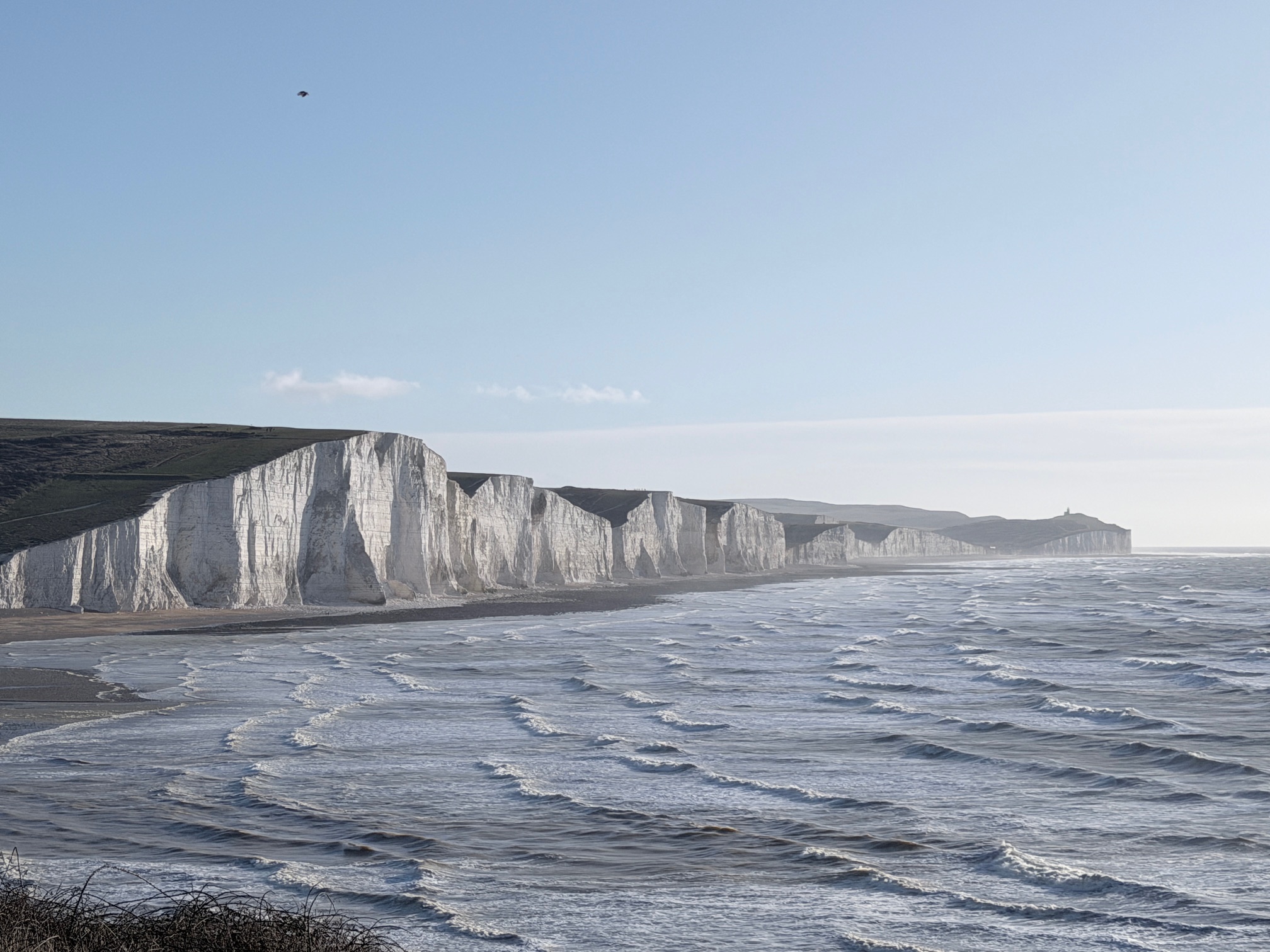
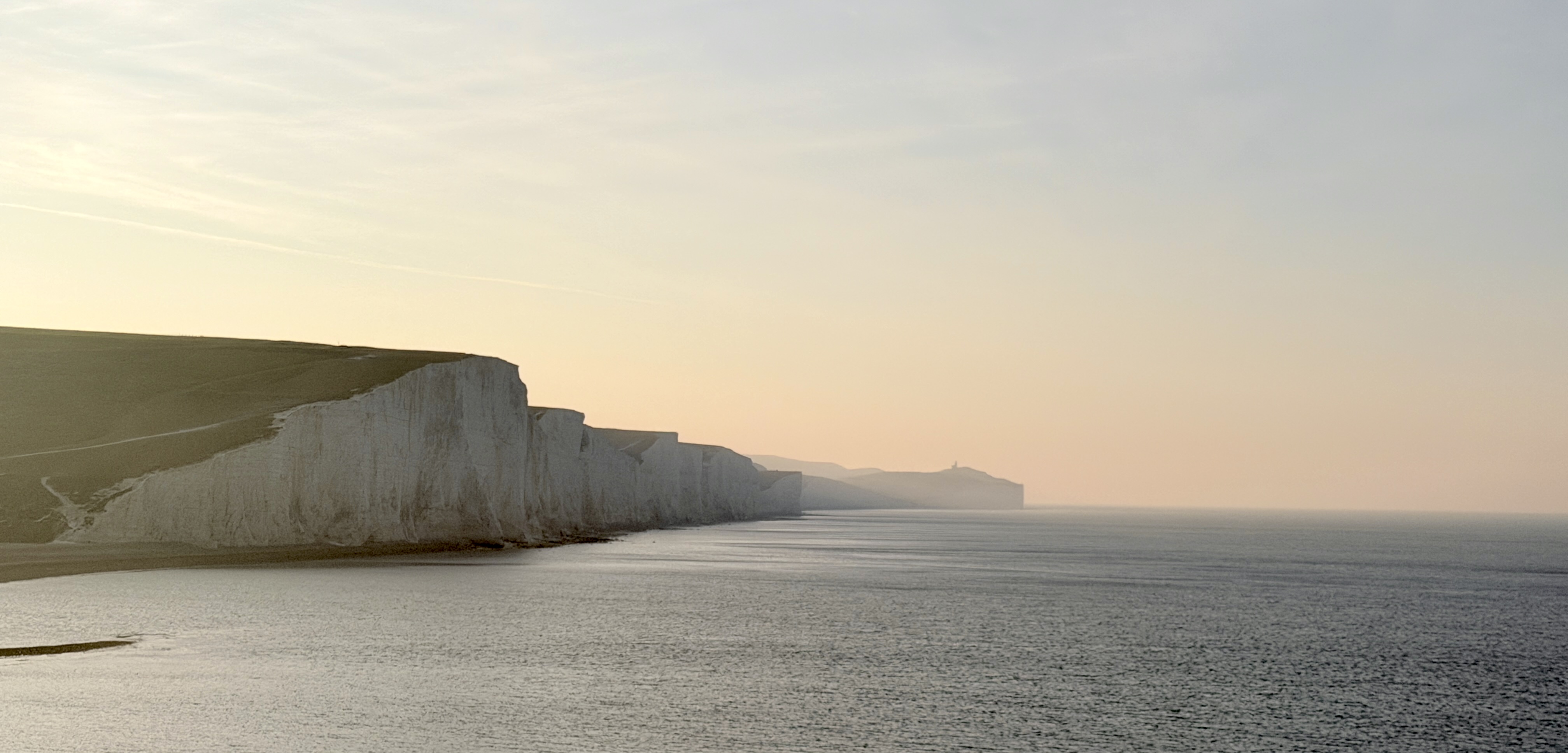
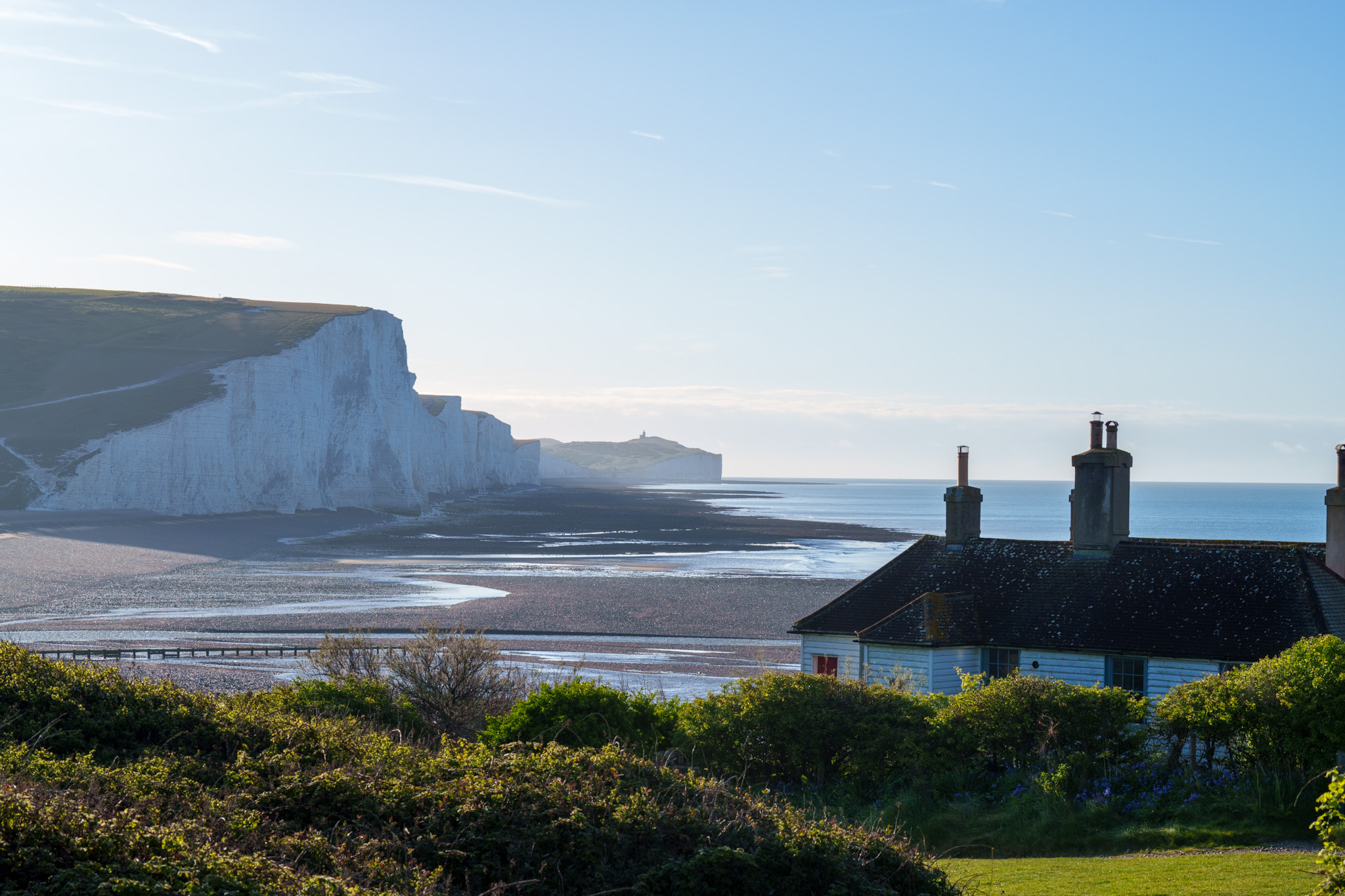
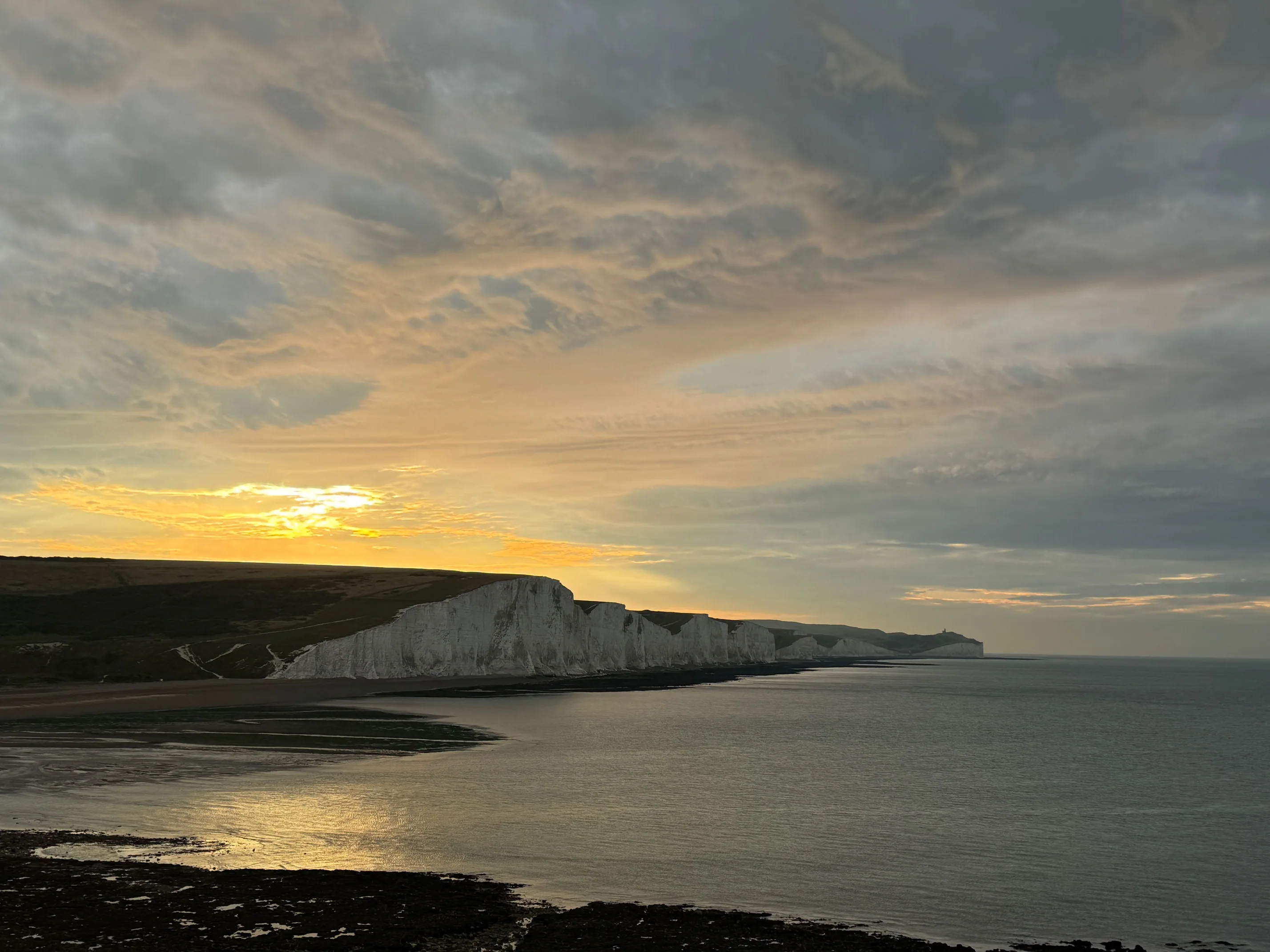
June avoids most of those problems while delivering conditions that July and August cannot match in important ways: the longest days in the calendar, the chalk grassland at its most floriferous, and the specific quality of June light on white chalk at 6am, which is something that needs to be experienced rather than described.
This is not an argument that June is perfect. It has real limitations. This is the honest case for why — if you have a choice — June is the month worth choosing.
Why June Works
The Light: 17+ Hours Per Day
At the summer solstice (21 June), sunrise over the Seven Sisters is at approximately 4:45am and sunset is after 9:15pm. You have over 17 hours of usable daylight. In practical terms, this means you can walk the full ridge in morning golden hour, return to your accommodation for breakfast, spend the afternoon on the beach, and still have time for an evening walk back up to the viewpoint for the sunset. No other month gives you this range of options in a single day.
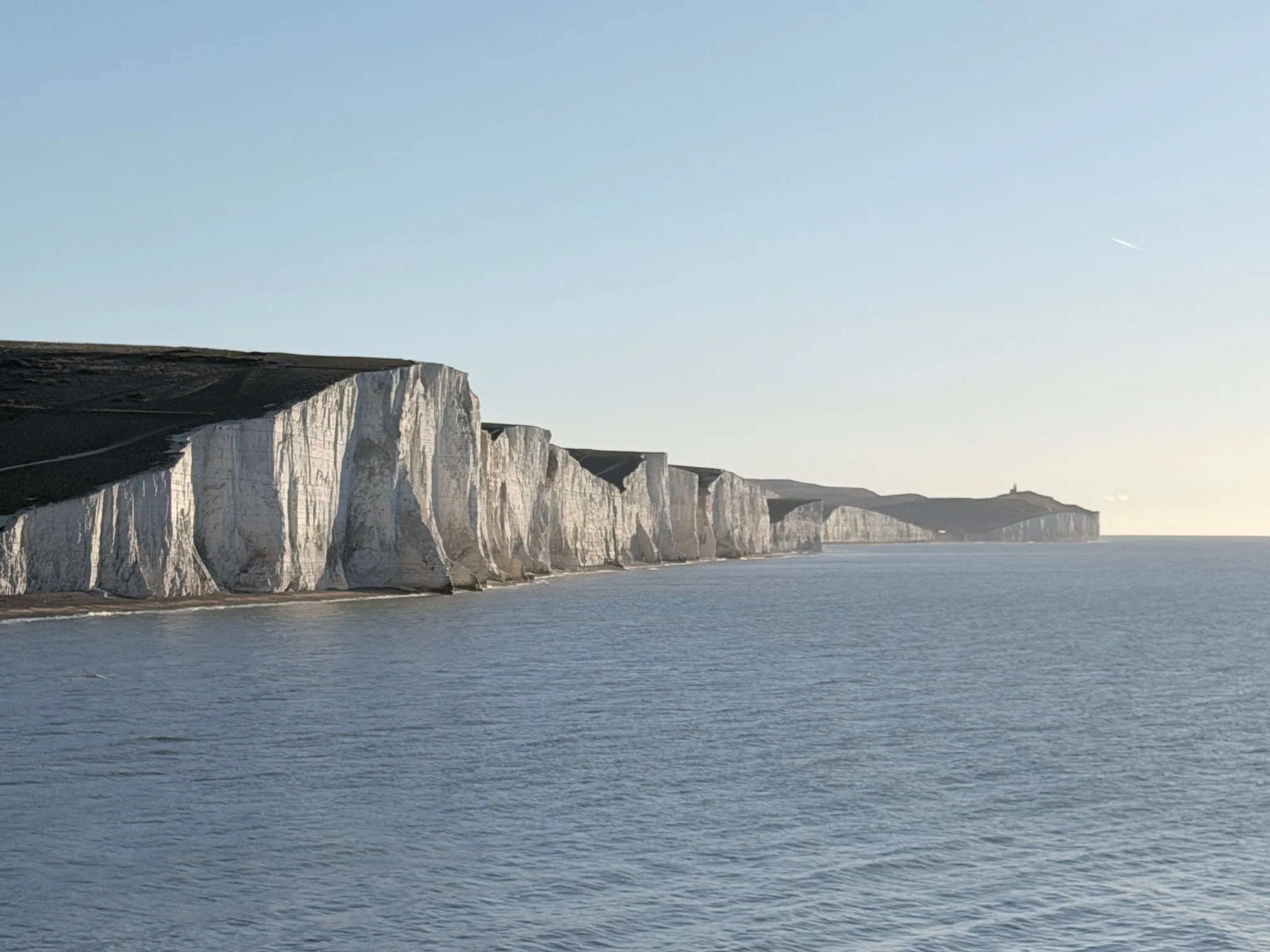
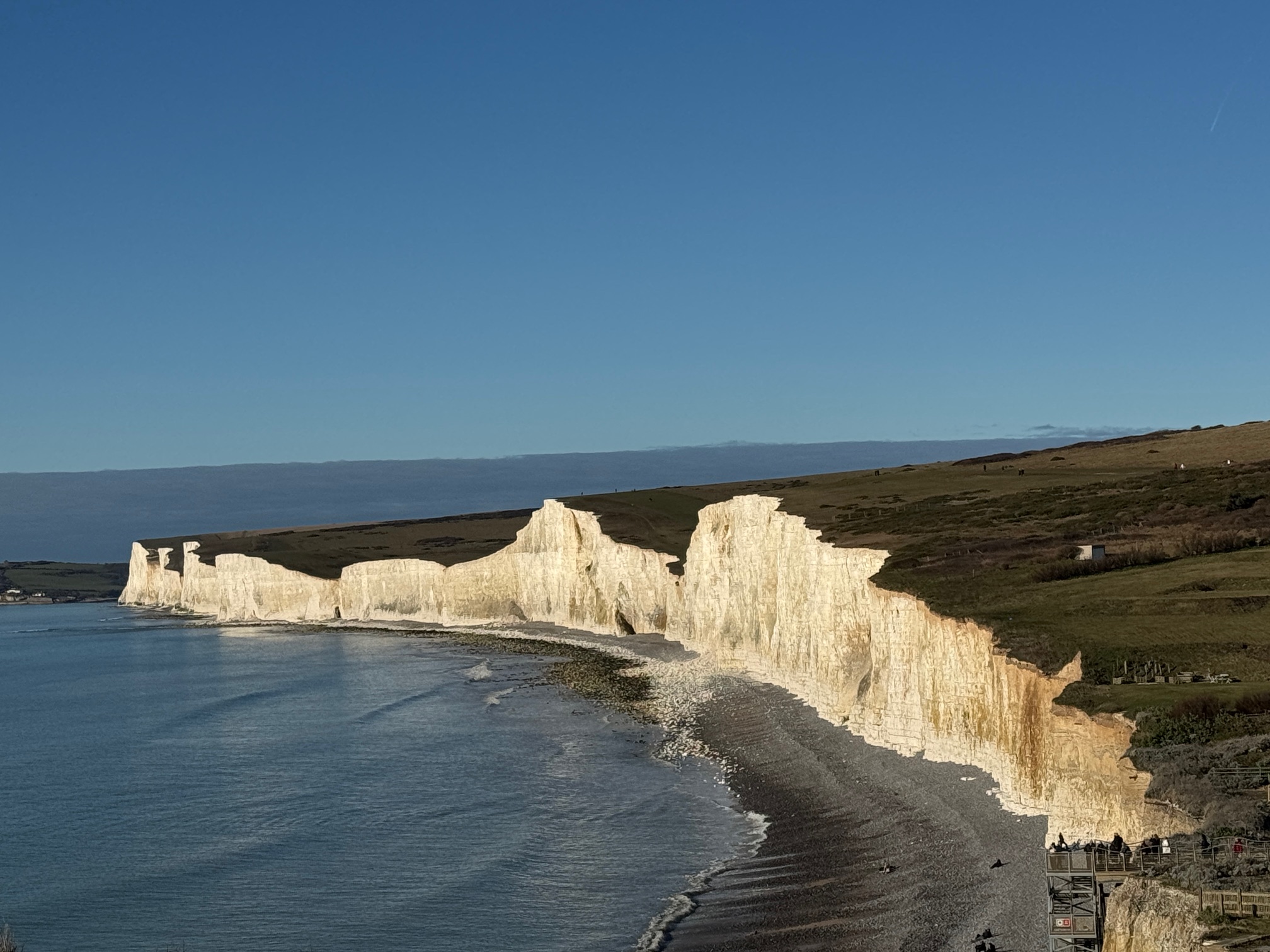
The quality of June light on white chalk is specific. The low angle of early morning sun picks out the texture of the cliff face in ways that midday light flattens. Photographers who have visited in multiple months consistently tell us June mornings produce images that other months do not.
The Orchids: The Peak of the Chalk Grassland
The chalk grassland on the Seven Sisters ridge is one of the most biodiverse habitats in lowland England. In June, common spotted orchids flower across the downland — recognisable by their spotted leaves and pink-purple flower spikes, appearing on both sides of the path across the full ridge. Pyramid orchids follow slightly later in the month, on the driest, most southerly-facing slopes.
Alongside the orchids: ox-eye daisies, kidney vetch, bird's-foot trefoil, quaking grass, and in the scrubby edges, wild privet and dogwood. The grassland in June supports dozens of species that a July visitor to the same path would find past flowering. It is the same walk with a completely different layer of detail visible. For the full species guide, see our wildflower guide.
The Crowds: Significantly Less Than July and August
Schools are still in term through most of June (breaking up in the third week of July). The domestic visitors who comprise the largest portion of the Seven Sisters summer crowd — families making the trip during school holidays — are largely absent. The car parks remain manageable until 10:30–11am on most June weekends rather than filling before 9:30am as they do in July and August.
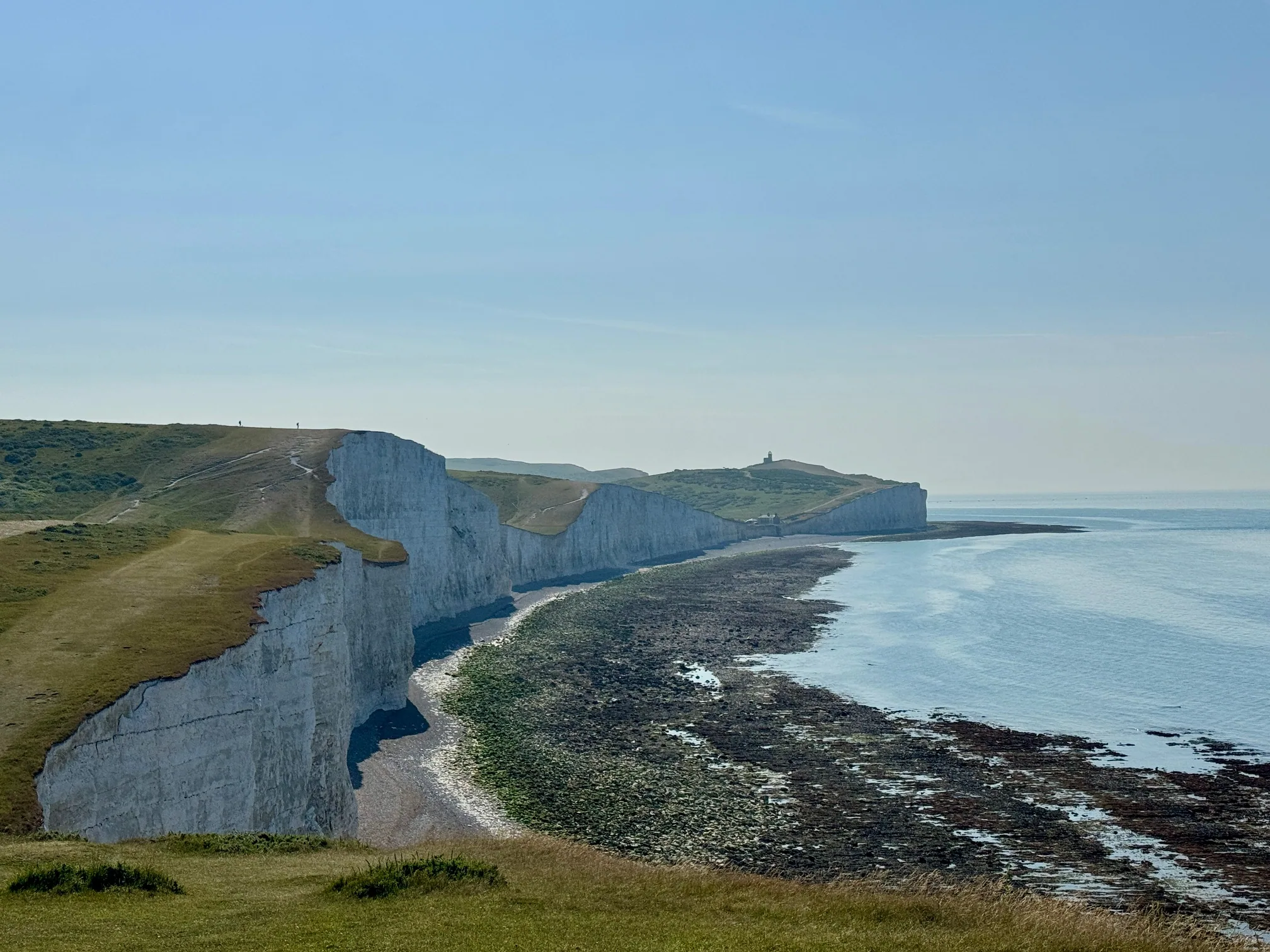
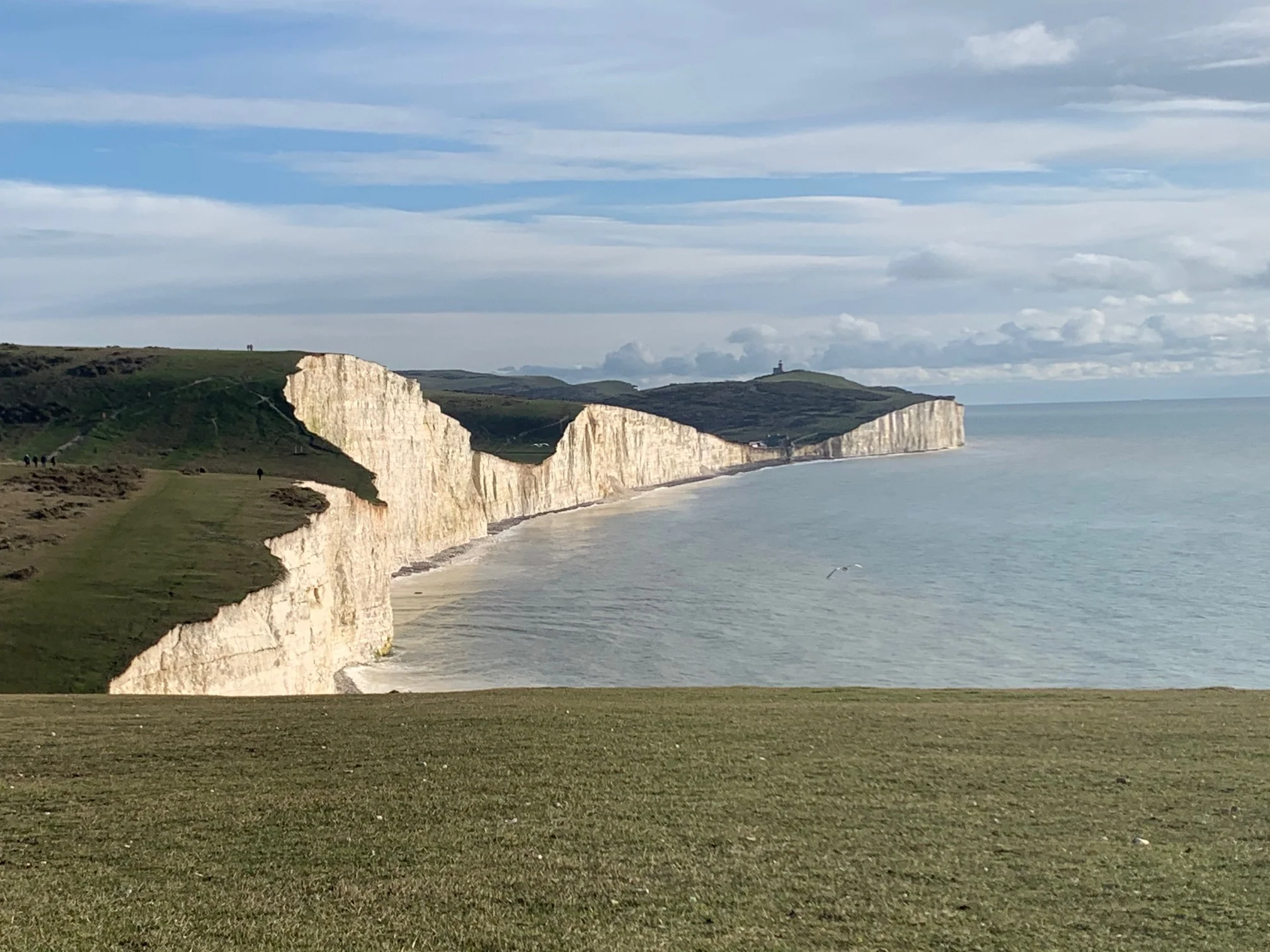
The ridge itself is noticeably less congested. Walking in a group without having to single-file behind slower parties is possible in June in ways that late July rarely allows. The experience of standing at the Seaford Head viewpoint with the full cliff system ahead of you, with nobody else at that exact viewpoint, happens in June. It happens rarely in August.
The Sea: Cold But Swimmable
Sea temperatures in the English Channel off Birling Gap and Cuckmere Haven in June run approximately 14–16°C — cold by Mediterranean standards, tolerable and bracingly refreshing by Channel standards. If you are a sea swimmer, June is the earliest point in the year when an open-water swim at Birling Gap is a pleasure rather than a survival exercise. The beach after swimming, on a warm June afternoon, is excellent. See our sea swimming guide for everything you need to know about swimming safely here.
Week by Week Within June
June is not a uniform month. The conditions shift across the four weeks in ways worth understanding.
Week 1 (1–7 June)
Transition from May. Orchids beginning to emerge on the warmer south-facing slopes. Schools still firmly in term. Statistically one of the quieter June weeks. Morning mist off the sea remains possible — can produce extraordinary atmospheric conditions on the cliff top. Sea still on the cool side (~14°C). Our preferred week for photography.
Best for: Photography, quiet walks, orchid spotting beginning
Week 2 (8–14 June)
Orchid season approaching peak. Days at or near their longest (approaching solstice). Settled weather more common as the Atlantic weather systems that dominate May are often replaced by more stable high pressure. Crowds beginning to build slightly as the pre-summer optimism drives bookings. Still meaningfully quieter than July.
Best for: Wildflowers, long evening walks, sea swimming beginning
Week 3 (15–21 June): Solstice Week
The longest days of the year. Sunrise before 5am, sunset after 9pm. Orchids at peak. Grassland at its most diverse. The solstice week at the Seven Sisters is genuinely special — the light at 4:50am on the ridge on a clear morning is not something easily forgotten. Crowds pick up slightly but remain manageable. Some visitors plan specifically around the solstice weekend for the dawn experience.
Best for: Solstice dawn, orchids at peak, maximum day length
Week 4 (22–30 June)
Days beginning to shorten slightly from solstice peak but still very long. Orchids beginning to fade on the earliest sites, continuing on later slopes. Warmer air temperatures than earlier in June. Sea temperatures at their most accessible (~16°C). A school-break week that many families use before the main July-August rush begins. Slightly busier than the first three weeks but still June rather than August.
Best for: Sea swimming, warm weather walking, late orchid sites
What June Is Not
This is not a guide that pretends one month is perfect. June has specific limitations.
The weather is not reliable
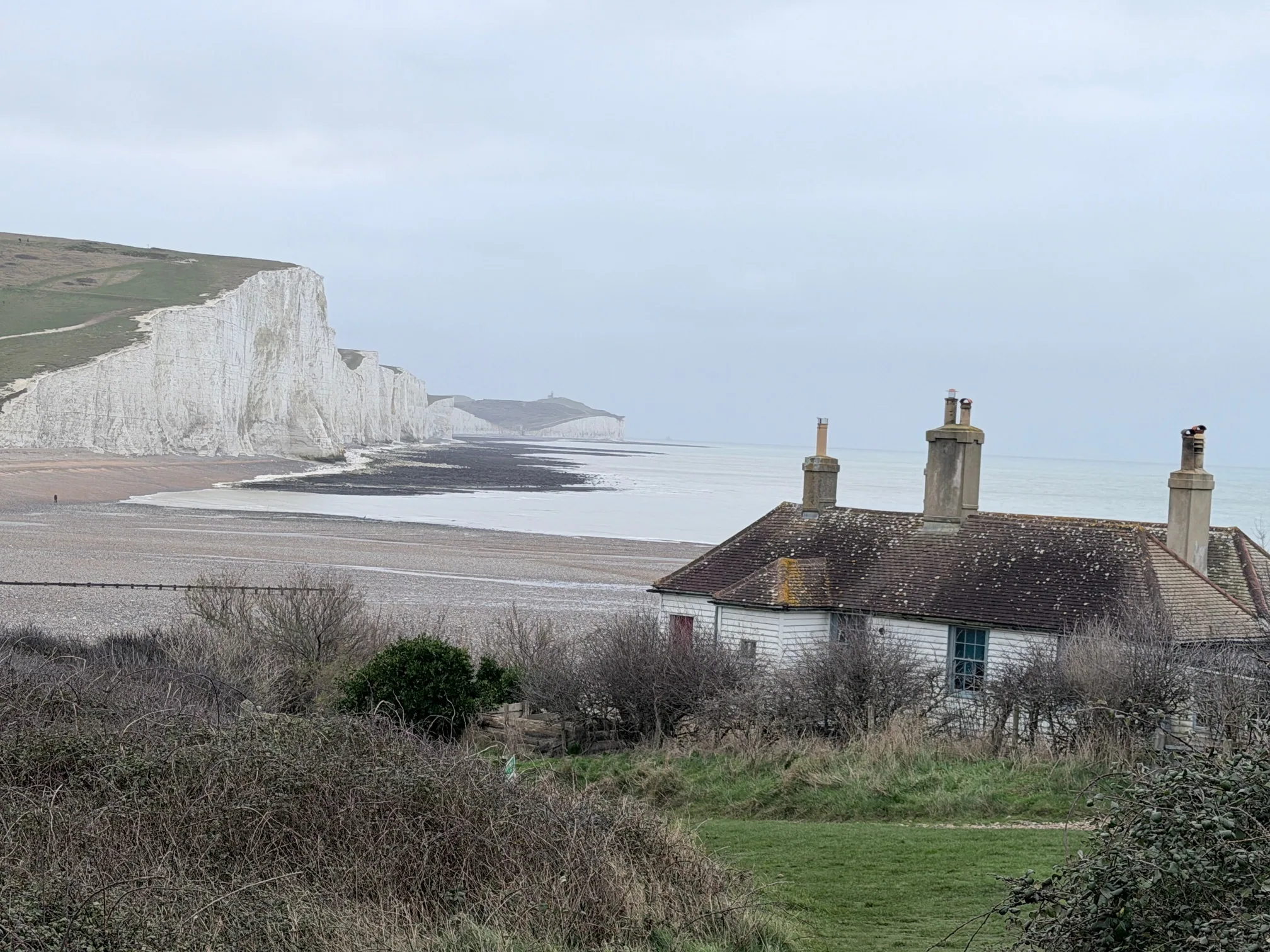
June weather in East Sussex is not uniform. Atlantic weather systems can produce rainy, grey weeks in June with the same frequency as any other month. The statistical picture shows June as a reasonable month, not a guaranteed one. Check the forecast within 72 hours of your planned visit and have a contingency. A June visit planned weeks in advance on the assumption of sunshine is a June visit that may need adjusting.
The sea is still cold
14–16°C is swimmable but it is not warm. Regular sea swimmers at these temperatures are comfortable; casual swimmers who prefer water that does not require acclimatisation will find June less enjoyable than August, when temperatures can reach 18–19°C. If a warm swim is a priority, August is the honest recommendation.
Some facilities are not at full summer operation
A small number of seasonal services and facilities in the area operate on reduced hours in June versus peak summer. The seasonal cliff bus from Brighton may be running less frequently than its August schedule. Check current timetables and opening hours before planning around any specific facility or service.
Late June can feel busier than early June
As June moves towards its end and the summer holiday narrative builds, visitor numbers begin climbing. The last weekend of June can approach July conditions on warm days. If you are choosing between early and late June, early June gives you a quieter experience at the cost of slightly less settled weather. Late June gives you warmer temperatures and longer crowds-free evenings but busy weekend daytimes.
What to Prioritise in June
An Early Morning Walk
Sunrise before 5am in June means the ridge is illuminated with low golden light before 5:30am. Most visitors are still asleep. The chalk is clean and white, the shadows long, the sea beyond the cliff face a deep blue-grey. Even if you are not a photographer, walking the ridge in the first hour after dawn in June is worth the early alarm. We have walked at 5am in June and understood why people do not stop talking about it afterwards.
Park at Birling Gap (no fee before the car park officially opens) or Seaford. Walk east or west. Return for breakfast.
The Orchid Walk
The chalk grassland orchid season peaks in June. Start from Birling Gap and walk west along the ridge — the south-facing slopes between the car park and Short Brow are among the best orchid sites. Common spotted orchids appear in clusters on both sides of the path. Walk slowly, look between the grass stems, and bring a wildflower guide or identification app. The orchid density in a good June is startling — dozens of spikes in a single field of view is not uncommon.
Best timing: mid-June morning. Best section: Birling Gap west to Rough Brow, south-facing slopes.
An Evening Walk to the Cuckmere Meanders
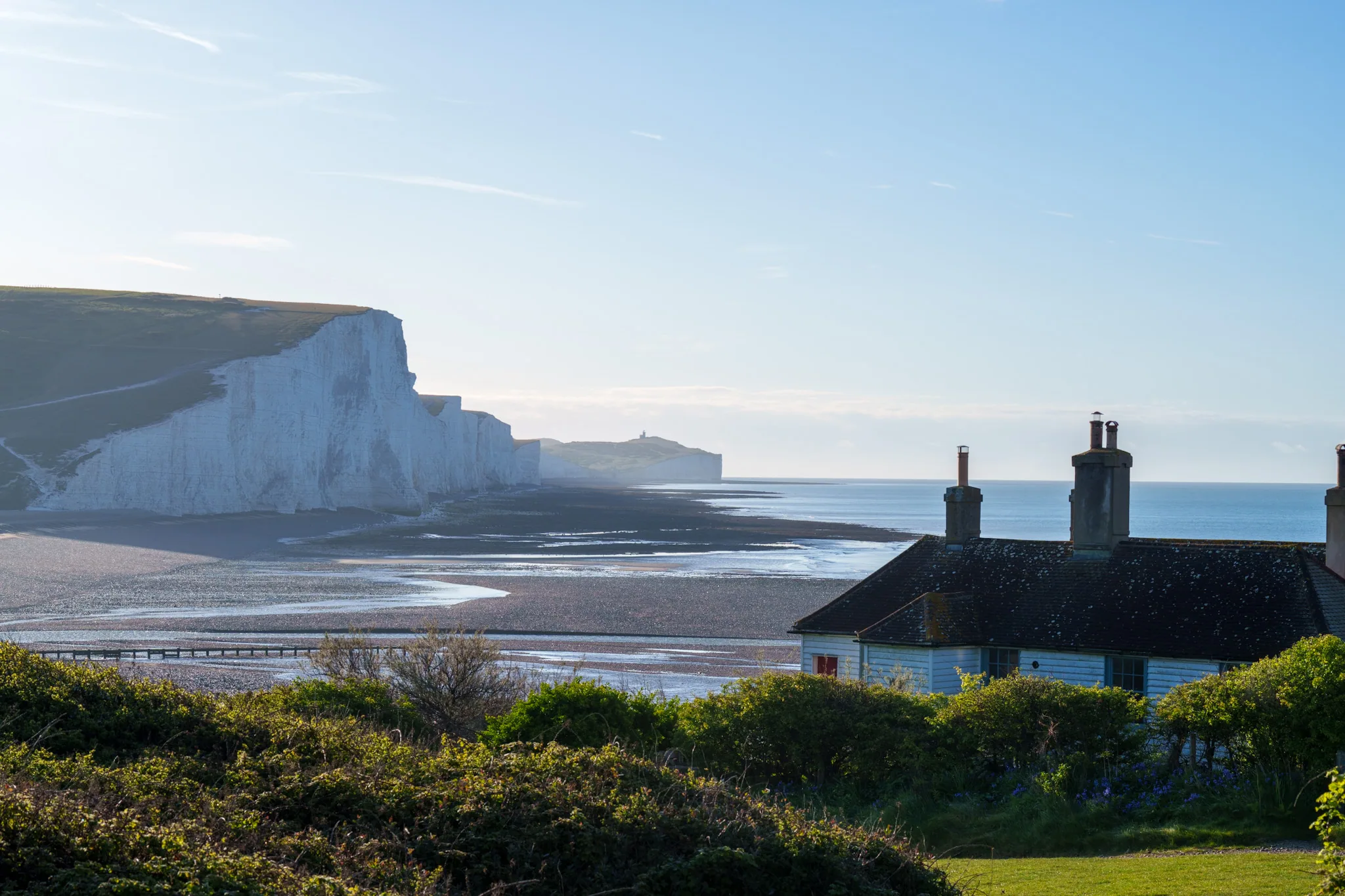
On a clear June evening, the Cuckmere meanders from the Exceat car park to Cuckmere Haven beach are one of the most photogenic walks in England. The light at 7–8pm is warm and directional, the river catches the sky, the valley floor is a deep green. Arrive at Exceat at 6:30pm, walk to the beach and back (5km, approximately 90 minutes), return before 9pm in time for the last light. This specific combination of light, direction, and season is difficult to replicate in any other month.
Evening crowds at Exceat are minimal. Carry an extra layer — valley temperatures drop after 7pm.
A Solstice Swim at Birling Gap
In the week around the solstice, the combination of early light, warm post-solstice air, and sea temperatures at their most accessible makes a Birling Gap swim an experience worth the cold. The steps at Birling Gap (restored 2026) give access to the beach. Arrive early, swim at low tide when the beach is wider, dry off on the shingle in the morning sun. This is not a comfortable swim in the way that a Mediterranean holiday is — it is a completely different kind of pleasure, and one that a surprising number of people find addictive.
Check tide times before going. Read our sea swimming guide for safety and access details.
June at the Seven Sisters: Quick Reference
| Factor | Early June (1–14) | Mid June (15–21) | Late June (22–30) |
|---|---|---|---|
| Sunrise | ~5:00am | ~4:45am (solstice) | ~4:50–5:00am |
| Sunset | ~9:10pm | ~9:20pm | ~9:15–9:00pm |
| Orchids | Emerging — early sites | Peak | Fading on early sites |
| Sea temperature | ~14°C | ~15°C | ~16°C |
| Car park (weekend) | Fills ~11am | Fills ~10:30am | Fills ~10am |
| Ridge crowds | Low | Low–Medium | Medium |
| Best for | Photography, orchids, quiet | Dawn walks, solstice, orchids at peak | Swimming, warmth, evening walks |
Planning the walk itself?
Four routes run along these cliffs and they are not interchangeable — a flat 3km riverside stroll, the classic 6.5km Exceat to Birling Gap crossing, a short Birling Gap loop, and the full 21.9km Seaford to Eastbourne ridge. Compare distance, ascent and difficulty before you pick one.
- Easy Birling Gap Short Loop 2 km 45 min
- Easy Cuckmere Haven Beach 3 km 1 hour
- Moderate Exceat to Birling Gap 6.5 km 2-3 hours
- Challenging Seaford to Eastbourne 21.9 km 6-7 hours
We may earn a small commission on bookings made through this link, at no extra cost to you. More info.
£4.99 · 24-page PDF · Instant download
The Seven Sisters Ultimate Guide
The complete 24-page companion built from first-hand walks — every cliff, all four graded routes, tide windows and a parking strategy. Designed to work offline, right on the cliff top.
- All 7 cliffs — heights, geology & viewpoints
- Four graded walking routes, compared
- Tide windows, light calendar & day plans
- Parking strategy & seasonal planner
Just want the basics? Download the free 2-page walk guide
Want an expert-led Seven Sisters tour?
From guided cliff walks and wildlife safaris to geology hikes and photography tours — explore all our curated experiences with local guides.