Seven Sisters Month-by-Month: Best Time for Wildlife and Photography
When to Visit Seven Sisters
Month-by-month — wildlife highlights, photography conditions, and what each season actually offers
The question “when is the best time to visit Seven Sisters?” has no single correct answer. It depends on what you want. If the answer is to see orchids on the chalk grassland, the answer is May and June. If the answer is to photograph the cliffs in the most dramatic light, it is December. If it is to watch bird migration, it is September. If it is to swim, it is July and August. This guide works through the year month by month, identifying what each period offers for wildlife and photography specifically — a different frame from the crowd-avoidance guide, which covers visitor numbers rather than nature.
Month-by-Month Reference Table
| Month | Wildlife highlight | Photography quality | Crowd level |
|---|---|---|---|
| January | Wintering seabirds, short-eared owls | High (low sun, empty cliffs) | Very low |
| February | Cliff fulmar display, first skylark song | High (long shadows, dramatic) | Very low |
| March | First migrants (wheatear), kittiwakes return | Good (improving light, no leaves) | Low |
| April | Bluebells, spring migrants, early orchids | Excellent (spring light, wildflowers) | Moderate |
| May | Peak orchids, swifts arrive, peak migration | Excellent (long evenings, wildflowers) | Moderate–high |
| June | Swifts peak, chalk butterflies begin | Excellent (longest days, golden hour) | Moderate–high |
| July | Adonis Blue, seabird juveniles, seawatching | Good (haze possible, late sunset) | Very high |
| August | Chalkhill Blue peak, first autumn migrants | Good (late summer light, warm tones) | Very high (eases late Aug) |
| September | Peak migration, grey seals, swallow departure | Excellent (low light, mist, seals) | Low |
| October | Fungi, autumn colour, redwings arrive | High (colour, low sun, reflections) | Low (half-term week moderate) |
| November | Wintering wildfowl, late migrants, seals | High (dramatic skies, storm light) | Very low |
| December | Seabirds, short-eared owls, clear winter light | Excellent (low sun, long shadows, no haze) | Very low |
Four Peak Experience Months: In Depth
April — Wildflowers and the First Migrants
April is the month of the greatest transformation. The chalk grassland, which has been brown and dormant through winter, begins to green rapidly from mid-March. By mid-April, cowslips carpet the south-facing slopes in yellow. The bluebells in Friston Forest reach peak bloom in the last two weeks of the month. The first warblers are establishing territories in the scrub. Wheatears sit on fence posts along the clifftop, fresh from their journey north from West Africa.
For photography: morning light in April rakes the cliff face from the north-east, throwing the chalk into relief and catching the wildflowers on the grassland. The cliff edge in golden hour — the hour before sunset — in late April is exceptional. The light is warm, the colours saturated, and the cliffs illuminated from low on the western horizon.
Read more: South Downs bluebells guide, Friston Forest bluebell walk route.
June — Swifts, Long Evenings, and Chalk Butterflies
June is the month when everything is at full intensity. Swifts, which arrive from early May, reach peak numbers in June — screaming in groups along the cliff face, roosting in the chalk crevices, feeding on insects rising in the warm air. The chalk grassland is at its richest: Early Spider Orchid season has ended but Pyramidal and Fragrant Orchids are at peak. The first chalk butterflies — Small Blue, Common Blue — are active on warm days.
Sunset in June is after 9pm. An evening walk starting at 7pm, from Birling Gap west toward Belle Tout and back, gives two hours in the best light of the day with crowds that have largely dispersed. This is arguably the finest single walking experience Seven Sisters offers.
Read more: spring wildflower guide, chalk plants and orchids guide.
September — Migration, Seals, and Morning Mist
September combines several wildlife phenomena that don't occur in the same month at any other time of year. Autumn migration peaks: the clifftop scrub can hold overnight arrivals of warblers and flycatchers after easterly overnight winds. The Cuckmere estuary draws waders and the first wintering wildfowl. Grey seals begin to appear at the river mouth. Swallows gather in the hundreds over the valley before departing south.
Photographically, September produces conditions that are difficult to find in other months: sea mist combined with low sun, seal reflections in still estuary water, hirundines in formation over golden reed beds. Arrive before 8am on clear mornings when the tide is falling.
Read more: bird migration guide, Cuckmere autumn wildlife guide.
December — Winter Light and Empty Cliffs
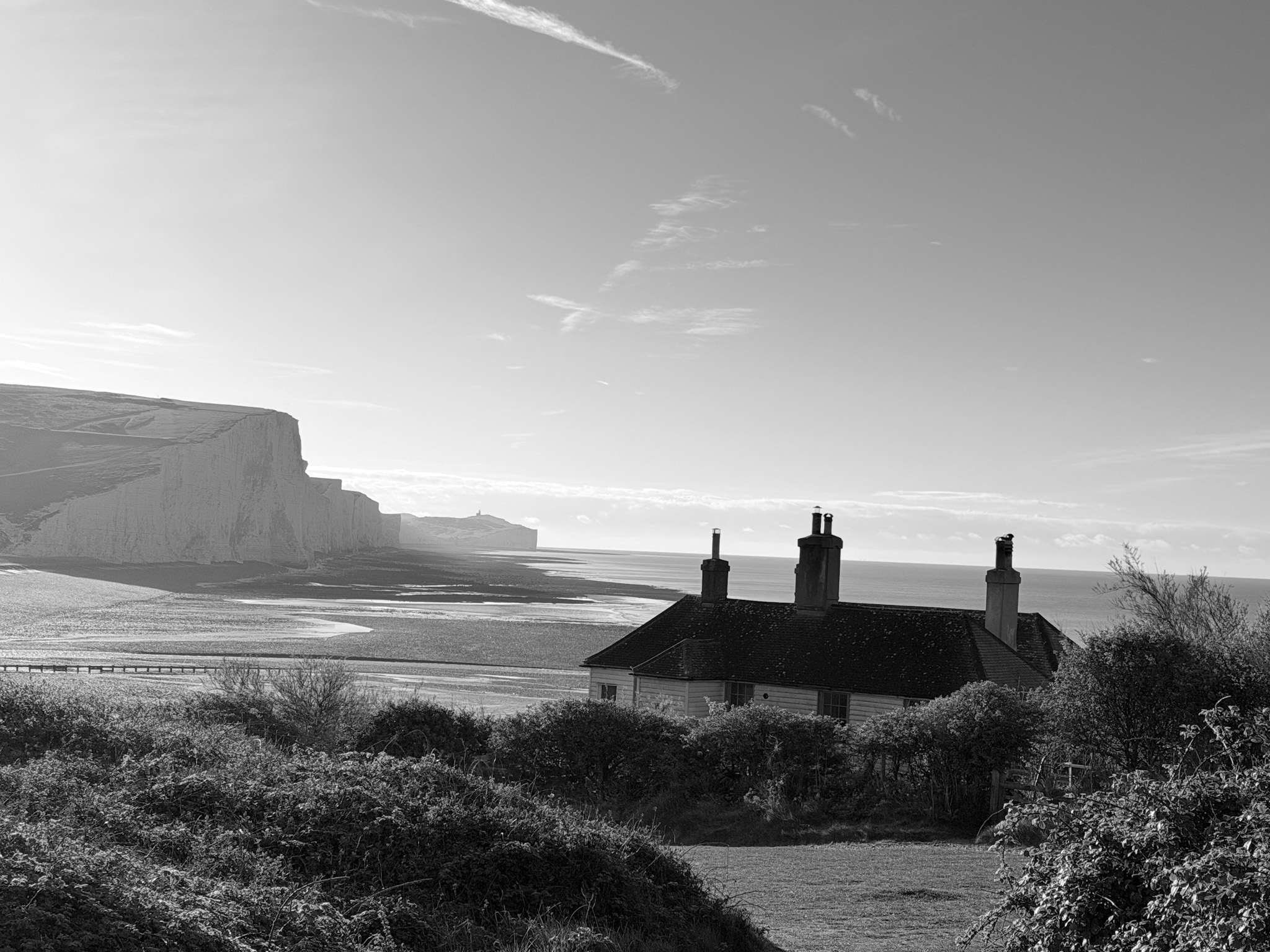
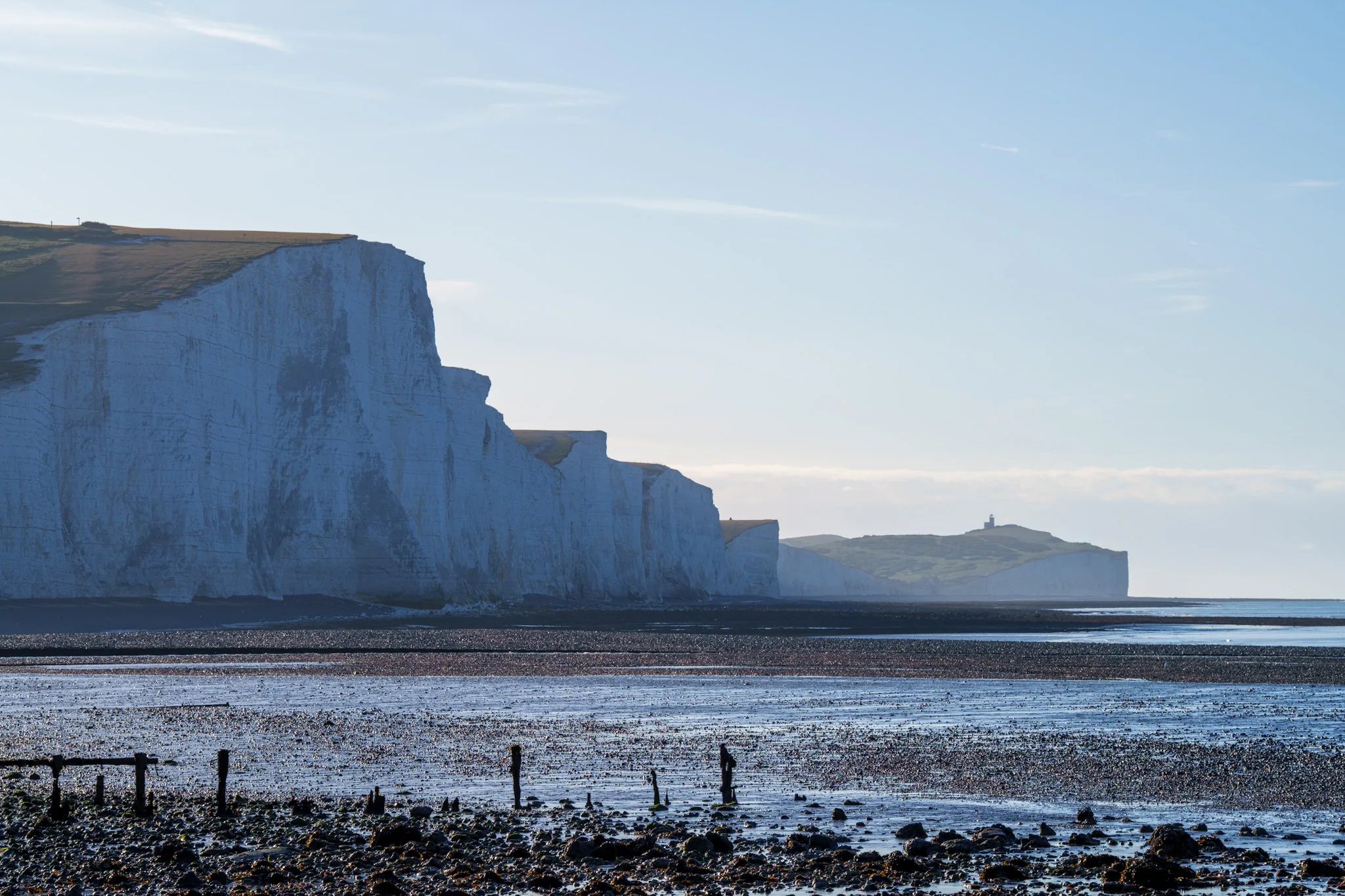
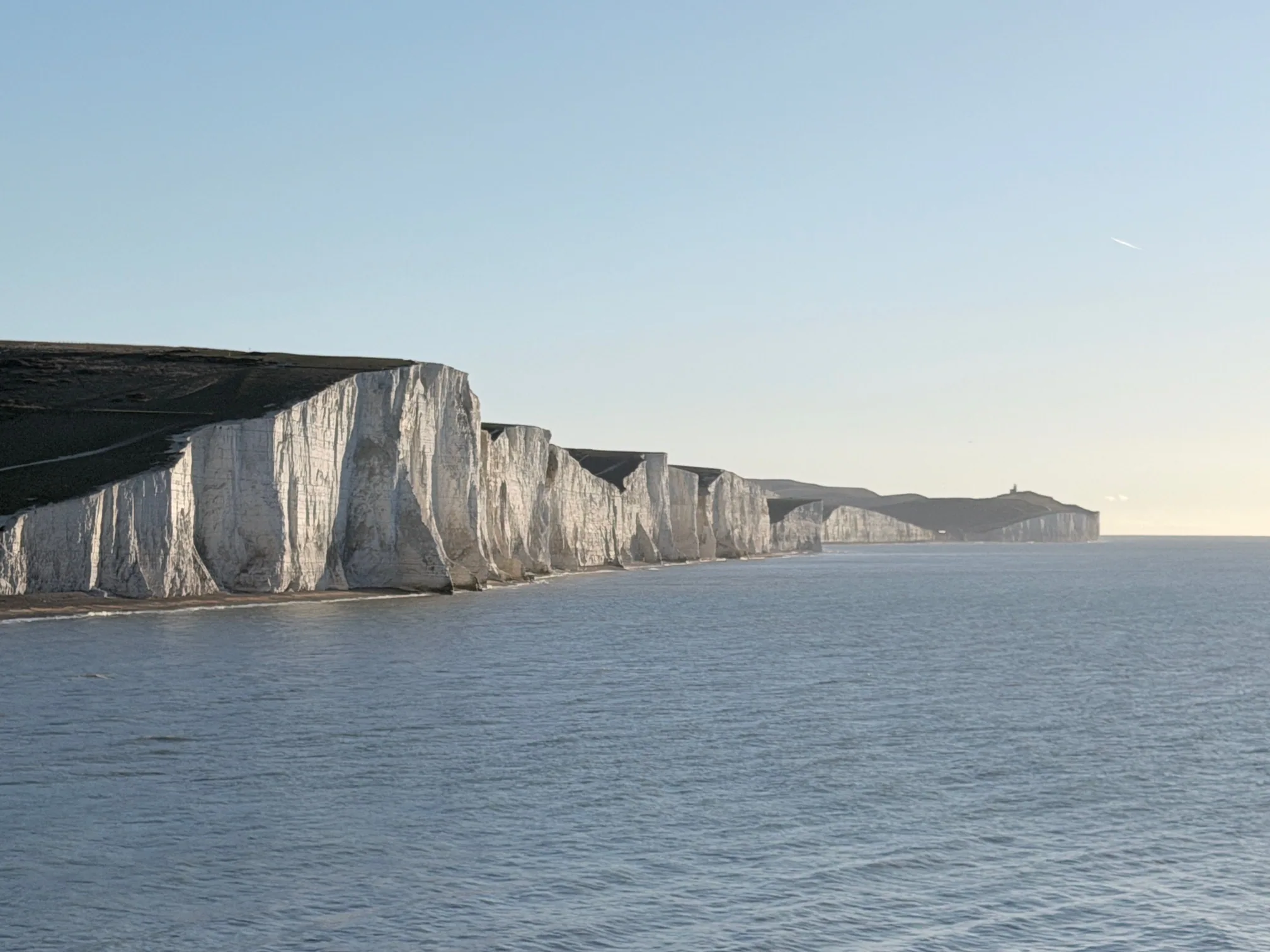
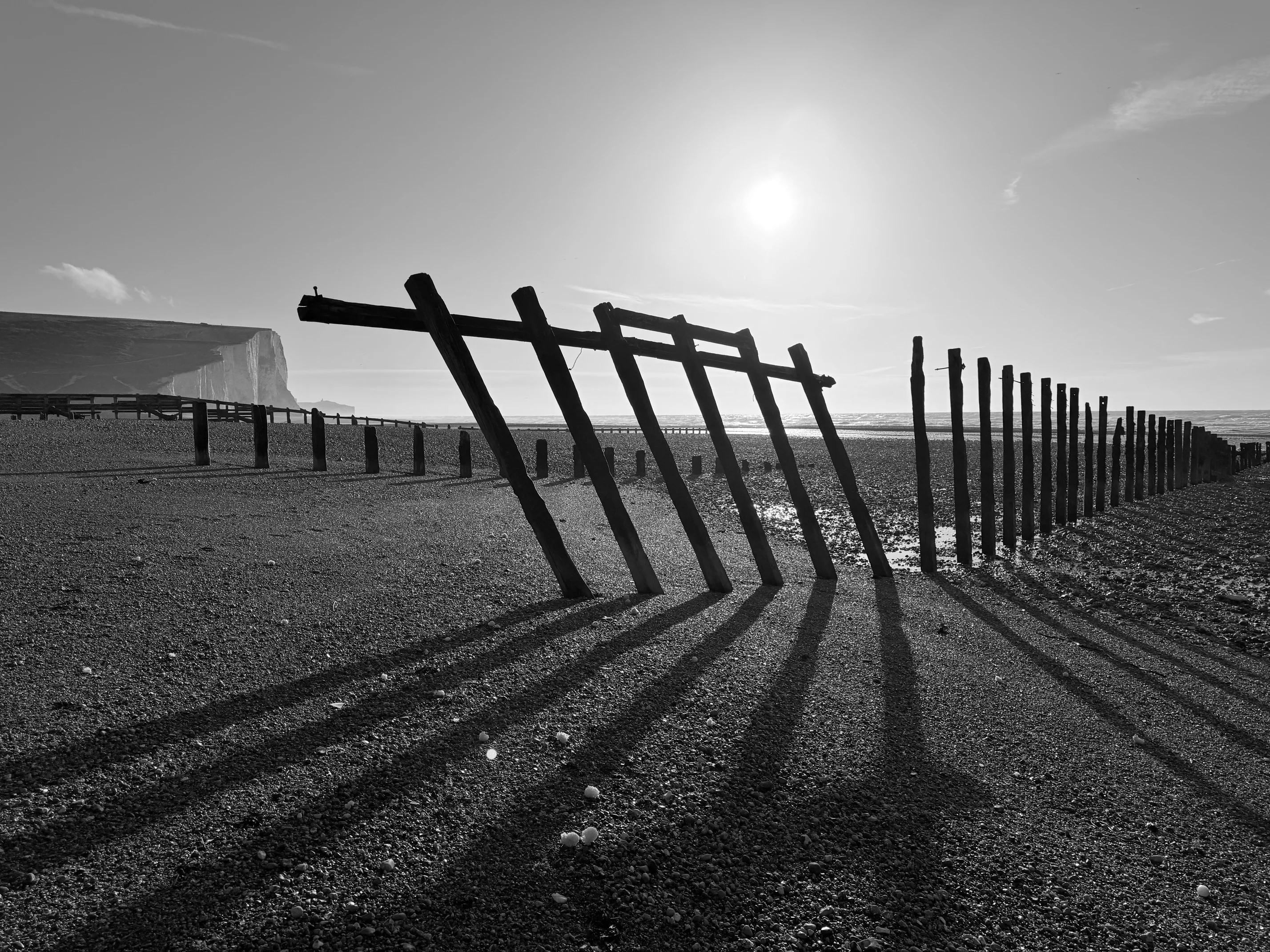
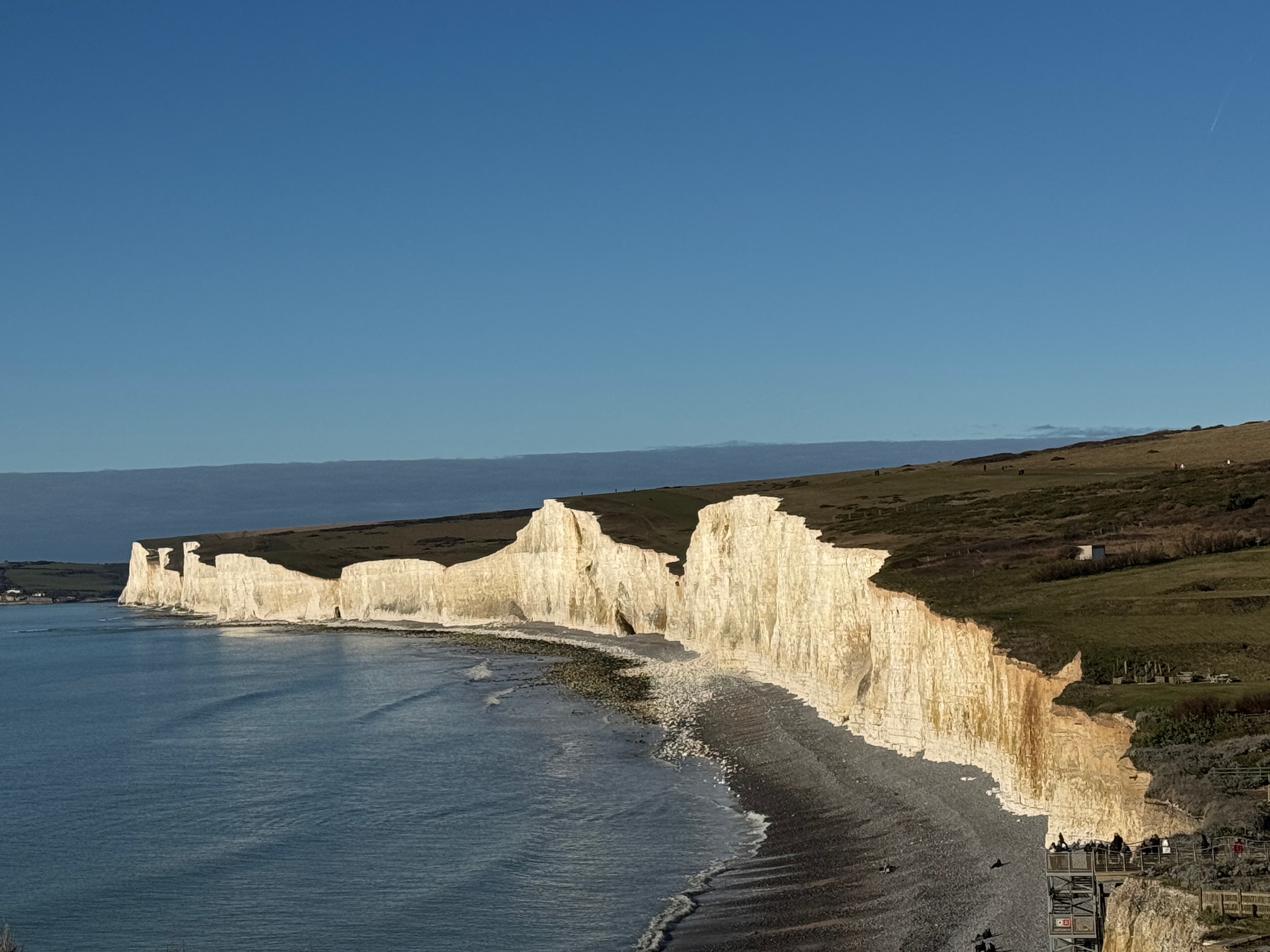
December is one of the most overlooked months for visiting Seven Sisters. The site is almost empty. The chalk cliffs are at their whitest against a winter sky. The sun, even at midday, is so low that the Sisters are lit entirely from the side — every undulation of the cliff face is emphasised, the chalk almost glows. Short-eared owls quarter the clifftop grassland in the late afternoon. There is almost nobody there.
For photographers: the winter sun at Seven Sisters rises over the Downs to the south-east and sets further south-west than in summer. On clear December days, the cliff face is directly illuminated from mid-morning. The walk from Seaford Head to Hope Gap on a clear winter morning produces a quality of light that summer visitors never experience.
Read more: stargazing at Seven Sisters (winter is peak season), winter wildlife guide.
Photography: Practical Notes by Season
Golden Hour Direction
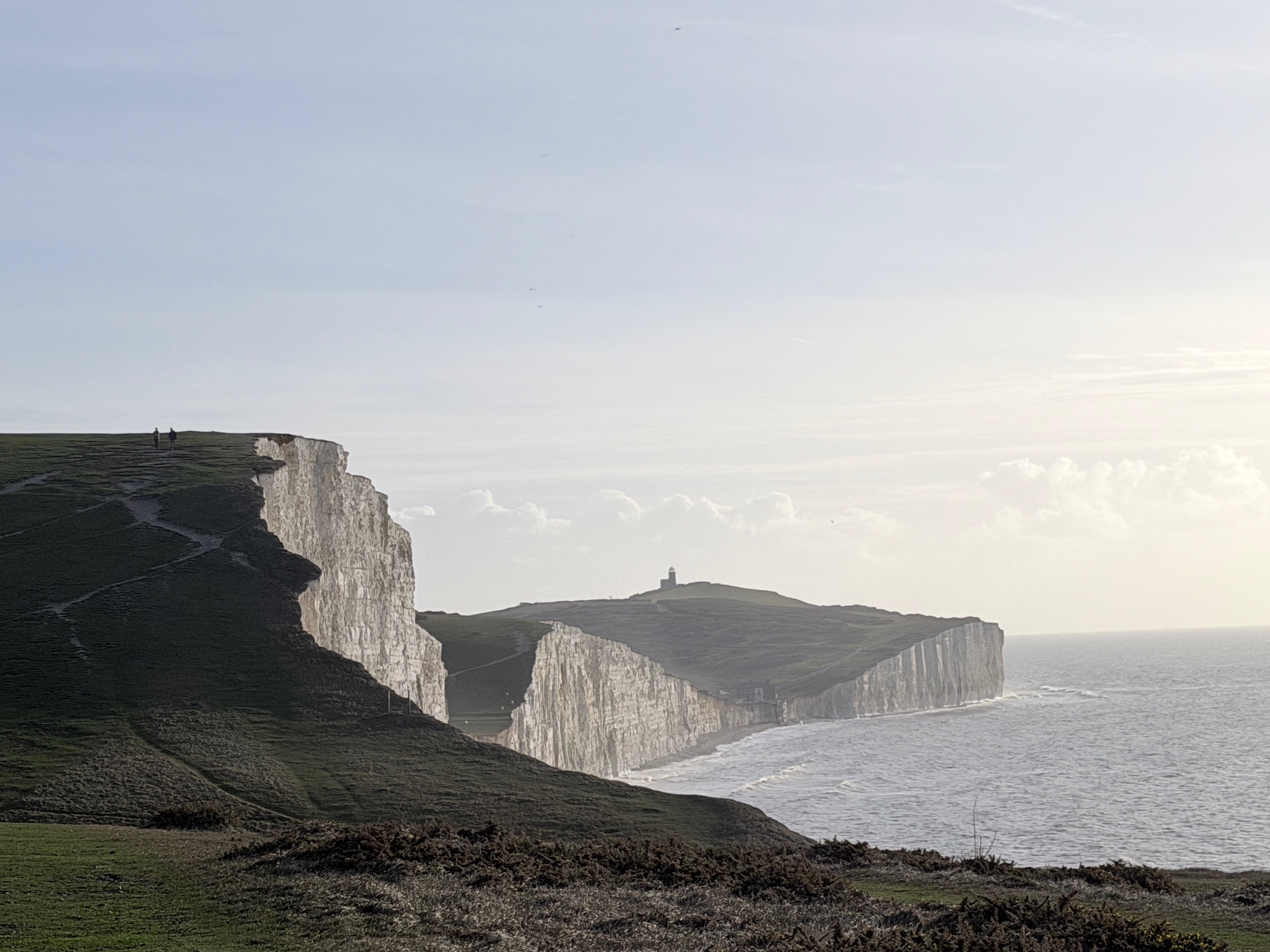
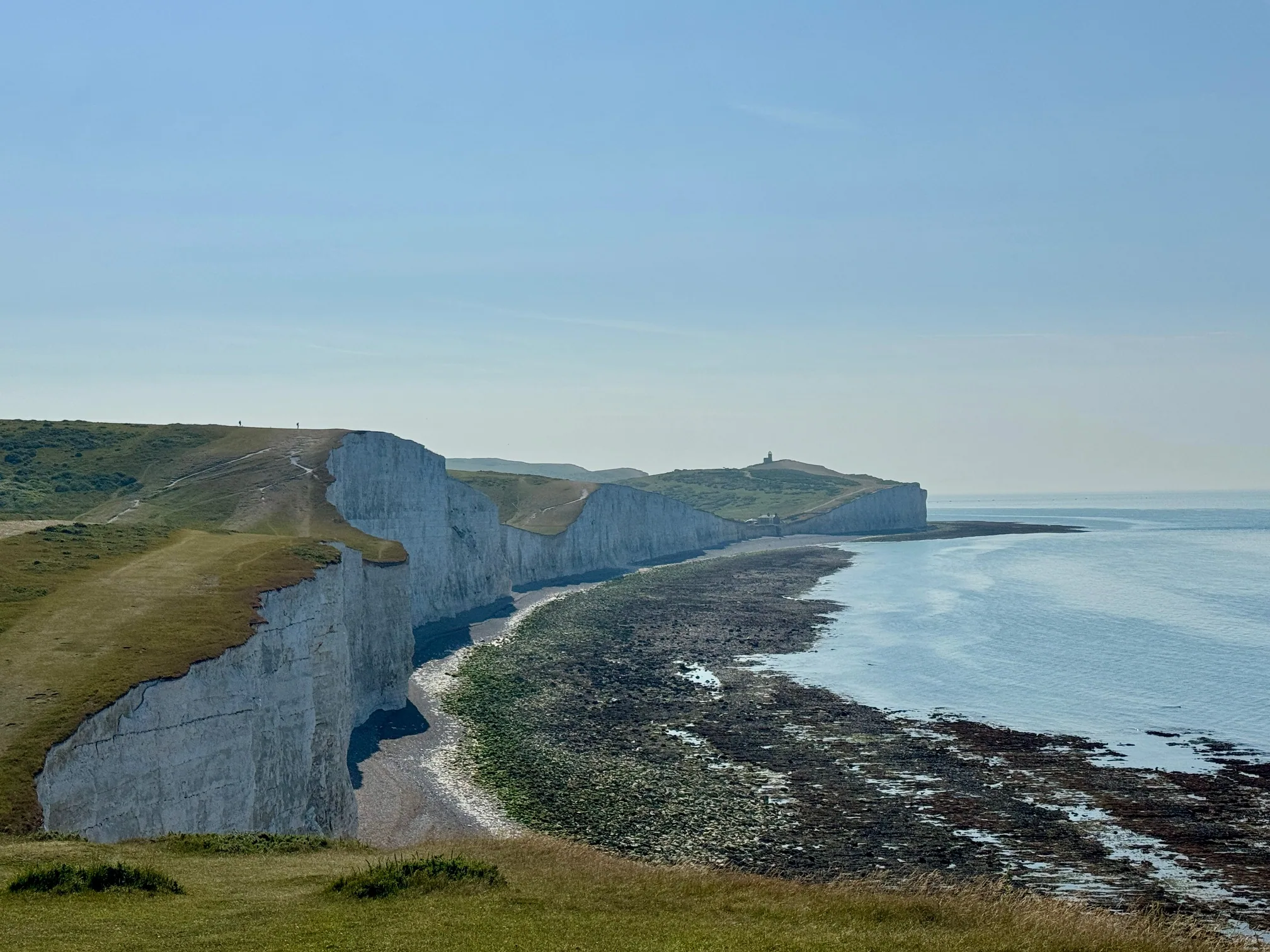
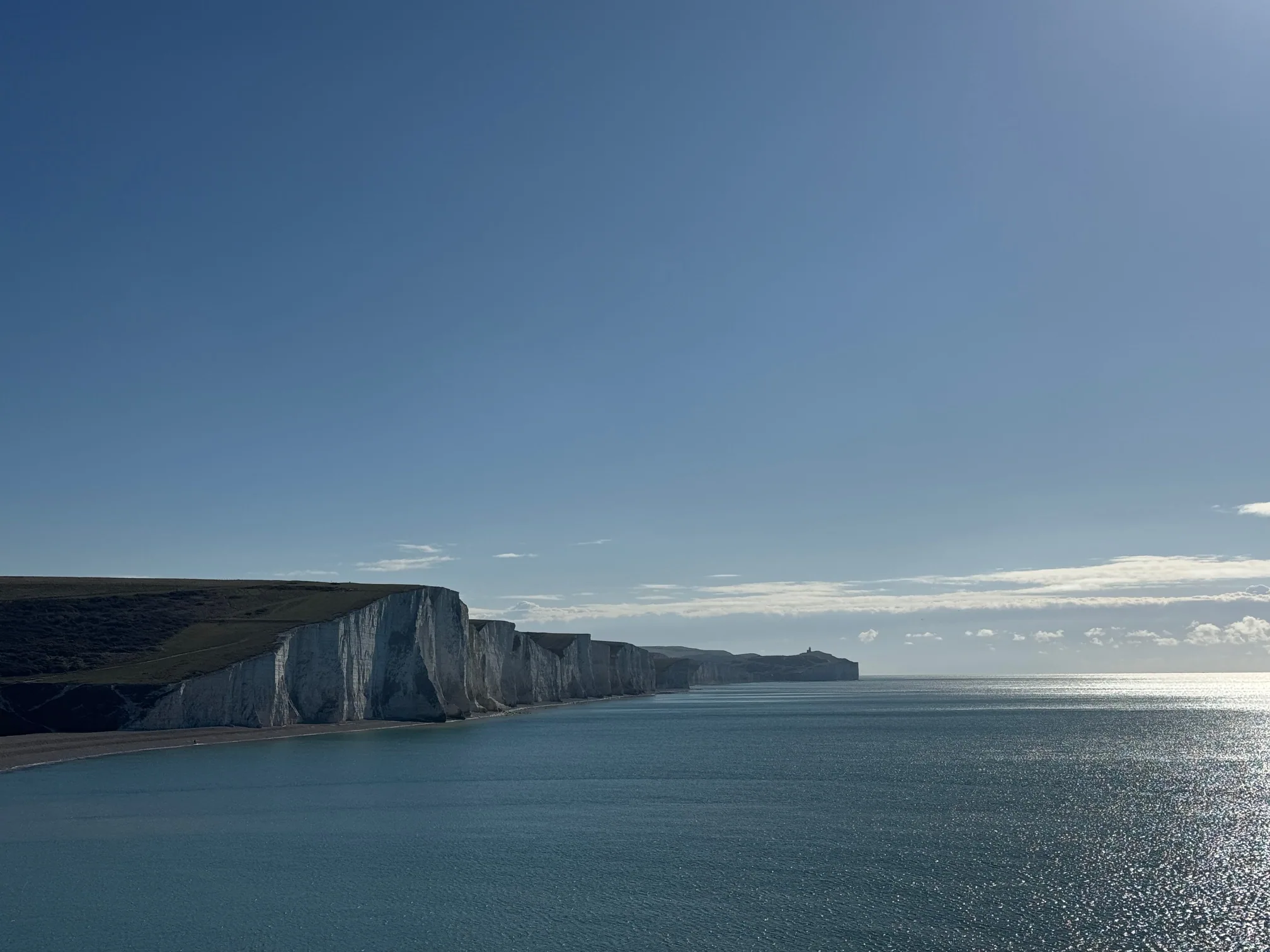
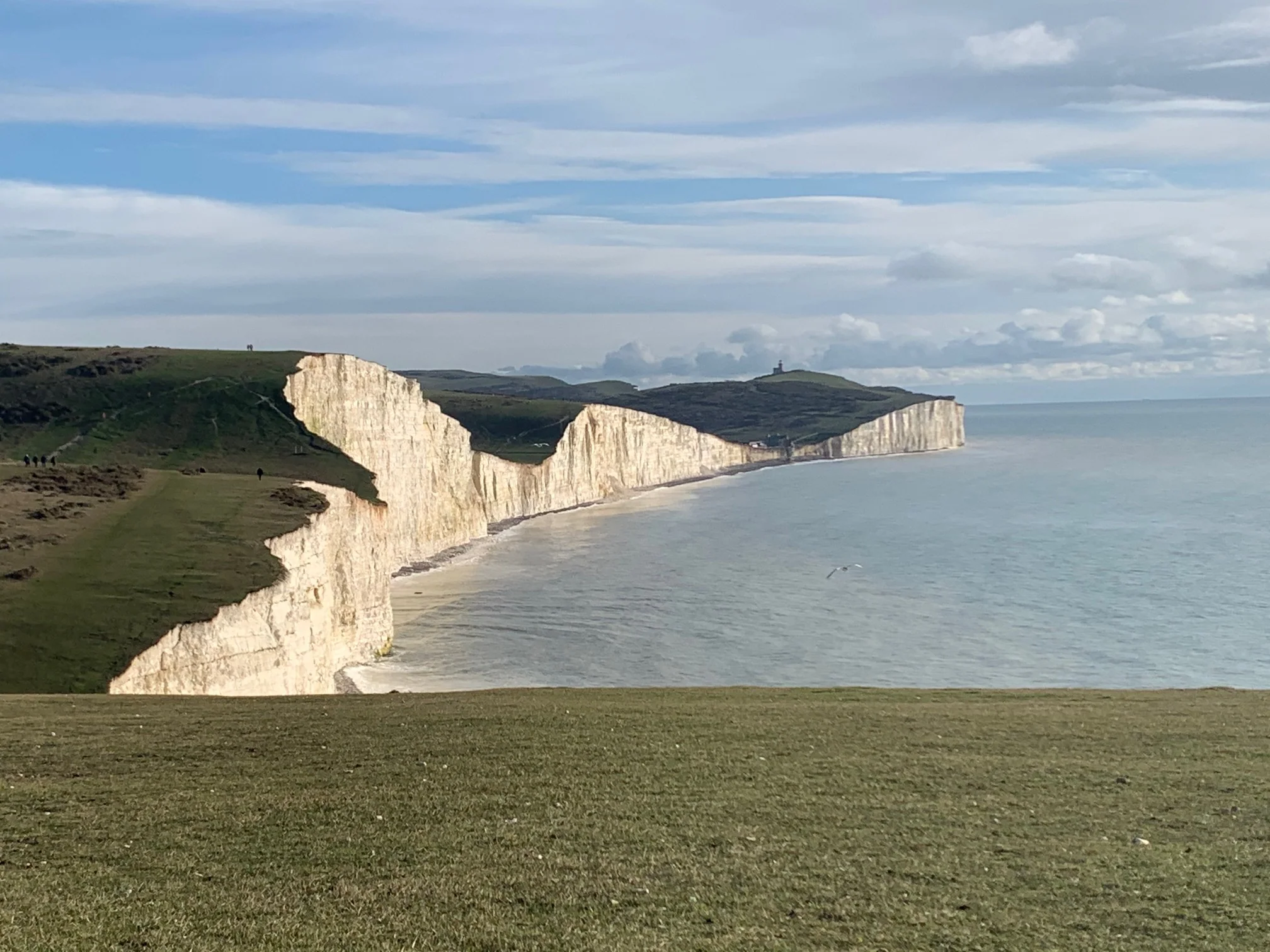
The cliff face at Seven Sisters faces roughly south. The most dramatic cliff photography comes from a westerly position (Seaford Head, Hope Gap) looking east along the cliff line — this catches the cliffs in direct light rather than the face-on, flat view from directly in front. In summer, the long evenings mean golden hour occurs late enough to combine with a full day's visit. In winter, golden hour occurs at reasonable mid-afternoon times — around 3pm — which suits shorter trips.
Mist and Atmospheric Conditions
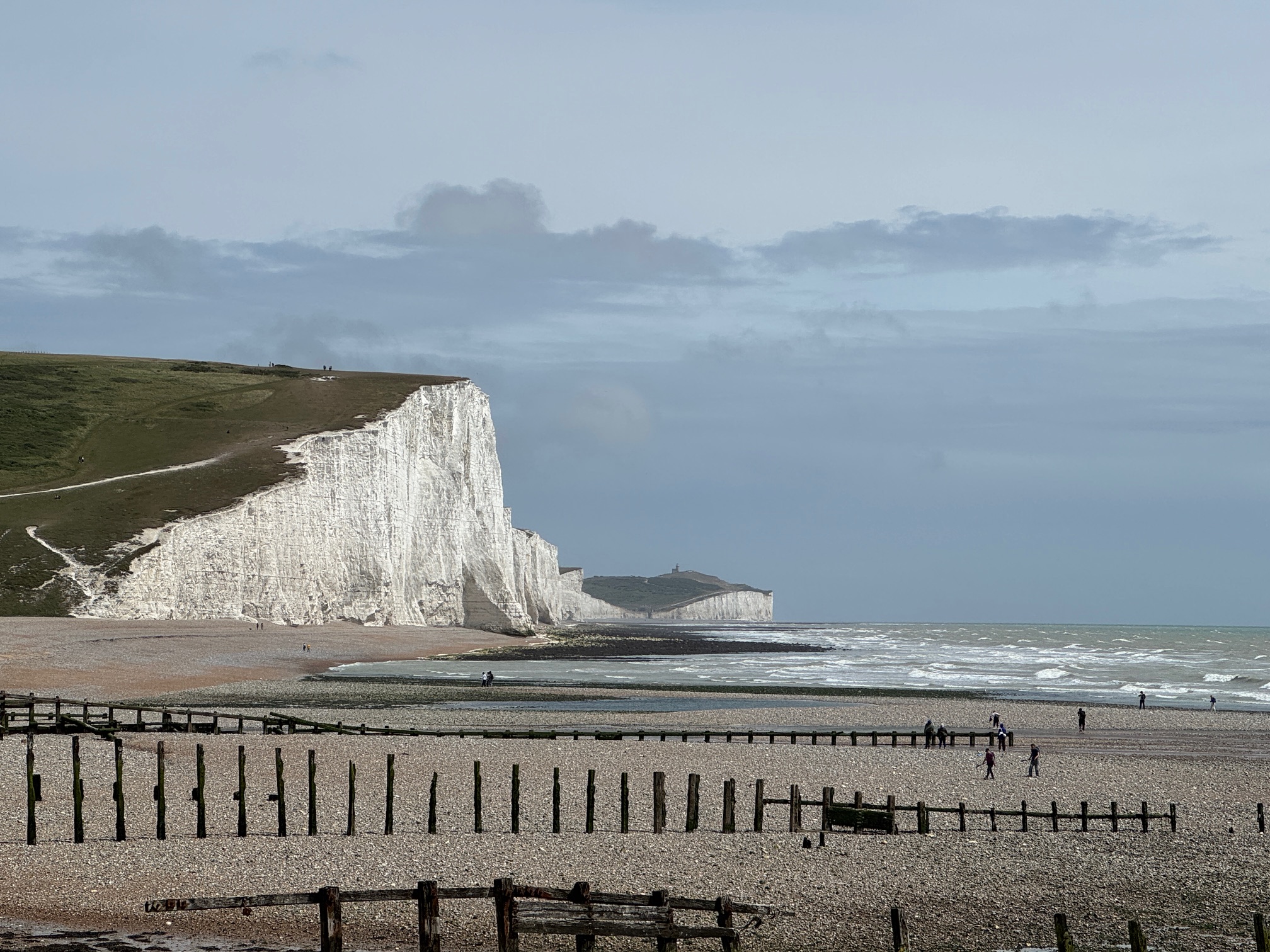
Sea mist is most common in spring (May–June) and autumn (September–October). It typically forms overnight when warm air meets cool sea surface and burns off by late morning. A misty morning at Cuckmere Haven, with the river reflecting pale sky and the cliff faces emerging from haze, produces one of the most atmospheric landscape conditions in southern England. The photography window is narrow — usually 7 to 10am.
Avoiding Harsh Light
The chalk cliff face in direct midday summer sun is often too bright for good photography — detail is lost in the highlights and the shadow-to-highlight ratio is extreme. The most consistently good cliff photography occurs in the two hours after sunrise and the hour before sunset. In winter, the lower sun angle means the entire day between 10am and 3pm can produce usable light.
Photography and Wildlife Walks Throughout the Year
Specialist guided photography and wildlife walks at Seven Sisters operate year-round, including dedicated golden-hour sessions, winter light walks, and migration-watching mornings. View the full programme of guided experiences.
One More Thing
The crowd-avoidance guide is the companion piece to this post — it covers visitor numbers, parking timelines, and the practical logistics of each month. The two posts address different questions. If you want to know when it will be quietest, read that one. If you want to know when the wildlife and light will be best, you just read it.
Planning the walk itself?
Four routes run along these cliffs and they are not interchangeable — a flat 3km riverside stroll, the classic 6.5km Exceat to Birling Gap crossing, a short Birling Gap loop, and the full 21.9km Seaford to Eastbourne ridge. Compare distance, ascent and difficulty before you pick one.
- Easy Birling Gap Short Loop 2 km 45 min
- Easy Cuckmere Haven Beach 3 km 1 hour
- Moderate Exceat to Birling Gap 6.5 km 2-3 hours
- Challenging Seaford to Eastbourne 21.9 km 6-7 hours
We may earn a small commission on bookings made through this link, at no extra cost to you. More info.
£4.99 · 24-page PDF · Instant download
The Seven Sisters Ultimate Guide
The complete 24-page companion built from first-hand walks — every cliff, all four graded routes, tide windows and a parking strategy. Designed to work offline, right on the cliff top.
- All 7 cliffs — heights, geology & viewpoints
- Four graded walking routes, compared
- Tide windows, light calendar & day plans
- Parking strategy & seasonal planner
Just want the basics? Download the free 2-page walk guide
Want an expert-led Seven Sisters tour?
From guided cliff walks and wildlife safaris to geology hikes and photography tours — explore all our curated experiences with local guides.