Seven Sisters in September: The Month the Cliffs Belong to You Again
Seven Sisters in September
The schools go back. The car parks empty. The sea is still warm. September is the month most visitors miss — and the one most worth planning for
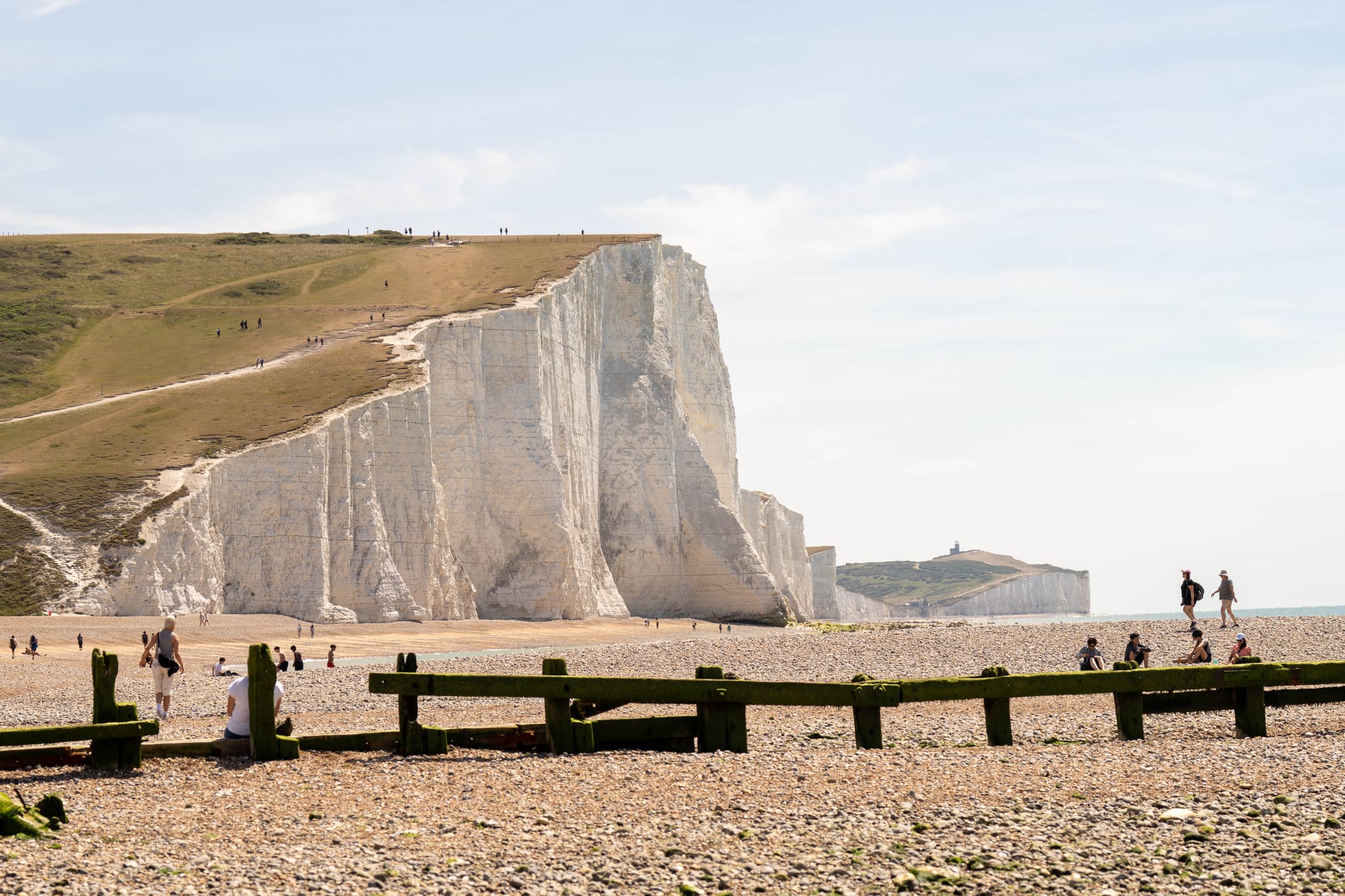
September is the best-kept secret at Seven Sisters. The shift happens in the first week — English and Welsh schools return, the family groups that have defined the site since late July thin rapidly, and the cliffs revert to something closer to their weekday character year-round: walkable, quiet, unhurried. At the same time, the sea water temperature is at its annual peak (typically 17 to 18°C, warmer than any point in summer), the chalk grassland is in its late-season prime, and bird migration reaches its richest and most varied phase. There is no single month in the Seven Sisters year where the ratio of what is on offer to how many people show up to find it is better than September.
Crowds in September: What Actually Changes
The crowd pattern at Seven Sisters in September is defined almost entirely by term dates. The first weekend of September — if schools have not yet returned — can still be busy. By the second weekend of September, the car parks are a different proposition entirely:
- Birling Gap: In peak July, the car park fills before 9am on sunny weekends. In mid-September, the same car park is typically 60 to 70% full at midday and has spaces available. You do not need to arrive before 8am. You do not need to plan around the parking.
- Exceat: Similar pattern. The queue of cars on the A259 that is a fixture on August Bank Holiday weekends does not appear in September. The car park is manageable throughout the day.
- Clifftop path: The bottlenecks at narrow cliff-edge sections that form on August weekends — where the path shrinks to single-file — clear. You can walk the full Sisters line at your own pace without managing other people.
Weekdays in September are extraordinary. A Tuesday or Wednesday in mid-September at Seven Sisters approaches what the site feels like outside the tourist season — not empty (the site never is), but genuinely quiet. If you have any flexibility to visit mid-week, September weekdays are the single best opportunity for that kind of visit.
Weather in September
September weather at Seven Sisters is genuinely good — and often underestimated by people who associate autumn with deterioration. The Sussex coast averages around 6 to 7 hours of sunshine per day in September, with typical daytime temperatures of 17 to 20°C. The warmest, most settled September days are often warmer than the coolest June days. The first autumn Atlantic storms can arrive in September but are not the dominant pattern — the month has more in common with late summer than with October.
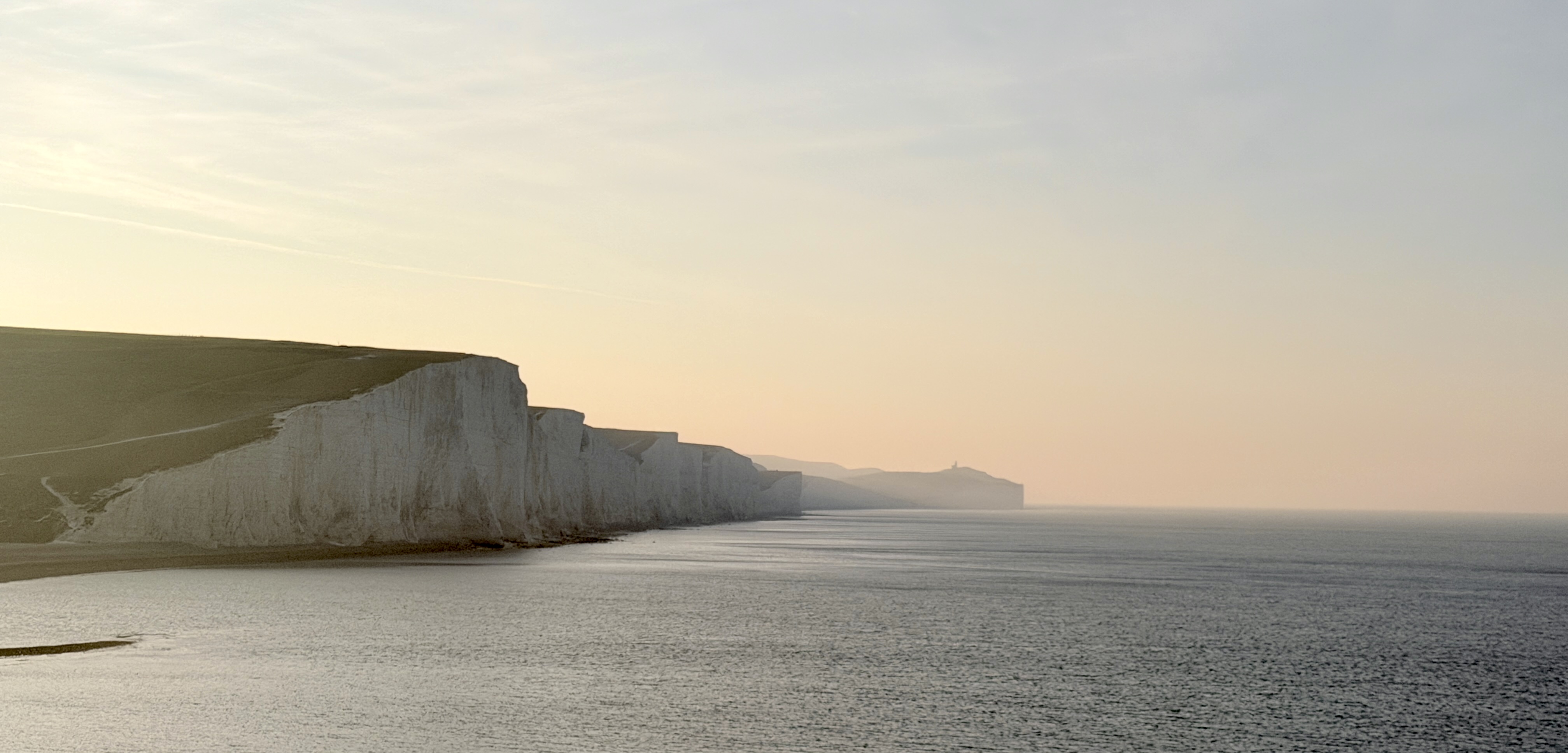
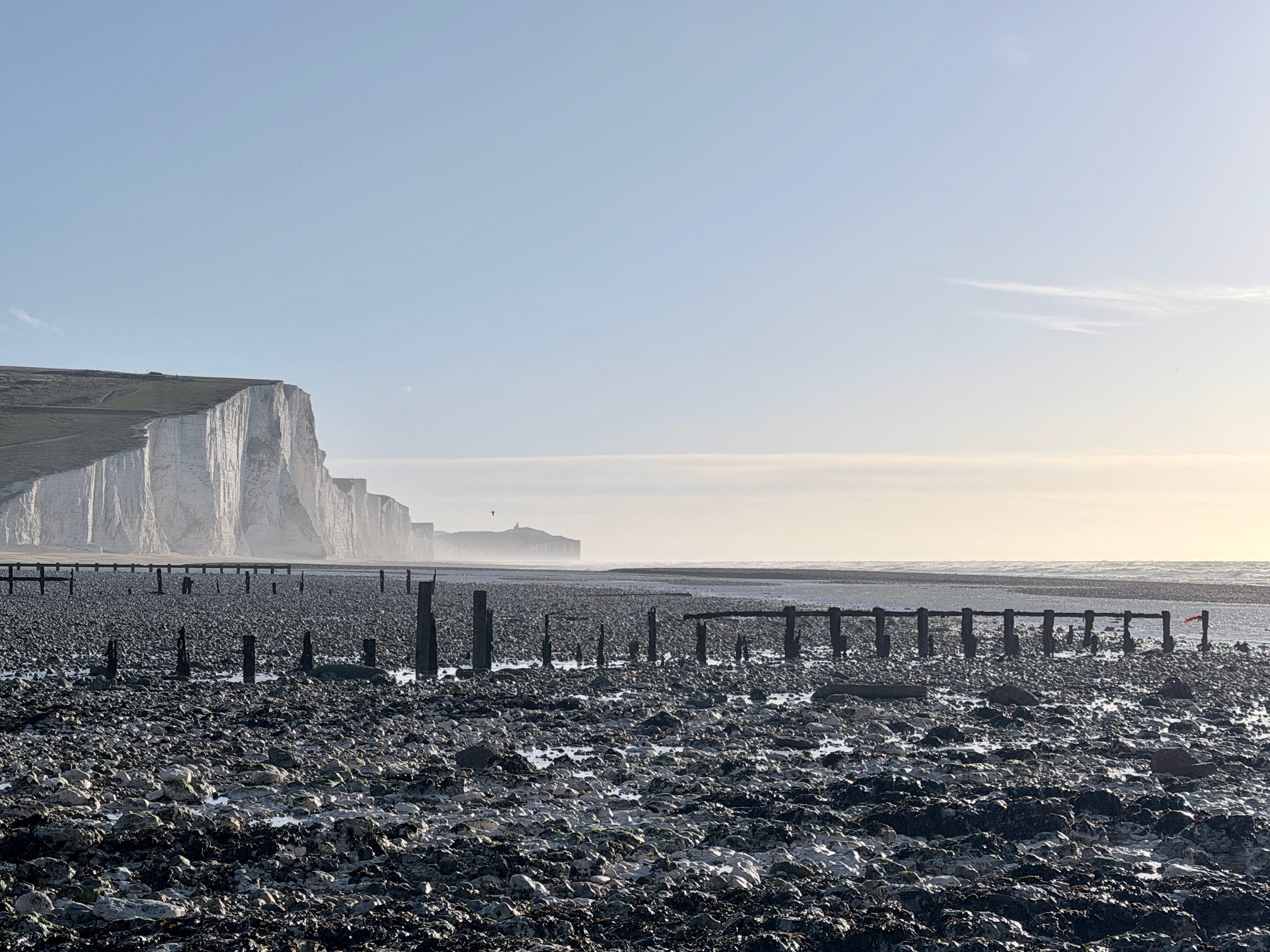
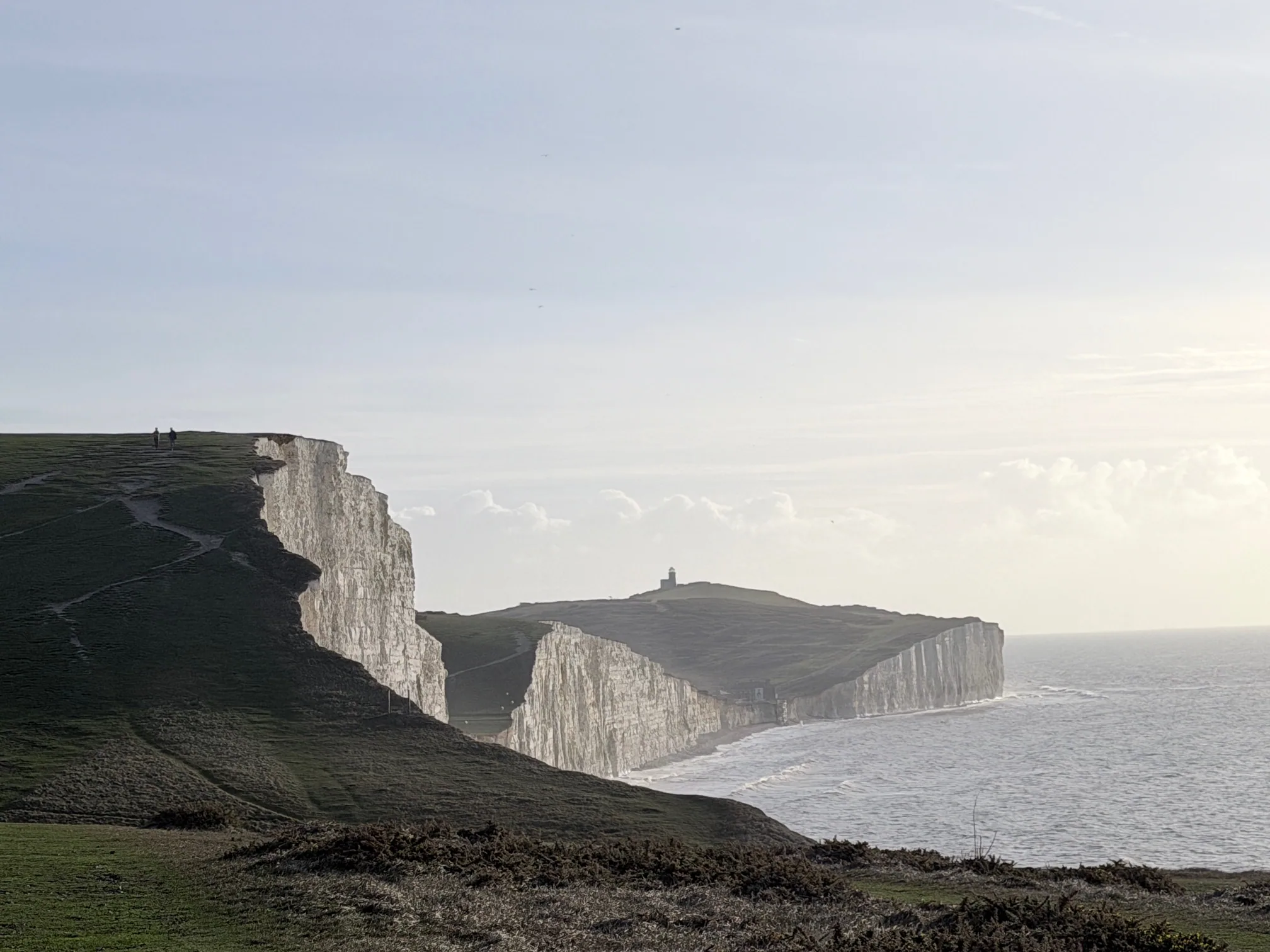
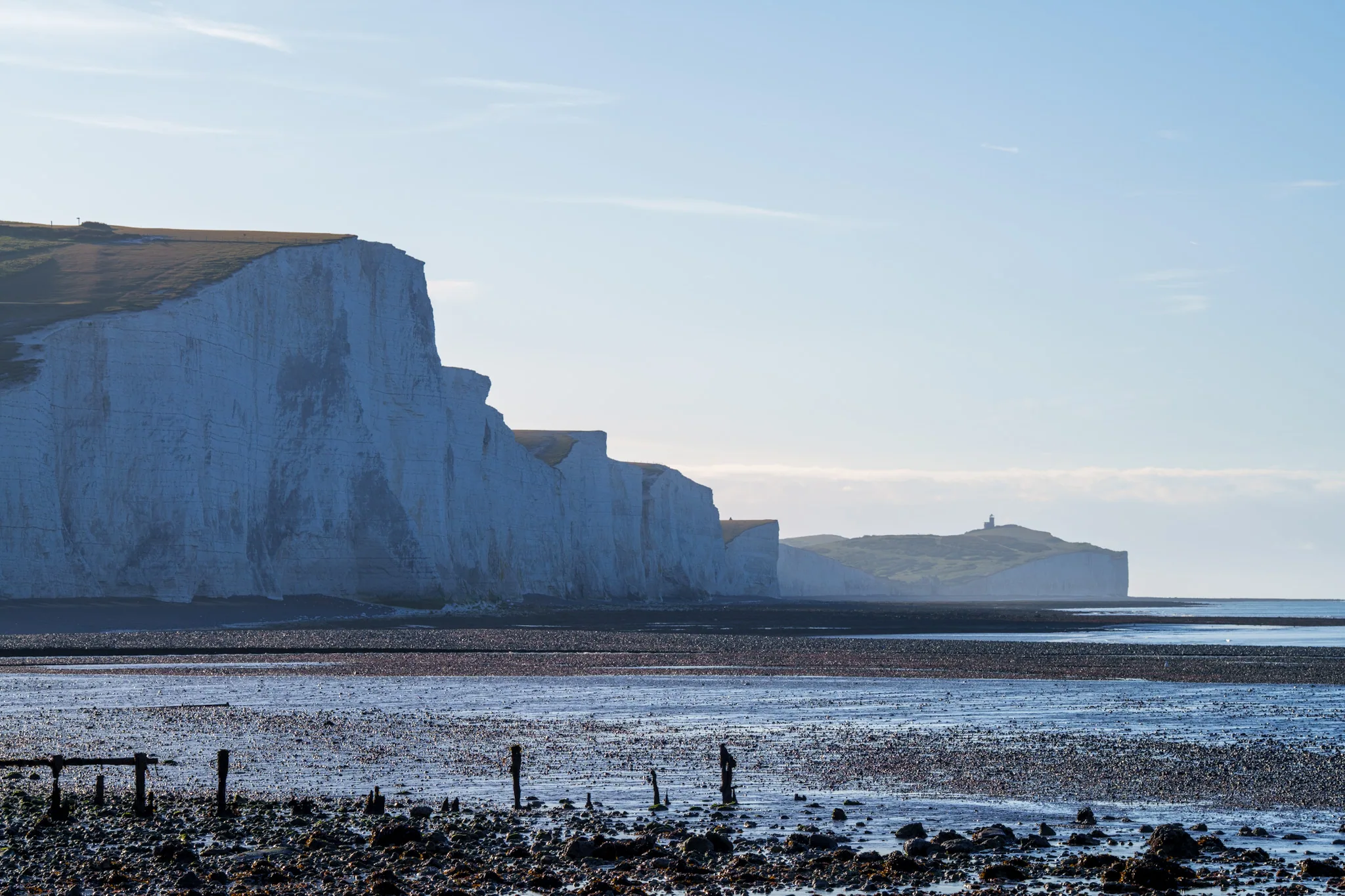
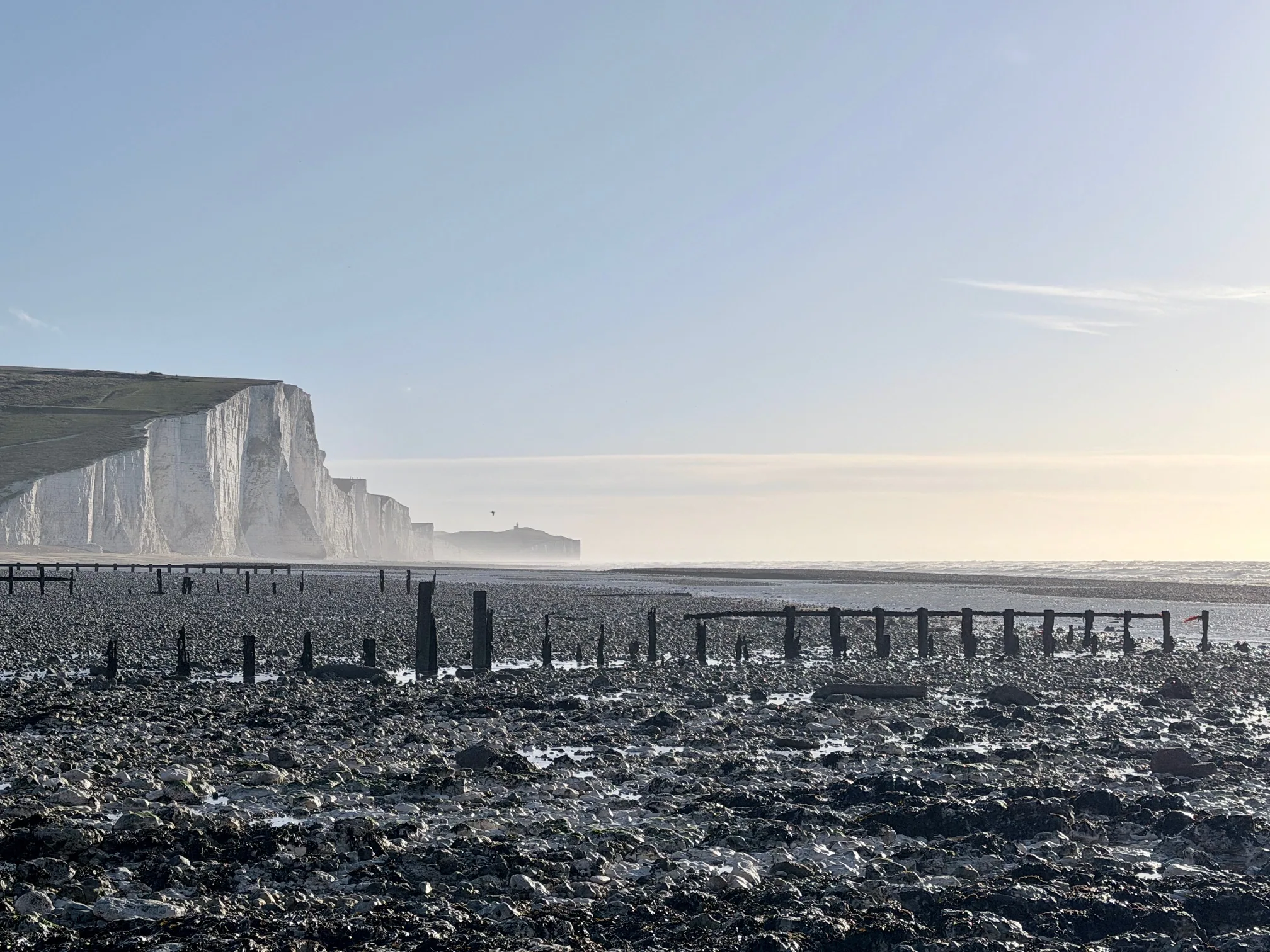
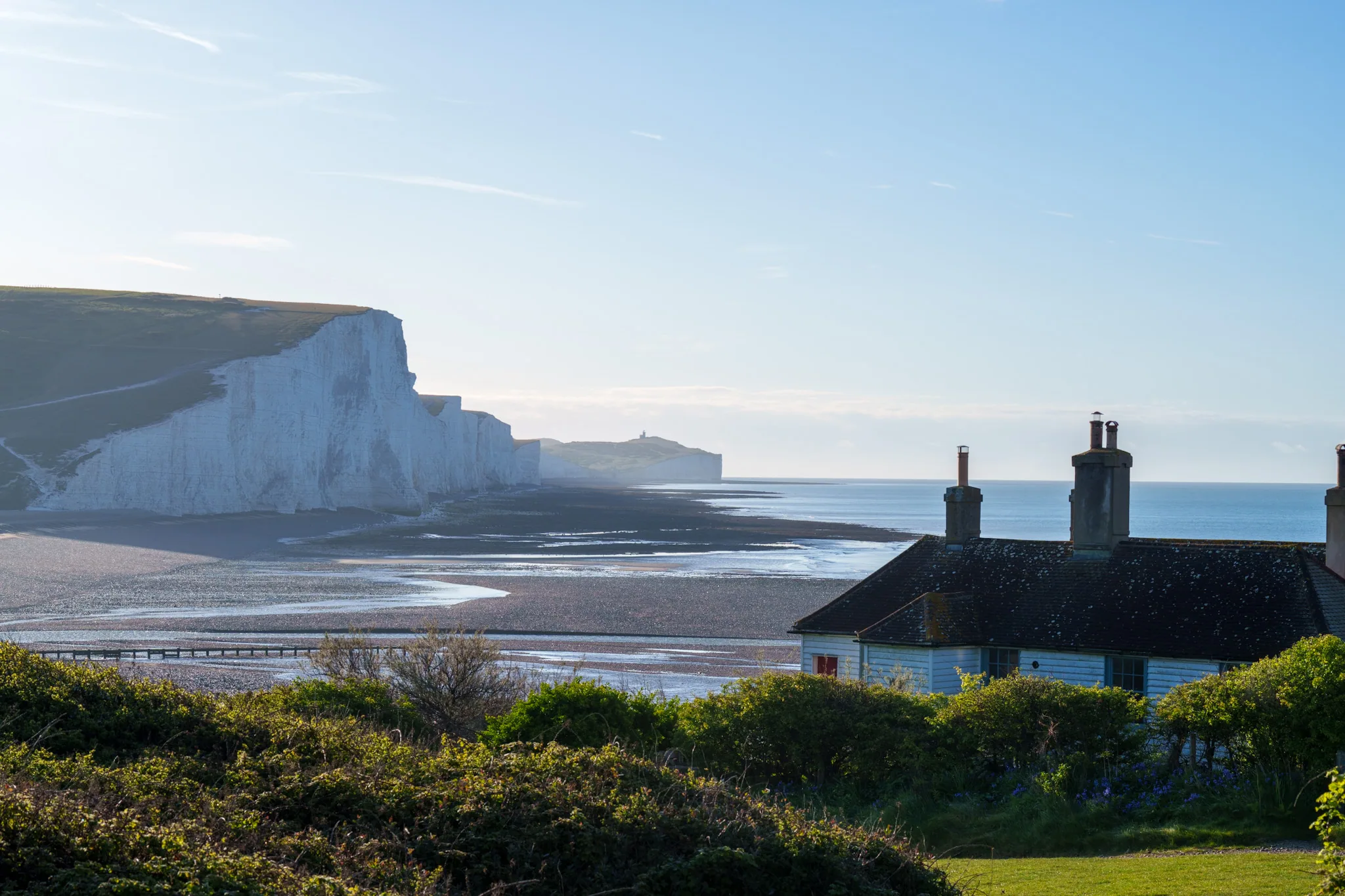
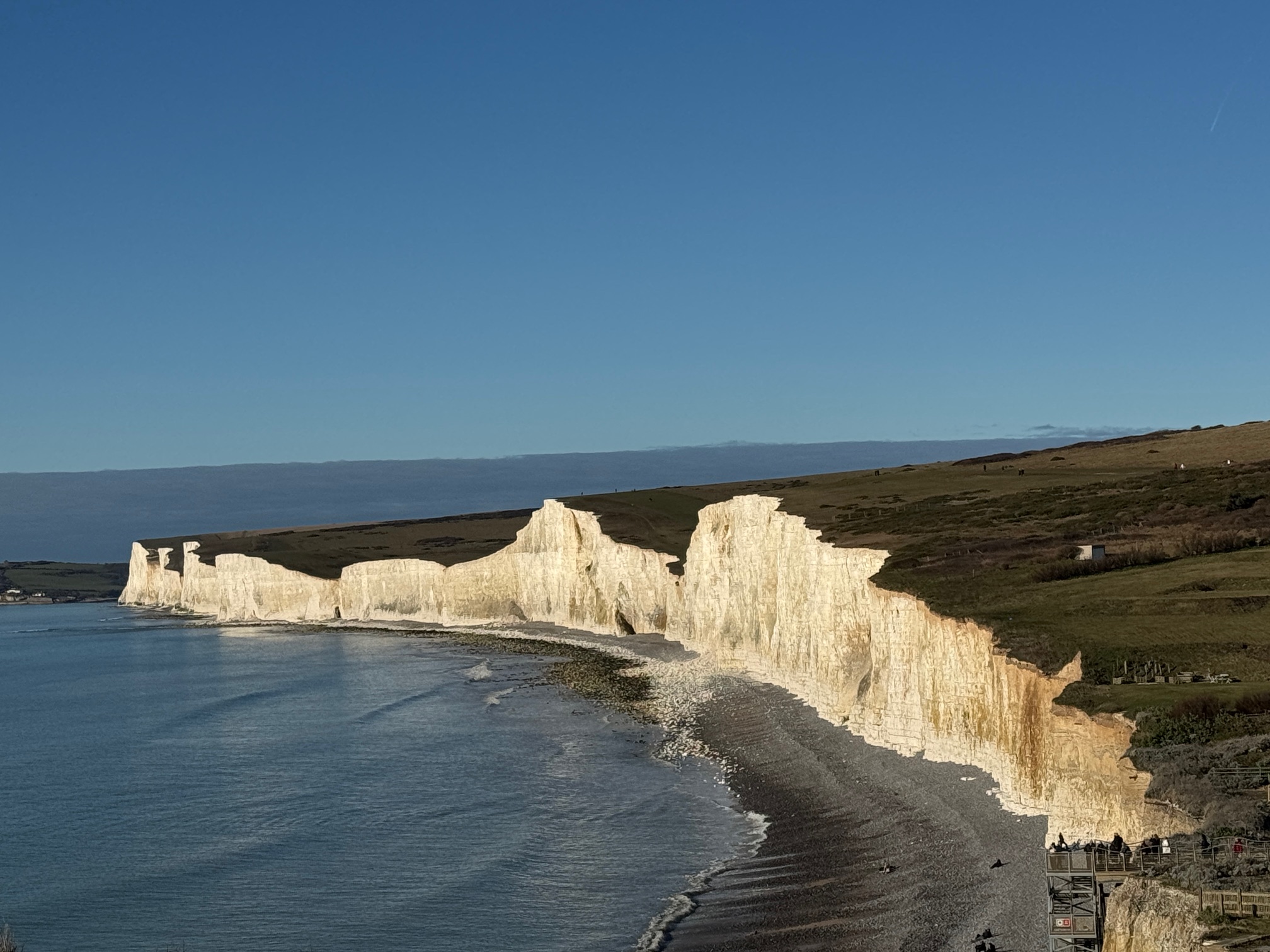
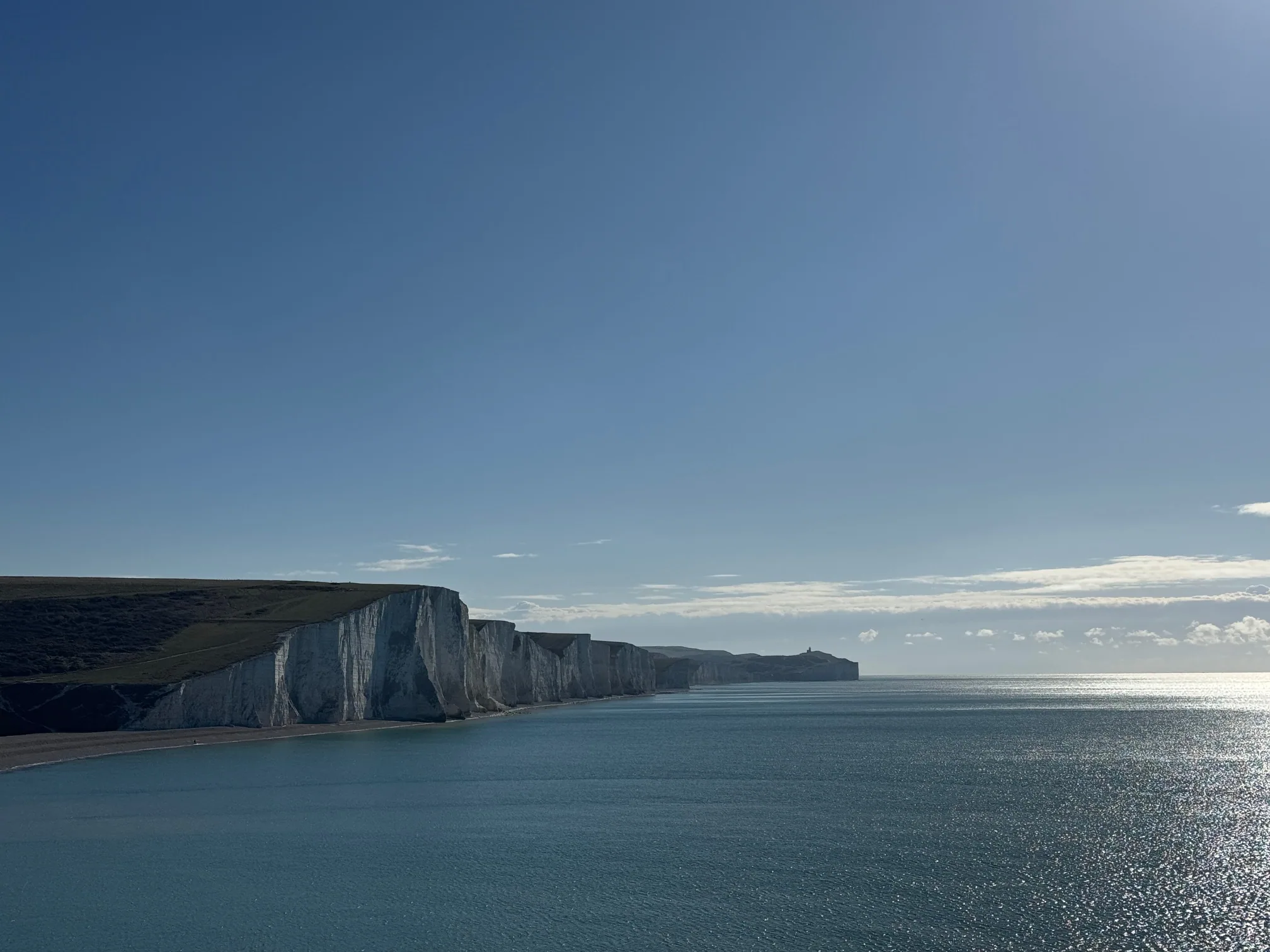
The light quality in September changes perceptibly. The sun is lower in the sky than in July and August, which means the chalk cliffs are lit more obliquely — the undulations and layers in the cliff face are more visible, shadows are more pronounced, and golden-hour light arrives earlier. The sunrise and sunset times guide gives exact times by month. In late September, sunset is around 7pm and falling — early enough to plan an evening clifftop walk without needing to be out until 9pm.
The Sea in September
September sea temperatures at Seven Sisters are typically 17 to 18°C — the warmest water of the year. The English Channel sea surface temperature lags behind air temperature by roughly six weeks, which means the peak swimming conditions come not in August but in early September. For sea swimming, September is the correct month: warm water, quieter beaches, no crowded access at Birling Gap.
Swimming from Cuckmere Haven beach remains the safest option — no steps required, flat access from the valley, and the beach at the river mouth is less exposed than Birling Gap on days with any swell. The sea swimming guide covers the conditions, safety, and best access points in detail.
Wildlife in September
Bird migration — the peak month
September is consistently the richest single month for bird migration at Seven Sisters. The combination of circumstances is unique: the cliff headland funnels birds arriving from continental Europe, the Cuckmere estuary provides feeding habitat, and the variety of species is at its annual maximum. On a September morning after overnight easterly winds, the clifftop scrub between Birling Gap and the valley can hold overnight arrivals of warblers, flycatchers, chats, and redstarts — birds that have crossed the Channel from France or Belgium during the night and grounded on the first high chalk grassland they encountered.
Even without specific knowledge of migrant identification, a September morning at Seaford Head or above the Cuckmere estuary is visibly different from August. Swallows gather in the hundreds over the valley before departing south. House martins swarm over the clifftop. Sparrowhawks move along the cliff line. Hobbies hunt dragonflies over the estuary edge. The migration guide covers what to look for week by week through September.
Grey seals
Grey seals begin to appear at Cuckmere Haven from September onwards. They are most commonly seen resting on the shingle bank at the river mouth or in the sea just offshore. September sightings are less reliable than October and November — this is the start of the haul-out season rather than the peak — but early-season sightings have become more frequent in recent years. Walking the valley floor and scanning the river mouth at low tide is the recommended approach. Binoculars are useful; close approach is not appropriate.
Chalk grassland in late season
The chalk grassland on the cliff tops in September has a different character to its spring and early summer appearance. The orchids are over. The cowslips are over. What replaces them is a tawny-gold sward with late-season species still in flower: devil's bit scabious (deep purple-blue, visited by migrant butterflies and bees), marjoram, and on sheltered south-facing slopes, the autumn gentian — a rare chalk grassland specialist with deep violet flowers that blooms from late August into October. Chalk butterflies remain active on warm September days: Adonis Blues, Chalkhill Blues, and occasional late-season Small Coppers.
Seabirds on the move
From the clifftop or the beach at Birling Gap, September offers seabird passage watching that exceeds anything available in summer. On westerly or north-westerly winds, Manx shearwaters move steadily along the coast in numbers. Arctic skuas harass terns offshore. Gannets are regular throughout the month. On the right day — a westerly blow following days of calm — the seabird passage in September can be spectacular even to a casual observer with binoculars.
What to Do in September
Walk the full Sisters line
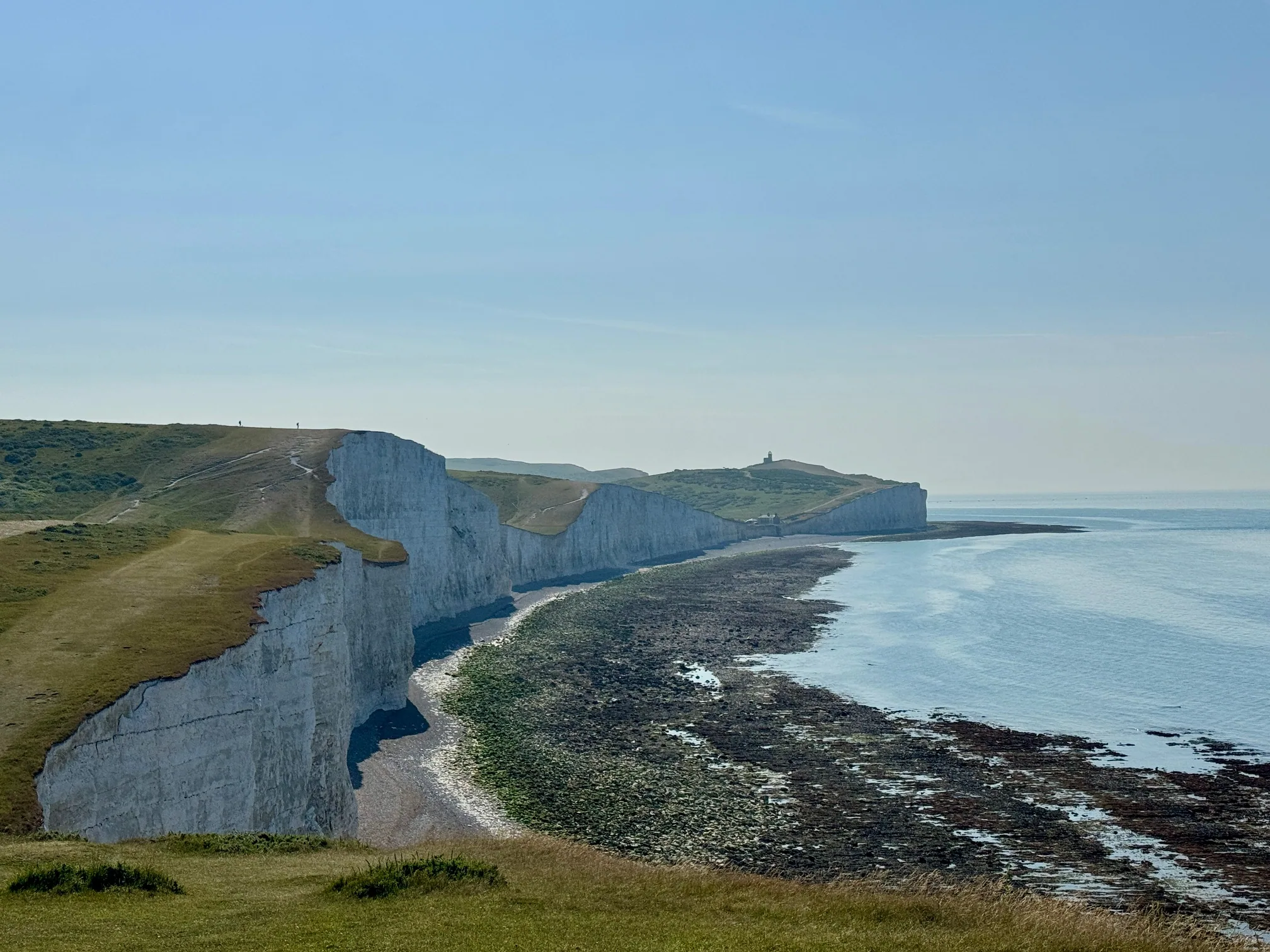
The complete cliff walk from Seaford to Eastbourne — 21.9km (13.6 miles), covering Seven Sisters, Birling Gap, Beachy Head, and finishing at Eastbourne — is the classic route but is rarely practical in August because the crowds and the heat make it a test rather than a pleasure. In September it is genuinely enjoyable. The temperature is right, the path is quiet, and the trains back from Eastbourne to Seaford via Lewes are straightforward. The Seaford walk guide and the Eastbourne walk guide cover both directions in detail.
Sea swimming
September is the correct month for swimming at Seven Sisters if you want warm water and space on the beach. The combination of peak sea temperature and post-school-holidays crowd reduction is exactly right. See the sea swimming guide for access, safety, and beach conditions.
Photography
September offers the best photography conditions of the summer-autumn transition. The lower sun angle creates raking light on the cliff face. The late-afternoon light in September is noticeably warmer and more golden than in midsummer. Sunset from Haven Brow at the western end of the Sisters line, looking back east along the full cliff sequence, is exceptional in September — the sun drops behind the Downs to the west, the chalk turns amber, and the sea catches the last light. The photography guide has specific timing recommendations by month.
Birding from Seaford Head
Seaford Head Local Nature Reserve, immediately west of the Sisters, is one of the best landfall sites for autumn migrants on the south coast. The clifftop grassland, the hedgerows of the golf course edge, and the scrub on the head's southern slopes all concentrate arriving migrants. Early morning — the hour after dawn — is the prime window. Bring binoculars, walk slowly, and check every bush. September mornings after overnight easterly winds produce the best conditions.
Practical Details for September
What to wear
September weather is variable. The warm days are genuinely warm — a T-shirt is fine on a sunny September afternoon on the cliff. But September can also bring rain, strong onshore winds, and sea mist with little warning. The rule that applies at Seven Sisters year-round applies in September: bring a layer and a wind/waterproof regardless of what the morning looks like. The kit list covers the non-obvious essentials.
What is open
The National Trust cafe at Birling Gap and the Cuckmere Inn at Exceat are both open throughout September. The seasonal 13X Coaster (Brighton & Hove) runs on its summer timetable into September — check current dates on the Brighton & Hove website as the last full-service day varies by year. The beach steps at Birling Gap are operational, storm closures aside.
Getting there
September is the easiest month of the summer season to arrive by train. Southern Rail runs to Seaford from London Bridge and Victoria — the journey is approximately 1 hour 25 minutes. In September, seats are available without the peak-summer pressure on the train and the bus connections from Seaford are not competing with large summer crowds. The transport guide covers the full journey from London in detail.
Make the Most of September at Seven Sisters
Guided autumn walks in September focus on bird migration, chalk grassland ecology, and the transition of the cliffs into the autumn season. Places are more available than summer — September is the month to book a guided experience without months of advance notice. View available guided experiences.
September Versus August: A Direct Comparison
| Factor | August | September |
|---|---|---|
| Crowds | Peak — car parks full by 9am weekends | Light to moderate — spaces available throughout the day |
| Sea temperature | 15–17°C | 17–18°C — annual peak |
| Air temperature | 18–24°C typical | 16–21°C typical |
| Bird migration | Early movement — seabirds offshore | Peak landbird migration — best variety of the year |
| Grey seals | Absent | Early arrivals — occasional sightings from late September |
| Photography light | High sun — flat light in midday | Lower sun angle — raking light, longer golden hour |
| Accommodation | Tight availability, higher prices | Easier availability, shoulder-season pricing |
September does not have the school-holiday buzz of August or the specific rewards of spring. What it has is everything August offers — warm weather, open coast, active wildlife — with virtually none of the crowds. For anyone with the flexibility to choose their month, September is the correct answer for a Seven Sisters visit more often than not.
Planning the walk itself?
Four routes run along these cliffs and they are not interchangeable — a flat 3km riverside stroll, the classic 6.5km Exceat to Birling Gap crossing, a short Birling Gap loop, and the full 21.9km Seaford to Eastbourne ridge. Compare distance, ascent and difficulty before you pick one.
- Easy Birling Gap Short Loop 2 km 45 min
- Easy Cuckmere Haven Beach 3 km 1 hour
- Moderate Exceat to Birling Gap 6.5 km 2-3 hours
- Challenging Seaford to Eastbourne 21.9 km 6-7 hours
We may earn a small commission on bookings made through this link, at no extra cost to you. More info.
£4.99 · 24-page PDF · Instant download
The Seven Sisters Ultimate Guide
The complete 24-page companion built from first-hand walks — every cliff, all four graded routes, tide windows and a parking strategy. Designed to work offline, right on the cliff top.
- All 7 cliffs — heights, geology & viewpoints
- Four graded walking routes, compared
- Tide windows, light calendar & day plans
- Parking strategy & seasonal planner
Just want the basics? Download the free 2-page walk guide
Want an expert-led Seven Sisters tour?
From guided cliff walks and wildlife safaris to geology hikes and photography tours — explore all our curated experiences with local guides.